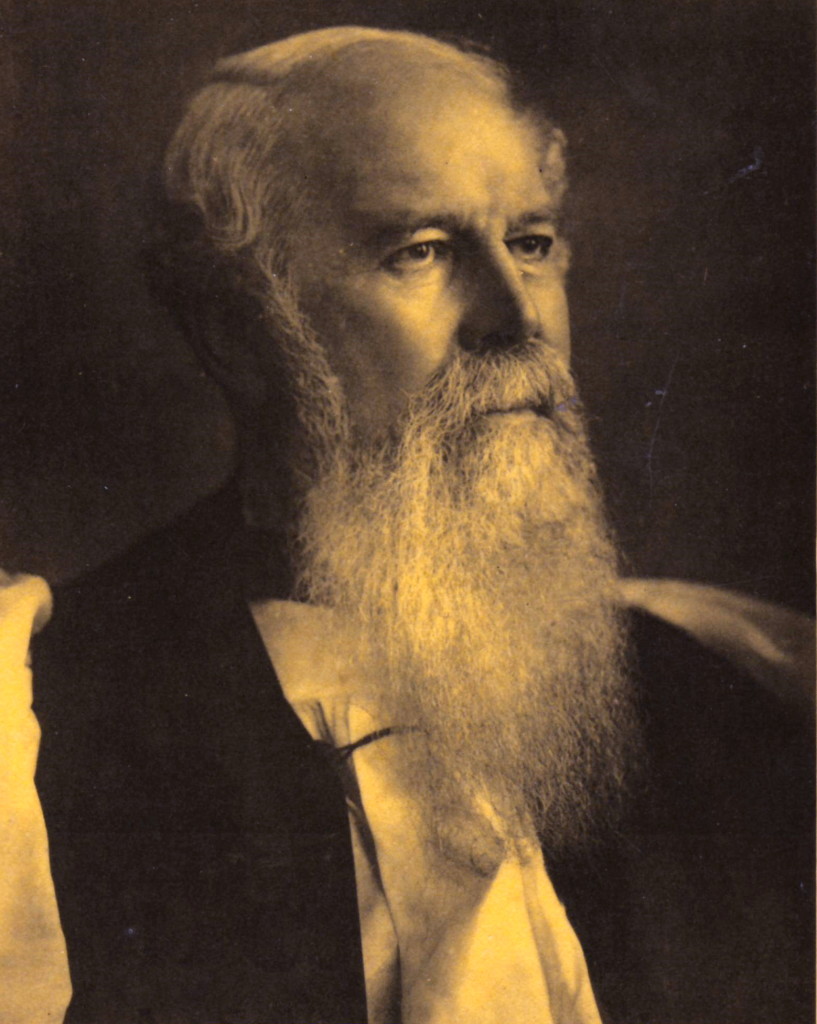
In J.C. Ryle's "Expository Thoughts on Matthew 26:57-68", the central theological topic addressed is the fulfillment of Old Testament sacrificial types through the trial and condemnation of Jesus Christ. Ryle emphasizes that Caiaphas and the chief priests, while holding high ecclesiastical offices, played pivotal roles in the injustice against Christ, showcasing that such positions do not inherently guarantee doctrinal fidelity or moral integrity. He references Isaiah 8:20 to argue that the authority of ministers must always be tested against Scripture, reinforcing the Reformed principle of sola scriptura. Additionally, Ryle discusses Christ’s declaration of His Messiahship before the council and foreshadows His eventual return in glory as predicted in Daniel, highlighting the significance of Christ’s sufferings as foretold in Isaiah 50:6 and pointing out that believers should be prepared for similar ridicule as followers of Christ. This underscores the doctrine of perseverance and the call to endure suffering in the Christian life.
Key Quotes
“It is a clear proof that high ecclesiastical office exempts no man from gross errors in doctrine and tremendous sins in practice.”
“The disciple is not greater than His Master nor the servant than His Lord.”
“How wonderful that the Holy Son of God should have voluntarily submitted to such indignities to redeem such miserable sinners as we are.”
“Let us draw from the passage one practical conclusion: let it never surprise us if we have to endure mockery and ridicule and false reports because we belong to Christ.”
What does the Bible say about Christ's trial before Caiaphas?
The trial highlights the fulfillment of atonement and the rejection of Jesus as the Messiah by the religious leaders.
Matthew 26:57-68, Isaiah 8:20
How do we know Jesus is the Messiah according to the Bible?
Jesus affirmed His identity as the Messiah before the Jewish council, proclaiming His future glory.
Matthew 26:64, Daniel 7:13-14
Why is it important for Christians to follow biblical teachings?
Following biblical teachings ensures we remain aligned with God's truth and guarded against error.
Isaiah 8:20
We read in these verses how our Lord Jesus Christ was brought beforeCaiaphas the high priest, and solemnly pronounced guilty. It was fitting that it should be so. The great day of atonement was come. The wondrous type of the scapegoat was about to be completely fulfilled. It was only suitable that the Jewish high priest should do his part, and declare sin to be upon the head of the victim, before he was led forth to be crucified. May we ponder these things and understand them. There was a deep meaning in every step of our Lord's passion.
Let us observe in these verses, that the chief priests were the principal agents in bringing about our Lord's death. It was not so much the Jewish people, we must remember, who pushed forward this wicked deed, as Caiaphas and his companions, the chief priests.
This is an instructive fact, and deserves notice. It is a clear proof that high ecclesiastical office exempts no man from gross errors in doctrine, and tremendous sins in practice. The Jewish priests could trace up their pedigree to Aaron, and were his lineal successors. Their office was one of peculiar sanctity, and entailed peculiar responsibilities. And yet these very men were the murderers of Christ!
Let us beware of regarding any minister of religion as infallible. His orders, however regularly conferred, are no guarantee that he may not lead us astray, and even ruin our souls. The teaching and conduct of all ministers must be tried by the Word of God. They are to be followed so long as they follow the Bible, but no longer. The maxim laid down in Isaiah must be our guide "To the law and the testimony—if they speak not according to this word, it is because there is no light in them." (Isaiah. 8:20.)
Let us observe, in the second place, how fully our Lord declared to the Jewish council His own Messiahship, and His future coming in glory.
The unconverted Jew can never tell us at the present day, that his forefathers were left in ignorance that Jesus was the Messiah. Our Lord's answer to the solemn adjuration of the high priest is a sufficient reply. He tells the council plainly that He is "the Christ, the Son of God." He goes on to warn them that though He had not yet appeared in glory, as they expected Messiah would have done, a day would come when he would do so. "Hereafter you shall see the Son of Man sitting on the right hand of power, and coming in the clouds of heaven." They would yet see that very Jesus of Nazareth, whom they had arraigned at their bar, appear in all majesty as King of kings. (Rev. 1:7.)
It is a striking fact which we should not fail to notice, that almost the last word spoken by our Lord to the Jews, was a warning prediction about His own second advent. He tells them plainly that they would yet see Him in glory. No doubt he referred to the seventh chapter of Daniel, in the language that he used. But He spoke to deaf ears. Unbelief, prejudice, self-righteousness covered them like a thick cloud. Never was there such an instance of spiritual blindness. Well may the Church of England litany contain the prayer, "From all blindness—and from hardness of heart, good Lord deliver us."
Let us observe, in the last place, how much our Lord endured before the council, from false witness and mockery.
Falsehood and ridicule are old and favorite weapons of the devil. "He is a liar, and the father of it." (John 8:44.) All through our Lord's earthly ministry we see these weapons continually employed against Him. He was called a glutton, a wine-bibber, and a friend of publicans and sinners. He was held up to contempt as a Samaritan. The closing scene of His life was only in keeping with all the past tenor of it. Satan stirred up his enemies to add insult to injury. No sooner was He pronounced guilty, than every sort of mean indignity was heaped upon Him. "They spit in his face, and buffeted him." "They smote him with the palms of their hands." They said, mockingly, "Prophesy unto us, you Christ, who is he that smote you?"
How wonderful and strange it all sounds! How wonderful that the Holy Son of God should have voluntarily submitted to such indignities, to redeem such miserable sinners as we are! How wonderful, not least, that every tittle of these insults was foretold seven hundred years before they were inflicted!
Seven hundred years before, Isaiah had written down the words, "I hid not my face from shame and spitting." (Isaiah. 50:6.)
Let us draw from the passage one practical conclusion. Let it never surprise us, if we have to endure mockery, and ridicule, and false reports, because we belong to Christ. The disciple is not greater than His Master, nor the servant than His Lord. If lies and insults were heaped upon our Savior, we need not wonder if the same weapons are constantly used against His people. It is one of Satan's great devices to blacken the characters of godly men, and bring them into contempt. The lives of Luther, Cranmer, Calvin, and Wesley supply abundant examples of this. If we are ever called upon to suffer in this way, let us bear it patiently. We drink the same cup that was drunk by our beloved Lord. But there is one great difference. At the worst, we only drink a fewbitter drops. He drank the cup to the very dregs.

Comments
Your comment has been submitted and is awaiting moderation. Once approved, it will appear on this page.
Be the first to comment!