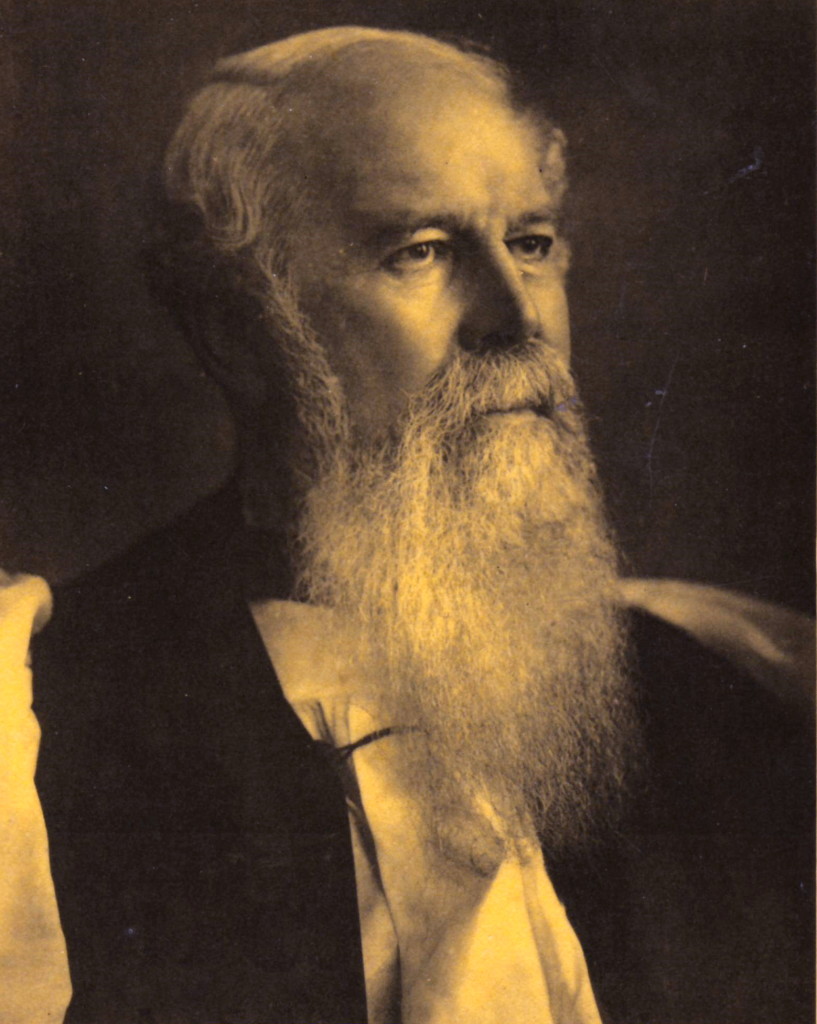
The article by J.C. Ryle addresses the theological doctrine of eschatology, particularly focusing on the Second Coming of Christ as depicted in Mark 13:32-37. Ryle emphasizes that the exact timing of Christ's return is intentionally withheld from believers to cultivate an attitude of constant readiness and expectation. He supports this argument with Scripture references, specifically Mark 13:32, which states that no one knows the day or hour of the Lord's return, as well as passages from 1 Thessalonians 5:6 and 2 Peter 3:14, which exhort vigilance and preparedness. The practical significance of this doctrine, according to Ryle, is that it encourages believers to live in a state of spiritual alertness, engaging in prayer, work, and the study of prophecy without being caught in dogmatic attempts to pinpoint exact future events. Ryle ultimately stresses the importance of self-examination for Christians regarding their readiness to meet Christ.
Key Quotes
“There is deep wisdom and mercy in this intentional silence.”
“This very uncertainty has supplied them with a reason for living always ready to meet Him.”
“We are to WATCH...keep our souls in a wakeful lively state prepared at any time to meet our Master.”
“May we give them the attention which they deserve.”
What does the Bible say about the second coming of Christ?
The Bible teaches that while the exact time of Christ's second coming is unknown, believers are called to live in constant expectation and readiness.
Mark 13:32, 1 Thessalonians 5:6, 2 Peter 3:14
How do we know the second coming of Christ will happen?
The assurance of Christ's second coming is grounded in Scripture, which repeatedly affirms this promise through prophetic announcements.
Mark 13:26-27, John 14:3
Why is it important for Christians to be vigilant about the second coming?
Being vigilant about the second coming of Christ prompts believers to live righteously and maintain a close relationship with God.
Mark 13:34-35, Luke 21:34-36
These verses conclude Mark's report of our Lord's prophecy on the Mount of Olives. They ought to form a personal application of the whole discourse to our consciences.
We learn from these verses, that the exact time of our Lord Jesus Christ's second advent is purposely withheld from His church. The event is certain. The precise day and hour are not revealed. "Of that day and hour knows no man, no, not the angels which are in heaven."
There is deep wisdom and mercy in this intentional silence. We have reason to thank God that the thing has been hidden from us. Uncertainty about the date of the Lord's return is calculated to keep believers in an attitude of constant expectation, and to preserve them from despondency. What a dreary prospect the early church would have had before it, if it had known for certain that Christ would not return to earth for at least fifteen hundred years! The hearts of men like Athanasius, Chrysostom, and Augustine, might well have sunk within them, if they had been aware of the centuries of darkness through which the world would pass, before their Master came back to take the kingdom. What a quickening motive, on the other hand, true Christians have perpetually had, for a close walk with God! They have never known, in any age, that their Master might not come suddenly to take account of his servants. This very uncertainty has supplied them with a reason for living always ready to meet Him.
There is one caution connected with the subject, which must not be overlooked. We must not allow the uncertainty of the time of our Lord's second advent to prevent our giving attention to the unfulfilled prophecies of Scripture. This is a great delusion, but one into which, unhappily, many Christians fall. There is a wide distinction to be drawn between dogmatical and positive assertions about dates, and a humble, prayerful searching into the good things yet to come. Against dogmatism about times and seasons, our Lord's words in this place are a standing caution. But as to the general profitableness of studying prophecy, we can have no plainer authority than the apostle Peter's words—"You do well that you take heed to prophecy;" and the apostle John's words in Revelation—"Blessed is he that reads." (2 Peter 1:19. Rev. 1:3.)
We learn, in the second place, from these verses, what are the practical duties of all true believers in the prospect of the second coming of Jesus Christ. Our Lord mentions three things, to which His people should attend. He tells them plainly that He is coming again one day, in power and great glory. He tells them at the same time, that the precise hour and date of that coming are not known. What then are His people to do? In what position of mind are they to live? They are to watch. They are to pray. They are to work.
We are to WATCH. We are to live always on our guard. We are to keep our souls in a wakeful, lively state, prepared at any time to meet our Master. We are to beware of anything like spiritual lethargy, dullness, deadness, and torpor. The company, the employment of time, the society which induces us to forget Christ and His second advent, should be marked, noted, and avoided. "Let us not sleep as do others," says the apostle. "but let us watch and be sober" (1 Thess. 5:6.)
We are to PRAY. We are to keep up habits of regular communion and communion with God. We are to allow no coldness to come in between us and our Father in heaven, but to speak with Him daily; that so we may be ready at any moment to see Him face to face. Moreover, we are to make special prayer about the Lord's coming, that we may be "found in peace, without spot and blameless," and that our hearts may at no time be "overcharged" with the cares of this life, and so the day come upon us unawares. (2 Peter 3:14. Luke 21:34.)
Finally, we are to WORK. We are to realize that we are all servants of a great Master, who has given to every man his work, and expects that work to be done. We are to labor to glorify God, each in our particular sphere and relation. There is always something for every one to do. We are to strive each of us to shine as a light—to be the salt of our own times—to be faithful witnesses for our Master, and to honor Him by conscientiousness and consistency in our daily lives. Our great desire must be to be found not idle and sleeping, but working and doing.
Such are the simple injunctions to which our Lord would have us attend. They ought to stir up in the hearts of all professing Christians great self- examination. Are we looking for our Savior's return? Do we long for His appearing? Can we say with sincerity, Come, Lord Jesus? Do we live as if we expected Christ to come again? These are questions which demand serious consideration. May we give them the attention which they deserve!
Does our Lord require us to neglect any of the duties of life, in the expectation of His return? He requires nothing of the kind. He does not bid the farmer neglect his land, or the laborer his work, the merchant his business, or the lawyer his calling. All He asks is that baptized people should live up to the faith into which they were baptized—should live as penitent people—live as believing people—live as people who know that "without holiness no man can see the Lord." So living, we are ready to meet our Master. Not living in this way, we are neither fit for death, judgment, nor eternity. To live in this way is to be truly happy, because it is to be truly prepared for anything that may come upon the earth. Let us never be content with a lower standard of practical Christianity than this. The last words of the prophecy are peculiarly solemn—"What I say unto you, I say unto all, Watch!"

Comments
Your comment has been submitted and is awaiting moderation. Once approved, it will appear on this page.
Be the first to comment!