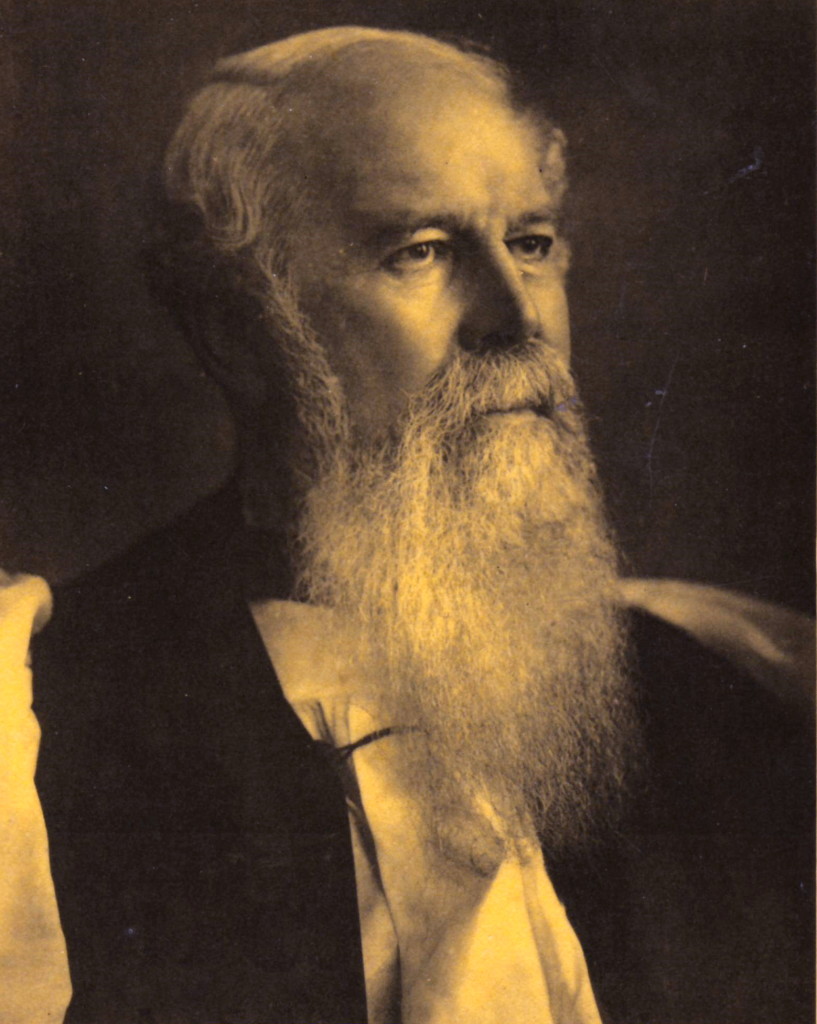
In "Expository Thoughts on John 9:13-25," J.C. Ryle addresses the theological topic of the Sabbath's true intent and its implications for Christian living. Ryle argues that the Pharisees misinterpret the Sabbath by prioritizing legalism over acts of mercy, demonstrated in their condemnation of Jesus for healing a blind man. He references Jesus' teaching on the Sabbath, suggesting it was designed for human benefit rather than restriction, and emphasizes that the Fourth Commandment remains binding, rejecting any notion that it has been abrogated. The significance of this doctrine lies in the call for Christians to maintain the Sabbath as a holy day dedicated to God, while also engaging in necessary and compassionate acts, reflecting the true spirit of the law. Furthermore, he highlights the danger of closed-mindedness in rejecting truth, making a case for the importance of personal experiences of grace as definitive evidence of genuine faith.
Key Quotes
“The Sabbath was made for man and meant for the good of man's body, mind, and soul.”
“There are only too many of whom we may say with sorrow, 'These men are not of God because they keep not the Sabbath day.'”
“Nothing convinces a man so thoroughly as his own senses and feelings.”
“Let us never rest until we know and feel within us some real work of the Holy Spirit.”
What does the Bible say about the Sabbath?
The Bible teaches that the Sabbath is a day set apart for rest and worship, meant for the good of man's body, mind, and soul.
Mark 2:27, Exodus 20:8-11
How do we know that Jesus performed miracles?
The blind man's testimony after being healed is a powerful affirmation that Jesus indeed performed miracles.
John 9:25, Acts 4:20
Why is understanding the Sabbath important for Christians?
Understanding the Sabbath is crucial as it reflects our commitment to God's command and our relationship with Him.
Hebrews 4:9-10, Exodus 20:8-11
The Pharisees’ Reaction to the Healing.
These verses show us how little the Jews of our Lord's time understood the right use of the Sabbath day. We read that some of the Pharisees found fault because a blind man was miraculously healed on the Sabbath. They said, "This man is not of God, because He keeps not the Sabbath day." A good work had manifestly been done to a helpless fellow-creature. A heavy bodily infirmity had been removed. A mighty act of mercy had been performed. But the blind- hearted enemies of Christ could see no beauty in the act. They called it a breach of the Fourth Commandment!
These would-be wise men completely mistook the intention of the Sabbath. They did not see that it was "made for man," and meant for the good of man's body, mind, and soul. It was a day to be set apart from others, no doubt, and to be carefully sanctified and kept holy. But its sanctification was never intended to prevent works of necessity and acts of mercy. To heal a sick man was no breach of the Sabbath day. In finding fault with our Lord for so doing, the Jews only exposed their ignorance of their own law. They had forgotten that it is as great a sin to add to a commandment, as to take it away.
Here, as in other places, we must take care that we do not put a wrong meaning on our Lord's conduct. We must not for a moment suppose that the Sabbath is no longer binding on Christians, and that they have nothing to do with the Fourth Commandment. This is a great mistake, and the root of great evil. Not one of the ten commandments has ever been repealed or put aside.
Our Lord never meant the Sabbath to become a day of pleasure, or a day of business, or a day of traveling and idle dissipation. He meant it to be "kept holy" as long as the world stands. It is one thing to employ the Sabbath in works of mercy, in ministering to the sick, and doing good to the distressed. It is quite another thing to spend the day in visiting, feasting, and self- indulgence. Whatever men may please to say, the way in which we use the Sabbath a sure test of the state of our religion. By the Sabbath may be found out whether we love communion with God. By the Sabbath may be found out whether we are in tune for heaven. By the Sabbath, in short, the secrets of many hearts are revealed. There are only too many of whom we may say with sorrow, "These men are not of God, because they keep not the Sabbath day."
These verses show us, secondly, the desperate lengths to which prejudice will sometimes carry wicked men. We read that the "Jews agreed that if any man did confess that Jesus was Christ, he should be put out of the synagogue." They were determined not to believe. They were resolved that no evidence should change their minds, and no proofs influence their will. They were like men who shut their eyes and tie a bandage over them, and refuse to have it untied. Just as in after times they stopped their ears when Stephen preached, and refused to listen when Paul made his defense, so they behaved at this period of our Lord's ministry.
Of all states of mind into which unconverted men can fall, this is by far the most dangerous to the soul. So long as a person is open, fair, and honest- minded, there is hope for him, however ignorant he may be. He may be much in the dark at present. But is he willing to follow the light, if set before him? He may be walking in the broad road with all his might. But is he ready to listen to any one who will show him a more excellent way? In a word, is he teachable, childlike, and unfettered by prejudice? If these questions can be answered satisfactorily, we never need despair about the man's soul.
The state of mind we should always desire to possess is that of the noble- minded Bereans. When they first heard the Apostle Paul preach, they listened with attention. They received the Word "with all readiness of mind." They "searched the Scriptures," and compared what they heard with God's Word. "And therefore," we are told, "many of them believed." Happy are those who go and do likewise! (Acts 17:11, 12.)
These verses show us, lastly, that nothing convinces a man so thoroughly as his own senses and feelings. We read that the unbelieving Jews tried in vain to persuade the blind man whom Jesus healed, that nothing had been done for him. They only got from him one plain answer—"One thing I know, that whereas I was blind, now I see." How the miracle had been worked, he did not pretend to explain. Whether the person who had healed him was a sinner, he did not profess to know. But that something had been done for him he stoutly maintained. He was not to be reasoned out of his senses. Whatever the Jews might think, there were two distinct facts of which he was conscious—"I was blind—now I see."
There is no kind of evidence so satisfactory as this to the heart of a real Christian. His knowledge may be small. His faith may be feeble. His doctrinal views may be at present confused and indistinct. But if Christ has really wrought a work of grace in his heart by His Spirit, he feels within him something that you cannot overthrow. "I was dark, and now I have light. I was afraid of God, and now I love Him. I was fond of sin, and now I hate it. I was blind, and now I see." Let us never rest until we know and feel within us some real work of the Holy Spirit. Let us not be content with the name and form of Christianity. Let us desire to have true experimental acquaintance with it. Feelings no doubt, are deceitful, and are not everything in religion.
But if we have no inward feelings about spiritual matters, it is a very bad sign. The hungry man eats, and feels strengthened; the thirsty man drinks, and feels refreshed. Surely the man who has within him the grace of God, ought to be able to say, "I feel its power."

Comments
Your comment has been submitted and is awaiting moderation. Once approved, it will appear on this page.
Be the first to comment!