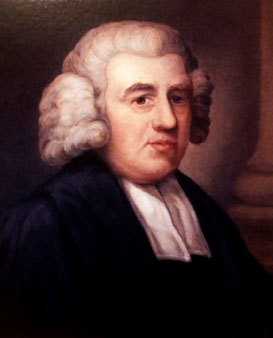
The article "A Christian's Present Blessedness" by John Newton addresses the theological doctrine of the present spiritual blessedness available to Christians in this life. Newton argues that true blessedness is not dependent on external circumstances but comes from a relationship with Jesus Christ, emphasizing assurance of acceptance, communion with God, reliance on His faithfulness, and an active spirit for service. Key Scripture references include Romans 8:31-37 and Ephesians 1:17-18, which support the importance of assurance and spiritual enlightenment in believers' lives. The practical significance is highlighted in its call for believers to pursue a deep and active faith that fosters joy and peace, which ultimately allows for fruitful engagement in God's service amidst life's trials.
Key Quotes
“A clear well-grounded habitual persuasion of our acceptance in the Beloved is attainable... to be in a state of suspense and uncertainty in a point of so great importance is painful.”
“Real communion with the Lord in his appointed means of grace is likewise an important branch of this blessedness.”
“Blessed is the man who trusts in the Lord and whose hope the Lord is; he shall not be afraid of evil tidings.”
“If the Lord gives him a heart to redeem his time to devote his strength and influence... he will account it blessedness.”
What does the Bible say about a Christian's present blessedness?
The Bible teaches that a Christian's present blessedness is found in their acceptance in Christ and their relationship with Him.
Ephesians 1:6, Romans 8:31-37
How do we know that the blessedness of a Christian is true?
The truth of a Christian's blessedness is affirmed by Scripture and personal experience of God's promises.
Ephesians 1:17-18
Why is a clear sense of acceptance important for Christians?
A clear sense of acceptance helps Christians experience true blessedness and live free from uncertainty.
Romans 8:31-37
Dear sir,
The Apostle speaks of a blessedness, which it is the design of the Gospel to impart to those who receive it. The Galatians once had it, and spoke of it. The Apostle reminds them of their loss, which is left upon record as a warning to us. His expression has led me sometimes to consider wherein a Christian's present blessedness consists: I mean that which is attainable in this state of trial, and the sense and exercise of which may be, and too often is, suspended and taken from us. It is a blessedness which, if we speak of man in a natural state, his eye has not seen, nor his ear heard so as to understand it, nor can the idea of it arise in his heart. It is no way dependent upon outward circumstances. Prosperity cannot impart it, preserve, or supply the lack of it; nor can adversity put it out of our reach. The wise cannot acquire it by dint of superior abilities; nor shall the simple miss it for lack of capacity.
The state of true believers, compared with that of others, is always blessed. If they are born from above, and united to Jesus, they are delivered from condemnation, and are heirs of eternal life, and may therefore well be accounted happy. But I consider now, not their harvest—but their first-fruits; not their portion in reversion—but the portion attainable in this life; not what they shall be in heaven—but what, in an humble attendance upon the Lord, they may be while upon earth.
There is even at present, a prize of our high calling set before us. It is much to be desired, that we had such a sense of its value as might prompt us so to run that we might obtain. I have thought this blessedness may be comprised in five particulars; though, in order to take a succinct view of the subject, some of these might be branched out into several others; but I would not, by too many subdivisions, give my letter the air of a sermon.
In the first place, a clear, well-grounded, habitual persuasion of our acceptance in the Beloved, is attainable; and though we may be safe, we cannot be said to enjoy blessedness without it. To be in a state of suspense and uncertainty in a point of so great importance, is painful; and the Lord has accordingly provided that his people may have strong consolation on this head. They are blessed, therefore, who have such views of the power, grace, and suitableness of Jesus, and the certainty and security of redemption in him, together with such a consciousness that they have anchored their hopes, and ventured their all, upon his person, work, and promise—as furnishes them with a ready answer to all the cavils of unbelief and Satan, in the Apostle's manner, Romans 8:31-37. That Paul could thus challenge and triumph over all charges and enemies, was not an appendage of His office as an apostle—but a part of his experience as a believer; and it lies equally open to us. For we have the same Gospel and the same promises as he had; nor is the efficacy of the Holy Spirit's teaching a whit weakened by length of time.
But many stop short of this. They have a hope—but it rather springs from their frames and feelings, than from a spiritual apprehension of the Redeemer's engagements and fullness, and therefore fluctuates and changes like the weather. Could they be persuaded to pray with earnestness and importunity, as the Apostle prays for them, Eph. 1:17-18, and Eph. 3:16-19, they would find a blessedness which they have not yet known; for it is said, "Ask—and you shall receive;" and it is said likewise, "You receive not—because you ask not."
Could this privilege be enjoyed singly, the natural man would have no objection to it. He would (as he thinks) be pleased to know he would be saved at last—provided that while here he might live in his sins. But the believer will not, cannot think himself blessed, unless he has likewise a conscience void of offense. This was the Apostle's daily exercise, though no one was farther from a legal spirit, or more dependent upon Jesus for acceptance. But if we live in any known sin, or allow ourselves in the customary omission of any known duty, supposing it possible in such a case to preserve a sense of our acceptance (which can hardly be supposed, for if the Spirit is grieved, our evidences decline of course)—yet we could not be easy.
If a traveler was absolutely sure of reaching his journey's end in safety; yet if he walked with a thorn in his foot, he must take every step in pain. Such a thorn will be felt in the conscience, until we are favored with a simplicity of heart, and made willing in all things, great or small, to yield obedience to the authority of the Lord's precepts, and make them the standing rule of our conduct, without willfully admitting a single exception. At the best, we shall be conscious of innumerable short-comings, and shameful defilement; but these things will not break our peace, if our hearts are upright. But if we trifle with God's Word, and connive at what we know to be wrong, we shall be weak, restless, and uncomfortable. How many, who we would hope are the children of the King, are lean from day to day, because some right-hand or right-eye evil, which they cannot persuade themselves to part with—keeps them halting between two opinions! and they are as distant from happiness, as they are from the possibility of reconciling the incompatible services of God and the world. But happy indeed is he who condemns not himself, in his conduct.
Real communion with the Lord, in his appointed means of grace, is likewise an important branch of this blessedness. They were instituted for this end, and are sufficient, by virtue of his power and Spirit, to answer it. I do not believe this enjoyment will be always equal; but I believe a comfortable sense of it, in some measure, is generally attainable. To read the Scripture, not as an attorney may read a will, merely to know the sense—but as the heir reads it, as a description and proof of his interest; to hear the Gospel as the voice of our Beloved, so as to have little leisure either for admiring the abilities or censuring the defects of the preacher; and, in prayer, to feel a liberty of pouring out our hearts before the Lord, to behold some glances of his goodness passing before us, and to breathe forth before him the temper of a child, the spirit of adoption; and thus, by beholding his glory, to be conformed more and more to his image, and to renew our strength by drawing water out of the wells of salvation— herein is blessedness! Those who have tasted it can say, It is good for me to draw near to God!
The soul thus refreshed by the water of life, is preserved from thirsting after the vanities of the world; thus instructed in the sanctuary, comes down from the mount filled with heavenly wisdom, anointed with a holy unction, and thereby qualified to judge, speak, and act in character, in all the relations and occasions of secular life. In this way, a spiritual taste is acquired, something analogous to the meaning of the word taste when applied to music or good-breeding; by which discords and improprieties are observed and avoided, as it were by instinct; and what is right is felt and followed, not so much by the force of rules, as by a habit insensibly acquired, and in which the substance of all necessary rules are, if I may so say, digested. O that I knew more of this blessedness, and more of its effects!
Another branch of blessedness, is a power of reposing ourselves and all our concerns upon the Lord's faithfulness and care; and may be considered in two respects—a reliance upon him that he will surely provide for us, guide us, protect us; be our help in trouble, our shield in danger; so that, however poor, weak, and defenseless in ourselves, we may rejoice in his all-sufficiency as our own. And farther, in consequence of this, a peaceful, humble submission to his will, under all events which, upon their first impression, are contrary to our own views and desires. Surely, in a world like this, where everything is uncertain, where we are exposed to trials on every hand, and know not but a single hour may bring forth something painful, yes dreadful, to our natural sensations, there can be no blessedness—but so far as we are thus enabled to entrust and resign all to the direction and faithfulness of the Lord our Shepherd.
For lack of more of this spirit, multitudes of professing Christians perplex and wound themselves, and dishonor their high calling, by continual anxieties, alarms, and complaints. They think nothing safe under the Lord's keeping, unless their own eye is likewise upon it; and are seldom satisfied with any of his dispensations. For though he gratifies their desires in nine instances, a refusal in the tenth spoils the relish of all, and they show the truths of the Gospel can afford them little comfort—if self is crossed. But blessed is the man who trusts in the Lord, and whose hope the Lord is. He shall not be afraid of evil tidings—he shall be kept in perfect peace, though the earth is moved, and the mountains cast into the midst of the sea!
The paper admonishes me it is time to end—and I have not room to detain you long upon the fifth particular. It belongs to a believer's blessedness, to feel his spirit cheerful and active for the Lord's service in the world. For to what other end should he wish to live? If he thought of himself only—it would be better to depart and be with Jesus immediately. But he is a debtor to his grace and love; and though, strictly, he can make no returns—yet he longs to show his thankfulness. And if the Lord gives him a heart to redeem his time, to devote his strength and influence, and lay himself out for his service, that he may be instrumental in promoting his cause, in comforting his people; or enable him to let his light shine before men, that his God and Father may be honored; he will account it blessedness. This is indeed the great end of life, and he knows it will evidently appear so at the approach of death; and therefore, while others are cumbered about many things—he esteems this the one thing needful.
October 21, 1775.
My Dear Friend,
The calls and engagements which I told you engrossed and anticipated my time when I wrote last, have continued without any intermission hitherto, and I am still far behind-hand with my business. I am willing to hope, that the case has been much the same with you, and that lack of leisure has been the only cause of my not having been pleasured with so much as a note from you since my return from London.
I am reluctant, for my own sake, to charge your silence to any unwillingness of continuing that fellowship which I have been, and still find myself, desirous to improve on my part. For though we are not agreed in our views—yet, while our preliminary agreement, to allow mutual freedom, and to exercise mutual candor, in expressing our sentiments, exists, we may, and I hope shall, be glad to hear from each other. It may seem to intimate I have a better opinion of myself than of you, that, while I seem confident your freedom will not offend me, I feel now and then a fear lest mine should prove displeasing to you. But friendship is a little suspicious when exercised with long silence; and a plain declaration of my sentiments has, more than once, put amiable and respectable people to the full trial of their patience.
I now return your sermons: I thank you for the perusal. I see much in them that I approve, and nothing in them but what I formerly espoused. But in a course of years a considerable alteration has taken place in my judgment and experience, I hope, yes I may boldly say I am sure, not for the worse. Then I was seeking, and now, through mercy, I have found, the Pearl of great price. It is both the prayer and the hope of my heart, that a day is coming when you shall make the same acknowledgment. From your Letters and Sermons, I am encouraged to address you in our Lord's words, "You are not far from the kingdom of God." I am persuaded the views you have received will not allow you to remain where you are. But fidelity obliges me to add, "Yet one thing you lack." That "one thing" I trust the Lord will both show you, and bestow upon you, in his due time.
You speak somewhere of "atoning for disobedience by repentance." Ah! my dear sir, when we are brought to estimate our disobedience, by comparing it with such a sense of the majesty, holiness, and authority of God; and the spirituality, extent, and sanction of his holy law, as he, and he only, can impress upon the heart of a sinner—we shall be convinced that nothing but the blood of the Son of God can atone for the smallest instance of disobedience!
I intimated, in my letter from London, one defect of your scheme, which will probably be the first to engage your notice. I am sure you have a desire to be useful to the souls of men; to be an instrument of reclaiming them from that course of open wickedness, or lifeless formality, in which you see them enslaved; and, in a word, to prevail with them to live soberly, righteously, and godly, according to the just and comprehensive sense you have given of those words in your sermon on Titus 2:11-12.
Now inward experience, and a pretty extensive observation of what passes abroad, have so perfectly convinced me there is but one mode of preaching which the Holy Spirit owns to the producing these effects, that I am not afraid to pronounce confidently—you will not have the desires of your heart gratified upon your present plan! The people will give you a hearing—but remain just as they are, until the Lord leads you to speak to them as criminals condemned already, and whose first essential step it is, to seek forgiveness by the blood of Jesus, and a change of heart and state by his grace, before they can bring forth any fruit acceptable to God.
As I have little time for writing, and little hope of succeeding in a way of argumentation, I have substituted, instead of a longer letter, the heads of some sermons I preached nine or ten years ago, on our Lord's discourse with Nicodemus. However, when I have heard that you are well, and that you still are disposed to correspond with me, I shall be ready to give a more particular answer to the subjects you pointed out to me in the letter you favored me with the day before I left London. I pray God to bless you in all your ways, and beg you to believe that I am, with sincerity, etc.
You complain that I have hitherto disappointed your expectations. If you have preserved my first papers, I believe you will find that I apprised you this might probably be the event, and certainly must, unless it should please God to make what I should write a means of giving you the same views with myself. I only proposed, as a witness, to bear a simple testimony to what I had seen and known. So far as you believed me sincere, and unwilling to impose upon you, I thought you might admit there was perhaps some weight in what I advanced, though for the present you could not see things in the same light. And if you allowed a possibility, that my changing the sentiments which I once held in common with yourself might be upon sufficient grounds, you would, as I trust you do, wait upon the great Teacher for his instruction; otherwise I did not expect to convince you; nor do I yet, only I am glad to put myself in his hands as an instrument.
You quite misunderstood what I spoke of the light and influence of the Spirit of God. He reveals to me no new truths—but has only shown me the meaning of his own written Word. Nor is this light a special revelation to myself—it is common to all who are born again. And thus, though you and I cannot fully agree about it—yet I almost daily meet with people, from the east, west, north, and south, whom, though I never saw them before, I find we understand each other at once. This (as you bid me be explicit) is the one thing which you at present lack. And I limited my expression to one thing, because it is our Lord's expression, and because that one thing includes many.
As I said before, I cannot give it to you—but the Lord can. And from the desire he has raised in your heart, I have a warm hope that he will. You place the whole stress of your inquiries upon human reason. I am far from discarding reason, when it is enlightened and sanctified; but spiritual things must be spiritually discerned, and can be received and discerned no other way; for to our natural reason they are foolishness; 1Co. 2:14-15; Mat. 11:25. This certain something I can no more describe to those who have not experienced it, than I could describe the taste of a pineapple to a person who had never seen one. But Scriptural proofs might be adduced in abundance—yet not so as to give a solid conviction of it—until we actually experience it.
Thus it was with my friend, whose case I sent you. When God gave him the key (as he expressed it), then the Scriptures were unlocked. His wishing himself a Deist some time before, was not from any libertine exceptions he made to the precepts of the Gospel—but from the perplexing enigmas he had found, by endeavoring to understand the doctrines by dint of reason, though reason in him was as strong and penetrating as in most men I ever met with. Upon your present plan, how can I hope to satisfy you, though even Paul asserts it, that the carnal mind is enmity against God? You will readily agree with me to the proposition as it stands in Paul's words—but I think will not so readily assent to what I have no more doubt than of my own existence, is the sense of it—That the heart of man—of any man, every man, however apparently amiable in his outward conduct, however benevolent to his fellow-creatures, however abundant and zealous in his devotions—is, by nature, enmity against God. Not indeed against the idea he himself forms of God—but against the character which God has revealed of himself in the Scripture. Man is an enemy to the justice, sovereignty, and law of God; and to the one method of salvation, which he has appointed in the Gospel, by faith alone; by such a faith as it is no more in his power to contribute to the production of in himself, than he can contribute to raising the dead, or making a world. Whatever is of the flesh is flesh, and can rise no higher than its principle—But the Lord could convince you of this by a glance of thought.
But I must break off, for lack both of room and time. Let me remind you of our agreement, to use and allow the greatest freedom, and not to be offended with what is well-meant on either side. Something in your last letter made me apprehensive you were a little displeased with me. He who knows my heart, knows that I wish you as well as my own soul.
The expression, of atoning for disobedience by repentance, was in one of your sermons. I considered it as unguarded; but, on my view of things, it were in a manner impossible I could use that expression, though perhaps too often unguarded myself.
I pray God to bless you in all your ways, and beg you to believe that I am, with sincerity, etc.

Comments
Your comment has been submitted and is awaiting moderation. Once approved, it will appear on this page.
Be the first to comment!