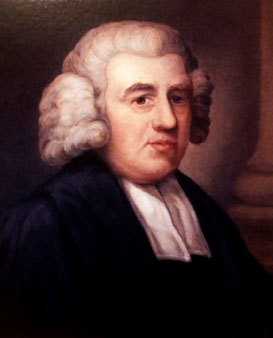
John Newton's letter to a young woman emphasizes the importance of recognizing one’s state as a sinner in need of God's grace. He articulates the principle that afflictions, such as illness, serve as a reminder of the seriousness of sin and the need for repentance, referencing John 5:14 as a critical scriptural foundation. Newton contrasts earthly accomplishments and admiration with the essential need for spiritual awakening, arguing that moral behavior devoid of true faith in Christ leaves one spiritually dead despite societal perceptions. He insists that engagement with the means of grace, such as scripture reading and prayer, is vital for spiritual growth, as these channels are ordained by God to lead to true transformation and salvation. This letter stresses that without embracing a personal relationship with God, even the most admired qualities become potential distractions that lead to spiritual peril.
Key Quotes
“He has healed all my sicknesses but be able to add He has pardoned all my sin.”
“Unless you enter the narrow way by the strait gate—all your talents and accomplishments will be snares to your feet and thorns in your eyes.”
“The promise of God has connected the appointed means and the promised end so certainly that no one who carefully attends to the former can possibly fail of attaining the latter.”
“Pray for the teaching of his Holy Spirit to enlighten your mind to see and understand the great things of his Word.”
What does the Bible say about sin and affliction?
The Bible teaches that afflictions are meant to remind us of the seriousness of sin and are often light compared to what sin deserves.
John 5:14
How do we know God's promises are true?
God's promises are true as He has connected the means of grace to their fulfillment, ensuring that those who seek Him will find Him.
Why is understanding our state as sinners important for Christians?
Recognizing our state as sinners is crucial for true repentance and appreciation of God's grace and mercy.
How can I grow spiritually as a young Christian?
Young Christians can grow spiritually by reading the Bible, engaging in prayer, and valuing communal worship.
My dear Miss___,
I thank you for your letter, and for your kind sympathy with me; but I am not much to be pitied. My trial, if I may call it one, has been very light, and sweetened with innumerable comforts and mercies. I fell in the street, and was confined to the sofa for nearly two weeks. Last Sunday I was enabled to mount the pulpit, and I am now returning into my old track; but I cannot yet walk in the street, because I cannot wear my own shoe. I trust, in the Lord's good time, I shall recover my former liberty; and, until his time comes, which is always the best, I hope I shall not desire it. I felt little pain, except for about half an hour after my fall. Perhaps my confinement may have kept me from some greater harm.
The text of my first sermon on my return to church was suggested by my own case, "See, you are well again. Stop sinning or something worse may happen to you." John 5:14. Methinks it is applicable to you likewise. You have been sick, near unto death—but the Lord has raised you up—may he enable you to consider sin as the source and cause of every sorrow; and that the afflictions the Lord sends, however trying to the flesh, are light, compared with what sin deserves; and designed, if rightly improved, to prevent still worse things which may come upon us, if we despise the chastening of the Lord. It is my heart's desire for you, that you may not only say with gratitude, "He has healed all my sicknesses," but be able to add, "He has pardoned all my sin!"
An accomplished and well-behaved young woman is an amiable object in the sight of her fellow-creatures. She may be sensible and obliging; she may dress and dance genteelly; she may play well upon the harpsichord; she may have much finer work to show than the coats and garments which Dorcas made; and, by her vivacity and good humor, she may become the idol of all her acquaintances; but, if she does not know her state as a sinner; if she admires herself, and is pleased with the admiration of others, while her heart is cold to the love and glory of God our Savior—if she has no taste for prayer or praise; if her mind is engrossed by the pleasures and prospects of this poor world—she is dead while she lives! In the sight of God her Maker, she is insensible and ungrateful, she is poor, blind, and miserable!
When you were a child, I could observe in you, not only the sprightliness common to children—but indications of sense and mental powers above the common standard. Your character, I suppose by now, is formed, your education finished, and your powers expanded. Happy are you, if, with these advantages, you should be led to devote yourself to the Lord in early life. Then He will guide and bless you, and make you a blessing in all your relationships. You will live honorably and usefully—and die, whether sooner or later, comfortably. You will have a double relish for every temporal comfort, because you will see His hand providing and bestowing it! And in times of trouble, which you will surely meet with, you will have a refuge, a hiding-place, a present and effectual Helper—when the help of man would be utterly in vain.
But, unless you enter the narrow way by the strait gate—all your talents and accomplishments will be snares to your feet, and thorns in your eyes! Though the world, at first, may appear like a beautiful palace, or a pleasant garden—it is enchanted ground—it is all illusion! And when, at last, the charm is broken—you will find yourself in a desolate wilderness. May the Lord preserve you from those awful disappointments and bitter reflections, which are the inevitable consequences of living without God in the world!
Shall I advise you to change your own heart, to make yourself (what you must be if ever you are a Christian indeed) a new creature? This would be no less vain, than if I advised you to fly in the air, or to touch the stars with your finger! Yet there is something within the reach of your ability, and which if you neglect, the fault will be properly your own. This is, the use of what we call the means of grace. The promise of God has connected the appointed means and the promised end; so certainly, that no one, who carefully attends to the former, can possibly fail of attaining the latter. And no one, to whom the Lord's word of salvation is sent, shall finally miss of happiness, unless the appointed means of attaining it are willfully neglected. You can read—the Bible is in your hands—read it therefore attentively; by it God speaks to you, and he deserves to be heard. Your heart tells you that he ought to be worshiped. Let this conviction engage you to pray, and especially pray for the teaching of his Holy Spirit, to enlighten your mind to see and understand the great things of his Word. Reverence his public worship. Where two or three are met in his name, he has said, I am in the midst of them. Prize the preaching of the gospel when you can have it, for ordinarily faith comes by hearing. If you persevere in this way, you shall find that he is able and willing to do that for you—that which you cannot possibly do for yourself.
I commend you to the care and blessing of the Lord. I hope you will always believe me to be.
Your affectionate friend,
John Newton

Comments
Your comment has been submitted and is awaiting moderation. Once approved, it will appear on this page.
Be the first to comment!