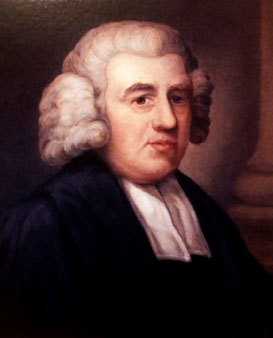
The main theological topic addressed in John Newton's article "Union With Christ" is the profound and transformative nature of the believer's union with Christ. Newton argues that this union is characterized by its richness in privilege, deep intimacy, and unshakeable security, which cannot be satisfactorily depicted using earthly analogies. He illustrates this union through four comparisons, including believers being anchored to Christ as a solid rock, as branches connected to the vine, as members of a body incorporated in Christ, and as heirs of God through His grace. Newton supports his assertions with Scripture references including 1 John 17:21, which emphasizes the oneness of Christ and believers, and Ezekiel 16:1-63, which depicts believers’ transformation through their union with Christ. Ultimately, this union is presented as foundational to the believer's identity and life, urging them to walk in a manner worthy of the God who calls them into His kingdom.
Key Quotes
“The union of a believer with Christ is so intimate, so unalterable, so rich in privilege, so powerful in influence that it cannot be fully represented by any description or similitude taken from earthly things.”
“By nature we are separated from the divine life as branches broken off, withered, and fruitless. But grace through faith unites us to Christ, the living Vine.”
“Well may we say, What has God wrought? How inviolable is the security, how inestimable the privilege, how inexpressible the happiness of a believer!”
“How greatly is he indebted to grace! He was once afar off, but is brought near to God by the blood of Christ; he was once a child of wrath, but is now an heir of everlasting life.”
What does the Bible say about union with Christ?
The Bible teaches that believers are united with Christ, symbolizing an intimate and inseparable relationship, as seen in passages like John 17:21.
John 15:1-5, Ephesians 4:15-16, John 17:21
Why is union with Christ important for Christians?
Union with Christ is paramount for Christians as it ensures their salvation, identity, and empowerment for godly living.
Romans 4:5-8, John 15:5, Ephesians 2:19-22
How do we know the doctrine of union with Christ is true?
The truth of the doctrine of union with Christ is evidenced in Scripture and the transformative experiences of believers throughout history.
Galatians 2:20, Romans 6:5, Ephesians 2:4-6
Dear Sir,
The union of a believer with Christ is so intimate, so unalterable, so rich in privilege, so powerful in influence, that it cannot be fully represented by any description or similitude taken from earthly things. The mind, like the sight, is incapable of apprehending a great object, without viewing it on different sides. To help our weakness, the nature of this union is illustrated, in the Scripture, by four comparisons, each throwing additional light on the subject, yet all falling short of the thing signified.
In our natural state, we are driven and tossed about, by the changing winds of opinion, and the waves of trouble, which hourly disturb and threaten us upon the uncertain sea of human life. But faith, uniting us to Christ, fixes us upon a sure foundation, the Rock of Ages, where we stand immovable, though storms and floods unite their force against us.
By nature we are separated from the divine life, as branches broken off, withered and fruitless. But grace, through faith, unites us to Christ the living Vine, from whom, as the root of all fullness, a constant supply of sap and influence is derived into each of his mystical branches, enabling them to bring forth fruit unto God, and to persevere and abound therein.
By nature we are hateful and abominable in the sight of a holy God, and full of enmity and hatred towards each other. By faith, uniting us to Christ, we have fellowship with the Father and the Son, and joint communion among ourselves; even as the members of the same body have each of them union, communion, and sympathy, with the head, and with their fellow-members.
In our natural estate, we were cast out naked and destitute, without pity, and without help, Ezek. 16:1-63; but faith, uniting us to Christ, interests us in his righteousness, his riches, and his honors. Our Redeemer is our husband; our debts are paid, our settlements secured, and our names changed.
Thus the Lord Jesus, in declaring himself the foundation, root, head, and husband, of his people, takes in all the ideas we can frame of an intimate, vital, and inseparable union. Yet all these fall short of truth; and he has given us one further similitude, of which we can by no means form a just conception until we shall be brought to see him as he is in his kingdom. John 27:21: "That they all may be one, as you, Father, are in me, and I in you; that they also may be one in us."
Well may we say, What has God wrought! How inviolable is the security, how inestimable the privilege, how inexpressible the happiness, of a believer! How greatly is he indebted to grace! He was once afar off, but he is brought near to God by the blood of Christ: he was once a child of wrath, but is now an heir of everlasting life. How strong then are his obligations to walk worthy of God, who has called him to his kingdom and glory!
PREFACE
The memoirs of many are written at the particular request of their relations; but in publishing these of the late John Newton, I profess myself a volunteer; and my motives were the following: When I perceived my venerable friend bending under a weight of years, and considered how soon, from the very course of nature, the world must lose so valuable an instructor and example; when I reflected how common it is for hasty and inaccurate accounts of extraordinary characters to be obtruded on the public by debased writers, whenever more authentic documents are lacking above all; when I considered how striking a display such a life affords of the nature of true religion, of the power of Divine grace, of the mysterious but all-wise course of Divine Providence, and of the encouragement afforded for our dependence upon that Providence in the most trying circumstances— I say, on these accounts, I felt that the leading features of such a character of Mr. John Newton's should not be neglected, while it was easy to authenticate them correctly.
Besides which, I have observed a lack of books of a certain class for young people; and have often been inquired of by Christian parents for publications that might be interesting to their families, and yet tend to promote their best interests. The number, however, of this kind which I have seen, and which appeared helpful, is but small. For, as the characters and sentiments of some men become moral blights in society men, whose mouths seldom open but, like that of sepulchers, they reveal the putridity they contain, and infect more or less whoever ventures within their baneful influence; so the holy subject of these Memoirs was happily a remarkable instance of the reverse; the change that took place in his heart, after such a course of profligacy, affords a convincing demonstration of the truth and force of Christianity. Instead of proceeding as a blight in society, he became a blessing! His life was a striking example of the beneficial effects of the Gospel; and that not only from the pulpit, and by his pen—but also by his conversation in the large circle of his acquaintances, of which there is yet living a multitude of witnesses.
Impressed, therefore, with the advantages which I conceived would result from the publication of these Memoirs, I communicated my design some years ago to Mr. Newton. Whatever tended to promote that cause in which his heart had been long engaged, I was sure would not fail to obtain his concurrence. He accordingly promised to afford whatever letters and materials might be necessary, beyond those which his printed "Narrative" contained. He promised also to read over and revise whatever was added from my own observation; and he soon after brought me an account in writing, containing everything memorial which he recollected before the commencement of his "Narrative." I shall, therefore, detain the reader no longer than to assure him that the whole of the following Memoirs (except what relates to Mr. Newton's character) was submitted to him in MS. while he was capable of correcting it, and that it received his sanction.
Richard Cecil, April, 1808.
MEMOIRS
These Memoirs seem naturally to commence with the Account mentioned in the Preface, and which I here transcribe.
"I was born in London the 24th of July, 1725. My parents, though not wealthy, were respectable. My father was many years master of a ship in the Mediterranean trade. In the year 1748 he went Governor of York Fort in Hudson's Bay, where he died in the year 1750.
"My mother was a Dissenter, a pious woman, and a member of the late Dr. Jennings's Church. She was weak and sickly in health; and loved retirement; and, as I was her only child, she made it the chief business and pleasure of her life to instruct me, and bring me up in the nurture and admonition of the Lord. I have been told, that, from my birth, she had, in her mind, devoted me to the Christian ministry; and that, had she lived until I was of a proper age, I was to have been sent to Scotland to be educated. But the Lord had appointed otherwise. My mother died before I was seven years of age.
"I was rather of a sedentary turn, not active and playful, as boys commonly are—but seemed as willing to learn as my mother was to teach me. I had some mental capacity, and a retentive memory. When I was four years old, I could read (hard names excepted) as well as I can now; and could likewise repeat the answers to the questions in the Assembly's Shorter Catechism, with the Scripture proofs; and all Isaac Watts' smaller Catechisms, and his Children's Hymns.
"When my father returned from sea, after my mother's death, he married again. My new mother was the daughter of a substantial grazier. She seemed willing to adopt and bring me up; but, after two or three years, she had a son of her own, who engrossed the old gentleman's notice. My father was a very sensible, and a moral man, as the world rates morality; but neither he nor my step-mother was under the impressions of genuine religion. I was therefore much left to myself—to mingle with idle and wicked boys—and soon learned their ways!
"I never was at school but about two years; from my eighth to my tenth year. It was a boarding-school, at Stratford, in Essex. Though my father left me much to run about the streets—yet, when under his eye, he kept me at a great distance. I am persuaded he loved me—but he seemed not willing that I should know it. I was with him in a state of fear and bondage. His sternness, together with the severity of my schoolmaster, broke and overawed my spirit, and almost made me a dolt; so that part of the two years I was at school, instead of making a progress, I nearly forgot all that my good mother had taught me!
"The day I was eleven years old, I went on board my father's ship in Longreach. I made five voyages with him to the Mediterranean. In the course of the last voyage, he left me some months in Spain, with a merchant, a particular friend of his. With him I might have done well, if I had behaved well; but, by this time, my sinful propensities had gathered strength by habit! I was very wicked, and therefore very foolish; and, being my own worst enemy, I seemed determined that nobody should be my friend.
"My father left the sea in the year 1742. I made one voyage afterwards to Venice; and, soon after my return, was pressed into military service on board the Harwich. Then began my awfully mad career, as recorded in the 'Narrative;' to which, and to the 'Letters to a Wife,' I must refer you for any further dates and incidents."
John Newton, December 19, 1795
A few articles may be added to this account from the "Narrative," where we find that his pious mother stored his "memory with whole chapters, and smaller portions of Scripture, catechisms, hymns, and Christian poems; and often commended him with many prayers and tears to God." In his sixth year, he began to learn Latin, though the intended plan of his education was soon broken. He lost his pious mother, July 11th, 1782.
We also find, that, after his father's second marriage, John was sent to the school above-mentioned; and, in the last of the two years he spent there, a new teacher came, who observed and suited his temper. He learned Latin, therefore, with great eagerness; and, before he was ten years old. But, by being pushed forward too fast, and not properly grounded (a method too common in inferior schools) he soon lost all he had learned.
In the next and most remarkable period of Mr. Newton's life, we must be conducted by the above-mentioned "Narrative". It has been observed, that, at eleven years of age, he was taken by his father to sea. His father was a man of remarkably good sense, and great knowledge of the world. He took much care of his son's morals—but could not supply a mother's part. The father had been educated at a Jesuit's College, near Seville in Spain; and had an air of such distance and severity in his carriage—as discouraged his son, who always was in fear when before him, which deprived him of that influence he might otherwise have had.
From this time to the year 1742, Mr. Newton made several voyages—but at considerable intervals. These intervals were chiefly spent in the country, excepting a few months in his fifteenth year, when he was placed, with a very advantageous prospect, at Spain, already mentioned.
About this period of his life, with a temper and conduct exceedingly vacillating, he was often disturbed with religious convictions; and, being from a child fond of reading, he met with Bennett's "Christian Oratory," and, though he understood little of it, the course of life it recommended appeared very desirable to him. He therefore began to pray, to read the Scriptures, to keep a diary, and thought himself 'religious'; but soon became weary of it, and gave it up.
He then learned to curse and to blaspheme; and was exceedingly wicked when out of the view of his parents, though at so early a period.
Upon his being thrown from a horse near a dangerous hedge-row, his conscience suggested to him the dreadful consequences of appearing in such a wicked state before God. This put him, though but for a time, upon breaking off his profane practices; but the consequence of these struggles between sin and conscience was, that on every relapse—he sunk into still greater depths of wickedness! He was roused again, by the loss of a companion who had agreed to go with him one Sunday on board a 'man of war' ship. Mr. Newton providentially coming too late, the boat had gone without him, and had sunk, by which his companion and several others were drowned. He was exceedingly affected, at the funeral of this companion, to think that by the delay of a few minutes (which at the time occasioned him much anger) his life had been preserved; but this also was soon forgotten. The perusal of the "Family Instructor" produced another temporary reformation. In short, he took up and laid aside a religious profession three or four different times, before he was sixteen years of age.
"All this while," says he, "my heart was insincere. I often saw the necessity of religion, as a means of escaping hell; but I loved sin, and was unwilling to forsake it. I was so strangely blind and stupid, that, sometimes when I have been determined upon things which I knew were sinful, I could not go on quietly until I had first dispatched my ordinary task of prayer—in which I have grudged every moment of the time! When this was finished, my conscience was in some measure pacified, and I could rush into folly with little remorse!"
But his last reform was the most remarkable. "Of this period," says he, "at least of some part of it, I may say, in the Apostle's words, 'After the strictest sect of our religion, I lived a Pharisee!' I did everything that might be expected from a person entirely ignorant of God's righteousness, and desirous to establish his own. I spent the greatest part of every day in reading the Scriptures, and in meditation and prayer. I fasted often; I even abstained from all animal food for three months; I would hardly answer a question for fear of speaking an idle word; I seemed to bemoan my former miscarriages very earnestly, and sometimes with tears. In short, I became an Ascetic, and endeavored, as far as my situation would permit, to renounce going into the world, that I might avoid temptation."
This reformation, it seems, continued for more than two years. But he adds, "it was a poor religion! It left me in many respects under the power of sin; and, so far as it prevailed, only tended to make me gloomy, stupid, unsociable, and useless."
That it was a poor religion, and quite unlike that which he afterwards possessed, will appear from what immediately follows—for, had it been taken up upon more Scriptural ground, and attended with that internal evidence and satisfaction which true religion only brings—he could not so soon have fallen a dupe to such an infidel writer as Lord Shaftesbury. It was at a little shop in Holland, that he first met a volume of Shaftesbury's "Characteristics." The infidel book, called by Shaftesbury a "Rhapsody," suited the romantic turn of his mind. Unaware of its tendency, he imagined he had found a valuable guide. This book was always in his hand, until he could nearly repeat the whole "Rhapsody." Though it produced no immediate effect, it operated like a slow poison, and prepared the way for all that followed.
About the year 1742, his father, having lately come from a voyage, and not intending to return to sea, was contriving for John's settlement in the world. But, to settle a youth who had no spirit for business, who knew but little of men or things, who was of a romantic turn, and as he expressed it—a medley of religion, philosophy, and indolence, and quite averse to order—must prove a great difficulty.
At length a merchant in Liverpool, an intimate friend of his father, and afterwards a singular friend to the son, offered to send him for some years to Jamaica, and undertook the charge of his future welfare, This was consented to, and preparation made for the voyage, which was to leave the following week. In the meantime, he was sent by his father on some business to a place, a few miles beyond Maidstone, in Kent. But the journey, which was designed to last but three or four days, gave such a turn to his mind as roused him from his habitual indolence, and produced a series of important and interesting occurrences.
A few days before this intended journey, he received an invitation to visit some distant relations in Kent. They were particular friends of John's mother, who died at their house in Kent. But a coolness having taken place upon his father's second marriage, all fellowship between them had ceased. As his road lay within half a mile of their house, and he obtained his father's permission to call on them, he went there, and met with the kindest reception from these relatives. They had two daughters. It seems the elder sister, "Polly" had been intended, by both the mothers, for his future wife. Almost at first sight of this girl, then under fourteen years of age, he was impressed with such an affection for her, as appears to have equaled all that the writers of romance have ever imagined.
"I soon lost," says he, "all sense of religion, and became deaf to the remonstrance's of conscience and prudence; but my loving regard for her was always the same; and I may, perhaps, venture to say, that none of the scenes of misery and wickedness I afterwards experienced ever banished her a single hour together, from my waking thoughts for the seven following years."
His heart being now riveted to a particular object, everything with which he was concerned appeared in a new light. He could not now bear the thought of living at such a distance as Jamaica for four or five years—and therefore determined not to go there! He dared not communicate with his father on this point; but, instead of three days, he staid three weeks in Kent, until the ship had sailed without him—and then he returned to London. His father, though highly displeased, became reconciled; and, in a little time, he sailed with a friend of his father, to Venice.
In this voyage, being a common sailor, and exposed to the company of His comrades—he began to relax from the sobriety which he had preserved, in some degree, for more than two years. Sometimes, pierced with convictions, he made a few faint efforts, as formerly, to stop. And, though not yet absolutely profligate, he has making large strides towards a total apostasy from God. At length he received a remarkable check by a dream, which made a very strong, though not abiding, impression upon his mind.
I shall relate this dream in his own words, referring to his "Narrative" those who wish to know his opinion of dreams, and his application of this one in particular to his own circumstances.
"In my dream—the scene presented to my imagination was the harbor of Venice, where we had lately been. I thought it was night, and my turn for 'watch' upon the deck; and that, as I was walking to and fro by myself, a person came to me (I do not remember from whence) and brought me a ring, with an express charge to keep it carefully; assuring me, that, while I preserved that ring, I would be happy and successful; but, if I lost or parted with it, I must expect nothing but trouble and misery. I accepted the present and the terms willingly, not in the least doubting my own care to preserve it, and highly satisfied to have my happiness in my own keeping.
"I was engaged in these thoughts, when a second person came to me, and, observing the ring on my finger, took occasion to ask me some questions concerning it. I readily told him its virtues; and his answer expressed a surprise at my weakness, in expecting such effects from a mere ring! He reasoned with me some time, upon the impossibility of the thing; and at length urged me, in direct terms, to throw it away. At first I was shocked at the proposal; but his insinuations prevailed. I began to reason and doubt, and at last plucked the ring off my finger, and dropped it over the ship's side into the water, which it had no sooner touched, than I saw, at the same instant, a terrible fire burst out from a range of mountains (a part of the Alps) which appeared at some distance behind the city of Venice. I saw the hills as distinct as if awake, and that they were all in flames!
"I perceived, too late, my folly; and my tempter, with an air of insult, informed me, that all the mercy which God had in reserve for me—was comprised in that ring, which I had willfully thrown away! I understood that I must now go with him to the burning mountains, and that all the flames which I saw, were kindled on my account. I trembled, and was in a great agony; so that it was surprising that I did not then awake; but my dream continued.
"And, when I thought myself upon me point of a constrained departure for the fiery mountains, and stood self-condemned, without plea or hope, suddenly, either a third person, or perhaps the same who brought the ring at first (I am not certain which), came to me, and demanded the cause of my grief. I told him the plain case, confessing that I had ruined myself willfully—and deserved no pity. He blamed my rashness, and asked if I would be wiser, supposing I had my ring again. I could hardly answer to this, for I thought it was gone beyond recall. I believe, indeed, I had not time to answer, before I saw this unexpected friend dive down under the water, just in the spot where I had dropped it; and he soon returned, bringing the ring with him! The moment that he came on board, the flames in the mountains were extinguished, and my seducer left me!
"Then was the prey taken from the hand of the mighty, and the lawful captive delivered. My fears were at an end, and with joy and gratitude I approached my kind deliverer to receive the ring again. But he refused to return it, and spoke to this effect: 'If you should be entrusted with this ring again, you would very soon bring yourself into the same distress; you are not able to keep it; but I will preserve it for you, and, whenever it is needful, will produce it in your behalf. Upon this I awoke, in a state of mind not to be described; I could hardly eat, or sleep, or transact my necessary business, for two or three days. But the impression of my dream soon wore off, and in a little time I totally forgot it; and I think it hardly occurred to my mind again until several years afterwards."
Nothing remarkable took place in the following part of that voyage. Mr. Newton returned home in December 1743; and, repeating his visit to Kent, protracted his stay in the same imprudent manner he had done before. This so disappointed his father's designs for his interest, as almost to induce him to disown his son! Before any suitable employment offered again, this thoughtless son was conscripted by a lieutenant of the Harwich 'man of war', who immediately impressed and carried him on board. This was at a critical juncture, as the French fleets were hovering upon our coast. Here a new scene of life was presented; and, for about a month, much hardship endured. As a war was daily expected, his father was willing that John should remain in the navy, and procured him a recommendation to the captain, who sent him upon the quarter-deck as a midshipman. He might now have had ease and respect—had it not been for his unsettled mind and wild behavior. The companions he met with here, completed the ruin of his moral principles; though he affected to talk of virtue, and preserved some decency—yet his delight and habitual practice was wickedness.
His principal companion was a person of talents and regard—an expert and plausible infidel, whose zeal was equal to his address. "I have been told," says Mr. Newton, "that afterwards he was overtaken in a voyage from Lisbon in a violent storm; the vessel and people escaped—but a great wave broke on board, and swept him into eternity!" Being fond of this man's company, Mr. Newton aimed to display what smattering of reading he had; his companion, perceiving that Mr. Newton had not lost all the restraints of conscience, at first spoke in favor of religion; and, having gained Mr. Newton's confidence, and perceiving his attachment to the "Characteristics," he soon convinced his pupil that he had never understood that book. By objections and arguments, Mr. Newton's depraved heart was soon gained. He plunged into infidelity with all his spirit; and the hopes and comforts of the Gospel were renounced at the very time when every other comfort was about to fail.
In December, 1744, the Harwich was in the Downs, bound to the East Indies. The captain gave Mr. Newton permission to go on shore for a day—but, with his usual thoughtlessness, and following the dictates of a restless passion, he went to take a last visit of the object with which he was so infatuated. On new year's day he returned to the ship. The captain was so highly displeased at this rash step, that it ever after occasioned the loss of his favor.
At length they sailed from Spithead, with a very large fleet. They put in to Torbay, with a change of wind—but sailed the next day on its becoming fair weather. Several of the fleet were lost at leaving the place—but the following night the whole fleet was greatly endangered upon the coast of Cornwall, by a storm from the southward. The ship on which Mr. Newton was aboard escaped unhurt, though several times in danger of being run down by other vessels—but many suffered much; this occasioned their going back to Plymouth.
While they lay at Plymouth, Mr. Newton heard that his father, who had a financial interest in some of the ships lately lost, had come down to Torbay. He thought that, if he could see his father, he might easily be introduced into a service, which would be better than pursuing a long and uncertain voyage to the East Indies. It was his habit in those unhappy days, never to deliberate. As soon as the thought occurred, he resolved to leave the ship at all events; he did so, and in the worst manner possible.
He was sent one day in the boat to prevent others from desertion—but betrayed his trust, and deserted himself. Not knowing which road to take, and fearing to inquire lest he should be suspected—yet having some general idea of the country, he found, after he had traveled some miles, that he was on the road to Dartmouth. That day and part of the next day, everything seemed to go on smoothly. He thought that he would reach his father in about a two hour walk—when he was met by a small party of soldiers, whom he could not avoid or deceive; they brought him back to Plymouth, through the streets of which he proceeded guarded like a felon. Full of indignation, shame, and fear—he was confined two days in the guard-house; then sent on ship-board, and kept a while in irons; next he was publicly stripped and whipped, degraded from his office, and all his former companions forbidden to show him the least favor—or even to speak to him. As midshipman he had been entitled to command the ship, but being sufficiently haughty and vain, he was now brought down to a level with the lowest, and exposed to the insults of all. The state of his mind at this time, can only be properly expressed in his own words:
"As my present situation was uncomfortable, my future prospects were still worse; the evils I suffered were likely to grow heavier every day. While my catastrophe was recent, the officers and my fellow sailors were somewhat disposed to screen me from ill usage—but, during the little time I remained with them afterwards, I found them cool very fast in their endeavors to protect me. Indeed, they could not avoid such conduct without running a great risk of sharing punishment with me; for the captain, though in general a humane man, who behaved very well to the ship's company, was almost implacable in his resentment towards me, and took several occasions to show it! And the voyage was expected to be (as it proved) for five years! Yet nothing I either felt or feared distressed me so much as to see myself thus forcibly torn away from the object of my affections, under a great improbability of ever seeing her again, and a much greater improbability of returning in such a manner as would give me hope of seeing her become my wife.
"Thus I was as miserable on all sides—as could well be imagined. My heart was filled with the most excruciating passions: eager desire, bitter rage, and black despair!
"Every hour exposed me to some new insult and hardship, with no hope of relief or mitigation; no friend to take my part, nor to listen to my distress. Whether I looked inward or outward, I could perceive nothing but darkness and misery. I think no case, except that of a conscience wounded by the wrath of God, could be more dreadful than mine. I cannot express with what wishfulness and regret I cast my last looks upon the English shore; I kept my eyes fixed upon it, until, the ship's distance increasing, it insensibly disappeared. And, when I could see it no longer, I was tempted to throw myself into the sea, which (according to the wicked infidel system I had adopted) would put a end to all my sorrows at once. But the secret hand of God restrained me!"
During His passage to Madeira, Mr. Newton describes himself as a prey to the most gloomy thoughts. Though he had deserved all, and more than all the harsh treatment which he had met with from the captain—yet his pride suggested that he had been done a gross injustice. "And this so," says he, "wrought upon my bewitched heart, that I actually formed designs against the captain's life, and this was one reason which made me willing to prolong my own life. I was sometimes divided between the two. The Lord had now, to all appearance, given me up to judicial hardness of heart. I was capable of any wickedness. I had not the least fear of God before my eyes, nor (so far as I remember) the least sensibility of conscience. I was possessed with so strong a spirit of delusion, that I believed my own lie, and was firmly persuaded that after death—I should cease to be. Yet the Lord preserved me! Some intervals of sober reflection would at times take place; when I have chosen death rather than life—a ray of hope would come in (though there was little probability for such a hope) that I should yet see better days, that I might return to England, and have my wishes crowned, if I did not willfully throw myself away. In a word, my love to my dear "Polly" was now the only restraint I had left; though I neither feared God nor regarded man, I could not bear that she should think meanly of me when I was dead."
Mr. Newton had now been at Madeira some time. The business of the fleet being completed, they were to sail the following day; on that memorable morning he happened to sleep late in bed, and would have continued to sleep—but that an old companion, a midshipman, came down, between jest and earnest—and bid him rise. As he did not immediately comply, the midshipman cut down the hammock in which he lay; this obliged him to dress himself; and, though very angry, he dared not resent it—but was little aware that this person, without design, was a special instrument of God's providence.
Mr. Newton said little—but went upon deck, where he saw a man putting his own clothes into a boat, and informed Mr. Newton he was going to leave the ship. Upon inquiry, he found that two men from a Guinea ship, which lay near them, had entered on board the Harwich, and that the commodore (the late, Sir George Pecock) had ordered the captain to exchange two others in their place. Inflamed with this information, Mr. Newton requested that the boat be detained a few minutes; he then entreated the lieutenants to intercede with the captain that he might be dismissed upon this occasion. Though he had formerly behaved badly to these officer, they were moved with pity, and were disposed to serve him. The captain, who had refused to exchange him at Plymouth, though requested by Admiral Medley, was easily prevailed with now. In little more than half an hour from his being asleep in bed—he found himself discharged, and safely on board another ship; the events depending upon this change, will show it to have been the most critical and important.
The ship he now entered was bound to Sierra Leone, and the adjacent parts of what is called the Windward Coast of Africa. The commander knew his father, received him kindly, and made professions of assistance; and probably would have been his friend, if, instead of profiting by his former errors, he had not pursued a course, which if possible, was worse. He was under some restraint on board the Harwich—but, being now among strangers, he could sin without disguise.
"I well remember," says he, "that, while I was passing from one ship to the other, I rejoiced in the exchange, with this reflection, that I might now be as abandoned as I pleased, without any control. And, from this time, I was exceedingly vile indeed, little, if anything, short of that animated description of an almost irrecoverable state, which we have in 2 Peter 2:14 "With eyes full of adultery, they never stop sinning; they seduce the unstable; they are experts in greed—an accursed brood!" I not only sinned with a high hand myself—but made it my study to tempt and seduce others upon every occasion; nay, I eagerly sought occasion, sometimes to my own hazard and hurt."
By this conduct he soon forfeited the favor of his captain; for, besides being careless and disobedient, upon some imagined affront, he employed his mischievous wit in making a song to ridicule the captain—as to his ship, his designs, and his person; and he taught it to the whole ship's company!
He thus proceeded for about six months, at which time the ship was preparing to leave the coast—but, a few days before she sailed, the captain died. Mr. Newton was not upon much better terms with his mate, who succeeded to the command, and upon some occasion had treated him badly. He felt certain, that if he went in the ship to the West Indies, the mate would have put him on board a man of war, a consequence more dreadful to him than death itself! To avoid this, he determined to remain in Africa, and pleased himself with imagining it would be an opportunity of improving his fortune.
Upon that part of the coast there were a few white men settled, whose business it was to purchase slaves, etc. and sell them to the ships at an higher price. One of these, who had first landed in circumstances similar to Mr. Newton's, had acquired considerable wealth. This man had been in England, and was returning in the same vessel with Mr. Newton, of which he owned a quarter part. His example impressed Mr. Newton with hopes of the same success; and he obtained his discharge upon condition of entering into the trader's service, to whose generosity he trusted without the precaution of terms. He received, however, no compensation for his time on board the ship—but a bill upon the owners in England; which, in consequence of their failure, was never paid; the day, therefore, on which the vessel sailed, he landed upon the island of Benanoes, like one shipwrecked, with little more than the clothes upon his back.
"The two following years," says he, "of which I am now to give some account, will seem as an absolute blank in my life—but, I have seen frequent cause since to admire the mercy of God in banishing me to those distant parts, and almost excluding me from all society, at a time when I was filled with evil and mischief; and, like one infected with a pestilence, was capable of spreading my infectious evil, wherever I went! But the Lord wisely placed me where I could do little harm. The few I had to converse with were too much like myself; and I was soon brought into such abject circumstances, that I was too low to have any influence. I was rather shunned and despised, than imitated; there being few even of the Negroes themselves, during the first year of my residence—but thought themselves too good to speak to me. I was an outcast, ready to perish—but the Lord beheld me with mercy; he even now bid me to live; and I can only ascribe it to his secret upholding power, that what I suffered in this interval, did not bereave me either of my life or senses."
Mr. Newton's new master had resided near Cape Mount—but at this time had settled at the Plantanes, on the largest of the three islands. It is low and sandy, about two miles in circumference, and almost covered with palm-trees. They immediately began to build a house. Mr. Newton had some desire to retrieve his time and character, and might have lived tolerably well with his master, if this man had not been much under the direction of a black woman, who lived with him as a wife, and influenced him against his new servant. She was a person of some consequence in her own country, and he owed his first rise to her influence.
This woman, for reasons not known, was strangely prejudiced against Mr. Newton from the first. He also had unhappily a severe fit of illness, which attacked him before he had opportunity to show what he could or would do in the service of his master. Mr. Newton was sick when his master sailed to Rio Nuna, and was left in the hands of this cruel black woman. He was taken some care of at first—but, not soon recovering, her attention was wearied, and she entirely neglected him. Sometimes it was with difficulty he could procure a draught of cold water when burning with a fever! His bed was a mat, spread upon a board, with a log for his pillow. Upon His appetite returning, after the fever left him, he would gladly have eaten—but no one gave him any food. She lived in plenty—but scarcely allowed him sufficient to sustain life, except now and then, when in the highest good humor, she would send him scraps from her own plate after she had dined. And this (so greatly was he humbled) he received with thanks and eagerness, as the most needy beggar does an alms.
"Once," says he, "I well remember, I was called to receive this bounty from her own hand—but, being exceedingly weak and feeble, I dropped the plate. Those who live in plenty can hardly conceive how this loss touched me—but she had the cruelty to laugh at my disappointment; and, though the table was covered with dishes (for she lived much in the European manner), she refused to give me any more. My distress has been at times so great, as to compel me to go by night, and pull up roots in the plantation (though at the risk of being punished as a thief), which I have eaten raw upon the spot, for fear of discovery. The roots I speak of are very wholesome food, when boiled or roasted—but as unfit to be eaten raw. The consequence of this diet, which, after the first experiment, I always expected, and seldom missed, was to make me vomit; so that I have often returned as empty as I went; yet necessity urged me to repeat the trial several times. I have sometimes been relieved by strangers; yes, even by the black slaves—who have secretly brought me victuals (for they dared not be seen to do it) from their own slender pittance. Next to abject poverty, nothing sits harder upon the mind than scorn and contempt, and of this likewise I had an abundant measure."
When slowly recovering, the same woman would sometimes pay Mr. Newton a visit; not to pity or relieve—but to insult him. She would call him worthless and indolent, and compel him to walk; which when he could scarcely do, she would set her attendants to mimic his motions, to clap their hands, laugh, throw limes at him, and sometimes they would even throw stones. But though her attendants were forced to join in this treatment, Mr. Newton was rather pitied than scorned, by the lowest of her slaves, on her departure.
When his master returned from the voyage, Mr. Newton complained of ill usage—but was not believed. And, as he complained in her hearing, he fared worse for it. He accompanied his master in his second voyage, and they agreed pretty well, until his master was persuaded by a another trader that Mr. Newton was dishonest. This seems to be the only vice with which he could not be charged; as his honesty seemed to be the last remains of a good education which he could now boast of. And though his great distress might have been a strong temptation to fraud, it seems he never once thought of defrauding his master in the smallest matter. The charge, however, was believed, and he was condemned without evidence. From that time he was treated very harshly; whenever his master left the vessel, he was locked upon deck with a pint of rice for his day's allowance, nor had he any relief until his master's return.
"Indeed," says he, "I believe I would have been nearly starved—but for an opportunity of catching fish sometimes. When fowls were killed for my master's own use, I seldom was allowed any part but the entrails, to bait my hooks with; and, at the changing of the tides, when the current was still, I used generally to fish, (at other times it was not practicable,) and I very often succeeded. If I saw a fish upon my hook, my joy was little less than any other person would have found in the accomplishment of the scheme he had most at heart. Such a fish, hastily broiled, or rather half burnt, without salt, sauce, or bread, has afforded me a delicious meal. If I caught none, I might, if I could, sleep away my hunger until the next return of low tide, and then try again.
"Nor did I suffer less from the inclemency of the weather, and the lack of clothes. The rainy season was now advancing; my whole wardrobe was a shirt, a pair of trowsers, a cotton handkerchief instead of a cap, and a cotton cloth about two yards long; and, thus clothed, I have been exposed for twenty, thirty, perhaps near forty hours together, in incessant rains accompanied with strong gales of wind, without the least shelter, when my master was on shore. I feel to this day some faint returns of the violent pains I then contracted. The excessive cold and wet I endured in that voyage, and so soon after I had recovered from a long sickness, quite broke my constitution and my spirits; the latter were soon restored—but the effects of the former still remain with me, as a needful memento of the service and the wages of sin."
In about two months they returned, and the rest of the time which Mr. Newton spent with his master was chiefly at the Plantanes, and under the same regimen as has been mentioned. His heart was now bowed down—but not at all to a wholesome repentance. While his spirits sunk, the language of the prodigal was far from him; destitute of resolution, and almost of all reflection, he had lost the fierceness which fired him when on board the Harwich, and rendered him capable of the most desperate attempts—but he was no further changed than a tiger tamed by hunger.
However strange it may appear, he attests it as a truth, that, though destitute both of food and clothing, and depressed beyond common wretchedness, he could sometimes collect his mind to mathematical studies. Having bought Barrow's Euclid at Plymouth, and it being the only volume he brought on shore, he used to take it to remote corners of the island, and draw his diagrams with a long stick upon the sand. "Thus," says he, "I often beguiled my sorrows, and almost forgot my feelings; and thus without any other assistance I made myself in a good measure master of the first six books of Euclid."
"With my staff, I passed this Jordan, and now I am become two bands." These words of Jacob might well affect Mr. Newton, when remembering the days in which he was busied in planting some lime or lemon trees. The plants he put into the ground were no higher than a young gooseberry bush. His master and mistress, in passing the place, stopped a while to look at him; at length his master said, "Who knows but, by the time these trees grow up and bear fruit, you may go home to England, obtain the command of a ship, and return to reap the fruits of your labors? We see strange things sometimes happen."
"This," says Mr. Newton, "as he intended it, was a cutting sarcasm. I believe he thought it as probable that I should live to be king of Poland; yet it proved a prediction; and they (one of them at least) lived to see me return from England, in the capacity he had mentioned, and pluck some of the first limes from these very trees! How can I proceed in my story, until I raise a monument to the Divine goodness, by comparing the circumstances in which the Lord has since placed me, with what I was in at that time? Had you seen me, then go so pensive and solitary in the dead of night to wash my one shirt upon the rocks, and afterwards put it on wet, that it might dry upon my back while I slept; had you seen me so poor a figure, that when a ship's boat came to the island, shame often constrained me to hide myself in the woods, from the sight of strangers; especially, had you known that my conduct, principles, and heart—were still darker than my outward condition—how little would you have imagined, that one, who so fully answered to the description of the Apostle, "hateful and hating one another"—was reserved to be so peculiar an instance of the providential care and exuberant goodness of God! There was, at that time—but one earnest desire of my heart, which was not contrary and shocking both to religion and reason; that one desire, though my vile licentious life rendered me peculiarly unworthy of success, and though a thousand difficulties seemed to render it impossible, the Lord was pleased to gratify."
Things continued thus nearly twelve months. In this interval Mr. Newton wrote two or three times to his father, describing his condition, and desiring his assistance; at the same time signifying, that he had resolved not to return to England, unless his parent were pleased to send for him. His father applied to his friend at Liverpool, who gave orders accordingly, to a captain of his who was then fitting out for Sierra Leone.
Some time within the year, Mr. Newton obtained his master's consent to live with another trader, who dwelt upon the same island. This change was much to his advantage, as he was soon decently clothed, lived in plenty, was treated as a companion, and trusted with his effects to the amount of some thousand pounds. This man had several factories, and white servants in different places; particularly one in Kittam. Mr. Newton was soon appointed there, and had a share in the management of business, jointly with another servant. They lived as they pleased; business flourished; and their employer was satisfied.
"Here," says he, "I began to be wretch enough to think myself happy. There is a significant phrase frequently used in those parts, that such a white man is grown black. It does not intend an alteration of complexion—but disposition. I have known several, who, settling in Africa after the age of thirty or forty, have at that time of life, been gradually assimilated to the tempers, customs, and ceremonies of the natives, so far as to prefer that country to England; they have even become dupes to all the pretended charms, necromancies, amulets, and divination’s of the blinded Negroes, and put more trust in such things, than the wiser sort among the natives. A part of this spirit of infatuation was growing upon me (in time, perhaps, I might have yielded to the whole); I entered into closer engagements with the inhabitants, and would have lived and died a wretch among them, if the Lord had not watched over me for good. Not that I had lost those ideas which chiefly engaged my heart to England—but a despair of seeing them accomplished made me willing to remain where I was. I thought I could more easily bear the disappointment in this situation than nearer home. But, as soon as I had fixed my connections and plans with these views, the Lord providentially interposed to break them in pieces, and save me from ruin—in spite of myself!"
In the meantime, the ship that had orders to bring Mr. Newton home, arrived at Sierra Leone. The captain made inquiry for Mr. Newton there, and at the Benanas—but, finding he was at a great distance, thought no more about him. A special providence seems to have placed him at Kittam just at this time; for the ship coming no nearer than the Benanas, and staying but a few days, if he had been at the Plantanes he would not probably have heard of her until she had sailed; the same must have certainly been the event had he been sent to any other factory, of which his new master had several. But though the place he went to was a long way up a river, much more than a hundred miles distant from the Plantanes—yet he was still within a mile of the sea coast. The interposition was also more remarkable, as at that very juncture he was going in quest of trade, directly from the sea; and would have set out a day or two before—but that they waited for a few articles from the next ship that came, in order to complete the assortment of goods he was to take with him.
They used sometimes to walk to the beach, in hopes of seeing a vessel pass by—but this was very precarious, as at that time the place was not resorted to by ships of trade; many passed in the night, others kept a considerable distance from the shore; nor does he remember that any ship had ever stopped while he was there.
In Feb. 1747, his fellow-servant walking down to the beach in the forenoon, saw a vessel sailing by, and made a smoke-signal in token of trade. She was already beyond the place, and the wind being fair, the captain demurred about stopping; had Mr. Newton's companion been half an hour later, the vessel would have been beyond recall; when he saw her come to an anchor, he went on board in a canoe; and this proved the very ship already spoken of, which brought an order for Mr. Newton's return. One of the first questions the captain put was concerning Mr. Newton, and, understanding he was so near, the captain came on shore to deliver his message.
"Had," says he, "an invitation from home reached me when I was sick and starving at the Plantanes, I would have received it as the from the dead—but now, for the reasons already given, I heard it at first with indifference." The captain, however, unwilling to lose him, framed a story, and gave him a very plausible account of his having missed a large packet of letters and papers which he should have brought with him—but said he had it from his father's own mouth, as well as from his employer, that a person lately dead had left Mr. Newton 400 pounds per annum, and added, that, if embarrassed in his circumstances, he had express orders to redeem Mr. Newton though it should cost one half of his cargo. Every particular of this story was false.
But though his father's care and desire to see him was treated so lightly, and would have been insufficient alone to draw him from his retreat—yet the remembrance of Polly, the hopes of seeing her, and the possibility that his accepting this offer might once more put him in the way of gaining her hand, prevailed over all other considerations.
The captain further promised (and in this he kept his word) that Mr. Newton should lodge in his cabin, dine at his table, and be his companion, without being liable to service. Thus suddenly was he freed from a captivity of about fifteen months. He had neither a thought nor a desire of this change one hour before it took place—but, embarking with the captain, he in a few hours lost sight of his island residence.
The ship in which he embarked as a passenger was on a trading voyage for gold, ivory, wood, and bees' wax. Such a cargo requires more time to collect than one of slaves. The captain began his trade at Gambia, had been already four or five months in Africa; and during the course of a year after Mr. Newton had been with him, they ranged the whole coast as far as Cape Lopez, and more than a thousand miles further from England, than the place from whence he embarked.
"I have," says he, "little to offer worthy of notice in the course of this tedious voyage. I had no business to employ my thoughts—but sometimes amused myself with mathematics; excepting this, my whole life, when awake, was a course of most horrid impiety and profaneness. I know not that I have ever since met so daring a blasphemer. Not content with common oaths and imprecations, I daily invented new ones; so that I was often seriously reproved by the captain, who was himself a very passionate man, and not at all moral in his speech. From the stories I told him of my past adventures, and what he saw of my conduct, and especially towards the close of the voyage, when we met with many disasters, he would often tell me, that, to his great grief, he had a Jonah on board; that a curse attended me wherever I went; and that all the troubles he met with in the voyage were owing to his having taken me into his vessel!"
Although Mr. Newton lived long in the excess of almost every other extravagance, he was never, it seems, fond of alcohol; his father was often heard to say, that while his son avoided drunkenness, some hopes might be entertained of his recovery. Sometimes, however, in a frolic, he would promote a drinking-bout; not through love of liquor—but disposition to mischief; the last proposal he made of this kind, and at his own expense, was in the river Gabon, while the ship was trading on the coast.
Four or five of them sat down one evening to try who could hold out longest in drinking whisky and rum alternately. A large sea-shell supplied the place of a glass. Mr. Newton was very unfit for such a challenge, as his head was always incapable of bearing much liquor; he began, however, and proposed as a toast, some imprecation against the person who should start first; this proved to be himself. Fired in his brain, he arose and danced on the deck like a madman, and while he was thus diverting his companions, his hat went overboard. He endeavored eagerly to throw himself over the side into the boat, that he might recover his hat. He was half overboard, and would, in the space of a moment, have plunged into the water; when somebody caught hold of his clothes and pulled him back. This was an amazing escape, as he could not swim, even if he had been sober; the tide ran very strong; his companions were too much intoxicated to save him, and the rest of the ship's company were asleep.
Another time, at Cape Lopez, before the ship left the coast, he went, with some others, into the woods, and shot a wild cow; they brought a part of it on board, and carefully marked the place (as he thought) where the rest was left. In the evening they returned to fetch it—but set out too late. Mr. Newton undertook to be their guide—but, night coming on before they could reach the place, they lost their way. Sometimes they were in swamps, and up to the waist in water; and when they reached dry land, they could not tell whether they were proceeding towards the ship, or the contrary way. Every step increased their uncertainty, the night grew darker, and they were entangled in thick woods, which perhaps the foot of man had never trodden, and which abound with wild beasts; besides which, they had neither light, food, nor arms, while expecting a tiger to rush from behind every tree. The stars were clouded, and they had no compass whereby to form a judgment as to which way they were going. But it pleased God to secure them from the beasts; and after some hours of wandering, the moon arose, and pointed out the eastern quarter. It appeared then, that, instead of proceeding towards the sea, they had been penetrating into the country; at length, by the guidance of the moon, they made it back to the ship.
These, and many other deliverance's, produced at that time no beneficial effect. The admonitions of conscience, which from successive repulses had grown weaker and weaker, at length entirely ceased; and, for the space of many months, if not for some years, he had not a single check of that sort. At times he was visited with sickness, and believed himself to be near death—but had not the least concern about the consequences. "In a word," says he, "I seemed to have every mark of final impenitence and rejection; neither judgments nor mercies made the least impression on me."
At length, their business being finished, they left Cape Lopez and sailed homeward about the beginning of January, 1748. From there to England is perhaps more than seven thousand miles, if the circuits are included, which it is necessary to make on account of the trade-winds. They sailed first westward, until near the coast of Brazil; then northward, to the banks of Newfoundland, without meeting anything extraordinary. On these banks they stopped half a day to fish for cod; this was then chiefly for diversion, as they had provision enough, and little expected that those fish (as it afterwards proved) would be all they would have to exist on. They left March 1st, with a hard gale of wind westerly, which pushed them fast homewards. By the length of this voyage, in a hot climate, the vessel was greatly out of repair, and very unfit to endure stormy weather. The sails and cordage were likewise very much worn; and many such circumstances concurred to render what followed imminently dangerous.
Among the few books they had on board was one by Thomas A Kempis; Mr. Newton carelessly took it up, as he had often done before, to pass away the time—but which he had read with the same indifference as if it were a romance novel. But, in reading it this time, a thought occurred: "What if these things should be true!" He could not bear the force of the inference, and therefore shut the book, concluding that, true or false, he must abide the consequences of his own choice; and put an end to these reflections by joining in the vain life which came in his way.
"But now," says he, "the Lord's time was come, and the conviction I was so unwilling to receive, was deeply impressed upon me by a dreadful dispensation."
He went to bed that night in his usual carnal security—but was awakened from a sound sleep by the force of a violent wave which crashed on board; so much of it came down as filled the cabin in which he lay with water. This alarm was followed by a cry from the deck, that the ship was sinking! He essayed to go upon deck—but was met upon the ladder by the captain, who desired him to bring a knife. On his returning to his cabin to get the knife, another person went up in his place, who was instantly washed overboard. They had no time to lament him, nor did they expect to survive him long, for the ship was filling with water very fast. The sea had torn away the upper timbers on one side, and made it a mere wreck in a few minutes; so that it seems almost miraculous that any survived to relate the story. They had immediate recourse to the pumps—but the water increased against their efforts; some of them were set to bailing, though they had but eleven or twelve people to sustain this service. But, notwithstanding all they could do, the vessel was nearly full, and with a common cargo must have sunk—but, having a great quantity of bees'-wax and wood on board, which were lighter than water, and towards morning they were enabled to employ some means for safety. In about an hour's time, day began to break, and the wind abated; they expended most of their clothes and bedding to stop the leaks; over these they nailed pieces of boards; and, at last, the water within began to subside.
At the beginning of this scene, Mr. Newton was little affected; he pumped hard, and endeavored to animate himself and his companions. He told one of them, that in a few days this distress would serve for a subject over a glass of wine—but the man, being less hardened than himself, replied with tears, "No, it is too late now." About nine o'clock, being almost spent with cold and labor, Mr. Newton went to speak with the captain, and, as he was returning, said, almost without meaning, "If this will not do—the Lord have mercy upon us!" thus expressing, though with little reflection, his desire of mercy for the first time within the space of many years. Struck with his own words, it directly occurred to him, "What mercy can there be for me!"
He was, however, obliged to return to the pump, and there continued until noon, almost every passing wave breaking over his head, being, like the rest, secured by ropes, that they might not be washed away. He expected, indeed, that every time the vessel descended into the sea—she would rise no more; and though he dreaded death now, and his heart foreboded the worst, if the Scriptures, which he had long opposed, were true; yet he was still but half convinced, and remained for a time in a sullen frame—a mixture of despair and impatience. He thought, "if the Christian religion were true—then he could not be forgiven;" and was therefore expecting, and almost at times wishing, to know the worst of it.
The following part of his "Narrative" will, I think, be best expressed in his own words; "The 21st of March, is a day much to be remembered by me, and I have never allowed to pass wholly unnoticed since the year 1748. On that day the Lord sent from on high, and delivered me out of deep waters. I continued at the pump from three in the morning until nearly noon, and then I could do no more. I went and lay down upon my bed, uncertain, and almost indifferent whether I should rise again. In an hour's time I was called; and, not being able to pump, I went to the helm, and steered the ship until midnight, excepting a small interval for refreshment. I had here leisure and convenient opportunity for reflection. I began to think of my former religious professions, the extraordinary turns of my life, the calls, warnings, and deliverances I had met with, the licentious course of my life, particularly my unparalleled effrontery in making the Gospel history (which I could not be sure was false, though I was not yet assured it was true) the constant subject of profane ridicule. I thought, allowing the Scripture premises, there never was or could be such a vile sinner as myself; and then, comparing the advantages I had broken through, I concluded at first, that my sins were too great to be forgiven. The Scripture, likewise, seemed to say the same; for I had formerly been well acquainted with the Bible, and many passages, upon this occasion, returned upon my memory; particularly those dreadful passages, Pro. 1:24-31; Hebrews 6:4-6; and 2 Pe. 2:20, which seemed so exactly to suit my case and character.
"Thus, as I have said, I waited with fear and impatience to receive my inevitable doom. Yet, though I had thoughts of this kind, they were exceeding faint and disproportionate; it was not until after (perhaps) several years that I had gained some clear views of the infinite righteousness and grace of Christ Jesus my Lord, that I had a deep and strong apprehension of my state by nature and practice; and, perhaps, until then, I could not have borne the sight! So wonderfully does the Lord proportion the discoveries of sin and grace; for he knows our frame, and that, if he were to put forth the greatness of his power, a poor sinner would be instantly overwhelmed, and crushed as a moth!
"But, to return—When I saw, beyond all probability, that there was still hope of respite, and heard, about six in the evening, that the ship was freed from water, a gleam of hope arose. I thought I saw the hand of God displayed in our favor. I began to pray; I could not utter the prayer of faith; I could not draw near to a reconciled God, and call him Father; my prayer was like the cry of the ravens, which yet the Lord does not disdain to hear. I now began to think of that Jesus whom I had so often derided; I recollected the particulars of his life, and of his death; a death for sins not his own—but, as I remembered, for the sake of those who, in their distress, would put their trust in him. And how I chiefly wanted evidence. The comfortless principles of infidelity were deeply riveted; and I rather wished, than believed these things were real facts. Please observe, that I collect the strain of the reasoning and exercises of my mind in one view—but I do not say that all this passed at one time. The great question now was, how to obtain faith. I speak not of an appropriating faith (of which I then knew neither the nature nor necessity)—but how I should gain an assurance that the Scriptures were of Divine inspiration, and a sufficient warrant for the exercise of trust and hope in God.
"One of the first helps I received (in consequence of a determination to examine the New Testament more carefully) was from Luke 11:13. I had been sensible, that to profess faith in Jesus Christ, when, in reality, I did not believe his history—was no better than a mockery of the heart-searching God—but here I found the Holy Spirit spoken of, who was to be communicated to those who asked. Upon this I reasoned thus; If this book is true, the promise in this passage must be true likewise. I have need of that very Spirit, by which the whole was written, in order to understand it aright. He has engaged here to give that Spirit to those who ask; I must therefore pray for Him; and, if it is of God, he will make good his own word. My purposes were strengthened by John 7:17. I concluded from thence, that, though I could not say from my heart that I believed the Gospel—yet I would, for the present, take it for granted; and that, by studying it in this light, I would be more and more confirmed in it.
"If what I am writing could be perused by our modern infidels, they would say (for I too well know their manner) that I was very desirous to persuade myself into this opinion. I confess I was; and so would they be, if the Lord should show them, as he was pleased to show me at that time—the absolute necessity of some expedient to interpose between a righteous God and a sinful soul; upon the Gospel scheme, I saw at least a possibility of hope—but, on every other side, I was surrounded with black, unfathomable despair."
The wind being now moderate, and the ship drawing near to its port, the ship's company began to recover from their consternation, though greatly alarmed by their circumstances. They found that the water having floated their moveables in the hold, all the casks of provisions had been beaten to pieces by the violent motion of the ship. On the other hand, their livestock had been washed overboard in the storm. In short, all the provisions they saved, except the fish lately caught on the banks for amusement, and a little of the grain, which used to be given to the hogs, would have supported them but a week, and that at a scanty allowance. The sails, too, were mostly blown away; so that they advanced but slowly, even while the wind was fair. They imagined they were about a hundred leagues from land—but were in reality much further. Mr. Newton's leisure time was chiefly employed in reading, meditation on the Scriptures, and prayer for mercy and instruction.
Things continued thus for about four or five days, until they were awakened one morning by the joyful shouts of the watch upon deck, proclaiming the sight of land. The dawning was uncommonly beautiful; and the light, just sufficient to reveal distant objects, presented what seemed a mountainous coast, about twenty miles off, with two or three small islands; the whole appeared to be the north-west extremity of Ireland for which they were steering. They sincerely congratulated one another, having no doubt that if the wind continued, they would be in safety and plenty the next day. Their brandy, which was reduced to a little more than a pint, was, by the captain's orders, distributed among them; who added, "We shall soon have brandy enough!" They likewise ate up the remainder of their bread, and were in the condition of men suddenly reprieved from death.
But, while their hopes were thus excited, the mate sunk their spirits, by saying, in a graver tone, that he wished "it might prove land at last." If one of the common sailors had first said so, the rest would probably have beaten him. The expression, however, brought on warm debates, whether it was land or not—but the case was soon decided; for one of their fancied islands began to grow red from the approach of the sun. In a word, their land was nothing but clouds; and, in half an hour more, the whole appearance was dissipated.
Still, however, they cherished hope from the wind continuing fair—but of this hope they were soon deprived. That very day, their fair wind subsided into a calm; and, the next morning, the gale sprung up from the south-east, directly against them, and continued so for more than a two weeks afterwards. At this time the ship was so wrecked, that they were obliged to keep the wind always on the broken side, except when the weather was quite moderate; and were thus driven still further from their port in the north of Ireland, as far as Lewes, among the western isles of Scotland. Their station now was such, as deprived them of any hope of relief from other vessels. "It may indeed be questioned," says Mr. Newton "whether our ship was not the very first that had been in that part of the ocean at the same time of the year."
Provisions now began to fall short. The half of a salted cod was a day's subsistence for twelve people; they had no stronger liquor than water, no bread, hardly any clothes, and very cold weather. They had also incessant labor at the pumps, to keep the ship above water. Much labor and little food wasted them fast, and one man died under the hardship. Yet their sufferings were light when compared with their fears. Their bare allowance could continue but little longer; and a dreadful prospect appeared of their being either starved to death, or reduced to feed upon one another.
At this time Mr. Newton had a further trouble, peculiar to himself. The captain, whose temper was quite soured by distress, was hourly reproaching him as the sole cause of the calamity, and was confident that his being thrown overboard would be the only means of preserving them. The captain, indeed, did not intend to make the experiment—but "the continued repetition of this in my ears," says Mr. Newton, "gave me much uneasiness; especially as my conscience seconded his words; I thought it very probable, that all that had befallen us—was on my account; that I was at last found out by the powerful hand of God, and condemned in my own breast."
While, however, they were thus proceeding, at a time when they were ready to give up all for lost, and despair appeared in every countenance, they began to conceive hope from the wind's shifting to the desired point, so as best to suit that broken part of the ship, which must be kept out of the water, and so gently to blow, as their few remaining sails could bear. And thus it continued at an unsettled time of the year, until they were once more called up to see land, and which was really such. They saw the island of Tory, and the next day anchored in Lough Swilly, in Ireland, on the 8th of April, just four weeks after the damage they had sustained from the sea. When they came into this port, their very last victuals were boiling in the pot, and before they had been there two hours, the wind, which seemed to have been providentially restrained until they were in a place of safety, began to blow with great violence; so that, if they had continued at sea that night, they must, in all human estimation, have gone to the bottom! "About this time," says Mr. Newton, "I began to know that there is a God, who hears and answers prayer!"
Memoirs Part 2
Mr. Newton's history is now brought to the time of his arrival in Ireland, in the year 1748; and the progress he had hitherto made in religion will be best related in His own words. I shall, therefore, take a longer extract than usual, because it is important to trace the operation of real religion in the heart. Speaking of the ship in which he lately sailed, he says,
"There were no people on board to whom I could open myself with freedom concerning the state of my soul; none from whom I could ask advice. As to books, I had a New Testament, Stanhope, already mentioned, and a volume of Beveridge's Sermons; one of which, upon our Lord's Passion, affected me much. In perusing the New Testament, I was struck with several passages, particularly that of the fig-tree, Luke 13; the case of Paul, 1 Tim 1; but particularly that of the Prodigal, Luke 15. I thought that had never been so nearly exemplified as by myself. And then the goodness of the father in receiving, nay, in running to meet such a son, and this intended only to illustrate the Lord's goodness to returning sinners. Such reflections gaining upon me, I continued much in prayer; I saw that the Lord had interposed so far to save me, and I hoped he would do more. Outward circumstances helped in this place to make me still more serious and earnest in crying to him who alone could relieve me; and sometimes I thought I could be content to die even for lack of food—just so that I might but die a believer.
"Thus far I was answered, that before we arrived in Ireland, I had a satisfactory evidence in my own mind of the truth of the Gospel, as considered in itself, and of its exact suitableness to answer all my needs. I saw, that, by the way it was pointed out, God might declare not his mercy only—but his justice also, in the pardon of sin—on account of the obedience and sufferings of Jesus Christ. My judgment at that time, embraced the sublime doctrine of God manifest in the flesh, reconciling the world unto himself. I had no idea of those systems, which allow the Savior no higher honor than that of an upper servant, or at the most of a demi-god. I stood in need of an Almighty Savior; and such a one I found described in the New Testament.
"Thus far the Lord had wrought a marvelous thing; I was no longer an infidel; I heartily renounced my former profaneness, and had taken up some right notions; was seriously disposed, and sincerely touched with a sense of the undeserved mercy I had received, in being brought safely through so many dangers. I was sorry for my past misspent life, and purposed an immediate reformation. I was quite freed from the habit of swearing, which seemed to have been as deeply rooted in me as a second nature. Thus, to all appearance, I was a new man!
"But, though I cannot doubt that this change, so far as it prevailed, was wrought by the Spirit and power of God—yet still I was greatly deficient in many respects. I was in some degree affected with a sense of my enormous sins—but I was little aware of the innate evils of my heart. I had no apprehension of the spirituality and extent of the Law of God; or of the hidden life of a Christian, as it consists in communion with God by Jesus Christ; a continual dependence on him for hourly supplies of wisdom, strength, and comfort—was a mystery of which I had as yet no knowledge. I acknowledged the Lord's mercy in pardoning what was past—but depended chiefly upon my own resolution to do better for the time to come. I had no Christian friend or faithful minister to advise me that my strength was no more than my righteousness; and though I soon began to inquire for serious books—yet, not having spiritual discernment, I frequently made a wrong choice; and I was not brought in the way of evangelical preaching or conversation (except the few times when I heard—but understood not) for six years after this period. Those things the Lord was pleased to reveal to me gradually. I learned them, here a little and there a little, by my own painful experience, at a distance from the common means and ordinances, and in the midst of the same course of evil company and bad examples I had been conversant with for some time.
"From this period I could no more make a mock at sin, or jest with holy things; I no more questioned the truth of Scripture, and had a sense of the rebukes of conscience. Therefore I consider this as the beginning of my return to God, or rather of his return to me—but I cannot consider myself to have been a believer (in the full sense of the word) until a considerable time afterwards."
While the ship was refitting at Lough Swilly, Mr. Newton went to Londonderry, where he soon recruited his health and strength. He was now a serious professor, went twice a day to the prayers at church, and determined to receive the sacrament the next opportunity. When the day came, he arose very early, was very earnest in his private devotions, and solemnly engaged himself to the Lord; not with a formal—but sincere surrender, and under a strong sense of the mercies which he lately received. Having, however, as yet but an imperfect knowledge of his own heart, and of the subtlety of Satan's temptations, he was afterwards seduced to forget the vows of God that were upon him. Yet he felt a peace and satisfaction in the ordinance of that day, to which he had hitherto been an utter stranger.
The next day he went on a shooting party, with the mayor of the city and some other gentlemen. As he was climbing up a steep bank, and pulling his gun in a perpendicular direction after him, it went off so near his face as to destroy the corner of his hat. The remark he makes on this ought not to be omitted; "Thus, when we think ourselves in the greatest safety, we are no less exposed to danger than when all the elements seem conspiring to destroy us! Divine providence, which is sufficient to deliver us in our utmost extremity, is equally necessary to our preservation in the most peaceful situation!"
During their stay in Ireland, Mr. Newton wrote home. The vessel he was in had not been heard of for eighteen months, and was given up for lost. His father had no expectation of hearing that his son was alive—but received his letter a few days before. He embarked from London to become governor of York Fort, in Hudson's Bay, where he died. He had intended to take his son with him, had he returned to England in time. Mr. Newton received two or three affectionate letters from his father; and hoped, that soon, he would have had the opportunity of asking his forgiveness for the pain his disobedience had occasioned—but the ship that was to have brought his father home, came without him. It appears he was seized with cramps while bathing, and was drowned before the ship arrived in the bay. Before his father's departure from England, he had paid a visit in Kent, and given his consent to the union that had been so long talked of.
Mr. Newton arrived at Liverpool the latter end of May 1748, about the same day that his father sailed from the Nore. He found, however, another father in the gentleman whose ship had brought him home. This friend received him with great tenderness, and the strongest assurances of assistance. For to this instrument of God's goodness, he felt he owed everything. "Yet," as Mr. Newton justly observes, "it would not have been in the power even of this friend to have served me effectually, if the Lord had not met me on my way home, as I have related. Until then I was like the man possessed with the legion of demons. No arguments, no persuasion, no views of self perseveration, no remembrance of the past, nor regard to the future, could have restrained me within the bounds of common prudence—but now I was, in some measure, restored to my senses."
This friend immediately offered Mr. Newton the command of a ship, which, upon mature consideration, he, for the present, declined. He prudently considered, that, hitherto, he had been unsettled and careless; and, that he had better, therefore, make another voyage, and learn obedience, and acquire further experience in business, before he ventured to undertake such a charge. The mate of the vessel in which he came home was preferred to the command of a new ship, and Mr. Newton engaged to go in the station of mate with him.
There was something so peculiar in Mr. Newton's case, after this extraordinary deliverance, and because others in like circumstances might be tempted to despair, that I think it proper to make another extract from his "Narrative;" as such accounts cannot be well conveyed but in his own words.
"We must not make the experience of others in all respects—a rule to ourselves, nor our own a rule to others; yet these are common mistakes, and productive of many more. As to myself, every part of my case has been extraordinary; I have hardly met a single instance resembling it. Few, very few, have been recovered from such a dreadful state; and the few that have been thus favored, have generally passed through the most severe convictions; and, after the Lord has given them peace, their future lives have been usually more zealous, bright, and exemplary than others. Now, as, on the one hand, my convictions were very moderate, and far below what might have been expected from the dreadful review I had to make; so, on the other, my first beginnings in a religious course were as faint as can be well imagined.
I never knew that season alluded to, Jer. 2:2, Revelation 2:4, usually called the time of the first love. Who would not expect to hear, that, after such a wonderful and unhoped for deliverance as I had received, and after my eyes were in some measure enlightened to see things aright—that I would immediately cleave to the Lord and His ways with full purpose of heart, and consult no more with flesh and blood? But, alas! it was far otherwise with me. I had learned to pray; I set some value upon the Word of God, and was no longer a libertine—but my soul still cleaved to the dust.
Soon after my departure from Liverpool, I began to intermit and grow slack in waiting upon the Lord; I grew vain and trifling in my conversation; and, though my heart smote me often—yet my armor was gone, and I declined fast. By the time we arrived at Guinea, I seemed to have forgotten all the Lord's mercies and my own promises; and was, profaneness excepted, almost as bad as before! The enemy prepared a train of temptations, and I became his easy prey; for about a month he lulled me asleep in a course of evil, of which, a few months before, I could not have supposed myself any longer capable. How much propriety is there in the Apostle's advice, Take heed lest any of you be hardened through the deceitfulness of sin!"
In this voyage Mr. Newton's business, while upon the coast, was to sail in the long-boat from place to place, in order to purchase slaves. The ship, at this time, was at Sierra Leone, and arriving at the Plantanes, the scene of his former captivity—everything he saw tended to remind him of his present ingratitude. He was now in easy circumstances, and courted by those who had once despised him. The lime-trees he had formerly planted were growing tall, and promised fruit upon his expected return with a ship of his own. Unaffected, however, with these things, he needed another providential interposition to rouse him; and, accordingly, he was visited with a violent fever, which broke the fatal chain, and once more brought him to himself. Alarmed at the prospect before him, he thought himself now summoned away to death. The dangers and deliverances through which he had passed his earnest prayers in time of trouble, his solemn vows before the Lord at his table—and his ungrateful returns for all his goodness, were present, at once, to his mind. He began then to wish that he had sunk in the ocean when he first cried for mercy. For a short time, he concluded that the door of hope was quite shut. Weak, and almost delirious, he arose from his bed, crept to a retired part of the island, and here found a renewed liberty in prayer; daring to make no more resolves, he cast himself upon the Lord, to do with him as he should please. It does not appear that anything new was presented to his mind—but that, in general, he was enabled to hope and believe in a Crucified Savior.
After this, the burden was removed from his conscience; and not only his peace—but his health, was gradually restored when he returned to the ship; and, though subject to the effects and conflicts of indwelling sin—yet he was ever after delivered from its power and dominion.
During the eight months they were employed upon the coast, Mr. Newton's business exposed him to innumerable dangers, from burning suns, chilling dews; winds, rains, and thunderstorms, in an open boat; and, on shore, from long journeys through the woods; and from the natives, who in many places, are cruel, treacherous, and watchful of opportunities for mischief. Several boats, during this time, were sunk; several white men were poisoned; and, from his own boat, he buried six or seven people with fevers. When going on shore, or returning, he was more than once overtaken by the violence of the surf, and brought to land half dead, as he could not swim. Among a number of such escapes, which remained upon his memory, the following will mark the singular providence that was over him.
On finishing their trade, and being about to sail to the West Indies, the only service Mr. Newton had to perform in the boat was to assist in bringing the wood and water from the shore. They were then at Rio Cestors. He used to go into the river in the afternoon, with the sea-breeze, to procure his cargo in the evening, in order to return on board in the morning with the land-wind. Several of these little voyages he had made—but the boat was grown old, and almost unfit for use. This service, likewise, was almost completed. One day, having dined on board, he was preparing to return to the river as formerly; he had taken leave of the captain, received his orders, was ready in the boat, and just going to put off. In that instant the captain came up from the cabin, and called him on board again. Mr. Newton went, expecting further orders—but the captain said he had taken it into his head (as he phrased it) that Mr. Newton should remain that day in the ship, and accordingly ordered another man to go in his place. Mr. Newton was surprised at this, as the boat had never been sent away without him before. He asked the captain the reason of his resolution—but none was assigned, except, as above—and so he would have it. The boat, therefore, went without Mr. Newton—but returned no more; it sunk that night in the river; and the person who supplied Mr. Newton's place was drowned! Mr. Newton was much struck when news of the event was received the next morning. The captain himself, though quite a stranger to religion, even to the denying of a Particular Providence, could not help being affected—but declared that he had no other reason for countermanding Mr. Newton at that time—but that it came suddenly into his mind to detain him.
A short time after he was thus surprisingly preserved, they sailed for Antigua; and from thence to Charlestown, in South Carolina. In that place there were many serious people—but, at this time, Mr. Newton was little capable of availing himself of their society; supposing that all who attended public worship were holy Christians, and that whatever was taught from the pulpit must be very good.
He had two or three opportunities, indeed, of hearing a minister of eminent character and gifts, whom, through struck with his manner, he did not rightly understand. Almost every day, when business would permit, he used to retire into the woods and fields (being his favorite oratories), and began to taste the delight of communion with God, in the exercises of prayer and praise; and yet so much inconsistency prevailed, that he frequently spent the evening in vain and worthless company. His relish, indeed, for worldly diversions was much weakened; and he was rather a spectator than a sharer in these pleasures—but he did not as yet see the necessity of absolutely relinquishing such society. It appears, that compliances of this sort, in his present circumstances, were owing rather to a lack of light than to any obstinate attachment. As he was kept from what he knew to be sinful, he had, for the most part, peace of conscience; and his strongest desires were towards the things of God. He did not as yet apprehend the force of that precept, Abstain from all appearance of evil—but he very often ventured upon the very brink of temptation. He did not break with the world at once, as might have been expected—but was gradually led to see the sin and folly of first one thing and then another, and, as such, to give them up.
They finished their voyage, and arrived in Liverpool. When the ship's affairs were settled, Mr. Newton went to London, and from thence he soon repaired to Kent to visit "Polly". More than seven years had now elapsed since his first visit. Yet, while he seemed abandoned to his passions, he was still guided, by a Hand that he knew not, to the accomplishment of His wishes. Every obstacle was now removed; he had renounced his former follies; his employment was established, and friends on all sides consenting. Accordingly, their hands were joined in marriage on February the 1st, 1750.
"But, alas! " says he, "this mercy, which raised me to all I could ask or wish in a temporal view, and which ought to have been an animating motive to obedience and praise, had a contrary effect. I rested in the gift, and forgot the Giver! My poor narrow heart was satisfied. A cold and careless frame, as to spiritual things, took place, and gained ground daily. Happy for me, the season was advancing; and, in June, I received orders to go to Liverpool. This roused me from my dream; and I found the pains of absence and separation from Polly, to be fully proportioned to my preceding pleasure. He wrote to Polly from St. Alban's, and included a prayer. From his interleaved copy of his "Letters to a wife," I extract the following remarks on this letter.
"This prayer includes all that I at that time knew how to ask for; and had not the Lord given me more than I then knew how to ask or think—I would now be completely miserable. The prospect of this separation was terrible to me as death; to avoid it, I repeatedly purchased lottery tickets, thinking, 'Who knows but I may win a considerable prize, and be thereby saved from the necessity of going to sea?' Happy for me, the lottery which I then considered as luck, was at God's disposal. The money, which I could not with prudence have spared at the time, was lost; all my tickets proved blanks, though I attempted to bribe God, by promising to give a considerable part to the poor. But these blanks were truly prizes. God's mercy sent me to sea against my own will. To His blessing, and to my solitary sea-hours, I was indebted for all my temporal comforts and future hopes.
"He was pleased likewise to disappoint me by His providence of some money which I expected to receive on my marriage; so that, excepting our apparel, when I sailed from Liverpool on my first voyage, the sum total of my worldly inventory was seventy pounds in debt. Through all my following voyage, my irregular and excessive affections were as thorns in my eyes, and often made my other blessings tasteless and insipid. But He, who does all things well, over-ruled this likewise for good; it became an occasion of quickening me in prayer, both for her and myself; it increased my indifference for company and amusement; it habituated me to a kind of voluntary self-denial, which I was afterwards taught to improve to a better purpose."
Mr. Newton sailed from Liverpool in August 1750, as commander of a good ship. He had now the control and care of thirty people; and he endeavored to treat there with humanity, and to set them a good example. [I have heard Mr. Newton observe, that, as the commander of a slave-ship he had a number of women under his absolute authority; and, knowing the danger of his situation on that account, he resolved to abstain from flesh in his food, and to drink nothing stronger than water, during the voyage; that, by abstemiousness, he might subdue every improper passion; and that, upon his setting sail, the sight of a certain point of land was the signal for his beginning a rule which he was enabled to keep.] He likewise established public worship, according to the Liturgy of the Church of England, officiating himself twice every Lord's day. He did not proceed further than this, while he continued in that occupation.
Having now much leisure, he prosecuted the study of Latin with good success. He remembered to take a Dictionary this voyage; and added Juvenal to Horace; and, for prose authors, chose Livy, Caesar, and Sallust. He was not aware of the mistake of beginning with such difficult writers—but, having heard Livy highly commended, he was resolved to understand him; he began with the first page, and made it a rule not to proceed to a second until he understood the first. Often at a standstill—but seldom discouraged, here and there he found a few lines quite obstinate, and was forced to give them up, especially as his edition had no notes. Before, however, the close of that voyage, he informed us that he could, with a few exceptions, read Livy almost as readily as an English author. Other prose authors, he says, cost him but little trouble; as, in surmounting the former difficulty, he had mastered all in one. In short, in the space of two or three voyages, he became tolerably acquainted with the best classics. He read Terence, Virgil, several pieces of Cicero; and the modern classics, Buchanan, Erasmus, and Cassimir; and made some essays towards writing elegant Latin.
"But, by this time," he observes, "the Lord was pleased to draw me nearer to himself, and to give me a fuller view of the Pearl of great price—the inestimable Treasure hidden in the field of the holy Scripture; and, for the sake of this, I was made willing to part with all my newly acquired learning. I began to think that life was too short (especially my life) to admit of leisure time for such elaborate trifling. Neither poet nor historian could tell me a word of Jesus! And I therefore applied myself to those who could. The classics were at first restrained to one morning in the week, and at length laid aside."
This, his first voyage after his marriage, lasted the space of fourteen months, through various scenes of danger and difficulty—but nothing very remarkable occurred; and, after having seen many fall on his right hand and on his left—he was brought home in peace, on November 2, 1751. In the interval between his first and second voyage, he speaks of the use he found in keeping a sort of diary; of the unfavorable tendency of a life of ease, among his friends; and of the satisfaction of his wishes proving unfavorable to the progress of grace. Upon the whole, however, he seems to have gained ground, and was led into further views of Christian doctrine and experience by Scougal's "Life of God in the Soul of Man," Hervey's "Meditations," and the "Life of Colonel Gardiner." He seems to have derived no advantages from the preaching he heard, or the Christian acquaintances he had made; and, though he could not live without prayer, he dared not propose it, even to his wife, until she first urged him to the social practice of it.
In a few months, the returning season called him abroad again; [Mr. Newton had had an unexpected call to London; and, on his return, when within a few miles of Liverpool, he mistook a quicksand pit for a pond, and, in attempting to water his horse, both the horse and the rider plunged in it overhead. He was afterwards told, that, near that time, three people had lost their lives by a mistake of the same kind.] and he sailed from Liverpool in a new ship, July 1752. "I never knew," say's he, "sweeter or more frequent hours of divine communion, than in my two last voyages to Guinea, when I was either almost secluded from society while on ship, or when on shore among the natives. I have wandered through the woods, reflecting on the singular goodness of the Lord to me, in a place where, perhaps, there was not a person who knew me for some thousand miles round.
In the course of this voyage, Mr. Newton was wonderfully preserved through many unforeseen dangers. At one time there was a conspiracy among his own people to become pirates, and take possession of the ship; when the plot was nearly ripe, they watched only for opportunity. Two of them were taken ill in one day, and one of them died; this suspended the affair, and opened a way to its discovery. The slaves on board frequently plotted insurrections; and were sometimes upon the very brink of one, when it was disclosed. When at a place called Mana, near Cape Mount, Mr. Newton intended to go on shore the next morning to settle some business—but the surf of the sea ran so high, that he was afraid to attempt landing; he had often ventured at a worse time—but then feeling a backwardness which he could not account for—and he therefore returned to the ship without doing any business. He afterwards found, that, on the day he intended to land, a scandalous and groundless charge had been laid against him, which greatly threatened his honor and interest, both in Africa and England, and would perhaps have threatened his life had he landed; the person most concerned in this affair owed him about a hundred pounds, which he sent in a huff; and otherwise, perhaps, would not have paid it at all; Mr. Newton heard no more of this accusation until the next voyage; and then it was publicly acknowledged to have been a malicious calumny, without the least shadow of foundation.
But as these things did not occur every day, Mr. Newton became very regular in the management of his time. He allotted about eight hours to sleep and meals, eight hours to spiritual exercise and devotion, and eight hours to his books; and thus, by diversifying his engagements, the whole day was agreeably filled up.
From the coast he went to St. Christopher's, where he met with a great disappointment; for the letters which he expected from Polly were, by mistake, forwarded to Antigua. Certain of her punctuality in writing, if alive, he concluded, by not hearing from her, that she was surely dead. This fear deprived him of his appetite and rest, and caused an incessant pain in his stomach; and, in the space of three weeks, he was nearly sinking under the weight of this imaginary trial. "I felt," says he, "some severe symptoms of that mixture of pride and madness, commonly called a broken heart; and, indeed, I wonder that this case is not more common. How often do the potsherds of the earth presume to contend with their Maker; and what a wonder and mercy it is—that they are not all broken! This was a sharp lesson—but I hope it did me good; and, when I had thus suffered some weeks, I thought of sending a small vessel to Antigua. I did so, and it brought me back several letters from Polly, which restored my health and peace, and gave me a strong contrast of the Lord's goodness to me, and of my unbelief and ingratitude towards him."
In August, 1753, Mr. Newton returned to Liverpool. After that voyage, he continued only six weeks at home; and, in that space, nothing very memorable occurred.
We now follow Mr. Newton in his third voyage to Guinea. It seems to be the shortest of any that he had made; and is principally marked by an account of a young man who had formerly been a midshipman, and his intimate companion on board the Harwich. This youth, at the time Mr. Newton first knew him, was sober—but Mr. Newton deeply infected with his then libertine principles! They met at Liverpool, and renewed their former acquaintance. As their conversation frequently turned upon religion, Mr. Newton was very desirous to recover his companion. He gave him a plain account of the manner and reasons of his own change, and every argument to induce him to relinquish his in fidelity.
When pressed very close, his usual reply was, that Mr. Newton was the person who had taught him his libertine principles. This naturally occasioned many mournful reflections in the mind of Mr. Newton. This person was going master to Guinea himself—but, meeting with disappointment, Mr. Newton offered to take him as a companion, with a view of assisting him in gaining future employment—but, principally, that his arguments, example, and prayers might be attended with good effect.
But his companion was exceedingly profane; grew worse and worse; and presented a distressing picture, continually before Mr. Newton's eyes, of what he himself had once been! Besides this, the man was not only deaf to remonstrance himself—but labored to counteract Mr. Newton's influence upon others; his spirit and passions were likewise so exceedingly high, that it required all Mr. Newton's prudence and authority to hold him in any degree of restraint. At length Mr. Newton had an opportunity of buying a small vessel, which he supplied with a cargo from his own ship. He gave his companion the command of it, and sent him away to trade on the ship's account.
When they parted, Mr. Newton repeated and enforced his best advice; it seemed greatly to affect his companion at the time—but, when he found himself released from the restraint of Mr. Newton, he gave loose to every vile appetite; and his violent irregularities, joined to the heat of the climate, soon threw him into a malignant fever, which carried him off dead in a few days. He seems to have died convinced—but not converted; his rage and despair struck those who were about him with horror; and he pronounced his own fatal doom before be expired, without any sign that he either hoped or asked for mercy. I hope the reader will deem the features of this dreadful case, though a digression from the principal subject, too instructive to be omitted.
Mr. Newton left the coast in about four months, and sailed for St. Christopher's. Hitherto he had enjoyed a perfect and equal state of health in different climates for several years—but, in this passage, he was visited with a fever, which gave him a very near prospect of eternity. He was, however, supported in a silent composure of spirit, by the faith of Jesus; and found great relief from those words, He is able to save to the uttermost! He was for a while troubled, either by a temptation or by the fever disordering his faculties, that he should be lost or overlooked amidst the myriads that are continually entering the unseen world—but the recollection of that Scripture, The Lord knows those who are his, put an end to his doubts. After a few days he began to mend; and, by the time they arrived in the West Indies, he was perfectly recovered.
In this way he was led, for about the space of six years. He had learned something of the evil of his heart, had read the Bible over and over, had perused several Christian books, and had a general view of Gospel Truth—but his conceptions still remained confused in many respects; not having, in all this time, met with one acquaintance qualified to assist his inquiries.
On his arrival at St. Christopher's, he found a captain of a ship from London, a man of experience in the things of God. For nearly a month, they spent every evening together on board each other's ship alternately; prolonging their visits until near day-break. While Mr. Newton was an eager recipient, his companion's discourse not only informed his understanding—but inflamed his heart, encouraged him in attempting social prayer, taught him the advantage of Christian converse, and put him upon an attempt to make his profession more public, and to venture to speak for God. His conceptions now became more clear and evangelical; he was delivered from a fear, which had long troubled him, of relapsing into his former apostasy; and taught to expect preservation, not from his own power and holiness—but from the power and promise of God.
From this friend he likewise received a general view of the present state of religion, and of the prevailing errors and controversies of the times; and a direction where to inquire, in London, for further instruction. Mr. Newton's passage homewards gave him leisure time to digest what he had received. He arrived safely at Liverpool, August, 1754 In a note in a letter from sea, in the interleaved copy of his "Letters to a Wife," before-mentioned, Mr. Newton remarks: "I now enter my 70th year. Still God are singularly bountiful to me; still I have reason to think myself favored as to externals beyond the common lot of mortals. God has upheld me. The best part of my childhood and youth was vanity and folly—but, before I attained the age of man, I became exceeding vile indeed; and was seated in the chair of the scorner, in early life. The troubles and miseries I for a time endured were my own. I brought them upon myself, by forsaking God's good and pleasant paths; and choosing the ways of transgressors, which I found very hard; they led to slavery, contempt, famine and despair!
"But my recovery from that dreadful state was wholly of God. God prepared the means, unthought of and undesired by me. How providential were the circumstances upon which my delivery from Africa depended! Had the ship passed one quarter of an hour sooner, I would have died there a wretch, as I had lived. But God heard and pitied my first lispings in prayer, at the time the storm fell upon the. He preserved me from sinking and starving. Thus I returned home; and He provided me friends, when I was destitute and a stranger.
His stay at home, however, was intended to be but short; and, by the beginning of November, he was ready again for sea. But the Lord saw fit to over-rule his design. It seems, from the account he gives, that he had not had the least scruple as to the lawfulness of the Slave Trade; he considered it as the appointment of Providence; he viewed this employment as respectable and profitable; yet he could not help regarding himself as a sort of jailer; and was sometimes shocked with an employment so conversant with chains, bolts, and shackles. On this account he had often prayed that he might be fixed in a more humane profession; where he might enjoy more frequent communion with the people and ordinances of God, and be freed from those long domestic separations which he found it so hard to bear. His prayers were now answered, though in an unexpected way.
Mr. Newton was within two days of sailing, and in apparent good health—but, as he was one afternoon drinking tea with Polly, he was seized with a fit, which deprived him of sense and motion. When he had recovered from this fit, which lasted about an hour, it left a pain and numbness in his head, which continued with such symptoms as induced the physicians to judge it would not be safe for him to proceed on the voyage. By the advice of a friend, therefore, to whom the ship belonged, he resigned the command on the day before she sailed; and thus he was not only freed from that service—but from the future consequences of a voyage which proved extremely calamitous. The person who went in his place died; as did most of the officers, and many of the crew.
As Mr. Newton was now disengaged from business, he left Liverpool, and spent most of the following year in London, or in Kent. Here he entered upon anew trial, in a disorder that was brought upon Polly from the shock she received in his late illness; as he grew better, she became worse, with a disorder which the physicians could not define, nor medicines remove. Mr. Newton was therefore placed for about eleven months in what Dr. Young calls the dreadful post of observation, darker every hour.
The reader will recollect that Mr. Newton's friend at St. Christopher's had given him information for forming a religious acquaintance in London; in consequence of this he became intimate with several people eminent for that character; and profited by the spiritual advantages which a great city affords, with respect to the means of grace. When he was in Kent, His advantages were of a different kind; most of his time he passed in the fields and woods. "It has been my custom," says he, "for many years, to perform my devotional exercises when I have opportunity; and I always find these scenes have some tendency both to refresh and compose my spirits. A beautiful, diversified prospect gladdens my heart. When I am withdrawn from the noise and petty works of men, I consider myself as in the great temple which the Lord has built for his own honor."
During this time he had to weather two trials, the principal of which was Polly's illness; she still grew worse, and he had daily more reason to fear that hour of separation which appeared to be at hand. He had likewise to obtain some future employment; the African trade was over-done that year; and his friends did not care to fit out another ship until that, which had been his, returned. Though a provision of food and clothing had seldom been with him a cause of great solicitude—yet he was some time in suspense on this account—but, in August following, he received a letter, informing him that he was nominated to a post which afforded him a competency, both unsought and unexpected. When he had gained this point, his distress respecting Polly was doubled; he was obliged to leave her in the greatest extremity of pain and illness, and when he had no hope that he should see her again alive; he was, however, enabled to resign her and himself to the Divine disposal; and, soon after he was gone, she began to amend; and recovered so fast, that, in about two months, he had the pleasure to meet her on her journey to Liverpool.
From October 1755, he appears to have been comfortably settled at Liverpool, and mentions his having received, since the year 1757, much profit from his acquaintance in the West Riding of Yorkshire. "I have conversed," says he, "at large among all parties, without joining any; and, in my attempts to hit the "golden mean", I have been sometimes drawn too near the different extremes; yet the Lord has enabled me to profit by my mistakes," Being at length placed in a settled habitation, and finding his business would afford him much leisure, he considered in what manner he could improve it. Having determined, with the Apostle, "to know nothing but Jesus Christ, and him crucified," he devoted His life to the prosecution of spiritual knowledge, and resolved to peruse nothing but in subservience to this design. But, as what fellows will appear most natural, and must be best expressed, in his own words, I shall transcribe them from the conclusion of his "Narrative."
"This resolution," says Mr. Newton, "divorced me (as I have already hinted) from my studies in the classics and mathematics. My first attempt was to learn so much Greek as would enable me to understand the New Testament and Septuagint; and, when I had made some progress this way, I entered upon the Hebrew the following year; and, two years afterwards, having surmised some advantages from the Syriac Version, I began with that language. You must not think that I have attained, or ever aimed at, a critical skill in any of these; I had no business with them—but as in reference to something else. I never read one classic author in the Greek; I thought it too late in life to take such a round in this language as I had done in the Latin; I only wanted the signification of Scriptural words and phrases; and for this I thought I might avail myself of others, who had sustained the drudgery before me. In the Hebrew, I can read the Historical Books and Psalms with tolerable ease—but, in the Prophetical and difficult parts, I am frequently obliged to have recourse to Lexicons, etc. However, I know so much as to be able, with such helps as are at hand, to judge for myself the meaning of any passage I have occasion to consult.
"Together with these studies, I have kept up a course of reading the best writers in divinity that have come to my hand, in the Latin and English tongues, and some French, for I picked up the French at times, while I used the sea. But, within these two or three years, I have accustomed myself chiefly to writing, and have not found time to read many books besides the Scriptures.
"I am the more particular in this account, as my case has been something singular; for, in all my literary attempts, I have been obliged to strike out my own path by the light I could acquire from books; as I have not had a teacher or assistant since I was ten years of age.
"One word concerning my views to the ministry—and I am done. I have told you, that this was my dear mother's hope concerning me—but her death, and the scenes of life in which I afterwards engaged, seemed to cut off the probability. The first desires of this sort in my own mind arose many years ago, from a reflection on Galatians 1:23-24. I could but wish for such a public opportunity to testify the riches of Divine grace. I thought I was, above most living, a fit person to proclaim that faithful saying, "that Jesus Christ came into the world to save the chief of sinners;" and, as my life had been full of remarkable turns, and I seemed selected to show what the Lord could do. I was in some hopes that perhaps, sooner or later, he might call me into his service.
"I believe it was a distant hope of this, that determined me to study the original Scriptures—but it remained an imperfect desire in my own breast, until it was recommended to me by some Christian friends. I startled at the thought when first seriously proposed to me—but, afterwards, set apart some weeks to consider the case, to consult my friends, and to entreat the Lord's direction. The judgment of my friends, and many things that occurred, tended to engage me. My first thought was to join with the Dissenters, from a presumption that I could not honestly make the required subscriptions. But Mr. C—, in a conversation upon these points, moderated my scruples; and, referring the Established Church in some respects, I accepted a title from him, some months afterwards, and solicited ordination from the late Archbishop of York. I need not tell you I met a refusal, nor what steps I took afterwards to succeed elsewhere. At present, I desist from any applications. My desire to serve the Lord is not weakened—but I am not so hasty to push myself forward as I was formerly. It is sufficient that God knows how to dispose of me, and that he both can and will, do what is best. To him I commend myself; I trust that his will and my true interest are inseparable. To his name be glory forever; and with this I conclude my story."
A variety of remarks occurred to me while abridging the "Narrative;" but I refrained from putting them down, lest, by interrupting its course, and breaking the thread of the history, I should rather disgust, than profit the reader. I have heard Mr. Newton relate a few additional particulars—but they were of too little interest to be inserted here; they went, however, like natural incidents, to a further authentication of the above account, had it needed any other confirmation than the solemn declaration of the pious relator. Romantic relations, indeed, of unprincipled travelers, which appear to have no better basis than a disposition to amuse credulity to exhibit vanity, or to acquire gain, may naturally raise suspicion, and produce but a momentary effect at most on the mind of the reader—but facts, like the present, manifest such a display of the power, providence, and grace of God; and, at the same time, such a deep and humbling view of human depravity, when moved and brought forth by circumstances, as inexperience can scarcely credit—but which must arrest the eye of pious contemplation, and open a new world of wonders.
I must now attempt to conduct the reader, without the help of Mr. Newton's "Narrative," finished February 2, 1763; to which, as I have already observed, he referred me for the former and most singular part of his life. When I left the above account with him for revision, he expressed full satisfaction as to all the facts related—but said, he thought I had been too minute even in the abridgment, since the "Narrative" itself had been long before the public. I remarked, in reply, that the "Narrative" contained a great variety of facts; that these Memoirs might fall into the hands of people who had not seen the "Narrative" but that, without some abridgment of it, no clear view could be formed of the peculiarity of his whole dispensation and character; and, therefore, that such an abridgment appeared to be absolutely necessary, and that he had recommended it at my first undertaking the work. With these reasons he was well satisfied. I now proceed to the remaining, though less remarkable, part of his life.
Mr. Manesty, who had long been a faithful and generous friend of Mr. Newton, having procured him the place of tide-surveyor in the port of Liverpool, Mr. Newton gives the following account of it; "I entered upon business yesterday. I find my duty is to attend the tides one week, and visit the ships that arrive, and such as are in the river; and the other week to inspect the vessels in the docks; and thus, alternately, the year round. The latter is little more than minimal effort—but the former requires pretty constant attendance, both by day and night. I have a good office, with fire and candle, and fifty or sixty people under my direction; with a handsome six-oared boat and a coxswain, to row me about in form."
We cannot wonder that Mr. Newton latterly retained a strong impression of a Particular Providence, superintending and conducting the steps of man; since he was so often reminded of it in his own history. The following occurrence is one of many instances; Mr. Newton after his conversion, was remarkable for his punctuality; I remember his often sitting with his watch in his hand, lest he should fail in keeping his next engagement. This exactness with respect to time, it seems, was his habit while occupying his post at Liverpool. One day, however, some business had so detained him, that he came to his boat much later than usual, to the surprise of those who had observed his former punctuality he went out in the boat, as heretofore, to inspect a ship—but the ship blew up just before he reached her. It appears, that, if he had left the shore a few minutes sooner, he must have perished with the rest on board.
This anecdote I had from a clergyman, upon whose word I can depend; who had been long in intimate habits with Mr. Newton, and who had it from Mr. Newton himself; the reason of its not appearing in his letters from Liverpool to Polly I can only suppose to be, his fearing to alarm her with respect to the dangers of his station.
But another providential occurrence, which he mentions in those letters, I shall transcribe. "When I think of my settlement here, and the manner of it, I see the appointment of Providence so good and gracious, and such a plain answer to my poor prayers, that I cannot but wonder and adore. I think I have not yet told you, that my immediate predecessor in office, Mr. C., had not the least intention of resigning his place on the occasion of his father's death; though such a report was spread about the town without his knowledge. or rather in defiance of all he could say to contradict it. Yet to this false report I owe my situation. For it put Mr. M. upon an application to Mr. S. the member for the town; and, the very day he received the promise in my favor, Mr. C. was found dead in his bed; though he had been in company, and in perfect health, the night before. If I mistake not, the same messenger, who brought the promise, carried back the news of the vacancy, to Mr. S. at Chester. About an hour after, the mayor applied for a nephew of his—but, though it was only an hour or two, he was too late. Mr. S. had already written, and sent off the letter, and I was appointed accordingly. These circumstances appeared to me extraordinary, though of a piece with many other parts of my singular history. And the more so, as, by another mistake, I missed the land-waiter's place, which was my first object, and which, I now see, would not have suited us nearly so well. I thank God, I can now look through instruments and second causes—and see his wisdom and goodness immediately concerned in fixing my lot."
Mr. Newton having expressed, near the end of his "Narrative," the motives which induced him to aim at a regular appointment to the ministry in the Church of England, and of the disappointment he met wills in His first making the attempt, the reader is further informed, that, on December 16, 1758, Mr. Newton received a title to a curacy from the Mr. C., and applied to the Archbishop of York, Dr. Gilbert, for ordination. The Bishop of Chester, having countersigned his testimonials, directed him to Dr. Newton, the Archbishop's Chaplain. He was referred to the Secretary, and received the softest refusal imaginable. The Secretary informed him, that he had "presented the matter to the Archbishop—but he was inflexible in supporting the Rules and Canons of the church, etc."
Mr. Newton, it seems, had made some small attempts at Liverpool, in a way of preaching or expounding. Many wished him to engage more at large in those ministerial employments to which his own mind was inclined; and he thus expresses his motives in a letter to Polly, in answer to the objections she had formed. "The late death of Mr. Jones, of St. Savior's, has pressed this concern more closely upon my mind. I fear it must be wrong, after having so solemnly devoted myself to the Lord for his service, to wear away my time, and bury my talents in silence (because I had been refused orders in the Church), after all the great things he has done for me."
In a note annexed, he observes, that the influence of his judicious and affectionate counselor moderated the zeal which dictated this letter, written in the year 1762; that, had it not been for her, he would probably have been precluded from those important scenes of service, to which he was afterwards appointed—but he adds, "The exercises of my mind upon this point, I believe, have not been peculiar to myself. I have known several people, sensible, pious, of competent abilities, and cordially attached to the Established Church; who, being wearied out with repeated refusals of ordination, and, perhaps, not having the advantage of such an adviser as I had, have at length struck into the itinerant path, or settled among the Dissenters. Some of these—yet living, are men of respectable characters, and useful in their ministry—but their influence, which would once have been serviceable to the true interests of the Church of England, now rather operates against it."
In the year 1764, Mr. Newton had the curacy of Olney proposed to him, and was recommended by Lord D. to Dr. Green, Bishop of Lincoln; of whose candor and tenderness he speaks with much respect. The Bishop had admitted him as a candidate for orders. "The examination," says he, "lasted about an hour, chiefly upon the principal heads of divinity. As I was resolved not to be charged hereafter with dissimulation, I was constrained to differ from his lordship in some points—but he was not offended; he declared himself satisfied, and has promised to ordain me. Let us praise the Lord!"
Mr. Newton was ordained the following year. In the parish of Olney he found many who not only had evangelical views of the truth—but had also long walked in the light and experience of it. The vicarage was in the gift of the Earl of D___, the nobleman to whom Mr. Newton addressed the first twenty-six letters in his "Cardiphonia." The Earl was a man of real piety, and most amiable disposition; he had formerly appointed Moses Brown to the vicarage.
Mr. Brown was a faithful minister, and a good man; of course, he had afforded wholesome instruction to the parishioners of Olney; he had also been the instrument of a sound conversion in many of them. He was the author of a poetical piece, entitled "Sunday Thoughts," a translation of Professor Zimmerman's "Excellency of the Knowledge of Jesus Christ, etc." But Mr. Brown had a numerous family, and met with considerable trials in it; he too much resembled Eli, in his indulgence of his children. He was also under the pressure of financial difficulties, and had therefore accepted the Chaplaincy of Morden College, Blackheath, while Vicar of Olney.
Mr. Newton in these circumstances, undertook the curacy of Olney, in which he continued nearly sixteen years, previous to his removal to St. Mary Woolnoth, to which he was afterwards presented by the late JOHN THORNTON, Esq.
As Mr. Newton was under the greatest obligations to Mr. Thornton's friendship while at Olney, and had been enabled to extend his own usefulness by the bounty of that extraordinary man, it may not be foreign to our subject, to give some general outline of Mr. Thornton's character, in this place.
It is said of Solomon, that the Lord gave him largeness of heart, even as the sand on the sea shore; such a peculiar disposition for whatever was good or benevolent was also bestowed on Mr. Thornton. He differed as much from rich men of ordinary bounty, as they do from others who are parsimonious. Nor was this bounty the result of occasional impulse, like a summer shower, violent and short; on the contrary, it proceeded like a river, pouring its waters through various countries, copious and inexhaustible. Nor could those obstructions of imposture and ingratitude, which have often been advanced as the cause of damming up other streams, prevent or retard the course of this. The generosity of Mr. Thornton, indeed, frequently met with such hindrances, and led him to increasing discrimination—but the stream of his bounty never ceased to hold its course. Deep, silent, and overwhelming, it still rolled on, nor ended even with his life.
But the fountain from whence this beneficence flowed, and by which its permanency and direction were maintained, must not be concealed. Mr. Thornton was a Christian. Let no one, however, so mistake me here, as to suppose that I mean nothing more by the term CHRISTIAN, than the state of one, who, convinced of the truth of Scriptural revelation, gives assent to its doctrines—regularly attends its ordinances—and maintains, externally, a moral and religious deportment. Such a one may have a name to live—while he is dead; he may have a form of godliness—without the power of it; he may even be found denying and ridiculing that power—until, at length, he can only be convinced of his error at an infallible tribunal; where a widow, who gives but a mite, or a publican, who smites on his breast, shall be preferred before him.
Mr. Thornton was a Christian indeed; that is, he was alive to God by a spiritual regeneration. With this God he was daily and earnestly transacting that infinitely momentous affair, the salvation of his own soul; and, next to that, the salvation of the souls of others. Temperate in all things, though base in nothing, he made provision for doing good with his opulence; and seemed to be most in his element when appropriating a considerable part of his large income to the necessities of others.
But Mr. Thornton possessed that discrimination in his attempts to serve his fellow-creatures, which distinguishes an enlightened mind. He habitually contemplated man, as one who has not only a body, subject to need, affliction, and death—but a spirit also, which is immortal, and must be happy or miserable forever. He felt, therefore, that the noblest exertions of charity are those which are directed to the relief of the noblest part of our frame. Accordingly, he left no mode of exertion untried to relieve man under his natural ignorance and depravity. To this end, he supported pastors, with a view to place in parishes the most enlightened, active and useful ministers. He employed the extensive commerce in which be was engaged, as a powerful instrument for conveying immense quantities of Bibles, Prayer-books, and the most useful publications, to every place visited by our trade. He printed, at his own sole expense, large editions of the latter for that purpose; and it may safely be affirmed, that there is scarcely a part of the known world, where such books could be introduced, which did not feel the beneficial influence of this single individual.
Nor was Mr. Thornton limited in his views of promoting the interests of real religion, with only the denomination with which he was connected. He stood ready to assist a beneficial design in every party. General good was his object; wherever or however it made its way.
But the nature and extent of his liberality will be greatly misconceived, if any one should suppose it confined to moral and religious objects, though the grandest and most comprehensive exertions of it. Mr. Thornton was a philanthropist, on the largest scale—the friend of man, under all his needs. His manner of relieving his fellow-men was princely. Instances might be mentioned of it, were it proper to particularize, which would surprise those who did not know Mr. Thornton. They were so much out of ordinary course and expectation, that I know some who felt it their duty to inquire of him, whether the sum they had received was sent by his intention or by mistake. To this may be added, that the manner of presenting his gifts was as delicate and concealed, as the measure was large.
Besides this constant course of private donations, there was scarcely a public charity, or occasion of relief to the ignorant or necessitous, which did not meet with his distinguished support. His only question was, "May the miseries of man in any measure be removed or alleviated!" Nor was he merely distinguished by stretching out a liberal hand; his benevolent heart was so intent on doing good, that he was ever inventing and promoting plans for its diffusion at home or abroad.
He, who wisely desires any end—will as wisely regard the means. In this, Mr. Thornton was perfectly consistent. In order to execute his beneficent designs, he observed frugality and exactness in his personal expenses. By such prospective methods, he was able to extend the influence of his fortune far beyond those who, in still more elevated stations, are slaves to expensive habits. Such men meanly pace in the trammels of the tyrant Custom, until it leaves them scarcely enough to preserve their conscience, or even their credit; much less to employ their talents in Mr. Thornton's nobler pursuits. He, however, could afford to be generous; and, while he was generous, did not forget his duty in being just. He made ample provision for his children; and though, while they are living, it would be indelicate to say more, I am sure of speaking truth, when I say—they are so far from thinking themselves impoverished by the bounty of their father, that they contemplate with the highest satisfaction the fruit of these benefits to society which he planted, which it may be trusted will extend with time itself, and which, after his example, they still labor to extend.
But, with all the piety and liberality of this honored character, no man had deeper views of his own unworthiness before his God. To the Redeemer's work alone, he looked for acceptance of his person and services; he felt that all he did, or could do—was infinitely short of that which had been done for him, and of the obligations that were thereby laid upon him. It was his abasedness of heart towards God, combined with the most singular largeness of heart towards his fellow-creatures, which distinguished John Thornton among men.
To this common patron of every useful and pious endeavor, Mr. Newton sent the "Narrative" from which the former part of these Memoirs is extracted. Mr. Thornton replied in his usual manner, that is, by accompanying his letter with a valuable bank-note; and, some months after, he paid Mr. Newton a visit at Olney. A closer connection being now formed between friends who employed their distinct talents in promoting the same benevolent cause, Mr. Thornton left a sum of money with Mr. Newton to be appropriated to the defraying of his necessary expenses, and the relief of the poor. "Be hospitable," said Mr. Thornton, "and keep an open house for such as are worthy of entertainment. Help the poor and needy. I will statedly allow you 200 pounds a year, and readily send whatever you have occasion to draw for more." Mr. N. told me, that he thought he had received of Mr. Thornton upwards of 3000 pounds in this way, during the time he resided at Olney.
The case of most ministers is peculiar in this respect. Some among them may be looked up to, on account of their publicity and talents; they may have made great sacrifices of their personal interest in order to enter on their ministry, and may be possessed of the warmest benevolence—but, from the narrowness of their financial circumstances, and from the largeness of their families, they often perceive, that an ordinary tradesman in their parishes can subscribe to a charitable or popular institution much more liberally than themselves. This would have been Mr. Newton's case—but for the above-mentioned singular patronage.
A minister, however, should not be so forgetful of his dispensation, as to repine at his lack of power in this respect. He might as justly estimate his deficiency by the strength of the lion, or the flight of the eagle. The power communicated to him is of another kind; and power of every kind belongs to God, who gives gifts to every man individually as he will. The two mites of the widow were all the power of that kind, which was communicated to her; and her bestowment of her two mites was better accepted, than the large offerings of the rich man. The powers, therefore, of Mr. Thornton and of Mr. Newton, though of a different order, were both consecrated to God; and each might have said—of your own have we given back to you.
Providence seems to have appointed Mr. Newton's residence at Olney, among other reasons, for the relief of the depressed mind of the Poet WILLIAM COWPER. There has gone forth an unfounded report, that the deplorable melancholy of Cowper was, in part, derived from his residence and connections in that place. The fact, however, is the reverse of this; and, as it may be of importance to the interests of true religion to prevent such a misrepresentation from taking root, I will present the real state of the case, as I have found it attested by the most respectable living witnesses; and, more especially as confirmed by a written memo by the poet himself, at the calmest period of his life, with the perusal of which I was favored by Mr. Newton.
It most evidently appears, that symptoms of Mr. Cowper's morbid state began to reveal themselves in his earliest youth. He seems to have been at all times emotionally disordered, in a greater or less degree. He was sent to Westminster school at the age of nine years, and long endured the tyranny of an elder boy, of which he gives an affecting account in the above mentioned memo; and which "produced," as one of his biographers observes, who had long intimacy with him, "an indelible effect upon his mind through life." A person so naturally bashful and depressed as Cowper, must needs find the profession of a Barrister a further occasion of anxiety. The post obtained for him by his friends in the House of Lords overwhelmed him; and the remonstrances, which those friends made against his relinquishing so honorable and lucrative an appointment (but which soon after actually took place), greatly increased the anguish of a mind already incapacitated for business. To all this were added events, which, of themselves, have been found sufficient to upset the strongest minds; namely, the decease of his intimate friend Sir William Russell; and his meeting with a disappointment in obtaining a wife, upon whom his affections were placed.
But the state of a person, torn and depressed, not by his religious connections—but by adverse circumstances, and these meeting a naturally morbid sensibility, long before he knew Olney, or had formed any connection with its inhabitants, will best appear from some verses which he sent at this time to one of his friends:
"Doomed as I am in solitude to waste
The present moments, and regret the past;
Deprived of every joy I valued most,
My friend torn from me, and my mistress lost
Call not this gloom I wear, this anxious deportment,
The dull effect of humor or of spleen,
Still, still I mourn with each returning day,
Him—snatched by fate, in early youth away;
And her, through tedious years of doubt and pain,
Fixed in her choice, and faithful—but in vain.
See me—before yet my destined course half done,
Cast forth a wanderer on a wild unknown
See me, neglected on the world's crude coast,
Each dear companion of my voyage lost!
Nor ask, why clouds of sorrow shade my brow,
And ready tears wait only leave to flow;
Why all that soothes a heart, from anguish free,
All that delights the happy—palls with me!"
Under such pressures, the melancholy and susceptible mind of Cowper received, from evangelical truth, the first consolation which it ever tasted. It was under the care of Dr. Cotton, of St. Alban's, (a physician as capable of administering to the spiritual as to the natural maladies of his patients,) that he first obtained a clear view of those sublime and animating doctrines which so distinguished and exalted his future strains as a poet. Here, also, he received that settled tranquility and peace, which he enjoyed for several years afterwards. So far, therefore, was his constitutional malady from being produced or increased by his evangelical connections, either at St. Alban's or at Olney, that he seems never to have had any settled peace, but from the truths he learned in these societies. It appears, that, among them alone, he found the only sunshine he ever enjoyed, through the cloudy day of his afflicted life.
It appears also, that, while at Dr. Cotton's, Mr. Cowper's distress was for a long time entirely removed, by marking that passage in Romans 3:25, "Him has God set forth to be an atoning sacrifice, through faith in his blood, to declare it is righteousness for the remission of sins that are past." In this Scripture he saw the remedy which God provides for the relief of a guilty conscience, with such clearness, that, for several years after, his heart was filled with love, and his life occupied with prayer, praise, and doing good to his needy fellow-creatures.
Mr. Newton told me, that, from Mr. Cowper's first coming to Olney, it was observed he had studied his Bible with such advantage, and was so well acquainted with its design, that not only his troubles were removed—but that, to the end of his life, he never had clearer views of the peculiar doctrines of the Gospel, than when he first became an attendant upon them; that (short intervals excepted) Mr. Cowper enjoyed a course of peace for several successive years; that, during this period, the inseparable attendants of a lively faith appeared, by Mr. Cowper's exerting himself to the utmost of his power in every benevolent service he could render to his poor neighbors; and that Mr. Newton used to consider him as a sort of personal helper, from his constant attendance upon the sick and afflicted, in that large and necessitous parish.
But the malady, which seemed to be subdued by the strong consolations of the Gospel, was still latent; and only required some occasion of irritation, to break out again, and overwhelm the patient. Any object of constant attention that shall occupy a mind previously disordered, whether fear, or love, or science, or religion, will not be so much the CAUSE of the disease, as the accidental OCCASION of exciting it. Cowper's Letters will show us how much his mind was occupied at one time by the truths of the Bible, and at another time by the fictions of Homer—but his melancholy was, originally a constitutional disease—a physical disorder, which, indeed, could be affected either by the Bible or by Homer—but was utterly distinct in its nature from the mere matter of either. And here I cannot but mark this necessary distinction; having often been witness to cases where true religion has been assigned as the proper cause of insanity, when it has been only an accidental occasion, in the case of one already affected.
I have been an eye-witness of several instances of this kind of misrepresentation, but will detain the reader with mentioning only one. I was called to visit a woman whose mind was disordered; and, on my observing that it was a case which required the assistance of a physician, rather than that of a clergyman, her husband replied; "Sir, we sent to you, because it is a religious case; her mind has been injured by constantly reading the Bible." "I have known many instances," said I, "of people brought to their senses by reading the Bible—but it is possible, that too intense an application to that, as well as to any other subject, may have disordered your wife." "There is every proof of it," said he; and was proceeding to multiply his proofs, until his brother interrupted him by thus addressing me; "Sir, I have no longer patience to stand by, and see you imposed on. The truth of the matter is this; my brother has forsaken his wife, and been long connected with a loose woman. He had the best of wives in her, and one who was strongly attached to him—but she has seen his heart and property given to another; and, in her solitude and distress, went to the Bible, as the only consolation left her. Her health and spirits, at length, sunk under her troubles; and there she lies distracted, not from reading her Bible—but from the infidelity and cruelty of her husband." Does the reader wish to know what reply the husband made to this? He made no reply at all—but left the room with confusion of face!
Thus Cowper's malady, like a strong current, breaking down the banks which had hitherto sustained the pressure of its course, prevailed against the supports he had received, and precipitated him again into his former mental distress.
I inquired of Mr. Newton as to the manner in which Mr. Cowper's disorder returned, after an apparent recovery of nearly nine years' continuance; and was informed, that the first symptoms were discovered one morning, in his conversation, soon after he had undertaken a new engagement in composition.
As a general and full account of this extraordinary genius is already before the public, such particulars would not have occupied so much room in these Memoirs—but with a view of removing the false statements that have been made.
Of great importance also was the vicinity of Mr. Newton's residence to that of the Mr. Scott, then pastor of Ravenstone and Weston Underwood, and now rector of Astern Sandford; a man, whose ministry and writings have since been so useful to mankind. This clergyman was nearly a Socinian; he was in the habit of ridiculing evangelical religion, and labored to bring over Mr. Newton to His own sentiments. Mr. Scott had married a lady from the family of Mr. Wright, a gentleman in his parish, who had promised to provide for him. But Mr. Scott's objections to subscription arose so high, that he informed his patron it would be in vain to attempt providing for him in the Church of England; as he could not conscientiously accept a living, on the condition of subscribing its Liturgy and Articles. "This," said Mr. Newton, "gave me hopes of Mr. Scott's being sincere, however wrong in his principles."
But the benefit which Mr. Scott derived from his neighbor will best appear in his own words. [Scott's "Force of Truth," p. 11, etc. 5th edit.] "I was," says he, "full of proud self-sufficiency, very positive, and very obstinate; and, being situated in the neighborhood of some of those whom the world calls Methodists, I joined in the prevailing sentiment; held them in total contempt; spoke of them with derision; declaimed against them from the pulpit—as people full of bigotry, wild enthusiasm, and spiritual pride; laid heavy things to their charge; and endeavored to prove the doctrines, which I supposed them to hold (for I had never read their books) to be dishonorable to God, and destructive of morality. And though, in some companies, I chose to conceal part of my sentiments; and, in all, affected to speak as a friend to universal toleration; yet, scarcely any person could be more proudly and violently prejudiced against both their people and principles than I then was.
"In January, 1774, two of my parishioners, a man and his wife, lay at the point of death. I had heard of the circumstance; but, according to my general custom, not being sent for, I took no notice of it; until, one evening, the woman being now dead, and the man dying, I heard that my neighbor Mr. Newton had been several times to visit them. Immediately my conscience reproached me with being shamefully negligent, in sitting at home within a few doors of dying people, my general hearers, and never going to visit them. Directly it occurred to me, that, whatever contempt I might have for Mr. Newton's doctrines, I must acknowledge his practice to be more consistent with the ministerial character than my own. He must have more zeal and love for souls than I had, or he would not have walked so far to visit, and supply my lack of care to those who, as far as I was concerned, might have been left to perish in their sins.
"This reflection affected me so much, that, without delay, and very earnestly, yes with tears, I besought the Lord to forgive my past neglect; and I resolved thenceforth to be more attentive to this duty; which resolution, though at first formed in ignorant dependence on my own strength, I have by Divine grace been enabled hitherto to keep. I went immediately to visit the survivor; and the affecting sight of one person already dead, and another expiring in the same chamber, served more deeply to impress my serious convictions.
"It was at this time that my correspondence with Mr. Newton commenced. At a visitation, May 1775, we exchanged a few words on a controverted subject, in the room among the clergy, which I believe drew many eyes upon us. At that time he prudently declined the discourse—but, a day or two after, he sent me a short note, with a little book for my perusal. This was the very thing I needed; and I gladly embraced the opportunity which, according to my wishes, seemed new to offer; God knows, with no inconsiderable expectations, that my arguments would prove irresistibly convincing, and that I should have the honor of rescuing a well-meaning person from his religious delusions.
"I had, indeed, by this time, conceived a very favorable opinion of him, and a sort of respect for him; being acquainted with the character he sustained, even among some people who expressed a disapprobation of his doctrines. They were forward to commend him as a benevolent, unselfish, inoffensive person, and a laborious minister. But, on the other hand, I looked upon his religious sentiments as rank fanaticism; and entertained a very contemptuous opinion of his abilities, natural and acquired. Once I had the curiosity to hear him preach; and, not understanding his sermon, I made a very great jest of it, where I could do it without giving offense. I had also read one of his publications—but, for the same reason, I thought the greater part of it whimsical, paradoxical, and unintelligible. Concealing, therefore, the true motives of my conduct, under the offer of friendship and a professed desire to know the truth, (which, amidst all my self-sufficiency and prejudice, I trust the Lord had even then given me,) with the greatest affectation of candor, and of a mind open to conviction, I wrote him a long letter; purposing to draw from him such an avowal and explanation of his sentiments as might introduce a controversial discussion of our religious differences.
"The event by no means answered my expectation. He returned a very friendly and long answer to my letter; in which he carefully avoided the mention of those doctrines which he knew would offend me. He declared that he believed me to be one who feared God, and was under the teaching of his Holy Spirit; that he gladly accepted my offer of friendship, and was no ways inclined to dictate to me—but that, leaving me to the guidance of the Lord, he would be glad, as occasion served, from time to time, to bear testimony to the truths of the Gospel; and to communicate his sentiments to me, on any subject, with all the confidence of friendship.
"In this manner, our correspondence began; and it was continued, in the interchange of nine or ten letters, until December in the same year. Throughout I held my convictions, and he his. I made use of every endeavor to draw him into controversy, and filled my letters with definitions, inquiries, arguments, objections, and consequences, requiring explicit answers. He, on the other hand, shunned everything controversial as much as possible, and filled his letters with the most useful anal least offensive instructions; except that, now and then, he dropped his hints concerning the necessity, the true nature, and the efficacy of saving faith, and the manner in which it was to be sought and obtained; and concerning some other matters, suited, as he judged, to help me forward in my inquiry after truth. But they much offended my prejudices, afforded me matter of disputation, and at that time were of little use to me.
"When I had made this little progress in seeking the truth, my acquaintance with Mr. Newton was resumed. From the conclusion of our correspondence, in December 1775, until April 1777, it had been almost wholly dropped. To speak plainly, I did not care for his company; I did not mean to make any use of him as an instructor; and I was unwilling that others should think us in any way connected. But, under discouraging circumstances, I had occasion to call upon him; and his discourse so comforted and edified me, that my heart, being by his means relieved from its burden, became susceptible of affection for him. From that time I was inwardly pleased to have him for my friend; though not, as now, rejoiced to call him so. I had, however, even at that time, no thoughts of learning doctrinal truth from him, and was ashamed to be detected in his company—but I sometimes stole away to spend an hour with him. About the same period, I once heard him preach—but still it was foolishness to me; his sermon being principally upon the believer's experience, in some particulars, with which I was unacquainted. So that, though I loved and valued him, I considered him as a person misled by fanatic notions; and strenuously insisted that we would never think alike until we met in heaven."
Mr. Scott, after going on to particularize his progress in the discovery of truth, and the character of Mr. Newton as its minister, afterwards adds:
"The pride of reasoning, and the conceit of superior discernment, had all along accompanied me; and, though somewhat broken, had yet considerable influence. Hitherto, therefore, I had not thought of hearing any person preach; because I did not think anyone in the circle of my acquaintance capable of giving me such information as I wanted. But, being at length convinced that Mr. Newton had been right, and that I had been mistaken, in the several particulars in which we had differed, it occurred to me, that, having preached these doctrines so long, he must understand many things concerning them to which I was a stranger. Now, therefore, though not without much remaining prejudice, and not less in the character of a judge than of a scholar—I condescended to be his hearer, and occasionally to attend his preaching, and that of some other ministers. I soon perceived the benefit; for, from time to time, the secrets of my heart were revealed to me, far beyond what I had hitherto noticed; and I seldom returned from hearing a sermon, without having conceived a lower opinion of myself—without having attained to a further acquaintance with my deficiencies, weaknesses, corruptions, and needs—or without being supplied with fresh matter for prayer, and directed to greater watchfulness. I likewise learned the use of experience in preaching; and was convinced, that the readiest way to reach the hearts and consciences of others—was to speak from my own! In short, I gradually saw more and more my need of instruction, and was at length brought to consider myself as a very novice in spiritual matters. Thus I began experimentally to perceive our Lord's meaning, when he says, Unless you receive the kingdom of heaven as a little child, you shall never enter therein."
If I have seemed to digress in dwelling so long on these three characters, let the reader consider the importance of the facts, and their intimate connection with Mr. Newton's history; and let me inform him, that the author has a design much nearer his heart than that of precision in setting forth the history of an individual; namely, that of exhibiting the nature and importance of vital and experimental religion; he therefore gladly brings forward any fact found in his way, which may tend to illustrate it.
MEMOIRS part 3
But to return to the more immediate subject of these Memoirs. In the year 1776, Mr. Newton was afflicted with a tumor, which had formed on his thigh; and, on account of its growing more large and troublesome, he resolved to undergo surgical excision. This obliged him to go to London for the operation, which was successfully performed, October 10th, by the late Dr. Warner. I remember hearing him speak, several years afterwards, of this trying occasion—but the trial did not seem to have affected him as a painful operation, so much as a critical opportunity in which he might fail in demonstrating the patience of a Christian under pain. "I felt," said he, "that, being enabled to bear a very sharp operation with tolerable calmness and confidence, was a greater favor granted to me than the deliverance from my malady!"
"The following reflections on this occasion occur in Mr. Newton's diary: "You supported me, and made this operation very tolerable. The tumor, by your blessing, was happily excised; so that on Sunday the 27th, I was enabled to go to church and hear Mr. F——, and the Sunday following to preach for him. The tenderness and attention of Dr. and Mrs. F——, with whom we were, I cannot sufficiently describe; nor, indeed, the kindness of many other friends. To them I would be thankful, my Lord—but especially to You; for what are creatures—but instruments in your hand, fulfilling your pleasure? At home, all was preserved quiet; and I met with no incident to distress or disturb me while absent The last two weeks I preached often, and was hurried about in seeing my friends—but, though I had little leisure or opportunity for retirement, my heart, alas! was as usual—sadly reluctant and dull in secret. Yet, in public, You were pleased to favor me with liberty."
While Mr. Newton thus continued faithfully discharging the duties of his station, and watching for the temporal and eternal welfare of his flock, a dreadful fire broke out at Olney, Oct. 1777. Mr. Newton took an active part in comforting and relieving the sufferers; he collected upwards of 200 pounds for them; a considerable sum of money, when the poverty and late calamity of the place are considered. Such instances of benevolence towards the people, with the constant assistance he afforded the poor, by the help of Mr. Thornton, naturally led him to expect that he would have so much influence as to restrain gross licentiousness on particular occasions. But, to use his own expression, he had "lived to bury the old crop, on which no dependence could be placed."
He preached a weekly lecture, which occurred that year on the 5th of November; and, as he feared that the usual way of celebrating it at Olney might endanger his hearers in their attendance at the church, he exerted himself to preserve some degree of quiet on that evening. Instead, however, of hearkening to his entreaties, the looser sort exceeded their former extravagance, drunkenness, and rioting; and even obliged him to send out money, to preserve his house from violence. This happened but a year before he finally left Olney. When he related this occurrence to me, he added, that he believed he would never have left the place while he lived, had not so incorrigible a spirit prevailed, in a parish which he had long labored to reform.
But I must remark here, that this is no solitary fact, nor at all unaccountable. The Gospel, we are informed, is not merely a savor of life unto life—but also of death unto death. Those, whom it does not soften—it is often found to harden. Thus we find Paul went into the synagogue and spoke boldly for the space of three months, disputing and persuading the things concerning the kingdom of God. But, as many were hardened, and believed not—but spoke evil of that way before the multitude, he departed from them.
The strong man armed seeks to keep his house and goods in peace; and, if a minister is disposed to let this sleep of death remain, that minister's own house and goods may be permitted to remain in peace also. Such a minister may be esteemed by his parish as a good kind of man—quiet, inoffensive, candid, etc., and, if he reveals any zeal, it is directed to keep the parish in the state he found it; that is, in ignorance and unbelief, worldly-minded and hard-hearted—the very state of peace in which the strong man armed seeks to keep his palace or citadel, the human heart.
But, if a minister, like the subject of these Memoirs, enters into the design of his commission—if he is alive to the interest of his own soul, and that of the souls committed to his charge; or, as the Apostle expresses it, to "save himself and those who hear him," he may depend upon meeting in his own experience the truth of that declaration, "Yes, all who will live godly in Christ Jesus, shall suffer persecution," in one form of it or another. One of the most melancholy sights we behold, is when any part of the church, through prejudice, joins the world in throwing the stone. There is, however, such a determined enmity against godliness itself, in the breasts of a certain class of men existing in most parishes, that, whatever learning and good sense are found in their teacher—whatever consistency of character or blameless deportment he exhibits—whatever benevolence or bounty (like that which Mr. Newton exercised at Olney) may constantly appear in his character—such men remain irreconcilable! They will resist every attempt made to appease their enmity. God alone, who changed the hearts of Paul and of Mr. Newton, can heal these bitter waters!
I recollect to have heard Mr. Newton say, on such an occasion, "When God is about to perform any great work, he generally permits some great opposition to it. Suppose Pharaoh had acquiesced in the departure of the children of Israel—or that they had met with no difficulties in the way—they would, indeed, have passed from Egypt to Canaan with ease—but they, as well as the church in all future ages, would have been great losers. The wonder-working God would not have been seen in those extremities which make his arm so visible. A smooth passage while here on earth—would have made but a poor story."
But, under such disorders, was Mr. Newton tempted to depart from the line marked out by the precept and example of his Master. He continued to bless those who persecuted him; knowing that the servant of the Lord must not strive—but be gentle unto all men, able to teach, patient when wronged. To the last day he spent among them, he went straight forward, in meekness instructing those that opposed, if God perhaps might give them repentance, leading to the acknowledging of the truth.
But, before we take a final leave of Olney, the reader must be informed of another part of Mr. Newton's labors. He had published a volume of Sermons before he became pastor, dated Liverpool, January 1, 1760. In 1762, he published his "Omicron;" to which his Letters, signed "Vigil," were afterwards annexed. In 1764, appeared his "Narrative;" in 1767, a volume of Sermons, preached at Olney; in 1769, his "Review of Ecclesiastical History;" and, in 1779, a volume of Hymns; of which some were composed by Mr. Cowper. To these followed, in 1781, his valuable work "Cardiphonia." But more will be said of these in their place.
From Olney Mr. Newton was removed to the Rectory of the united parishes of St. Mary Woolnoth, and St. Mary Woolchurch-Haw, on the presentation of his friend Mr. Thornton.
These parishes had been favored with two very eminent pastors before Mr. Newton appeared; namely, Josias Shute, who died 1643; and Ralph Robinson, who died in 1655. There is a well-written account of Mr. Shute in the Christian Observer for January 1804; from which it appears, that his piety, ministerial talents, and moderation, in those difficult times, were very much distinguished, during the thirty-three years which he continued rector. Granger, in his Biographical History of England, says, that "his learning in divinity and ecclesiastical history was extensive, indeed almost universal." And Walker, in his Account of the Clergy, says, that, "In the beginning of the troubles, he was molested and harassed to death, and denied a funeral sermon to be preached for him by Dr. Holdsworth, as he desired;" and that he was "a person of great piety, charity, and gravity, and of a most sweet and affable temper." It further appears, that, like his successor Mr. Newton, he preached twice on the Sunday, and had a lecture in his church every Wednesday. Mr. Robinson died young—but has left a volume of truly evangelical discourses, preached at St. Mary's.
Mr. Newton preached his first sermon in these parishes, December 19, 1779, from Ephesians 4:15. Speaking the truth in love. It contained an affectionate address to his parishioners, and was immediately published for their use.
Here a new and very distinct scene of action and usefulness was set before him. Placed in the center of London—in an opulent neighborhood—with connections daily increasing, he had now a course of service to pursue, in several respects different from his former at Olney. Being, however, well acquainted with the Word of God and the heart of man—he proposed to himself no new weapons of warfare, for pulling down the strong-holds of sin and Satan around him. He perceived, indeed, most of his parishioners too intent upon their wealth and merchandise, to pay much regard to their new minister. But since they would not come to him—he was determined to go, so far as he could, to go to them; and therefore, soon after his institution, he sent a printed address to his parishioners; he afterwards sent them another address, on the usual prejudices that are taken up against the Gospel. What effects these attempts had then upon them, does not appear; certain it is, that these, and other acts of his ministry, will be recollected by them, when the objects of their present pursuits are forgotten or lamented.
Writing of himself, John Newton says, "That I, one of the most ignorant, the most miserable, and the most abandoned of slaves—should be plucked from my forlorn state of slavery in Africa, and at length be appointed as minister of the gospel in London, the foremost city in the world—that I should there, not only testify of God's grace—but stand up as a singular instance and monument of His grace—that I should be enabled to minister to the world at large through my writings—is a fact I can contemplate with admiration—but never sufficiently estimate." This reflection, indeed, was so present to his mind, on all occasions and in all places, that he seldom passed a single day any where—but he was found referring to God's grace, in one way or ether.
When Mr. Newton came to London—being of the most friendly and generous disposition, his house was open to Christians of all ranks and denominations. Here, like a father among his children, he used to entertain, encourage, and instruct his friends; especially younger ministers, or candidates for the ministry. Here also the poor, the afflicted, and the tempted found an asylum and a sympathy, which they could scarcely find, in an equal degree, anywhere else.
His timely hints were often given with much point and profitableness, to the numerous acquaintance which surrounded him in this public station. Some time after Mr. Newton had published his "Omicron," and described the three stages of growth in religion, from the blade, the ear, and the full corn in the ear, distinguishing them by the letters A. B. and C., a conceited young minister wrote to Mr. Newton, telling him that he read his own character accurately drawn in the character of C. Mr. Newton wrote in reply, that, in drawing the character of C. or full Christian maturity, he had forgotten to add, until now, one prominent feature of C.'s character; namely, that C. never knew his own face.
"It grieves me," said Mr. Newton, "to see so few of my wealthy parishioners come to church. I always consider the rich as under greater obligations to the preaching of the Gospel than the poor. For, at church, the rich must hear the whole truth—as well as others. There they have no mode of escape. But let them once get home, you will be troubled to get at them; and, when you are admitted, you are so fettered with petty points of etiquette—so interrupted and damped with the frivolous conversation of their friends, that, as Leighton says, 'It is well if your visit does not prove a blank or a blot!'"
Mr. Newton used to improve every occurrence which he could with propriety bring into the pulpit. One night he found a prayer request posted at the church, upon which he largely commented when he came to preach. The note was to this effect; "A young man, having come to the possession of a very considerable fortune, desires the prayers of the congregation, that he may be preserved from the snares to which it exposes him." "Now if the man," said Mr. Newton, "had lost a fortune, the world would not have wondered to have seen him put up a prayer request—but this man has been better taught."
Coming out of his church, on a Wednesday, a lady stopped him on the steps, and said, "My lottery ticket has drawn a prize of ten thousand pounds. I know you will congratulate me upon the occasion." "Madam," said he, "as for a friend under temptation, I will endeavor to pray for you."
Soon after he came to St. Mary's, I remember to have heard him say, in a certain company, "Some have observed, that I preach shorter sermons on a Sunday morning, and with more caution—but this I do upon studied principle. I suppose I may have two or three of my bankers present, and some others of my parish, who have hitherto been strangers to my views of truth.
"To the weak I became weak, to win the weak. I have become all things to all men—so that by all possible means I might save some." 1 Corinthians 9:22. The fowler must go cautiously—to catch timid birds. I endeavor to imitate the Apostle, "I have become all things to all men." But observe his end; it was "so that by all possible means I might save some."
"I have fed you with milk," says the Apostle. But there are some that are not only for forcing strong meat—but forcing large bones too, down the throat of the child! We must have patience with a single step in the case of an infant—and there are first-step books and sermons, which are good in their place. Christ taught his disciples, "as they were able to hear," and it was upon the same principle that the Apostle accommodated himself to the spiritual state of his hearers.
Now, what I wish to remark on these considerations is, that this apostolic principle, steadily pursued, will render a minister apparently inconsistent. Superficial hearers will think him a 'trimmer'. On the other hand, a minister, destitute of the apostolic principle and intention, and directing his whole force to preserve the appearance of consistency, may thus seem to pre
I could not help observing, one day, how much Mr. Newton was grieved with the mistake of a minister, who appeared to pay too much attention to politics. "For my part," said he, "I have no temptation to turn politician, and much less to inflame a party, in these troubled times. When a ship is leaky, and a mutinous spirit divides the company on board; but a wise man would say, 'My good friends, while we are debating—the water is sinking us! We had better leave the debate, and go to the pumps! I endeavor to turn my people's eyes from human instruments to God. I am continually attempting to show them, how far they are from knowing either the matter of fact or the matter of right. I inculcate our great privileges in this country, and advise a discontented man to take a lodging for a little while in Russia or Prussia."
Though no great variety of anecdote is to be expected in a course so stationary as this part of Mr. Newton's life and ministry. Sometimes his whole day was so benevolently spent—so that all the day, he was found both rejoicing with those who rejoiced—and literally weeping with those who wept!" The portrait, which Goldsmith drew from imagination, Mr. Newton realized in fact; in so much, that, had Mr. Newton sat for his picture to the poet, it could not have been more accurately delineated than by the following lines in his "Deserted Village"—
"Unskillful he to fawn, or seek for power
By doctrines fashioned to the varying hour.
Far other aims his heart had learned to prize,
More bent to raise the wretched, than to rise.
Thus to relieve the wretched was his pride,
And even his failings leaned to Virtue's side;
But, in his duty prompt at every call,
He watched and wept, he prayed and felt, for all.
And, as a bird each fond endearment tries,
To tempt its new-fledged offspring to the skies,
He tried each art, reproved each dull delay,
Allured to brighter worlds, and led the way."
I remember to have heard him say, when speaking of his continual interruptions, "I see in this world two heaps, of human happiness and misery. Now, if I can take but the smallest bit from one heap and add to the other, I shall be content. If, as I go home, I meet a child who has lost a penny, and if, by giving it another penny, I can wipe away its tears—I feel I have done something. I would be glad, indeed, to do greater things—but I will not neglect these smaller acts of kindness. When I hear a knock at my study door—I hear a message from God. It may be a lesson of instruction for him; or perhaps a lesson of patience for me—but, since it is His message, it must be beneficial."
But it was not merely under his own roof that |his benevolent aims were thus exerted; he was found ready to take an active part in relieving the miserable, directing the anxious, or recovering. the wanderer, in whatever state or place he discovered such; of which take the following instance.
Mr. ___, who is still living, and who holds a post of great importance abroad, was a youth of considerable talents, and had received a respectable education. I am not informed of his original destination, but he left his parents in Scotland, with a design of viewing the world at large; and that, without those financial resources which could render such an undertaking practicable. Yet, having the optimistic expectations of youth, together with its inexperience, he determinately pursued his plan. I have seen an account from his own hand, of the strange—but by no means dishonorable, resources to which he was reduced in the pursuit of this scheme; nor can romance exceed the detail. But the particulars of his long journey, until he arrived in London, and those which have since occurred, would not be proper, at present, for anyone to record except himself; and I cannot but wish he would favor the world with his excursion to London. He eventually did come—and then he seemed to come to himself. He had heard Mr. Newton's character, and on a Sunday evening he came to Mr. Newton's church, and stood in one of the aisles while Mr. Newton preached. In the course of that week he wrote Mr. Newton some account of his adventure, and state of mind. Such circumstances could be addressed to no man more properly.
Mr. Newton therefore gave notice from the pulpit on the following Sunday evening, that, if the person was present who had sent him such a letter, he would be glad to speak with him. Mr. ___ gladly accepted the invitation, and came to Mr. Newton's house, where a friendship began which continued until Mr. Newton's death. Mr. Newton not only afforded this youth the instruction which he, at this period, so deeply needed—but, marking his fine abilities and corrected inclination, he introduced him to Henry Thornton, Esq., who, inheriting his father's unbounded liberality and determined adherence to the cause of true religion, readily patronized the stranger. By the munificence of this gentleman, he was supported through a university education, and was afterwards ordained to the Christian ministry. It was, however, thought expedient that his talents should be employed in an important station abroad, which he readily undertook, and in which he now maintains a very distinguished character. It ought not to be concealed, that, since his advancement, he has not only returned his patron the whole expense of his university education—but has also placed in his hands an equal sum, for the education of some pious youth, who might be deemed worthy of that assistance once afforded to himself!
Mr. Newton used to spend a month or two, annually, at the house of some friend in the country. He always took an affectionate leave of his congregation before he departed; and spoke of his leaving town as quite uncertain of returning to it, considering the variety of incidents which might prevent that return. Nothing was more remarkable than his constant habit of regarding the hand of God in every event, however trivial it might appear to others. On every occasion—in the concerns of every hour—in matters public or private, like Enoch, he walked with God.
Take a single instance of his state of mind in this respect. In walking to his church he would say, "The way of man is not in himself, nor can he conceive what belongs to a single step. When I go to the church, it seems the same whether I turn down one certain street—or go through a different one—but the going through one street and not another may produce an effect of lasting consequences. A man cut down my hammock in sport—but had he cut it down half an hour later, I would not be here; as the my drew was then boarding the ship. A man made a fire on the deserted island we had been shipwrecked one, at just the time a ship passed and saw it, landed there, and afterwards brought me to England."
Mr. Newton had experienced a severe affliction soon after he came to St. Mary's, in the death of His niece, Miss Eliza Cunningham. He loved her with the affection of a parent; and she was, indeed, truly lovely. He had brought her up; and had observed, that, with the most amiable natural qualities, she possessed a real piety. With every possible attention from Mr. and Mrs. Newton and their friends, they saw her gradually sink into the arms of death—but fully prepared to meet him, as a messenger sent from a yet kinder Father; to whom she departed, October 6th, 1785, aged fourteen years and eight months. On this occasion Mr. Newton published some brief memoirs of her character and death.
In the years 1784 and 1785, Mr. Newton preached a course of sermons, on an occasion of which he gives the following account in his first discourse, "Conversation, in almost every company, for some time past, has much turned upon the commemoration of Handel; and, particularly, on his oratorio of the 'Messiah.' I mean to lead your meditations to the language of the oratorio; and to consider, in their order, (if the Lord, on whom our breath depends, shall be pleased to afford life, ability, and opportunity) the several sublime and interesting passages of Scripture which are the basis of that admired composition." In the year 1786, he published these discourses, in two volumes octavo.
There is a passage so original, at the beginning of his fourth sermon, from Mal. 3:1-3, The Lord, whom you seek, shall suddenly come to his temple, etc. that I shall transcribe it for the use of such as have not seen these discourses; at the same time, it will, in a few words, convey Mr. Newton's idea of the usual performance of this oratorio, or attending its performance, in present circumstances.
"Whereunto shall we liken the people of this generation, and to what are they like? I represent to myself a number of people, of various characters, involved in one common charge of high treason. They are already in a state of confinement—but not yet brought to their trial. The facts, however, are so plain, and the evidence against them so strong and pointed, that there is not the least doubt of their guilt being fully proved, and that nothing but a pardon can preserve them from punishment. In this situation, it should seem their wisdom to avail themselves of every expedient in their power for obtaining mercy. But they are entirely regardless of their imminent danger, and wholly taken up with contriving methods of amusing themselves, that they may pass away the term of their imprisonment with as much cheerfulness as possible!
"Among other resources, they call in the assistance of music. And, amidst a great variety of subjects in this way, they are particularly pleased with one; they choose to make the solemnities of their impending trial, the character of their Judge, the methods of his procedure, and the dreadful sentence to which they are exposed—the ground-work of a musical entertainment! And, as if they were quite unconcerned in the outcome, their attention is chiefly fixed upon the skill of the composer, in adapting the style of his music to the very solemn declarations and subject with which they are trifling. The King, however, unasked by them, and from his great mercy and compassion towards those who have no pity for themselves, goes before them with his goodness; and sends them a gracious message. He assures them that he is unwilling that they should suffer; he requires, yes, he entreats them to submit to him! He points out a way in which their confession and submission shall be certainly accepted; and, in this way, which he condescends to prescribe, he offers them a free and a full pardon!
"But, instead of taking a single step towards a compliance with his goodness, they likewise set his message to music; and this, together with a description of their present state, and of the fearful doom awaiting them if they continue obstinate, is sung for their entertainment; and accompanied with the sound of the "horn, flute, zither, lyre, harp, drum, and every kind of music." Surely, if such a case as I have supposed could be found in real life, though I might admire the musical taste of these people—I should commiserate their stupidity and insensibility!"
But, clouds return after the ruin; a greater loss than that of Miss C. was to follow. Enough has been said in these Memoirs already to show the more than ordinary affection Mr. Newton felt for his wife Polly,who had been so long his idol, as he used to call her; of which I shall add but one more instance, out of many that might easily be collected.
Being with him at the house of a lady at Blackheath, we stood at a window which had a prospect of Shooter's Hill. "Ah," said Mr. Newton, "I remember the many journeys I took from London to stand at the top of that hill, in order to look towards the part in which Polly then lived; not that I could see the spot itself, after traveling several miles, for she lived far beyond what I could see, when on the hill—but it gratified me even to look towards the spot; and this I did always once, and sometimes twice a week." "Why," said I, "this is like one of the vagaries of romance, than of real life." "True," replied he; "but real life has extravagancies that would not be admitted to appear in a well written romance; they would be said to be beyond imagination."
In such a continued habit of excessive attachment, it is evident how keenly Mr. Newton must have felt, while he observed the progress of a threatening tumor in her lungs. The pain it occasioned at the time soon wore off—but a small lump remained in the part affected. In October, 1788, on the tumor's increasing, she applied to an eminent surgeon, who told her it was a cancer, and now too large for extraction, and that he could only recommend quiet rest. As the spring of 1789 advanced, her malady increased; and, though she was able to bear a journey to Southampton, from which she returned, in other respects, tolerably well, she grew gradually worse with the cancer, until she expired, December 15, 1790.
Mr. Newton made this remark on her death; "Just before her disease became so formidable, I was preaching on the waters of Egypt being turned into blood. The Egyptians had idolized their river, and God made them loathe it. I was apprehensive it would soon be a similar case with me." During the very affecting season of her dissolution, Mr. Newton, like David, wept and prayed—but, the desire of his eyes being taken away by the stroke, he too, like David, arose from the earth, and came into the temple of the Lord, and worshiped, and that in a manner which surprised some of his friends.
I must own I was not one of those who saw anything that might not be expected from such a man, surrounded with such circumstances. I did not wonder at his undertaking to preach her funeral sermon, on the following Sunday, since I always considered him as unique, and his case quite an exception to general habits in many respects. There could be no question as to the affection he had borne to his deceased wife; it had even prevailed, as he readily allowed, to an eccentric and blamable degree; and indeed, after her removal, he used to observe an annual seclusion, for a special recollection of her, whom through the year he had never forgotten, and from which proceeded a sort of little elegies or sonnets to her memory. But he clearly recognized the will of God in the removal of his idol, and reasoned as David did on the occasion; "I fasted and wept while she was alive, for I said, Perhaps the Lord will be gracious to me and let her live. But why should I fast when she is dead? Can I bring her back again? I will go to her one day—but she cannot return to me."
Besides which, Mr. Newton had a favorite sentiment, which I have heard him express in different ways, long before he had so special an occasion of illustrating it in practice. "God in his providence," he used to say, "is continually bringing about occasions to demonstrate characters." He used to allege the case of Achan and Judas among ungodly men; and that of Paul (Acts 27:1-44), among godly ones. "If anyone," said he, "had asked the commander of the ship whom Paul the prisoner was—it is probable he would have thus replied; 'He is a troublesome enthusiast, who has lately joined himself to a certain sect. These people affirm that a Jewish malefactor, who was crucified some years ago at Jerusalem, rose the third day from the dead; and this Paul is insane enough to assert that Jesus, the leader of their sect, is not only now alive—but that he himself has seen him, and is resolved to live and die for him. Poor crazy creature! But God made use of this Paul's imprisonment to reveal the real character of Paul; and taught the Centurion, from the circumstances which followed, to whom it was he owed his direction in the storm, and for whose sake he received his preservation through it."

Comments
Your comment has been submitted and is awaiting moderation. Once approved, it will appear on this page.
Be the first to comment!