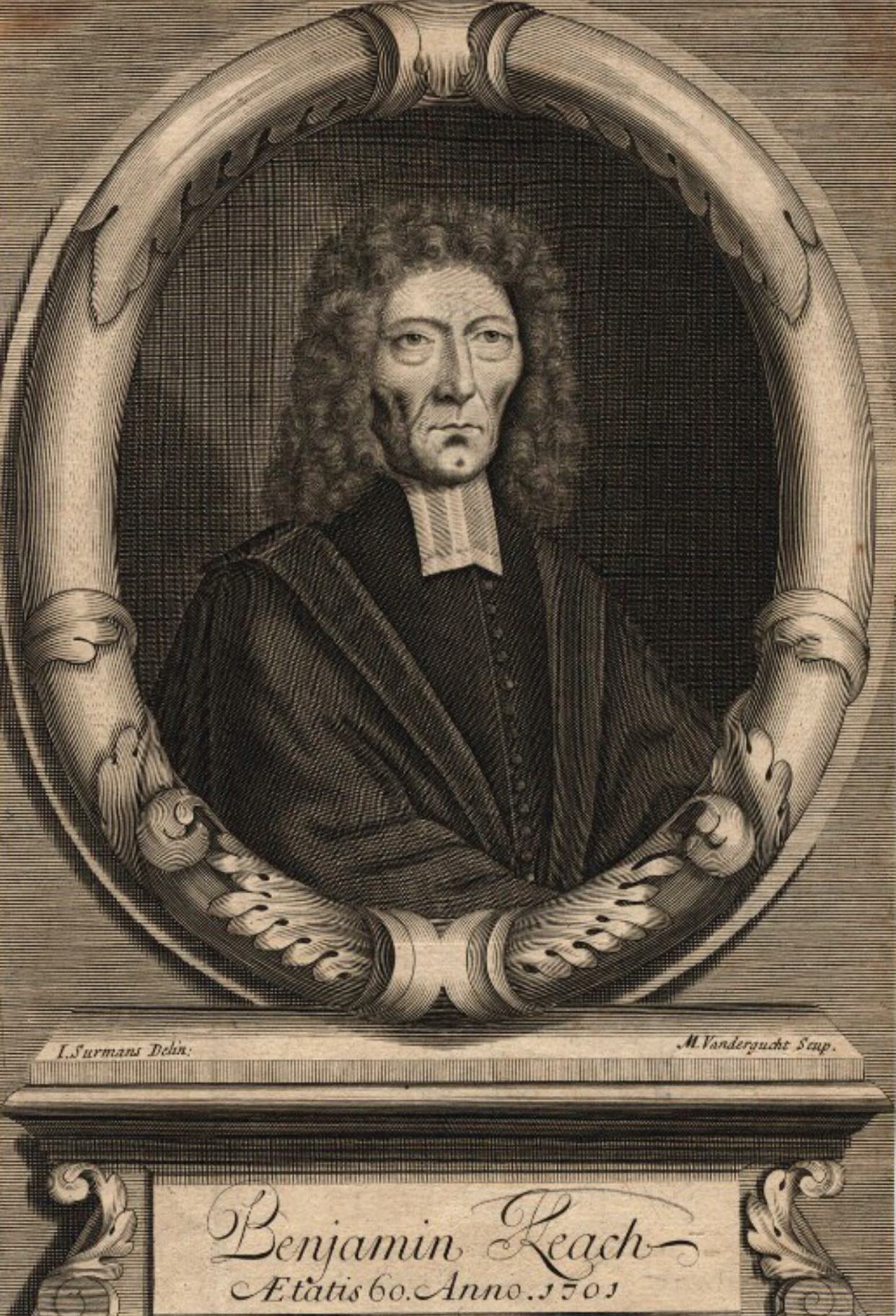
The main theological topic addressed by Benjamin Keach in "XIV. of a Synecdoche" is the use of synecdoche as a rhetorical device in Scripture, which serves to deepen the understanding of biblical meanings. Keach articulates various forms of synecdoche, such as the whole being used for a part or vice versa, providing numerous examples from both the Old and New Testaments to illustrate his points. He cites Scripture passages like Exodus 9:6 and Matthew 3:5 to demonstrate how terms like "all" can signify a majority rather than an absolute total, highlighting the importance of context in biblical interpretation. The practical significance of Keach's analysis lies in refining hermeneutical methods within Reformed theology, promoting careful and precise understanding of Scripture’s language to avoid misinterpretation.
Key Quotes
“A synecdoche is a trope by which the whole is put for part or part for the whole.”
“In doing this, there must be great heed taken to the scope and right meaning of the text.”
“The plural number is sometimes put for the singular as…who would have said unto Abraham Sarah shall give children suck that is one child.”
“To speak for stipulation or promise.”
What does the Bible say about synecdoche?
Synecdoche is a figure of speech where a part is used to represent the whole or vice versa, seen in various scriptural examples.
Scriptural examples abound, such as in Matthew 3:5, where 'all Jerusalem and all Judea' indicates the multitudes coming for baptism, not every individual. Recognizing synecdoche enriches our understanding of biblical texts and highlights the nuanced ways in which God's communication is conveyed through language, illustrating the depth of divine revelation in Scripture.
Exodus 9:6, Matthew 3:5
How do we know the doctrine of synecdoche is true?
The doctrine of synecdoche is supported by numerous biblical instances that illustrate its usage, affirming its truth in scriptural interpretation.
In the New Testament, similar examples are present. In Matthew 3:5, the text references 'all Jerusalem,' indicating the large number of people who responded to John's baptism rather than suggesting every inhabitant. This consistent utilization across diverse passages supports the doctrine's truth, helping readers grasp the deeper meaning and intent of the scripture as they engage with the text.
Exodus 9:6, Matthew 3:5
Why is understanding synecdoche important for Christians?
Understanding synecdoche is crucial for Christians as it enhances biblical interpretation and deepens comprehension of God's message.
Moreover, recognizing such tropes helps believers articulate their faith more accurately, as they can discuss scriptures with appropriate context in mind. Engaging with synecdoche fosters a greater awareness of divine communication and encourages discerning study of Scripture, ultimately strengthening one's faith and understanding of God's redemptive narrative.
Exodus 9:6, Matthew 3:5
CHAPTER XIV.
OF A SYNECDOCHE
HAVING largely gone through the most frequent and most eminent tropes in the scripture, principally metaphors, we will be more concise in what follows, and illustrate each, with a few scripture examples, by which the rest of that kind may be easily understood.
A synecdoche is a trope, by which the whole is put for part, or part for the whole. And whereas the whole is either the genus or entire thing, and part is a species, or member; we will treat of the four loads of synecdoches in order.
A synecdoche of the genus, is when the genus is put for species, or an universal for a particular, as when,
1. The term all, is put for the greatest part or many, as that rule of law in the pandects. quod Major. [1] "All seem to do that which the greater part does." In doing this, there must be great heed taken to the scope and right meaning of the text, take a few examples out of the Old Testament, Ex 9:6, "And all the cattle of Egypt died;" that is, all that was in the field, as Ex 9:3, and some were left, as Ex 9:19; 14:26,28; 9:29. Ex 32:3, "All the people;" that is, the greatest part, as verse 26. Hence Paul uses a particular word, 1Co 10:7, viz., some. See more sxamples, Ex 32:26, with verse 29, and De 32:9; Isa 2:2-3; De 28:64; 2Sa 16:22; Ho 7:4,16. In the New Testament, Mt 3:5, "Jerusalem and all Judea, and all the region about Jordan, went to be baptized;" that is many men of those places. More examples are, Mr 9:23; Joh 10:8, with verse 7, Ac 2:5; Eph 1:11; Php 2:21; 4:13.
[1] Omnes videntur facere, quod facit Major pars.
2. The word all or every, is put for the kinds of singulars, as Ge 2:16, "Of every tree of the garden thou shalt eat," that is, of every kind of fruity Ge 24:10, "All the goods of his master were in his hands," that is, some of every sort;; see Ge 24:52-53, so 2Ki 8:9; Joe 2:8, with 1Pe 2:9, and Ac 2:17; Zep 2:14; Mt 4:23; Lu 11:42; Ac 10:12; Heb 13:4.
An universal negative is also sometimes to be restrained and understood by a particular negative, as Ex 20:10, "No work to be done on the Sabbath," that is servile or mechanic: as appears, Le 23:7-8; Nu 28:18, see 1Sa 20:26, with 1Ki 19:11-12; Jer 7:6; Mt 5:34, "Ye shall not swear at all;" that is, rashly and lightly, Mt 10:26; Lu 7:28; Joh 1:31; 3:32-33; 15:5; 18:20; Ac 27:33; 2Th 2:11. Always is put for often, Lu 18:1; 24:53, and every where for here and there. Ac 28:22; 1Co 4:17.
Names of a larger signification are put for "those which are of a narrower, as flesh is put for man, all flesh, that is, every man, Ge 6:12; Ps 145:21; Isa 40:5; 66:23; Mt 24:22; Lu 3:6; Ro 3:20. A creature is put for a man, Mr 16:15; Col 1:23; see Ac 12:7; Lu 11:51; Job 14:14; Ac 10:12, (&c.) A common name is put for a proper, hence God is often called XXXX (El) which signifies strong and powerful, "and that (kat ezoxhn) by way of eminency, Ge 14:22, andxxi. 33. So Christ is called Lord, Mt 21:3; Joh 11:3; 12; and Master, Joh 11:28; the "Son of Man," Mt 8:20; "the angel," Ge 48:16, the "Angel of the Lord," Ex 3:2; Jg 6:11; so "the Seed of the woman," "Messiah," "Servant of God," "Prophet," &c. Moses is called a prophet, Ho 12:13.
The plural number is sometimes put for the singular, as Ge 20:7, "Who would have said unto Abraham, Sarah shall give children suck?" that is, one child, as in the next verse. Ge 46:7, it is said that there went down with Jacob into Egypt, all his daughters and all his sons 5 daughters, whereas, as verse 15, 17, appears, he had but one daughter, and one niece, or son's daughter.
See Ac 13:40-41, with Hab 1:5; Mt 2:23.
Some general verbs are put for special, as to say for to command or admonish; Ro 12:3; to open is put for to plough, Isa 28:24, to be is put for to live, Mt 2:18; and to dwell, Ru 1:2. To speak, for stipulation or promise, De 26:17,19.

Comments
Your comment has been submitted and is awaiting moderation. Once approved, it will appear on this page.
Be the first to comment!