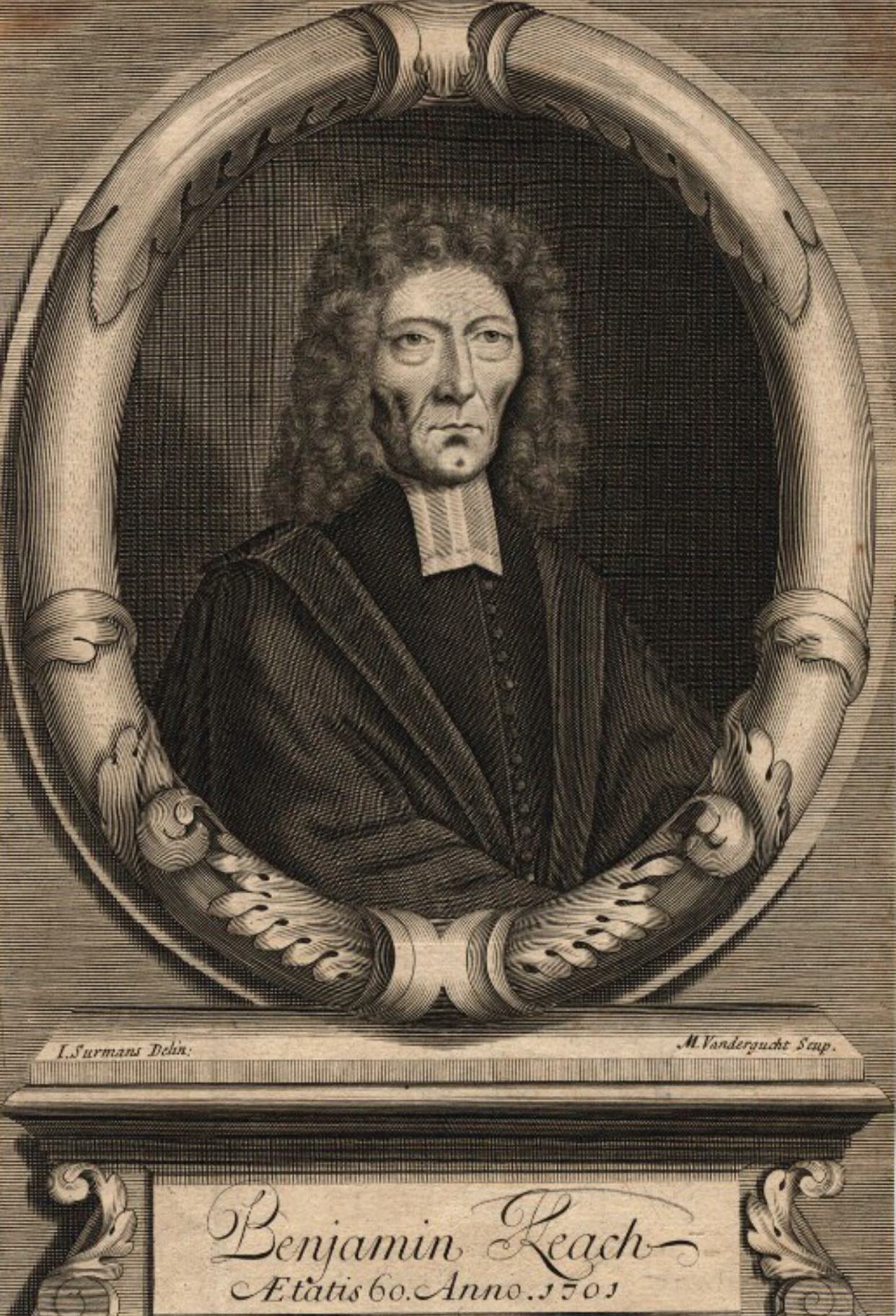
The article "XVII. of a Synecdoche of the Part" by Benjamin Keach discusses the theological concept of synecdoche as it pertains to Scripture, particularly how parts can be used to represent the whole in biblical texts. Keach argues that various body parts, such as the soul, body, and blood, illustrate this principle, serving both to convey significant theological meaning and to deepen the reader's understanding of Scripture. He supports his argument with numerous Scripture references, including Genesis, Psalms, and Acts, demonstrating that terms associated with human anatomy and common objects often symbolize larger concepts or realities. This discussion bears doctrinal significance by enriching readers' comprehension of biblical language and enhancing their appreciation for the nuances of Scripture within Reformed theology.
Key Quotes
“A synecdoche of the member is when a member is put for an integer or part for the whole.”
“The integral parts of man are put for the man or his body or flesh.”
“Part of time is put for time either indefinite or certain.”
“A year is put for time.”
What does the Bible say about the synecdoche of the part?
The Bible uses synecdoche to illustrate how parts can represent the whole, as seen in various passages.
Genesis 2:7, Matthew 10:28, 1 Corinthians 12:27
How do we know the doctrine of the whole and part is true?
The doctrine is reinforced by numerous biblical examples that illustrate how parts represent the whole in God's creation.
Leviticus 17:11, Genesis 2:7
Why is the concept of synecdoche important for Christians?
Synecdoche aids Christians in grasping deeper theological truths and the collective nature of God's creation.
1 Corinthians 12:12, Ephesians 4:16
A SYNECDOCHE of the member, is when a member is put for an integer, or part for the whole, thus distinguished;
(1.) With respect to men.
(2.) Other things.
(3.) The common accident of things, viz., time.
(1.) In single men, the essential parts are put for the whole man; as the soul (XXXX Nephesh) for man, Ge 12:5,13; 17:14; Ex 12:19; Ps 3:2; 11:1; 25:13; Isa 58:5; Eze 18:4; Lu 6:9; Ac 2:43, and many other places, &c. Sometimes it is said that the soul, may die or be killed, Nu 23:10; Jg 16:30; Job 36:14; Joh 4:8, where the body must be understood. It is put for any brute, Ge 1:24, (&c.)
A body is put for man, Ex 21:3, where the Hebrew is body; See Ro 12:1; 1Co 6:15. Jas 3:6.
The integral parts of man, are put for the man or his body or flesh; Ge 17:13; Ps 16:9; Pr 14:30. See Ac 2:26,31; Joh 6:51, (which is expounded, Lu 22:19; 2Co 7:1.) Flesh is put for the whole man, Ge 6:12; Lu 3:6; Ro 3:20. 1Co 1:29; for every living creature, Ge 6:13,17. Blood, is put for man, Ps 94:21; Pr 1:11; Mt 27:4; Ac 17:26.
The head is put for man, Jg 5:30; 2Ki 2:3; 2Sa 1:16; Ac 18:6. See other examples, Ge 19:21; Mt 13:16; Pr 8:13; Tit 1:12; Jg 5:30; Ge 31:26, where the Hebrew is, "What hast thou done, that thou hast stolen away my heart?" when he meant himself, as verse 27, Chaldee, "Thou hast stole myself."
See Lu 21:34; Pr 1:16, and Pr 6:8; Isa 3:7; Ro 10:15, (&c.)
The tribe of Ephraim is put for all Israel, Isa 7:2,5,8-9; 9:9, because the royal seat, viz., Samaria was in it. So is Joseph (of whom Ephraim descended) Ps 80:1; 81:5. See Am 5:15, and Am 6:6; Jer 6:1.
The general is put for the army; Ex 17:13; Jos 10:28,40; 1Sa 18:7.
2. Part of a thing is put for the entire thing. As XXXX a field, for a land or country, Ge 14:7; 1Sa 27:7.
A corner for a tower, Zep 1:16; 3:6; Ec 10:4, because it has strong corners.
The baptism of John, is put for his whole ministry, Ac 1:22; 10:37, and Ac 18:25. (&c.)
A nail for tents; because they are fastened with nails or stakes, Ec 10:4.
Stones are put for the entire building, Ps 102:14.
The wall for a city, Am 1:7,10,14, (with verse 12,) and Am 2:2,5.
The gate, for a city, Ge 22:17; De 12:12; 14:27-29, and for the inhabitants, Ru 3:11, and Ru 4:10; Isa 14:31.
A rafter is put for a roof, and consequently for a house, Ge 19:8.
Part of time is put for time, either indefinite or certain.
A year is put for time, Isa 61:2; 63:4; Jer 11:23.
A day is put for time, Ge 8:22; 2Ki 20:1; Ps 18:18; Mt 2:1; Ac 5:36-37.
A day is put for a year, when there is no addition of a numeral word, Ge 40:4; Ex 13:10; 1Sa 1:3; Le 25:29; Jg 17:10; 1Sa 27:7. Yet Am 4:4, three days signify three years with respect to the law, De 14:28.
The Sabbath is put for the whole week, Lu 18:12.
The morning for continued time, Ps 73:14; Isa 33:2; Ec 11:6; La 3:23.
Evening and morning are put for the whole day and night, Ge 1:5, (&c.)
An hour is put for time, Joh 4:25; 5:25; 16:2; 17:1,
And for a little space of time indefinitely, Ga 2:5; 1Th 2:17; Php 1:15.

Comments
Your comment has been submitted and is awaiting moderation. Once approved, it will appear on this page.
Be the first to comment!