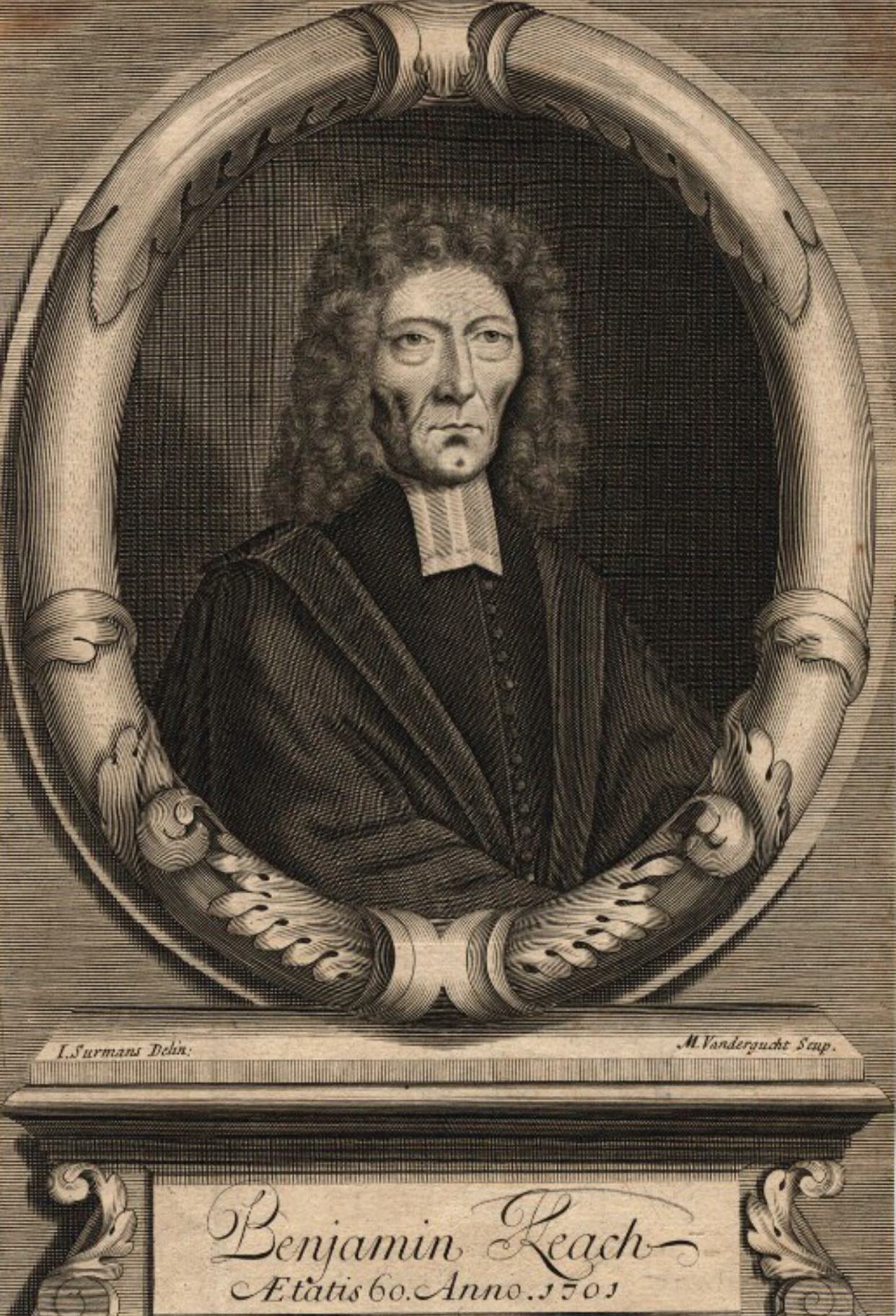
The article "I: Of the Figures of a Word" by Benjamin Keach delves into the theological topic of rhetorical figures in biblical language, emphasizing their significance in facilitating a deeper understanding of scriptural texts. Keach argues that these figures enhance the beauty and clarity of expression without altering the intended meaning, thus serving as an essential tool for interpretation and communication. Specific Scripture references, such as Exodus 34:6 ("The Lord, the Lord"), Psalm 22:1, and Isaiah 6:3, demonstrate how repetition and structure provide theological insights into divine attributes, enhancing the reader's comprehension of God's nature, particularly in the context of the Trinity. The practical significance of this study lies in its encouragement for believers to appreciate the richness of Scripture's literary style and to grasp its deeper theological implications, which ultimately supports orthodox Reformed teachings on inspiration and the authority of Scripture.
Key Quotes
“The word 'Schema' principally and properly signifies the garb, habit or ornament of the body and by a metaphor is translated to signify the beauty or ornament of speech.”
“These figures are called rhetorical lights and ornaments and do not change the sense of words as tropes do but give an embellishment or beauty to speech.”
“Without them [figures] the speech is naked as a man without his clothes.”
“This figure helps to evidence and expound things as in the alleged examples.”
What does the Bible say about the figures of speech?
The Bible uses various figures of speech to enhance understanding and communicate deeper truths.
Exodus 34:6, Psalm 22:1, Psalm 115:9-11
How do we know biblical figures of speech are true?
Biblical figures of speech convey profound theological truths and are validated through their impact and consistency across scripture.
John 1:1, Psalm 136:1-3, Romans 8:31
Why is understanding figures of speech important for Christians?
Understanding figures of speech enhances comprehension of the scripture and enriches the believer's faith.
Psalm 118:2-4, Philippians 4:4, Isaiah 5:20
CHAPTER I:
OF THE FIGURES OF A WORD
THE word Sxhma Schema>, principally and properly signifies the garb, habit, or ornament of the body; and by a metaphor is translated to signify the beauty, or ornament of speech, as[1] Aristotle and[2] Cicero say. The Latins render it figure, (as some say) because stage-players, by the variation or shifting of their habit, represented divers figures of men: these figures are called rhetorical lights and ornaments, and do not change the sense of words, as tropes do, but give an embellishment or beauty to speech.
[1] Lib. 3. Rhet. cap. 8.
[2] In Brulo et Orat. perf.
There are figures thv lecewv of a word, and figures thv dianoiav, of a sentence; the first belong to the matter, or as it were, the body of an oration; the latter, to the form, or as it were, the soul of a sentence.
The former are, when a speech is figured in words repeated in a certain order, or that mutually agree in sound, for emphasis, or ornament's sake. The latter are such, whose emphaticalness consists not in words singly, but in the things themselves giving weight and gravity to the speech. [3] Vossius says, "That a scheme properly signifies two things, viz. the exterior garb, and the gesture of the body; as dancers who caper at the noise of musical instruments: for schemes of words may in this be resembled to habit, or garb, because without them the speech is naked, as a man without his clothes; and schemes of sentences may be compared to artificial gestures, because, without these, it will be like a man who moves or walks in his natural place or posture; of the first we will produce some examples.
[3] Lib. 5. Instit. Orat. c. 1.
1. Epizeuxis epizeucis, in Latin Subjunctio, is when the same word or sound is continued or repeated in the same sentence, as Ex 34:6, "The Lord, the Lord, a God merciful and gracious," &c. De 28:43, "The stranger that is in thy middle (or within thee) shall ascend above thee, up, up, and thou shalt descend down, down," (so the Hebrew) which denotes, that the servants or vassals of the sinning Israelites, above whom they bore such a sway, should become their masters, and bring them into thraldom. 2Ki 4:19, "And he (the son of the Shunamite) said to his father (when he began to be sick in the field) my head, my head:" that is, my head most grievously aches. Ps 22:1, XXXX XXXX "My God, my God, why hast thou forsaken me?" which repetition fervently denotes the overmuch cruelty of the enemy, and the mournful condition of Israel in captivity: Isa 6:3, "Holy, holy, holy is the Lord God of Hosts;" this triple repetition denotes the mystery of the Trinity, or Three Persons in one divine essence; see Jer 22:29; Eze 21:27; Mt 23:37; Lu 22:31, and Lu 23:21; Joh 5:24; Ac 9:4; Re 18:2; Le 24:18; 2Sa 18:33; Isa 28:10; Ho 2:21; Eze 34:17, where you have examples of this figure.
2. Anadiplosis anadiplwsiv (called in Latin reduplicatio, in English redoubling) is, when the last word of the former sentence is repeated in the beginning of the next: as Ps 121:1-2; 122:2-3; 98:5; Ro 8:17; Ps 115:12; Ro 9:30, and Ro 10:17; Php 2:8; Jas 1:3; Ps 113:8. This figure helps to evidence and expound things, as in the alleged examples.
3. Climax klimac, Gradatio, or a climbing by steps; this is a continuation of the former figure [4] in more degrees, so as that the last of the antecedent sentence, must be a part of the following; as Ho 2:21, "And it shall come to pass in that day, I will hear, saith the Lord, I will hear the heavens, and they (that is, the heavens) shall hear the earth, and the earth shall hear the corn, and the wine, and the oil, and they (that is, the corn, and the wine, and the oil) shall hear Jezreel." This gradation may be fitly called an epitome of physical theology, which by a fair prosopopæia enumerates all the causes of the conversation of universal nature, and particularly of man: see it at large expounded in our Philologia Sacra, Book I, Page 94.
[4] Viz. Anadiplosis.
Joh 1:1, "In the beginning was the Word, and the Word was with God, and God was the Word---this Word, was in the beginning with God." The true divinity of Christ, and his distinct subsistence from the Father, are most fairly expressed by this gradation. In the third proposition there is an inversion of the terms, viz.. a God was the Word, for the Word was God." A like climax, respecting his office and benefits, is subjoined, verse 4, 5, &c. See more examples, Joe 1:3-4; Ro 5:3-5; 8:29-30, and Ro 10:14-15; 1Co 11:3; Jas 4:15; 2Pe 1:5-7; Mt 10:40; 1Co 3:23.
4. 'Anafora Anaphora, from anaferw refero, to bring back, or rehearse, is when the same word, or more, is repeated in the beginning of divers clauses or sentences: as De 28:3, "Blessed shalt thou be in the city, and blessed shalt thou be in the field;" verse 4, "Blessed shall be the fruit of thy belly, and the fruit of thy ground, and the fruit of thy cattle," &c. Verse 5, "Blessed shall be thy basket," &c. Verse 6, "Blessed shalt thou be when thou comest in, and blessed shalt thou be when thou goest out." The like anaphora, respecting the curses of God upon the wicked and rebellious, we read verses 16-19. This figure is very frequent in scripture, take these few places instead of many; Ps 3:1-2; 29:3, (&c.,) Ps 67:5-7; 115:12-13; 118:8-9,15-16; 148:1, (&c.,) and Ps 150:1, (&c.,) Isa 2:7-8; Jer 4:23,26; 5:17; 50:35-37; 51:20,23; Mic 5:9,12; 7:11-12; Zep 1:2-3; 1Co 13:4,7,11; 12:8-10; 2Co 11:26. And in the repetition of pronouns and particles. Ps 94:5; Ro 8:35,38-39; 2Co 7:11; Php 4:8, (&c.)
5. Epizrofh Epistrophe, conversion, is a figure when the same word or phrase, is repeated in the end of divers sentences. Examples of the repetitions of single words (among which, we reckon the Hebrew affixes) are to be read, De 32:10; Eze 27:23,27; Ro 8:31, ei o Qeov uper hmwn, tiv kaq hmwn, "If God be for us, who can be against us?" 2Co 11:22, "Are they Hebrews? so am I; are they Israelites? So am I; are they the seed of Abraham? so am I;" &c., Examples of phrases, or little sentences are, Ps 115:9-11, where their help, and their shield, frequently concludes the sentence. Ps 136:1-2, (&c.,) see De 27:15, (&c.,) Ps 24:9-10; Joe 2:26-27; Eze 33:25-27; 36:23, (&c.,) Am 4:6,8, (&c.,) Hag 2:8-9; La 3:41, (&c.,) Mt 7:22.
6. Sumplokh Symploce, complication, the word is derived of sumplekw, to wrap or couple together; and is a figure, which the same word or phrase both begins and end a sentence, which joins the two last figures (viz., Anaphora and Epistrophe) together, Ps 118:2-4, "Let Israel now say, that his mercy endureth for ever," &c. So Ps 136:1-3; Jer 9:13; 1Co 12:4-6; 14:15; 2Co 9:6, (&c.,) Ps 47:6; Ro 14:8.
7. Epanalhyiv, Epanalepsis, Resumptio, a taking back, is when the same word is repeated both in the beginning and end of a sentence, as Php 4:4, "Rejoice in the Lord always, and again I say, Rejoice:" see Ps 53:2; 2Ki 18:33,37; 1Co 11:22; 2Co 4:3; 1Co 12:4-6; 14:15; 2Co 9:6; Ps 8:1,9, and Ps 46:1.
8. Epanadov, Epanados, regression or turning back, (derived of epiabove, and anodov, an ascending, or climbing, from anw, upwards, and odov, a way,) is a figure, when the same word is repeated in the beginning and middle, or in the middle and end, so as that there is an inversion of them; as Isa 5:20, "Woe unto them who call good evil, and evil good; who put darkness for light, and light for darkness; that put bitter for sweet, and sweet for bitter," Eze 7:6-7; Ga 2:16; 2Co 2:10,15-16; Joh 8:47; Eze 36:6; Ro 7:19; Ps 114:3-6; Eze 32:16; 2Th 2:4.
Poluptwton, Poluptoton, in Latin Casuum Varietas, a variety of cases, or the change of the case or termination (from polu variously, and ptwton falling, derived from ptow to fall,) is when words of the same root, primitive, or original, are used in a different termination with respect to mood, tense, person, case, degree, gender, number, &c. As Ps 68:15-16; Isa 24:16; Ho 10:1; Mic 2:4; Ro 2:21-23; 4:18; 2Co 9:8; 10:12; Ge 2:19-20; Eph 1:3. There is an elegant polytoton in those lines of the learned Picus, Earl of Mirandula.
Namq; tua est nostris major clementia, culpis;
Et dare non dignis, res mage digna Dei
Quanquam sat digni, si quos dignatur amare,
Qui quos non dignos invenit, ipse facit.
Ge 50:24, "The Lord when he visiteth, in visiting, will visit you:" see Ro 11:36; Ec 12:8; Da 2:37; Joh 3:13; 1Jo 3:7; 2Ti 3:13; Heb 6:14; Joh 17:25; Isa 19:2.

Comments
Your comment has been submitted and is awaiting moderation. Once approved, it will appear on this page.
Be the first to comment!