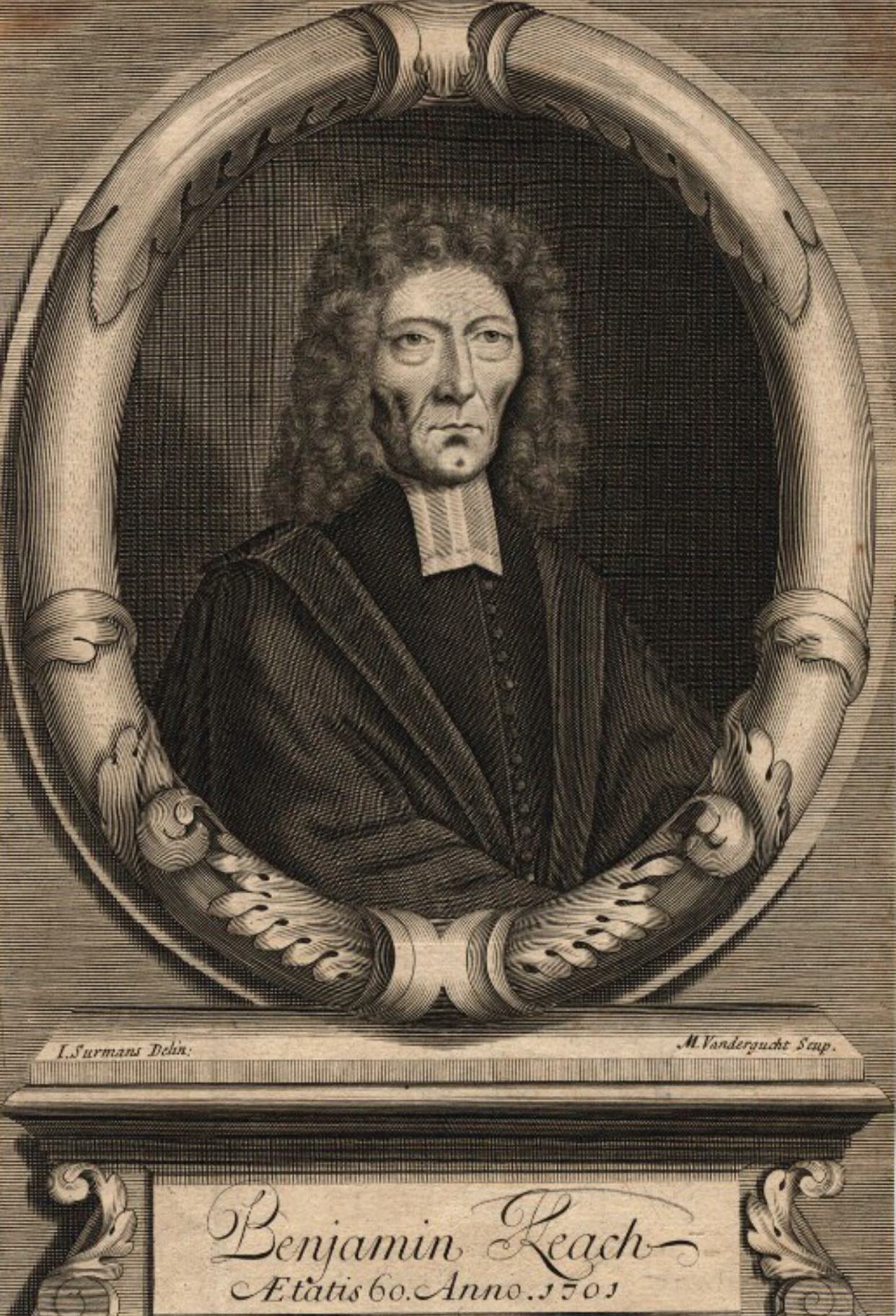
The article “II. of a Paronomasia” by Benjamin Keach explores the theological significance of paronomasia, a literary device involving a play on words that can change meanings via minor alterations. Keach argues that this device is both prevalent in Scripture and essential for understanding biblical texts more deeply, offering examples primarily from both Hebrew and Greek. He cites numerous Scripture references, including passages from 2 Corinthians and Isaiah, to illustrate how wordplay conveys profound doctrinal truths, particularly regarding the nature of Christ and the church. The practical significance of Keach's argument lies in its critique of prevailing interpretations, especially those suggesting a direct apostolic succession from Peter to the Pope, advocating instead for a proper understanding of Christ as the foundational rock of the church.
Key Quotes
“Paronomasia Agnomination or likeness of words...is when by the change of one letter or Word the signification thereof is also changed.”
“Most faithfully therefore has Matthew expressed the words of Christ in Greek which alone is to be esteemed authentic.”
“We may infer what a weak foundation the pope's supremacy is built upon.”
“The church is my heavenly kingdom; the unbelieving world is the devil's.”
What does the Bible say about the name of Peter being a rock?
The Bible teaches that Peter's name signifies a rock, illustrating the foundation of the Church built upon Christ's confession.
Furthermore, the context in which Christ addresses Peter is critical; He does not simply call him a rock at random but does so in response to Peter's faithful confession. The church's resilience against the gates of hell, as mentioned in the same passage, underscores the doctrine of God's sovereign protection over His people, affirming the enduring nature of the truth confessed by Peter. The emphasis is not on Peter as an individual but on the truth of Christ that he proclaimed, which is the cornerstone of belief for all who follow Him.
Matthew 16:18, 1 Peter 2:4-6
Why is the doctrine of the church's foundation important for Christians?
This doctrine asserts that the Church is built on Christ, providing assurance of its security and the truth of the Gospel.
Moreover, understanding that the Church's foundation rests on the doctrine of Christ and the confession made by Peter is essential for maintaining sound theology within the Christian community. It emphasizes that the truth of the Gospel must be preserved and proclaimed, allowing the Church to remain resilient against false teachings and practices. The Church is not merely an institution; it is a divine assembly of believers empowered for mission, grounded in the truth of Christ, ensuring the continuity of the faith throughout generations.
Ephesians 2:19-20, Matthew 16:18, Colossians 1:17
How do we know that Peter represents a rock in the Bible?
Peter is identified as a rock in the Bible through Jesus' declaration and the original Greek meaning of his name.
The biblical narrative further supports this connection in various places, such as 1 Peter 2:4-6, where Peter himself refers to Christ as the cornerstone. This dual recognition illustrates the balance between Peter's unique role and the ultimate foundation, which is Christ Himself. Hence, by examining both the original language and context, we ascertain that Peter truly represents a rock, affirming the central truth upon which the Church is built.
Matthew 16:18, 1 Peter 2:4-6, Ephesians 2:20
OF A PARONOMASIA.
PARONOMASIA, Paronomasia, Agnomination, or likeness of words, (of para, which in composition, signifies with alteration, and anoma, a name, or from paranomazw to change, or allude to a name or word) is when by the change of one letter or Word, the signification thereof is also changed. This figure is frequent in the Latin, and is very ornamental, as Nata salo, suscepta solo, patre edita Coelo---ab exordio, ad exodium. And the native beauty of it being peculiar to the original languages can hardly be shown in English. There are many in the Hebrew, of the Old; and the Greek of the New Testament, which the learned may find in Glassius; take, however, a few English examples, by which you may judge of the rest; as, friends turned fiends. You are like to have a bare gain out of this bargain. Bolder in a buttery than in a battery.---Wine is the blood of the vine.---No stumbling but tumbling; errors will cause terrors. Scripture examples are many, as 2Co 10:3, "Though we walk in the flesh, yet do we not war after the flesh; 2Co 6:9, "As unknown, and yet known;" see 2Co 4:8-9, and Mt 8:22. Examples in the Hebrew, text are Isa 57:6, and Isa 65:12; Ge 18:27; Ex 25:27, and Ex 32:18; 1Sa 13:17; Ps 69:30-32; Isa 5:7, and Isa 13:6; Joe 1:15; Jer 1:11-12, and Jer 48:43; Isa 24:17; Ge 9:27; Isa 65:11. In the Greek text, Mt 16:18. Tu es Petpov, &c., super hac Petra ædificabo Ecclesiam meam, &c., where there is an allusion to the name of Peter, though Christ speaks of himself; Peter having confessed him to be the Son of the living God, (1Pe 2:4-6,) which plainly appears by the context;---As if Christ had said, the name I give thee is not in vain, for thou hast acted conformable to it, when in thy confession, thou hast expressed the true rock, upon which thou, and all believers, are to be built. Erasmus thus paraphrases it,---"I also, because I would not have so magnificent a testimony unrequited, affirm, that thou art truly Peter, that is, a solid stone, so fixed that thou shalt not wave hither and thither, according to the giddy humour of the vulgar. And upon this rock of thy profession (viz., myself) will I build my church, that is, my house and palace, as upon an immoveable foundation, which all the open violence, or private stratagems of hell, shall not be able to destroy. Satan will employ his various artifices to ensnare you, and will stir up a wicked generation to circumvent, trepan, and persecute you; but mine all-powerful protection shall be your invincible defence during your sound and solid profession; the church is my heavenly kingdom, the unbelieving world is the devil's, none of the former have need to fear of the latter, if he be a Peter, that is like thee." In the Syriac tongue, in which Christ speaks, the same word XXXX signifies both Peter a proper name, and Petra a rock, a noun appellative. Hence Bellarmine clamours, saying, "We have what we would, viz., that Peter is that rock of whom Christ speaks. If Augustine, says he, had considered that Cephas signifies nothing but a rock, and that the Lord had said, thou art a rock, and upon this rock, &c., he had made no doubt of the truth of the sentence." But the Jesuit gains nothing by this XXXX: as it is a proper name, it has a different signification from Cephas as it is a common name, as Abel. Deborah, Rachel, Jonah, &c., signify one thing when they are proper names; and another when they are common names, although there be no change in the word or denomination; the Syriac joins a masculine pronoun XXXX he, to the first Cephas, and the feminine XXXX hæc this, to the latter Cephas, which is of the feminine gender when it signifies a stone, as 1Co 10:4; Mt 28:2; Mr 16:4. Most faithfully therefore has Matthew expressed the words of Christ in Greek, which alone is to be esteemed authentic; and it is certain, that the Holy Spirit did on purpose change the speech in the authentical Greek text, to make it perspicuous, lest any body through error or inadvertency should apply those things to Peter, which must be understood of the doctrine and confession of Christ, or Christ himself proposed in that confession. From the whole we may infer what a weak foundation the pope's supremacy is built upon.
Mt 11:17, "We have piped, and ye have not danced; we have mourned unto you, and ye have not lamented." In the Syriac tongue in which Christ spake, there is a fair allusion in those words, "danced, lamented," for both are of the same root, and differ only in conjugation.

Comments
Your comment has been submitted and is awaiting moderation. Once approved, it will appear on this page.
Be the first to comment!