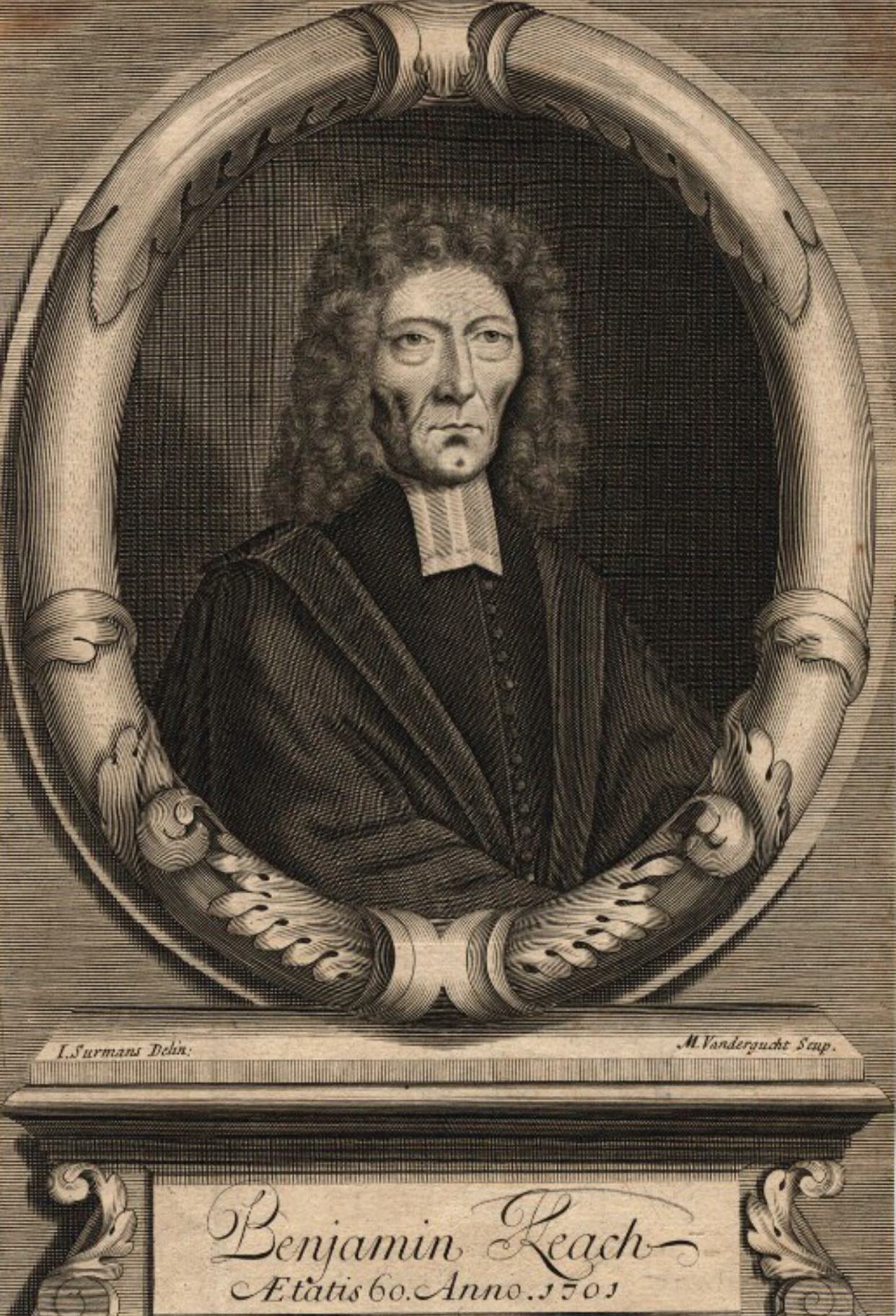
The article "III: Of Antanaclasis" by Benjamin Keach delves into the figure of speech known as antanaclasis, which involves the repetition of a word with different or contrary meanings. Keach illustrates this rhetorical device through various examples from Scripture, such as Judges 15:16 and Matthew 8:22, where the repetition bears distinct interpretations that enrich the text's meaning. He emphasizes how these nuanced meanings can deepen one's understanding of theological truths, particularly about spiritual death and the nature of Christ's goodness. This exploration reveals the theological significance of closely examining language in Scripture, encouraging believers to seek deeper insights into God's Word while affirming the importance of sound biblical interpretation in Reformed theology.
Key Quotes
“Antanaklasiv antanaclasis which signifies refraction or reciprocation is a figure when the word is repeated in a different if not contrary signification.”
“The first dead denotes the wicked who are spiritually dead in sin the second dead such as are naturally dead or departed from this life.”
“The sense therefore of the words of Christ is either call me not good or believe me to be the true God and Qeanqrwpov God-man.”
What does the Bible say about antanaclasis?
Antanaclasis is a rhetorical device used in Scripture where a word is repeated with a different or contrasting meaning.
Moreover, examples of antanaclasis are found throughout both the Old and New Testaments. In Matthew 5:19, when Christ talks about the 'least' of the commandments, the term carries both a Pharisaical perspective of insignificance and the absolute consequence of disregarding God’s law, illustrating the serious repercussions of how we interpret God's commands. Thus, antanaclasis serves not only as a grammatical feature but also as a theological tool that calls attention to the intention and meaning behind the Scripture's wording.
Matthew 8:22, Matthew 5:19
How do we know the doctrine of antanaclasis is true?
The doctrine of antanaclasis is supported by various Scripture passages that demonstrate how words can have multiple meanings.
Furthermore, the examination of these passages within their broader context provides theological integrity to the doctrine. For example, Romans 2:28-29 elucidates that not all who are descended from Israel according to the flesh are of true spiritual Israel. Here, the concept of 'Israel' varies in application, reflecting God's covenantal plan and His choice of the elect. Such textual analysis illustrates how antanaclasis reveals profound truths about human nature and divine sovereignty, affirming the doctrine’s relevance in the study of Scripture.
Matthew 26:29, Romans 2:28-29
Why is antanaclasis important for Christians?
Antanaclasis is important for Christians because it reveals the complexity and depth of God's Word.
Moreover, recognizing antanaclasis allows Christians to appreciate the multifaceted ways God communicates with His people. It fosters a more robust theology, prompting believers to reflect on how words convey not just factual information, but also profound spiritual truths. For instance, James 5:16 indicates the importance of prayer and confession. Through antanaclasis, such terms reveal a depth about the relational aspects of faith that mere surface readings might miss, thus encouraging a more vibrant and transformative relationship with God.
John 1:10, James 5:16
CHAPTER III: OF ANTANACLASIS
Antanaklasiv, antanaclasis, which signifies refraction or reciprocation, is a figure when the word is repeated in a different, if not contrary signification; examples in the Hebrew text are Jg 15:16, where the same word signifies an "ass, and a heap." 1Sa 1:24, "And the boy was a boy," (so the Hebrew) that is, as we render it, "the boy was young." See Ps 141:5; Ec 7:7; Ps 58:9-10; Isa 37:18; 58:10, and Isa 66:3-4; Jer 7:18-19; 8:4,14, and Jer 34:17; Eze 20:24-25, and Eze 41:24; Mt 8:22, "Follow me, and suffer the dead to bury their dead;" the first dead denotes the wicked, who are spiritually dead in sin; the second dead such as are naturally dead, or departed from this life, Mt 26:29, "I will not drink henceforth of this fruit of the vine, until that day when I drink it new with you in my Father's kingdom." Here the first drink is properly understood; but the latter metaphorically, denoting their partaking together of the joys of heaven. Joh 1:10, "The world was made by him, and the world knew him not:" the former world notes the whole universe; the latter unbelievers, &c. see Joh 2:23-24; 4:31-32,34; Ro 2:26,28-29; 3:21,27; 7:23; 9:6, "They are not all Israel which are of Israel," that is, all who are born of Israel, according to the flesh, are not true spiritual Israelites, Ro 12:13-14, where there is an antanaclasis in the verb diokein. 1Co 11:24, the first breaking is taken properly; the second breaking metaphorically, for the passion of Christ, as Lu 22:19. See Isa 30:13, (&c.,) and 1Co 15:28; Mt 5:19, "Whosoever shall break one of these least commandments, shall be called least in the kingdom of heaven:" the first (least) expresses the sense of the Pharisees, who esteemed some of the precepts of Christ among the least; the second (least) alluding to the former, signifies the same with none, or not at all, viz., he shall be none in the kingdom, or he shall not enter there at all.
Mt 18:1, "The disciples say unto Jesus, who is the greatest in the kingdom of heaven;" the first word greatest, in the sense of the disciples, signifies him that hath pre-eminence over others; the second greatest, alluding to the former, denotes a participation, of the kingdom of God, without respect to inferiors; the sense is, whosoever humbles himself shall enjoy his part in the kingdom of heaven.
Mt 19:16, "The young man saith unto Christ, good Master, &c," verse 17, Christ answers, "Why callest thou me good? there is none good but one, that is, God;" the first good denotes any goodness communicated to the creature by the Lord, such as may be found in a mere man (for such the young man judged Christ to have;) the latter good alluding to the first, expresses the essential goodness of God, who is the fountain and original of all good in the creature: the sense therefore of the words of Christ, is, either call me not good, or believe me to be the true God, and Qeanqrwpov God-man. See Joh 4:31; 6:28; Ac 26:28. Sometimes there happens an ellipsis in this figure, the latter being understood by the former, as Joe 2:13, "Rend your hearts, and not your garments;" here is a double proposition: 1. "Rend your hearts;" 2. "Rend your garments," the first is metaphorical; the other proper.

Comments
Your comment has been submitted and is awaiting moderation. Once approved, it will appear on this page.
Be the first to comment!