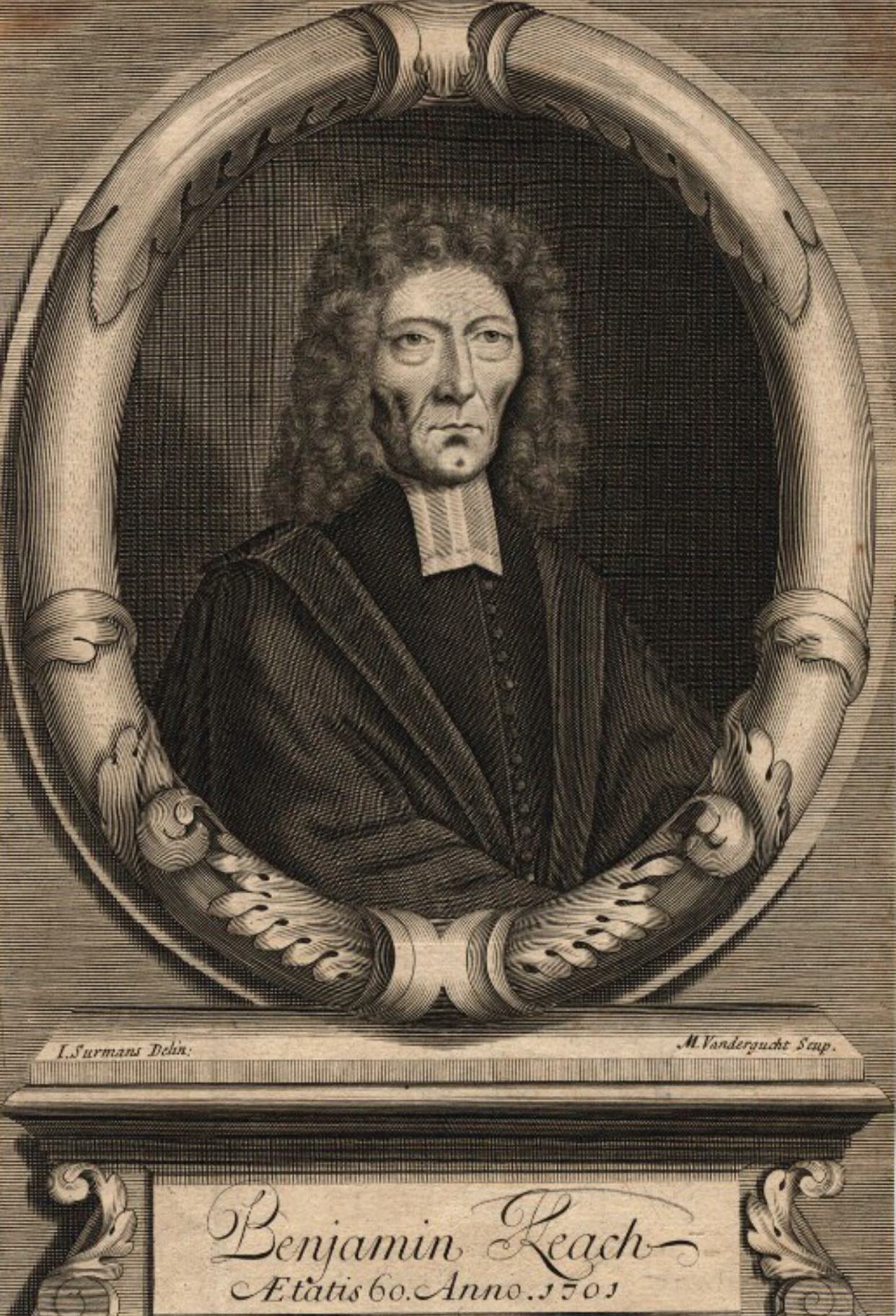
The main theological topic addressed in Benjamin Keach's "Of the Figures of a Sentence in Logism" is the use of various rhetorical figures within Scripture to convey theological truths. Key arguments include the classification of figures into two main types: logism, which pertains to sentences without dialogue, and dialogism, which involves conversational exchanges. Keach provides an array of examples from Scripture to illustrate the effectiveness of figures such as ekphrōnesis (exclamation) and epanorthosis (correction), demonstrating how these devices emphasize emotions, prayers, and doctrinal affirmations. Specific Scripture references include Psalms and the Gospels, supporting the argument that these rhetorical forms serve to engage the reader's affections and convey profound theological principles more powerfully. The doctrinal significance of Keach's exposition lies in its capacity to deepen the understanding of biblical texts, illustrating how God communicates His truths through varied linguistic styles, ultimately enhancing believers’ grasp of divine revelation.
Key Quotes
“Ekfwnhsiv exclamation is a pathetical figure whereby the speaker expresses the passion or vehement ardour of his mind by various interjections expressed or understood to move the affections and minds of those he speaks to.”
“Epanorqwsiv epanorthosis correction or amending is the reinforcement of the clause last uttered by what follows or a recalling of what one said to correct it.”
“This apostrophe is directed sometimes to the heavens and the earth... because the Lord by Moses called heaven and earth as witnesses.”
“Prosopopoeia... is when an inanimate thing is introduced as speaking like a rational person.”
What does the Bible say about exclamations in worship?
The Bible uses exclamations to express admiration, sorrow, and joy, illustrating passionate communication with God.
Psalm 84, Matthew 27:46, Psalm 133:1
How do we know that the use of figures in sentences is important in understanding scripture?
The use of figures helps illuminate the meaning of scripture, revealing deeper truths about God's character and human experience.
John 12:27, Hebrews 1:1
Why is apostrophe significant in biblical writings?
Apostrophe engages the audience directly, enhancing the emotional intensity and conveying urgent messages from God.
Psalm 33:22, Nehemiah 4:4
CHAPTER IV.
OF THE FIGURES OF A SENTENCE IN LOGISM.
WHAT these are we have before defined: they are distinguished thus; (1.) such as are in logism, or in a sentence without collocution, or talking together. (2.) Such as are in dialogism, or by way of dialogue, or mutual conference.
There are five of the first sort, viz.
I. Ekfwnhsiv exclamation, is a pathetical figure, whereby the speaker expresses the passion or vehement ardour of his mind, by various interjections expressed or understood to move the affections and minds of those he speaks to; O! Alas! Behold! are signs of it; this figure is made in scripture;
1. In a way of admiration, Ps 84. "How amiable are thy tabernacles, O Lord of hosts!" Ps 133:1, "Behold, how good, and how pleasant (it is) for brethren, to dwell together in unity!" Ro 11:33, "O the depths of the riches both of the wisdom, and of the knowledge of God! how unsearchable (are) his judgments, and his ways are past finding out!" See Ps 8:1, and Ps 144:15.
2. In a way of wishing or praying, 1Ch 11:17, "O that one would give me drink of the water of the well of Bethlehem, which is at the gate!" Ps 14:7, "O that the salvation of Israel were come out of Sion!" See Ps 42:2; Isa 64:1; Ro 7:24, "O wretched man that I am, who shall deliver me from the body of this death!" see Ga 5:12; Job 6:8; Ps 55:6.
3. In praise, Mt 15:28, "O woman great is thy faith!" Mt 25:21,23, "Well done good and faithful servant!"
4. In a way of sorrow and complaint, Ps 22:1; Mt 27:46, "My God, my God, why hast thou forsaken me?" Isa 6:5, "Woe is me, for I am undone!"
5. In a way of commiseration or pity, Jos 7:7, "Alas! O Lord God, wherefore at all hast thou brought this people over Jordan, to deliver us into the hand of the Amorite, to destroy us!" Eze 9:8, "Ah Lord God, wilt thou destroy us with the residue of Israel, in thy pouring out thy fury upon Jerusalem!" Lu 13:34; La 1:1.
6. In a way of indignation, detestation, and reproof, Isa 1:4, "Woe to the sinful nation, a people laden with iniquity, a seed of evil-doers, &c. Eze 16:23, "Woe, woe unto thee, saith the Lord God," see Mt 11:21; 17:17; Lu 24:25; Jer 44:4; Ac 13:10, "O full of all suhtilty and mischief, thou child of the Devil, thou enemy of all righteousness, wilt thou not cease to pervert the right ways of the Lord?" Ac 7:51; Ro 9:20.
7. In a way of joy and exultation, as Ps 57:7, and Ps 135:21, "Blessed be the Lord out of Sion, which dwelleth at Jerusalem. Hallelujah," that is, "praise ye the Lord." See 1Co 15:55.
8. In a way of obsecration or beseeching, Ps 118:25, "Save now I beseech thee, O Lord; O Lord, I beseech thee, send now prosperity!" Re 22:20.
9. In a way of reprehension, Ga 3:1, "O foolish Galatians, who hath bewitched you!" &c. see Ac 7:51-52.
10. In a way of derision, Mt 15:26; of fear, 1Ti 6:11, (&c.)
Epiphonema, signifies acclamation, and is wont to be subjoined to an exclamation, as a certain species of it. It is a little clause or apt sentence added after the thing is expounded, exhibiting a certain emphasis (and deinwsiv) briefly and concisely, as Ps 2:12; 3:8; Mt 22:14; Lu 10:30; Ac 19:20; Mt 19:27; Mr 7:37.
II. Epanorqwsiv epanorthosis, correction or amending, is the reinforcement of the clause last uttered, by what follows, or a recalling of what one said to correct it. It is stated in a threefold manner.
1. When that which is said is wholly disowned, and corrected by a more apt, more proper, and significant expression: as Mr 9:24, when the father of the child that was possessed with a dumb spirit, said, "Lord, I believe," but recollecting himself and confessing his infirmity, immediately subjoins, "help thou mine unbelief," Joh 12:27, Christ says to be saved from death, "Father, save me from this hour;" yet immediately correcting that prayer, which shows the reality of his human nature, that prompted him to express himself so, he adds, "but for this cause came I unto this hour," see Mt 26:29; Ro 14:4, "who art thou that judgest another man's servant? to his own master he standeth or falleth;" as if he had said, there is but one Lord of all, Christ Jesus; to him he stands, if he be firm in faith; to him he falls if he sins, as thou suspectest: he has the prerogative and power of judging in himself, but thou hast not, &c. And whereas he had made mention of his fall, he immediately adds the correction, "he shall be held up, for God ia able to make him stand;" that is, to clear up all suspicion of evil.
2. So in those phrases where the denial of the affirmative is subjoined, where nevertheless the denial is to be understood comparatively, or respectively, as Joh 16:32, "Ye---shall leave me alone; "the epanorthosis, the figure we speak of, follows, "and yet I am not alone, because the Father is with me:" Christ was alone, with respect to men, but not with respect to God. 1Co 7:10, "But to the married I command,"---the correction follows, "yet not I, but the Lord." Both command, the Lord principally, the sovereign Law-giver, and Paul, as the servant and minister. 1Co 15:10, "I laboured more abundantly than they all;" the apostle subjoins a correction, lest it should savour of arrogancy, in ascribing that to himself, which was the work of God,---"yet not I, but the grace of God, which was with me." He was set on work by divine grace, which was the primary cause of all labour and success. Ga 2:20, "I live, yet not I, but Christ liveth in me: he speaks of spiritual life, which he attributes not to himself but to Christ the Prince of life, as the supreme author and cause of it. See Ga 1:6, (&c.,) Pr 6:16; Ro 8:34; Ga 4:9; 2Ti 4:8; 1Jo 2:2.
3. When a positive and affirmative antecedent is corrected by the particle if, (which is very familiar and frequent in Cicero's writings,) as Ga 3:4, "Have ye suffered so maflj things in vain? if it be yet in vain." As if he had said, yet have not only suffered in vain, but with loss and detriment also, &c.
III. Aposiwphsiv, aposiopesis, reticentia, a holding one's peace, derived from apo from, and siwpawobticeo, to be silent, is, when the course of the speech is so abrupt or broken off, that some part is concealed, or not uttered; yet by that means to aggravate it; this is used in scripture:
1. In promising, as 2Sa 5:8, "Whosoever smiteth the Jubusite"---we are to understand (he shall be chief and captain,) as 1Ch 11:6. See 1Ch 4:10; Lu 13:9; "And if it bear fruit;" you must understand (well, or it is well) which is not in the Greek, but supplied in our English Bible.
2. In commination, Ge 3:22, "And now lest he put forth his hand, and take also of the tree of life, and eat, and live for ever." In these words of the Lord, being angry with man for his sin and violation of the divine law, we must by an aposiopesis understand what is omitted, viz., "I will drive him out of the garden, and forbid him my presence," which was done, as the next words declare. See Eze 34:8, with verse 10. Ge 20:3, "Behold thou art a dead man, for the woman which thou hast taken away;" that is, if thou dost not restore her, as is gathered from verse 7, see Ge 25:22.
3. In complaint, Ps 6:3, "My soul is also sore vexed; but thou, Lord, how long?" that is, "wilt thou be averse to me, or delay help?" Lu 19:32, "If thou hadst known, even thou, at least in this day, the things unto thy peace," so the Greek, we are to understand "which belong unto thy peace."
4. In swearing, this figure is frequently used, 1Sa 3:14; Ps 89:35; Isa 14:24, and Isa 62:8.
IV. Apostrofh, apostrophe, aversion, or turning away, is a breaking off the course of speech, and a sudden diverting it to some new person, or thing. This is made,
1. To God, Ne 4:4, in the middle of his discourse of the re-building of the city, Nehemiah converts his speech to God, "Hear, O our God, for we are despised," &c. See another example, chap. 6:9. Ps 33. the psalmist in the third person speaks of God, and his works and attributes, concluding verse 22 with an apostrophe, directed to God, "Let thy mercy, O Lord be upon us, according as we hoped in thee." So Ps 82:8; 109:21; Jer 11:18, and elsewhere frequently.
2. To men, whether living or dead; 2Sa 1:24, to the daughters of Israel; and verse 26, in that lamenting epicedium of David, there is a passionate apostrophe, to dead Jonathan: see 2Sa 7:23, where there is an emphatical apostrophe of God, to the people of Israel, Ps 2:10-12; Isa 7:14; Ps 6:8; 103:22; Isa 1:5; Jer 5:10; Ro 11:13. Sometimes this apostrophe is directed to some second person, yet uncertain who it is, which by a synecdoche of the species denotes any body, Ps 27:14; 34:11,13; Ro 2:17; 9:19-20; 12:20; 13:3; 14:4,10; 1Co 7:16; Ga 4:7; 6:1. Sometimes to whole cities, by which their inhabitants are metaphorically to be understood, as Mt 11:21,23; and to a man's own soul, Ps 42:5,11, "Why art thou cast down, O my soul?" Ps 43:5; 103:1, (&c.,) Ps 104:1, and Ps 146:1, (&c.)
Note that an imperative, commanding, or exhortatory apostrophe is frequently indicative and vaticinatory or prophetical, that is, such things as are to come to pass, are foretold by the prophets in the form of commanding, Isa 6:9-10, (see Mt 13:14; Ac 28:26-27,) Isa 47:1,5; 23:16, "Take a harp, go about the city, thou harlot that hast been forgotten," upon which Musculus thus comments, "Per formam apostrophes, &c., by the form of an apostrophe, he expresses the care of restoring Tyre. He does not exhort her to do this, but under this figure foretells what she shall do after her restitution, seventy years from that time, she shall act as an harlot, who when released from any great affliction, falls afresh to the practice of her meritricious arts, and enticements, to allure the unwary youth to her snare; she takes her harp, (for the whores in those countries were skilful in that sense-enticing art of music,) quavers her notes, in comfort with her charming voice, gadding about the city to insinuate into the affections of young men. So Tyre, when restored, will fall again to merchandizing, in as brisk a manner as before its devastation," &c., Jer 6:1,6,26.
3. To brutes, or things wanting reason, Joe 2:22, "Be not afraid, ye beasts of the field; for the pastures of the wilderness do spring," &c., See Ps 148:10.
4. To things mute and altogether void of sense, where by a prosopopæia, a person is attributed to them; 2Sa 1:21, "Ye mountains of Gilboa, let there be no dew, neither let there rain be upon you, nor fields of offerings, because the shield of Saul was cast away there," upon which place Brentius says excellently, "This is a prosopopæia, very familiar with such as are full of indignation; for as such as are in a mad fit of anger snatch up the first thing that comes to hand for a weapon, to annoy or assault their adversary; so to such as are oppressed with a weight of grief, whatsoever is obvious to them or in view, seems to be the cause of their misfortune; yea, such things as are insensible, and contribute nothing to it. So Job, in his affliction, cursed the clay of his nativity, and the night in which it was said, a man is born: wherein was the day or night guilty? in nothing surely. So the mountains of Gilboa are cursed by David, when yet they did no hurt: for Saul might have tarried at home, and acted righteously, which would have hindered that mischance. But by this prosopopæia, the affection and passion of him that grieves is denoted, who would have all destroyed, provided the thing he loves, be safe." Other examples are, 1Ki 13:2; Ps 114:5-6, and Ps 148:3, (&c.,) Jer 47:6; Eze 13:11, (in the Hebrew,) Eze 21:16, and Eze 36:1,4,8; Joe 2:21; Mic 6:2; Ec 11:1-2; Ho 10:8; Lu 23:30; 1Co 15:55, (&c.)
In specie an apostrophe is directed sometimes to the heavens and the earth; De 32:1; Isa 1:2; Jer 2:12-13; 22:29, upon which Arias Montanus in libro Joseph, chap. vi. says, Cæli aliquando testes adeo appellari solent, &c. "The heavens are wont sometimes to be appealed to as witnesses by God, because of their integrity and certainty. For nothing transacted on earth, can be hid from the view of heaven, which by its daily motion perlustrates all things. Heaven lives, feels, cheers, and sees to God, to whom all things live, &c." By the very text and parallel phrases, De 30:19; Ps 1:1,4; Ro 8:20,22, it is evident that these apostrophes were used for conviction and detestation of the malice, stubbornness, and ingratitude of men, whose duty it was to receive the gracious invitations of a merciful God, and sincerely to obey him.
Jerome in his commentary on Isa 1:2, says, Quia per Moisen testes vocaverat Dominus coelum et terram, &c. "Because the Lord by Moses called heaven and earth as witnesses, when he prescribed Israel his law after their prevarication; [1] he calls them again as evidences, that all the elements may know, that the Lord had just cause to be angry, and distribute vengeance to the infringers of his holy commands:" the meaning is, if heaven and earth were endued with understanding and reason, they would certainly accuse this people for their wickedness. For they, and all things contained in them, carefully observe their appointed station, and do answer the end they were intended for: but man alone, for whom all things were made, becomes refractory and disobedient.
[1] De 31:1.
V. Prospopoiia, prosopopoeia, (signifying the feigning of a person) is when an inanimate thing is introduced, as speaking like a rational person. This prosopopoeia we have treated in the first volume, book 1, p. 91, among metaphors, but that differs from this figure. (1.) With respect to subject, for that relates only to certain things inanimate, which are not persons; whereas these concern men also. (2.) With respect to the predicate and attributes: for in that, such attributes of all kinds, from animate things, chiefly men, as are translated to inanimate things, are treated of; but in this what relates only to speech, and when mention is made in that speech, attributed to inanimate creatures, here is a regard had only to its action or act; but in this, there is respect to the formality of speech, or words actually pronounced, &c.
Some destinguish this figure into imperfect and perfect; the imperfect they call that whereby the speech of another is lightly and obliquely represented; or when one gives a short narrative or exposition of what another person spoke. The perfect is, when the proper person is wholly laid aside, and another person or thing is introduced as speaking; or when the very formal words of the person introduced are recited, which from [2] Plato and Aristotle, de poetis, is called mimhsiv, or imitation: in the sacred scripture either the true person is introduced as speaking, or an inanimate thing: the first is done openly or covertly: openly, as when the verb of saying is premised, and a clear intimation given that another person speaks; covertly, when the verb of saying is omitted; in an apert prosopopoeia, the speech is uttered of the thing itself; or else feigned and framed to signify another thing: the former is either good and true, or false and evil. Examples of these in order.
[2] De Repub. 3.
1. A good and true speech is proposed by the sacred writers, whenever the words of God himself, and our Saviour Christ, or of angels and good men, are expressed; Ps 2:7-9, "The Lord said unto me, thou art my Son, this day have I begotten thee.
Ask of me and I will give thee the heathen for thine inheritance, and the utmost parts of the earth for thy possession. Thou shalt break them with a rod of iron: thou shalt break them in pieces like a potter's vessel." Ps 50:16, "But unto the wicked, God saith, what hast thou to do to declare my statutes, or that thou shouldst take my covenant in thy mouth?" verse 17, "Seeing thou hatest instruction," &c. Isa 66:1, "Thus saith the Lord, the heaven is my throne, and the earth is my footstool." And so very frequently the prophets introduce God himself speaking, not only that their speech may have the greater authority by it, but chiefly because (as 2Pe 1:21,) "The prophecy came not in old time by the will of man; but holy men of God spake as they were moved by the Holy Ghost:" it is therefore doubtful, whether (speaking accurately) this kind of speech belongs to this kind of rhetorical prosopopoeia; because God is the real Author of the scripture, and immediately both spoke and wrote it by the prophets, who were his ministers and amanuensis; men do not introduce God as speaking, but God moves them by inspiration to represent him; see Heb 1:1.
As for the speech of angels and good men, we need not produce examples, the scriptures are full of them; in reading of which we are carefully to heed the peristaseiv, or circumstances of every text, and the speaker, that the fallacy of composition and division may be avoided. Jer 26:17-19, the elders of Judea are introduced, as speaking for Jeremiah; but if any will attribute to them, verse 20, 21, 22, 23, he goes against their words, and the scope of the prophetical text: for those verses have a coherence with the last, and continue the historical relation of the execution of the sentence, and the deliverance of Jeremiah by a just judgment from the lawless violence of the king, the example of which is contained in those four verses; on the contrary, the words of Paul, Ac 19:4-5, are to be joined together to prevent error.
2. A false and evil speech is proposed, when the devil and wicked men are introduced as speaking, Ps 3:2, "Many there be which say of my soul, there is no help for him in his God." Ps 12:4, "Who have said, with our tongue will we prevail; our lips are our own; who is Lord over us?" Isa 14:13, "For thou hast said in thy heart, I will ascend into heaven; I will exalt my throne above the stars of God, &c." Mt 23:16, "Woe unto you, ye blind guides, which say, whosoever shall swear by the temple, it is nothing; but whosoever shall swear by the gold of the temple, he is a debtor," &c. Of this kind of speech we will give some useful observations.
1. An historical narration, although most true, yet all things therein said, are not believed to be true.---For when a canonical writer treats of a thing, and speaks of what is falsely or foolishly done or said by another, he does not approve of it, but only relates it: the things in scripture are of two sorts,---some are istorikwv, by way of narrative, or recital; and some eceghtikwv, by way of assertion and approbation; things related of the latter kind are always true; but not of the former. Here likewise we must distinguish between the history itself, and the speech introduced by him that speaks; the first is always true, the latter not, &c.
2. When the wicked or false speech of another is related, a true sentence or word of the holy scripture is intermixed, as 1Ki 21:10, the words of Jezebel, writing to the citizens of Jezreel are thus related; "Set two men, sons of Belial, before him, to bear witness against him," &c. The words (sons of Belial) are not Jezebel's, who would fain destroy Naboth by a colour and pretext of right and justice; but they are the words of the Holy Spirit, which exegetically and according to truth, describe those suborned wretches that would testify against the innocent, as verse 13, &c. Isa 28:15.
Because ye have said, we have made a covenant with death, and with hell are we at agreement when the overflow scourge shall pass through, it shall not come unto us, for we have made lies our refuge, and under falsehood have hid ourselves." It was not they that called it lies and falsehood, but the prophet so entitles their hope. The words of the false prophets are hereby to be understood, who lyingly advised them to hope well: Isa 30:10, "Which say to the seers, see not; and unto the prophets, prophesy not unto us right things; speak unto us smooth things, prophesy deceits." It is not those unbelievers, but the Holy Spirit, that calls those visions which they sought for, delusions, for such indeed they were, &c. Brentius upon Isa 44., thus speaks of this scripture-way of expression, and brings more examples. "It is usual for ingenious men to paint out impiety of words in colours, and obtrude it upon men as true piety. But the Holy Spirit acknowledges not, nor owns, such things as are framed and pretended to cloak and excuse impiety; but sees (because there is nothing invisible to him) into the most private recesses of the mind, and judges according to what he finds in the very secrets of the heart. De 29:19, the wicked blesses himself in his heart saying, "I shall have peace, though I walk in the stubbornness of my heart, to add drunkenness to thirst."---Who would be so impudent as publicly to say that his ways are wicked, and that he would persevere in them: see Ps 14:1; Isa 28:15; 44:17; Jer 18:12, the Holy Spirit recites the words of the wicked, not the words of their mouths, but their words of the hearts: for the ungodly do not call their own ways evil, but in regard they are really so. The Spirit so calls them as his own sentence."
3. Yet all things, which the devil and wicked men are said to speak, are not in themselves evil and false, although pronounced with a fallacious and fraudulent intention---this may be seen in the words of unclean spirits; Mr 1:24, "I know thee who thou art, the Holy One of God." See Lu 4:34; Ac 16:16-17. In the words of Caiaphas the Jewish High-Priest, Joh 11:49-50, (&c.)
Whatsoever is related in scripture, may be reduced to these four ways, viz.
When good things are well spoken.
When evil things are ill spoken.
When good things are ill spoken.
When evil things are well spoken.
1. Good things are well spoken, when righteous and holy things are well preached; as Mt 3:2, "Repent, for the kingdom of heaven is at hand."
2. Evil things are ill spoken, when a perverse or wicked action is persuaded to; as Job 2:9, "Curse God, and die."
3. Good things are ill spoken, when something is not pronounced with a right mind and understanding; as Joh 9:28, the Pharisees say to the blind man that had his sight restored,---"Thou art his disciple;" which was true; but they spoke it maliciously, and by way of contempt. Joh 11:49-50, "It is expedient for us that one man should die for the people, that the whole nation perish not." This was good (yea, the greatest good in the world) but he spoke it out of spite to Christ and a greediness to destroy him, without any respect to the grace of redemption, of which he was ignorant.
4. Evil things are said well, when by the mouth of the speaker vice is expressed, so as to condemn and confute it.
3. Speeches prudently feigned and composed to signify another thing, are to be read in scripture-parables, especially the writings of the evangelists, which shall be treated of at large in this work, in the chapter of parables, to which we refer you. To this belongs when a speech is attributed to persons, to be a sign of the very state of things, and is figured as the thing signified by that speech; as is intimated, Isa 3:6, "When a man shall take hold of his brother, of the house of his father, saying thou hast clothing, be thou our ruler, and let this ruin be under thy hand:" verse 7, "In that day shall he swear, saying, I will not be a healer; for in my house is neither bread nor clothing; make me not a ruler of the people." The rareness or fewness of governors capable to exercise that dignity is denoted in this dialogism, or feigned speech: Isa 4:1, "And in that day seven women shall take hold of one man, saying, we will eat our own bread, and wear our own apparel, only let us be called by thy name, to take away our reproach."---This is a prophecy of the want of men, because of the frequent slaughters that were to come, and the desolation of women. See other examples, Mt 23:32, with Mt 21:15-16.
4. A covert prosopopoeia, when the verb of saying is omitted, called mimhsiv, or imitation, it is either simple or connex; the simple are such as are without collocution; Isa 21:3, "Therefore are my loins filled with pain, pangs have taken hold of me, as the pangs of a woman that travaileth; I was bowed down at the hearing of it, I was dismayed at the seeing of it:" verse 4, "My heart wandereth, horror affrights me, he hath made my amiable night terrible," (so the Hebrew.) After that divine oracle which foretells the destruction of Babylon by the Medes and Persians, this mimesis of the king of Babylon is subjoined, by which he expresses his anxiety and terror, as if the thing was then a doing; you may find the fulfilling of this described, Da 5:6,9-10,30. Other examples you may read, Jer 49:10-11,14; Ps 2:3; 82:7-8; 89:3; Ec 4:1; Pr 23:35; Isa 14:16; 22:13; 33:18; 56:12; 58:3; Jer 3:17; 6:4-6; 8:14; 9:19; 20:10; 30:17; 31:3; La 3:42; 2:15; Mic 2:11; Ac 1:4-5; 15:5; 17:3; 1Co 15:32; Col 2:21, (&c.)
5. There is a connex mimesis in a dialogism, or the discourse of two or more; as Ps 118:19, (&c.,) which is an eminent example of this, and is thus expounded by Junius, parall. 1,37, "Open to me, (says the godly man) the gates of righteousness, being entered at them, I will praise (Jah) the Lord;' to this petition an answer is annexed, as if the church, who is the mother, were teaching her children the causes or ways of salvation,---verse 20, 'This is the gate of the Lord, into which the righteous shall enter,' viz., Christ, who is 'the Way, the Truth, and Life.' This entrance being shown or expounded, the godly congratulate, saying, verse 21, 'I will praise thee," &c., as if they had said, when we behold this entrance which the Lord has opened, we cannot but praise and admire the greatness of his favour and goodness; especially when we consider, that all good things bestowed upon mankind proceed from the benignity of the Deity, though unthought of by them. Pray therefore what is this gate? verse 22, 'the Stone which the builders refused, is become the [3] head stone of the corner,' (that is, not only the support of the building, but what gives entrance into it,) which, verse 23, ' is the Lord's doing,' and exceeds the capacity of human art, or understanding. But when will this be? verse 24, ' This is the day which the Lord hath made,' not by constant labour or artifice. Therefore it is just, that we should place all our joy and comfort in him alone, and in an assured confidence of our deliverance proclaim his glory, because he hath vouchsafed us so glorious a redemption: verse 25, 'Save now, I beseech thee, O Lord,' &c., that is, grant full salvation to the members of thy church, and prosper the ways of thine anointed, whom we celebrate with this joyful acclamation: verse 26, 'Blessed be he that cometh in the name of the Lord:' not only in himself, or in his own person, but transfusing divine benediction by the voice of the Gospel into those who believe in his word, saying, 'We have blessed you out of the house of the Lord;' that is, from heaven, or the highest places, as the house of the Lord is frequently called in scripture."
[3] Akrogoniaia, Angularis, ab akrov, summes, chief, et gonia, Angulas, a corner.
To this we may refer the whole book of Canticles, which is a continued dialogism, or dialogue; and Isa 63, wherein there is a conference between Christ and his church, respecting the glorious triumph of Christ over death and suffering, manifested in his resurrection. See also Jer 47:6-7. [So much of the speaking of a real person.]
6. Speech is also attributed to a mute or inanimate thing; as Jg 9:8, and the following verses, where trees are represented as persons, speaking and reasoning amongst themselves in the parable of Jotham; as also 2Ki 14:9. By the same reason, speech, or certain words are attributed to destruction and death, Job 28:22; to fir-trees, Isa 14:8; to the dead, verse 10. See Eze 32:21; to the righteousness of faith, Ro 10:6-8. See also Ro 9:20; 1Co 12:15-16, some refer hither, Pr 1:20, (&c.,) and Pr 8:1, (&c.,) to Pr 9:7, where wisdom, commending itself, and inviting men to partake of it, is introduced. But the soundest divines do rightly understand Christ by this wisdom; which chap. 1:20, and 9:1, is called XXXX in the plural by way of excellency; as if it were said, he is the very wisdom of the most wise God, and the very Author of it. Chap 8:14, he attributes counsel, strength, and prudence to himself; verse 17, "And to love them that love him; verses 24, 25, "That he was brought forth before the depths," &c.; verses 22, 27, 30, "that he was existent before the creation of the world;" verse 23, "Anointed, or set up from everlasting," viz., to be a King and a Governor; verse 13, "Sporting always before him," viz., the Father,---all which, and other things there written, must of necessity be attributed to a true person: see Mt 11:19; Lu 7:35; 11:49; Mt 23:34; 1Co 1:24,30; Col 2:3. Therefore this prosopopeia is to be referred to the first class, not to this latter.

Comments
Your comment has been submitted and is awaiting moderation. Once approved, it will appear on this page.
Be the first to comment!