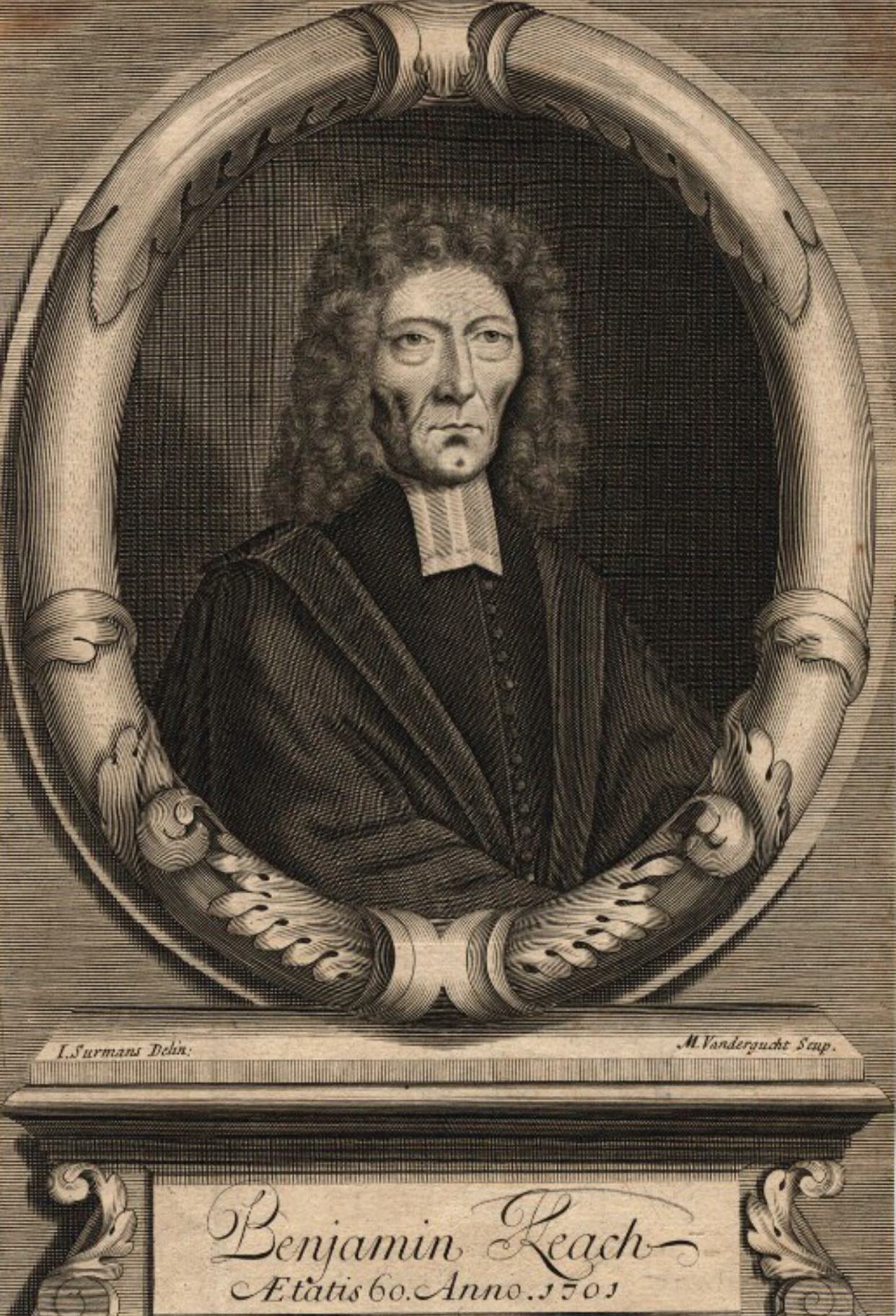
Benjamin Keach's chapter on "Epwtesis (Erotesis) or Interrogation" addresses the theological significance of the figure of interrogation as it appears in Scripture. Keach argues that interrogative language enriches understanding by emphasizing divine truths and invoking contemplation of God's power and grace. He employs various Scripture references, such as Psalm 15:1 and Isaiah 53:8, to illustrate how the interrogative form can convey both affirmation and negation, highlighting human limitations in relation to God's omnipotence. The significance of this doctrine lies in its demonstration of how Scripture's rhetorical elements serve theological reflection and deepen faith in God's character, ultimately instructing believers on the nature of divine communication and human response.
Key Quotes
“The interrogative particle who ... sometimes signifies an absolute negative ... as if he had said no man can help me.”
“Sometimes it does not absolutely deny but restrictively so that the particle quis who is put for quotusquisq how many which denotes fewness or paucity.”
“An interrogation which denotes absurdity in a way of exploring it ... How can a man be born when he is old?”
“The use of interrogations is various and almost serves every affection.”
What does the Bible say about interrogation in scripture?
The Bible uses interrogation to convey various meanings, such as expressing doubt, admiration, or emphasizing a divine truth.
Genesis 18:14, Genesis 17:17, Psalm 32:9
Why is understanding biblical questions important for Christians?
Understanding biblical questions helps Christians engage deeply with scripture and recognize God's attributes and intentions.
Job 38:2-3, Psalm 73:11, Psalm 139:17
How do we know God's sovereignty is true?
God's sovereignty is affirmed throughout scripture, assuring us that He is in control of all things.
Romans 8:28, Ephesians 1:11, Isaiah 46:10
CHAPTER V
OF AN Epwthsiv (EROTESIS) OR INTERROGATION.
To the foregoing five, we may add this figure in logism, viz., Epwthsiv, which signifies interrogation, or asking a question: which because it is peculiar to the idioms of the Hebrew and Greek, of the Old and New Testament; we will briefly and particularly treat of, (1.) With respect, to its force, energy, or peculiar emphasis. (2.) With reference to its use. The first we will consider according to the order of interrogative words.
The interrogative particle, who, besides its ordinary grammatical signification, which simply denotes asking, (Ps 15:1, and Ps 24:3; Isa 42:24, and Isa 63:1, [&c.,]) sometimes signifies an absolute negative, when the speech is of persons; as Ps 94:16, "Who will rise up for me against the evil-doers? or, who will stand up for me against the workers of iniquity?'' as if he had said, no man can help me; so have I been dealt withal: it is only God can relieve me, as verse 17, Ps 106:2, "Who can utter the mighty acts of the Lord? who can show forth his praise?" that is, none can do it; yet Ps 9:14, David says, "That I may show forth all thy praise in the gates of the daughter of Sion:" which text R. Kimchi thus reconciles; viz., in the former text we are to understand the praise of God, with reference to those great things which he had done for his people in general: in the latter, what he had done for David in particular. We may add, that the first place may be meant of the most perfect praise of Jehovah, in the celebrating of which no proportion can be stated so as to correspond with it: the latter, an earnest endeavour to return thanks and praise to the very utmost of human faculty: see Ps 40:5, and Ps 113:5, "Who is like unto the Lord our God?" that is, there is none amongst men, who can so really condole your case, and so mightily help you; for God was, and is, both willing and able. He speaks here of a divine grace, aid, and help: there is his gracious encouragement given for our hope in the next verses.
Isa 53:8, "Who can declare his generation?" that is, none can, because he is eternal. Heb 1:5, "For unto which of the angels said he at any time, thou art my son," &c.; verse 13, "But to which of the angels said he at any time, sit on my right hand," &c., that is, he never said so to any of the angels: see Isa 40:13-14; Lu 14:5; Joh 8:46; Ro 8:31,33-35; 1Co 9:7.
Sometimes it does not absolutely deny, but restrictively, so that the particle quis, who is put for quotusquisq, how many; which denotes fewness, or paucity; as Ps 90:11, "Who knoweth the power of thine anger?" that is, they are indeed but few, to wit, the servants of the Lord: as verses 13, 16, Isa 53:1; Ho 14:9. Sometimes it denotes the difiiculty of the question asked: 1Sa 2:25, "If a man sin against the Lord, who shall intercede for him?" that is, how difficult is it to appease the Lord, when he is angry for our sins?" Pr 31:10, "Who can find a woman of strength?" (or activity, viz., a virtuous woman?) this does not signify that such are nowhere to be found, but that they are rare: see Mt 19:25-26; Mr 10:26, with veise 23.
The interrogative, an, nunquid, whether, besides its common signification, which simply and affirmatively asks a question; Ge 18:21; Nu 13:19; Ro 3:3,5-6, (&c.,) sometimes denotes an absolute negation, as Ge 18:14, "whether is there any thing too hard for the Lord?" that is, there is nothing too hard for him: verse 17, "Whether shall I hide from Abraham the thing I am about to do?" that is, I will not hide it from him: Ge 30:2, "Whether am I in God's stead, who hath withheld from thee the fruit of the womb?" as if he had said, can I arrogate that to myself, which is the work of God? (that is, I can by no means do it,) "He made thee barren, and he only can make thee fruitful." See Ge 50:19; Job 40:20, (&c.,) Joe 1:2, (&c.)
On the contrary, a negative interrogative, as, is not, is to be understand affirmatively, as Ge 13:9, "Is not the whole land before thee?" that is, the whole land is before thee; Ge 37:13, "And Israel said unto Joseph, do not thy brethren feed the flock in Shechem?''" that is, they do so: Ex 4:14, "Is not Aaron the Levite thy brother, whom I know to be eloquent?" that is, I know that he is so: see De 11:30; Jos 10:13; Ru 2:9; 3:1; 1Ch 21:17, (see 2Sa 24:17,) Job 7:1; Ps 56:8,13; Ec 6:6; Isa 50:2, (with Isa 59:1,) Jer 23:24; Joe 1:16; Am 2:11; 5:20; Ob 1:5,8-9; Jon 4:11; Mt 7:22; Mr 12:24, (see Mt 22:29,) Joh 4:35; 6:70, and Joh 11:9; 1Co 10:16; Heb 1:14.
We are especially to note that there are some places, which affirmatively ask, in which there is an affirmative sense, or in which the negative particle no is to be understood; as 2Sa 15:27, "The king said unto Zadok the priest (art not) thou a seer?" that is, thou dost perfectly see how things go; see Eze 8:6; 1Sa 2:27; 1Ki 16:31; Jer 31:20, and Jer 23:23.
The interrogative, pwv, quomodo, how, sometimes absolutely denies; Ex 6:12,30; De 7:17; Jg 16:15; Ps 73:11, and Ps 137:4; Mt 12:26,34; 23:33; Mr 4:13; Lu 6:42," Ro 10:14-15; 1Co 14:7,9,16; 1Ti 3:5; Heb 2:3 (&c.)
Why, therefore, XXXX, is often put for prohibition; Ge 27:45, "Why should I be deprived of you both in one day?" that is, let me not be deprived of both: 1Sa 19:17, "Why should I kill thee?" that is, let me not kill thee: see 2Sa 2:22; 2Ch 25:16; Ps 79:10; Ec 5:5, and Ec 7:17-18; Jer 27:13,17, and Jer 40:15; Eze 33:11; Da 1:10.
The use of interrogations is various, and almost serves every affection;
1. An interrogation, which denotes absurdity in a way of exploring it; as Joh 3:4, "How can a man be born when he is old, can he enter a second time into his mother's womb?" as if he had said, this is absurd, and in my judgment cannot be; Joh 6:52, "How can this man give us his flesh to eat?" as if he had said, this is most absurd: see verse 60, and chap. xii. 34.
2. Admiration, Ge 17:17, "Shall a child be born unto him that is an hundred years old? and shall Sarah that is ninety years old bear?" This is an interrogation, admiring the divine power, and comparing it with his own and his wife's impotency: as Ro 4:19,21; more examples, see Ge 27:20; 42:28; Song 3:6; Ps 133:1; Isa 1:21, and Isa 13:1; Eze 16:30; Mt 21:20; Mr 6:37.
3. Affirmation, of which we have given examples in the foregoing pages.
4. Demonstration of a certain subject, of which some thing is affirmed or predicated, Eze 8:6, "Son of man, seest thou what they do?" as if he had said, behold, thou art autopthv, a spectator, or witness of their impiety, idolatry, and abomination. Mt 11:7-9, there are certain interrogations proposed by our Saviour, the scope of which is to show who John was, and in his commendation to affirm or deny some things. And sometimes in this manner the question and answer are joined; both which are equivalent to a connective enunciation, whose antecedent is taken from the question, and the consequent from the answer: as Ps 25:12, "What man is he that feareth the Lord? him shall he teach in the way that he shall choose;" verse 13, "His soul shall lodge in goodness, and his seed shall inherit the earth," that is, these things shall be conferred on him that fears the Lord: so Ps 34:12-13; 107:43; Jer 9:12; Ho 14:9; see also Pr 22:29, with Pr 29:20.
5. In a matter of doubt; Ge 18:12, "Therefore Sarah laughed within herself, saying, after I am waxed old, shall I have pleasure?" These words denote diffidence and doubt, and the unlikelihood in her judgment of what was promised, as the following words of the Lord manifest. Ro 10:6, "But the righteousness which is of faith, speaketh on this wise, say not in thy heart, who shall ascend into heaven?" verse 7, "Who shall descend into the deep" (or abyss?) These interrogations of doubt, are brought to denote the uncertainty of self-righteousness, which righteousness by faith wholly takes away; consult the next chapter.
6. Exaltation and extenuation. Rab. Kimchi, in his Comment on Jer 22:23, says, that the interrogative particle XXXX, quid vel quam, what or how, is used in a double signification, viz., to exalt a thing, as Ps 31:19, "how great is thy goodness?" Ps 139:17, "How precious also are thy thoughts unto me, O God?" Or to extenuate a thing, as Ps 8:4, "What is man, that thou art mindful of him?" that is, how inconsiderable, and unworthy is he of thy grace and favour? So Ps 144:3. See also Isa 2:11-22, with Ps 146:3-4; 1Sa 9:21; 2Sa 7:18; Ge 23:15; Ex 3:11; 1Ki 9:13, (&c.)
Expostulation, accusation, or chiding, Ge 12:18, Pharaoh chid Abraham, "What (is) this (that) thou hast done unto me? Why didst thou not tell me that she was thy wife?" verse 19, "Why saidst thou, she is my sister?" so Ge 31:26-27,30, and Ge 44:4,15. Other examples are Ps 11:2; 50:16; Isa 5:4, and Isa 58:3; Eze 12:22; Da 3:14, (&c.)
8. Indignation, as Ps 2:1, "Why do the heathen rage, and the people meditate vain things?" That these are words of indignation, appears, verse 5. Mt 17:17, "0 faithless and perverse generation, how long shall I be with you? how long shall I suffer you?" this was an apostrophe to the apostles by way of indignation, as appears from verse 10.
9. By way of insultation and irony, as Ps 42:3, "While they continually say unto me, where is thy God?" so Ps 79:10, (&c.) More examples see Jer 22:23, and Jer 23:33, with, verse 36, Joh 18:38.
10. By way of lamentation, as Ps 3:1, "Lord, how are they increased that trouble me?" (or, Lord, how numerous are mine enemies?) Ps 22:1; La 2:20; Ps 77:7-9; Hab 1:17.
11. By way of commiseration, or pity, as La 1:1, "How doth the city sit solitary that was full of people," &c. La 2:1, "How hath the Lord covered the daughter of Sion with a cloud in his anger?" &c. so, frequently in the Lamentations.
12. By way of negation, concerning which we refer you where we have spoken a little before of the emphasis of an interrogation.
13. By way of wishing, as 2Sa 23:15, "Who will make me drink of the water of the well of Bethlehem?" that is, O that somebody would make me drink: see Ro 7:24.
14. By way of prohibition, or dissuasion from a thing, of which you may see the fourth and fifth paragraphs before going.
15. By way of rejection, or refusing, as Nu 23:8, "How shall I curse him, whom God hath not cursed? and how shall I defy (or detest,) him whom the Lord hath not defied," (or detested?) as if he had said, I neither can, nor dare do this thing; see Jg 11:12; 2Sa 16:10; 2Ki 17:18; 3:13; Ho 14:9; Joe 3:9; Mt 8:29; Mr 5:7; Lu 8:28; Joh 2:4.

Comments
Your comment has been submitted and is awaiting moderation. Once approved, it will appear on this page.
Be the first to comment!