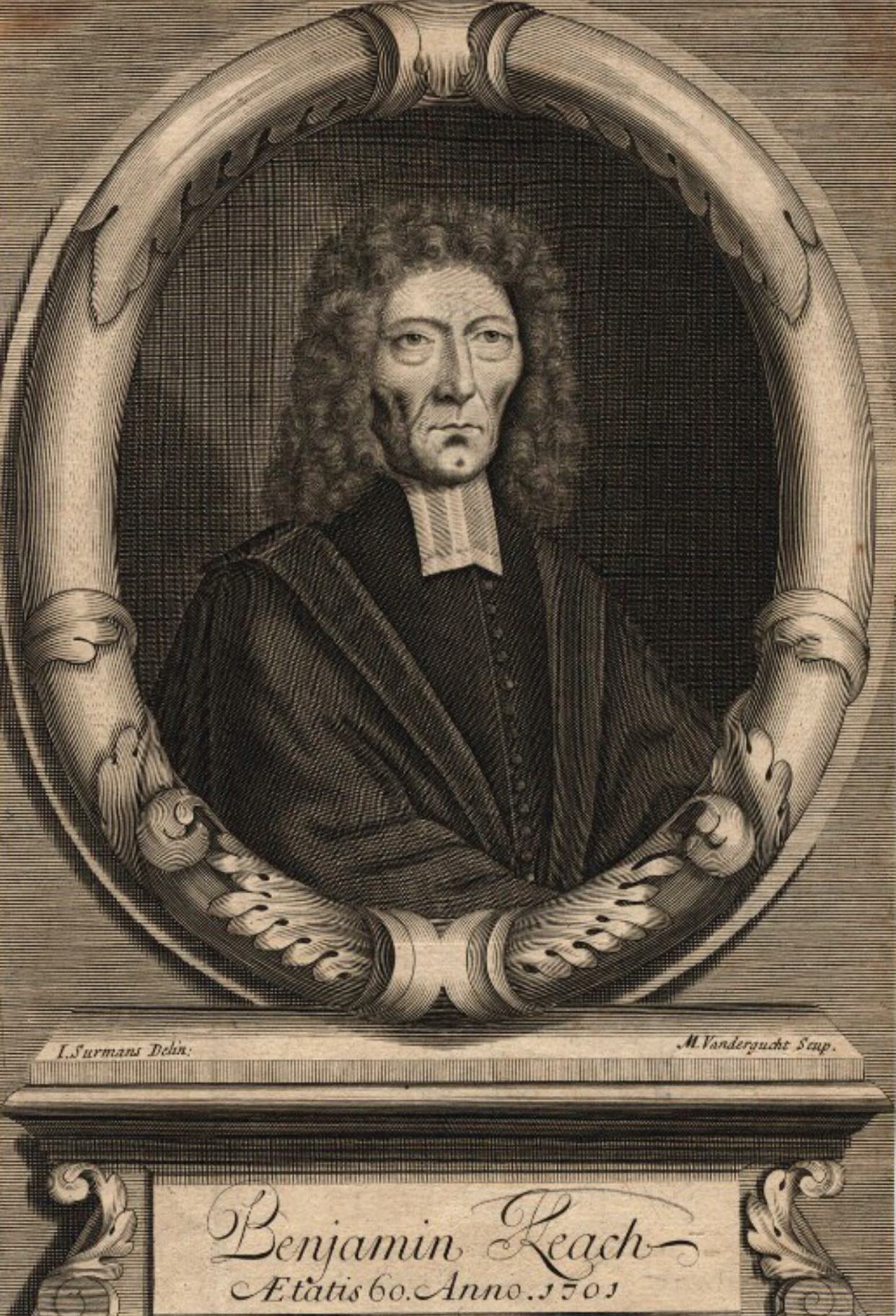
The theological summary of Benjamin Keach's article "God a Father" focuses on the multifaceted role of God as Father, emphasizing His paternal attributes towards His creation and particularly towards believers. Keach outlines four respects in which God is identified as Father: as the eternal Father of Jesus Christ, the creator of humanity, the source of mercies, and the Father of adopted believers. He supports his arguments with various Scripture references, including John 1:14, Romans 8:15, and 2 Corinthians 1:3, which illustrate God's loving and nurturing nature. The practical significance of this doctrine lies in its assurance to believers of their identity as children of God, encouraging them to trust in His providential care and to live according to their identity as heirs to His kingdom.
Key Quotes
“God is the Author of spiritual being to his people of his own will begat he us with the word of truth.”
“He clothes them with the garments of salvation covers them with the robe of righteousness.”
“The ears of the Lord are ever open to the cries of his children.”
“This spiritual sonship is the greatest and chiefest of blessings and privileges because it gives a title to an everlasting kingdom in heaven.”
What does the Bible say about God as a Father?
The Bible presents God as a Father in various respects, such as being the eternal Father of Jesus, the creator of humanity, and the source of mercy and grace.
John 1:14, Ephesians 1:3, Luke 3:38, 2 Corinthians 1:3, Ephesians 4:6, Romans 8:15, Galatians 4:6
How do we know God loves us as a Father?
We know God loves us as a Father through His creation of us, the sending of His Son, and His continuous care and provision.
John 3:16
Why is understanding God as our Father important for Christians?
Understanding God as our Father is vital for Christians because it shapes our identity, influences our relationship with Him, and gives us comfort in adversity.
Romans 8:15, Galatians 4:6
THE title of Father is attributed to God in a four-fold respect:
1. As he is the eternal Father of our Lord Jesus Christ, who is his only-begotten Son, Joh 1:14; Eph 1:3.
2. As he is the Father of Adam, and all his natural offspring in respect of creation, Lu 3:38.
3. As he is the Father of mercies, all flowing from his bountiful hand to the creature, 2Co 1:3; Eph 4:6.
4. The Father of all good men in respect to adoption and regeneration wrought in them by the power of his grace, Ro 8:15; Ga 4:6.
The word Abba is a Syriac word (XXXX) and is derived from the Hebrew XXXX Ab, from XXXX to will or acquiesce. It is only found in three places in scripture; as Mr 14:36; Ro 8:15; Ga 4:6, and in all those places the[1] Greek word, o pathr a Father, is joined to it; which intimates (as learned men say) that the Gospel-grace belongs to the Greeks, who were Gentiles, as well as the Jews. It is observed, that this is the first word that usually children speak, which carries a spiritual allusion.
[1] Voci aBBa statim additur vocula echghtikh o pathr, quod fit, ut Scriptura testetur, Deum pertinere ad Græcos. Glaff. Phil. Sacra, p. 305.
[2] "Whether it be read backwards or forwards, it sounds Abba, which by a sweet allusion seems to imply, that God is the Father of the faithful, even when in their crosses and calamities he seems averse to them.
[2] Quidem suavi allusione dicam Abba voce, quæ retro eodem modo legitur, usum esse Apostolum, hie et alias, ut innueret, Deum pioraai esse patrem etiamsi ab iis aversus esse videatur in cruce et culumitalibus Id. Ibid.
Others think that the gemination or doubling of the word in Syriac and Greek, carries an emphasis, signifying that God is always a Father, and that the invocations of his children should be put up with earnest geminations, and vehemency of desire.
Jerom makes the latter an interpretation of the former, as Re 1:7, nai kai amhn, even so, and Amen; where the first is the explication of the second, being a Hebrew word.
In the ensuing parallel we take the title Father in the fourth respect above mentioned; and so it may not unfitly be termed a metaphor, taken from a natural or earthly Father: because God has the same love to, and care of his spiritual or adopted children, as worldly parents have of their natural offspring; and in what degree of paternal eminence God excels them, shall be showed in the disparity.
METAPHOR
I. A FATHER gives being to his children, as Jacob begat the twelve patriarchs, Ac 7:8; Ex 1:5; hence his posterity are said to proceed out of his loins; Ge 48:5, and are called his issue, or offspring.
PARALLEL
I. GOD is the Author of spiritual being to his people: "of his own will begat he us with the word of truth," Jas 1:18, "blessed be the God and Father of our Lord Jesus Christ, which according to his abundant mercy hath begotten us again unto a lively hope," &c. 1Pe 1:3. Hence believers are called his children, begotten by his holy word and Spirit.
METAPHOR
II. A Father makes provision for the nursing, nourishment, and bringing up of his children.
PARALLEL
II. God, the spiritual Father, nourishes, and with paternal tenderness brings up his children, Isa 1:2, hence it is said, they are borne up by him from the belly, and carried from the womb," Isa 45:3; "to be laid to the breast like new-born babes, that they may receive the sincere milk of the word," 1Pe 2:2.
METAPHOR
III. Fathers clothe their children; Jacob made Joseph a coat of many colours, Ge 37:3; they allow, not only for necessity, but also for ornament, that they may take the more delight in them.
PARALLEL
III. God clothes his saints ---"He that so clothes the grass of the field, shall He not much more clothe you, O ye of little faith?" Mt 6:30. He clothes them with the garments of salvation, covers them with the robe of righteousness," Isa 61:10, and adorns them with the graces of his Spirit, and evangelical holiness, that he might take the more delight in them.
METAPHOR
IV. A Father dearly loves, highly esteems, and greatly pities his children: if they are sick, or under any calamity, his tender and compassionate bowels yearn with pity and sympathy to them.
PARALLEL
IV. "God so loved his children, that he sent his only begotten Son to save them," Joh 3:16; in love to their souls be delivers them, Isa 38:17; "they are precious in his sight, and honourable, and therefore he hath loved them," &c. Isa 43:4; "like as a father pitieth his children, so the Lord pitieth them that fear him," Ps 103:13.
METAPHOR
V. A loving Father protects and defends his children from hurts, injuries, and abuses, to the utmost of his power, taking their part, and vindicating their innocency against all their enemies, whom he warns not to wrong them at their peril.
PARALLEL
V. God saves and defends his children from their soul-enemies, as sin, Satan, spiritual wickedness in high places, which without his help would be too strong for them, Ps 59:9,16; 62:2; Eph 6:12; Ps 94:22, therefore he covers them with his wing from the rage and malice of persecutors: he is always ready to take their part,---"If it had not been the Lord who was on our side, (says David) when men rose up against us, then they had swallowed us up quick," &c. What a strict charge does the Lord give to the ungodly, touching his Israel? "When they went from nation to nation, and from one kingdom to another people, he suffered no man to do them wrong; yea, he reproved kings for their sakes, saying, touch not mine Anointed, and do my prophets no harm," 1Ch 16:20-22; Ps 105:14; 15; Ge 12:17; 20:3.
MATAPHOR
VI. The thoughts of a tender Father run out most towards his weakest children, who are least able to help themselves, giving special charge to such as are entrusted to look after them, to take particular care of them.
PARALLEL
VI. God is exceeding tender and thoughtful of the babes and weak ones among his people, and gives particular charge concerning them unto his ministers---"Strengthen ye the weak hands, and confirm the feeble knees." Isa 35:3; Heb 12:12. And in another place, "Comfort the feeble-minded, support the weak," 1Th 5:14. He is said to "gather the lambs with his arm, and carry them in his bosom, and gently to lead those that are with young," Isa 40:11.
METAPHOR
VII. A Father provides food and physic for his children:---if they ask bread, he will not give them a stone; nor a serpent, if they ask him a fish, Mt 9:10. How ready was the nobleman to seek Jesus from place to place, that he might heal his sick son at Capernaum? Joh 4:46
PARALLEL
VII. God provides food for his people, and whatsoever else they want---"The young lions do lack and suffer hunger, but they that seek the Lord shall not want any good thing. Ps 23:1-2, and Ps 34:8-10. "There is no want to them that fear him: He abundantly blesses Sion's provision, and satifies her poor with bread," Ps 132:15, gives meat to them that fear him, for he is ever mindful of his covenant---He provides physic for their soul diseases---"Bless the Lord, O my soul, (says David) who forgiveth all thine iniquities, who healeth all thy diseases," Ps 103:2-3.
METAPHOR
VIII. A Father takes delight to hear his young children learn to speak; and is better pleased at their endeavour to express their minds, (though in lisping, stammering, or inarticulate language) than in the most florid rhetoric, or quaint deliveries of others; and will answer their request, before the most persuasive oratory of strangers.
PARALLEL
VIII. The Lord takes great delight to hear his little children (his babes in Christ) learn to pray, and open their wants to him; and though they stammer out a request or sigh, or lisp out a petition, he is willing to hear and answer them, Pr 15:8; 11:20; 12:22; Isa 61:1; Lu 4:18; Isa 12:3. "His Spirit helps their infirmities, (for they know not what they should pray for as they ought) and maketh intercession for them with unutterable groans, Ro 8:26. "Though (like the prophet) they chatter like a crane," yet he will not despise them, Isa 38:14, but rather lend his ear to them, than to the vain pomp and empty ceremonies of formalists, and the specious performances of the hypocrite, Pr 15:8.
METAPHOR
IX. A loving and discreet Father proposes himself as a pattern and example of good to his children, and exhorts them to imitate him.
PARALLEL
IX. God is proposed by Christ as a holy pattern, Le 19:2; 11:44; 20:7, and example to his saints, "Be perfect, as your Father in heaven is perfect," Mt 5:48. And in another place, "Be ye merciful, as your Father also is merciful," Lu 6:36. God is not soon angry, but patient and long-suffering, so should his children be, &c. Col 1:11.
METAPHOR
X. A father loves those children best that are most like him.
PARALLEL
X. The Lord God loves such of his spiritual children best, who walk closest with him, who are holy as he is holy, pure as he is pure, 1Pe 1:15; who "are changed into his image," 2Co 3:18, made partakers of the divine nature. Daniel was greatly beloved, Da 9:23; 2Pe 1:4, and David is recorded to be "a man after God's own heart." Ac 13:22, by way of eminency; and John is called the beloved disciple, after the same manner: for it is agreeable to reason and equity, that where there is the nearest similitude, there should be the dearest love and union.
METAPHOR
XI. A Father takes care to educate his children, and instruct them in all points of manners and good behaviour in the various circumstances of their lives, at home and abroad; towards superiors, inferiors, and equals, towards each other; giving them precepts of good learning, and other qualifications suitable to their rank and qualities.
PARALLEL
XI. None teacheth like the heavenly Father, 1Jo 3:2-3; Joh 1:7; none more careful to train up and instruct his children in right ways: he hath given them his holy word, which is able to make them wise to salvation, Ps 25:4; 27:11; 2Ti 3:15. Prophets, evangelists, apostles, pastors, and teachers to instruct them. Rules to walk by, precepts of behaviour towards enemies and friends, high and low, rich and poor: "I will teach you (saith the Lord) what ye shall do." "He teaches sinners in the way," Lu 12:49; Eph 4:11; Ne 9:14; Isa 28:10. He teacheth the hand to war. It is he only that teacheth to profit, Isa 48:17. In a word, he hath given them the Lord Jesus, "in whom are hid all the treasures of wisdom and knowledge," Col 2:3.
METAPHOR
XII. Fathers are very ready to hear the humble suit and requests of their dear children, for such things as they stand in need of.---Isaac cries to his Father, and he answered, "Here am I, my son," Ge 22:7.
PARALLEL
XII. The ears of the Lord are ever open to the cries of his children: -"Ask and ye shall receive," &c., "whatsoever ye shall ask in prayer, believing, ye shall receive."---"This is the confidence that we have in him, that if we ask any thing according to his will, he heareth us; and if we know that he heareth us, whatsoever we ask, we know that we have the petitions that we have desired of him." 2Co 6:3; Col 1:28; Ex 4:15; Ps 25:8-9; 2Sa 22:35; Ps 18:34; Col 2:3; Ps 34:15; 1Pe 3:12; 1Jo 5:14-15; Mt 21:22; 5:42; 1Jo 3:22; Mt 7:7.
METAPHOR
XIII. If a prudent Father grants not his childrens' request, it is because he knows they ask things that are not good for them, but such as would prove in conclusion hurtful, and prejudical.
PARALLEL
XIII. The Lord God knows what is best for his children, and never fails to supply them, if they ask in faith.---He never refuses, but when they ask amiss.---"Ye ask, and receive not, (says the apostle James) because you ask amiss." Lu 6:40; Joh 16:23; Jas 1:5-6; 4:3.
METAPHOR
XIV. If a tender parent sees his children play with any hurtful thing, or to be fond of that which may wound, ill, or destroy them, he takes it away from them.
PARALLEL
XIV. The heavenly Father, when Israel would be going on in a course of idolatry and sin, tells them, "He will hedge up their way with thorns, and make a wall, &c., that is, to stop Israel's pursuit, insomuch that she shall not overtake her lovers," Ho 2:23; 6:7. See Burroughs on this place. As the Lord has a hedge of protection to secure his people from evil, Isa 5:5; Job 1:10, so he has a hedge of affliction to keep them from evil.---The hedge of thorns is a metaphor, and signifies much trouble and difficulty of going over it; and the wall, being a thicker substance, keeps them from passing through: his sore and heavy afflictions, are but as a hedge, in a way of mercy, to keep his children from evil, the pursuit of which would ruin them.
METAPHOR
XV. Fathers take care of their children, and are mindful of their welfare, when at the greatest distance.
PARALLEL
XV. The Lord God, in seeming absence or distance from his children, never forgets them, but has them in continual remembrance, as in the case of Ephraim, Isa 49:15; Jer 31:20.
METAPHOR
XVI. A Father overlooks the common weakness and infirmities of his children, and pardons them upon their humble applications for it.
PARALLEL
XVI. The heavenly Father overlooks the frailties and miscarriages of his children, through Christ, for he accepts of a willing mind, 2Co 8:12; Heb 8:12, and highly prizes sincerity.---He is merciful to their unrighteousness, and their sins and iniquities will he remember no more, 1Jo 1:8; Jer 3:13; he is free to pardon the penitent and humble confessor, Ps 32:5.
METAPHOR
XVII. A loving Father is much grieved if his children prove wicked and rebellious, and useth all gentle and mild ways to reclaim them.
PARALLEL
XVII. What a lamenting prosopopoeia does the Lord use by the prophe---"Hear, O heavens, give ear, O earth---I have nourished and brought up children, and they have rebelled against me," Isa 1:2, (&c.). How great his patience, Jer 3:7, is, and how gently he deals with them, Mt 23:37; and how frequent his calls to repentance are, the scriptures clearly evidence, Ro 15:5.
METAPHOR
XVIII. If a mild fatherly entreaty, and gentle usage, will not reclaim them, the Father uses a rod, and chastises them because he loves them, Pr 22:15, and Pr 23:13.
PARALLEL
XVIII. God, the heavenly Father (if his children be stubborn and perverse) visits their transgression with a rod, and their iniquity with stripes, yet he takes not his loving-kindness from them, Mic 6:13; Ps 89:31-32. To be without chastisement, is a note of bastardy, Heb 12:8; 5:6-7, and to be corrected, is a certain sign of God's love, for those whom he loves he chastens, Re 3:19; Pr 3:11.
METAPHOR
XIX. A Father corrects his children, not that he delights in it, but because it is absolutely necessary; he proportions the punishment to the crime, his bowels yearning upon them the while; and when the chastisement has effected its end, he is ready with open arms to receive them, as in the case of the prodigal, Lu 15:20.
PARALLEL
XIX. God, the great Father, does the like; "My bowels (saith he) are troubled (for repenting Ephraim) I will surely mercy have upon him," Jer 31:18-20; Isa 27:7. "In all their affictions he was afflicted," Isa 62:9; "he chastens for our profit, and corrects in measure," Heb 12:13; "he executes not the fierceness of his anger to destroy Ephraim," Jer 30:11; "because he is God, and not man," Ho 11:9; but in love and pity redeems (his saints) &c., Isa 63:9; Ro 8:28.
METAPHOR
XX. A Father provides a portion for his children, and takes care of their future maintenance and subsistence, it being his duty lay up for them, 2Co 12:14.
PARALLEL
XX. God lays up for his children: he not only distributes plentifully of his good things now, but has much more in store and reversion for them. "O how great is thy goodness (says the Psalmist) which thou hast laid up for them that fear thee!" Ps 31:12, "Henceforth (saith the apostle) is laid up for me a crown of righteousness," &c., 2Ti 4:8.
METAPHOR
I. Earthly Fathers are men subject to passions, and may sometimes unjustly harden their hearts, and prove cruel to their children.
DISPARITY
I. Our heavenly Father is God, and not man, and therefore doth whatsoever is good and right; never wronging any of his children: "In righteousness hast thou afflicted me." Jer 31:3
METAPHOR
II. Earthly Parents, though kings and potentates, are men of little dignity and grandeur, in comparison of the greatness and glory of the Almighty.
DISPARITY
II. But our heavenly Father has no superior in quality, nor equal in dignity; his majesty is infinite, and his glory unspeakable; "Ten thousand times ten thousand, and thousands of thousands of angels wait upon his throne." Re 5:11, the least of which excels all the kings of the earth.
METAPHOR
III. Earthly Fathers may not know the condition of their remote children, or may be unable to help them in straits, &c., or send seasonable supplies.
DISPARITY
III. God knows all the wants of his children, in what place or condition soever they are in, and can give them sufficient, suitable, and seasonable relief, though the powers of hell and wicked men should be set against them, Php 4:19; Isa 49:8.
METAPHOR
IV. Earthly Parents may be in a moment made poor, and their children brought to beggary; or by giving may impoverish themselves.
DISPARITY
IV. God can never be made poor, nor is his store the less for distribution---his spiritual children are beyond all possibility of want, Isa 54:10; Ps 34:8-10.
METAPHOR
V. Earthly Parents (though they instruct their children, yet) cannot convert the heart.
DISPARITY
V. God speaks to the heart and fastens his word, as a nail in a sure place, Ho 2:14. He makes the heart of stone to be a heart of flesh, Eze 36:26. He speaks the word of grace to them, and gives them the grace of the word, Jer 24:7.
METAPHOR
VI. An earthly Parent cannot so give his estate, as that all his children (collectively considered) may possess all, and yet every one possess the whole, as if no other had a share in it.
DISPARITY
VI. God makes every one of his children joint heirs of the eternal inheritance; and yet it is so, that every one hath the whole property, they shall all possess a crown and kingdom of joy and glory jointly, 2Ti 4:8; Ro 8:17, and yet so that every one shall have it wholly to himself, a whole God to himself, Ps 73:26; La 3:23; a whole Christ to himself, a whole heaven to himself, every one has God for his portion particularly, and Christ for a Husband, and yet all of them jointly do enjoy them together.
METAPHOR
VII. Fathers are mortal, they are children of yesterday, they pass away, and leave their children fatherless.
DISPARITY
VII. God is immortal, from everlasting to everlasting: he is called the living Father, the Father of eternity, and so incapable of any change: he is a Spirit, and the Father of spirits and life.
METAPHOR
VIII. The best of Fathers are no perfect examples or patterns of goodness, for their children may not only equal, but excel them.
DISPARITY
VIII. But God is a perfect pattern to all his children; those perfections and excellencies of the Divine Being that are communicable are set before us for our imitation, and though we should do our best to be as like him as we can, yet when we have done all, and gone as high as we are capable to go by the assistance of grace, we shall, notwithstanding, infinitely fall short of that perfect copy.
COROLLARIES.
1. FROM the foregoing parallels we may infer, that believers (as such) are of the most glorious and illustrious extraction in the world; for the Almighty God is their Father!
2. That this spiritual sonship is the greatest and chiefest of blessings and privileges, because it gives a title to an everlasting kingdom in heaven.
3. That saints should be encouraged against doubts, dejection, and despondency in affliction, because their Father has provided so glorious an estate in reversion for them, and which they shall shortly possess.
4. That saints have cause to be comforted, for they have a gracious Father ready to receive all their applications; and in all cases help, relieve, and defend them.
5. That it is the duty of saints to behave themselves suitable to their quality, and not debase their, birth and pedigree, nor stain the glory of their Father's house by sinful, base, reproachful actions. A sordid employ, and base society, do not become a king's son.
6. As God is the best of Fathers, so let children labour to be the best of children.
7. Let them beware how they grieve his Spirit, or provoke him to take the rod.
8. This may support us under the loss of our nearest and best relations.

Comments
Your comment has been submitted and is awaiting moderation. Once approved, it will appear on this page.
Be the first to comment!