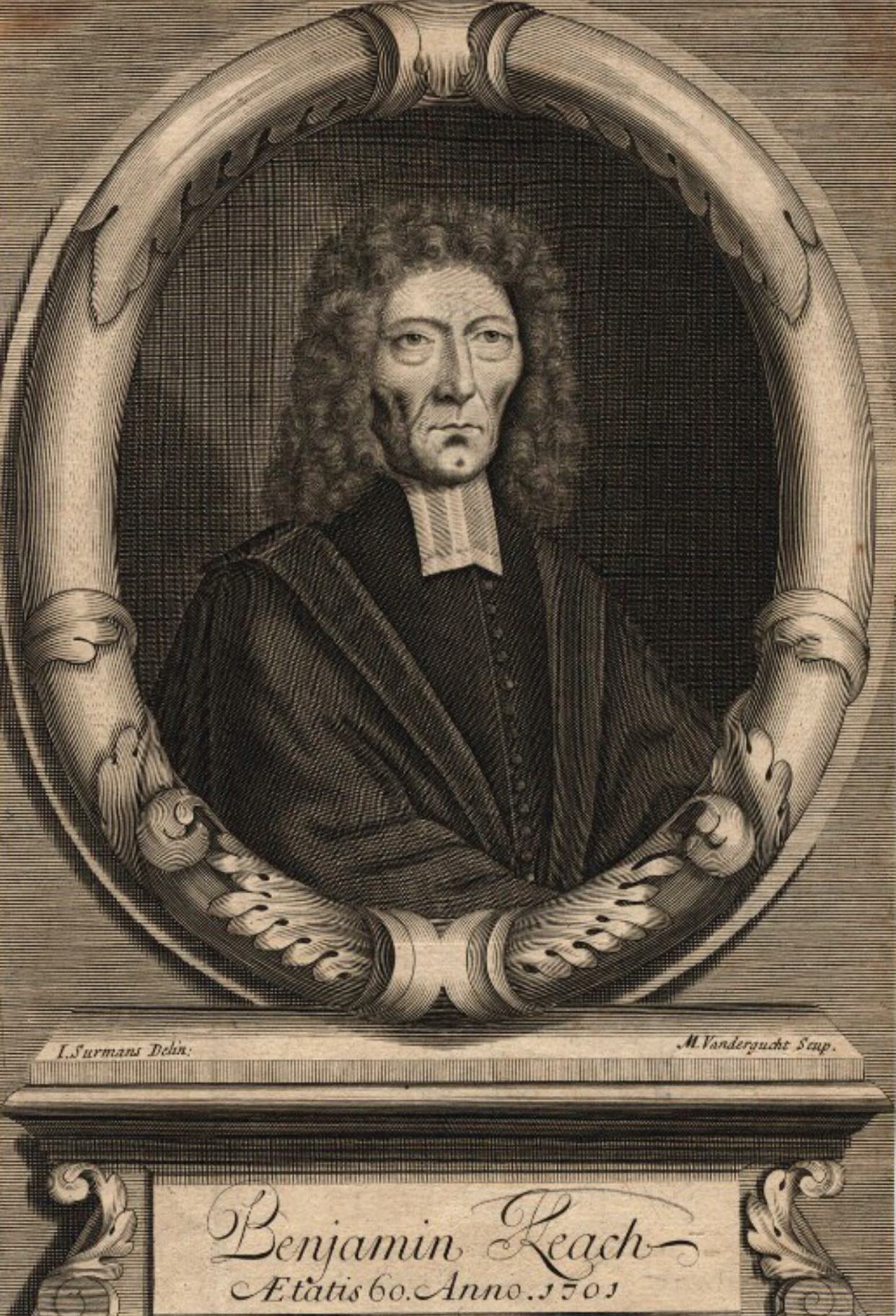
In Benjamin Keach's work, the main theological topic revolves around the use of various schemes of sentences and amplifications found in Scripture to convey deeper truths. Keach outlines different rhetorical figures such as etiology, metastasis, and antithesis, which are employed to elucidate the richness of biblical texts. He extensively references Scripture passages, for example, Romans 1:13-17 and Isaiah 30:33, to illustrate how these schemes elucidate theological concepts, such as the nature of sin and the power of the Gospel. The doctrinal significance of this analysis is profound for Reformed theology, as it emphasizes how the layers of meaning in Scripture enhance understanding of God's revelation, affirming the importance of careful exegesis in preaching and teaching.
Key Quotes
“Metastasis signifies translation and is when the cause or blame is transferred from one to another.”
“Topographia... exhibiting [a place] as it were to our view... as the description of hell.”
“Antithesis contention is when a thing is illustrated by its contrary opposite.”
“In a parable there are two parts: The first is the thing brought as a similitude; the second is the application of that thing which is as it were the marrow kernel or mystical sense of it.”
What does the Bible say about the significance of types and figures?
The Bible uses types and figures to foreshadow and illustrate spiritual truths, particularly concerning Christ and His work.
Hebrews 8:5, Romans 5:14
How do we know that Christ is the fulfillment of Old Testament types?
Christ fulfills Old Testament types as He embodies the prophecies, rituals, and figures prefigured throughout the Scripture.
1 Corinthians 5:7, Matthew 12:40, Hebrews 9:11-12
Why is understanding types and figures important for Christians?
Understanding types and figures helps Christians grasp the unity of Scripture and the deeper meanings of Christ’s work of redemption.
Romans 15:4, Colossians 2:17, Hebrews 10:1
CHAPTER VII.
OF OTHER SCHEMES OF SENTENCES AND AMPLIFICATIONS.
I. Schemes taken from Causes.
A Itiologia, Ætiologia, according to its signification, is the rendering of a reason of a word or deed; as Ro 1:13-14, "Now I would not have you ignorant, brethren, that oftentimes I purposed to come to you, (but was let hitherto,) that I might have some fruit among you also: Even as among other Gentiles. I am debtor both to the Greeks, and the barbarians," &c., verses 15, 16,---"I am ready to preach the Gospel to you that are at Rome also: for I am not ashamed of the Gospel of Christ; for it is the power of God unto salvation, to every one that believeth, &c. See Ro 3:20, and Ro 4:14-15.
Metastasiv, Metastasis, signifies translation, and is when the cause or blame is transferred from one to another, as Ro 7:8, Paul says, that the law augments sin; yet verse 14, following, shows that it is the fault of our corrupt nature, see Ro 8:3; 1Co 4:6, (&c.)
II. Schemes taken from Adjuncts and Circumstances.
Topografia, topographia, that is, the description of a place, is, when a place is accurately described, exhibiting it, as it were, to our view: as the description of hell, Isa 30:33; Lu 16:24, (&c.); the new heaven, and the new earth, in the elect, which shall be eternally glorified, Isa 65:17,(&c.,) Re 21:1, (&c.,) of sin, or the church environed with broad streams, Isa 33:20, (&c.,) by which description, its safety and divine defence from enemies is noted. Of the new temple and the admirable city, Eze 40:See Ps 42:6; 60:7, (&c.,) Ps 89:12, with verse 11.
Here note, that the climates or distinct parts of the earth, as the East, West, North, and South, when mentioned in scripture, are to be understood with respect to the situation of Judea, Jerusalem, and the temple, where the prophets lived in the land which God gave the Jews: only we must except some places in Ezekiel, who lived and wrote in Babylon. Note also, that the sea signifies the West, viz., the Mediterranean sea, which is on the west of Judea, Nu 2:18; Jos 16:3; Eze 42:19. Jerome on Eze 46., says, "it is a customary way of speaking in scripture, because of the situation of Judea, to call the sea the west." We may except Ps 107., where in the Hebrew text the sea signifies the South, viz., the "Red sea, which was on the South of Judea; see Ps 72:8; Ex 23:31, (&c.)
Xronografia, chronographia, a description of time pragmatografia, pragmatographia, a description of a thing or action, and proswpografia, prosopographia, a description of a person, or rather the circumstances (perizaseiv) of an historical speech simply and plainly delivered, than schemes; though by some accounted as such.
Upotupwsiv, hypotyposis, signifies representation, and is, when a thing is represented to the eye, so as that it may seem not to he told, but to he acted; as in that description of that horrible desolation of the earth, Isa 1:6, (&c.,) the whole 34 chapters. Jer 4:19-21,23-26,31. Of idols, Isa 44:9, and Isa 46:6, the humiliation and passion of Christ, Isa 53. Of famine or hunger, La 4:8-9. Of the triumph of Christ, Col 2:14-15. The Holy Spirit not only exhibits verbal but real hypotyposes; of which see our treatise of types, Article 3. To this head some refer eikwn, an image or representation of a thing, viz., when the glorious or illustrious figure, picture, or species of a thing or person is produced; as when Christ is represented by the sun, Mal 4:2; also when God is likened to a giant, or mighty man, scarce sober after drinking hard, and quarrelling with all he meets with, to denote his wrath against wicked men, and how severely he will punish them, Ps 78:65-66. When Christ is expressed by a spouse and a warrior, Ps 45. When the prosperous wicked man, is proposed as a green bay-tree, Ps 37:35-36, so that this is only an illustrating similitude.
Paqopoiia, pathopæia, an expression of affection, is when affections are clearly expressed by a plain speech, as of God, Isa 49:15; Jer 31:10; Ho 11:7-8. Of the apostle Paul, 1Co 4:14-15; 2Co 2:4; Ga 4:19-20; see Lu 18:9-14; Isa 3:16-17; Jer 48:3, (&c.)
Sullogismov, Sillogismus, Ratiocinatio, reasoning, especially so called, (which is also called emfasiv, Emphasis) is, when the greatness of a thing is manifested by some certain sign; as when the stature and strength of Goliah is set forth by his armour; 1Sa 17:4-6, (&c.) When Rehoboam the son of Solomon, said that "his little finger would be thicker than his father's loins," 1Ki 12:10. The grievousness of the burden or yoke laid upon the people, is noted, when by the signs of external peace, the greatness of inward and spiritual peace is denoted, as Isa 2:4, see also Isa 4:1; 49:20; Mt 10:30; 24:20; Lu 7:44, (&c.) But, speaking more accurately, either these things belong to a simple historical narration, or the tropes and their affections, of which we have treated, part 1:
III. Schemes taken from Disparates or different Things.
ParekBasiv, parecbasis, digression, is, when something is added besides the purpose, or exceeds the intended narration, Ge 2:8-15, where there is a digression respecting the habitation which God provided for the man he created, Ge 38. throughout is a digression, as also chapter 36. In the Epistles of Paul, there are many neat digressions, which are fairly, though with different reasons, brought to serve his present scope, returning by a circle of sentences to his first original purpose, Ro 1:1-8: the apostle from his name, digresses to his vocation, verse 1; then to define the Gospel, verse 2; then to describe Christ, verses 3, 4; again he comes to his own vocation, verse 5; at length he greets the Romans with grace and peace, and so ends the circle. His scope runs thus, "Paul the apostle of the Gentiles, separated unto the Gospel," verse 1, the Gospel is the doctrine of the Son of God, verse 2, 3; the Son of God is true God and man, verses 3, 2; by this Son of God and man, Paul was called to the apostleship, to preach among the Gentiles, verse 5; the Romans are Gentiles, verse 6, therefore let grace and peace from God the Father, and our Lord Jesus Christ, be to the Romans, verse 7. See 1Co 1:13, (&c.,) Eph 3:1, (&c.,) Col 1:3, to the end. There are many of these digressions in the epistles of Peter, and in his sermons, as they are described by Luke in the Acts, &c.
MetaBasiv, metabasis, transition, is, when the thing, or things, to be spoken, are briefly hinted or pointed at; as 1Co 12:31, "But covet earnestly the best gifts, and yet show I unto you a more excellent way." The first words respect what went before, and is their anakefalaiwsiv, or sum; the latter furnish them with the argument of what follows. See 1Co 15:1-2, and 1Co 11:17.
IV. Schemes taken from Opposites, or Contraries.
Antiqesiv, antithesis, contention; is, when a thing is illustrated by its contrary opposite:---As when the fortune of the wicked is opposed to the fortune of a good man, Ps 1 and Ps 37. See also Isa 1:21; 5:3, and Ps 59:9; La 1:1; Eze 16:33-34. Ro 5:6-8; 8:13,15; 2Co 4:17-18; Php 3:7-9,14; 2Pe 2:19, (&c.)
'AntimetaBolh, antimetabole, commutation or inversion, is a kind of a delicate permutation, (or change) of contraries one to another, as Mr 2:27, "The sabbath was made for man, and not man for the sabbath." More examples, see Joh 15:16; Ro 4:1-3, and Ro 7:19; 1Co 11:8-9; 2Co 12:14, (&c.)
'Antikathgoria, anticategoria, adverse accusation, or a transferring to the adversary, is when we fasten that upon our adversary which another was accused or suspected of, as Eze 18:29; 33:17.
Antiztrofh, antistrophe, inversion, is, when we retort any thing proposed as granted into the contrary. It is also called Biaion, violent: we have an example in the answer of Christ to the woman of Canaan, Mt 15:26-27, which bears this sense,---"Because thou art a dog (says Christ) the children's bread must not be thrown to thee---"yea but (says she) because I am a dog, you ought not to deny me the crumbs which fall from the table, &c."
Ocumoron, oxymoron, signifies one that is wittily foolish, and is when contraries are acutely joined, which seem at first sight to be nonsense, but upon better view to be elegant; as Job 22:6, "To strip the naked of their clothing." Now the naked have no clothes, and so cannot be stripped,---so that naked by a synecdoche, signifies to be ill clothed. Jer 21:14, "He shall be buried with the burial of an ass:" that is, with an unburied burial, viz., not at all: see 2Ch 36:6; and Josephus, Lib. 10, Antiq. Chap. 8. Ac 5:41, "Rejoicing that they were counted worthy to suffer shame for his name;" aciousqai to be worthy, and atimazesqai to be disgraced, or contumeliously used, and contraries, but the apostle joins them by a most elegant oxymoron,---denoting, that it is the greatest dignity to be treated unworthily for the sake of Christ; because the ignominy of the godly in this world will be their glory in the presence of God.
1Ti 5:6, "the widow that lives delicately," (or in pleasure) Ewsa teqnhke, vivens mortua est, living she is dead, or as we render it, "she is dead whilst she liveth"---by life in the former part, is meant temporal life, by the latter, spiritual life, viz., dead in sin. Profane writers, much use this figure, sometimes in a single word, as QrasudeilXX, a faint-hearted bragger, ptwxoplogsiov, a rich beggar, that is, a covetous man; glukupikron, bittersweet, (as in wedlock) mwrosofXXX, a wise fool, that is, a simpleton, that conceits himself wise. Sometimes in two or more words, as Sophocles says, exqrwn adwra dwra the gifts of enemies are not gifts; aBiwtXXX Biov, a lifeless life, a living carcase. So Epiphanius says of Joseph, anandrXXX anhr thv Mariav, the husband and not the husband of Mary. Cicero---if they are silent they say enough,---so harmonious discord, he is mad with reason, poor in the midst of riches.---Hence Scipio Africanus said, Nunquam se minus otiosum esse, quam cum otiosus, nec Minus solum, quam cum solus esset, &c. Vossius says, that in the very word oxymoron, there is an oxymoron, because it is compounded of words that signify acuteness and folly, as if a man could speak simply and wisely at the same time.
'Apodiwciv, apodioxis, rejection or detestation, is, when any thing is rejected with indignation, as extremely absurd and intolerable; Ps 50:16, (&c.) God rebukes the wicked that presume to preach his word, so Christ rebukes Peter, that would prevent his passion, Mt 16:23; and his disciples, Lu 9:55, that would have fire from heaven to consume the inhospitable Samaritans; so Peter deals with Simon Magus, that would purchase the Holy Ghost for money, Ac 8:20.
'Anqupofora, anthypophora, a contrary inference; is, when the objection is refuted or disproved by the opposition of a contrary sentence. It is also called antieisagwgh, antieisagoge, and antikataleciv, anticatalexis, compensation, because it takes away the question, by opposing a stronger argument, as Mt 21:23, (&c.,) this differs from that antipophora, chap.6., for that answers a tacit, this an express objection.
V. Schemes taken from Comparates.
Sugkrisiv, paraqesiv, Syncrisis, parathesis, comparison, is an amplification of the sacred speech by the comparison of such things as are like and unlike, greater or less,---as in a proposition and its answer, or the proposition only, leaving the answer to be found out, of which sort there are many examples in the parables of our Saviour; of which see Gram. Sacr. p. 483, &c. and Illyricus part 2. Clavis Script. 4. Tract in the titles of similitudes, as also our treatise of parables.
VI. Schemes taken from Division.
Merismov, merismos, distribution, is when the whole is largely expounded by a deduction from the parts (properly or analogically, so called) as Isa 24:1-3; Eze 36:4; Ro 2:6-8; Joh 5:28-29.
Sunaqroismov, synathroismos, congeries, a heap or pile; is when things of several species are piled and huddled together, Isa 1:11,13-14; 3:16; Ro 1:29-30; Ga 5:19-22.
AnaBasiv, anabasis, increase, is when the speech ascends by degrees from the lowest to the highest, or when the latter words increase in vehemence beyond the former, still adding the vehemence to the oration: see Ps 2:1-3, (Ac 4:25-27,) Isa 1:4; Ps 7:5; 18:37-38; Eze 2:6; Da 9:5; Hab 1:5; Ec 7:11-12; 1Co 4:8; 1Jo 1:1. Sometimes there is a progress from the highest to the lowest, Eze 22:18, in the names of metals; see Php 2:6-8.
VII. Schemes taken from Definition.
Epechghsiv, epexegesis, interpretation, is when words of the same signification are joined to illustrate a sentence, as Ps 16:1; 35:1-3, and Ps 18:1-2; Jon 2:3-4,6; Ec 6:12. To this they refer epimonh, epimone, commoration, viz. when one persists in his speech, changing only the words or sentences, Mt 7:21-23; 12:31-32; Col 2:13-15; 1Co 7:36-37, (&c.)
When that which was before obscurely delivered, is in the same sentence more clearly expounded, they call it ermhneia, hermeneia, which signifies interpretation, Isa 1:22-23, (&c.)
Perifrasiv, periphrasis, circumlocution, is, when a thing is pronounced or described with many words. Some say that the reason of this, is, because truth may be proposed more splendidly, or that which is unseemly may be avoided. Some interpreters say, that the phrase, Ge 20:16, "To be a covering of the wife's eyes," is a periphrasis of a husband, because she was really his wife, and because it was his duty to protect her, hence it is said Ru 3:9, "Spread thy skirt over thine handmaid;" (that is, receive me into thy protection in a way of marriage;) then from the duty of the wife, who is to reverence and obey her husband: for the woman were to be veiled, to betoken subjection, Ge 24:65; 1Co 11:5, (&c.) The entire words of Abimelech to Sarah, Ge 20:16, runs thus, "Behold, I have given thy brother a thousand pieces of silver: behold, he is to thee a covering of the eyes unto all that are with thee, and with all other, and be thou advised,"(so the Hebrew) as if he had said, thou didst tell me Abraham was thy brother, to whom (so falsely represented) I have given a present of a thousand pieces of silver, for a recompense of what he suffered. But he is thy husband, not thy brother, and is so acknowledged by all thy family: therefore let him be so known to all strangers, and let this passage forewarn you, by which you have wilfully put yourself in hazard, and dissemble no more that way, &c. So a parting or double way is called the door of eyes in the Hebrew, Ge 38:14.
It is said by a periphrasis (they are the words, of Vossius, Lib. 4. Instit. Orat. Cap. 13., that when mention is made twn peri koliolusian outwn, of men's retiring to a place of ease, they covered their feet, Jg 3:24; 1Sa 24:4. For the Hebrews, Greeks, and Romans, wore (not breeches as we do, but) long gowns or coats, which covered their feet at that time. This may be an instance of the modesty of the sacred style. See more examples, Jg 5:10; 2Sa 3:29; 2Ki 18:37; Isa 36:12; 2Ch 26:5; Job 10:21-22, where there is a periphrasis of death; See Job 16:22. So Job 18:14, death is called, "The king of terrors;" that is, which terrifies the wicked; verse 13, it is called, "The first-born of death;" that is, most cruel and fatal, the metaphor being taken from the right of primogeniture, to which belonged a double portion, and other prerogatives; and therefore from these, whatever was excellent and chief in its own kind was by the Hebrews called the firstborn. Other phrases respecting death see Ge 15:15; 25:8, and Ge 42:38; 2Ki 22:20; Ps 94:17; 115:17; Isa 14:15, and Isa 38:10; 2Co 5:1; Php 1:23; 2Pe 1:13-14, (&c.) Job 26:13. The whale is called a serpent like a bar, or oblong, because of his immense length. See other examples, Ec 12:1-2, (&c.,) Pr 30:31; 2Sa 5:9, with Jos 15:8; 2Sa 5:6; Eze 1:22, where there is a periphrasis of crystal: Eze 24:16, a wife is called, the "Desire of the eyes." Eze 26:9, there is a periphrasis of a battering ram;---a periphrasis of gems of a bright lustre, Eze 28:13, as a carbuncle, ruby, chrysolite, &c. See more examples, Eze 31:14; Mic 7:5; Zep 1:9.
In the New Testament men are called gennhtoi gunaikwn, "born of women," Mt 11:11. See also Lu 21:26; Job 1:8; Lu 2:23; 1Th 5:3; Mt 1:18,23; 24:19; Mr 13:17; Lu 1:31; 21:23; Re 12:2. There is a periphrasis of rest, Ps 132:3, (&c.,) the meaning of which is, that he would not rest till it be done, &c.
VIII. Schemes taken from Testimony.
Gnwmh, sentence, is a certain general, brief, and seasonable saying of the manners or affairs of this life, without the allegation or citing of an author (Pr 1:2, they are called '"words of prudence or understanding.") But if an author be quoted, it is called xreia Chria, (that is, a profitable saying,) as Seneca says, ita vivendum esse cum hominibus tanquam Deus videat, sic loquendum cum Deo, tanquam homines audiant: that is, "we must so live with men, as if God saw us; and we must so speak with God, as if men heard us.' And as Cræsus in Xenophon says, Texnai phgai twn kalwn, arts are the fountain of good things. Demosthenes says, polewv yuxhn einai touv nomouv, "the laws are the soul of a city," &c.
But if an allusion only be made to a sentence or famous saying, or if it be accommodated to a certain person, it is called nohma, Noema, that is, cogitation, or thinking: which is frequent in profane rhetoricians. But,
Concerning the sacred scripture, it abounds with the most sweet and useful sentences in the world: Joh 6:68, "Lord, to whom shall we go? thou hast the words of eternal life." A fair description of which, we have Ec 12:11, "The words of the wise are as goads," (by which men are pricked forward to their duty, as oxen are pricked forward to go on, or labour) "and as nails" (which keep men within the bounds of duty, as planks are fixed when they are nailed through) "fastened by the masters of assemblies," (he speaks metaphorically of divine preaching, as 1Co 3:6; Jas 1:21. For the masters of assemblies are such as founded or instituted colleges, or such as in the public assemblies of the church taught the word of God, as the prophets and priests in the Old Testament did;) "which are given from one shepherd, (that is, God, the only Pastor of his people, Ps 22:1,) that is, the supreme Governor and protecter. He alone is the Author of his written word, speaking immediately by his prophets, &c.
More especially and by way of brief analogy, we will make some observations of the quotations of the Old Testament quoted in the New, (1.) Quoad formam internam, with respect to the internal form, which is the sense of scripture oracles. (2.) The external form, which is the manner or character of speaking, and the mode or way of allegation.
1. The internal or inward form, with respect to which the allegation is made either according to the sense intended by the Holy Spirit; or its analogical accomrnodation. (1.) The sense intended by the Holy Spirit, is either literal, or typical and mystical. In an immediate literal sense, there are frequent quotations which concern Christ, of whom the prophets prophesied, kata to rhton, word for word, as Isa 7:14, "Behold, a virgin shall conceive, and bear a Son, and thou shalt call his name Immanuel;" which in the proper and proximate sense is cited with respect to Christ, Mt 1:23,---compare also De 18:15, with Ac 3:22; Ps 2:7, with Ac 13:33; Heb 1:5, and Heb 5:5; Ps 8:2, with Mt 21:16; Ps 22:18, with Mt 27:35; Joh 19:24; Ps 40:6-8, with Heb 10:5, (&c.;) and Ps 45:6-7, with Heb 1:8-9; and Ps 68:18, with Eph. 8; and Ps 69:8, with Ro 15:3; and Ps 102:25, with Heb 1:10; and Ps 110:7, with Mt 22:24,45; Mr 12:36; Lu 20:42-44; Ac 2:34-35; 1Co 15:25; Heb 1:13; Ps 110:4; Heb 5:6, and Heb 7:17; Ps 118:22, with Mt 21:44; Mr 12:10; Ac 4:11; 1Pe 2:7. So Isa 11:10, with Ro 15:12; and Isa 28:16, with 1Pe 2:6; and Isa 42:1, (&c.) with Mt 12:17, (&c.;) and Isa 45:23, with Ro 14:11; and Isa 61:1, with Lu 4:18,21; and Am 9:11, with Ac 15:15-16; Mic 5:2, with Mt 2:6; and Ec 9:9, with Mt 21:5; Joh 12:14-15, and Ec 11:10, with Mt 27:9; and Ec 12:10, with Joh 19:37; and Ecclesiastes 13:7, with Mt 25:31; Mal 3:1, with Mt 11:10; Mr 1:2.
Junius and Tremellius, Tarnovious and Rivet, refer to this place, Ho 11:1, "Out of Egypt have I called my son;" which Mt 2:15, is cited and applied to Christ.
2. There are citations in a mediate and typical sense out of the Old Testament, respecting Christ and his mystical body the Church: as Ex 12:46, about the paschal lamb, applied to Christ, Joh 19:36; the brazen serpent, Nu 21:8-9, with Joh 3:14-15; Jon 2:1,10, with Mt 12:39-40; Adam and Eve, Ge 2:23-24, with Eph 5:31-32. To this head also may be reduced those allegations, which are expositions of an allegorical speech, as in Phil. Sacr. p. 375.
An analogical accommodation (which Cajetan called a transumptive sense) is when the words of the Old Testament are used in the New, and accommodated, to the event, and for conveniency or similitude are attributed to a person or some certain thing, extending it beyond, the scope of the first holy writer, as Mt 13:35, the saying Ps 78:3, "I will open my mouth in a parable, I will utter dark sayings of old," is analogically said to be fulfilled in Christ: for, as God the Father by the prophets opened the mysteries of the kingdom of heaven to his people at all times; so Christ who was, o logov upozatikov, the hypostatical word of the Father, thought meet to express himself in parables. Yet in the 78th Psalm, true examples are given; but Christ uses feigned narrations, muqwdeiv kai allhgorikai, both which agree in this, that they are called parables, that is similitudes, viz., such as are brought in by Christ, and recited by the Psalmist on purpose to admonish the people by those examples, of what they were to expect from God by their perseverance in, or apostacy from the faith: see 1Co 10:6,11.
The words Isa 53:4, viz. "He hath borne our griefs, (or infirmities,) and carried our sorrows," (or diseases,) are cited Mt 8:17. Now if you respect the person or adequate subject of whom the prophet speaks; the allegation or citation is, kata to rhton, according to the word, or literally to be understood: but if you will have respect to the thing of which Matthew treats: it must be only by way of analogy and accommodation. For here there is an account given of Christ, with respect to his healing divers diseases, in which he is said to accomplish what was foretold by the prophetical oracle, and in a literal sense to bear our spiritual infirmities in his passion and death, as it is expounded, 1Pe 2:24-25. More citations you may find, De 30:11-12, with Ro 10:6, in the description of the righteousness of faith; see also Isa 43:19, compared with Re 21:5; Mt 2:17-18, with Jer 31:15; Mt 13:14, with Isa 6:9; Mt 15:8, with Isa 29:13; Lu 23:30; Re 6:16, with Ho 10:8; Ac 13:40-41, with Hab 1:5; Ro 9:27-28, with Isa 10:22; Ro 9:29, with Isa 1:9; 1Co 1:19-20, with Isa 29:14; 33:18; Re 1:7, with Ec 12:10; and Re 11:4, with Ec 4:14, (&c.)
As to the external form, or the kind of speaking, or the manner of citation, the following things are observable. (1.) The frequent quotation of the Septuagint, or the ancient Greek translation of the old Testament, of which, as Jerome notes, [1] Hoc generaliter observandum, quod ubicunq; sancti apostoli aut apostolici viri loquantur ad populus, his plerumq; testimoniis abutuntur, quæ (per translationem Septuagint, interpretum) jam fuerrnt in Gentibus divulgata: that is, "This is to be generally noted, that wheresoever the holy apostles or apostolical men spoke to the people, they did for the most part use these testimonies, which (that is, the translation of the seventy interpreters) were now published to the Gentiles." And that even in those things where there is a manifest difference between that translation and the original Hebrew text, as Lu 3:36, where in the genealogy of Christ, the name Cainan is put in, which is not in the original Hebrew, but in the version of the seventy, of which more hereafter.
[1] In quæst. Heb, super Gen. Tom. 4. Fol. 102.
The words, kai tuqloiv anaBleyin, restoring sight to the blind as it is cited, Lu 4:18, and not in the Hebrew text of Isa 61:1, but in the Septuagint: compare Ec 9:9, with Mt 21:15; and Ps 8:2, with Mt 21:16. Upon which[2] Illyricus thus says, "In Septuaginta Interpretum versione citanda notandum est Apostolos, in Novo Testamento non immerito aliquid dedisse imbecillitati Christianorum, et communi consuetudini quod non aliter aliquoties dicta Scripturæ citaverint, quam sicut jamdudum apud vulgus ex illa versione innotuerint; sic enim illa pusillis Christi lac præbentes, ac ad eorum captum sese accommodantes, loqui non sunt dedignati; sic videmus etiam parentes aliquando cum infantibus bulbutire; that is, in the citations of the seventy interpreters in the New Testament, we are to note, that the apostles yielded much to the weakness of Christians and common custom, and that seasonably, in not quoting those places otherwise than the capacity of the vulgar could reach: for they giving as it were milk to those tender babes of Christ, and accommodating themselves to their understanding, disdained not to speak after that manner. So we see parents sometimes lisp to their little ones."
[2] Part 2. Clavis Script, p. 103.
Rivet says thus,[3] "They (viz., the holy penmen of the New Testament) followed this interpretation in those things only, which did no way prejudice the truth of faith, especially when they had occasion to discourse of any dangerous departure from that very version received among the Greeks;" or, as he adds, "the apostles and apostolical men used that common version by a liberty no way dangerous, to win upon the Greeks or Gentiles, who had great veneration for it, though not in every part perfect." Yet we must carefully note, that the apostles did not always quote the Septuagint, as by the comparing of divers places may appear, as Isa 25:8, for the Hebrew word XXXX there, which signifies in sempiternum, for everlasting, the Septuagint has it isxusav, prevailing or overcoming; but St. Paul translates it eiv nikXX, in victory: Matthew and John, as Jerome witnesses in his comment on Isa 6., made their quotations from the Hebrew, whereas Luke was very skilful in the art of medicine, and better read in Greek; therefore his style is elegant both in his Gospel, and in the Acts of the apostles, savouring more than they of human eloquence, and more using Greek than Hebrew citations. Examples from John and Matthew are Ec 12:10, which the Septuagint renders epiqleyontai prov me anq wn katwrxhsanto, "they will look upon me, because they have insulted, (for XXXX transfixed or pierced,) but Joh 19:37, cites it out of the Hebrew, oyantai eiv on ecekenthsan, "they shall see him whom they pierced:" compare the version of the seventy, Ho 11:1, with Mt 2:15; Mic 5:1, with Mt 2:6; Isa 42:1-4, with Mt 12:18-21. These and other passages are to be opposed to such, as do overmuch extol that Greek version, and attribute divine and authentic authority to it, because the evangelists and apostles sometimes made use of it, which kind of reasoning might carry a show of validity had they always used it, which it is certain they did not, and the reason why they cited it sometimes is given before.
[3] In Isagog. Scrip. Cap. x. p. 38.
2. Testimonies and prophecies of the Old Testament, are alleged and produced in the New, not always according to the letter, or word for word, but frequently by change of the phrase in divers respects; as,
1. Sometimes words are left out, which are not for the present purpose, as appears, if you compare De 24:1, with Mt 5:31; and De 25:5, with Mt 22:24; Isa 9:1, with Mt 4:15; and Isa 42:4, with Mt 12:21. Some observe more especially, that the sacred writers when they make allegations, do for brevity and perspicuity sake, cite the first and the last, and cut off the middle, as Isa 28:11-12, with 1Co 14:21; and Isa 40:6-8, with 1Pe 1:24-25; and Ec 9:9, with Mt 21:5, (&c.)
Sometimes words are added for illustration or exposition's sake, as Ge 2:24, with Mt 19:5, where (oi dou they two) are emphatically added, "And they two shall be one flesh." So De 6:13, compared with Mt 4:10, where the exclusive word is added with great evidence, viz,., "Thou shalt worship the Lord thy God, and him only shalt thou serve:" see also Isa 64:4, with 1Co 2:9, where these words are added, "Neither hath it entered into the heart of man."
There is sometimes a transposition of words, which nevertheless diminishes not, nor varies the sense, as Isa 64:4, compared with 1Co 2:9, where "the hearing of the ear, and the seeing of the eye" are transposed; so the destruction of altars and the killing of the prophets, are transposed, 1Ki 20:14, with Ro 11:3.
There is sometimes a change of the words themselves, and sometimes of their accidents; the change of words themselves happens, (1.) From the diversity of reading in the Hebrew text, especially when the quotation is from the Septuagint; who having made use of Bibles not pointed, did frequently read and expound it otherwise than it is in the Hebrew; Ge 47:31, "And Israel bowed himself upon the head XXXX of the bed, (he worshipped or adored his Lord God, so as that he bowed his body to his bed's head) but the Septuagint has it kai prosekunhsen Israhl epi to akron thv paBdou autou.[4] "And Israel worshipped upon the end or top of his rod or staff;" for they read it as if it had been XXXX which signifies a rod or staff, the difference being only in the points. This version the Apostle exactly follows, Heb 11:21. And whereas there is a different reading even in the Greek, some copies having autou ejus, of his; some autou, suus, his: there arises a double interpretation here, viz., that Jacob through age being in bed, leaned upon his staff, and thanked God for the promise of a sepulcher with his fathers; hence say some, it should be thus, Et inclinavit se baculo suo innixus; "and he bowed himself, leaning upon his staff," or that he bowed himself to the scepter which Joseph held, and honoured his son in his office; that that dream might be fulfilled which Joseph had of the obeisance of the sun and moon, mentioned Ge 37:9, which the Vulgate version, and that of Erasmus, will have rendered, "And he adored, leaning on the top of his rod," &c. Another example you have, Ps 40:6, "Mine ears hast thou opened;" of which metaphor, see our sacred Philology, part I. Chap. 7. But the Septuagint renders it swua de kathrtidw uoi, "But a body hast thou prepared for me;" which version the apostle cites, Heb 10:5. This reading may be explained two ways: first, of Christ's human body; hence the Syriac elegantly translates it; "But with a human body hast thou clothed me:" and so the version agrees excellently with the original Hebrew. "Because thou hast prepared a body for me, and hast made me an obedient servant (which is symbolically noted by the digging or boring of the ears) that I may offer the self-same body as a sacrifice to thee for the sins of mankind."
[4] Et adovarit Israel super summitatem virgæ fuse, Heb 11:21.
Secondly; as a body, in opposition to figures and shadows, as Westhemerus says.[5] Sacrificium et Oblationem noluisti, id est ceremonias illas V.T. repudiasti, sed corpus aptasti mihi, &c., that is, "sacrifice and offering thou wouldst not;" that is, thou hast abrogated the ceremonies of the Old Testament, but thou hast prepared a body for me; that is, the truth, of which those sacrifices were only shadows; a figure thou wouldst no longer, the time coming wherein the body, that is, the very thing itself, and truth was to be made manifest, Col 2:9,17. Hunnius in his comment says, that these words from the Greek translation are by a very good reason retained, because that body provided or fitted for Christ, or taken in the incarnation, is to be opposed (as a thing adumbrated, and the true propitiatory sacrifice) to the rites of the law, which contained only a shadow, not the absolute image or substance of things.
[5] Westhemerus Lib. de Tropis Sue. Sac. Scrip. P. 148.
2. Echghsewv, exegetically, that is, by way of illation or inference, as Ps 68:18, "Thou hast received gifts among men" (so the Hebrew) which Eph 4:8, is thus quoted kai edwice domata toiv anqrwpoiv, "And gave gifts unto men;" both are true, and the one is the consequence of the other, or an illation from it. Isa 1:9, "Except the Lord of hosts had left us a remnant" (XXXX, reliquum) this, Ro 9:29, is called sperma, "Seed:" so from the Septuagint, Isa 10:22, "if thy people be as the sand of the sea," &c., it is said, Ro 9:27, si fueritariqmov uiwn twn Israhl, "if the number of the children of Israel, &c."
It is said, Isa 28:16, "he that believeth shall not make haste," which Ro 10., is quoted, "whosoever believeth on him," ou katasxunqhsetai, and 1Pe 2:6, ou mh katasxunqh, shall not blush, be ashamed, or be confounded:" the latter follows from the former; he that believes makes no haste, but patiently expects the fulfilling of divine promises; and therefore he will certainly partake of them; whence it follows, that he has no cause to be ashamed of his hope, &c.
Am 5:27, "I will cause you to go into captivity beyond Damascus:" this is quoted, Ac 7:43, thus, "I will carry you away beyond Babylon." Both were fulfilled: for the Israelites were not only carried away into Syria only, whose chief or metropolitan city Damascus is, but also beyond Babylon, into Persia and Caspia, as appears, Esd. viii. 17.
Mic 5:2, "And thou Bethlehem Ephrata, though thou be little among the thousands of Judah, yet out of thee shall come forth unto me, that is, to be a ruler in Israel." This text is thus cited, Mt 2:6, "And thou Bethlehem in the land of Juda, art not the least among the princes of Juda; for out of thee shall come a governer, that shall rule (or feed) my people Israel." In the former text it is called Bethlehem Ephrata, of which you may read Ge 35:16,19; 48:7. In the latter, it is called the land of Juda, by a synecdoche, for a city seated in the land of Juda. For at that time the epithet of Juda was more used, and to Herod himself better known than the surname of Ephrata, which perhaps at that season grew out of use, or was less known to the vulgar. In the former text Bethlehem is called little, with respect to external splendour and eminency: but in the latter it is called not the least, because of that singular honour which accrued to it by the nativity of the Messiah. In the former it is said, among the thousands of Juda, but here among the princes of Juda, of which see our first book, chapter 3. section 3, there the Messiah is called a ruler in Israel, but here a captain (or governor) who shall feed the people: which eminent metaphor is elsewhere expounded as it respects the office of Christ.
So much for a change in words themselves, the like may be found in their accidents, such as respect, (1.) Number, as that which is said, Ps 32:1, in the singular number, viz., "Blessed is he whose transgression is forgiven, whose sin is covered," is cited, Ro 4:7, in the plural; so Isa 52:7, with Ro 10:15, in both places the sense is the same, for the singular is put for the plural synecdochically. Compare De 6:16, with Mt 4:7, (&c.) (2.) Person, of which examples are given elsewhere. (3.) Mood and tense, of which there is an eminent example in the citation from Isa 6:10, which is made Mt 13:24-25; Joh 12:40; Ac 28:26-27, where there is an emphatical change of the imperative mood into the indicative, and of the present tense of the subjunctive into the future tense of the indicative.
Now before we proceed it is to be noted, that sometimes there is such a change made in the quotation, that we cannot clearly show from what place of the Old Testament it is taken, as Eph 5:14, "Wherefore he saith, Awake thou that sleepest, and arise from the dead, and Christ shall give thee light," which some refer to Isa 9:1, and others to Isa 26:19,21; but it seems to agree most with the first place, because of the likeness of the scope.
Another sacred sentence of a doubtful original we meet with, Jas 4:5, "Do ye think that the scripture saith in vain, the spirit that dwelleth in us lusteth to envy?" which words are thought to be cited from Ge 8:21. Others think them to be rather taken from Nu 11:29, (&c.)
3. The writers of the New Testament are wont from two or three alleged testimonies to make up one entire citation, or, as Salmeron says, Tom. 1. page 109, to produce one testimony from divers prophets put together, as Mt 21:4-5, of which the first part is taken from Isa 62:11, and the latter from Ec 9:9. The Evangelist calls it the prophet in the singular number, to denote the harmony and agreement that is betwixt the prophets. Compare Mt 21:13, with Isa 56:7, and Jer 7:11; Mr 1:2-3, with Mal 3:1; Isa 40:3; and Ac 1:20, with Ps 69:25-26, and Ps 109:7-8; Ro 3:10-18, which are taken from Ps 14:2-3,7,5,7,7. Isa 59:7-8, and Ps 36. Compare Ro 9:33, with Isa 28:16; 8:14; and Ro 11:26, with Isa 59:20; 27:9; 4:4. Jer 31:34; and 1Co 15:54-55, with Isa 25:8; Ho 13:14; and 1Pe 2:7, with Ps 118:22, and Isa 8:14; Heb 9:19-20, with Ex 24:6-8, and Nu 19:6.
Testimonies are not only cited from the scriptures of the Old Testament, but also from the books of the ancient Rabbies, as we have already touched upon. In 2Ti 3:8, there is mention made of Jannes and Mambres, upon which Schikard[6] says, Hæc nomina magorum Ægypti nuspiam in scripturis, at in Targum, &c. These names of the Egyptian magicians are no where to be read in scriptures, but the Targum of Jonathan Ben Uziel, upon Ex 7:11, they are expressly found: Paul therefore quotes this famous paraphrase of the law: yet others say, that this Targum of Jonathan, is of too late a date, if we consider the style and matters treated of, than that Paul could peruse them; but that he and the author of the Chaldee paraphrase, rather received it from common opinion or tradition: and Schindler affirms, that the names Juhanes and Mambres were expressed in the Talmud tract. Sanhedrim. Pliny in his natural history, Lib. 30, chap. 1. speaks of names something like these, and represents them as a faction that opposed Moses, &c.
[6] In præfat. Bechinath Happeruschin.
To this we may refer what we read in the 9th verse of the epistle of Jude, concerning the controversy between the archangel Michael and the devil, about the body of Moses; and also the prophecy of Enoch concerning the coming of the Lord to judgment, verse 14, 15, of which Junius says, that the former is taken from Ec 3:1-2, where that divine rebuke is read; and that by Michael we are to understand Christ, called the archangel, because he is the prince of angels: see Da 12:1. But the body of Moses is not to be understood properly but figuratively of the truth and complement of the law given by Moses (see Col 2:17,) of which complement (which is in Christ) he was a type; "And he showed me Joshua the high-priest standing before the angel of the Lord, and Satan standing at his right-hand to resist," Ec 3:1, (&c.)
We meet with three citations from profane writers, quoted by the Apostle Paul,, as (1.) Ac 17:28, "For in him (that is, the Lord God) we live, move, and have our being, as certain also of our own poets have said; for we are also his offspring," tou gar kai genov esmen, which piece of a verse Clemens Alexandrinus[7] says, is taken from Aratus in Phænomenis, and recites the entire place of Aratus consisting of some verses. In Aratus this is attributed to, or spoken of Jupiter, which Paul took notice, as perversely and altogether unjustly ascribed to that imaginary, false, and fantastical God, and therefore restores that sentence to the only true God. This Aratus flourished in the time of Ptolomy Philadelphus, and was illustrious in the court of Antigonus the sone of Demetrius, who governed the Macedonian monarchy in the 105 Olympiad, Mac. ii. 1, see Sixtus Senensis, Lib. Ii. Bibliothec. Sanctæ. Tit. Aratus. In the golden verses of Pythagoras, there is the like sentence, Qeion genov ezi Brotoisi.
[7] Stromat. fol. 123.
2. Fqeirousin hqh Xrhoq omiliai kakai, corrumpunt mores bonos colloquia (vel consortia) prava; (bad or evil) discourse (or society) corrupts good manners. This sentence consisting of a senary iambick, some attribute to Menander, therein following Jerome in his epistle to Magnus the Orator. Others ascribe it to Euripides: however it is, the verse is made canonical by the Apostle. And the word omilia (rendered communication) really signifies a fellowship, or keeping company with impious and lewd persons, from omilov, coetus, a congregation or gathering together: see Isa 22:13.
3. Tit 1:12, "One of themselves, a prophet of their own, said," Krhtev aei yeuzai, kaka Qhria, gazerev argai, "The Cretans are always liars, evil beasts, slow bellies, verse 13, "This witness is true." There is a most elegant Oxymoron, in these words of Paul; the Cretans are always liars; but he that said this was a Cretan, therefore (it may be concluded) he was a liar; yet says Paul, his testimony is true: and hence perhaps he calls him prophet; this Greek verse is thus rendered in Latin Cres semper mendax, mala bestia venter iners est. Erasmus adag. xii. 29, says thus,[8] Jerome in his commentaries written upon this epistle, intimates that his verse is found in the works of Epimenides, in a book, whose title was, De Oraculis, of Oracles. Hence Paul calls him a prophet, whether by way of irony, or because of the subject he treated on, we will not determine. The beginning of this verse Krhtev aei yeuzai, was made bold with by Callimaehus a poet of Cyrene, in a hymn, wherein he celebrates the praises of Jupiter, and lampoons the Cretans very satirically for their vanity and boasting that he was buried among them; whereas (as this heathen zealot fancies) Jove was immortal: hence Ovid said, Nec fingunt omnia Cretes, the Cretans do not always lie; hence also arose the proverb, krhtizein (to play the Cretan) was put for to lie. The occasion of this discourse was, that the Cretans had a certain sepulchre with this epitaph, Eiqade keitai on Dion epikalousi; that is, here lies one whom they call Jupiter. Because of this inscription, the poet charges them with a lie, in those words, Krhtev aei yeuzai kaka qhria, gazerev argai; tafon ana seio Krhtev etekthnanto: Sude ou qanev, essi gar ain; that is, the Cretans are always liars, evil beasts, slow bellies: therefore, O King, the Cretans have built a sepulchre for you: but thou hast not died, for thou always livest, &c.
[8] Divns Hieronimus in Commentariis, quos in hanc scripsit epistolam, &c.
4. To conclude, we will only add the passage we read, Ac 17:22-23, "Ye men of Athens, I perceive that in all things ye are too superstitious; for as I passed by, and contemplated on what ye worship, (or beheld your worship) I found an altar with this inscription Agnwzw Qew, to the unknown God: whom therefore ye ignorantly worship, him declare I unto you," &c; upon which Jerome excellently says[9] after he had recited some sayings of learned Heathens, quoted by the apostle. This leader of the Christian host, and this invincible orator, pleading the cause of Christ, discreetly urges that accidental view of the inscription of that heathenish altar, as an argument to prove the true faith. He learned of the true David, to snatch the sword out of the enemy's hand, and chop off his head with his own weapon, &c. Of this epigrafh, or inscription on that altar, Ludovicus Vives says,[10] "That in the Attican fields there were very many altars dedicated to unknown Gods, hinted at by the evangelist Luke, Ac 17., as also by Pausanias in his Atticks, Qewn agnwtwn Bwmoi, (the altars of unknown gods) which altars were the invention of Epimenides the Cretan." For when that country was visited with a sore plague, they consulted the Delphian oracle, whose answer is reported to be, that they must offer sacrifices, but named not that God to which they should be offered. Epimenides, who was then at Athens, commands that they should send beasts (intended for sacrifice) through the fields, and that the sacrifices should follow with this direction, that wherever they should stand, there they must be sacrificed to the unknown God, in order to pacify his wrath. From that time to the time of Diogenes Laertius, these altars were visited. More of this may be seen in Sixtus Senensis, Lib. II. Biblioth, Tit. Arce Atheniensis Inscriptio. See also Wolfius, Tom. I. Lectionum Memorabilium, page 4, verse 20, &c., so much of schemes or figures.
[9] Epist. ad Magnum Oratorum Romanum, Tom. 3. operum, f. 148.
[10] In Lib. 7. de Civit. Dei Cap. 17.
Schema hujus mundi citius prolabitur undis.
In Jesu solo spes rata, firma quies.
In Coelo solo spes rata firma, quies.
1Co 7:31. Paragei to sxhma tou kosmou toutou.
Præterit hujus Mundi Figura.
PHILOLOGIA SACRA; OR A TREATISE OF THE TYPES AND PARABLES OF THE OLD AND NEW TESTAMENT.
WITH THE EXPOSITIONS OF THE LEARNED, UPON SUCH AS ARE OBSCURE, &c.
In treating of a type, we are to remark, 1. Its definition, and that (1.) With respect to name. (2.) With respect to the thing itself. 2. Its division. 3. Its canons, or rules: of which in order.
ARTICLE 1.
Of the Definition of a Type.
IN the definition, (1.) We are to respect its etymology. (2.) Its Homonymy, or various acceptations. The Greek word tupov, typos, which generally is used in this affair, is derived of tuptw, which signifies to beat or strike, and is formed of its mean (præter-tense) has various significations. As,
1. In a general signification tupov, a type, is called the print or mark, which is made by beating, as Joh 20:25. What we call, the print of the nails, is in Greek, tupov hlwn, the type of the nails; that is, the impression or holes left by the nails beaten or driven through his hands.
2. More particularly, it denotes an example or exemplar, which in certain actions we imitate, this goes before, and is to be imitated; see Php 3:17; 1Th 1:7; 2Th 3:9; 1Ti 4:12; Tit 2:7; 1Pe 5:3; 2:21; Ac 23:25; Ro 6:17. What we translate form of doctrine, in the Greek, is tupov didaxhv, that type of doctrine; that is, in which God has prescribed the rule, form, and example of obedience, and life to us, viz. to believe the gospel, and live accordingly, Php 1:27.
3. In another signification tupov a type, is called a[1] description not very exact, viz., that which is made summarily, briefly, and less completely.
[1] Arist. Eth. 1. c. 3, and l. 2, c. 7.
4. It has also another signification with physicians, who call that form and order observed or noted in the increase or abatement of diseases; tupov, a type, denoting the symptoms of the disease, and what it is: hence Galen wrote a book entitled, peri twn tupwn, of types. As to other senses wherein lawyers and politicians take it, consult Stephanus in Thesaur. Graecae Linguae, Tom. 3. Col. 1691.
5. But to approach nearer to our scope and business, tupov, a type, denotes a figure, image, effigy, or representation of any thing, and that either painted, feigned, or engraven or expressed by any other way of imitation, Ac 7:43. So Isocrates in Evag. Encom. calls tupouv, the images of bodies, (twn swmatwn eikonav.)
6. Divines understand nothing else by types, but the images or figures of things present or to come; especially the actions and histories of the Old Testament, respecting such as prefigured Christ our Saviour in his actions, life, passion, death, and the glory that followed. In which sense some judge this appellation to be eggrafon, written or inscribed, and refer Ro 5:14, to it, where Adam the first man, is called tupov tou mellontov, figura futuri, "The figure of him that was to come," viz., "the last Adam," 1Co 15:45; 10:6, tauta tupoi hmwn egenhqhsan, "Now these things were our types;" and verse 11, tauta panta tupoi suneBainon ekeinoiv, "Now all these things happened to them for types." These two texts we translate examples, or ensamples. But in the former place, Ro 5:14, a type seems not properly to denote what we here intend, for there is a certain comparison made between Adam and Christ, which carries rather a disparity than a similitude in it. The protasis, or proposition, is in ver. 12. As Adam conveyed death together with sin to all that were born of him, (ut Adamus omnibus ex se natis cum peccato mortem communicat.) The apodosis, reddition, or return, is not expressly set down, but insinuated in the foregoing words, as if he had said, so Christ conveys or communicates life to all those that by faith are given to, and implanted in him. A Type therefore in the said place denotes a similitude generically, and relates to the fifth particular. In the latter example tupov, a type, signifies an example, shadow, or umbrage of things to come, as the words annexed make out, yet not properly relating to the types in hand. To this some refer Heb 8:5; Ac 7:44, where tupov, a type, is taken for the pattern and image shown to Moses in the mount, Ex 25:40; in the Hebrew it is called XXXX, an exemplar, pattern, figure, or form, denoting that the structure of that Levitical tabernacle, was a type or prefiguration of the truth which was to be expected under the gospel dispensation: so Gregory Nazainzen says,[2] "That the Levitical law was a shadow of things to come, as the apostle declared, and as God commanded Moses to do all things, Kata ton tupon, according to the example showed him in the mount, viz. of things obvious to sense, which afterwards were to be discovered by faith. Piscator says, that by tupov, a type, Heb 8:5, the arxetupov, or archetype, is to be understood; that is, the principal or primitive exemplar or pattern of those heavenly and spiritual things, which were prefigured by the tabernacle, and the ceremonies relating to it, as antitypes, viz. the death of Christ upon the altar of the cross, and his entrance into the heavenly sanctuary, which things were spiritually revealed to Moses."
[2] Orat 42. eis to agion pasxa, p: 683.
But we may be satisfied that by type, or example, in the aforesaid place, we are to understand the disposition and form of the future building of God's house under the evangelical dispensation, and so it belongs to the fifth signification, according to the signification of the Hebrew word XXXX, Banah cedificavit, he hath built.
II. Synonymous terms, 1. The word typos used by the seventy, answers to XXXX Ex 26:37, and XXXX, Am 5:26; but neither of these concern us in this place. Yet we may refer to this that general appellation, XXXX, Mashal, which denotes a similitude, or the comparison of one thing to another: also a parable, proverb, axiom, dark or figurative speech: see Eze 24:3. In the Arabic tongue we meet with the word XXXX, Schibh, which denotes a similitude, type, or parable, from XXXX, he was like, &c. 2. From Greek writers, as well canonical, as ecclesiastical, may mention some synonymous appellations; as from the New Testament, we find that the types of things to come are called. (1.) Skia, a shadow of things to come, Heb 8:5; skia twn epouraniwn "a shadow of heavenly things; and Heb 10:1, skia twn mellotwn, agaqwn, "the shadow of good things to come;" because Christ, with his blessings and works performed for the salvation of mankind, was proposed to the godly in an obscure way, or a shadowy description of his lineaments in the Old Testament. Hence some think that (Ro 13:12,) the Old Testament is represented by night, or darkness, and the New Testament by day, or face to face. (2.) gpodeigma, an example, or pattern; the priests of the Old Testament are called latrenontev, upodeigmati epouraniwn, to serve to those things, Heb 8:5, that is, to be exercised in those parts of divine worship, which were types and figures of things to be expected in the New; here there may be an ellipsis of the preposition ev, and so the sense is, that their priesthood or ministry expired en upodeigmati, in the exemplar or shadow of heavenly things, because by their priesthood, the celestial and spiritual priesthood of Christ was prefigured as in types; the like appellation we have, Heb 9:23.
3. Shmeion, a sign, Mt 12:39, where Christ applies the three days' stay of Jonas in the whale's belly, as a type of himself, shmeion tou Iwna tou profhtou, "the sign of the prophet Jonas." Here Christ accommodates his speech to the words of the Scribes and Pharisees, who asked a sign of him; otherwise a sign and a type differ in signification, the one being of a larger, the other of a narrower signification: every type is a sign, but every sign is not a type: every sign may represent the thing signified although unlike; but the condition of a type is, that it must bear a parity, proportion, or likeness to the thing typified.
4. ParaBolh, a parable,Heb 9:9, which term -in the Hebrew books of the Old Testament, frequently answers the Word XXXX, but is put in this place for such typical or prefigurative things, and actions, as are related in the Old Testament. So Heb 11:19, the phrase of "Abraham's receiving his son in a figure," which son was by him adjudged as good as dead, en paraBolh, in a parable or similitude, is well expounded, that he was a type or similitude of Christ. In ecclesiastical writers we meet with the same appellations, of such as are very near, only we are to take notice, (1.) That they confound the allegory with the type frequently: so Augustine, Tom. 1, oper. lib. de vera Relig. cap. 56, says, an allegory, under which term undoubtedly he comprehended types, is fourfold, viz., respecting history, fact, preaching, and sacraments. (2.) Gregory Nazianzen puts the antitype for the type, Orat. 42, eiv to agion wasxa, Pag. 692, his words are, o de kalxouv, ofiv krematai menkata twn daknontwn ofewn ouk wv tupov de tou uper hmwn, paqontov all' wv antitupov; that is, yet really the brazen serpent was not hanged up to prevent the biting of serpents, nor yet as a type of Christ, who suffered for us, but as an antitype. (3.) In the Latin tongue the words Exemplar, Figura, Præfiguratio, are much used, that is, a pattern, figure, or representing a thing to come. But the word type was most usual to denote privileges to come, by the donation of parents to such as were denizens of the city of Rome, when it was imperial.
The correlative, or that which answers a type, is the antitype, that is, the thing represented by the type, or that which answers to it; as 1Pe 3:20, where when the history of eight souls saved by water, (in the deluge, Ge 6:17-18,) is mentioned, the apostle subjoins, ver. 21, w antitupon nun kai hmav swzoi Baptisma, i.e. "to which the antitype, baptism, doth now also save us," so the Greek; by which the apostle denotes, that baptism, which is a medium, or means of salvation in the Gospel dispensation, is the antitype, or answers to the type, of that great preservation of those few faithful persons that were saved in that universal deluge, commonly called Noah's flood.
This antitype, or thing prefigured, has other appellations in the New Testament, as first, Col 2:17, where it is called swma, a body, which is opposed to th skia a shadow, and signifies only the very thing or genuine essence, whose aposkiasma, obumbration, or shadow, or picture was prefigured in the time of the Old Testament; hence it is said. ver. 9, of the same chapter, "that in him, viz. Christ, dwelleth all the fulness of the Godhead, swmatikwv, bodily." In the time of the Old Testament God dwelt in the temple of Jerusalem, and upon the ark of the covenant, in the mercy-seat, but it was tupikwv, typically. But when the fulness of time was come, the whole fulness of the Deity dwelt bodily, truly, and in a most eminent manner personally in Christ's human nature.
2. Consult Heb 10:1, where you will find a metaphor taken from painteis, who first with a charcoal are wont to draw a skiagrafia, that is, a rude adumberation or delineation of the thing they intended to paint, and afterwards perfect it with true and lively colours, till they make a fair picture. By the first of these, the apostle in this place, means the skiai, or shadows of the Old Testament; by the latter, the truth and compliment of the Old Testament types, which the apostle calls eikonav, images.
Heb 9:23, ta en toiv ouranoiv, "Things in the heavens," or, as the explication subjoined has it, "heavenly things," are called such things as are understood to typify the heavenly priesthood of Christ, and other things mentioned in the Old Testament: so ver. 24, they are called ta alhqina true, by which is hinted, that the images, prefigurations, or adumbrations of those good things, were but exhibited only in the Old Testament: see Joh 1:17, where it is said, "That grace and truth came by Jesus Christ;" in which place, grace is opposed to the curse of the law, and truth, to the ceremonies, shadows, and prefigured types thereof.
The definition of the thing is thus: a typical sense is when things hidden, or unknown, whether present, or to come, especially when the transactions recorded in the Old Testament prefigure the transactions in the New, are expressed by external action, or prophetical vision. The division of types follows.
ARTICLE II.
OF THE DIVISION OF TYPES.
HERE we shall wave the wranglings of critics, who spent many words to confute each other, and give the best account we can of the real division of types, which may be reduced to two sorts. (1.) prophetical types. (2.) historical types; of which in order.
ARTICLE III.
OF PROPHETICAL TYPES, AND TYPICAL AND SYMBOLICAL ACTIONS.
PROPHETICAL types are such, whereby the prophets who were divinely inspired by external symbols figured or signified things present, or to come, in their speeches, or writings, either by way of warning, admonition, or prophecy. This must be considered, (1,) with respect to actions. (2.) visions.
1. Prophetical actions are typical, when some thing mystical and hidden is adumbrated or shadowed by those things which the prophets by divine command acted; as for instance, Isa 20:2, "The prophet goes out naked;" that is, without his prophetical garments, to prefigure the fatal destruction of the Egyptians and Ethiopians: Jer 13:1, and the following verses, the prophet by divine command gets himself a linen girdle, puts it upon his loins, hides it in a rock by Euphrates, afterwards takes it from thence, but it is putrified, or marred, or rotten: by which type the blessings God gave the people, their ingratitude and wickedness, and the destruction that was to come upon them, are prefigured, as by the context appears. Chap. xvi. 2, 5, there is a command to abstain from matrimony, procreation of children, mourning feasts for the dead: by which type God denounces most woeful calamities which were to come upon his people for their sins: see chap, 18:2, 3, 4, 5, 6, 11, 19:12, 13, 27:2, and 51:63, Eze 2:8, (&c.) The prophet eats the volume, book, or roll reached to him, to witness, the gift of prophecy divinely inspired into him, which afterwards he was strenuously to exercise against the rebellious people: see chap. 4:2, 13:3, and 24:3, 16-22, where you have instances relating to this head, Ho 1:2, and the following verses, gives the names of wife of whoredoms, and children of whoredoms, to a lawful wife, and lawfully begotten children; by which type he denotes and taxes the spiritual idolatry of the people of Israel; see Tarnovius Exercit. Bib., largely upon the place. The like symbolical action we read in chap, iii., to this we may also reduce the typical action of the prophet, which is described, 1Ki 20:35. We may add likewise to these, that action of Christ, when he cursed the barren fig-tree, which presently withered. For that curse was not produced from any rash, or unseasonable malice, or a desire of revenge; but by it our Saviour would typically show, (1.) The destruction that was to come upon the people of Israel, considered as such obstinate persons, who by no admonitions, or threats, would suffer themselves to be amended or reformed: see the parable, Lu 13:6-7, (2.) The power of faith, whose analogy, or deep mystery, Christ himself expounds.
To this head we may also refer the action of the prophet Agabus, in Ac 21:10-11, who took Paul's girdle, and bound his own hands and feet, to imitate Paul's captivity Jerusalem, &c.
ARTICLE IV.
OF PROPHETICAL AND TYPICAL VISIONS.
These may be thus distinguished, viz., such as were shown to men sleeping, or waking: to men asleep, their dreams have been sent from heaven. In these there is a twofold difference, some are mere, or naked sights or views, which without figures, and the mystery of types, represent deep things, and future events, such was the dream of Joseph, Mt 1:20, and Mt 2:13; of the wise men, Mt 2:12. But these concern not this head; some are oneira sumBolika, or such dreams, which are hidden or involved in figures and types; these dreams came sometimes to believers, sometimes to unbelievers.
To the former class belongs;
First; the dream of the patriarch Jacob, Ge 28:12-13, "And he dreamed; and behold, a ladder set upon the earth, and the top of it reached to heaven; and behold, the angels of God ascending and descending upon it. And behold, the Lord stood above it, and said, I am the Lord," &c. Certain interpreters, by reason of the antitype, refer this vision to the patriarch Jacob himself, making the ladder to signify the journey of Jacob; the ascending angels his keepers when he travelled, and the descending angels when he returned: they say, that God stood on the top of the ladder, since he is the moderator or governor of the whole affair, because by his providence Jacob is taken from his parents, led in his journey, entertained by his father-in law Laban, and led back again. This interpretation, they say, is made by God himself, ver. 15; but Christ is a more sure interpreter, who, Joh 1:51, makes himself the Antitype of that vision; "Verily, verily I say unto you, hereafter ye shall see heaven opened, and the angels of God ascending and descending upon the Son of man:" that is, from day to day, ye shall more and more understand, that I am he who is prefigured in that vision of Jacob's ladder. That vision holds forth,
1. The personal union of two natures in the Messiah, which prefigured by the ladder standing upon the earth, whose top reached heaven, denoting the union of the divine and human nature, by the symbol of the ladder touching heaven and earth.
2. The fruits, benefits, or blessings, tou logou, of the incarnate Word, or the Word made flesh, expressed by the ladder's touching heaven; because through Christ, the ascension or entrance into heaven, is open to all believers, Joh 3:14-16, and by him only, Ac 4:12. As the patriarch saw but one ladder; so the going up and the coming down of the angel denotes, that they were no longer to be hurtful to mankind, but most friendly: see Lu 2:9,13. For they come down as ministering spirits for the help of the saints, Heb 1:14, and go up again, carrying their souls into Abraham's bosom, Lu 16:22. Here is also a blessing annexed by the Lord, Ge 28:14, "And all the families of the earth shall be blessed in thee;" that is, in thy seed. This is that blessing which comes upon us through Christ, Eph 1:3; Ga 3:8-9.
3. Here is the principal end for which the land of Canaan was delivered into the possessions of the posterity of Abraham and Jacob, viz., that there may be a certain seat or habitation for that people, of whom the Messiah was to be expected.
Secondly; the double dream of the patriarch Joseph, Ge 37:5, (&c.,) which was expounded by Joseph's brethren, ver. 8, and his father, ver. 10, agreeble to the event of the thing, as Chap. 41., and the following chapters.
Thirdly; the dream of Daniel of the four beasts that came out of the sea, Da 7:3, (&c.,) which were types of the four monarchies of the world, viz., the Babylonian, Persian, Grecian, and Roman, &c.
To the latter class belong,
1. The dream of Pharaoh king of Egypt, Ge 41. Of the fourteen cows and the fourteen ears of corn, by which the future state of Egypt, and the neighbouring country, with respect to fertility, and the scarcity of corn, is prefigured, as Joseph himself expounds it, chap. 41:25, &c., and is evidenced by the event, ver. 47, 54, &c.
2. The double dream of Nebuchadnezzar; the first is described, Da 2:29, (&c.,) viz. of the great, large, splendid, terrible image of a man, "whose head was gold, his breast and arms silver, belly and sides brass, legs iron, feet part iron part clay, and of the stone hewn out with hands, which brake them to pieces; becoming afterwards a great mountain." By which typical and symbolical image, the four universal kingdoms or monarchies of the earth are again shadowed, or adumbrated, as the prophet himself expounds it, Da 2:37, and the following verses.
But by the "stone cut or hewn out without hands,"the spiritual kingdom of the Messiah is denoted, which when these monarchies were in being, began to lift up, or erect itself; but at length whatsoever shall remain of the said kingdoms, he will break in pieces and consume, ver. 44.
So much of visions which appeared to men asleep, such as appeared to men awake are of a twofold kind, but of the manner of appearance, viz., whether with ecstacy, or without, is not our work to dispute at present, viz., some have the exposition or interpretation of the types and symbols annexed, and some have not.
Visions of the first sort are to be also differenced, forasmuch as the interpretation of the vision is taken from the thing itself, or from its appellations or terms, and so it is by an allusive reason.
Of the first sort are the visions of Jeremiah, (Jer 24:1, (&c.,) "of the two baskets of figs, good and bad;" by the good figs, the restoration of the Jewish and Christian church which was to come, is prefigured; and by the bad figs, the carrying away of Zedekiah and the people of Israel into captivity, is also prefigured, as it is expounded in the 5th and the following verses.
The viii., ix., x., and xi. chapters of Ezekiel (Eze 8; 9; 10 and Eze 11) agree in the description of the same vision of the prophet, which had four parts; the first part of the vision adumbrates the wickedness of the Jews which remained at Jerusalem, (Eze 8):The second figures out the destruction of the citizens in the very city, except those whom God had marked, as Eze 9. The third prefigures the fire, by which is denoted the flaming anger and indignation of the Lord, who by plague and famine afflicted the inhabitants before the taking of the city, and after its taking, utterly burnt and destroyed the whole city, with the temple; and hence the glory of the Lord departed, as Eze 10. The last denotes the persecution and ruin of those that escaped the burning and destruction of the city, as Eze 11. So Eze 37:1, and the following verses, there is a vision of bones made alive again, and reduced to their former state, by the immission of the Spirit; by which the restitution of the Jews, and the deliverance of the universal church, its resurrection from death, and its eternal glory is adumbrated or shadowed forth, as appears ver. 11 and 23, with the verses immediately following both places. The vision in Da 8, of the two-horned ram, and of the he-goat with one horn, is expounded by Gabriel, ver. 19, to relate to the kings of Media, Persia, and Greece, &c.
Am 7:1,4,7, is a relation of certain visions, by which, as by types and symbols, a famine to come, warlike devastations, and the captivity of all the Israelites after the extinction of Jeroboam's family is denoted, as it is expounded in the same chapter; see chap ix. 1 (Am 9:1), where you have a vision, that denotes God's departure from the temple, his forsaking the Jews, and his most sure judgments against them.
Ec 1:8, (&c.,) there is a vision of "A man riding upon a red horse, standing among the myrtle trees in the bottom, and behind him, red horses, bay, and white," so the Hebrew; by which is figured our Saviour Christ, dwelling in the church among the godly, and angels ministering to him, as Ec 1:18, "the four horns," denote the enemies of Israel who invaded them, as the Syrians, Assyrians, and Babylonians on one side, viz., the north; Ammonites and Moabites from the east: the Edomites and Egyptians from the south; and the Philistines from the west. The "four carpenters," ver. 20, which cast out the horns aforesaid, do figure out those instruments which God shall make use of, and gather from all parts, to destroy the Babylonians, and those enemies of the Church, who hindered the building of the temple and the city Jerusalem. Ec 2:1, there is represented a man, holding a measuring line in his hand, to measure Jerusalem; by which the rebuilding of the city in time to come is denoted, Ec 3:1, Joshua the high-priest is represented as a type of Christ, as is plainly intimated, ver. 8.
Ec 4:2, there is mention of a golden candlestick, which is a type of the church, and most precious in the sight of God, the explication of which, with reference to each individual member, is given by our Saviour himself.
The flying roll, Ec 5:1, denotes the judgments of God against the impenitent, and impious Jews. More examples may be read in this and the following chapter.
To the latter class belong the visions we read of, Jer 1:11,14; Am 8:2, of which we have spoken before.
We have treated so far of visions, whose antitypes are expounded in the very text; but there are others which are not so expounded: therefore we must take their exposition either from the circumstances of the text, or from other places of scripture; or from the event, compliment, or fulfilling of the prophecy; such are Isa 63:1, (&c.) where there is a dialogue proposed by the prophet, between Christ and the church, respecting his own most blessed passion and merit. And although there is in that place no direct mention of such a vision, yet the circumstances do fairly intimate it, viz., that such a vision appeared to the prophet.
In Eze 40 to the end, we have a typical description of the temple and city: the antitype of which, is not the city and temple rebuilt by Zerubbabel and Nehemiah after the captivity, as the Hebrew rabbies and others have dreamed, but the mystical temple of God, his true church, and the heavenly and spiritual city, as the learned doctor Haffenrefferus most learnedly expounds it. Lastly; the Revelations of John, in which the future state of the church, by divers visions, both symbolical and typical, is represented, the explication or fulfilling of which the event must show, is properly reduced under this head. So much for prophetical types.
ARTICLE V.
OF AN HISTORICAL TYPE, AND ITS FIRST DIVISION.
AN historical type is the mystical sense of scripture, whereby things acted or done in the Old Testament, (especially what respected the priesthood and worship of the Jews,) prefigured and adumbrated things acted in the New Testament times, with respect especially to Christ the Antitype, who is, as it were, the kernel inclosed in all those shells of Old Testament ceremonies, types or actions, &c.
This may be thus distinguished, (1.) that like an allegory, it is either innate, or natural, or inferred. The innate is that which is expressly delivered in the scriptures, or when the scripture itself shows or intimates, that some ceremony, or thing transacted, does adumbrate the things related or done in the New Testament, especially Christ in a mystical sense. This is done, either expressly or explicitly, or tacitly and implicitly; or, which is all one, the scripture either shows it expressly, or tacitly insinuates the thing transacted to be a type of Christ; of the first kind we have many examples.
The prophet Jonah was swallowed in the whale's belly, and vomited out after three days, as Jon 1:17; 2:10. This is a type of Christ, who lay three days in the grave, and of his glorious resurrection, as Christ himself expressly says, Mt 12:40; 16:4; Lu 11:29-30.
The brazen serpent which Moses by divine command lifted up in the desert, against the bitings of serpents, as Nu 21:8-9, is expressly said to be a type of Christ, who was lifted up upon the cross, and healing believers of the biting of the infernal serpent, Joh 3:14-15.
The constitution and sacrifice-offerings of the levitical priesthood in the Old Testament, did typically prefigure Christ the High-priest, as Heb 5, and the following. More examples may be found upon a diligent search and meditation of the scripture.
Examples of the latter sort are these: the mercy seat, or the covering of the ark of the covenant, Ex 25:17, which typified Christ, Ro 3:25; so you may compare Jos 1 (&c.,) with Heb 4:8. That the manna was a type of Christ is told us, Joh 6:32, (&c.) The paschal lamb, Ex 12:3, (&c.,) was a type of Christ, as 1Co 5:7; Joh 19:36.
The scape-goat, Le 16:10,21, was a type of Christ, as Joh 1:29; 1Pe 2:24, so was Isaac, Ge 22:2,12, with Ro 8:32, and Heb 11:19. So Sampson, Jg 13. compared with Mt 2:23, where that which is spoken of Sampson, Jg 13:5, is accommodated to Christ the Antitype: yet the phrase Nazwraiov klhqhsetai, "he shall be called a Nazarene," is not used as some say, respecting the words concerning Sampson, but to other sayings of the prophets, Isa 40:21; 11:1; Ec 6:12, in which the Messias is called XXXX, netzer, surculus, "a branch," whence Nazareth is derived; hence the Syriac has it XXXX, Natzerath, or Notrath,[3] Mt 2:23, and the reason they give is, that it is said it was written, dia profhtwn, by the prophets, in the plural number, &c.
[3] See Piscator upon the place, and Junius in Parallelis.
That King Solomon, the son of David, was a type of Christ, appears Heb 1:5; Ac 2:30; 13:22-23, where the promise made to David, spoken in a literal sense of Solomon, 2Sa 7:12; 1Ch 17:11, is referred to Christ.
The first-born son of the Lord, as the people of Israel are called, Ex 4:22, when they were to go out of Egypt, is a type of Christ: the only begotten Son of God, Mt 3:17, who is said to be called from his exile in that nation, Mt 2:15, where that which is literally said of the Israelites, Ho 11:1, is accommodated to Christ the Antitype, &c.
An illated or inferred type is that which is consequently gathered to be such by interpreters; this is either by fair probabilities agreeable to the analogy of faith or extorted, and without any foundation in, or shadow of sense, from the literal sense of the text.
Of the first sort, the homily-writers and expositors produce a great many. As the doings of Sampson in marrying a strange wife, and destroying his enemies by his death, Jg 13; 14; 15; 16; although no where in Scripture applied to Christ, yet it is expounded as a type of Christ, who was spiritually, as it were, married to the Gentiles, and conquered his enemies by dying. More examples are, Ge 37., respecting Joseph; Nu 16:47, respecting Aaron. See Isa 59:2; Ge 2:22-23; Da 6:22; Jg 16:2-3; 1Sa 17:49; compare 1Sa 22:2, with Lu 15:1, (&c.)
Of the latter sort, are the wild fantastical conceits of papists, and some others, who make types where there are none. For instance, [4] Turrecremata makes the Son of David, yea, Christ himself, a type of the pope of Rome: for he expounds the words, 2Sa 7:13, thus---"I will establish the throne of his kingdom for ever:" that is, says he, I will cause the supremacy, or kingdom of the pope, always to endure, with several other things of the same ridiculous tenor; which we omit as useless to our undertaking.
[4] Lib. 1. fummæ. Cap. 90.
ARTICLE VI.
OTHER DIVISIONS OF AN HISTORICAL TYPE.
ANOTHER division of an historical type is this; some immediately respect Christ, and some the things that belong to Christ. Of the first sort are such things as prefigure, and lively set forth his most holy life, his most bitter death, his most glorious resurrection and exaltation, as in the examples before recited. Of the latter sort are, the universal flood, in which, by the peculiar blessing of God, Noah and his family were saved, which is called a figure or type of baptism, 1Pe 3:21, to which Ps 29:10, may be applied, which, by the power and efficacy of the most precious blood of Christ, saves men, and is to them the laver of regeneration and renovation of the Holy Spirit. The parallel of this type, with the antitype, may be read in the learned Gerhard, Tom. 4. loc. de Bapt. sect. 8.
The bodily circumcision is a type of heart circumcision; the former is called peritouh axeiropoihtov; "the circumcison made without hands;" the latter peritomh tou Xrizou the circumcision of Christ, Col 2:11.
So our divines propose some types of the Lord's supper, as the tree of life in the midst of paradise, Ge 2:9; see Re 22:14; Joh 6:53-55. The bread and wine brought forth by Melchizedec, and given to Abraham, Ge 14:18-19. The paschal lamb eaten yearly (in anamnhsin) in commemoration of the deliverance of the Israelites from literal Egypt, Ex 12:27, with 1Co 5:7, and 1Co 11:24: the manna, Ex 16:15; the water that came out of the rock, Nu 20:11: the blood of the covenant, Ex 24:8; Heb 9:20. The shew-bread, Ex 25:30. The live coal, Isa 6:6; the explication of which, amongst other types, may be read in Gerhard, Tom. 5, de sacr. Euch. sect. 12.
The types of the New Testament Church, as learned men say, are Paradise, Ge 2:8. Noah's ark, Ge 6:14, (&c.) The calling of Abraham, Ge 12:1; Jos 24:2. See more examples, Jos 2:18; 6:23; Ps 87:1; Ga 4:22; Mal 3:3. Yet some of these are reputed allegories rather than types.
Types are either of things or of ceremonies: the types of things done are, when some actions of holy men in the Old Testament prefigured some things done in the New. Thus Abraham's offering his son, in obedience to God's command, and love to him, typified God the Father, delivering his Son to death for the love of mankind, Ro 5:8, and Ro 8:32. So Joseph's being sold into Egypt, and afterwards advanced, typified the humiliation and exaltation of Christ, Php 2:6, (&c.) Ceremonial types are, when the ceremonies, and whole constitution of the Levitical worship in the old Testament, prefigured things in the New; an evident explication of which the epistle to the Hebrews gives.
ARTICLE VII.
Canons or Rules expounding Types.
CANON 1.
IN prophetical types we must exactly take notice where Christ manifests himself with respect to his office and merit; and where he sets forth other divine things, as judgments and blessings.
The reason of the canon is; because the son of God, before the fulness of time was come, Ga 4:4, did at sundry times, and in divers manners (polumerwv kai polutropwv) adumbrate and make himself manifest, with his merit and passion to the fathers and prophets of the Old Testament, partly by plain promises, and partly by typical visions, and thus he "rejoiced in the habitable parts of the earth," Pr 8:31. In which respect he is said to be "A Lamb slain from the foundation of the world," Re 13:8. For the general understanding of these types, the learned give this rule: "Whatsoever text of the Old Testament treats of the grace of God, of propitiation, redemption, benediction, and destruction of enemies, so that the light and explication of it may be found in the New Testament, or that the circumstances and emphasis of the words themselves discover it; that text is to be expounded of Christ, together with his merit and passion.
Thus the vision of Jacob's ladder, Ge 18. prefigures Christ, the true ladder, by which the saints ascend into heaven, as appears by the circumstances of the text which treats of the propitiation of God, his divine protection, and his blessings upon the faithful posterity of believers; besides, Christ applies this to himself, Joh 1:51.
Isa 63:1-6. There is a prophetical colloquy, which respects not only Christ, but also his most bitter passion, and most glorious victory; for, (1.) The text discourses of the propitiation of God, the redemption of men, and the destruction of enemies. (2.) The three foregoing chapters expressly treat of the merits and blessings of Christ. (3.) It is expounded of Christ, Re 19:11,13,15. (4.) The circumstances of the text, and the emphasis of the words clearly evidence it to be as before expounded: of which more in another place.
CANON II.
There is oftentimes more in the Type than in the Antitype.
IRENÆUS, lib. 2. chap. 40. says thus: "A type and image (of a thing) is sometimes different from the truth, according to its materiality and substance; but according to the habit and lineament it ought to keep a similitude, and to show by things present, things which are not present." The reason of the canon you have, art. 6. God designed one person or thing in the Old Testament to be a type or shadow of things to come, not in all things, but with respect to some particular thing, or things only; hence we find many things in the type, which are not to be applied, to the antitype, which it typifies in some certain thing only, not in all, especially the failings and sins of the saints of the Olcl Testament, who did typify Christ, are by no means, neither ought they to be attributed to the most holy and unspotted Jesus. For as a picture may represent all the lineaments of the party pictured exactly, although there may be some accidental spot in it, that is not in the person. So the life of the saints may be a type and image of Christ, although they are liable to frailties and infirmities incident to human nature, which are no representations of any thing in Christ. The use of this canon is shown in the epistle to the Hebrews, where the priesthood and ritual sacrifices of the Old Testament are fairly accommodated to Christ the Antitype, yet that there were many things in that priesthood which do not quadrate; as that the priest was to sacrifice for his own sins, chap. v. 3, which does not quadrate with Christ, chap. vii. 27; that priesthood was asqenev kai anwfelev, weak and unprofitable, chap, vii. 18, and there were many priests, neither of which can be applied to Christ, who made all perfect and unchangeable, chap. vii. 24, 25.
CANON III
There is oftentimes more in the Antitype than in the Type.
CHRYSOSTOM, Homil. 61, on Gen. says, "It is necessary that the figure have less in it than the truth, because otherwise it would not be a figure of things to come." The reason of this canon is the same with the foregoing. For since no one type can express the life and particular actions of Christ, therefore there is altogether more in the antitype, or other thing adumbrated, than can be found in types. And when we say that there is more in the antitype than the type, it is to be understood, not only with respect to the thing, but also with respect to the manner. Of this Moses and Joshua were examples, each of whom was a type of Christ. Moses typified Christ as a Redeemer, and Joshua typified him, as he brings his people to heaven, their true country. But the manner varies in both places, and in that respect there is much more in the Antitype than in the type. In the type there is only a bodily or human deliverance; in the Antitype an heavenly and a spiritual. In the type there is only a simple or single redemption; in the antitype such a redemption, as is made (intercedente lutrw) by a redeeming price, viz., the blood of Christ, Ro 3:24-25. The redemption in the type, and the introduction into the land of Canaan is made by Moses and Joshua, as by the ministers of God, Heb 3:5. In the Antitype our redemption and salvation is wrought by Christ, as (per aition thv swthriav) by the principal Author or cause of salvation, Ac 3:15; 4:12; Heb 5:9. So Moses, when he is called mesithv, mediator, Ga 3:19, may be termed a type of the mediatorial office of Christ, with respect to the thing itself; although there be an eminent disparity in the manner. Moses is called a mediator, because of his office of interpreting and teaching, Ex 19:3; De 6:6. But Christ is not only a Mediator in that respect, but for the great blessing and benefit of his satisfaction, 1Ti 2:5-6.
CANON IV
There must be a fit application of the Type to the Antitype.
THIS application, besides other things, if it be inferred, comprehends this also, that there may be a comparison made betwixt the type and the antitype, as far as the scripture and the analogy of faith will bear it. Here Bellarmine faulters egregiously, lib. I. de Missa cap. 9, where going about to prove that there is a true sacrifice offered in their mass, he wrests the type in the Old Testament, Ge 14., in the history of Melchizedec. For whereas this is a figure of Christ in a peculiar respect, Ps 110:4; Heb 7:17, and that he truly sacrificed bread and wine, Ge 14:18, he concludes it necessary, that Christ also sacrifice bread and wine, &c. But besides this that Articles of faith are not to be proved by typical accommodations, (if not in the scriptures, as this is not,) but by certain and illustrious evidences of scriptures, which Bellarmine[5] himself grants. We will encounter this papistical quibble, and affirm, that this application of the type to the antitype is not only in the least little consonant to scripture, (for the parallel is quite otherwise proposed, Heb 7.) but quite contrary to it, and a disparagement to, if not a justling out the only sacrifice of Christ and his everlasting priesthood.
[5] Lib. 3, de o. d. cap, 30.
CANON V
When there are many partial Types of one and the same thing, then we are to judge not from one Antitype, but of all jointly taken.
THE reason of this canon depends upon the forgoing canons. For inasmuch as the things of the New Testament are prefigured in the old, polumerwv, "At sundry times, and in divers manners," Heb 1:1: therefore if a right judgment of the thing prefigured ought to be made by types, we must not examine or meditate upon one type singly, but many of them together. Here Socinus and his followers err when he parallels the redemption and mediation of Moses, with that purchased and done by Christ. But besides that Moses is here a type of Christ only with respect to the thing, (ratione rei) but not (ratione modi) with respect to the manner, as we said, Canon 3. For we may allege that we bring our judgment according to the Canon concerning our redemption by Christ, and his mediatorial office, not from that single type of Moses, but from others joined with it. For the manner of our redemption, which consists of the appeasing of divine wrath and satisfaction for our sins, was more proximately. and immediately, though not fully adumbrated by the sacrificial types, chiefly the scape-goat, Le 16:21. The red heifer, Nu 19:2. Nevertheless you are to note here, that the grand foundation of our belief in this point, is not built upon types, but upon clear scripture texts, that unfold the mystery of our redemption.
CANON VI.
In expounding the types of the Old Testament we are to examine accurately, whether the shadow, or the truth, represented by a shadow, be proposed; that is, whether the prophets prophesy of Christ under the umbrage or shadow of types, or in express terms, viz., speaking of our Saviour in a literal sense.
THE reason depends upon that custom of prophetical speech, yea, of God himself, speaking by the prophets, by which they are wont to make a sudden transition from, the type to the antitype, from a corporeal to a spiritual thing; and when the speech is of another thing, to turn themselves to Christ, the kernel, as it were, of the scripture, and prophesy of him, not under the shadow of types, but in express terms. As for instance, it is said, Ps 2:7, "Thou art my Son, this day have I begotten thee." Calvin, in his commentary upon this psalm, says, that it is to be understood literally of David, but typically of Christ. So the place, Mic 5:2, But thou Bethlehem Ephrata, &c., "out of thee shall come forth unto me a ruler," or captain. This the same Calvin expounds not literally of Christ, but of some political governor, as a type of Christ. When yet these, and all texts of the same purport, are to be understood of Christ literally, which the coherence and scope of the text does clearly prove, &c.
CANON VII.
The wicked, as such, are by no means to be made types of Christ, &c.
THE adultery of David, and what is related of the two harlots, and the incest of Ammon and Thamar were accommodated by certain writers to Christ, as Azorius the Jesuit,[6] and Cornelius a Lapide. [7] But those are impious and groundless conceits, as the most of the learned affirm. Gretzer the Jesuit, lib. 1, de Cruce, Cap. 6. affirms, that the oak, in which Absalom did hang hy the hair of the head, is a figure or type of the cross of Christ; and that Absalom prefigured Christ. This man is certainly a very daring and nonsensical type-maker, to make such an impious typical explication. For Absalom received just punishment for his rebellion against his father, &c.
[6] Lib. 8. Cap. 2. instit. Moral.
[7] In Præfat. Pent. Can. 40.
It cannot be denied but that the punishments of some malefacters are accommodated to Christ as an Antitype. Ga 3:13, "Christ hath redeemed us from the curse of the law, being made a curse for us: for it is written, cursed is every one that hangeth on a tree." In which words he gives, not obscurely, the typical sense of De 21:23, (which is, with respect to the fact itself, or the civil punishment, or with respect of the cause or ceremonial reason added.[8] ) In the said place of Deuteronomy the body of the person hanged, is commanded to be taken clown and buried, for this reason, because he that is hanged is accursed of God. For otherwise neither according to the law of nature, nor according to the civil law, neither of himself, is he that is hanged, accursed or execrable to God. Doubtless therefore by this ceremonial or Levitical Ætiology (viz., a rendering a reason) [in respect of which the person hanged, is said to be accursed in the sight of God, as things of old were according to the Levitical ministration.] Respect is had by Moses to Christ the Mediator, as the apostle expounds it in the aforesaid place, "He is made a curse and sin for us," 2Co 5:21. For though the reason, or occasion of hanging, in the Old Testament, be vastly different from Christ (for they that were hanged then, were hanged for their own crimes, but Christ bears the punishment of other men's sins imputed to him;) yet, in hoc ipso tertio in this very third, or meaning, they are types of Christ, inasmuch they were accounted ceremonially accursed by God. See 1Pe 2:24. De 21.
[8] Respectu aitiou sive rationis additæ ceremonialis.
CANON VIII
One thing is sometimes a Type and figure of two things, even contrary things, but in divers respects.
THUS the deluge, wherein Noah was saved, was to believers a type of baptism, but in regard the wicked were drowned in it, it typified the damnation of reprobates at the great day. To this head some refer the place where Christ; who is called a rock and a cornerstone, is said to be to the godly a rock or stone of salvation, but to the wicked a rock of offence. So Christ is called a lion for his strength; but the devil is so called for his cruelty. But the two latter are rather a different explication of one metaphorical appellation with respect to different or divers things.
CANON IX.
In types and antitypes an enallage, permutation, or change, sometimes happens, as when the thing figured and adumbrated takes to itself the name of the figure, shadow, or type: and on the contrary, when the type and, figure of the thing represented takes to itself the name of the antitype.
EXAMPLES of the first sort may be read, Eze 34:23; 37:24; Ho 3:5, where Christ is called David, who in many things was a type of Christ. Joh 1:29,36, Christ is called a Lamb, because the paschal lamb, was an eminent type of him: thus he is called our passover 1Co 5:7; Ro 3:25. Christ is called Ilazhrion, the propitiatory or mercy-seat, not because of the propitiation he made for our sins, 1Jo 2:2, but because the covering of the ark of the covenant (which the LXX render by Ilazhrion, and Moses calls XXXX) was a type of him.
The New Testament church is frequently called Sion, Isa 2:22. Jerusalem, Ga 4:26; Re 21:2, because these were types of it. The ministers of the Gospel are called the sons of Levi, say some, for the same reason, viz., that they typified these; but this is disputed. Of the latter kind you may read examples, (1.) In prophetical types, when the name of a person or thing (which properly agrees with the antitype, for which the type is proposed) is given or attributed to any, as Isa 7:3; 8:1,3. So the honest wife of Hosea the prophet, and his children born in lawful wedlock, by the command of God, are called "A wife of whoredoms, and children of whoredoms," Ho 1:2, because of the Israelites, who were the antitype, and guilty of this, viz., spiritual whoredom. See Ho 1:4,6,8.
(2.) In historical types, as when hanging was called in the Old Testament the curse of[9] the Lord; because it was a type of Christ, who was made a curse for our sins, Ga 3:13. See Isa 45:1, with Isa 45:8.
To conclude with a general canon, kat analogian, Imagines gerunt Nomina sui prototypi,---that is, pictures or figures are called by the names of the persons they represent; as, Cæsar's statue or picture is called Caesar:---And so of others. See Ge 41:26; Da 8:20, (&c.)
[9] XXXXX XXXX
THE NATURE AND DEFINITION OF A PARABLE
OF PARABLES.
Wherein shall be given, (1.) The definition of the Word and Thing. (2.) Its Division. (3.) Canons respecting it.
1. A PARABLE is called so, para tw paraBallein, which, besides other significations, which this subject is unconcerned in, (for it signifies objicere, conjicere,detorquere, committere, appropinquare, transmittere, &c.,) denotes conferring, comparing, or the collocation of different things. Jerome[1] calls it a similitude, because, as a previous shadow of truth, it represents it. Tossanus says, that it denotes the comparison of heavenly things with earthly; it answers to the Hebrew word XXXX, Mashal: properly and strictly, it signifies an artificial narrative of a thing done, to signify another thing. So Glassius says.
[1] Tom. 3. Epist. 151. ad. Algasium, q. 6, p. 359.
2. As to the different significations of the word, it is, (1.) used to denote any similitude or comparison whatsoever, Mt 24:33; Mr 3:33, where the word paraBolh, a parable, is used. (2.) It is used to signify any thing obscurely and figuratively expounded, as Mt 15:15, where Peter calls the words of Christ a parable, paraBolhn, ver. 11, which is expounded verse 17-30. (3.) It is used to denote a proverb or adage, as Lu 4:23, where that vulgar and over-woven saying of the common Proverb, Medice cura teipsum, physician heal thyself, is called a parable. (4.) For a type of the Old Testament, prefiguring a thing in the New, Heb 9:9; 11:19, where the word, which we translate figure, is in the Greek paraBolh, parable. (5.) For special doctrine, which yet is to be understood more universally, and extended more largely, so Lu 14:7. (6.) It is taken properly and strictly for an artificial narration of a thing, as it were, transacted, to signify another thing, as Mt 13:3,10,13, (&c.,) Mt 22:33,45, and Mt 22:1, with several other places, of which you may read more in the former part of this work.
3. As to its Sunonumia, the appellations of a parable are Hebrew and Greek. The usual word in the Hebrew is XXXX, Mashal (according to the Syriac and Chaldee XXXX, the letter XXXX being changed into XXXX, as Mt 13:18,24; 15:15; 21:33,45; 22:1; Mr 3:23.) from the root XXXX, which signifies to rule or liken (or assimilate) that so the original signification of XXXX might be kuria gnwmh, a ruling sentence, viz., an eminent and authentic saying, or a similitude and comparison. This Hebrew word denotes[2] (1.) The comparing of one thing with another, as Eze 24:3. (2.) A famous or received saying, as 1Sa 10:12; Eze 18:2. (3.) An obscure saying that needs exposition, Eze 20:49, see Eze 21:5. (4.) A thing gravely spoken, and comprehending great matters in a few words, Job 27:1; Nu 23:7,18, and Nu 24:3,15, so Ps 49:15, and Ps 78:3. (5.) That which is sad and complaining, or grievous mourning and lamentation, Mic 2:4. (6.) That which is ironical and insulting, as Isa 14:4; Jer 24:9; De 28:37; 1Ki 9:7; Hab 2:6; Pr 1:1, with Pr 1:6. The sentences of Solomon are called XXXX, parables or proverbs, Pr 1:1, (&c.) As for New Testament instances, peruse Mt 20:1, (&c.,) Joh 10:6, (&c.)
[2] In these texts the Hebrew word signifies parable.
II. The Nature and Definition of a Parable.
1. Some say that a parable is a continued metaphor, or an allegory of words (lecewv) which is a continuation of tropes, especially metaphors; of this mind is Azorius, Gillius, Morton; but this is not right, for several reasons showed by the learned Glassius, p. 440, to which we refer. A parable, according to Jerome, is a comparison made of things differing in nature under a certain similitude. Varinus describes it, paraBolh paraqesiv ezin omoiwmatikhepi safhneia twn upokeimenwn: i.e. A parable is a comparison, signifying a similitude in order to explain, or make the things treated of perspicuous.
We define or describe a parable thus: a parable is a similitude or comparison, by which some certain affair or thing is feigned, and told, as if it were really transacted, and is compared with some spiritual thing, or is accommodated to signify it.
A parable differs from an history, (1.) with respect to the object: for history is a narrative of things really done; but a parable only of a thing feigned, and adapted to instruct, which yet is not a lie, as Augustine well says, lib. 2. Quæst. Evang. q. 41, Non omne quod fingimus mendacium est, sed quando id fingimus quod nihil significat, tunc est mendacium. Cum autem fictio nostra refertur ad aliquam significationem, non est mendacium, sed aliqua figura veritatis. Alioquin omnia, quæ a sapientibus et sanctis viris, vel etiam ab ipso Domino figurate dicta sunt, mendacia deputabuntur, quia secundum usitatum intellectum non subsistit veritas in talibus dictis. Hence Horace says,
Ficta voluptatis causa sunt proximo, veris.
And if fables, accommodated to teach or instruct, are not lies, much less are parables.
2. They differ with respect to use: an history gives you a plain simple narrative. A parable does not only tell a thing as if really done, but has withal some reference to some other thing in order to instruct, either implicitly or explicitly.
A parable differs from an example, which the Greeks call paradeigma. For an example is but part of an history, when a thing, rightly done, is defended or justified from instances or practice of the like thing done before: or when a thing ill done is demonstrated by a like example. Thus Christ excuses his apostles when accused for plucking the ears of corn on the sabbath, Mt 12:1-4, by the example of David's eating the shew-bread, 1Sa 21:6; compare Mt 12:41-42; Lu 14:1, (&c.,) and Lu 10:29-30, (&c.,) where you have the parable of him that fell among the thieves. See also Lu 16:19, the parable of the rich man and Lazarus, &c.
The division of parables is thus. In a parable there are two parts. The first is the thing brought as a similitude: the second is the application of that thing, which is, as it were, the marrow, kernel, or mystical sense of it. In scripture we find three sorts of parables. 1. Some relate a thing done and produced as a similitude, as the parable of the leaven. 2. Some relate to a thing not done, but of which there may be a possibility or probability; as the parable of the householder, Mt 20:3. others relate to a thing impossible; as when the trees went to anoint (or choose) themselves a king, Jg 9:8.
More examples of parables read in Mt 13:3, (&c.,) Lu 8:4,(&c.,) Mt 22:2,(&c.,) respecting the fourfold seed;---the tares;---and marriage of the king's son. Mr 13:34., "The man taking a far journey."
CANONS OF PARABLES.
I. PARABLES are more frequently used in the New than in the Old Testament. In the Old Testament are these parables, Jg 9:8, applied Jg 9:16; 2Sa 12:1, the parable of Nathan to David; Isa 5:1, the parable of the vineyard, expounded, Isa 5:7; Eze 17:2, (&c.,) the parable of the two eagles, explained, Eze 17:12; 33:2; of the watchman, applied to the prophet, Eze 33:7.
In the New Testament are these parables, Mt 13:3, (&c.,) Mr 4:3, (&c.) Lu 8:4, (&c.) Mt 13:24, (&c.,) Mr 4:26, (&c.,) Mt 13:31; Mr 4:30; Lu 13:18-19; Mt 13:33; Lu 13:21; Mt 13:44-46; 18:23; Lu 7:41; Joh 10:1; Lu 12:16,42; Mt 24:45; Mr 13:34; Lu 13:6; 14:16; Mt 18:12; Lu 15:4,8,11; 16:1; 18:2; Mt 20:1; Lu 19:11; Mt 21:28,33; 22:2; 25:1,14, (&c.)
II. Christ with good reason used a parabolical way of preaching---The reasons partly concern God, viz., a fulfilling of the Scripture, as Mt 13:34-35, with Ps 88:2. Or, secondly, men, who are teachable and godly, (1.) For their information, Mr 4:33; Joh 3:12. (2.) To excite and stir up a fervour in them of being taught, as Mt 13:9; Mr 4:9; Lu 8:8. See Mt 13:10; Mr 4:10.
Sometimes they are used to stubborn and unteachable men, who despise the word, to inform them, stir them up (peruse Mt 13:9, with Ps 48., 2Ti 2:25,) to check and convince them, Mt 12:33,40-41,43. See Lu 7:43; 2Sa 12:6-7; 1Ki 20:39-42; Mt 13:11; Mr 4:11-12.
III. In parables, if they he taken entirely, there are three things, the root, the bark, and the sap or fruit. The root is the scope to which it tends, the bark is the sensible similitude, and the sap or fruit is the mystical sense, &c.
IV. In the right explication and application of parables the scope of them is principally to be heeded, viz., the drift of the Spirit, which may be gathered from foregoing and subsequent things, with which it has any connexion. See Mt 20:16; 19:30; 13:31-32.
V. In parables, there is no necessity of being too sifting and anxious about every single word, nor ought we to expect a too curious adaptation or accommodation of it, in every part, to the spiritual thing inculcated by it: but only to mind the applicatory part: as the edge of a sword is only designed to cut.
VI. Parabolical theology is not argumentative: that is, any exposition or accommodation of them beyond their native scope, or wherein the interpretation disagrees with the analogy of faith, or where it is superstitiously wrested; this is like the "wringing of the nose, till it brings blood," Pr 30:33.
VII. It helps very much in the understanding of parables, if men know the natural properties of such things, arts, or mysteries, as are proposed in the similitudes. As what treasure is, what a jewel or pearl is, what mustard, tares, &c., are.
VIII. Whereas it is frequently said, that the kingdom of heaven is like this or that thing, we are not to understand that it is so in all its parts, or in every respect, but only in such things as are declared in the similitude. So Christ is compared to a thief, only in this respect, because he comes in a time when unlooked for, or when unexpected; Lu 12:39.
IX. All parables do not conclude in the same, but in a different manner. Some from likeness (a simili) as the seven parables, Mt 13. Some from things unlike, as that of the unjust judge, him that desired three loaves, and the unjust steward, &c.

Comments
Your comment has been submitted and is awaiting moderation. Once approved, it will appear on this page.
Be the first to comment!