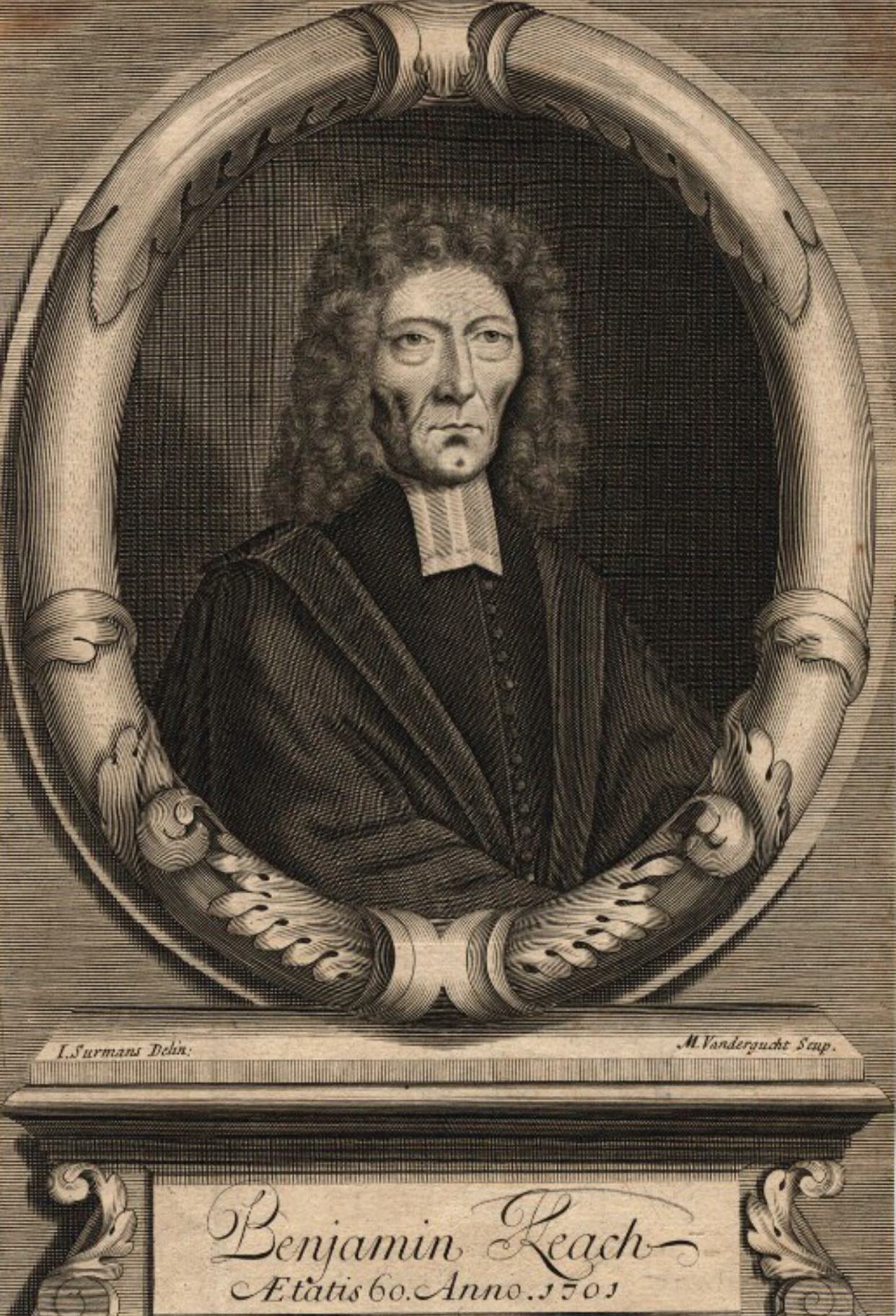
In "God a Strong Tower," Benjamin Keach explores the metaphor of God as a refuge and protector for believers, drawing on key scriptural references such as Proverbs 18:10 and Psalms 18:3. He presents several parallels between the attributes of God (such as mercy, omnipotence, and faithfulness) and the characteristics of a strong tower, emphasizing God's sufficiency in sustaining and defending His people against spiritual adversaries. Key arguments include the notion that God's name signifies His excellency and attributes, which serve as an unshakeable stronghold for the faithful. The practical significance of these truths lies in the assurance and comfort they provide to Christians, encouraging them to seek refuge in God alone, especially in times of trouble.
Key Quotes
“The name of the Lord is a strong Tower; the righteous runneth into it and is safe.”
“God is the spiritual Tower; He satisfies and fills the hungry soul; His fullness fills all in all.”
“Without him, we can do nothing.”
“If God be such a Strong Tower, let the righteous make haste and run into it.”
What does the Bible say about God as a strong tower?
The Bible presents God as a strong tower, a refuge and fortress for the righteous (Proverbs 18:10, Psalms 18:3).
Proverbs 18:10, Psalms 18:3
Why is God's name important for Christians?
God's name signifies His attributes and power, serving as a source of strength and assurance for believers.
Exodus 33:19, Exodus 34:6-7, Psalms 46:5
How do we know God is a place of refuge?
Scripture consistently affirms God as a place of refuge for His people, promising their safety and protection.
Psalms 46:1, Matthew 16:18, Psalms 59:16
GOD A STRONG TOWER.
"The name of the Lord is a strong Tower, the righteous runneth into it, and is safe," Pr 18:10. "My high Tower," Ps 18:3. "The Lord is good, a strong-hold in the day of trouble" Na 1:7.
These metaphors,
Refuge, } {Habitation } {High }
Hiding-place,} {Place of defence, } {Strong } Tower.
Fortress, } {Sanctuary, } {Rock,
Have the same import and signification, and plainly hold forth, that God is the safeguard, defence, and sure protection of his people: yet such of them, whose properties admit of demonstration and enlargement different from this, are handled particularly, (to which the reader is referred) and for the rest the ensuing parallel may serve.
To open this metaphor we shall show,
1. What is meant by the name of God,
2. Run the parallel.
3. In what respects his name may be called a strong Tower; with some short application.
1. By the name of God we are to understand those apt titles, (as God, I am that I am, Elohim, Jehovah, &c.,) by which God calls himself, to signify or set forth the excellency of his name and attributes; as his mercy, goodness, truth, faithfulness, onnipotence, omniscience, &c., Ex 33:19, with Ex 34:6-7; Ps 46:5; 54:1; 1Sa 17:45.
2. It is put for aid and help.
3. It is put for renown or glory, Ge 6:4, "men of name;" XXXX Nomen, that is, famous men. Ec 7:1; Pr 22:1; Php 2:9. So vile persons are called, Job 30:8, "men of no name,"---sine nomine turba, id est, ignobilis turba. So particularly for the honour of God, Ps 76:1; his virtue and power, Mt 7:22; his will concerning salvation, Joh 17:6.
4. For the worship and service of God, 1Ki 8:16; 2Ch 7:16; Jer 7:12; Le 20:3. See more in "Wilson's Dictionary, and Illyric. in Clav. Script, upon the word name, &c.
METAPHOR
I. A Strong Tower is furnished with a magazine of arms and ammunition, to supply the soldiers with armour and weapons defensive and offensive.
PARALLEL
I. God is the Christian's Magazine and spiritual armoury, from thence he is furnished with weapons to combat his soul's adversaries, as the girdle of truth, the breast-plate of righteousness, shoes of the preparation of the Gospel of peace, the shield of faith, the helmet of salvation, the sword of the Spirit, &c., reckoned up in Eph 6:10-18.
METAPHOR
II. A Strong Tower or garrison is furnished with plenty of provision, to supply the soldiers when besieged.
PARALLEL
II. God, the spiritual Tower, is fulness itself: "He satisfies and fills the hungry soul: his fulness fills all in all," Ps 107:9; Eph 1:23. The believing hungry soul has his absolute promise, Lu 6:21, "Ye shall be filled." And it is most certain, that he can and will make it good. The militant Christian can want nothing, but it is there ready for him.
METAPHOR
III. A Strong Tower is furnished with a resolute courageous commander, and well-disciplined soldiers, whom the captain animates and arms, receiving his flying friends into protection.
PARALLEL
III. The Lord Jesus Christ is commissioned chief Officer in this heavenly Tower, whose resolution no force can shake, whose courage no enemy can daunt, and whose skill in training and disciplining his soldiers no military professor can equal. He is the Captain of our salvation; by him, (and only him) all distressed sinners are admitted into the shelter and protection of this Tower. He only shuts and opens: "None can come unto the Father but by him," Joh 17:22; Ro 9:5; 10:12; Joh 14:6; Heb 2:10; Re 3:7. "Without him we can do nothing," Joh 15:5. He distributes his graces, and fits for an encounter.---He gives his saints power to tread upon serpents and scorpions, and over all the power of the enemy, &c., Lu 10:19.
METAPHOR
IV. A Strong Tower, with respect to situation, is usually built upon a rocky or most firm foundation, to prevent undermining.
PARALLEL
IV. This heavenly Tower is the Rock of ages itself, De 32:4; 2Sa 23:3. All the powers of earth and hell are not able to shake it, nor all their art to undermine it.
METAPHOR
V. A Strong Tower is environed with thick and lofty walls, to with stand the batteries of the enemy, and overtop their scaling-ladders. It also gives a fair and full prospect of things below, discovering the motions and approaches of the enemy.
PARALLEL
V. The Lord is "a Wall of fire," Ec 2:5, round about his people, such as no battery can make a breach in, nor ladder scale. There is no fighting against God, Ac 5:39; 23:9, for he is too hard a match for the proudest mortal. It is a desperate and foolish enterprise to attack this fort, for it is impregnable. It gives those within a clear prospect of the things of this world, which the believers below cannot discover.---They see what sin is, with its defiling and damning quality; they are not ignorant of Satan's devices, 2Co 2:11, by which he labours to circumvent them; they see the weakness of their spiritual enemies, and fear them not, so long as this tower incloses them.
METAPHOR
VI. A Strong Tower is fortified with out-works, as moats, platforms, palisadoes, counterscaps, half-moons, &c., which are often stormed and taken; the soldiers therefore do not put their chief confidence in them, but when they find them not tenable, they wisely retire to the tower, or main strength, or they are certainly lost.
PARALLEL
VI. A bare external profession of religion, superficial reading of the scriptures, thinking (like the Jews) to have eternal life in them; speculative knowledge, or that which is merely historical; assembling or joining in communion with God's people in his ordinances; conversations morally sober, outward strictness in Christian duties, pious performances, &c., may be fitly compared to these out-works, which, though in themselves very good, and to be practised, yet without the root of the matter, that is, the life and power of grace in the heart, they are not by any means to be rested in; for when an enemy comes, these defences are too weak and unserviceable. It therefore concerns the safety of Christians, to go to God (this impregnable Tower) through Christ, and make a timely retreat into their great citadel; else their fortification will be certainly demolished, and they destroyed, as in the foolish virgins' case, Mt 25:1-13.
METAPHOR
VII. In a strong Tower the walls and bulwarks are furnished with artillery, and other military engines, to keep off and destroy the assailants.
PARALLEL
VII. This heavenly Tower is furnished with a dreadful train of artillery. He distributes death, desolation, and havoc, among the proud rebellious Pharaohs of the earth, that oppress his people, Ex 9:23. He deals destruction in loud peals of thunder, and furious storms of rain,
hail, and fire. He pours out the vials of his wrath, rends rocks, and makes the earth to quake, Re 16:1.---He can (and will in time) melt the elements with fervent heat, and burn up the earth, and the works therein, 2Pe 3:10. The murdering cannon never roared out more horror and amazement, than the wrath and vengeance of an incensed God, elegantly expressed, Ps 28:7-9: "The earth shook and trembled; the foundations of the hills moved, and were shaken, because of his wrath. There went up smoke out of his nostrils, and fire out of his mouth devoured---coals were kindled by it. He rode upon a cherub and did fly; yea, he did fly upon the wings of the wind. He made darkness his secret place; his pavilion round about him were dark waters, and thick clouds of the skies. At the brightness that was before him, his thick clouds passed, hailstones, and coals of fire. Yea, he sent out his arrows, and scattered them; and he shot out lightnings and discomfited them."
METAPHOR
VIII. In a strong Tower they have countermines, and other devices to defeat the besiegers' mines, or under-ground workings.
PARALLEL
VIII. The Lord can baffle the combinations of the wicked, and entrap them in their own snares, Ec 10:8. "He disappoints the devices of the crafty," Job 5:12-13; makes them fall into their own pit, Pr 26:27; he brings the hidden counsels of wickedness to light, and defeats the plots and stratagems of Antichrist, of which (in his blessed providence) he has given us many memorable instances, in former and latter times.
METAPHOR
IX. A strong Tower is a place of security; there (as in a safe retreat) men trust their lives, estates, families, choice treasures, &c.; it is a refuge, and sure receptacle, when enemies invade, or tyrants oppress us.
PARALLEL
IX. God is such a safeguard to his church, that "the gates of hell shall not prevail against it," Mt 16:18; Isa 8:14; a sure sanctuary to every individual Christian, that puts or commits himself into his protection, Mt 6:20. He is as tender of his saints, as of the apple of his eye. Here we may safely deposit lives, estates, families, choice treasures. Here no moth can corrupt, no thief break through, or tyranny oppress us. "Commit your souls in well-doing unto him, as into the hands of a faithful Creator 1Pe 4:19. Believers had rather have their treasure in their Father's keeping, than their own. The adversary might soon rob and undo us, were not our chief store-house in God.
METAPHOR
X. Sometimes from a strong Tower, a party is commanded to make brave sallies and onsets on the enemy.
PARALLEL
X. God can command millions of angels to destroy his and his people's enemies: one of which, in one night, slew 185,000 Assyrians, 2Ki 19:35, and at another time, cut off all their mighty men of valour, leaders, and captains, &c., 2Ch 32:21.
METAPHOR
XI. A Strong tower only saves and protects those that are got into it.---Others are exposed to the fury of the enemy. The knowledge of its impregnable strength, gives courage and resolution to such as are in it, to bid defiance to the rage and malice of all enemies.
PARALLEL
XI. The Lord (in whose name is strong confidence) is a place of Refuge, and Strong Tower to his dear children, Pr 14:26, Those sincere ones that have given themselves up to him they are secure out of the devil's gun-shot, and the power of enemies; whilst the hypocrites, and lukewarm formalists, are upon all occasions exposed to both, Isa 33:14. But the valiant soldiers of Jesus within the Tower, are animated with so brave a courage, that they despise the batteries and assaults of the enemy, (as was said concerning blasphemous Sennacherib:) "The virgin, the daughter of Zion, hath despised thee, and laughed thee to scorn; the daughter of Jerusalem hath shaken her head at thee," Isa 37:22. "For she had absolute confidence in "her strong holds," Mic 4:8.
METAPHOR
XII. As a Strong Tower gives courage and spirit, to those that are in it; so it dispirits and disheartens the besiegers, who after along and successful assaults, are defeated, or beaten quite off.
PARALLEL
XII. God, the Strong Tower, not only inspires his soldiers with true valour and courage, to set at naught all the powers of hell; but also confounds and dispirits their adversaries, that they are at last, when their bloody persecuting designs prove ineffectual, forced to give over, and quit their attempts against his Church and people.
METAPHOR
I. The fabric and materials of an earthly Tower are subject to decay.
DISPARITY
I. The heavenly Tower is incorruptible and everlasting, of an infinite and spiritual essence, and so not subject to the decays of time.
METAPHOR
II. A Strong Tower may be beaten down by the fury of cannons, or battering engines.
DISPARITY
II. The heavenly Tower is out of the reach of hell, and the world's batteries; all the violence, in the world cannot shake it.
METAPHOR
III. A Strong Tower may be surprised, if the watchman be sleepy or negligent.
DISPARITY
III. The heavenly Tower is beyond all possibility of surprise; its Watchmen never slumbers, nor sleeps.
METAPHOR
IV. A Strong Tower may be betrayed by the treachery of seeming friends.
DISPARITY
IV. God knows the hearts of all men, and therefore cannot be deceived. He knows the secret bent and inclination of the closest hypocrite, and can render their darkest designs against him or his people ineffectual, Isa 54:17.
METAPHOR
V. A Strong Tower may be reduced by famine.
DISPARITY
V. In this Tower is the bread of life, and an inexhaustible fountain: here the hungry are filled, and the thirsty satisfied: here is no fear of famine, because the provision is as eternal as the souls that need it.
3. In what respects the name of the Lord may be called a Strong Tower, take in the following particulars:---
The Hebrew names of God, as Jerome (the best Hebrician of the fathers,) observes are ten: Leigh Crit. Sac. Three come from being, as XXXX Jehovah, XXXX Jah, XXXX Ehejeh: three from power, as XXXX El, XXXX Eloah, XXXX Elohim: three from governing, XXXX Adonai, XXXX Shaddai, XXXX XXXX Jehovah-Tsebaoth; one from excelling, as XXXX Elion.
1. Jehovah sets out the eternity and self-existence of God---Je notes the time to come, Ho the time present, Vah the time past. It consists of quiescent letters, (or letters of rest) to show that there is no rest till we come to Jehovah, and that there we are safe and secure. This name is opened, Re 1:4,8; 4:8; 11:17; 16:5. O wn, o hn, kai o erxomenov; "Which is, which was, and which is to come." It comes of XXXX Havah, he hath been.
2. Jah, is a diminutive of Jehovah, and notes the same things.
3. Ehejah, I am or will be, XXXX XXXX XXXX Ehejeh Asher Ehejeh, "I will be what I will be;" Ex 3:14. This notes the essence of God, and implies his immutability and incomprehensibleness. Christ alluded to this name, Joh 8:58, "Before Abraham was I am."
With respect to these names, God may be called a Strong Tower, in regard of the eternity of his duration, and infiniteness of his essence. The Rabbins, and Chaldee paraphrase, expound this text of the eternity of God. See Ainsworth on the place.
4. El, a strong God. Junius and Tremellius translate it, Deum fortem; Aquila isxuron robustum, strong. This notes the omnipotency of God, &c. Eze 31:11; Ge 14:22, and Ge 11:32. See Rivet on Ps 19:1. Hence Eli, my God, an Hebrew word Mt 27:46, and Eloi, a Syriac word, Mr 15:34.
5. Eloah is derived of El, strong or mighty; and by increase of the word, the signification is increased, Most Mighty, or the Almighty, &c. The plural number of it is,
6. Elohim, Almighties, or Almighty powers, Ge 1:1; 1Ch 17:21; 2Sa 7:23, XXXX XXXX Bara Elohim, that is, word for word, God's created; that is, the Father, Son, and Spirit, created; noting, as some say, Trinity in Unity;[1] or (as others say) the great Majesty of God, and the plurality of his Excellencies.
[1] Because here is a noun of the plural number, joined with a verb of the singular number.
With respect to the signification of these names also, God may be called a Strong Tower, because of his almighty power, and infinite strength, which is a safe sanctuary for such as fly to it.
7. Adonai,[2] (derived from XXXX Eden, Basis, columna, vui aliquid insistit, a base pillar, or column that bears up or supports anything) signifies Lord, who as he created all things, doth also sustain and preserve them. It is given to God in the Old Testament one hundred and thirty-four times. See Ainsworth on Ge 15:2.
[2] Dominus qui basis instar, sustentat et regit domum aut politiam.
8. Shadai, Almighty, or all-sufficient. Grammarians are not agreed about the etymology of this word; some derive it from XXXX [3] Shadad, to carry away by force, to prey, lay waste, or destroy.---Many think that God took this name from the world's destruction in the flood.---The Greeks translate it pantokratwr, and the Latins omnipotens, both which signify Almighty. Others say, that it is a compounded word of the verb dai, which signifies, it is sufficient, and the letter XXXX, which supplies the place of the relative Asher, to answer the Greek antarkhv, content in himself, or self-sufficient, for in him is all sufficiency, &c.
[3] Quod est diripere et prædari, item perdere destruere, et vastare, quasi vastatorem dicas, i.e. potentem et invictum, cui nemo resistere possit. Valnut nonnulli Deum Loc nomen traxisse a vastatione mundi, factet in diluvio. Alii 'XXXXiffl nomen compositum esse volunt, &c.
This name notes the power and sufficiency of God to go through with all things, and for wasting and destroying his enemies. To this the prophets have reference, saying, that XXXX, Shod, (destruction) shall come forth Shaddai, (the Almighty, Isa 13:6; Joe 1:15.
9. Jehovah Tsebaoth, Lord of Hosts.[4] The Rabbins observe, that he hath two general troops, (Copiæ tam inferiores quam supernæ,) the creatures above, and creatures beneath, already pressed to be employed in his wars, either defensive or offensive, for the safeguard of his favourites, or the destruction of their opposites.
[4] Dominus exercituum, qoud exercitus omnes pro arbitrio suo agit. Tremell. & Jun. in Ps 24. Vid. Bezam & Piscator. in Ro 9:29.
The name Jehovah implieth, that God had his being or existence of himself before the world began, and that he giveth being to all things, that he giveth being to his word, effecting whatsoever he speaketh. I appeared, saith the Lord, to Abraham, Isaac, and Jacob, the name of God Almighty, or All-sufficient; but by my name Jehovah was I not known to them; as the Greek and Chaldee render it, manifested not. They believed God was able to perform whatsoever he had said, but they saw not the performances; till when he makes good the covenant to their children, he calls himself Jehovah, denoting the faithful performance of all his promises, and therefore may be rightly called a Strong Tower.
10. The last Elion, altissimus, Ps 9:2, and Ps 92:6, to which the Greek uyistov, Most High, answers, Lu 1:32; Ac 7:48, which sets forth the surpassing digaity, excellency, and high sovereignty of God, which is over and above all.
In all these respects God's name is a Strong Tower, for he is their support: he is Almighty, and so can destroy such as rise against him; he commands the celestial and terrestial hosts: and lastly, he is the Most High, so that there is no contending with him.
Besides, the other attributesof God are so many Strong Towers to secure his people. His wisdom orders all things for the best.---His goodness and mercy engages him to fatherly affection.---By his omniscience he knows all their wants, temptations, afflictions, &c. His faithfulness gives them, assurance, that he will not fail, &c.
COROLLARIES.
I. If God be such a Strong Tower, let the righteous make haste and run into it. An interest in Christ, an exercise of faith, sincere prayer, confession of sin, &c., is the way. Motives to this are,
1. No other Strong Tower can secure them; wisdom, honour, riches, &c., will not do it. Ps 20:7, and Ps 49:6.
2. To fly to other strong-holds, is a breach of God's law, and brings a curse; "Cursed is the man that trusteth in man," &c., Jer 17:5.
3. It is absolute folly and madness to depend upon any other, for they cannot save in a day of wrath, Job 15:31; Ps 39:5.
4. There you will be safe from all the enemies in the world.
II. From hence we may infer, that all the attempts of hell, and wicked men, will certainly prove vain and unsuccessful against the church and people of God.
III. That there is no resting in a bare lifeless form, (which are the outworks,) but such as will be safe, must get the power, as well as the profession of religion

Comments
Your comment has been submitted and is awaiting moderation. Once approved, it will appear on this page.
Be the first to comment!