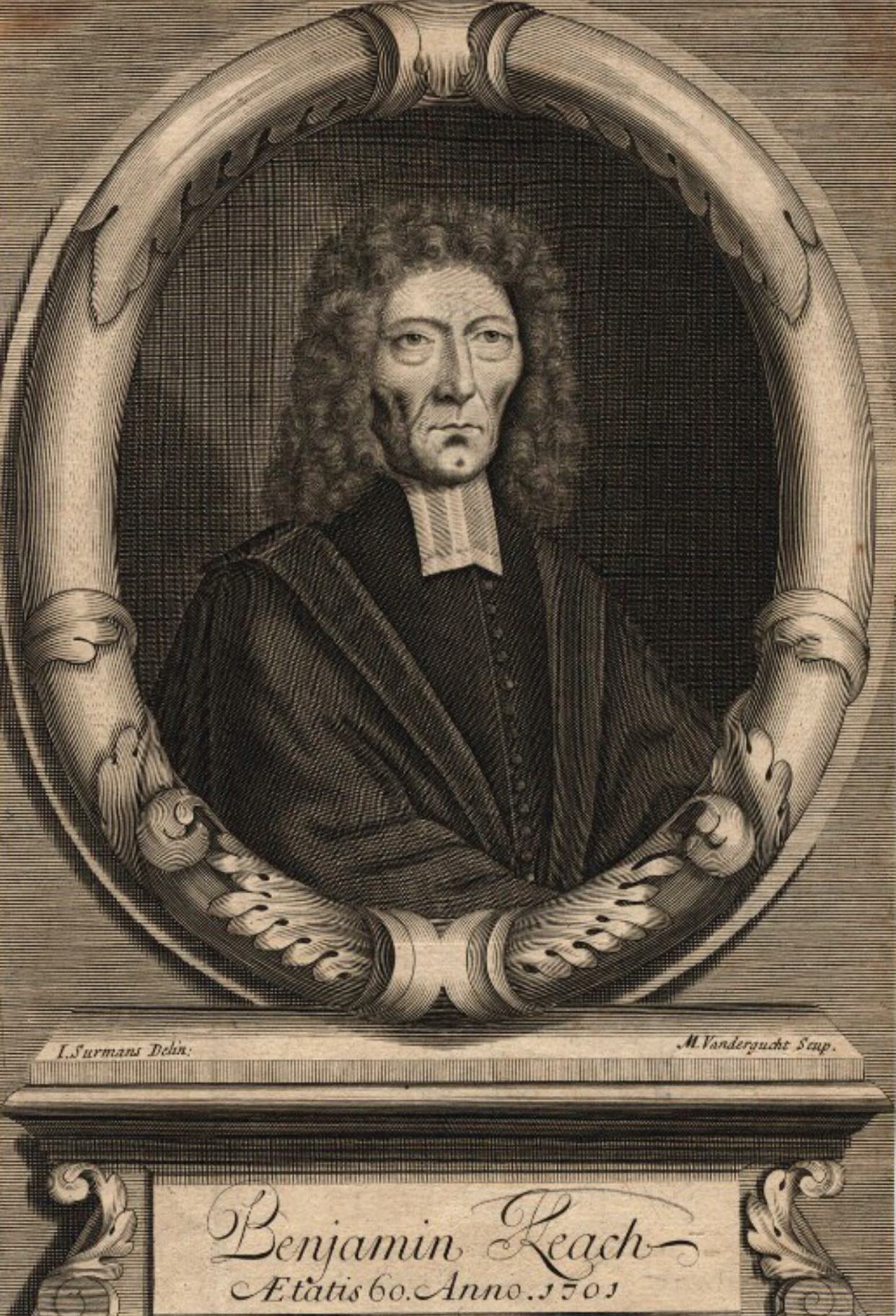
The article "God Compared to a Lion" by Benjamin Keach addresses the theological implications of viewing God as a lion, particularly in the context of His judgment towards the wicked. Keach utilizes multiple similes—drawing parallels between a lion's nature and God's attributes—to illustrate the fearsome wrath of God, emphasizing that His anger leads to destruction for the unrepentant. Key Scripture references include Hosea 13:7-8 and Amos 3:8, which highlight God’s powerful judgment and the terror it instills among the unrighteous. The article asserts that while God embodies divine justice, He also desires mercy for those who humbly submit to Him, revealing a profound doctrinal significance regarding the balance of God's holiness and compassion.
Key Quotes
“When sinners fall into his hands will crush them as a Lion.”
“The Lord will do as a Lion doth... strike out their hearts and punish them with spiritual plagues and judgments.”
“God delights to live in love concord and real friendship with all his creatures.”
“There is no way for the guilty or rebellious soul to take but to fall down before the dreadful God.”
What does the Bible say about God's judgment?
The Bible describes God's judgment as fearsome, likening Him to a lion that devours the wicked.
Hosea 13:7-8, Amos 3:8, Psalm 48:10
Why is the concept of God as a lion important for Christians?
Understanding God as a lion underscores His sovereign authority and the seriousness of sin.
Jeremiah 31:20, Hosea 5:14, Psalm 12:5
How do we know God's righteousness is true?
God's righteousness is evidenced by His consistent, just judgments throughout Scripture.
Psalm 48:10, Romans 3:5
GOD COMPARED TO A LION
"I will be unto them as a Lion, as a leopard will I observe them: I will meet them as a bear bereaved of her whelps: and I will rent the caul of their heart, and then will I devour them like a Lion, Ho 13:7-8.
WE have here a threefold simile, which showeth the fearful state of a wicked and provoking people.
1. I will be unto them as a Lion, I will devour them like a Lion.
2. As a Leopard I will observe them.
3. I will meet them as a Bear bereaved of her whelps.
Doct. 1. God in his breaking in upon a wicked and rebellious people, in a way of wrath and judgment, will he be unto them as a Lion.
The scope of this text being to set forth the anger and wrath of the incensed majesty of God with the consequent, destruction of the wicked and impenitent, we shall illustrate the similitude in the following parallels.
SIMILE
I. The Lion is a most terrible creature: if the Lion roars, all the beasts of the forest tremble, Am 3. Naturalists observe, that though other creatures are swifter on foot than the Lion; yet when he roareth, they lie down.
PARALLEL
I. That God corneth forth in a way of judgment against the wicked, is a terrible God. Hence it is said, "He shall roar out of Sion." Joe 3:16. The threatenings of God are as the roaring of a Lion, and terrify the wicked, as a Lion doth the more impotent animals.
SIMILE
II. A Lion when enraged (especially) hath a majestical, fierce, and an amazing look; and how ready are all to run, and shift for their lives, when he rises up to the prey.
PARALLEL
II. When the face of God is set against a soul or nation, or he is moved to frowns, indignation, and wrath against them, let all stand clear: how ready are all to fly, when God rises up to the prey, that is, to be avenged on the ungodly.
SIMILE
III. None can take away the prey from a Lion, as the prophet showeth us? who, if he goeth through a flock of sheep, both treadeth down and teareth in pieces, and none can deliver.
PARALLEL
III. None can deliver themselves out of God's hands, when he comes forth against them as an hungry Lion. God tells us, "He will arise to the prey, and all the earth shall be devoured with the fire of his jealousy," Zep 3:8. There is "none can deliver out of his hand," Isa 43:13.---neither power, nor policy, craft, nor outward force, will signify any thing.
SIMILE
IV. A Lion is strong, and crushes the whole compages of a man's bones at one crush; he rends the body of man to pieces. And naturalists tell us, that when the Lion hath torn the body asunder, he loves to suck the blood that is about the heart; and as for other parts of the body, except he is very hungry, he leaves them to other beasts to prey upon; but the heart, the blood, and the fat that is about the heart, the Lion loves to suck.
PARALLEL
IV. The dreadful God, when sinners fall into his hands, will crush them as a Lion: "Consider this, ye forget God, lest he tear you in pieces," Ps 50:23. "I will arise, and devour at once, I will rent the caul of their heart, and there will I devour like a Lion," Ho 13:8. A reverend divine hath an excellent note upon this place: "The Lord will do as a Lion doth: the more immediately strike out their hearts, and punish them with spiritual plagues and judgments; and as for their estates and bodies, he will leave them to other beasts, and they shall plague them that way. Their hearts were grown fat, they had a film about their hearts, and instruction could not get to their hearts; but God will tear that caul, that film from off their hearts." Mr. Borroughs on Hosea, hath noted further, that it denotes the sending plagues upon the hearts of wicked men, and to leave their estates, &c., to the Assyrians; concerning Luther's observation; and for a further confirmation, cites Arius Montanus.
SIMILE
V. The Lion is a creature (as naturalists observe[1] ) that seems much for justice. No creature more fixed or constant in their love and friendship, or more ready to revenge the breach of amity, than is a Lion; which is further demonstrated by a great Historian, citing a passage of Eudemus,[2] who writeth of a certain young man, that nourished together many years, a dog, a bear, and a Lion; who lived in perfect peace and concord, without breach, snarling, or appearance of anger. But on a day, as a dog and the bear played together, and biting one another gently, it happened that the poor dog fastened his teeth in sport, deeper than the bear could digest; and thereupon he presently fell upon him, and with his claws tore out the soft part of his belly, whereof he presently died. The Lion sitting by, and seeing this cruelty, and breach of love, amity, and concord, that had been, amongst them, was inflamed to revenge that perfidy, and like a true king of beasts, measured to the bear, as he had done to the dog, and served him with the same sauce, tearing him instantly in pieces. If a Lion be wounded or hurt by a man, with a stone or dart, according to the greatness of the hurt he frames his revenge.
[1] Seneca in his book, De Beneficiis out of Gellius.
[2] Topsall, lib. 1. p. 336.
PARALLEL
V. The holy God is just in all he doth: "Just and righteous are thy judgments, O Lord." "The right hand of the Lord is full of righteousness," Ps 48:10. Yet he delights to live in love, concord, and real friendship with all his creatures; and O how fixed and constant is he therein, and how loth that any should move him to anger! But when once the covenant of peace and amity is broken, and nought but cruelty and injustice appears amongst men, and the great ones of the earth prove tyrants, and tear in pieces, and devour the poor; how is God thereby enraged, or stirred up to revenge the breach of his law? "For the oppression of the poor, saith God, will I arise," Ps 12:5. And he will retaliate upon the wicked, according to the nature of the evils they have done. "Rob not the poor, because they are poor; neither oppress the afflicted in the gate: for the Lord will plead their cause, and spoil the soul of those that spoiled them," Pr 22:22. "And I heard the angel of the waters say, thou art righteous, Lord, which art, and wast, and shall be, because thou hast judged thus; for they have shed the blood of saints and prophets, and thou hast given them blood to drink, for they are worthy," Re 16:5-6. God always proportions the punishment, to the nature and quality of the offence.
SIMILE
VI. It is observed of the Lion, that he will narrowly mark any one that wounds him: and though there are hundreds of men together, and but one wound him, or shoot at him, or any ways hurt or injure him, he will observe and mark that man, and keep the wrong in his mind a long time.
PARALLEL
VI. The Lord narrowly observes those men that fight against him with a high hand, who wound his name, and abuse his people; and surely they must not think to escape amongst others; though the evil may be forgotten by the sinner, being formerly done, yet God remembers it. "Thus saith the Lord, go and smite Amalek, I remember what Amalek did, and utterly destroy all they have," 1Sa 15:2-3. "These things hast thou done, and I kept silence, thou thoughtest I had been altogether such an one as thyself: But I will reprove thee, and set them in order, before thine eyes. Consider this, ye that forget God, lest I tear you in pieces, and there be none to deliver," Ps 50:21-22.
SIMILE
VII. Moreover, it is observed of the Lion, that he sleeps but little, and with his eyes open; or, as some others note, he having great eyes, and so small eye-lids, they cannot wholly cover his eyes.
PARALLEL
VII. The Lord that keeps Israel neither sleepeth nor slumbereth, his eyes are always open, he seeth the sinner at all times. No dark nor secret place can hide from him; he beholds the wicked when they work; day and night are alike to him. "He that keepeth Israel sleepeth not," Ps 121:4, which is matter of comfort to them: so he that destroys their enemies sleeps not, which is ground of terror to them.
SIMILE
VIII. The Lion will fall upon no creature, except he be in hunger, or is greatly provoked.
PARALLEL
VIII. The Lord, though his wrath be dreadful as a Lion's, yet he is not so ready to fall upon his creatures presently. He breaks not in upon them, until he is greatly provoked, and there is no remedy; but then he falls terribly upon them indeed, like as an hungry and incensed Lion, 2Ch 36:16-17.
SIMILE
IX. The Lion (as Pliny observes Lib. viii. p. 202.) cannot endure to be looked asquint upon by any.
PARALLEL
IX. The Lord hates those that look asquint upon him; we mean those professors that have by and sinister ends of their own, that have not a right and pure eye to his glory in what they do. The Lord loves uprightness in all our ways and carriages to him, 1Ch 29:17.
SIMILE
X. Again, of all wild beasts, it is observed that the Lion, if one do fall down, and prostrate himself before him, as it were, and petition for his life, he will spare him. Take Pliny's own words, Lib. viii. p. 201. "The Lion alone, of all wild beasts, is gentle to those that humble themselves unto him, and will not touch any such upon submission, but spareth what creature soever lieth prostrate before him."[3]
[3] Corpora magnanimo satis esl prostrassa Leoni. Ovid.
PARALLEL
X. God is full of clemency and bowels to all that submit to him. When he sees a poor creature humble himself, and fall down at his feet, and petition for mercy, how ready is he to forgive and pass by all former treasons and rebellions against him! "Seest thou how Ahab humbleth himself? I will not, saith the Lord, because he hath humbled himself, bring the evil in his days," 1Ki 21:29; yet this Ahab was an abominable wretch in God's sight, a monster of wickedness; therefore it is said, "There was none like Ahab, who sold himself to work wickedness in the sight of the Lord, whom Jezebel his wife stirred up/' 1Ki 21:25. Ephraim provoked God to anger, but he bemoans himself, and repents with tears, and smites upon his thigh, with shame and confusion of face; and what saith God now to Ephraim? "I will surely have mercy upon him, my bowels are troubled for him, I will surely have mercy upon him, saith the Lord. I will not execute the fierceness of mine anger. I will not return to destroy Ephraim, for I am "God and not man: my heart is turned in me, my repentings are kindled together, Jer 31:20; Ho 11:8-9. Though God is a terrible Lion, yet it is only to the impenitent, and those that stand out against him.
SIMILE
XI. A Lion (as Pliny, and divers other great naturalists, tell us) is a great enemy to apes and wolves.
PARALLEL
XI. God is a great enemy to flatterers and tyrants, which sooner or later will be the subjects of his wrath and fury, whom he will tear in pieces and devour.
SIMILE
THE Lion is a proud and lofty creature, a tyrannical and cruel beast, a great destroyer of sheep, lambs, and other poor innocent and harmless creatures; besides he hath many other evil qualities. Hence the devil and wicked men are compared to a Lion: to which similes we refer you.
DISPARITY
IN divers respects God cannot by any means be compared to a Lion. He is not proud, cruel, nor will he cast off or destroy an upright and innocent person, whatever the provocation be; but he is in the highest degree of eminency, quite contrary to all these evil qualities, as is showed elsewhere.
COROLLARIES.
1. Is God compared to a Lion in those respects you have heard? then let sinners tremble, for they are like to be the only prey of this dreadful and terrible God. Art thou able to encounter him, or to stand before him? "I will be unto Ephraim as a Lion, and as a young Lion to the house of Judah: I, even I will tear, and go away, and none shall rescue him," Ho 5:14. Doth not this Lion begin to roar? Will a Lion roar in the forest, when he hath no prey? Shall the trumpet be blown in the city, and the people not afraid? Sure God is arising up to the prey, and "He will shake terribly the earth," Am 3:4,6,8. What will ye do, can you stand before his indignation?
2. Is God compared to a Lion? let sinners take heed, lest they awake and rouse him up.
3. See from hence what the nature of sin is; it is only that which causes God to break forth against man, as a hungry Lion. It is sin that provokes him to anger, and fills him with wrath and indignation. God greatly delights in mercy; and to execute judgment, is called "His strange work," Isa 28:21.
4. There is no way for the guilty or rebellious soul to take, but to fall down before the dreadful God, to prostrate itself at the feet of the Lion of the tribe of Judah: He will have mercy on thee, if thou dost submit thyself unto him.

Comments
Your comment has been submitted and is awaiting moderation. Once approved, it will appear on this page.
Be the first to comment!