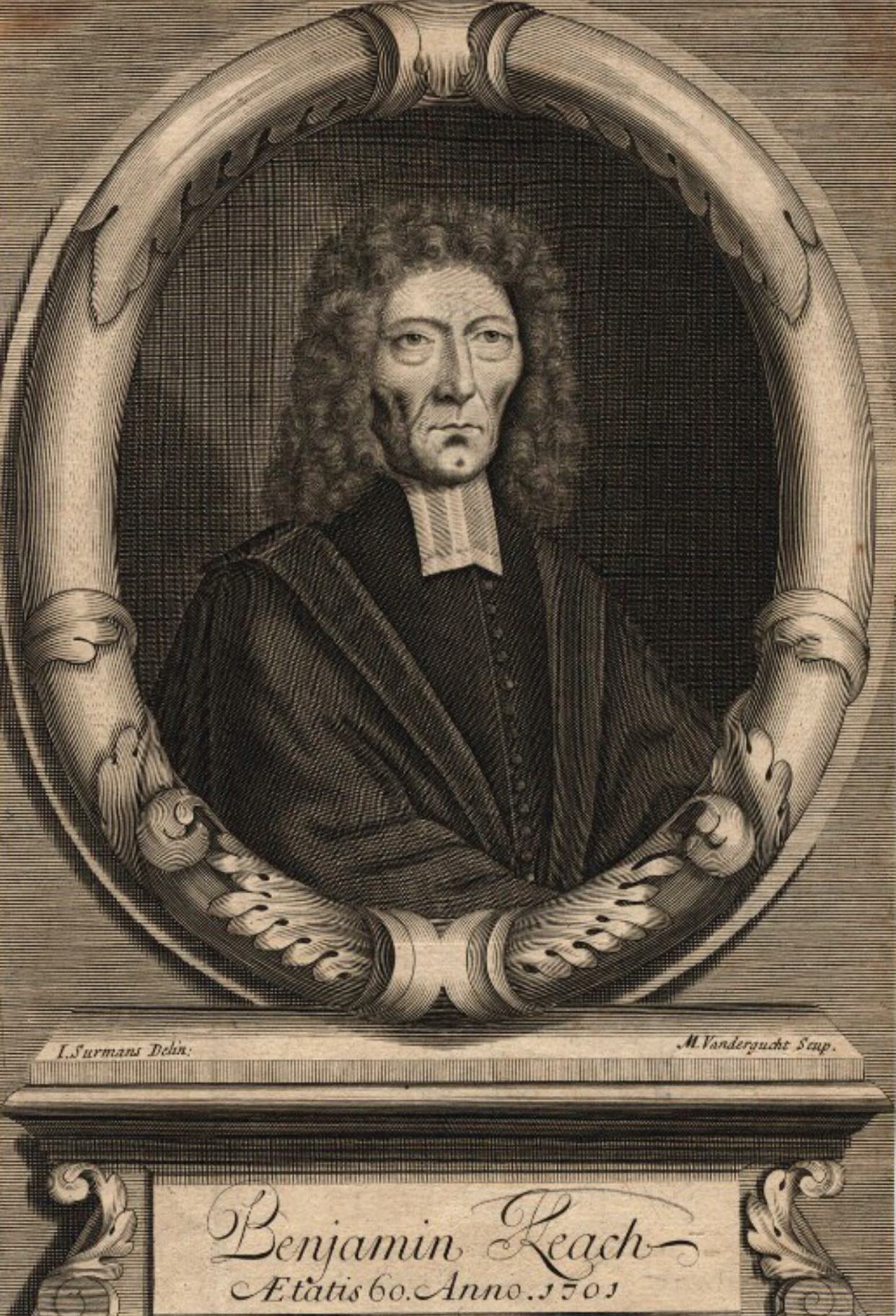
The theological topic addressed in Benjamin Keach's "God an Householder" is the metaphor of God as a householder, illustrating God's sovereignty and providential care in His creation. Keach argues that, akin to a householder who manages a household, God actively governs His creation, establishes order, and provides for the needs of His people. He draws upon various scriptural references, including Matthew 21:33, Ezekiel 18, and Genesis 1, to support his claims about God's role as Creator and sustainer, who provides guidance, love, and discipline. The practical significance of this metaphor emphasizes the relational and covenantal aspect of God's dealings with humanity, encouraging believers to recognize their position within God's household and respond with obedience and reverence.
Key Quotes
“The word Householder imports three things: One that is possessed of an estate; One that hath business to do; One that hath a family of servants to employ.”
“God the most great and good Householder seeing it very needful and convenient hath built a house for the commodity of his family.”
“God hath appointed his First-born to be a Mediator, a Priest, an Advocate to influence the Gospel and Word.”
“It is of absolute necessity and concern for all to hasten to come and reconcile themselves to him that they may be admitted into his favour as the beloved ones of his family.”
What does the Bible say about God as a Householder?
The Bible portrays God as a Householder, indicating His role as the creator and sustainer of the universe.
Matthew 21:33, Genesis 1
How do we know that God is sovereign in His household?
God's sovereignty as a Householder is reflected through His absolute authority and wise governance over creation.
1 Corinthians 14:33, Matthew 21:33
Why is it important for Christians to understand God as a Householder?
Understanding God as a Householder reinforces the importance of His governance, care, and provision in our lives.
1 Timothy 3:15, Galatians 6:7-8
How does God's role as a Householder relate to His promises?
God's role as a Householder underscores His promises to care for and sustain His people.
Philippians 4:19, Psalm 37:25-26
GOD AN HOUSEHOLDER
"Hear another parable, There was a certain Householder" &c., Mt 21:33.
BY the scope and meaning of this parable, it appears, that God the Father is that Householder intended in this text of scripture.
1. Because it was he that planted the vineyard. We take vineyard for the world, or the state of the Jews in the land of Canaan.
2. He hedged it round about, he digged a wine-press, and built a tower.
3. He set it, and farmed it out to husbandmen. God made the world, and all things therein, divided it by lot, since Adam; and set a determination to the bounds and habitations thereof.
4. It was God who sent the prophets, judges, apostles, priests, and kings to receive the fruits of them.
5. It appears evidently, that it was God who sent his Son to the husbandmen, who killed him, &c.
6. To put all out of doubt, his Son is said to be the Corner-stone laid in Zion, and that by the Lord himself: "This is the Lord's doing, and it is marvellous in our eyes.
The word Householder imports three things:
1. One that is possessed of an estate.
2. One that hath business to do.
3. One that hath a family of servants to employ.
All these seem fairly applicable to God, metaphorically.
1. God is possessed of an estate: the earth is his, and the fulness thereof, the world, and all the inhabitants therein.
2. God hath business to do in this world, to replenish the earth, and to establish his will in respect of worship and service: "Thy will be done on earth, as it is in heaven," &c.
3. God hath a family of servants to govern: "The soul of the father, as well as the soul of the son, is mine:" Eze 18:4. And he saith to these servants, Dwell in the land, do good, and employ the talents given you.
God is (and may not unfitly be compared to) a Householder. Here I shall give you the properties of a Householder, according to the sense of the word, and the true intent of the text; and so go on, by God's help, in prosecution of the parallel.
METAPHOR
I. An Householder is the first founder of a family; for there can be no such thing as a Householder, family, &c., without a raising, or first founding of it: and there can be no such raising or founding, without a beginner or founder; where there are effects, there must be a cause producing those effects.
PARALLEL
I. That God is the first Author, that gives being to matter, form, and order, is so great and evident a truth, evidenced by scripture and reason, that none can deny it without shaking the very foundation of heaven and earth, and of all true piety and religion: for all things that do appear, were produced by some cause pre-existent, or else they did cause themselves; which last cannot be, because then they must be before themselves, which is a monstrous absurdity. See the ancient records of the world, and all things therein, Ge 1.
METAPHOR
II. An Householder, that is to be concerned with family-affairs, doth frame and build a house or dwelling, as a very needful conveniency for himself and family.
PARALLEL
II. God, the most great and good Householder, seeing it very needful and convenient, hath built a house for the commodity of his family, yea, many houses, suitable to the distinct parts of his family, which is very great; one house fit for angels, and the souls of saints, that is heaven; one for men, even on earth; one for a nursing-house to the offspring of his family, and that is his church, which is the house of the living God, the nursing-house for his heirs and eldest sons, 1Ti 3:15. These things have his hands begun and finished. "He that built all things is God."
METAPHOR
III. A good Householder gets him a family suited to all his purposes, not thinking it meet to be alone, he doth espouse a wife, and bring in servants, &c.
PARALLEL
III. God did not think it meet to be alone, in the enjoyment of perfect happiness in himself, and therefore hath taken into covenant with himself, angels and men; and for this end was Jesus Christ set up from everlasting, to gather together in himself, both things in heaven, and things on earth, &c.
METAPHOR
IV. A good Householder fits his family or Household for business.
PARALLEL
IV. Thus God, the great and good Householder, hath done. He hath made nothing in vain, but hath fitted each creature with natures, to do work suitable to their proper station: the angels to dwell in heaven, to praise in heaven, to fly through heaven, to come down into the air, to visit the earth, and view the sons of men: men are fitted to look up to heaven, to pray, to read, to contemplate, to reverence God, to propagate, to replenish the earth: beasts are fitted for labour and service, as the horse, the mule, the ox, &c., the sheep, with all other creatures, receive influence from his great and good Spirit, so as to come to the place where their prey is, and where they are to be taken for assigned use.
METAPHOR
V. A good Householder sets things in good order, leaves nothing confused, to occasion quarrelling and strife; sets all in their proper places; his eldest son and first-born is made the chief; the rest of the children and servants are made inferiors to him; he is called, "the excellency of dignity," Ge 49:3.
PARALLEL
V. God, the great and good Householder, hath set all things in order, both in the upper and lower world; who is "not a God of confusion, but of order, in all the people of his family," 1Co 14:33. Christ his First-born is not only King, even the King of the earth, but the King of angels; he is the Head of all principalities and powers, Col 1:16; Eph 1:20-21. Angels next to him, above men, men God's representatives and vicegerents, above women: the man is tbe head of the woman, parents the head of their offspring, and children above the servants, and all these above the beasts of the field, or creeping things of the earth.
METAPHOR
VI. A good Householder shows and appoints his family their work; some to be employed in the house, some in the barn and stable, and some in the field.
PARALLEL
VI. Even thus hath God, the great and good Householder, done to all his family. He hath appointed his First-born to be a Mediator, a Priest, an Advocate, to influence the Gospel and Word; his angels to protect; his people in love to serve one another, and bear one another's burdens; women to bear children and nurse them, and to be helpmeets to their husbands; parents to love their children, to honour their parents; servants and subjects to obey their supreme; and all these to adore God, and children to obey the Lord Jesus Christ.
METAPHOR
VII. A good Householder maketh good provision for the subsistence of his family; he knoweth that they cannot labour without sustenance and supplies.
PARALLEL
VII. God, this great Householder, hath made provision for his great and large family: "The eyes of all things look up and trust in him, he gives them their meat in due season:" "In my Father's house is meat enough, and to spare." Heavenly manna, as meat and food for angels; heavenly food, as the bread of life for the saints; earthly food, as corn, wine, and oil, for men; grass and herbs, &c., as meat for beasts, &c. His hand gives all things needful. If in the house, he feeds them; if in the field he feeds them, and fills them with good things, &c.
METAPHOR
VIII. A good Householder keeps his place, leaves not his family when discord happens amongst them; he accounts it his work to heal and strengthen, not to destroy a house.
PARALLEL
VIII. God keeps his place in heaven; though angels fall out and go to war; though men differ, the heavens shake, the mountains remove, the wind bluster, the waves of the sea roar and rage; yet the Lord is in heaven, and he beholds all disorders of men, and still keeps his place in perfect tranquillity, and moves not; for the good of his whole household depends upon it; for if it were possible for the immoveable God to leave his place, all would become a piece of confusion.
METAPHOR
IX. A good Householder lays out ground for his servant's employment, and family's supply; one place for a vine, and another for a garden, with others for fields and meadows, for hay, &c.
PARALLEL
IX. God, the wise Householder, hath set out the church for a vineyard and garden, digged a wine-press, and built a tower, Isa 5:1: the world for a plowed field; the wise and best men, both divines, philosophers, naturalists and historians, to yield a fruitful crop of teaching and instruction, to supply his great household.
METAPHOR
X. A wise and good Householder contrives the best situation, as well as the best methods of accommodation, for his household; plants them as near as may be to pools, rivers, pleasant streams, and fruitful springs, where such are, or may be formed and made.
PARALLEL
X. God, the most wise and good Householder, hath contrived the situation of his family, near adjoining to these great conveniences, of still and standing pools, pleasant and gliding streams, constant rising and issuing springs, for increase of knowledge, and standing laws and government, establishing the truth of religion and piety, as pleasant streams, and issuing springs, for increase of knowledge.
METAPHOR
XI. A good and wise Householder teacheth and instructeth his household in good manners, and fit behavior; shows faults, and dislikes uncomely and debauched actions and examples, is angry at reiterated untowardness. Abraham taught his children, Moses instructed Israel, David taught Solomon, was angry with Absalom, as Eli with his sons.
PARALLEL
XI. God, the great and wise Householder teacheth, instructeth, gives forth his law, shows them what is good, and required of them; charges his family to walk by the example of the best, to walk in wisdom, to give no offence, to hold fast that which is good. God is troubled (as it were) and angry at great miscarriages, and unseemly actions, grieved (if I may with reverence so speak) at his very heart, with particular instruments, angry with not only some, but even the whole household, when the offenders will not reform.
METAPHOR
XII. A good and wise Householder loves his household with a natural and paternal love.
PARALLEL
XII. God loved all his creation; when he looked upon it, and saw all to be good, he could do no otherwise, angels, men, beasts, creeping things, fowls, and all inanimate things. The church he loves on new terms: "The Father himself loveth you, because you have loved me, and believed that I came forth from God."
METAPHOR
XIII. A good and wise Householder takes care for the preservation and security of his family, in respect of health, and safety against thieves and enemies; sends for a physician, as soon as he finds any ill; orders the doors and gates to be kept fast with bars and locks.
PARALLEL
XIII. God sent Moses to Israel, when sick of oppression in Egypt, when corrupted with sin in the wilderness, about the calf, and had need of purgation; Abigail and Nathan to David, on the same account; Elijah to Israel and Ahab, as well as he had before sent Samuel to David. Peter's advice is, to cleanse from all filthiness of flesh and spirit. He takes care for their security, and manifesteth his care diversely, gives cautions to take heed, puts their enemies in fear, sometimes restrains in time of pursuit of seeming advantages, orders doors to be shut, till the enemies disappear, and the indignation be overpast.
METAPHOR
XIV. A good Householder bears, and forbears long, is not rash and hasty, but meek and patient under present provocation.
PARALLEL
XIV. God hath to admiration showed his patience and long-suffering to his church, to the whole world, to the whole families of the earth. He gave the old world one hundred and twenty years, bore long with the murmurers of Israel in the wilderness, was forty years grieved, suffered Jerusalem long before the first captivity, longer before the last by the Romans; gives Jezebel, and mystic Babylon, time and space; spared a sinful world in general, above five thousand years.
METAPHOR
XV. A wise Householder is not always wrath, retains not anger out of spite, soon becomes reconciled, upon submission, and using means of pacification.
PARALLEL
XV. God will not be always wroth, lest the object of his wrath should fail before him, retains not anger for ever, takes immediate notice of returns, and forthwith proclaims peace and reconciliation.
METAPHOR
XVI. A good Householder is full of sympathy, is much concerned and grieved, when things go ill, and are out of order.
PARALLEL
XVI. God is plenarily qualified with bowels of compassion and tenderness towards his people: "I have seen the affliction of my people, and am come down to deliver." "In all their afflictions he was afflicted." My bowels are afflicted for him. He pities them that fear him, &c. Ex 3:7; 6:5; Isa 63:9.
METAPHOR
XVII. A good Householder gives reiterated instances of his favours, he is familiar with his family, speaks to them, and smiles on them, hears them when they call, helps them up when they fall.
PARALLEL
XVII. God loads (as it were) with benefits, speaks comfortably, bids others speak comfortably as from him: "Speak comfortably to Jerusalem:" Let us reason together: smiles invisibly by providence, invisibly by grace and spirit; hears prayer in an accepted time, helps up his church and people when they fall: Aaron rose up by his help; God raised holy David when he fell, Peter in like manner: which confirms the word of his servant, &c.
METAPHOR
XVIII. A wise and good Householder deals plainly and uprightly with his family, showeth them the danger of disobedience, both to children and servants, hides nothing from them that may be for their good; lets his servants know, that if they obey not, he will turn them out of service; and children if they are disobedient, they will not only be beaten, but also dispossessed of many privileges and inheritances.
PARALLEL
XVIII. God demonstrates the great danger of disobedience, with all plainness, by words at length: "If thou doest evil, sin lieth at the door:" all the curses of the book light on the children of disobedience, who are separated to evil, and destroyed if they do wickedly: he that sins shall die: if you remain disobedient, he will not prevent your ruin: He will not hear your call, but laugh at your calamities, and rejoice when your fear comes, Pr 1.
METAPHOR
XIX. A good Householder encourages his family by present rewards, and future promises; he pays his servants well for their work, gives his children promise of reward, even an inheritance.
PARALLEL
XIX. God suffers none to labour in vain, nor spend their strength for nought in his service, He doth good unto all; his tender mercies are over all his works: He makes one day in his courts, better than a thousand elsewhere. And the church said, it was better with her when she abode under his conduct, than when she left it. "He will give grace and glory, and no good thing will he withhold from them that walk uprightly."
METAPHOR
XX. A good Householder gives correction in season for faults committed: fathers after the flesh, and masters, chastise disobedient ones for faults.
PARALLEL
XX. God in love and faithfulness doth correct, rebuke, chasten, and afflict his people for their profit. "In very faithfulness hast thou afflicted me." Whom he loves, he rebukes and chastens, to make partakers of his holiness: the fruits whereof David expressed, "It was good for me that I was afflicted," Ps 119:71. Thus when men are in heaviness through many temptations, the rod drives out ill dispositions, and is a good remedy to cure folly, &c.
METAPHOR
XXI. A good Householder is so prudent, moderate, and gentle, in his administration of severity, that there is no cause of blame and censure; his equity and authority justify his ways.
PARALLEL
XXI. God renders not to any man more than is right, that he should enter into judgment with God; he layeth judgment to the line, and righteousness to the plummet: extenuates to offenders, rather gives less than more: in the midst of judgment he remembers mercy. He debates in measure; and as to the justice of the cause provoking, or measure of punishments, he appeals to the justice of their own minds: "Are not my ways equal, and yours unequal," Eze 18:29.
METAPHOR
XXII. A good and wise Householder, when any are obstinate, withdraws the manifestation of former goodness, favour, and delight; for if after all good means used fruitlessly, they will not be reclaimed, then he frowns on them, and cannot show his countenance as at other times.
PARALLEL
XXII. This hath been the common way of God's dealing with men, as well large congregations, as particular persons; "I will hide my face from this generation," &c. Thou art a God that hidest thyself, &c. God left Saul when obstinate, and would not be fond of him in distress. When God leaves a people or person, they lose their strength, and come to shame and misery. Woe to him that is alone.
METAPHOR
XXIII. A wise and good Householder will maintain his own rights against invaders, and keep up his interest according to law and justice, and the use of reasonable means.
PARALLEL
XXIII. God hath maintained the lot of the righteous throughout all generations, kept up his church from falling, contrived a seed to serve him. He will not suffer the gates of hell to prevail, nor overthrow his family.
METAPHOR
XXIV. A wise and good Householder brings all the spoil taken from his enemies, and all the fruits of his land, into his own household; there are his trophies, and the fruits of his labour found.
PARALLEL
XXIV. God brake the head of the Leviathan, gave it to be meat to his people in the wilderness, cut Rahab, wounded the dragon, overthrew great kingdoms and armies, &c., gained victory over mighty kings, and brought the fruit of all his works into his church; there are his worthy acts, doctrine, and book of the acts, and examples of all his servants, Heb 11.
METAPHOR
XXV. A wise and good Householder shuts all unruly persons out of doors, to preserve peace and prevent disturbance, David would not let a wicked man dwell with him, nor a liar stay in his house. Some will divorce a wife, when she proves treacherous. Abraham turned or cast out the bondwoman and her son.
PARALLEL
XXV. God shut angels out of heaven, to preserve peace; sent Cain to the land of Nod; shut the old world out of the ark; put Saul out of the kingdom; puts a difference between Egypt and Israel; secludes Hymeneus and Philetus, hypocrites and heretics, and all unclean persons, that the peace of the family may be preserved; hath threatened, they that trouble it shall bear their judgment, whoever they be. God divorced the church of Israel, &c.
METAPHOR
XXVI. A wise Householder sometimes becomes an enemy to those of his own family, when his patience is abused, and they stand out by large provocations.
PARALLEL
XXVI. God upon this ground hath (though he accounts it his strange work) turned to be an enemy to those of his own household; and hath not only cast them out, but drawn his glittering sword, made sharp by whetting, bent his bow, and prepared his arrows upon the string, made sick in smiting, and utterly destroyed, as in the case of Israel, Judah, and Jerusalem.
METAPHOR
XXVII. A wise and good Householder doth in his wrath sometimes swear against reconciliation, and future acceptance.
PARALLEL
XXVII. God sware in his wrath, that they should not enter into his rest; and left them to expectation of fiery indignation,
METAPHOR
XXVIII. A wise and good Householder, sometimes and in some cases, casts off all care and pity, so as to interpose against evil or dangers that may befal from without, but gives up to fearful ruin.
PARALLEL
XXVIII. Thus God dealt with Israel and Judah, gave Jacob to the spoil, and Israel to the robbers, and was so far from interposing between them and danger, that he gave them up to fearful ruin from the Chaldeans, and to the Romans, in the time of Josephus; declaring that his eye should not pity, neither would he have mercy. And as to particular persons, David told Solomon, that if he forsook God, God would cast him off for ever. Thus those are confounded, even as Judas Iscariot was, and as Jesus Christ speaks of the branches that abide not, "They are cast off and men gather them," and they come to burning; and as salt, when good for nothing, is cast to the dunghill, and trodden under foot.
METAPHOR
XXIX. A good and wise Householder is ready to have his actions tried, and refuseth not to come before a judge, or before the determination of tolerable indifferent persons.
PARALLEL
XXIX. God, that he might be justified in all his actions, hath appointed a general judgment, to bring forth his works and actions, that he may clear himself, and overcome when he is judged. Hence it is said, "He hath appointed a day in which he will judge the world in righteousness," Ac 17:31; call all his Household to account before the angels, and there make his justice shine as the sun at noon, in respect of all his providences and dispensations.
METAPHOR
XXX. A good and wise Householder renders rewards and encouragement to his family, and servant's that do well: "Be thou ruler over much; enter into the joy of thy Lord."
PARALLEL
XXX. God certainly rewards all men for well-doing, both in this world, and that which is to come. "Verily, shall one say, there is a reward for the righteous, when there is a God that judges in the earth:" "The righteous shall be recompensed in the earth." "Godliness hath the promise of the life that now is, and that which is to come."
METAPHOR
I. An Householder in this world hath but a small family, though never so great a person: Solomon was the greatest we read of, yet small in comparison, &c.
DISPARITY
I. God hath a very great family, as numerous as the stars, or the sand of the sea: "The God of the whole earth shall he be called:" "The earth is the Lord's and the fulness thereof." The fathers and the children are all his, and the whole world receives great benefits by him, &c. He gives all their meat in due season; He makes the sun to shine, and the rain to fall, on the just and unjust.
METAPHOR
II. An Householder in this world is but a steward under another, &c.
DISPARITY
II. But God is absolute Head and Lord, under no commission, neither in subjection to any
METAPHOR
III. An Householder in this world wants wisdom, and may be defective in respect of government over his household.
DISPARITY
III. God is infinitely wise and good, perfect in knowledge, hath all treasures of wisdom and knowledge, hath depths of wisdom and knowledge, unsearchable, and past finding out. It is impossible for him to err or miscarry in any case, his way is perfect.
METAPHOR
IV. An Householder cannot of himself make his family.
DISPARITY
IV. But God is the Maker of his family, from the highest to the lowest; "Thou hast made us, and not we ourselves," &c.
METAPHOR
V. An Householder in this world cannot communicate strength, nor secure from falling by sickness or death, till they have finished the work which he hath committed to them.
DISPARITY
V. But God is able to make all grace abound, to make the arms of their hands strong, to renew their strength like the eagle: to make the weak become as David, and David as the Angel of God; so as to run and not be weary, to walk and not faint.
METAPHOR
VI. An Householder in this world may be taken away from his household by human force, or by sickness and death.
DISPARITY
VI. God is always abiding, as he hath no beginning of days, nor end of life: He is the eternal and ever-living God.
METAPHOR
VII. An Householder in this world may be from home, about other business, not at all times doing his family good.
DISPARITY
VII. God is never from home about other business, cannot be out of the way of doing his family good; because every where present, on earth as well as in heaven: He fills his own work, therefore promised to be with them in the fire, and in the water, and promised never to leave them nor forsake them.
VIII. An Householder in this world, though he be at home, and well, yet he may be asleep, and evil come in the same instant.
DISPARITY
VIII. But God, the Keeper of Israel, neither slumbers nor sleeps; for night and day, the dark and the light, are alike to him; and between the land and the sea there is no difference: "For his ways are in the dark, in the deep; and his footsteps are in the mighty waters."
METAPHOR
IX. An Householder may be taken away captive, or forced to fly from his family: though as valiant as David, as wise as Solomon, as great and mighty as Belshazzar and Darius.
DISPARITY
IX. But God, yea, the omnipotent God, cannot be invaded, nor carried away captive; he keeps his place, and is immoveable. None hath an arm like God; and by strength, nor no other way, shall any prevail over him. God is omnipotent, powerful, invincible, &c.
METAPHOR
X. An Householder cannot always preserve his family in peace, nor give them everlasting rewards.
DISPARITY
X. But God, the Preserver of man, and of the souls of his saints, can so preserve in peace, that none dares approach to rob his family of it. God gives his family consolation and good hope here, and reward of inheritance hereafter, which shall never fade away nor be taken from them.
INFERENCES.
1. If God be an Householder, we infer against Epicurus, that he is and must be concerned in the affairs of this lower world; why otherwise should all things look up to him, as the Psalmist saith? and how should they be cared for, and provided for, as Christ himself, and St Paul aver? God gives not his Spirit once, and no more; but it is given to his people daily and hourly; it is he that gives us our daily and common bread, and taketh care of us, &c.
2. We infer, how greatly ignorant most of the world are, in that they do not account it a great privilege to be under the conduct of God, and enquire what they should do to please him.
3. What a mighty blessing and privilege they have who are under his conduct, that is able to do all manner of good for them in this world, and reward them with everlasting life in the world to come.
4. How miserable they will be that are cast out from his care and conduct, or that do abide out, and come not in by accepting his terms, and endeavour to please him, to know God in a way of love, and be careful to concern themselves with him, &c.
5. It is of absolute necessity and concern, for all to hasten to come and reconcile themselves to him, that they may he admitted into his favour, as the beloved ones of his family and household. Their standing out inevitably incurs misery, for there is no safety out of his service and favour; "There is no peace to the wicked, saith my God."

Comments
Your comment has been submitted and is awaiting moderation. Once approved, it will appear on this page.
Be the first to comment!