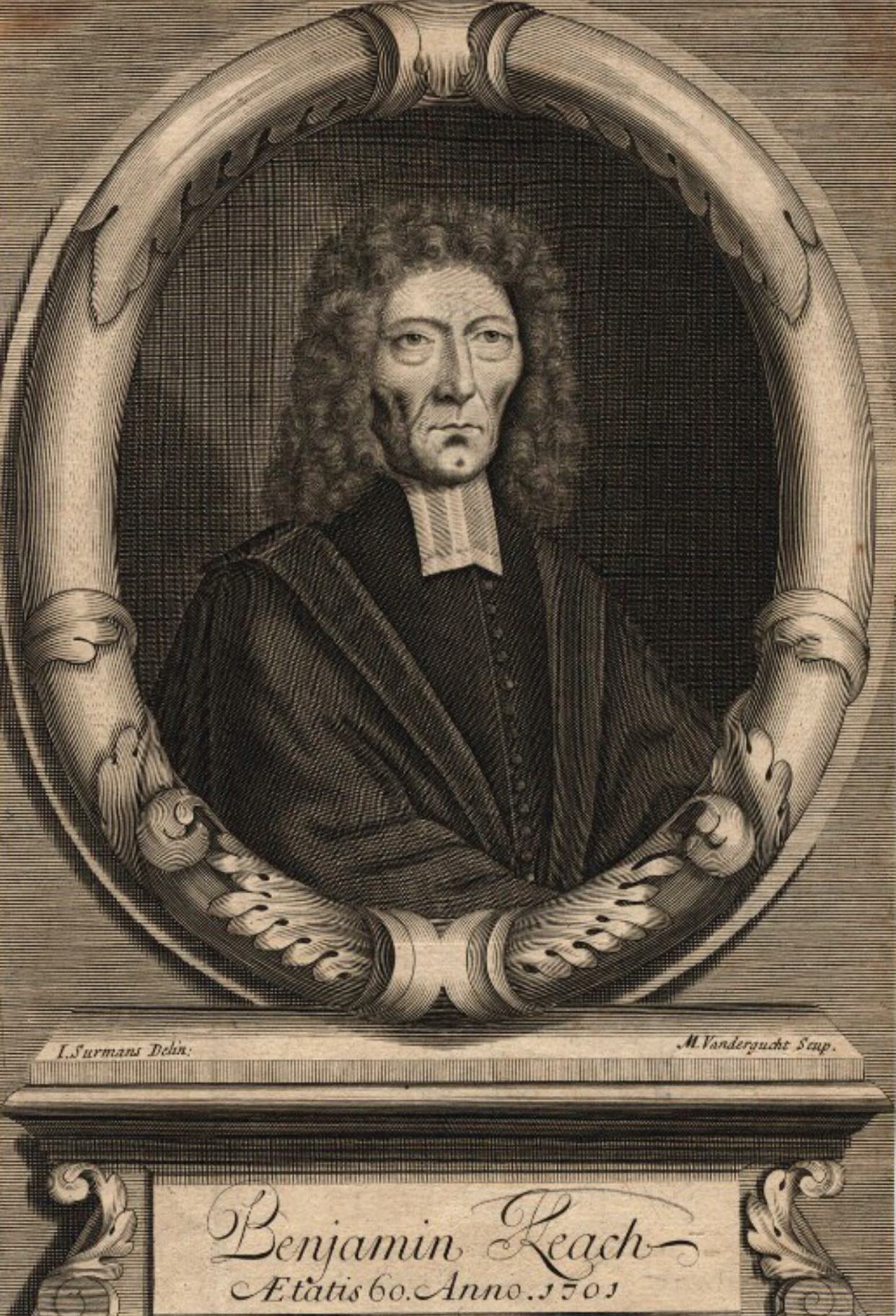
In "God Compared to a Potter," Benjamin Keach employs the metaphor of God as a potter who shapes clay to illustrate divine sovereignty and human dependence. He highlights that God, as the Creator, has the authority to form humanity according to His will, referencing scriptures like Isaiah 64:8 and Romans 9:21 to underscore God's right to mold individuals for various purposes, both honorable and dishonorable. Keach argues that God's creation and governance reflect His infinite wisdom and care, contrasting God with human artisans who may lack skill or control over their work. The importance of this doctrine lies in its implications for humility and submission in the believer's life, as it calls individuals to recognize their fragility and purpose under God's sovereign hand.
Key Quotes
“We are the clay, and thou art our Potter; we are all the work of thy hand.”
“Known unto God are all his works from the beginning.”
“If he forms and fashions any of them to be vessels of mercy, it is infinite grace.”
“Man is not made for himself but for some particular use.”
What does the Bible say about God being our Potter?
The Bible uses the metaphor of God as a Potter to illustrate His sovereignty in creating and shaping our lives (Isaiah 64:8, Romans 9:21).
Isaiah 64:8, Romans 9:21
How do we know God's sovereignty is true?
God's sovereignty is affirmed throughout scripture, particularly in His role as Creator and Potter (Romans 9:21).
Romans 9:21
Why is the concept of God as Potter important for Christians?
This concept emphasizes God's authority over our lives and His ability to shape us for His purposes (Jeremiah 18:4).
Jeremiah 18:4
GOD COMPARED TO A POTTER.
"We are the clay, and thou art our Potter; we are all the work of thy hand," Isa 64:8.
"Hath not the Potter power over the clay?" &c., Ro 9:21.
ACCORDING to the usual method of scripture metaphors, we find the Lord God set forth under the metaphorical notion of a Potter, which shall be illustrated in the ensuing parallel.
METAPHOR
I. A Potter is an artificer, an artizan or workman, one skilful to work in earth, or to form and make pots, and other vessels of clay.
PARALLEL
I. God is the Maker of all men and things that ever were, or shall be.
METAPHOR
II. A Potter prepares his clay or matter first, of which he intends to make his vessels; and when he hath made it fit, and ready for the wheel, he goes to work.
PARALLEL
II. God created or prepared the earth, the clay, before he formed man, and out of it was he made: "And the Lord made man of the dust of the ground," Ge 2:7.
METAPHOR
III. A Potter projects beforehand, what kind of vessel he will make of such clay; he hath the form and fashion of it in his mind, before he goes to work; nay, (and it may be) makes known what a vessel he will make.
PARALLEL
III. "Known unto God are all his works from the beginning." He contrived in his eternal counsel, what a kind of creature he would make man; nay, at the time of his formation, he declared what a rare vessel he should be: "Let us make man in our own image, after our likeness; and let him have dominion over the fish of the sea, and fowls of the air," &c.
METAPHOR
IV. A Potter makes vessels of divers sorts and sizes, and for several uses; some are for more honourable and noble services than others.
PARALLEL
IV. God makes vessels of divers sorts and sizes: all men are not of the like stature and beauty in their first formation; neither are they so, as they are made or formed anew in Christ Jesus; for some vessels are designed by the great Potter to contain the golden oil, and soul-enriching treasure, for the emptying of them unto others.
METAPHOR
V. A Potter finds sometimes, that whilst he is forming and fashioning his work upon the wheel, the vessel is marred in his hand, and then he makes another vessel of it, as seemeth good to the Potter, Jer 18:4.
PARALLEL
V. God sometimes, whilst he is at work to form and fashion a soul for his own use, by the preaching of the Gospel, finds the vessel marred in his hand, the clay yields not, nor is pliable; and finding it will not be a fit vessel for honour, he makes a vessel for dishonour, Ro 9:21.
METAPHOR
VI. "A Potter hath power over the clay, of the same lump, to make one vessel unto honour, and another to dishonour," Ro 9:21.
PARALLEL
VI. God may do what he will with a rebellious people, that are as a lump of pollution in his hands, as the house of Israel was: if he forms and fashions any of them to be vessels of mercy, it is infinite grace; if he makes some of them, through his long sufferance, and for their abominable sins, vessels of destruction, he is just, Ro 9:22.
METAPHOR
VII. A Potter takes great care of the vessels he hath made, and bestowed his labour and pains upon, that they may not be broken; for they are brittle ware, and he is greatly offended with such as strive to dash them to pieces.
PARALLEL
VII. God takes great care of those pots or vessels he hath made, nay, twice made, or formed for himself: he gives a charge concerning them, and rebukes kings for their sakes; saying, "Touch not mine Anointed, and do my prophets no harm," 1Ch 16:22. The devil and wicked men shall one day go to wreck, for that violence offered to those curious vessels that God hath prepared to glory: "But he that troubles you shall bear his judgment, whosoever he be," Ga 5:10.
METAPHOR
I. A Potter hath not his skill in making vessels from himself, but is taught by some other man.
DISPARITY
I. God hath his wisdom of, and from himself.
METAPHOR
II. A Potter many times wants skill in framing of some curious vessels, and not only so, but care; and by this means the vessel is marred, and spoiled in his hand.
DISPARITY
II. God is infinite in wisdom, loveth all things he goes about, and his care is accordingly; a God that is never unmindful of the work of his hands; so that if any vessel is broken, the fault is not in him, but either in themselves, or some cursed enemy.
METAPHOR
III. A Potter makes not all the vessels which are upon the wheel for his own use and profit, but for the use of others.
DISPARITY
III. God makes all things for himself, "even the wicked for the day of wrath."
METAPHOR
IV. A Potter cannot make vessels, unless he hath clay or matter to make them with, or to work upon.
DISPARITY
IV. God first made the clay, he created the dust of the earth, and then out of it made or framed man.
METAPHOR
V. A Potter makes vessels that are very defective, as they first come off the wheel.
DISPARITY
V. God never made or framed any vessel, but as it came out of his hand it was well done, without fault or blemish: "And God saw all the work of his hands, and behold it was very good."
APPLICATION.
1. Is God the Potter, and man the clay? This may teach men to lie low before the God of heaven and earth; what is the clay in the Potter's hand?
2. We may infer from hence, that man is not made for himself, but for some particular use.
3. And since the glory of God was the principal thing he designed, in making and forming of us; let us see we do not rise up against him in a sinful way, to his dishonour.
4. You may know from hence how frail and brittle man is, sooner broken than a Potter's vessel. See more under the Metaphor of Vessels.

Comments
Your comment has been submitted and is awaiting moderation. Once approved, it will appear on this page.
Be the first to comment!