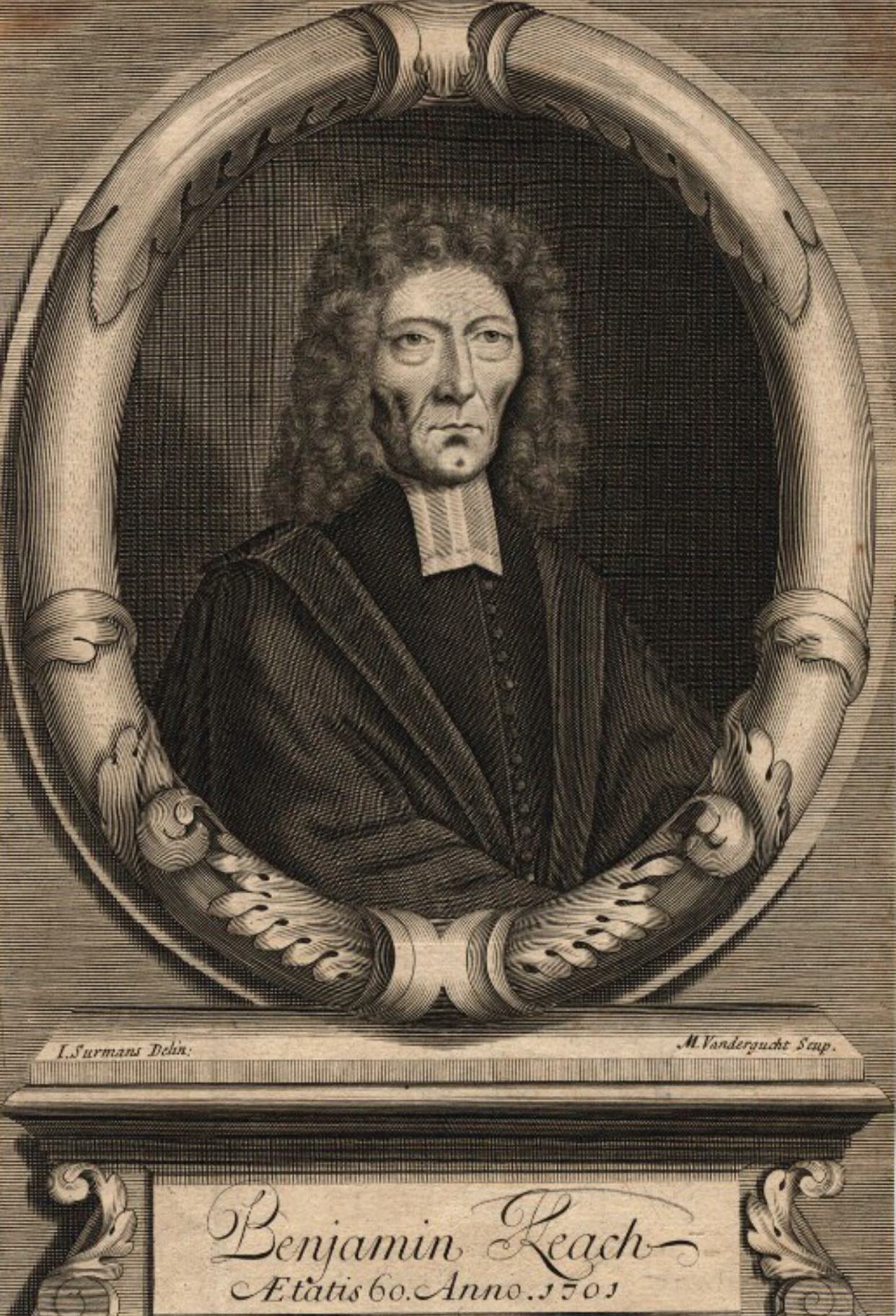
The article by Benjamin Keach examines the theological doctrine of God's wrath and its implications for the wicked, utilizing the metaphor of God as a "consuming fire" derived from Hebrews 12:29. Keach articulates that this metaphor illustrates the terrifying nature of God's judgment, portraying Him as a devouring fire that symbolizes destruction against sin and ungodliness, as shown in various Scripture references such as Deuteronomy 4:24 and Isaiah 66:15-16. He emphasizes that God's wrath is both immediate and inevitable, equating it to destructive fires that cause widespread panic and ruin (e.g., the fate of Sodom and Gomorrah). The practical significance of this doctrine lies in its dual capacity to instill fear in the unrepentant and to offer comfort to believers, reaffirming that while God is just and severe in His judgment, He is also a loving Father to His redeemed.
Key Quotes
“For our God is a consuming fire.”
“The consuming wrath of God furiously breaks out upon a people or nation, it causeth dreadful horror when it seizeth upon the ungodly.”
“It is a fearful thing to fall into the hands of the living God.”
“This great God who to the wicked is a consuming Fire to them is a loving Father and a reconciled God.”
What does the Bible say about God being a consuming fire?
The Bible describes God as a consuming fire, emphasizing His holiness and wrath against sin (Hebrews 12:29).
Hebrews 12:29, Deuteronomy 4:24, Isaiah 66:15-16
How do we know God's wrath against the wicked is true?
Scripture consistently warns of God's impending judgment, illustrating His wrath against impenitent sinners (Jeremiah 10:10, Revelation 6:16).
Jeremiah 10:10, Revelation 6:16
Why is recognizing God as a consuming fire important for Christians?
Understanding God as a consuming fire helps Christians appreciate His holiness and the consequences of sin (Hebrews 10:26-27).
Hebrews 10:26-27, Isaiah 33:14
GOD TO THE WICKED IS A CONSUMING FIRE.
"For our God is a consuming fire "Heb 12:29.
We meet with many metaphors in the sacred scriptures, which set forth the terribleness of an angry God to impenitent sinners, but none more dismal nor terrible than this: "For God is a consuming fire."
Observe. The great God is not only in scripture-phrases compared, to a fire; but he is compared (with respect to wicked men) to a devouring or consuming fire.
Amongst the metaphors taken from elementary things, we find that God is called Fire, yea, a consuming Fire, De 4:24; 9:3 and Isa 32:20; 10:17, and Isa 66:15-16; Eze 21:31, (&c.,) which denotes his wrath against sin and wicked men, in whose power it is to consume those miserable persons against whom it burns, as fire does stubble, or other combustible materials. See Ps 18:8.
METAPHOR
I. A consuming Fire is very dismal; when it breaks out in a town or city, what a frightful cry it causeth! what wringing of the hands! men tremble, women miscarry, children screech out: it frightens the fowls of the air, the beasts of the earth; it turns all faces into paleness, and makes the inhabitants to run together in heaps, in confusion. How amazing were the flames of Sodom, and how terrible is the burning of, mount Ætna.
PARALLEL
I. When the consuming wrath of God furiously breaks out upon a people or nation, it causeth dreadful horror; when it seizeth upon the ungodly, it maketh the stoutest heart to quake and tremble, and it maketh the stoutest hands to become feeble. "At his wrath the earth shall tremble, and the nations shall not be able to abide his indignation: it poureth out a fire, and the mountains are thrown down before him. Can thy heart endure, or thy hand be strong, in the day when I contend with thee? Who can stand before his indignation?" Jer 10:10. O how will the wicked fly together in holes, and quiver like a leaf, and "cry to the rocks and mountains to fall upon them, and hide them from the fear of him that sitteth on the throne, and from the wrath of the Lamb," Re 6:16.
METAPHOR
II. A Fire breaks forth sometimes very suddenly, when none think of it; but all are, as they judge, very safe and secure: yet in a moment are they surprized, when nothing but horror and amazement is in the streets.
PARALLEL
II. God, like a dreadful and unexpected Fire, breaks out sometimes suddenly upon the ungodly. How surprising was that sudden and terrible hand-writing on the wall against Belshazzar, when he was drinking wine in bowls? Da 5:5-6. "Immediately the king's countenance was changed, and he was troubled in his thoughts, so that the joints of his loins were loosed, and his knees smote one against the other." "When they cry peace and safety, then sudden destruction cometh, as travail upon a woman with child, and they shall not escape," 1Th 5:3.
METAPHOR
III. A dreadful Fire sometimes breaks out in the night, when men are asleep; yea, many times they awake with nothing but fire about them, and can hear little else than the hideous cry, fire, fire, fire, in the streets.
PARALLEL
III. God cometh sometimes upon men in the night of their ignorance and unbelief: they lie on their beds of ease and carnal security, and will believe no danger, nor fear the evil that is just at the door, though it be told them. Doubtless Lot foretold the people of Sodom that was coming upon them, as Noah did to the Old World, but they regarded it not; now in the time of their ignorance and darkness, though it were about the rising of the sun, the Lord rained fire and brimstone upon them.
METAPHOR
IV. A consuming Fire destroys exceeding, it overthrows famous cities, burns down houses; it makes your marbles, and other curious wrought stones and bricks, to fly; it lays all desolate before it, and makes a fenced city become as a ruinous heap. What ruin did it make on Sodom and Gomorrah, and the cities about them? What in London, and in many other cities and towns that might be mentioned, to evince the outrageous cruelty of fire? &c.
PARALLEL
IV. God, when he breaks forth in wrath and fury, makes most lamentable desolation. Saith David, "Thine hand shall find out all thine enemies, thou shalt make them as a fiery oven in the time of thine anger:" "The Lord shall swallow them up in his wrath, and the Fire shall devour them," Ps 21:9-10, and in another place, "Come, see what desolation the Lord hath made in the earth. Our God shall come, and shall not keep silence; a Fire shall devour before them, and it shall be very tempestuous round about. Behold, the name of the Lord cometh from afar, burning with his anger, and the burden thereof is heavy; his lips are full of indignation, and his tongue a devouring Fire," Ps 50:3. And again "Behold, the Lord will come with Fire, and with chariots like a whirlwind; to render his anger and fury, and his rebukes like flames of Fire," Isa 66:15. There is a day near, when the terrible God will arise, and show himself in this dreadful appearance. "He will gather the nations and assemble the kingdoms, to pour upon them his indignation, even his fierce anger:" "All the earth (saith he) shall be devoured with the fire of my jealousy," Zep 3:8.
METAPHOR
V. A consuming, raging, and devouring Fire spares none, nothing that stands in its way; it will spare the palace of a prince, no more than the cottage of a peasant; gold and silver are melted by it, as well as brass and lead: the strongest castle, and best fortification must down before it; it turns all into dust and rubbish; cedars and mighty oaks are consumed before it.
PARALLEL
V. God will spare the mighty and honourable of the earth, no more than the poor and contemptible ones; the king on the throne must with vengeance be brought down and consumed, as well as the beggar on the dunghill; the gallant citizen, as well as the inferior countryman. The greatest courage then will fail, and the strongest fleshly confidence then will signify nothing. "The day of the Lord of hosts shall be upon every one that is lofty, and upon every one that is proud, and lifted up, and he shall be brought down: upon all the cedars of Lebanon, that are lifted up, and upon all the oaks of Bashan: upon all high mountains, and upon all the hills that are lifted up; and upon every high tower, and upon every fenced wall, that is lifted up with the haughtiness of man, shall the fierce indignation of the Lord be kindled, even to the bearing it down, and laying it down, and laying it low, even to the dust; and the Lord shall be exalted in that day." "The mountains quake at him, and the hills are melted, and the earth burnt up, (or, is burned up.) but the whole earth shall be devoured by the Fire of his jealousy; neither their gold nor silver shall be able to deliver them in the day of the Lord's wrath," Isa 2:12-17; Zep 1:18.
METAPHOR
VI. Wood, hay, and stubble, are fit fuel for a consuming Fire to seize upon; and such things as are combustible make it burn the more vehemently. And if high and strong towers cannot stand before a consuming and devouring Fire, how it is possible for briars and thorns?
PARALLEL
VI. Wicked, profane, and ungodly men are fit matter and fuel for the wrath of God to take hold of; and when they are piled together, with the horrid guilt that is upon their consciences, what a dreadful Fire will there be! "Whilst they are thus folded together as thorns, and whilst they are drunken as drunkards, they shall be devoured as stubble fully dry," Na 1:10.
METAPHOR
VII. A dreadful Fire, when it breaks out turns all joy into sorrow; it makes a day of mirth a day of mourning, and makes rich
PARALLEL
VII. The consuming wrath of God, or those plagues of his fury, when he rises up to contend with the wicked in a way of vengeance and indignation, with a person or people, turns all their joy into mourning, and a bitter day. I will (saith God by his prophet) undo all those that have afflicted thee, Zep 3:19. The Fire of God's wrath will utterly impoverish all the wicked of the earth, &c.
METAPHOR
VIII. Fire, of all elements, doth most crully and dreadfully torment. If a man or woman be cast into a fire, what intolerable pain and anguish doth it put him to! Hence the bloody persecutors have found out, by their diabolical art, those cruelties, to burn in dreadful Fires the bodies of God's children, thinking they could not put them to more exquisite pain and torment: yea, and the punishment of the damned is set forth by Fire, because nothing is more terrible to think upon, than, to be cast into a furnace of Fire; though natural Fire be so dreadful, yet hell-Fire is much more dreadful and tormenting.
PARALLEL
VIII. It is a fearful thing to fall into the hands of the living God, viz. God being a consuming Fire; in respect to this the apostle spake these words, "for our God is a consuming Fire." If it be terrible to have a finger, foot, or hand to burn off, or to hear that our bodies must be cast into a furnace of boiling oil, or into a fierce devouring Fire; how then can sinners bear the thoughts of falling into the hands of the dreadful and terrible God, whose incensed wrath is ten thousand times worse, and more intolerable, than any Fire that ever mortals saw, or that ever any were cast into?
METAPHOR
IX. A consuming Fire lays waste, and makes desolate in a little time: in a few hours, what famous towns have been consumed to ashes? In the fatal year of 1666, what dismal ruin and desolation was made in London, by the last great and fearful conflagration! There were above thirteen thousand houses burnt down, and turned to rubbish and ashes, with eighty-seven parish-churches, and six chapels, besides the exchange, and many stately public halls, and magnificent buildings; in all amounting to the loss of near ten millions of pounds sterling.
PARALLEL
IX. God, when he goeth forth in vengeance, will destroy mightily, and in a short space, when he rises up to set on Fire the briars and thorns of the earth. "Through the wrath of the Lord of hosts is the land darkened, and the people shall be as the fuel of the Fire," Isa 9:19. Now will I (saith God) arise, and devour at once. Destruction is coming upon the wicked of the earth; destruction upon destruction in a moment will come upon them, Re 18:8. Let Mystery Babylon look to it, this fire will kindle very suddenly upon that great city, in a more terrible and irreparable manner, than her agents have done upon our metropolis; yea, and her plagues shall come in a day, death and mourning, and famine, and she shall be utterly burnt with fire. "And let the sinners in Sion tremble; for the light of Israel shall be for a Fire, and his holy one for a flame, and it shall burn and devour his thorns and his briars one day," Isa 33:14.
There is vast difference and disparity between our common elementary Fire, and the Fire of God's wrath.
METAPHOR
I. Fire is natural and elementary, and so consequently can only seize or consume things that are visible, of external or temporal substances; it destroys that only which is fit fuel for it whilst kept under.
DISPARITY
I. The Fire of God's wrath is divine or spiritual, and so takes hold of, or kindles upon that which is of an immaterial and invisible substance; it seizeth upon spirits, torments devils, and the souls of men and women; it kindles not on external matter only, but on internal also.
METAPHOR
II. The flames of a burning and consuming Fire are always seen, and the ruin that it makes are obvious to the outward eye.
DISPARITY
II. The flames of God's wrath upon the soul cannot be seen. A man may have a Fire buming in his conscience, like that Francis Spira, and yet by looking upon him, you cannot see what ruin and desolation it makes there.
METAPHOR
III. A consuming Fire hath often been overcome, and put quite out, by engines, instruments, and industry of man; when it hath burned vehemently, a stop hath been put to it, and further danger prevented.
DISPARITY
III. God is such a consuming Fire, that when his incensed wrath is kindled in good earnest, with a design to burn up and destroy, none is able to overcome, and put a stop to it; all the ways and means then that sinners can advise, will prove insignificant. It is not repentance, nor floods of brinish tears, that can put out or lessen the burning of this divine Fire. It is true, that when his wrath is kindled but a little and before the day of grace is over, his anger may be appeased: but when he lets out the greatness, yea, the deluge of the vials of his wrath, O! then it will be too late.
METAPHOR
IV. Fire is not unquenchable: though the burning of mount Ætna, and other burning mountains, where there is much brimstone, and other sulphurous matter, are impossible for man to extinguish, yet they shall not burn always.
DISPARITY
IV. The Fire of God's wrath shall never be extinguished. "Behold, thus saith the Lord, mine anger and my fury shall be poured out, &c. and it shall not be quenched," Jer 7:22. "Fire is kindled in mine anger, and shall burn to the lowest hell," De 32:22. And it is said, "And they shall go forth, and look upon the carcases of the men that have transgressed against me; for the worm shall not die, neither shall the fire be quenched; and they shall be an abhorring to all flesh," Isa 46:13. "There the worm dieth not, and the Fire shall not be quenched," Mr 9:43,48.
APPLICATION.
I. IF God be a consuming Fire, it is good to inquire, to whom he is so, and will be so terrible?
1. To the fallen angels, or damned spirits, who once enjoyed him as a gracious Head and Creator; but by reason of sin, not being contented with their first estate, were cast out of heaven, and must for ever undergo the incensed flames of God's wrath.
2. All profane, debauched, and ungodly men, who are enemies to God and religion, who live like brute beasts upon the earth, who mind nothing but to satisfy their carnal appetites, who wallow in the lusts of uncleanness, drunkenness, pride, covetousness, &c., without timely repentance, as God is, so he will for ever be to such a consuming fire, &c.
3. All persecutors, tyrants, murderers, whoremongers, and all such that destroy the saints of God on the earth; the beast, false prophets, and mystical Babylon; to all such will God be continually a consuming Fire.
4. All rotten and hypocritical professors, and unbelievers, whether in or out of the pale of the church. Yaa, let "the sinners in Zion be afraid, for fearfulness will soon surprise the hypocrite," Isa 33:14. These without repentance must dwell with devouring Fire, and everlasting burnings. How many times doth our Saviour say, that hypocrites and unbelievers shall have their portion in the Fire that cannot be quenched?
5. To all backsliders, apostates, and abominable revolters, will God be a consuming Fire, Heb 10:26-27,
But some may object and say, how can it be so, seeing God saith of himself, "Fury is not in me," Isa 27:4; and that one of his chiefest attributes is love; And that "God so loved the world, that he gave his only begotten Son?" &c., Joh 3:16.
Answ. God is set forth as, and said to be, a consuming Fire, in respect to his justice. God is just, as well as gracious, a righteous and severe Judge, and he will deal with men according to the penalties of his just law: so that for rebelling against him, and not believing in the Lord Jesus Christ, his well-beloved Son, his wrath is kindled, and seizeth upon such men.
II. This terrible doctrine of God's being a consuming Fire, may justly strike terror into the hearts of all ungodly men: the day is coming, that he will burn them up, and leave them neither root nor branch.
III. An use of consolation to the saints: this great God, who to the wicked is a consuming Fire, to them is a loving Father, and a reconciled God.

Comments
Your comment has been submitted and is awaiting moderation. Once approved, it will appear on this page.
Be the first to comment!