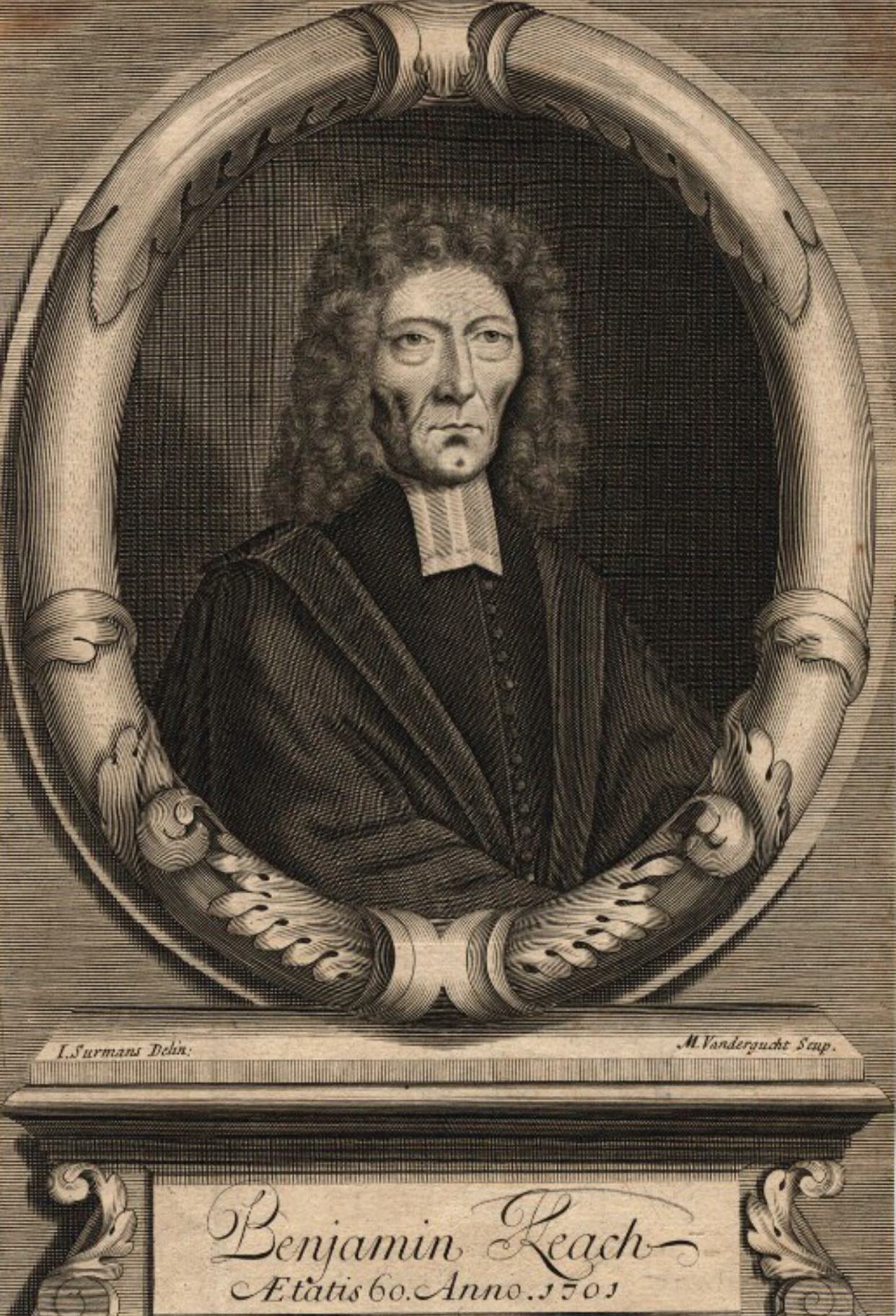
In "Christ a Bridegroom," Benjamin Keach explores the rich biblical metaphor of Christ as the Bridegroom in relation to His church, highlighting the depth of God's love and the covenant relationship established through Christ. Keach argues that this metaphor encompasses various aspects, such as Christ's role as a suitor who engages the affections of sinners, His journey from glory to humanity, and His efforts to win believers through acts of grace and mercy. Scriptural references such as Matthew 25:6, John 3:28-29, and John 8:42 illustrate the relational dynamics between Christ and His church as well as the divine counsel involved in the plan of salvation. The significance of this doctrine lies in its assurance of Christ's unconditional love, the transformation of believers, and the call for their consequent obedience and fidelity to Him.
Key Quotes
“A Bridegroom presupposes two things: First, a person in a single capacity and as so considered he is a suitor; Secondly, a person in a married estate and as so considered he is a head or husband.”
“Jesus Christ left his kingdom and all that glory he had with the Father... yet he left all this and became poor and a man of sorrows exposing himself to greater pain and misery than any mortals are capable to endure.”
“How infinitely sinners are obliged and beholden unto God in providing such a great and good match for them.”
“If this offer be rejected thou art undone and must be damned.”
What does the Bible say about Christ as a Bridegroom?
The Bible describes Christ as a Bridegroom who loves and seeks to unite Himself with sinners in a covenant relationship.
Matthew 25:6, John 3:29, Ephesians 5:25-27
How do we know Christ's love for sinners is true?
Christ's love for sinners is shown through His incarnation, sacrificial death, and ongoing intercession for us.
Romans 5:8, Hebrews 7:25, John 15:13
Why is the metaphor of Christ as a Bridegroom important for Christians?
This metaphor emphasizes the intimate relationship Christ desires with His followers and highlights His love and commitment.
Ephesians 5:25-27, John 3:29, Revelation 19:7-9
CHRIST A BRIDEGROOM.
"Behold, the Bridegroom cometh, go you out to meet him" Mt 25:6.
"He that hath the bride is the Bridegroom: but the friend of the Bridegroom, which standeth and heareth him, rejoiceth greatly because of the Bridegroom's voice: this my joy therefore is fulfilled" Joh 2:25.
THIS metaphor of a Bridegroom, as it is exceeding useful, so it is as comfortable and pleasant a metaphor as most we meet with in the holy scriptures.
A Bridegroom presupposes two things? First, a person in a single capacity; and as so considered, he is a suitor. Secondly, a person in a married estate; and as so considered, he is a head or husband. In both these respects Christ may be considered, and is held forth in the word of God. He first acts as a Lover or Suitor, to engage the love and affections of sinners to himself; and then joins himself in a glorious, mystical marriage-relation with them, and accordingly acts towards the sons of men: of which take this following parallel.
METAPHOR
I. A man that intends or is disposed to marry, is not contented (or thinketh it not convenient) how happy soever he is otherwise, in the enjoyment of all outward good things in his father's house.
PARALLEL
I. Jesus Christ, notwithstanding all the glory he had with the Father, being the joy and excellencies and perfections, dwelling in the fruition of eternal bliss, yet thought upon a spouse, and judged it meet to enter into a marriage-relation, Pr 8:31.
METAPHOR
II. An obedient and wise son takes advice, and consults with his father, being fully resolved to change his condition, and enter into a contract of love, and marriage-union; and then fixes upon a particular object.
PARALLEL
II. Jesus Christ took counsel with the Father about that glorious design of love and good-will he bore to mankind; and hence he is said to be "delivered by the determinate counsel and foreknowledge of God," Ac 2:23. It was no less than the great result of the blessed Trinity, that the Lord Jesus the second Person, should espouse sinners to himself: "I proceeded," saith he, "and came from God; neither came I of myself, but he sent me," Joh 8:42. He fixed not his choice on the fallen angels, but on the offspring of fallen man, who were given unto him by the Father.
METAPHOR
III. When a man hath fixed upon an object that he intends to espouse unto himself, he contrives the way and method of his proceeding, in making known his mind, and to bring about his design; and many times will choose to send messengers, to treat with the person about the business, and discover his affections, before he goes himself in person.
PARALLEL
III. Jesus Christ hath fixed his eye upon lost and perishing man, agreed with the Father upon the way and method of proceeding, what he must do and become, in order to the accomplishment of this glorious enterprise: and accordingly the father was pleased, out of his abundant grace, in a fit season, to make known his eternal counsel, and proposed Jesus Christ, the seed of the woman, to the sinner, as an object of love; and not only so, but also before he came himself, he sent his messengers, the prophets, "rising up early, and sending them," to offer terms of love and friendship, and reveal his purpose to them, 2Ch 36:15.
METAPHOR
IV. After this, a lover usually (his heart being enflamed with love and ardent affection to the person, though she being in another country, very far off) takes a journey resolving to give her a visit; and in order thereunto he suits himself in a fit garb and clothing, that so he might every way render himself a person acceptable, and meet, likely, and capable of winning and enjoying of her.
PARALLEL
IV. Jesus Christ after this, such was the greatness of his love, and strength of his affection, resolved to take a journey to give poor sinners a most gracious visit; the journey he took was long, as far as it is from heaven to earth. And that he might accomplish his blessed purpose, he fits himself with a garb accordingly, laying aside his heavenly robes, he clothed himself with our flesh, or did assume a man's nature, that so he might every way become a meet object for the sinner, and likely to come and enjoy him at last.
METAPHOR
V. If the person or suitor be a prince, and known, commonly at his arrival, he is much congratulated and welcomed, by the nobility, and persons of honour.
PARALLEL
V. When the Lord Jesus came into the world, the angels of God, who had knowledge of him, in an heavenly way of congratulation, magnified the Most High: "And suddenly there was with the angel a multitude of the heavenly host, praising God, and saying, glory to God in the highest, and on earth peace and good will toward men," Lu 2:13-14. But how ungratefully was he welcomed and entertained by the generality of mankind, for whose sake he came into the world?
METAPHOR
VI. A lover, when he goes to visit a person he intends to espouse unto himself, usually sends his friend, or takes him along with him, to signify, not what only what and who he is, but also his intention and purpose in coming.
PARALLEL
VI. The Lord Jesus, when he came into this world, to espouse poor sinners in a spiritual way, sent John the Baptist to prepare the way before him, and make ready a people for him, who bore witness of his Majesty, and declared the excellency of his Person, as also his gracious intention: "He that cometh after me is mightier than I, whose shoes I am not worthy to bear," (in another place, unloose, Mt 3:11; Joh 1:27.) "He shall baptize you with the Holy Ghost, and with fire." "Ye yourselves bear witness, that I said, I am not the Christ, but I am sent before him." He that hath the bride is the Bridegroom; but the friend of the Bridegroom, which standeth and heareth him, rejoiceth greatly because of the Bridegrooms voice: this my joy therefore is fulfilled," Joh 3:28-29.
METAPHOR
VII. A man propounds questions to the person he loves, to discover whether she be pre-engaged to any other; and if he perceives she is entangled through great folly, and in danger to be utterly undone thereby, he strives to undeceive her, and save her from ruin.
PARALLEL
VII. Jesus Christ propounds questions in his word to poor sinners, thereby to discover how it is with their souls, showing the danger of being in love with sin, or to rely upon their own righteousness, or to have their affections inordinately set upon things of this world: he strives to deceive them. "Why do you not understand my speech?"---"He that committeth sin, is the servant of sin," saith he. "Unless a man deny himself, and take up his cross, he cannot be my disciple. He that loveth father or mother more than me, is not worthy of me," &c. "Unless ye believe that I am he, ye shall die in your sins," Joh 3:24, "Jesus answered, and said unto them, suppose ye that those Galileans were sinners above all the Galileans, because they suffered such things? I tell you nay, except ye repent, ye shall all likewise perish," Lu 13:2-3.
METAPHOR
VIII. A Lover makes offers of love unto the person he has fixed his eye upon, and uses divers arguments, to persuade her to yield or consent unto his request.
PARALLEL
VIII. Jesus Christ offers his love unto sinners, showing how willing he is to embrace them in the arms of his mercy. He commends his favour and good will to sinners many ways: first, by his taking our nature upon him, and coming into the world. Secondly, by those hard things he met with in this life for our sakes. Thirdly, by shedding of his blood. Fourthly, he commends his love by the continual motions of his Spirit upon our hearts, and by those inward checks of conscience, besides those blessed offers and tenders of grace, which dropped from his gracious lips: "If any man thirst, let him come unto me and drink," Joh 7:37. "Look unto me, and be saved, all ye ends of the earth," Isa 45:22. "Come to me, all ye that are weary and heavy laden, and I will give you rest," Mt 11:21. "Behold I stand at the door, and knock: If any man hear my voice, and open the door, I will come in unto him, and sup with him, and he with me," Re 3:20.
METAPHOR
IX. A true Lover respects his intended bride, more than wealth, beauty, &c. It is not the portion, but the person, his eye is principally set upon.
PARALLEL
IX. Jesus Christ loves poor sinners, not for any thing he sees in them, not for beauty, riches, &c., for naturally mankind hath nothing that may render them any way desirable in Christ's eye; he might see enough in them to loath them, but nothing to love them.
METAPHOR
X. Such a person sues hard, uses weighty arguments to prevail, and will not quickly take a denial.
PARALLEL
X. Jesus Christ sues hard, is very importutate, uses many powerful and weighty arguments to prevail with sinners to accept of the terms of grace, and join in an holy contract of love with him. 1. One is taken from the dignity of his Person, being the root and offspring of David; David's Lord, as well as David's Son. "I (saith he) and my Father are one." 2. From that early love and good will he bore to them! "When there were no depths, was I brought forth: when he gave the sea his decree,---Then was I by him, as one brought up with him, and I was daily his delight, rejoicing always before him: rejoicing in the habitable parts of the earth, and my delights were with the sons of men," Pr 8:24,29-31. And in another place, "I have loved thee with an everlasting love, therefore with loving-kindness have I drawn thee," Jer 31:3. From the intention or purpose of his coming so long a journey;" I am come that ye may have life,"---"Not to call the righteous, but sinners to repentance:"---"Come to seek and to save that which was lost." 4. His great abasement and condescension. 5. From his suffering: "I lay down my life for my sheep." Can there be a greater argument than this? 6. He argues with sinners from the consideration of their own misery, and that absolute necessity there is of closing with him, and the blessed effects of it: "He that believeth on the Son, hath everlasting life; and he that believeth not the Son, shall not see life, but the wrath of God abideth on him," Joh 3:36.
METAPHOR
XI. A faithful suitor waits long, and hath much patience, before he will desist or give over his suit, and yet thinks nothing too much that he suffers or does endure for her sake; as appears concerning Jacob, who served seven years for Rachael: "And they seemed unto him but a few days, for the love he had to her," Ge 29:20.
PARALLEL
XI. Jesus Christ waits long, and hath much patience, before he doth desist from his suit, and leave sinners to perish in their iniquities. How long did infinite patience wait upon the old world? was it not one hundred and twenty years? and forty years upon Israel in the wilderness:"I have (saith he) spread out my hands all the day unto a rebellious people." Isa 65:2. But if he prevails at last, he thinks nothing too much that he has suffered for sinners. He waits at the door of his spouse, "until his head is wet with dew, and his locks with the drops of the night," Song 5:2, yet does he not think all too much.
METAPHOR
XII. One that intends to make a person his bride and only consort, expresses great love; his love is sometimes much more than he can well express; it is very strong, as strong as death; "Many waters cannot quench it, nor can the floods drown it." There is an unsatisfied desire in the person, until the object beloved be enjoyed.
PARALLEL
XII. Jesus Christ doth express and manifest great love to sinners, which he intends to take into covenant relation with himself. His love, like the Nile, overflows all banks and bounds; his grace is without limits, beyond the love of Jonathan to David. What doth the Gospel show or express more plainly, than the strength of Christ's love to sinners? Christ expressed such love as never any other had, in laying down his life for his enemies, for such as were rebels to him and his Father. There is "depth, height, length and breadth, in it, it passeth knowledge," Eph 3:19.
METAPHOR
XIII. Such an one is generally concerned and grieved at the unkindnesses of his friend, and ungrateful repulses, and many times from hence doth withdraw himself, and carry it as a stranger.
PARALLEL
XIII. Jesus Christ is greatly troubled at the ungrateful repulses he meets with from sinners; which appears, 1. By his being grieved; "He was grieved because of the hardness of their hearts," When he drew near to Jerusalem, he wept over it, perceiving how basely they had slighted and rejected him. 2. By condoling and bewailing their miserable state and obstinacy: Israel will have none of me. "0 Jerusalem, Jerusalem, how often would I have gathered thy children together, as a hen gathereth her chickens under her wings? and ye would not," Mt 23:37. By hiding of his face, and bringing afflictions upon them: "I will go and return to my place, till they acknowledge their offences, and seek my face: In their afflictions they will seek me early," Ho 5:15.
METAPHOR
XIV. A Suitor nevertheless (such is the nature of his affection) knows not how to give her up; he therefore sends letters, thereby further expressing the ardency of his desire, and how loath he to take his final farewell.
PARALLEL
XIV. Jesus Christ notwithstanding all the unkindnesses of sinners, hath afforded them his word, wherein is expressed his good will and desire to them; nay, and more than this, sends many a kind message to them by the sweet motions of his Spirit, to awaken their consciences, before he leaves them finally: thus he strove with the old world, Ge 6:3.
METAPHOR
XV. Moreover, besides all this, he sends faithful messengers to her, as spokesmen, to answer her objections, that so (if it be possible) he might bring her at last to a compliance: who use also many arguments in order thereunto. Thus Abraham's servant acted, when he went to take a wife for Isaac, Ge 24:35-37.
PARALLEL
XV. Jesus Christ sends his faithful ministers, who are as spokesmen for their Master: "I have (saith Paul) espoused you to one husband, that I may present you as a chaste virgin to Christ," 2Co 11:2. "I have espoused you;" the meaning is, I have been employed as an instrument sent and commissioned by the Lord Jesus to do it. Many arguments they use to bring poor shiners to accept of the offers of grace, and receive Jesus Christ; as, 1. They, like Abraham's servant, set forth the greatness and riches of their Master: "The Lord (saith he) hath blessed my master greatly, and he is become great; he hath given him flocks and herds, silver and gold, &c., and Sarah my master's wife bare a son to my master when she was old, and to him he hath given all that he hath," Ge 24:35. God is very great, all things in heaven and earth are his, "The cattle upon a thousand hills;" and saith the servant of God, he hath given unto Christ all that he hath. "All things are delivered unto me of my Father." Christ is very rich, the heir of all things, Mt 11:27; Joh 13:3; Heb 2:2. They set not out the greatness and riches of Christ, but his excellent beauty also: "Thou art fairer than the children of man," Ps 45:2-3. The power of Christ. 4. His wisdom. 5. His love and rich bounty. 6. They set before sinners, what the promises are if they receive him, and what glory they shall be raised to. 7. The wofulness of their present state, and what it will be in the end, if they do refuse him: "Knowing therefore the terror of the Lord, we persuade men," 2Co 5:11.
METAPHOR
XVI. A Suitor also sends love-tokens to the person he intends to make his bride: Isaac sent unto Rebekah, ear-rings, and bracelets of gold, Ge 24:22.
PARALLEL
XVI. Jesus Christ sends tokens of his gracious love to all such that he intends to marry, and betroth unto himself for ever; he gives them a cabinet of costly jewels, the graces of the Spirit, to adorn them: They shall be an ornament of grace unto thy head, and chains about thy neck," Pr 1:9. Grace is like a box of precious ointment, whose odoriferous smell perfumes the hearts and lives of believers.
METAPHOR
XVII. A Lover cannot endure rivals, nor permit that another should have a part or an equal share in the affection of the object beloved.
PARALLEL
XVII. Jesus Christ cannot endure that the heart of a professor should be divided, or that a man or woman should have one heart for sin, and another for him; he must have the whole heart, or he will have none of it: "Thou shalt love the Lord thy God with all thy heart, and with all thy soul," &c., Mt 22:37. Conscience may be for Christ and his ways, and the judgment may be much enlightened, when the will may be opposite, and the affections set chiefly upon sin, and the vanities of this world: "Their heart is divided, now shall they be found faulty."
METAPHOR
XVIII. Some Lovers have fought great battles, and met with great opposition from enemies, for the sake of those persons they have set their hearts upon.
PARALLEL
XVIII. Jesus Christ met with greater opposition, and fought more sore and fearful battles than ever any did, for the sinner's sake; as witness his conflict with Satan, that strong man armed, with sin and wrath, and last of all with death itself; over all which enemies he gloriously triumphed, and got a perfect conquest, Mt 4:3-6.
METAPHOR
XIX. A man will not make a contract of marriage with one that is engaged to another person; she must be free from all others, if he espouse her to himself.
PARALLEL
XIX. Jesus Christ will not take into covenant, or make a contract of divine love or grace, with a person that is not dead to the law. We must see the insufficiency of that, and of our own righteousness, and "have no confidence in the flesh, if we would win Christ," Php 3:3,8. "Wherefore, my brethren, ye also are become dead to the law, that ye should be married to another, even to him that is raised from the dead, that we should bring forth fruit unto God," Ro 7:4.
METAPHOR
XX. When a Suitor hath obtained the love and full consent of the person beloved, (and being satisfied upon all accounts, respecting such things as we have hinted) signifies in the next place his resolution to betroth or marry her unto himself; and that it might be orderly and legally done, she is given to him.
PARALLEL
XX. When Jesus Christ, by his word and Holy Spirit, hath brought over all the faculties of the soul unto himself, finding the person dead to sin, self, and to this world, and all things being removed which obstructed this happy contract; he then proceeds, and takes the soul into union with himself: but, according to that holy order and decree of God, no soul is espoused by Christ, but such as is given to him by the Father; "All that the Father hath given me, shall come unto me," Joh 6:37.
METAPHOR
XXI. The espousal day being come, and consummated, there is great joy in the family, amongst the servants and others, to see this happy conjunction.
PARALLEL
XXI. No sooner is a sinner converted by faith, united or espoused to Jesus Christ, but there is great joy amongst the angels of God in heaven, and amongst the saints of God on earth. "Likewise I say unto you, there is joy in heaven, in the presence of the angels of God, over one sinner that repenteth," Lu 15:10. And so in the case of the prodigal, at his return: "The father said to his servants, Bring forth the best robe, and put it upon him, and put a ring on his hand; and bring hither the fatted calf, and kill it; and let us eat and drink, and be merry. And they began to be merry," Lu 15:23-24.
METAPHOR
XXII. A Bridegroom usually, especially if he be a prince or noble person, settles a jointure or dower upon his bride, entitles her to such or such a place, city, land, or inheritance.
PARALLEL
XXII. Jesus Christ settles upon each soul he espouses, a very great inheritance; he makes over a jointure of an inestimable value, a kingdom of glory, a crown that fadeth not away, even everlasting blessedness.
METAPHOR
XXIII. A Bridegroom leaves his bride a while (after he hath espoused her) in her own country, and in her father's house, doth not immediately carry her home to his own habitation.
PARALLEL
XXIII. Jesus Christ leaves his church, and each believing soul (whom he takes into union with himself) in this world for a while, and doth not immediately take them to himself, or carry them to heaven, his own habitation.
METAPHOR
XXIV. A Bridegroom rejoiceth over his bride, and much delighteth in her, Isa 62:5.
PARALLEL
XXIV. Jesus Christ delighteth greatly in his church, and in every sincere member thereof; hence Zion is called Hephzibah: "And as the Bridegroom rejoiceth over the bride, so shall thy God rejoice over thee," Isa 62:4-5.
METAPHOR
XXV. The Bridegroom discharges the bride from many debts and dangers, by means of this marriage contract, and conjugal knot. He now stands liable to these actions and arrests, which otherwise, had she abode in a single state, would have come upon her own head.
PARALLEL
XXV. Jesus Christ discharges his saints and people from all those debts that bind over to eternal wrath. Sinners were miserably indebted to the law and justice, owed ten thousand talents, but had not a farthing to pay; liable every day to arrests, and to be sent to the dark shades of eternal night, or prison of utter darkness, under the wrath of the incensed Majesty, having whole mountains of sin and guilt lying upon them, running every day into new scores, adding sin to sin, one heavy debt upon another. Oh! how great is the guilt of sinful man! and how unable to satisfy Divine Justice! How then shall these debts be paid, all these sins expiated, and the guilt taken away? Justice calls for full payment; its language is, pay, or perish: yet we cannot make the least reparation, nor right God for the wrong we have done him, by offending the eyes of his glory. But now by a marriage-covenant with Jesus Christ, all is at once discharged, and the sinner acquitted; there being riches and worth enough in him, who hath fully satisfied the demands of law and justice; and by union with him the sinner comes to be interested into all!" "He was made sin for us, who knew no sin, that we might be made the righteousness of God in him," 2Co 5:21. "The Lord hath laid on him the iniquities of us all!" O how happy is that soul that is espoused to Jesus Christ!
METAPHOR
XXVI. A Bridegroom, if he be a prince, or noble person, raises his bride to great honour; she is called by his name, has the attendance of his servants, and lies in his bosom.
PARALLEL
XXVI. Jesus Christ confers great honour on those that are espoused to him. The church is called a queen; and how comes that to pass, but by means of this contract and marriage with Christ? "Upon thy right hand stands the queen, with gold of Ophir," Ps 45:9. Believers are called by Christ's name, have the attendance of his servants, the holy angels: "The angels of the Lord encamp round about them that fear him," Ps 34:7, "He hath given his angels charge concerning thee." Saints lie in the bosom of Christ's love and mercy.
METAPHOR
XXVII. A Bridegroom supplies the wants of his bride; it is his part, and great concern, to provide all things needful for his wife that he has espoused.
PARALLEL
XXVII. Jesus Christ supplies all the wants, and makes blessed provision for his saints: "They that fear the Lord shall not lack any good thing," Ps 34:10. Whether it be grace or peace, either food or physic they want, they shall have it from him: all is in Christ: "In him all fulness dwells," Col 1:19; and in him, so as to be let out and communicated to his saints.
METAPHOR
XXVIII. A Bridegroom sympathizes with his spouse, and helps to bear her burdens; is greatly troubled when she is afflicted, and cannot endure any should affront, misuse, or wrong her.
PARALLEL
XXVIII. Jesus Christ sympathizes with his saints: "In all their afflictions," it is said, "he was afflicted," Isa 63:9. And in another place, it is said, "His soul was grieved for the misery of Israel," Jg 10:16. "He himself hath suffered. Being tempted, he is able to succour them that are tempted," Heb 2:18, "We have not an High-priest that cannot be touched with the feeling of our infirmities," Heb 4:15. "He that toucheth you, toucheth the apple of mine eye," Ec 2:8. "Cast thy burden upon the Lord, and he shall sustain thee," Ps 55:22.
METAPHOR
XXIX. A Bridegroom requires obedience. The man hath, and ought to have pre-eminence over the woman; he is her head, and she is commanded to be in subjection.
PARALLEL
XXIX. Jesus Christ requires obedience of his church, and of every member thereof; hence Paul saith, "The church is subject unto Christ." "The Lord Jesus is exalted above all principalities and power, might and dominion, and every name that is named, not only in this world, but also in that which is to come," Eph 5:24; 1:21-22, and is given particularly to be "Head over all things to the church," "Call ye me Lord," saith Christ, "and do not the things that I say," Lu 6:46.
METAPHOR
XXX. A Bridegroom reproves his bride for the faults that he sees in her, from that great love he bears to her.
PARALLEL
XXX. Jesus Christ reproves his saints for their evils and transgressions, out of his great love. "As many as I love, I rebuke and chasten," Re 3:19.
METAPHOR
XXXI. A Bridegroom nevertheless hides and forgives many infirmities that he sees in his spouse, and will not lay open her weakness, nor expose her to reproach, as Joseph thought to have dealt with Mary.
PARALLEL
XXXI. Jesus Christ covers the weakness and infirmities of his people. He covers our sins, doth not upbraid us with our faults, but forgives our iniquities, "and remembers our sins no more," Ps 32:1; Heb 8:12. Though his saints have many spots and blemishes, yet he through his great grace overlooks them all, and will not expose them to reproach, here nor hereafter, for them.
METAPHOR
XXXII. A bridegroom advises and instructs his spouse, in all things wherein she stands in need of it from him.
PARALLEL
XXXII. Jesus Christ gives counsel and instruction to his people: "I counsel thee," &c. Re 3:18. What heavenly instruction hath he left in his word, of which we stand in need at all times? Ps 73:24, and Ps 16:7.
METAPHOR
XXXIII. A Bridegroom is greatly pleased with the good behaviour of his bride, takes much delight in her company, leading her into pleasant places, to lovely fields, and springs of water, for her solace and refreshment.
PARALLEL
XXXIII. Jesus Christ is greatly pleased with his people, when they walk as becometh the Gospel. "Do good, and communicate; for with such service the Lord is well pleased." To distribute to the ministers of Christ, is said to be "a sacrifice acceptable, and well-pleasing to God." Children, obey your parents in all things; for this is well-pleasing unto the Lord," Php 4:18; Col 3:20. "Come, my beloved, let us go forth into the fields, let us lodge in the villages:---let us see if the vine flourish, whether the tender grape appear, and the pomegranates bud forth, there will I give thee my loves," Song 7:11-12. "He leadeth me beside the still waters," Ps 23:2.
METAPHOR
I. A great and mighty prince will not set his heart upon nor court a leper, a creature blind, deformed, full of running sores, and old ulcers, from the crown of the head, to the sole of the foot.
DISPARITY
1:The Lord Jesus set his heart upon the sinner, when cast out to the loathing of his person in his blood like a new-born infant. Every sinner is a leper in a spiritual sense, defiled all over, wounded, full of ulcers and stinking putrefaction, as loathsome as a filthy sepulchre: every faculty of the soul unclean, and the menbers of the body polluted. Hence it is said, "We have no soundness from the crown of the head, to the sole of the foot," Isa 1:5-6. Yet when the sinner was in this condition, that was the time of Christ's love, Eze 16:4-6.
METAPHOR
II. Much less will a king leave his crown and kingdom, and deny himself of all his glory, become poor and contemptible, not having so much as a small cottage to dwell in, nor money in his pocket; nay, be exposed to as great miseries as ever any mortal was; and all for the sake and love he bore to such a wretched creature, a loathsome leper, blind and deformed, a mere vagabond, and contemptible beggar: and yet a creature that was his enemy, a notorious rebel, and hater of him.
DISPARITY
II. Jesus Christ left his kingdom, and all that glory he had with the Father, which was infinite, and inconceivable, shining forth in all the excellency and perfections of the heavenly Majesty, with the attendance of all the angels of light, those glorious seraphims and cherubims, who bowed down to worship at his royal feet; yet he left all this, and became poor, 2Co 8:9; and a man of sorrows, exposing himself to greater pain and misery, than any mortals are capable to endure? and all this for the sake of poor, polluted, and deformed mankind, who were "enemies to him by wicked works," Col 1:21.
METAPHOR
III. Other lovers and Bridegrooms mind their own advantage and interest in seeking a wife.
DISPARITY
III. Jesus Christ did all to raise us to honour. There could be no addition to his glory and happiness; it was our interest and advantage he sought, in all he passed through, and endured.
METAPHOR
IV. The beauty that another Bridegroom finds in his spouse, is not transmitted from him unto her; he cannot confer beauty, nor more comely features; if she he hard-favoured, deformed, and ugly, so she must remain.
DISPARITY
IV. Jesus Christ finds sinners very ugly and deformed, in head and heart, in face and feature; but he transmits or transfers his glorious beauty unto them. Hence the church's beauty is said to be "Perfect, through that comeliness the Lord hath put upon her," Eze 16:14. He makes the soul that was polluted, clean; that was deformed, very beautiful and amiable to look upon.
METAPHOR
V. Some are not very constant in their love; they cool in their affection, and love not always alike, nor to the end.
DISPARITY
V. Jesus Christ is unchangeable in his love; "I have loved thee with an everlasting love, therefore with loving-kindness have I drawn thee," Jer 31:3. He will rest in his love; "Having loved his own that were in the world, he loved them unto the end," Joh 13:1.
METAPHOR
VI. A princely Bridegroom provides not the wedding-garments for his bride, he is not at the charge of adorning her; the bride doth procure her own attire, her robes, rings, and costly ornaments.
DISPARITY
VI. Jesus Christ is at all the charges of clothing and adorning the church, and every sincere believer and member thereof.
METAPHOR
VII. Other Bridegrooms die, and leave their wives and dear consorts widows, and their children fatherless.
DISPARITY
VII. Jesus Christ never dies: he was dead, but dies no more: "He ever liveth to make intercession for us," Heb 7:25. He will never leave Zion a widow, nor her children orphans. "I will not leave you comfortless."
INFERENCES.
I. We may infer from hence, how infinitely sinners are obliged and beholden unto God, in providing such a great and good match for them. Did ever any king manifest such kindness to vile and wicked traitors, as to send his own son to die for them, that they might be interested in all the blessings of his court and kingdom? God propounds Christ to us as a Spouse and Bridegroom.
II. Moreover, how infinitely are we obliged to Jesus Christ, for bearing such goodwill unto us, to pass by the fallen angels, and fix his eye upon poor fallen man; to come into the world, and expose himself to all those base affronts, shame, sorrow, and death itself, that he might accomplish this glorious design of love and marriage-union with us!
III. It shows what great folly, and horrid ingratitude, those sinners are guilty of, that slight and contemn this offer. Which may lead you to consider:
1. What is your state without Christ? If you have not Christ, what have you? No life, no light, no pardon, no peace, no God, no glory. You are without all true good, if you are without God and Christ. Sine summo bono, nihil bonum.
(1.) Is it not folly to prefer bondage to sin and Satan, before a marriage-state with Jesus Christ? rather be the devil's slave and vassal, than Jesus Christ's dearest consort?
(2.) Is it not great folly to refuse such an offer, that will make you happy for ever, if embraced, and when there is no other way of being happy? If this offer be rejected thou art undone, and must be damned.
(3.) Is it not great folly to value the lusts of the flesh, and pleasures of this world, above Christ? To value the greatest evil above the chiefest good?
2. It is great ingratitude. Hath Christ done all this, and wilt thou slight him at last? Shall he come to thy door, and wilt thou shut him out? Is there no room for him in the inn? Shall he lie in the stable? Shall Satan command the heart, and Christ only have the lip?
(l.) Is it not great ingratitude to pour such contempt upon Christ? Do not they that refuse him, and slight the offers of his grace, derogate from him? Do not such vilify his person? Do you not say in your hearts, "There is no beauty in him, form, nor comeliness?" Isa 53:2.
(2.) Do you not pour contempt upon his undertaking, and undervalue his blood and sufferings? We read of some that tread under foot the blood of the Son of God, and judge it to be a thing of no worth nor excellency, Heb 10:29; and what dost thou less, who dost not believe in him, embrace him, and apply his precious blood and grace for help and healing.
Exhort. If this be so, then labour, whoever thou art to accept of Christ. Dost thou think to do better? what object canst thou find, that more deserves thy affection?
1. He is great, honourable, a King, the King of kings; all our kings are his subjects; He is King of heaven, earth, and hell.
2. Great in power: he has led captive the king of darkness, has spoiled the principalities of sin, that so long tyrannized over thousands, yea, millions of thousands; hath overcome death, the king of terrors, that none of the mighty could ever encounter with.
3. He is the most amiable object in the world, his beauty far exceeds the beauty of the luminaries, much fairer than the children of men.
4 He is rich, unsearchable in riches. What wouldst thou have, or canst thou desire, but it is in him?
Wouldst thou know the ready way to be espoused unto him? Then,
1. First of all, break off that affinity thou holdest with sin, and get thy heart off from the inordinate love of this world.
2. Thou must become dead to the law, and thine own righteousness.
3. Labour to see an absolute necessity of marrying with him.
4. Get thy judgment well enlightened in the mysteries of grace and glory, that come by Jesus Christ.
5. Hearken to the motions of thy own conscience; for conscience is employed, when thoroughly awakened, and rightly informed, as a spokesman for Christ.
6. Take heed of a divided heart; never rest till thy will is brought over to accept of Christ, and the offers of grace.
7. Labour to choose Christ singly, a naked Christ. Christ is able every way to make thee happy, and fully answer all thy desires; take heed therefore of going after other lovers, give not his Headship and Sovereignty away.
IV. This shows what a happy state the godly are in. Can the soul be poor, that has such a friend and husband as Christ is? If David concluded he should not want, because the Lord was his Shepherd: be sure thou shalt not, because Christ was thy Husband: the Bridegroom takes more care, and is more tender of his bride, than any shepherd of his sheep or lambs, Ps 23:1.
V. This speaks great terror to the wicked, that oppress and misuse God's people, and make a spoil of his church. What will they do, when the Bridegroom rises up to plead the cause of his darling? He will not spare his arrows, but tread them down in his folly.
Lastly, be prepared, you that are virgins, the Bridegroom is coming, the midnight-cry will soon be heard; get your lamps trimmed, and oil in your vessels.

Comments
Your comment has been submitted and is awaiting moderation. Once approved, it will appear on this page.
Be the first to comment!