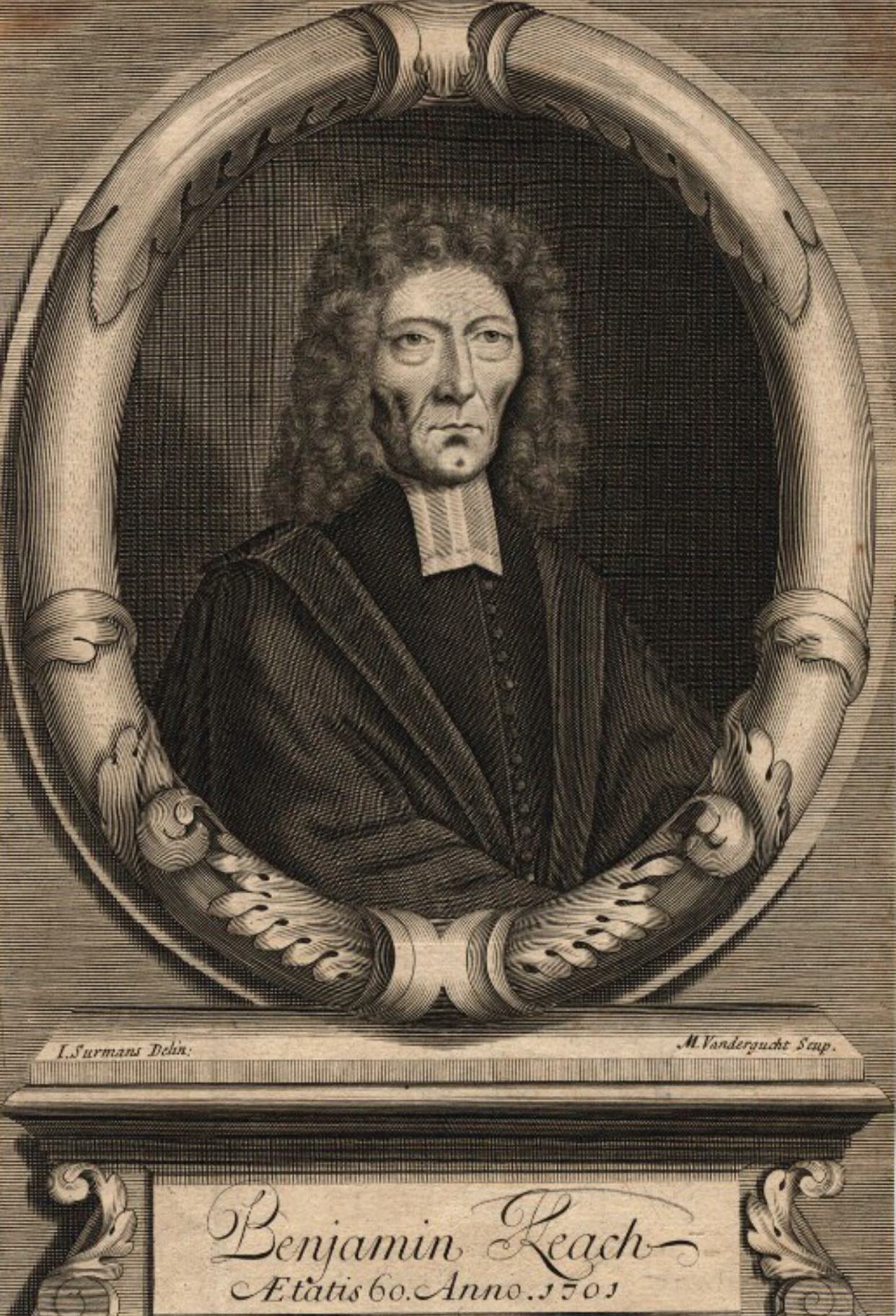
Kata tosouton xreitlon</UXXdiaqnkhv gegonen eglnov Ihsoun, Heb 7:22.
By so much was Jesus made a Surety of a better Testament, (or covenant.)
Eglnov, or eglunthv, a Surety, is one that undertakes for another, wherein he is defective really, or in reputation; in Latin, sponsor, fidejussor.[1]
[1] Dr Owen on Heb 7:22. p. 221
1. Whether it be derived of egluv prope, nigh; or from egluaw, spondeo, promitto, to engage or promise, it imports the nearness of the Surety and debtor,---Christ being made near to us. All good authors, thus understand it: sponsor proprie est, qui pro alio satisfactionem spondet: that is, a Surety is properly one that engages to make satisfaction for another. The Hebrew XXXX gnarab, is a root of as large, or larger signification, that any in that language, as Mercer says: Non est radix apud Hebræos, quæ tarn late pateat.[2]
[2] Vid. Par. Com. in Heb 8:6, Calv. Lex Jurid. &c.
1. This answers to the Greek, egluov, Surety.---Its primary signification is miscuit commiscuit, he hath mixed or mingled, Pr 14:10; Ps 106:35.
2. But by a Metaphor[3] it is put for fide-jussit, spospondit, fidem interposuit, that is, he hath engaged or passed his promise and truth for another, Jer 30:21, so becomes his Surety, as Ge 43:9. In this sense we take Christ to be a Surety, and therefore will run the parallel under that notion; for though he is really and properly a Surety, yet the original notation of the Hebrew, which the Greeks translated by the word in the text, being not so, it leaves no ground for cavil, if this be reputed a metaphor, for so Mr. Leigh in Crit. Sac. calls it.
[3] Leigh Crit. Sacr. in, voce XXXX.
3. The word signifies to give pledges, Isa 36:8; 2Ki 18:23.
4. Sometimes to strike hands, for so the Sureties were engaged, as Pr 22:26, rendered by the Septuagint by eiv egzuhn, as a Surety.
SURETY
I. Suretyship supposes or imports two or more parties in a way of commerce or trade one with another.
PARALLEL
I. God and mankind are concerned in a way of spiritual commerce and correspondence one with another. God gave many talents, many choice blessings, privileges, opportunities, &c., to man, to trade with and improve in a spiritual way, to the glory of his Creator, Lu 19:13.
SURETY
II. A Surety either engages for one or both parties covenanting: this (though rarely) is done among men; for one sometimes engages to see the terms and conditions of the covenant kept on both sides; as one that becomes the warranty of a mutual contract.
PARALLEL
II. Christ, our spiritual Surety, (as he is a Mediator) undertakes on God's part to the creature. "All the promise of God in him are yea, and in him amen, unto the glory of God," &c., 2Co 1:20. He undertakes on the creature's part to God.---"I have prayed for thee, that thy faith fail not," Lu 22:32.
SURETY
III. A Surety engageth before or after the obligation of the principal debtor.
PARALLEL
III. Christ's Suretyship or undertaking in the behalf of the creature, was part of the result of God's eternal counsel; yet this office of his may be considered as subsequent to man's obligation.
SURETY
IV. A Surety is one that undertakes for another, whose credit is not good, or whose faithfulness or ability touching performances become suspected.
PARALLEL
IV. Christ (being a fit Person) undertook not only to be a Mediator betwixt God and man, but also to be the Surety of the covenant on man's part, upon consideration of his impotency or in ability to perform the conditions of the first covenant since the fall, and to bear the punishment for the breach of it; for man having once failed, and become bankrupt, God will neither treat nor trade with him more, without a Mediator, and such a Surety as Christ. "Because they continued not in my covenant, I regarded them not, saith the Lord," Heb 8:9; Isa 53:5-7,10; Mt 20:28; 1Ti 2:6; Ro 3:25-26; Heb 10:-8, Ro 8:2-4. See Dr. Owen on Heb 7:22, p. 225.
SURETY
V. The introduction of a Surety in any case, is to give stability and security in case of bonds, covenants, &c., for it is never done but upon a supposition of defect on some account or other.
PARALLEL
V. The stability of the new covenant depends upon the Suretyship of Christ, and it is secured to believers thereby, Ga 3:13, for the first Adam (in whose hands the whole estate and riches of mankind were trusted) ran out of all; and therefore God established another covenant, and constituted Christ (as a responsible Security, of known fidelity, and mighty to perform) to be the Surety thereof, that so it might be a firm and sure covenant between him and man, Heb 8:8.
SURETY
VI. Suretyship imports obligation for another, and is ranked by lawyers among contracts. Fidejussor non fit nisi per Stipulationem. Be not Surety for debts, &c.
PARALLEL
VI. Christ by becoming Surety stands engaged to the Father to satisfy in the behalf of man, so far as God sees it necessary, or comports with his wisdom, and the perfections of his holy attributes. "That he might be just, and the Justifier of him that believeth in Jesus," Ro 3:26.
SURETY
VII. A Surety does not only undertake for debtors, but sometimes also engages for criminals.
PARALLEL
VII. Those that Christ, the Surety of the covenant, undertook to make peace for, were not only spiritual [4] debtors, but criminals also, such as deserved death, dead in law, and under the sentence thereof, spiritually dead, being under the deprivation of the light of God's countenance.
[4] Sins are called debts, Mt 6:12, ofeilhmata, debita. In the evangelists, the words, sins and debts, are used promiscuously; as Lu 11:4, compared with Mt 6:12, and Lu 13:4. Luke was learned in Greek, and wrote amartiav, sins, in the Lord's prayer; whereas Matthew hath ofeilhmata, debts. Canon, in. loc. N. T. page 86, 8?7.
SURETY
VIII. A Surety, if the party he engages for be not able to satisfy, or give full compensation to the creditor, pays the debt himself; for in the sense of the law he is one with the principal.
PARALLEL
VIII. Christ seeing how unable we were to make satisfaction according to the demands of the first law, made a full compensation, and laid down a valuable price, satisfactory to law and justice; for he bore the punishment due to us for our sins, First, he endured death, and the curse of the law; he died, and was made a curse for us. Secondly, he bore or sustained the wrath of God, being under a deprivation of the light of his countenance; the favour of God was for a time suspended and withdrawn from him. "My God, my God, why hast thou forsaken me," Mt 27:46. "He was made sin for us, that knew no sin," &c. "God hath laid on him the iniquity of us all."
SURETY
IX. Suretyship imports the obligation to be voluntary, for the law forces none to be bound for another.
PARALLEL
IX. Though Christ was appointed by the Father to be the Surety of the covenant, yet all that he did was his own voluntary act. "I lay down my life freely, no man taketh it from me," &c., Joh 10:18.
SURETY
X. Suretyship imports great love and pity to the debtor, which inclines the sponser (though without hopes of repayment) to become his security, rather than see him ruined.
PARALLEL
X. The love and grace of our Lord Jesus Christ was such, that "though he was rich, yet for our sakes he became poor, that we through his poverty might be made rich,"2Co 8:9, "I live (says the apostle) by the faith of the Son of God, who loved me, and gave himself for me," Ga 2:20.
SURETY
I A Surety among men is not of the creditor's, but of the debtor's procurement.
DISPARITY
I. The Surety of the covenant was of God's procurement, (who is man's offended Creditor, or rather Creator.) God chose, called, and anointed Christ to this office; though it is true he was as ready to accept of it, as the Father was to assign it him. In this the infinite grace and mercy of God was manifest to mankind; for among men, the creditor is not concerned to seek out a security for the debtor. But should a creditor do so? all must confess, it is in his choice to propound when, how, and upon what terms the debtor should be discharged; and it would be thought very reasonable, (especially if he hath wronged or abused the good name of his creditor) that before he be acquitted, he should be brought upon his knees, and humbly confess his fault, and beg forgiveness, in regard, though a compensation was made (according to the demands of law and justice for the debt) yet the Surety being of the Creditor's own procurement, and indeed his own Son, who having vast riches and abilities, (and likewise equal love with the Father to the poor debtor, knowing the law was such, that satisfaction must of necessity be made) offered freely to lay down the price or full sum. Even so God and Christ, in making of this covenant in behalf of sinners, agreed, (that upon Christ's laying down his life as a satisfactory price) then, and upon that conditions, we should be discharged of the guilt of sin, which binds us over to eternal wrath. And these conditions are expressed in the word of God. viz. Faith and humiliation; for it is certain that no man is actually acquitted before he believes, and takes hold of the satisfaction purchased by Christ applying his merits, and the virtue of his blood, unto his own soul, by the help of the Spirit, which Christ (the Surety) hath promised to give to all sincere ones, that he might thereby make his death effectual to them, and so complete this work and office of Suretyship.
SURETY
II. Sureties and debtors amongst men enter into the same bond, and the debtor is looked upon to be the principal bondsman.
DISPARITY
II. Christ engaged as our Surety without us. Our bonds and obligations signify nothing, by reason of our utter inability; Christ hath therefore changed our name, and in the room and place of it put his own, so that death and the curse fall upon him. "He was wounded for our transgressions," Isa 53:5. "He looked, and there was none to help, therefore his own arm brought salvation," Isa 63:5.
SURETY
III. Among men, when the Surety makes a full compensation for debts, the party indebted cannot be said to receive a release or discharge in a way of grace and favour, but only in a way of justice.
DISPARITY
III. Christ, the Surety of the covenant of grace, makes full compensation for sin, and yet the sinner receives his release in a way of grace; which may be thus demonstrated: first, God, as was said, and not the sinner, found or provided the Surety, which his own sovereign grace and goodness moved him to, being wholly at his own choice whether he would save man or not, having cause enough to cast him off for his disobedience, as he did the angels that sinned: so that whatever relief or discharge sinners receive, it is of grace, being wholly the contrivance of the creditor, to find out the way which best comported (in his wisdom) to the satisfying of law and justice, in behalf of the criminal; had the debtor found the Surety, as it is among men, the case had been otherwise. Secondly, the Suretyship of Christ holds forth abundant grace, yea, the greatest demonstration of the love and goodness of God to sinners, in that he was pleased to dispense with his own law, as to the rigorous exaction of it from sinners, and to take satisfaction from another, which he might have exacted from them. Thirdly, that he might bring about redemption and pardon for man, he parted with his own dear Son, who laid down his life, to atone, and make reconciliation between him and sinners. Fourthly, in that the blessing and benefit of Christ's undertaking as our Surety, is given and bestowed freely upon us, so that we have no more to do, but to fall down on our knees, and humbly acknowledge our offences, and accept a pardon through Christ's mediation, and own him to be our Prince and Saviour. Fifthly, in that he, as our Surety, gives to us a broken heart, and renews a right spirit in us; gives us the grace of believing, whereby we come to have an interest in him, through the atonement made by his blood; from whence it appears, it is not our faith, nor our acceptance of Christ and the Gospel, that makes his satisfaction so to God, though it is hereby made effectual unto us.
The sum of all is this, that Christ did not die only nostro bono, for our good and profit, as Socinians aifirm; but in our stead and room; for where one is said to die for another, it is always thus taken. Moreover, where it is said, Christ bore our sins, &c. it is to be understood of the punishment due to them; for in all places of the Old Testament, where it is said, thou shalt, or, they shall bear their own sins, it is meant of the punishment of them. So that if we would be pardoned, we must accept it as God is pleased to offer it to us, though a complete satisfaction be made for sin, in our nature to the Father. And shall we dislike that way of forgiveness that God is so much pleased with, wherein he doth not only magnify his own free-grace and goodness, but his justice and holiness also?
SURETY
IV. Among men usually the Surety's bond is for debts, contracted at or before the Surety's bond is given in, and for a particular sum, or sums, specified.
DISPARITY
IV. Christ became Security for his people's debts, before ever they were contracted, or they themselves born: yea, he was bound to satisfy for all the debts (of such who do believe in him) that at any time of their lives should be contracted; that is to say, he bore not only the punishment due to them for sins committed before their calling and conversion, but all their iniquities afterwards, through human frailty committed, Isa 5:3; Jer 3:5; 1Jo 2:1-2; though it is not alleged, they were discharged before committed, nor before true repentance be wrought in them, for repentance and pardon go together, "Him hath God exalted on his right-hand, to be a Prince and a Saviour, to give repentance to Israel, and remission of sins," Ac 5:31.
SURETY
V. A Surety sometimes repents his coming into bonds, and it is a great trouble and perplexity to him, and seeks ways to be released. "My son, if thou be a Surety for thy friend, if thou hast stricken hands with a stranger, thou art ensnared with the words of thy mouth," &c. Pr 6:1-2.
DISPARITY
V. Christ never repented his Suretyship; instead of its being a trouble to his mind, he delighted in it. "I have a baptism to be baptised with, and how am I straitened till it be accomplished?" "I delight to do thy will, O my God," Ps 40:8; he knew the payment of all would fall upon him, and yet he shrinks not from it. "I lay down my life freely," Joh 10:17-18.,
SURETY
VI. A Surety many times undoes himself by being bound for other men; he engages for more than he is able to pay, and is thereby cast into prison, and never capable to deliver himself out.
DISPARITY
VI. Christ, though he suffered hard things for his people, in becoming their Surety, yet was not undone, or brought to utter beggary thereby; for though for a time he became poor to make us rich, yet by suffering death he was crowned with glory and honour; his abasement was for his exaltation; he expended not all his riches in satisfying for our sins: though he was cast into prison, (viz. brought to the grave) yet he quickly delivered himself out, by the powerfulness of the Godhead which dwelt bodily in him;
INFERENCES.
1. FROM hence we may perceive what a miserable condition mankind had involved themselves in by reason of sin, utterly impoverished, and brought to beggary, debtors to God's justice for the breach of the law, owing ten thousand talents, and not a farthing to pay, Mt 18:24-25; and had been cast into the eternal prison of darkness, had not Jesus stepped in and become our Surety.
2. What grace and unspeakable favour is here! how much hath God out-done mortals! he sought out a Surety to satisfy for our sins, who were not only ill-natured debtors, but cursed and most guilty rebels,, who deserved nothing but death, and chains of darkness. Though he doth not pardon us without a price, yet rather than we should be without remission, his own Son shall be the ransom.
3. Moreover, we may admire the great mystery of our redemption! let men take heed how they contemn any part of the depths of God, because they seem to overtop and outdo their depraved reason.
4. Here are tidings of great joy to broken and undone sinners. There is a way open for free commerce and trading with God again: though he did not regard us whilst we stood under the old covenant, being miserable beggars and bankrupts; yet he delights to have commerce and dealing with us in a way of grace, through the compact made with Christ our Surety.
5. Let saints hold up their drooping heads and hearts, their debts are paid: "The Lord hath laid on him the iniquity of us all," Isa 53:6. "There is now no condemnation to them that are in Christ Jesus," Ro 8:1.
6. Why should any think the conditions of the Gospel are hard, or Christ's commands grievous? what you cannot do, Christ hath undertaken to help you in, and see done by you. "He hath wrought all our works in us," Isa 26:12. "My God shall supply all your needs," Php 4:19. "My grace is sufficient for thee," 2Co 12:9.
7. Moreover, let us consider what benefits do accrue to believers, by virtue of Christ's Suretyship.
First, by this means we are delivered from the hands of justice, and curse of the law, and wrath of God: "Christ hath redeemed us from the curse, being made a curse for us," Ga 3:13.
Secondly, We owe our covenant-relation, first, unto God's grace; and secondly, to Jesus, our blessed Surety and Mediator's undertaking: "I have manifested thy name to the men which thou gavest me," &c. Joh 17:6.
Thirdly, This is the ground of the saints' support against the power of sin, and indwelling corruption: "Thanks be to God, through our Lord Jesus Christ," &c. Ro 7:25.
Fourthly, From hence we may groundedly expect succour in temptations: "I have prayed for thee," Lu 22:32. He hath undertook for thee who is "mighty to save," and who will "bruise Satan under your feet shortly," Isa 63:1. Ro 16:20.
8. How are we obliged to God our Father, and to the LordJesus Christ, for the work of our redemption? O let us love God, and love Christ, and live to their praise, whilst on earth.
9. This also may embolden the godly, to draw near to God; they have a Surety, or one that hath undertaken for them, Heb 4:16. He is engaged for God to them, and for them, to God; he makes sure the promises to us, and renders our services acceptable to God.
10. Woe, woe to them that have not Christ their Surety; what will sinners do without a Saviour? "If ye believe not that I am he, ye shall die in your sins," Joh 8:24.
Lastly, For trial. Have you Christ for your Surety? Examine yourselves by these marks following.
1. Did you ever see the need of Christ's Suretyship? Or do you adventure to come to God for more goods in your own name: in this take heed, for your credit is gone.
2. Hath Christ taken you (as a door) off the old hinges? Have you seen your want and beggary, and from hence chosen Christ for your Surety? it is only the broken man that seeks to his friend for security.
3. Is the law written in your hearts? Have you that new spirit put within you? Jer 31:33. Are you changed ones? "I will put my fear in their hearts," &c. Do you love the word of God because of the purity of it, Ps 119:140. Would you be holy as well as happy?
4. Do you lay the stress of your salvation upon Jesus Christ? Is he the Foundation of your faith and hope? Have you fled to him for refuge?
5. Is Christ a pearl of great price to you? "To them that believe he is precious." If sin be in thy sight the greatest of evils, and that which thou loathest above all things; and Christ the rarest jewel in thy esteem, whom thou preferrest before thy chiefest joy: then peace be unto thee: Christ is thy surety.
For caution. O let none, from the consideration of this glorious grace shining forth in this great and wonderful mystery, take encouragement to run further into debt; if any should do so, let them know, that there is nothing can be a greater evidence against them, that they have no part nor lot in this matter.

Comments
Your comment has been submitted and is awaiting moderation. Once approved, it will appear on this page.
Be the first to comment!