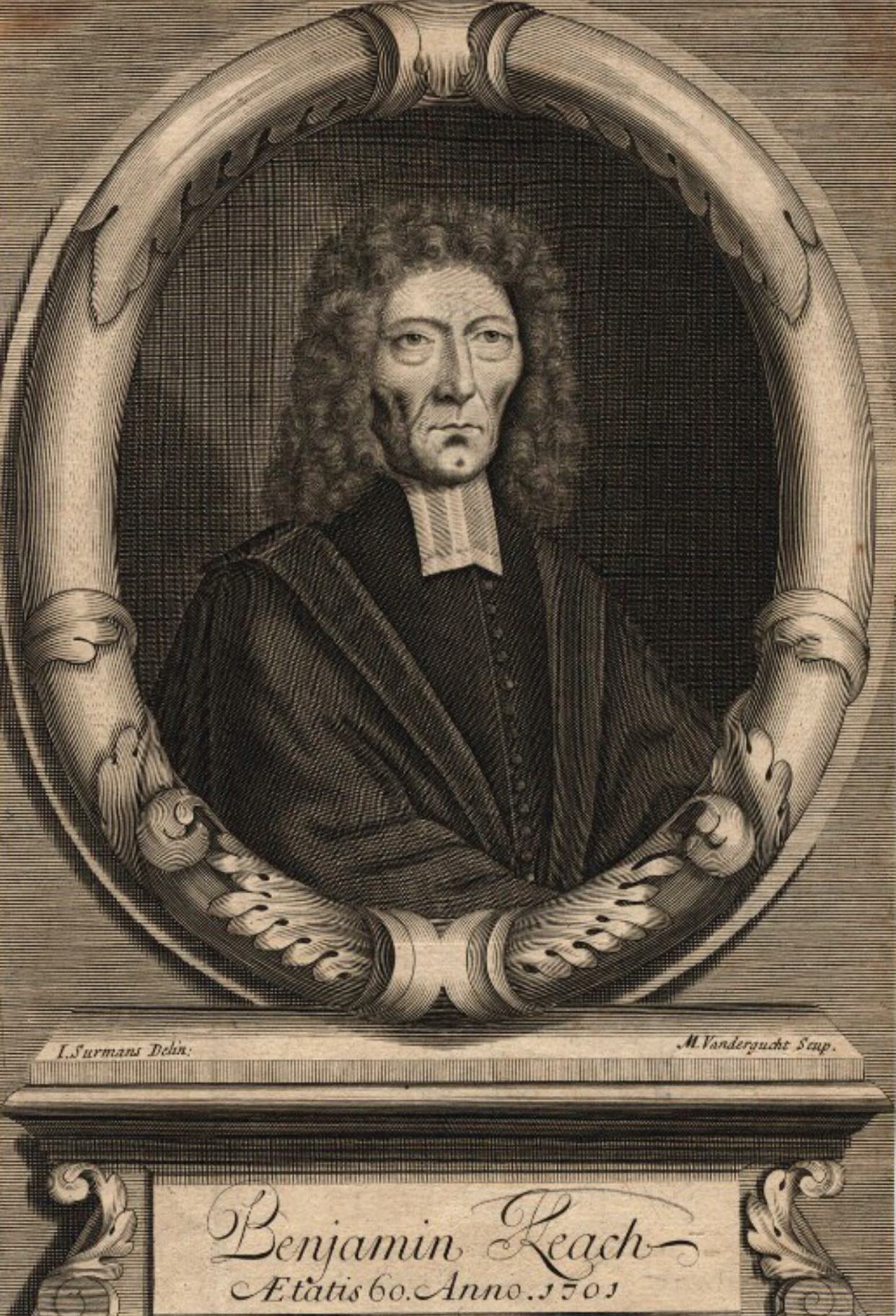
The article "Christ a Mediator" by Benjamin Keach explores the doctrinal significance of Jesus Christ as the exclusive mediator between God and humanity, arguing that His role is essential due to the breach caused by sin. Keach articulates various metaphors for understanding Jesus' mediatorial work, drawing from Scripture references such as 1 Timothy 2:5 and Hebrews 12:24 to illustrate Christ's unique qualifications and willingness to mediate. He emphasizes that Jesus, being both fully God and fully man, is the only suitable mediator who reconciles God’s justice and mercy. The practical significance of this doctrine lies in understanding the necessity of Christ for salvation and the implications of rejecting Him as mediator, thus highlighting the profound grace offered through Him.
Key Quotes
“A Mediator implies a difference between two parties.”
“Jesus Christ is a Mediator between God and man... a blessed Reconciler of man to God and of God to man.”
“There was great need of... a Mediator betwixt God and man.”
“Let us take heed we own no other to be our Mediator as Christ is our Mediator.”
What does the Bible say about Christ being our Mediator?
The Bible proclaims that Christ is the sole Mediator between God and man, emphasizing His unique role in reconciling humanity to God (1 Timothy 2:5).
1 Timothy 2:5, Psalm 7:11, Ephesians 2:3
How do we know that Christ's mediatorship is necessary?
Christ's mediatorship is essential as it addresses the profound breach caused by sin, allowing reconciliation between the holy God and sinful humanity.
Galatians 3:20, Ephesians 2:3, John 8:24, Romans 3:26
Why is Christ's role as Mediator important for Christians?
Christ's mediatorship is vital as it provides access to God, offering grace and peace through His sacrifice.
Ephesians 2:13, 2 Corinthians 5:21, Hebrews 9:15
"For there is one God, and one Mediator between God and men, the Man Christ Jesus" 1Ti 2:5.
"To Jesus the Mediator of the new covenant," Heb 12:24.
THE Greek word, Mesithv, is thought by Erasmus to be peculiar to the Scripture, as being not elsewhere used; and doubts whether it should be rendered Mediator, Reconciler, or Intercessor. The term, as applied to Christ, is borrowed from persons, whose office it is to reconcile such parties as are at variance, being as it were in the middle, betwixt both, soliciting the cause of each to the other, till they bring them to concord or agreement. It is thus defined by Illyricus: Mediator is dicitur, qui inter duos parum inter se congruentes, aut etiam sibi invicem Hostes, medius est, et utriusque nomine cum altero agit, promovens conciliationem, &c. Quique tamdiu apud utramque partem alterius nomine laborat, donee eas in consensum et pactionem deducat. The term is applied to Moses typically, De 5:4-5, with Ga 3:19; but really and antitypically to Jesus Christ, Heb 12:24; Col 1:20; Ro 5:10-11; 1Jo 2:1.
A MEDIATOR
I. A Mediator implies a difference between two parties, Ga 3:20.
PARALLEL
I. Sin made a great breach between God and man: "God is angry with the wicked every day," Ps 7:11. Hence by nature mankind are said to be the "Children of wrath," Eph 2:3. "The carnal mind is enmity against God," Ro 8:7.
METAPHOR
II. A Mediator properly signifies a middle-man, a reconciler.
PARALLEL
II. "Jesus Christ is a Mediator between God and man," 1Jo 1:2. "He is not only God, but man; not only man, but God: a blessed Reconciler of man to God, and of God to man," Ga 4:4-5,
METAPHOR
III. A Mediator oftentimes is appointed to make up differences, that arise between two parties upon a breach of covenant.
PARALLEL
III. The difference originally that is between God and man, did arise from man's breaking God's covenant, Isa 24:5. "God and man were in peace and concord, whilst man stood in the state of innocency; but when he fell, Christ came to make up that breach," Heb 8:8.
METAPHOR
IV. A Mediator must be a person willing to undertake the great work and transaction of making peace.
PARALLEL
IV. Jesus Christ was willing to undertake the work of Mediator, to make peace between God the offended Creator, and man the offending creature. "Lo, I come to do thy will, O God," Heb 10:7.
METAPHOR
V. A Mediator ought to be an indifferent or impartial person, free from all exceptions.
PARALLEL
V. Jesus Christ is a person free from all exceptions whatsoever. God approved of him, Ac 2:22; and hath no cause to except against him, but contrariwise to be abundantly thankful to God for choosing him to this work and office, because none else could be found in heaven or earth; "None able to open the book, and loose the seals thereof," but He, Re 5:4-5.
METAPHOR
VI. A Mediator ought to be a well-wisher to peace, a person that loves it, and longs after it; nothing being more acceptable to him, than a peace-maker.
PARALLEL
VI. Jesus Christ is called the "Prince of peace," Isa 9:6, never did any give such cjear, full, and undeniable proofs and demonstrations of his being a Well-wisher to, and lover of peace; witness all he did and endured, or past through, from first to last, that he might accomplish this work of making peace, Eph 2:14.
METAPHOR
VII. A Mediator must have the great transaction of making peace committed to him, or be invested with full power and authority to do it.
PARALLEL
VII. God hath given Christ full power and commission to accomplish this work of Mediatorship. "He is anointed and ordained to be a Prince and Saviour." "All power is given to me in heaven and in earth," Mt 28:18-20, "Him hath God the Father sealed," Joh 5:27.
METAPHOR
VIII. A Mediator ought to be a condescending person, not to have his own will to be done in any respect, further than the nature of the cause will require it.
PARALLEL
VIII. Christ showed himself to be of a marvellous condescending Spirit: "Who being in the form of God, thought it no robbery to be equal with God, but made himself of no reputation," &c., Php 2:5-7. "He for our sakes became poor, that we through his poverty might be made rich," 2Co 8:9, "I came down from heaven, not to do mine own will, but the will of him that sent me," Joh 6:38. "Not my will, but thy will be done," Lu 22:42.
METAPHOR
IX. A Mediator is not chosen unless there appear great need of it, and that the business cannot be accomplished otherwise.
PARALLEL
IX. There was great need of, or it was very necessary that there should be a Mediator betwixt God and man:
First, On God's part.
Secondly, On the creature's part.
First, On God's part it was necessary, in respect of his own glory.
1. In respect of the glory of his wisdom. This of bringing forth and ordaining a Mediator, was the marvellous contrivance, and the highest manifestation of divine wisdom: for hereby a way is found to justice and mercy, and make them meet together in sweet harmony; that the punishment of sin might be borne, and yet the sinner, pardoned freely in a way of mercy, 1Co 1:2, and Ro 2:7; 3:26. Hence, (as the apostle showeth) "the manifold wisdom of God is made known by the church, according to the eternal purpose, which was purposed in Christ Jesus our Lord," Eph 3:10-11.
2. It was for the glory of his mercy and goodness, which moved wisdom to seek out and provide this blessed Mediator, and glorious means of reconciliation, when God might justly have left fallen man, as he did the fallen angels. Moreover, this of a Mediator shows us, that God must be dealt with in a way of free grace, entreaty, and request. Hence we read, how frequently Christ prayed and interceded for us, yea, what strong cries and tears he offered up in the days of his flesh, Heb 5:7. Whatsoever blessed relief, pardon, peace, &c., mankind receives, it is wholly in a way of mercy and free grace, through the mediation of the Lord Jesus Christ. "By grace ye are saved," Eph 2:8. "God so loved the world, that he gave his only-begotten Son," Joh 3:16.
3. It was for the glory of his justice, which must be dealt with in a way of satisfaction; grace will be dealt with in a way of entreaty, salva Justitia: therefore the covenant is established in the hands of a Mediator, that is able to lay down a price or ransom, 1Ti 2:6. "That so God might be just, and the Justifier of those that believe in Jesus," Ro 3:16. Nay, when the Lord Jesus undertook on our behalf, to come up to the demand of justice, it is said, "God spared him not, but delivered him up to death for us all," Ro 8:32, "He bore our sins in his own body on the tree," 1Pe 2:24.
4. The sovereignty of God is manifested in its glory, that through a Mediator he is pleased to extend mercy to mankind, when none is afforded to the angels that sinned: and that Jesus at his command should "lay down his life for the sheep," Joh 6:38; 10:18,
5. It magnifies the glory of God's power and all-sufficiency, who can raise up and restore man to greater happiness than ever he had before his fall, when devils and sin had done their worst, 1Jo 3:8; 1Co 1:24.
6. The like might be said of the holiness, patience, and faithfulness of God, &c.
Moreover, this undertaking adds to the glory of Christ Jesus, who is the Mediator himself; God had hereby a design to magnify the name of his Son, the second Person of the Trinity, in our nature.
1. In that he is constituted (by undertaking this honourable office) King, Priest, and Prophet, Mt 28:18-19; Ac 5:31.
2. In respect of that great power which is given to him, to make peace between God and man; to have the keys to open and shut: and to give eternal life to as many as he pleaseth, or are given by the Father to him, Joh 5:27; Eph 2:14; Re 1:18; Joh 3:35; 17:2.
3. Nay, his glory shines forth herein to such a degree, that it is the duty of all men to "honour the Son, as they honour the Father," Joh 5:23.
4. Christ hath hereby the honour of accomplishing the whole affair, being "Author and Finisher of our faith and salvation," Heb 12:2.
Secondly, In respect of man, there was great need of such a Mediator.
1. God would not treat with sinners upon any other terms. There is no knowledge of God which is saving, nor union with him, without a reconciliation. "You that were sometimes afar off, are made nigh by the blood of Christ," Eph 2:13, "Neither knoweth any man the Father, save the Son, and he to whomsoever the Son will reveal him," Mt 11:27.
2 Without a Mediator, to atone and make peace between the Father and us, there is no communion with him: "Can two walk together, unless they are agreed?" Am 3:3. Nor eternal life: "such as are without Christ, and without God, must die (that is, be damned) in their sins," Joh 8:24.
A MEDIATOR
X. A Mediator must be fitly qualified for this work; a person very wise, for justice, and yet greatly inclined to mercy; that so he may answer the expectation of each party, so far as is necessary.
PARALLEL
X. Christ was every way qualified and fitted for this work. He was not only wise, but the wisdom of God, 1Co 1:30, much for justice, but yet inclined to mercy, and pity to the poor, Ro 3:26; Joh 10:15. And then again, how was he fitted by his being God? It is from the Worth and excellency of his Person, that the price comes to be satisfactory, Isa 53:12; Mt 3:17; 1Pe 1:19. Besides, had he not been God, as he could not have expiated Sin, so he could not have overcome death, and other enemies he was to encounter with, that he might accomplish our redemption.
2. He must be a man, because he is to plead for us, and be sacrificed on the cross in our stead; he must bleed, as well as intercede for man; "For without shedding of blood there is no remission," Heb 9:22. He must be man, that he might be one with us, that his righteousness might by imputation be ours; and that he might receive the Spirit for us, and we from him who is the Son, receive it with the adoption of sons, and thereby be sure of the eternal inheritance, Joh 17:10; Ga 4:4-5; Heb 9:15.
3. He must be God and man in one Person: A Mediator is not a Mediator of one, but God is one, Ga 3:20, and by this means he is fitly qualified for this office. He must be a Person at an equal distance from, and drawing near and allied to both parties; having interest in, and participating of the nature of each. Hence it is thought that he is called our "Days-man, (or kinsman) that lays his hands on both," Job 9:33. Having access unto them; knowing what will stand with the honour of the one, and he for the relief and profit of the other.
METAPHOR
XI. A Mediator must be faithful, seeking the interest, right, honour, and weal of both parties.
PARALLEL
XI. Christ is faithful both to God and man, greatly for the honour of the one, and as much for the comfort and salvation of the other. He is said to be "faithful to him that appointed him," Heb 3:2. And in respect of man he is called, "a faithful High-Priest.'
METAPHOR
XII. A Mediator many times meets with great trouble and difficulty, in undertaking the composing of differences.
PARALLEL
XII. Jesus Christ met with much trouble in the days of his flesh, in managing our business as Mediator, from the devil and wicked men, Mt 4:1,4: he found the world very averse to accept of terms of peace; and not only so, but they offered violence to him, and grievously abused him.
METAPHOR
XIII. A Mediator ought to be endued with much patience, meekness and long-suffering, not only bearing frowns from one party, or the other, but also in his long waiting upon either of them, to yield to terms of peace offered to them.
PARALLEL
XIII. Jesus Christ was meek and lowly in heart, Mt 11:28-29: he patiently bore the hidings of his Father's face. How quietly did he bear and endure the punishment due to us for our sin? notwithstanding "we esteemed him not, but hid our faces as it were from him. He was oppressed, he was afflicted, yet he opened not his mouth," Isa 53:3,7: he patiently waits upon poor sinners.
METAPHOR
XIV. A Mediator must be undaunted and courageous, unwearied, not tired out, nor let the work fall.
PARALLEL
XIV. Jesus Christ, as he was potent, so he was of a very courageous and undaunted spirit: "He shall not fail, nor be discouraged, till he hath set judgment in the earth," Isa 42:4.
METAPHOR
XV. A Mediator should be mollifying, that is, of so pacifying a temper, as to labour for such mediums that the streams of strict justice may run in a way of mercy, especially (considering the weakness and impotency of one party) for peace sake.
PARALLEL
XV. Jesus Christ was a pacifying Mediator; for instead of a personal satisfaction from the sinner, God accepts of his mediation: "He was made sin for us, who knew no sin, that we might be made the righteousness of God in him," 2Co 5:21. Instead of an inherent righteousness, God accepts of a righteousness imputed; and accepts of sincerity instead of a perfect keeping the whole law; and through his mediation obtains pardon for human frailties, Ro 9:32; 4:5; Heb 8:12.
METAPHOR
XVI. A Mediator hath usually a set time prefixed, finally to finish and accomplish his work.
PARALLEL
XVI. Jesus Christ, our Mediator, hath a time set him, to finish his mediatorial kingdom and office, which will cease at the end of the world, when all the elect are gathered in, 1Co 15:28.
METAPHOR
XVII. A Mediator makes use of strong and powerful arguments, to bring the adverse party to terms of peace and friendship.
PARALLEL
XVII. Jesus Christ our Mediator uses most weighty and powerful arguments, such as in the word of God set forth the excellency of his person, the preciousness of his blood; the oath, covenant, and promises of God; the miserable condition of man, &c.
METAPHOR
XVIII. A Mediator, whose mediation is rejected, (after long patience) leaves the offending person open to the severity of the law.
PARALLEL
XVIII. Jesus Christ when he is rejected, after his long patience and forbearance, will leave all offending and impenitent sinners to the severity of the law and wrath of God, Ro 9:22; Heb 10:26-27; Joh 3:36.
METAPHOR
XIX. A Mediator is made sole judge in those great matters he is chosen about, and is to make righteous decision between party and party, and to give the definitive sentence at last.
PARALLEL
XIX. Jesus Christ is ordained the sole Judge by the Father, of the quick and the dead, and will in due time make a righteous decision between God and sinners, and pass that dismal definitive sentence on such as accept not of those terms of peace that he offers to them. "God judges no man, but hath committed all judgment to the Son. He hath given him authority to execute judgment also, because he is the Son of man," Joh 5:22,27.
METAPHOR
XX. A Mediator after he hath done and finished his work of mediation, gives up his trust, and ceaseth to be a Mediator any more
PARALLEL
XX. Jesus Christ, after he hath finished his work of mediation, at the end of the world will yield up his office unto the Father, and cease to be Mediator any more. "And when all things shall be subdued unto him, then shall the Son also himself be subject unto him, that put all things under him, that God may be all in all," 1Co 15:28.
METAPHOR
XXI. A Mediator leaves no liberty of appeal, after he had passed the definitive sentence.
PARALLEL
XXI. Jesus Christ, after the last judgment, and definitive sentence is past, will leave no relief for sinners; then will that text be fulfilled, which says, "Let him that is filthy be filthy still," Re 22:11.
INFERENCES.
1. See what the abominable nature of sin is; it is that which made the breach betwixt God and man, and filled the heart with enmity against the Majesty of heaven, Ro 8:6.
2. From hence also we may admire the love of God, in sending such a blessed Mediator to make peace for us, Joh 3:16.
3. This also shows the firmness and stability of the covenant of grace. Christ keeps and preserves peace betwixt the covenant-parties, being the Mediator thereof, Heb 9:15; the inheritance is from hence sure to all such as are called.
4. It shows the woeful state of such as reject this Mediator, and will not accept of those gracious terms of peace he offers to them, Heb 2:3. They must submit to him, and take salvation, as it is offered by the Father through him, or perish, Joh 12:48.
5. Let us take heed we own no other to be our Mediator, as Christ is our Mediator. Ministers may pray for us, and one saint may mediate and intercede to God for another: but none have power to make peace, or to give to God a ransom for his brother, Ps 49:7-8. "There is but one Mediator betwixt God and man," 1Ti 2.
5. Christ Mediates by the price and virtue of his own blood, which alone is that propitiatory sacrifice, by which we have peace and acceptance with God the Father.
6. Let all labour to accept Christ Jesus as Mediator; which none can do, unless they receive him as King, Priest, and Prophet.

Comments
Your comment has been submitted and is awaiting moderation. Once approved, it will appear on this page.
Be the first to comment!