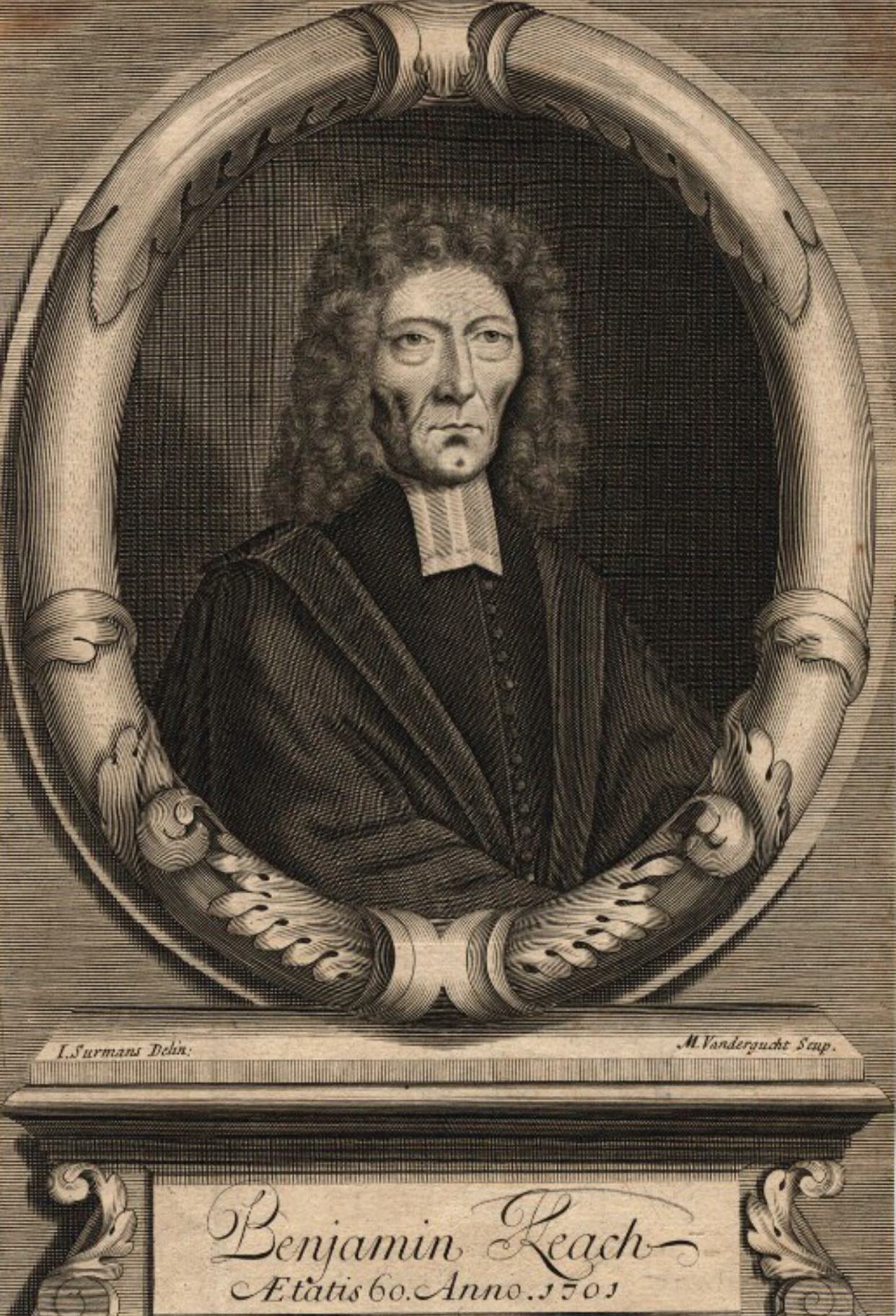
The article "Christ Compared to a Hart" by Benjamin Keach explores the theological metaphor of Jesus Christ as a hart (or deer) in the context of various biblical attributes and qualities. Keach presents several similes comparing characteristics of the hart to facets of Christ, emphasizing His loveliness, lack of gall, delight in worship, gentleness, quickness to aid believers, sociability, and readiness to endure suffering. Significant Scripture references, including Isaiah 53:2, Hebrews 4:13, and Matthew 11:29, support these parallels, highlighting Christ's meekness, omniscience, and ability to empathize with human suffering. The practical significance of this metaphor lies in its ability to convey the beauty, tenderness, and merciful nature of Christ, encouraging believers to seek Him joyfully as their refuge in faith.
Key Quotes
“A Hart is a lovely and pleasant creature… Jesus Christ is exceeding lovely and pleasant to look upon though not to every eye.”
“Jesus Christ... retains no envy or indignation to poor sinners for injuries done to him… he prayed for those that murdered him.”
“Jesus Christ… greatly delights in the melody of the souls of sincere Christians… such make sweet music in his ear.”
“Christ… saw the great need he had of help and succour and therefore it is said… he offered up prayers with strong cries and tears.”
What does the Bible say about Jesus being compared to a Hart?
The Bible compares Jesus to a Hart to illustrate His loveliness, gentleness, and swiftness in aiding His people.
Song of Solomon 2:9, Isaiah 53:2, Matthew 11:29, Hebrews 4:13
Why is it important for Christians to understand Jesus as a loving Savior?
Understanding Jesus as a loving Savior is crucial, as it reassures believers of His compassion and readiness to help in times of need.
Isaiah 41:10, Philippians 4:6-7, Hebrews 4:16
How do we know that Christ is meek and lowly in heart?
We know Christ is meek and lowly in heart through His teachings and His interactions with sinners, as illustrated in Scripture.
Matthew 11:29, Philippians 2:5-8
CHRIST COMPARED TO A HART
"My beloved is like a roe or a young Hart" Song 2:9.
THE Lord Jesus in several places is resembled to a Hart.
SIMILE
I. A Hart is a lovely and pleasant creature, so called in the Proverbs, "pleasant roe," Pr 5:19. It is observed by writers, that the Hart hath some resemblance of a lion, a horse, and a grey-hound, which are all accounted very stately creatures.
PARALLEL
I. Jesus Christ is exceeding lovely, and pleasant to look upon, though not to every eye. Some cannot discern wherein the hind resembles a lion, a horse, or a grey-hound; this is known only to the curious observer: so there are some that see nothing lovely nor pleasant in Christ, think there is "No form nor comeliness in him," Isa 53:2, but a believer, who hath the eyes of his understanding enlightened can clearly discern a loveliness and ambiableness in the Lord Jesus.
SIMILE
II. A Hart (as naturalists tell us)[1] hath no gall.
[1] Gesnor collected by Topsall, p. 99.
PARALLEL
II. Jesus Christ hath no rancour of spirit, retains no envy or indignation to poor sinners for injuries done to him; he prayed for those that murdered him: "Father, forgive them, they know not what they do."
SIMILE
III. A Hart is a creature that exceedingly delights in music, loves to hear such that can sweetly sing.
PARALLEL
III. Jesus Christ greatly delights in the melody of the souls of sincere Christians, in the well-tuned instruments of their hearts, who by fervent prayer can open their case, and send forth the desires and breathings of their souls to him; such make sweet music in his ear: when they sing spiritual songs, aud hymns of praise to him, with grace in the heart, he is exceedingly delighted. "Sing praises unto the Lord, sing praises."
SIMILE
IV. A Hart or stag (saith Pliny) is the most gentle and mild beast in the world.
PARALLEL
IV. Jesus Christ is meek and humble in spirit, and may rather be compared to a Hart than Naphtali, whom Jacob says was "A hind let loose, giving goodly words," Ge 49:21, "Learn of me, for I am meek, and lowly in heart, and you shall find rest to your souls," Mt 9:29.
SIMILE
V. A Hart is a creature that has a very clear sight, and a quick hearing: nay, can see (if credit can be given to historians[2] ) in the night as well as in the day.
[2] Topsail, p. 91.
PARALLEL
V. Jesus Christ hath so quick and sharp an eye, that he can see into the very heart of a man or woman. "All things lie naked and open to his eyes," Heb 4:13. Day and night are alike to him; he sees as well in darkness as in the light. His ears are always open to the prayer of his saints, he is quick in hearing their complaints.
SIMILE
VI. A Hart is a very loving creature to those of its kind, and will help its fellow, when forced to take to a river, one resting his head upon the loins of his fellow; and if the foremost tireth, the hindmost changeth place with him.
PARALLEL
VI. Jesus Christ dearly loveth his people, all sincere Christians, and is ready to help them, not only when they are in the water, but in the fire; "When thou passeth through the waters, I will be with thee, and through the rivers, they shall not overflow thee: when thou walkest through the fire thou shalt not be burnt, neither shall the flame kindle upon thee," Isa 43:2, "I will help thee, yea, I will uphold thee with the right hand of my righteousness," Isa 41:10, (&c.)
SIMILE
VII. A Hart is a very sociable creature, greatly delights in company; multitudes of them will (if they can) be together.
PARALLEL
VII. Jesus Christ was very sociable in the days of his flesh, he took delight to be amongst poor sinners, and great multitudes flocked together to him, "My delight was with the children of men," Pr 8:31.
SIMILE
VIII. A Hart is a creature that is chased exceedingly by dogs, and vexed by hunters.
PARALLEL
VIII. Jesus Christ was exceedingly chased,pursued, and hunted by wicked men, in the days of his flesh, (as he is now in his members.) No sooner was news brought of his birth, but Herod, that fox, pursued him, (blood-hound like) to take away his blessed life; many dogs were I may say) always at his heels, hunting him from one place to another: he was seldom quiet, or had rest while on earth; such was the rage of the devil against him, that old talicious hunter.
SIMILE
IX. The Hart is a very swift beast, excellent in leaping, and ascending mountains: their swiftness doth not only appear upon the earth, but also upon the waters. David alludes to this, when he says, "The Lord hath made my feet like hind's feet," Ps 8:9, "The lame man shall leap saith the prophet) as a Hart, Isa 25:6.
PARALLEL
IX. Jesus Christ (saith Mr. Ainsworth) is ready to help his church; he is like a Hart for swiftness. Some of the common epithets expressing the qualities of this creature, are (amongst the rest) these nimble, swift, or winged, as if he did rather fly than run; now for agility and swiftness none like Christ; he is said to come leaping over the mountains, and skipping over the hills, that is, over all impediments that might hinder good from his people, whether it respect their sins and unworthiness, or the opposition of the world and their and his adversaries, who are likened to a mountain: "Who art thou, O great mountain, before Zerubbabel?" "And every mountain and hill shall be made low," Ec 4:7; Isa 40:4.
SIMILE
X. Dictum est de cervis, quod acerrime pugnant pro uxorbus, et sua certamina instituunt in montibus.[3] ---It is said of Harts that they fight fiercely for their females upon the mountains,
[3] Wolf. Franz. Hist of animals, p. 66.
PARALLEL
X. So Christ (pro suo Ecclesia certamina acria cum diabolis et morte sustinuit) sustained sharp encounters and conflicts with the devils and sin, for his spouse, (the church,) removing those mountains that hid his grace, and separated him from her.
SIMILE
XI. A hind, when she has brought forth her young, lodges them (say the naturalists) in some rock, or other bushy and inaccessible place, covering them; and if they be stubborn and wild, beating them with her feet, until they lie close and contented. They leap over their young, teaching them to run, and leap over bushes, stones, and small shrubs, against a time of danger. Or as Pliny[4] saith, their little ones they teach and exercise to use their legs from the very beginning, &c. They bring them to high, steep, and rugged rocks, and there show them how to leap, and withal acquaint them with their dens, and places of harbour.
[4] Pliny, lib. 8. p. 213.
PARALLEL
XI. Jesus Christ lodges the children under his own pavilion, he hides them in the secret place of the Almighty, or under the wings of his power, love, and gracious protection, covering them with the mantle of his pardoning mercy. But if believers are stubborn and disobedient, kicking like an untamed heifer, the Lord Jesus in a way of mercy beats them with the rod, lays afflictions upon them, to humble them, and bring them to submit to his blessed pleasure, and causing them to be contented with their condition. He teaches his saints to leap over all opposition, or exercises them to use their feet from the beginning, how to improve their graces, and learn experiences, so that they may escape the danger of the hunter, and keep clear of the bounds. And because he would every way secure and save them from death, he acquaints them where their dens, place or places of safety and sure harbour are. "Behold, there is a place by me, and thou shalt stand upon a rock. I will put thee in a clift of the rock, and will cover thee with my hand,'" &c., Ex 33:21-22.
*** Topsall out of Gesner. p. 102.
SIMILE
XII. The Hart when it is hunted by the dogs, will fly to men; nay, rather than be made a prey to the hounds, run to the huntsman: in short, it greatly desires and pants after help and relief in its distress.
PARALLEL
XII. Jesus Christ, when pursued, and under the heavy pressure or weight of our sins, saw the great need he had of help and succour; and therefore it is said, "In the days of his flesh he offered up prayers, with strong cries and tears, unto him that was able to save him from death, and was heard in that he feared," Heb 5:7. He accepted of relief from the very angels, who in his distress showed their readiness to comfort him.
SIMILE
XIII. Mirabilis est anipaqeia inter cervos et serpents, &c. There is, say Historians a marvellous antipathy, and continual enmity, between the Hart and serpents.
1. The Hart knows, by a wonderful instinct of nature, in what holes or caverns they lurk and hide themselves, and by his breath brings them out, that he may spoil and destroy them.
2. The Hart is hard beset, and much annoyed by serpents, in Lybia.[5] Multitudes of them do set upon him together, fastening their poisonous teeth in every part of his body; some on his neck, breast, sides, back; twine about his legs, biting him with mortal rage, which he, throwing himself upon the ground, destroys; others he bruises, and so clears himself of them.[6]
[5] Ibid, p. 214.
[6] Topfall, p. 100.
PARALLEL
XIII. There is an irreconcilable enmity between Jesus Christ, and the old serpent, and his race. "I will put enmity between thy seed and her seed," Ge 3:15.
1. Jesus Christ knows all the holes and lurking places of the old, venomous, and mischievous serpents, and by his Spirit, and breath of his mouth, viz., the preaching of the Gospel, brings them out of the hearts and bodies of men, that he may dispossess, spoil, and destroy them.
2. Christ was hard beset with evil spirits, his enemies were numerous; the devil tempted him; many with serpentine rage assaulting him, grievously annoyed him; and at last, how did this venomous offspring set upon him, and torment him in every part of his body, and cast contempt upon all his offices, Mt 4:1-4. And to this day, how doth Satan and his instruments, twine about and annoy every member of his mystical body? But Christ, notwithstanding all their rage, by humbling himself unto death, overcame them all. He spoiled principalities and powers, he made a show of them openly, triumphing over them in it," Col 3:15. "He shall bruise thy head," Ge 3:15, "To this end was the Son of God manifested, that he might destroy the works of the devil," 1Jo 3:8
SIMILE
XIV. Cervi, devoratis serpentibus, ita inflammantur, ut ardentissimam sitim concipiant,---ejulationes adant, donec ad fontem perveniant,[7] &c. The Hart, when it hath devoured serpents, is so inflamed with vehement thirst, that he cries with a lamentable moan, and rests not, until he comes to a fountain to drink.
[7] Wolf, Frauz. Hist of animals p, 164
PARALLEL
XIV. Christus destruens diabolum, vere sensit ardentissimum onus iræ Dei in se derivari, &c. When Christ came to destroy, break the head of, or devour the serpent, (the serpent, as it was foretold, crushed or bit his heel) he was sensible that the heavy wrath of God was upon him, insomuch that "He sweat as it were great drops of blood" in the garden; and when he was on the cross, he cried out, I thirst, and with a bitter cry ran to the fountain of all fulness, "My God, my God, why hast thou forsaken me?"
SIMILE
XV. Odium inter serpentum et cervum etiam durat post mortem, &c. The hatred between the serpent and the Hart continues after death, when the Hart is slain. Pliny and Sextus affirm, that if a man sleep on the ground, having upon him a Hart's skin, serpents never annoy him. The virtues of his horn are wonderful; nay, naturalists affirm, the whole nature and disposition of every part of this beast to be good against poison, and venomous things; his blood hath excellent virtue in it.[8]
[8] Gensnar, Topsal, p. 103. Pliny. Dioscorides. Solinus.
PARALLEL
XV. Christus post mortem ubi resurrexit, &c. Christ being slain, or after his death and resurrection, sitting at the right-hand of the eternal Father, retains mighty efficacy in himself against the old serpent, and all the venom of sin. A man that hath on him the robe of his righteousness, cannot be hurt or devoured by the devil. The virtue of his horn of power is infinite, whether respecting the power of his grace to help his Church, or the power of his anger to destroy his enemies. The whole and every part of Christ is excellent against Satan, and the poison of sin; the example of his life, his death, resurrection, intercession; his word, Spirit, Gospel, and grace, powerfully expel it. The virtue of his blood is admirable, it heals all diseases of the soul, makes atonement, and "Cleanses us from all sin," 1Jo 1:9.
METAPHOR
I. The Hart is but a weak creature in comparison of lions, elephants, &c., and cannot save himself from his enemies.
DISPARITY
I. Jesus Christ excels all in strength, all the mighty monarchs of the earth, and powers of hell and darkness, are nothing in his hand: "I have laid help upon one that is mighty.
METAPHOR
II. The Hart is a very timorous and fearful creature, will run as being affrighted, when no danger approaches.
DISPARITY
II. Jesus Christ is void of all fear, his courage is beyond the fearless courage of a lion, flies from no enemies, &c.
METAPHOR
III. A Hart is, as naturalists [9] tell us, an envious creature, is loth to part with that which is good for others; when he has cast his horn, he hides it in the earth, so that it is hard to find it; and is unkind to such of its own kind as are wounded.
[9] Pliny, lib. 8. p. 213.
DISPARITY
III. Jesus Christ is ready to part with any thing that will do poor sinners good. He left his kingdom, the bosom of his Father, and shed his precious blood for our sakes; he gives all things that are good both for body and soul. He envies not our happiness, and is exceeding merciful to poor wounded sinners.
METAPHOR
IV. The Hart, though he lives long, and is famous for length of life, yet dies at last as well as other creatures.
DISPARITY
IV. Jesus Christ, though he once died, yet dieth no more: "Death hath no more power over him. He ever liveth to make incercession for us."
INFERENCES.
1. From the enmity of the Hart to serpents, which our parallel shows to be true of Christ in a spiritual sense, we may infer, that the eternal ruin, and final overthrow of the devil, and his cursed offspring, is at hand; he will tread them down under his feet shortly, Ro 16:20.
2. Moreover, from hence we may infer further terror to the enemies: Christ's quick and piercing eye, sees all their secret abominations, pries into their cabals, and close councils; and as he sees what mischief and violence is hatching by them, so he is swift-footed, will soon skip over all mountains, and with his direful vengeance confound them.
3. Besides this, we may learn from hence what fools many men are; whilst they pursue after the poor Hart, they study not the way to hunt for this spiritual venison. Jesus Christ is worth the chase; who would not hunt for such an Hind?
4. Let saints be comforted, Christ has Hind's feet; he will soon get over all difficulties; and deliver them.
Lastly; Let us pray with the church, "Make haste, my beloved, and be thou like a roe, or a young Hart, upon the mountain of spices," Song 8:14.

Comments
Your comment has been submitted and is awaiting moderation. Once approved, it will appear on this page.
Be the first to comment!