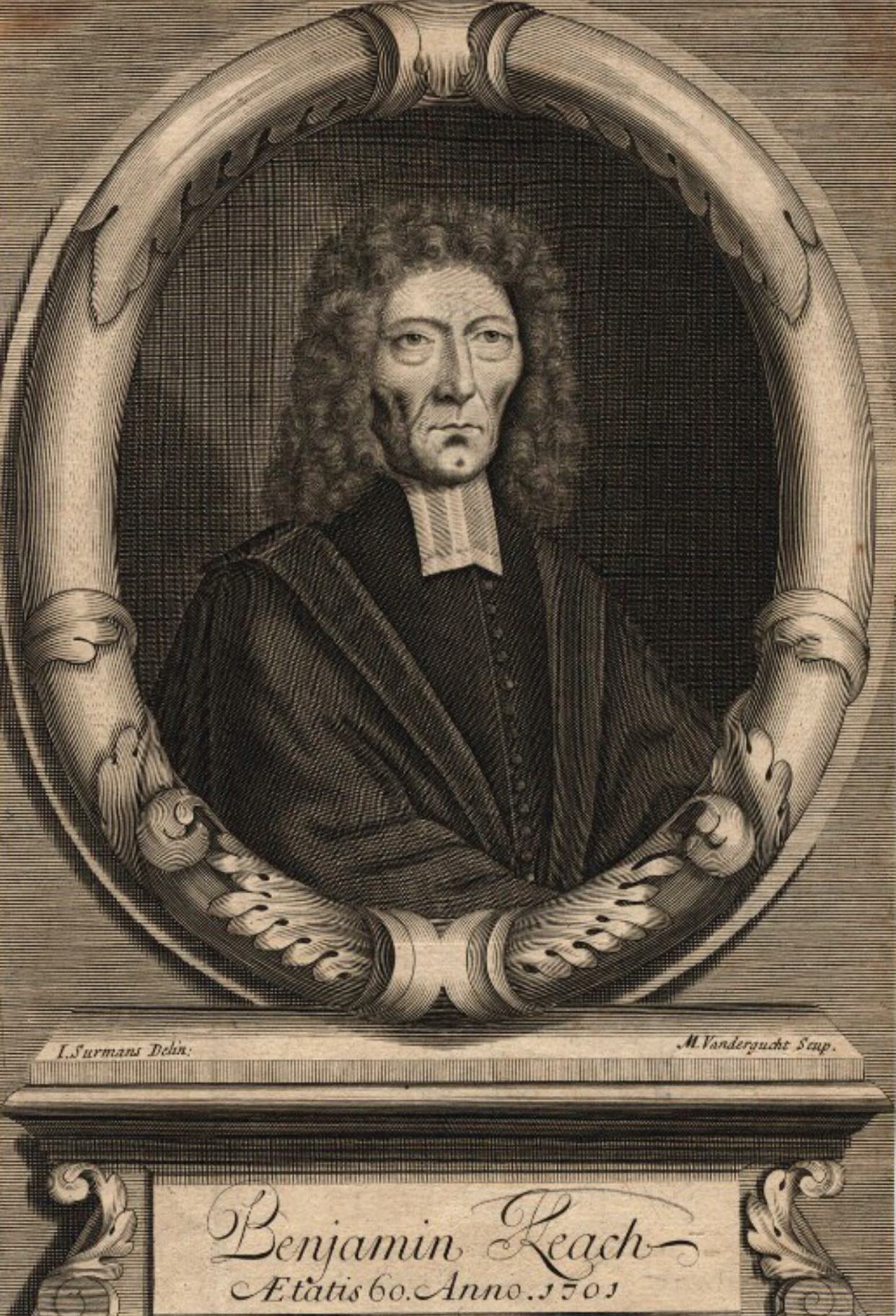
The article "Christ a Testator" by Benjamin Keach addresses the theological concept of Christ as the Testator of the New Covenant, emphasizing how His death ratifies and confirms the promises made to believers. Keach employs multiple metaphors to draw parallels between human testators and Christ, illustrating that Christ, through His death, bequeaths spiritual blessings to His elect, fulfilling God's will and establishing the validity of the covenant. Scriptural references, particularly Hebrews 9:16-17, affirm that a testament requires the death of the testator, while passages like John 15:14 stress the intimate relationship Christ has with His followers as friends and heirs. The broader significance of Keach's argument underscores the assurance believers have in their covenant privileges, emphasizing both the grace of God in Christ's sacrificial love and the imperative for believers to adhere to the covenant's stipulations.
Key Quotes
“A Testament is the sentence and declaration of our just will of what we would have done after death.”
“Jesus Christ the Testator of the new Covenant hath not only full power and authority to convey all Gospel-blessings but all grace here and glory hereafter is solely disposed of at his will and pleasure.”
“Christ's last will and Testament is the godly man's title.”
“If we or an angel from heaven preach any other Gospel unto you than that which we have preached, let him be accursed.”
What does the Bible say about Christ as a Testator?
The Bible describes Christ as the Testator whose death ratifies the New Testament, confirming the covenant of grace for His elect.
Hebrews 9:16-17, Colossians 2:3, John 15:14
How do we know the New Covenant is valid?
The New Covenant is validated by the death of Christ, which sealed the covenant's promises through His blood.
Hebrews 9:16, John 17:24, 1 Corinthians 11:25
Why is Christ's death considered essential for salvation?
Christ's death is essential for salvation as it serves as the sacrifice that ratifies the New Covenant and offers forgiveness of sins.
Hebrews 9:15, Matthew 26:28, Romans 5:8
CHRIST A TESTATOR
"For where a testament is, there must also of necessity be the death of the Testator" Heb 9:16.
THOUGH this term is thought by some not to be a metaphor, (Christ being really a Testator) yet it may not be unprofitable to run the parallel with human Testators. The word in the Greek is diaqemenov of diaqhkh which signifies a Testament, which is of the same import with the Hebrew XXXX Berith. A Testament is the sentence and declaration of our just will, of what we would have done after death, and is so called, because it is a Testimony of our mind, which is not in force (because revocable) till the Testator dies. Thus the New Testament, or law of the Gospel, is ratified and confirmed by the death of Christ. The parallel is as follows.
METAPHOR
I. A Testator signifies a disposer, one that makes a will and Testament, who hath goods to bestow, and relations or friends to give them to.
PARALLEL
I. Christ, our spiritual Testator, hath store of blessings and good things, Col 2:3. In his hand are all the riches of grace and glory; and at the end he will bestow them on his spiritual relations, viz., his children, his elect, who are called his friends: "Ye are my friends," &c., Joh 15:14.
METAPHOR
II. A Testator, is one that is under a natural tie or obligation, and full of thoughts, cares, and good-will to his friends, and hence provides for them when he is gone.
PARALLEL
II. Jesus Christ, by taking his people into covenant-relation and union, hath laid himself under strong bonds and obligations to them, and from hence takes care of them, and is filled with thoughts of kindness to them, and provides for their future good in his absence.
METAPHOR
III. A Testator imports a person dying, or under the apprehension of approaching death, and from hence makes a Testament, and bequeaths legacies.
PARALLEL
III. Jesus Christ, knowing his hour was coming, that he must go out of the world to the Father, he being appointed to death, made his last will and Testament, and left legacies to all his saints, and faithful followers, Joh 13:1.
METAPHOR
IV. A Testator hath full power to dispose of whatsoever he posseseth, or hath a right unto, and according to his sole will and pleasure bequeaths unto others.
PARALLEL
IV. Jesus Christ the Testator of the new Covenant, hath not only full power and authority to convey all Gospel-blessings; but all grace here, and glory hereafter, is solely disposed of at his will and pleasure, in which way and to whom he pleases. "He gives power to become the sons of God," Joh 1:12. He hath given him power over all flesh, that he should give eternal life to as many as thou hast given him. "Father, I will that those whom thou hast given me, be with me where I am," Joh 17:24. "My peace I give unto you," Joh 14:27.
METAPHOR
V. A Testator sets down the person in his will, to whom he doth bequeath or give legacies.
PARALLEL
V. Jesus Christ, as Testator, hath set down in his Testament, who the persons are to whom he hath bequeathed the blessings of the covenant, both grace and glory, viz., all that are his sheep, all that the Father hath given him, all that are regenerated, who truly repent and believe in him, and keep his word, Joh 10:28; 3:36; 14:27; 17:20; Heb 5:9.
METAPHOR
VI. A Testator, to make his last will and Testament firm and authentic, calls others to witness it.
PARALLEL
VI. Jesus Christ, to establish and make firm his last will, called sufficient Testimony to witness it; as first, the Father; secondly, his miracles; thirdly, John Baptist; fourthly, the scriptures; and then fifthly, his apostles, "We are his witnesses of all things that he did," Joh 5:32,36-37; Ac 10:39.
METAPHOR
VII. A Testator, finally to complete, perfect, and confirm his last will, doth sign and seal it himself; which (according to the laws and customs, especially of the eastern nations, as divers have observed) is done by blood; moreover, the epistle to the Hebrews shows us, that the first Testament was dedicated by blood, hence called the blood of the Testament.
PARALLEL
VII. Jesus Christ ratified and confirmed his last will and Testament with his own blood: "He shall confirm the covenant,---he shall be cut off," Da 9:26-27. "For where a Testament is, there must be the death of the Testator," Heb 9:16. "This is my blood of the New Testament shed for many," 1Co 11:25. By Christ's death there is a confirmation of the truth and reality of the covenant, of the validity and authority of it, and lastly, of its efficacy and availableness to us, Heb 9:17: for a Testament is of force after men are dead, otherwise it is of no strength whilst the Testator liveth.
METAPHOR
VIII. A Testator, by making his last will and Testament, usually disannulls any will made before.
PARALLEL
VIII. Jesus Christ disannulled the law of the old covenant, by his establishing the New; "There is a disannulling of the commandment going before, for the weakness and unprofitableness thereof," Heb 7:12,18. "He took away the first, that he might establish the second," Heb 10:9.
METAPHOR
IX. A Testator makes his last will and Testament unalterable by any other, or by himself; as others must not, so he will not.
PARALLEL
IX. Christ hath made his last will and Testament so as never to be altered by himself. "I will put upon you no other burden, but what you have already," Re 2:24, (&c.) "My covenant will I not break, nor alter the thing that is gone out of my mouth," Ps 89:34.
METAPHOR
X. A Testator takes care to have his will made known and published after his death, that the legatees may know what legacies are left and bequeathed to them.
PARALLEL
X. Christ ordained and commanded his disciples to publish his mind and will to the children of men. "Go into all the world, and preach the Gospel," that is, to make known the Testament. "He that believeth, and is baptized, shall be saved; and he that believeth not, shall be damned," Mr 16:15-16.
METAPHOR
XI. A Testator oftentimes limits the legacies bequeathed to some of the legatees, upon conditions by them to be performed.
PARALLEL
XI. Christ hath appointed conditions to be performed by some men, before they can actually possess the grace and blessing promised, viz., to attend upon hearing the word, to pray, believe, repent, &c. "If thou dost well, shalt thou not be accepted of," Ge 4:7. "If thou followest on to know the Lord, then shalt thou know him," Ho 6:3. "Seek, and ye shall find," Lu 11:9. "Believe in the Lord Jesus Christ and thou shalt be saved," Ac 16:31.
METAPHOR
XII. The will of a Testator gives a sure and firm title to those that he wishes well to, and bestows riches on; they hereby are secured: for what can be a more full and undeniable right, than that which is left or bequeathed to a man, by the last will and Testament of his friend?
PARALLEL
XII. Christ's last will and Testament is the godly man's title. Whoever he be, that Christ hath bequeathed such and such a blessing or promise to, he is sure enough of it, from the nature of the covenant, and from the provision that is made by Christ the Testator, for the fulfilling and accomplishing thereof: "My people shall be willing in the day of my power," Ps 110:3. Christ makes the condition easy to his elect.
METAPHOR
XIII. A Testator ordains or assigns executors in trust, to see that his will be punctually observed and fulfilled.
PARALLEL
XIII. Christ hath resigned this great trust of fulfilling of his will, into the hands of the Father, Joh 10:29, and the Holy-Ghost, who are not only faithful executors of this his Testament, but able to supply the wants of every one, and helps all those to whom the covenant doth belong. "Holy Father, keep through thine own name those whom thou hast given me," Joh 17:11. "I will pray the Father, and he shall send you another Comforter, who shall abide with you for ever," Joh 14:16.
METAPHOR
XIV. A Testator being dead, no man can attempt to abrogate or alter any part or thing that is in his last will; though it be but a man's covenant, yet if it be confirmed, no man disannulleth, or added thereunto, Ga 3:15.
PARALLEL
XIV. Christ's will and Testament being confirmed and ratified by his blood, as he will not alter it himself, much less may any man or angel presume to do it. "If we, or an angel from heaven, preach any other Gospel unto you, than that which we have preached, let him be accursed," Ga 1:8. "If any man shall take away from the words of the book of this prophecy, God shall take away his part out of the book of life. If any man add unto these things, God shall add unto him the plagues that are written in this book," Re 22:18-19.
METAPHOR
XV. A Testator dies, and thereby opens a way for his legatees to come into the possession of the inheritance that is left them.
PARALLEL
XV. Christ by dying opened a way, and gave legacies to sinners, to have his Testament executed; if the Testator had not died, there had been no room nor access to them that are called, to receive the eternal inheritance, Heb 9:15.
METAPHOR
I. The death of a Testator amongst men, makes only his own will valid, cannot make and confirm the will of another.
DISPARITY
I. Christ did not only give force and value to his own will, but to the will of the Father also.
METAPHOR
II. A Testator amongst men, cannot be a witness to the will he ratifies and establishes.
DISPARITY
II. Christ is not only a Testator, but a witness of the same Testament, as it is the Father's. He is given of God as the great evidence of covenant love, and of all the choice favours and good-will to sinners: "God so loved the world," &c., Joh 3:16. And secondly, he is given as the great covenant-interest and relation betwixt God and sinners. He testifies that all that is contained in the covenant is true, and the absolute will and pleasure of God: "He said, these things are true and faithful," Re 22:6. Who is it that affirms and testifies this? "Jesus Christ, who is the true and faithful Witness," Re 1:5.
METAPHOR
III. A Testator amongst men bequeaths or gives legacies comparatively but to a few.
DISPARITY
III. Christ gives legacies, to thousands, and ten thousands; no godly man hath, nor ever shall have, any spiritual good thing, but what was bequeathed to him by Christ's will and Testament.
METAPHOR
IV. A Testator among men cannot enjoy or possess that kingdom, estate, or inheritance himself, after he hath given it away to others, and settled them in possession.
DISPARITY
IV. Christ, the spiritual Testator, though he hath given away all that he hath, and gives the possession to believers by his last will and Testtament; yet is co-heir of the same kingdom and glory, and shall possess it together with them.
METAPHOR
V. A Testator amongst men, commits his last will and Testament to men to be fulfilled.
DISPARITY
V. Christ, the spiritual Testator, surrogates his Spirit, in his absence, and after his death, to see his will executed in all points, and to give real and actual possession of all his covenant blessings, unto them to whom they are given.
METAPHOR
VI. The best legacies, Testators among men bequeath, are but earthly and temporal things.
DISPARITY
VI. The legacies Christ bequeaths are spiritual, things of a high and most sublime nature. As all things are given to Christ the Mediator, so all that he is or hath, he parts with freely to
his faithful followers; the graces of the Spirit, adoption, pardon of sin, peace of conscience, precious promises; in a word, all things that appertain to the life that now is, and to that which is to come: "All is yours, ye are Christ's, and Christ is God's," 1Co 3:22-23.
INFERENCES.
1. This exceedingly shows forth the grace and love of Christ to sinners, in that he should assume man's nature, and become liable to death and mortality; what marvellous condescension is here, that he should act or do any thing in contemplation of death, and be a Testator, and yet could not see corruption, the grave could not keep him; and yet refused not to submit unto death, and thereby through the Spirit he might convey a legal right and possession to us of eternal life?
2. From hence we may also see, how firm and sure the covenant of grace is made to all the true seed, and faithful children of God,
3. And let all the friends and legatees of Jesus Christ know, that their right and title to spiritual and eternal blessedness is of absolute grace, and mere pleasure of the Testator.
4. And what cause have we to praise the name of God in Christ, who hath published and made known his last will and Testament unto the sons of men? We have the mind of Christ.
5. And in that he hath left one to execute his will, and that it is put into the hands of the Holy Spirit in Christ's absence, who is able to do it effectually, Joh 15:26, "But the Comforter, which is the Holy Spirit, whom the Father will send in my name, he shall teach you all things, he shall testify of me."
6. Moreover, let all such tremble, that adventure to alter, add to, or diminish from, any thing that is left in Christ's last will and Testament; the plagues of God, without repentance, are like to be their portion for ever.
7. Furthermore, from hence you may see what reason we have to examine what is preached for doctrine, or published by any man as the mind of Christ; for if it be not written or found in his last will and Testament, we ought utterly to reject it, though an angel from heaven should preach it. Whatever is affirmed to be an ordinance of Christ's, if it be not, nor cannot be naturally inferred, without abuse or wrong to the text, let it be abhorred and contemned by us.
8. This affords much comfort to the godly, whose names are written in this Testament, and in the Lamb's book of life. You will there find exceeding great and glorious things bequeathed to you, and let it be your care to sue for them, according to the will and directions of the Testator.
9. Also let them not forget their Friend, nor neglect to keep up his remembrance in the holy signs of his death and sufferings for their sakes, which he hath enjoined them: "This do in remembrance of me," &c., 1Co 11:24.

Comments
Your comment has been submitted and is awaiting moderation. Once approved, it will appear on this page.
Be the first to comment!