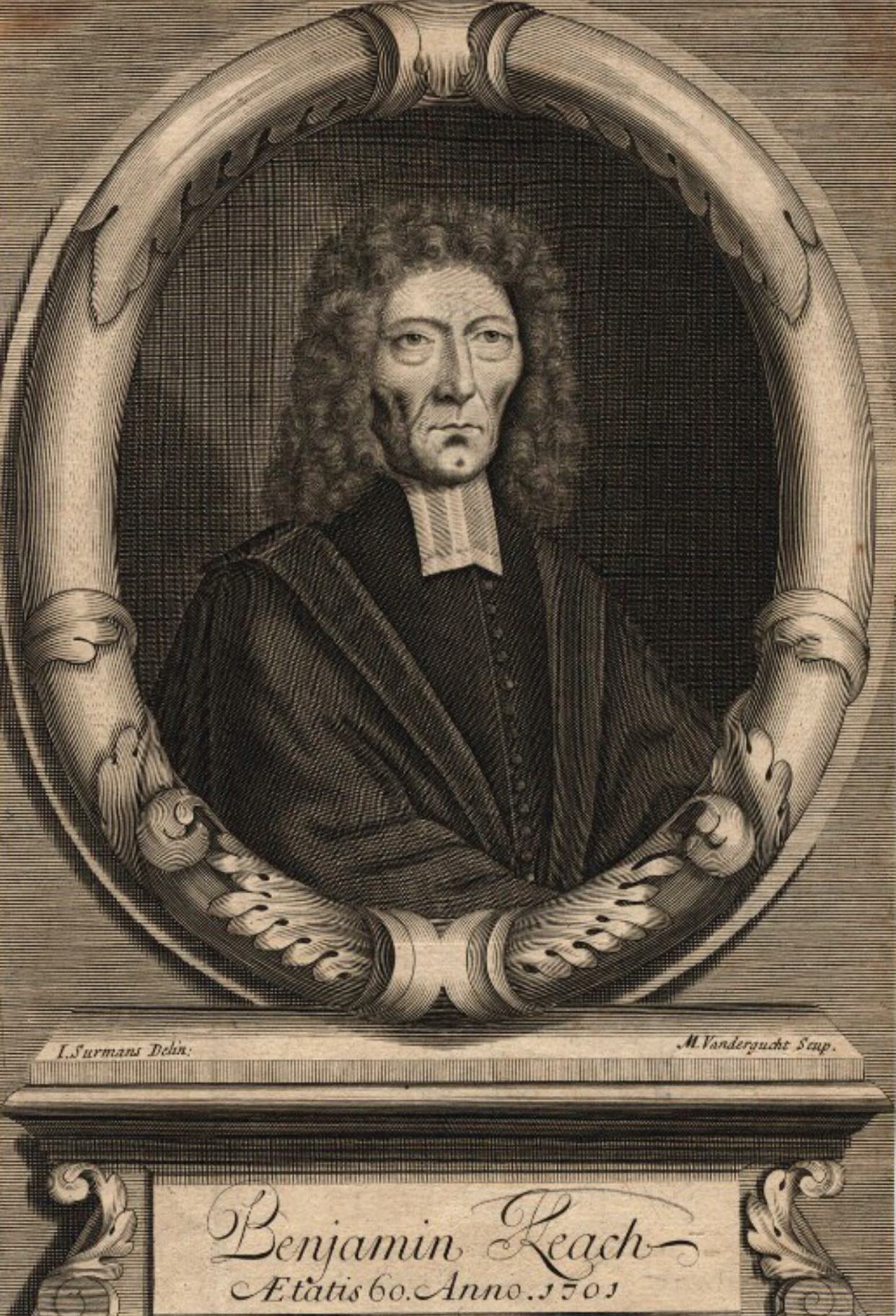
In "Christ the Servant of God," Benjamin Keach addresses the theological significance of Christ as the servant of God through various biblical metaphors. He argues that Christ's role as a servant encompasses multiple facets including being chosen, subordinate, trustworthy, and laborious, each illustrated with corresponding Scripture references such as Isaiah 42:1, Philippians 2:6-7, and John 4:34. These passages support the doctrine of Christ's humility and obedience, emphasizing His subservient role while affirming His divine nature. The practical significance of this teaching highlights the condescension of Christ and sets an example for believers, calling them to emulate His humble service and dedication to God's will.
Key Quotes
“Behold my Servant whom I uphold;… Christ was chosen by the Father not to one office only but to many to be a Mediator King Priest and Prophet.”
“Jesus Christ as God's servant sought not his own glory… but he that seeketh the glory of him that sent him the same is true.”
“The Lord Christ was most faithful… My meat is to do the will of him that sent me and to finish his work.”
“It is an honourable pleasant and gainful thing to be Christ's servant.”
What does the Bible say about Christ as a servant?
The Bible describes Christ as a Servant chosen by God, fulfilling multiple offices including Mediator, King, Priest, and Prophet.
Isaiah 42:1, Isaiah 49:6, Psalm 89:19, Philippians 2:6-7
How do we know the doctrine of Christ's servanthood is true?
The doctrine of Christ's servanthood is affirmed by Scripture, showcasing His obedience and fulfillment of God's will throughout His life.
Philippians 2:6-7, John 8:49, John 12:49
Why is Christ's servanthood important for Christians?
Christ's servanthood is vital for Christians as it exemplifies humility, obedience, and sacrificial love that believers are called to emulate.
John 13:14-15, Mark 10:45
CHRIST THE SERVANT OF GOD
"Behold my Servant whom I uphold" &c., Isa 42:1.
"It is a light thing that thou shouldest be my Servant?" Isa 49:6.
CHRIST is in these scriptures called a Servant.
METAPHOR
I. A Servant is one chosen to office. If men have work or business to do, they choose one to be their servant, whom they think fitly qualified, and able to do it.
PARALLEL
I. Christ was chosen by the Father, not to one office only, but to many, to be a Mediator, King, Priest, and Prophet. "Behold my Servant whom I have chosen," Isa 43:10. He was every way furnished and fitly qualified for the great work appointed for him. "I have laid help upon one that is mighty: I have exalted one chosen out of the people," Ps 89:19.
METAPHOR
II. A Servant is a name of subordination and subjection, it respects an office of an inferior rank and quality.
PARALLEL
II. Christ in his humiliation was abased so low, as to be in subjection to the Father. "He made himself of no reputation, and took upon him the form of a Servant," Php 2:6-7. "I have been amongst you as he that serveth," Lu 22:27.
METAPHOR
III. A Servant is one that hath a trust committed to him, by a master or superior, to whom he is to be accountable.
PARALLEL
III. Christ hath a great trust committed to him. "Is it a light thing that thou shouldest be my Servant, to raise up the tribes of Israel?" Isa 49:6. And as all the treasures and riches of Egypt were committed to Joseph, Ge 41:41, so are all the riches of heaven, both of grace and glory, committed to Christ. "It pleased the Father that in him should all fulness dwell, in whom are hid all the treasures of wisdom and knowledge," Col 2:3.
METAPHOR
IV. A Servant is oftentimes employed to labour and hard work, as to plough and sow, build and plant, &c.
PARALLEL
IV. Jesus Christ was employed in hard work, viz., to redeem, and not only so, but to build the temple or house of God. "Upon this Rock will I build my church," Mt 16:18. "Behold, the Man that is called the branch, he shall build the temple of the Lord," Ec 6:12. "A Sower went out to sow, this Sower is the Son of man," Mt 13:2,37.
METAPHOR
V. A Servant is not to seek his own glory, nor to do his own will, no further than it agrees with the glory and will of his master or father, but doth every thing that is commanded him, not being ashamed to acknowledge himself to be a Servant.
PARALLEL
V. Jesus Christ, as God's servant, sought not his own glory. "I honour my Father," Joh 8:49. "If any man will do his will, he shall know of the doctrine, whether it be of God, or whether I speak of myself. He that speaketh of himself, seeketh his own glory; but he that seeketh the glory of him that sent him, the same is true," &c., Joh 7:17-18. "Father, not my will but thy will be done," Lu 22:42. "He that sent me, gave me commandment what I should say, and what I should speak," Joh 12:49. "As I have kept my Father's commandments," &c., Joh 15:10.
METAPHOR
VI. A Servant is sent sometimes abroad to do business, far from home, and is thereby exposed to many dangers, and great hardships.
PARALLEL
VI. Jesus Christ, to do the work of God as Mediator, was sent on a long journey, as far as it is from heaven to earth, and was thereby exposed to much difficulty, and great hardships, from men and devils. He was persecuted from place to place, his life being often in jeopardy; he had no where to lay his head; and was at last most basely betrayed and put to death, Mt 8:20.
METAPHOR
VII. A Servant that is faithful, delights to do his father's or master's business, preferring it above his meat and drink, as appeared by the Servant of Abraham, who would not eat nor drink before he had done his errand, Ge 24:33
PARALLEL
VII. The Lord Christ was most faithful,"Though he was a Son, yet learned he obedience by the things he suffered," Heb 5:8, "My meat is, to do the will of him that sent me, and to finish his work," Joh 4:34. "I delight to do thy will, O God," Ps 40:8. "Wist ye not that I must be about my Father's business?" Lu 2:49.
METAPHOR
VIII. A Servant that is faithful, will not go beyond his commission in any thing. Saith God to Moses, "Look that thou make them according to the pattern that I have showed thee in the Mount," Ex 25:40. "Thus did Moses; according to all that the Lord commanded him, thus did he," Ex 40:16.
PARALLEL
VIII. The Lord Christ was faithful, in doing all things which God required of him; he went not beyond his commission, nor did he neglect any part of his work. "He, that God sent, speaketh the words of God, and I know that his commandment is life everlasting," Joh 3:34. "Whatsoever I speak therefore, even as the Father said unto me, so speak I," Joh 12:50. "Who was faithful to him that appointed him, as Moses was faithful in all his house," Heb 3:2.
METAPHOR
IX. A Servant hath a right to wages, and expects it, as the desert of his work: as Jacob said, "Give me my wife, for my days are fulfilled." He demanded his wife, after he had served seven years for her.
PARALLEL
IX. The Lord Jesus Christ hath an absolute right to a reward for his work's sake. Though there is no merit or desert for the works which believers do, being unprofitable Servants when they have done all: yet there is very great merit and worth in what Christ did. And the Father will give him his wages; he shall have his wife, his Church, for whom he served above fourteen years; nay, "He shall have the heathen for his inheritance, and the uttermost parts of the earth for his possession. Behold, my Servant shall deal prudently, he shall be exalted and extolled, and be very high: I will divide him a portion with the great, and he shall divide the spoil with the strong, because he hath poured out his soul unto death," Isa 53:12. "But we see Jesus, who for the suffering of death is crowned with glory and honour," &c., Heb 2:9.
METAPHOR
X. It is the hope and expectation of a reward, that causeth a Servant to go through difficulties and hardships cheerfully; as it was in Jacob's case; "Thus I was, in the day the drought consumed me, and the frost by night; yet he served seven years for Rachel. and they "Seemed unto him but as a few days."
PARALLEL
X. The Lord Jesus Christ, having in his eye that eternal advantage his elect should receive, and what glory he, as man, should be raised unto, as the reward of his undertaking, went through all his sorrows with much cheerfulness. "Who for the joy that was set before him, endured the cross, despised the shame, and is set down at the right-hand of the throne of God," Heb 12:2.
METAPHOR
XI. A Servant is attended with fear, "If I am a master, where is my fear?" Mal 1:6.
PARALLEL
XI. The Lord Jesus Christ was subject whilst he was here in our nature, in the form of a Servant, (at some time) unto fear. "He was made under the law." It is said, "He was troubled in Spirit and was heard, in that he feared," Heb 5:7.
METAPHOR
I. A Servant and the master are not essentially and inseparably one.
DISPARITY
I. Jesus Christ, although a Servant, is essentially one with the Father; the Father, Son, and Spirit, are but the one everlasting and eternal God. "I and my Father are one. There are three that bear record in heaven, the Father, the Word, and the Holy Ghost; and these Three are (inseparably) One," 1Jo 5:7.
METAPHOR
II. A Servant amongst men hath not an inseparable interest in his master's goods and estate.
DISPARITY
II. Christ hath a full, a clear, and inseparable interest in all that the Father hath: "All mine are thine, and thine are mine, and I am glorified in them," Joh 17:10.
METAPHOR
III. Servants among men many times, through temptation, prove unfaithful, and deceive either father or master; yea, the best Servants of good men have in something or other miscarried.
DISPARITY
III. It was impossible for Christ to be unfaithful, or disobey God his Father, because he was without sin, and Satan had nothing in him to fasten a temptation upon, Joh 14:30.
METAPHYOR
IV. A Servant may be turned out of his master's service, and lose his honour.
DISPARITY
IV. The Lord Jesus Christ did not, could not displease his Father, and therefore did not, nor could lose his honour. "I do always the things that please him," Joh 8:29.
METAPHOR
V. The Servant abides not in his master's house for ever.
DISPARITY
V. Jesus Christ abideth in the house of God for ever.
METAPHOR
VI. A Servant differs from the heir in place, dignity, and privilege.
DISPARITY
VI. Jesus Christ, though he be called the Servant of God, yet is he his own beloved Son, and "Heir of all things, by whom he made the world," Heb 1:2. "There is none in heaven and earth, that hath greater glory, place, or privilege, conferred upon him, than the Lord Jesus Christ," Heb 1:5,8.
METAPHOR
VII. Too many are oftentimes forced to become Servants, because they cannot otherwise tell how to live.
DISPARITY
VII. Jesus Christ had no necessity of nature laid upon him, to accept of the low place and office of a Servant. He was not forced to it, because he could not tell how to live without serving, he being infinitely happy in himself from eternity; but the glory of his Father, and the dear love he bore to the creature, even to poor lost man, moved him to become a servant; he did it freely for our sakes, that we might be lords.
INFERENCES.
I. We may note from hence the wonderful condescension of Jesus Christ; there is nothing which sets forth his great abasement for our sakes more than this; what grace is this! Doth the Son of God, who is the Lord of heaven and earth, become a Servant! "He that thought it no robbery to be equal with God, made himself of no reputation, and took upon him the form of a servant!" Php 2:6-7. "The Son of man came not to be ministered to, but to minister," Mr 10:45.
Quest. But some may enquire, whose Servant is Christ? &c.
1. He is God's Servant: "Behold my Servant," &c.
2. He is his people's Servant: "The Son of man came not to be ministered unto, but to minister, and to give his life for many," Mt 20:28.
II. Let us learn from him, henceforward to humble ourselves. Let the same mind be in you, that was also in Christ Jesus," Php 2:5. Shall the Lord become a Servant? and shall the Servant swell in pride and arrogancy, and nothing content him but to be called lord; nay, and lord it over God's heritage, whose Servants they ought to be, if they would be Gospel ministers. Surely Christ abhors him who calls himself the Servant of servants, whilst at the same time he exalts himself above all that is called gods.
III. If the Lord Christ became a willing, humble, laborious, and faithful Servant for us let us labour to be humble, faithful, and sincere servants to him: he hath done all the hardest work, and if any remain too hard for us, he sticks not to set his hand to it. "Thou hast wrought all our works in us, and for us," Isa 26:12.
IV. Let this teach us to follow his example, and be servants one to another: "I have given you an example, that you should do as I have done to you; for this is acceptable to him," Joh 13:14-15.
V. Remember it is an honourable, pleasant, and gainful thing, to be Christ's servant. Paul seems to glory more in it, than in his being an apostle: "If any man serve me, let him follow me; and where I am, there shall my servant also be. If any man serve me, him will my Father honour," Joh 12:26.
VI. This justly reproves such who are ashamed to be Christ's servants, and to bear reproach and infamy for his name's sake, seeing he hath not stuck to serve them in denying himself, even to the ignominious death of the cross.

Comments
Your comment has been submitted and is awaiting moderation. Once approved, it will appear on this page.
Be the first to comment!