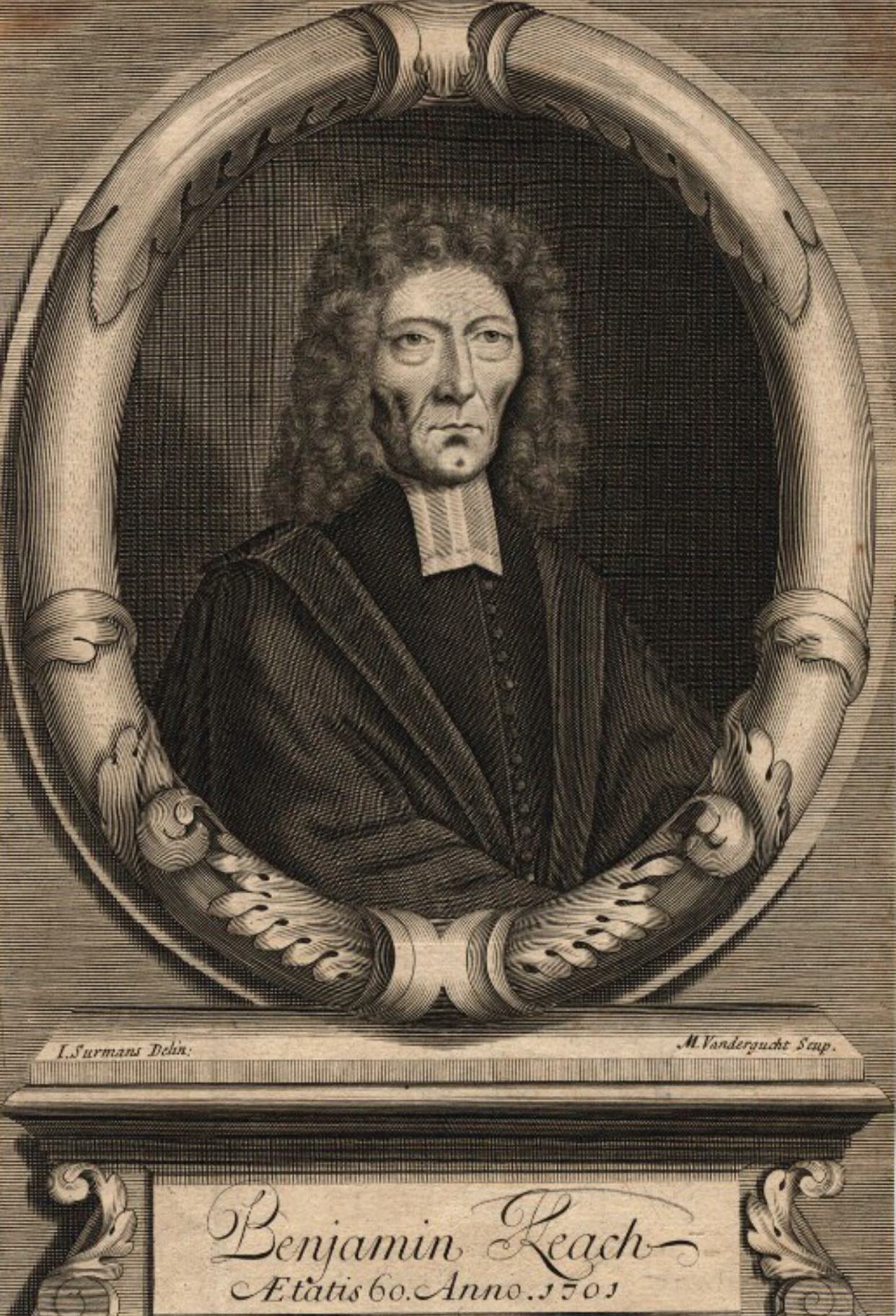
In "Christ a Lion," Benjamin Keach expounds upon the metaphor of Christ as the Lion of the tribe of Judah, illustrating various attributes of Christ through this image. Key arguments made include the kingly nature of Christ as the sovereign ruler, His majestic presence that instills awe, and His mighty power to conquer sin, death, and the devil. Scripture references such as Revelation 5:5, Isaiah 9:6, and 1 Corinthians 1:24 are utilized to support Keach’s portrayal of Christ as a powerful protector and avenger of His people. The practical significance lies in the duality of Christ's character, serving as both a compassionate savior and a fierce judge, encouraging believers to seek His mercy while acknowledging His sovereign authority.
Key Quotes
“The Lord Jesus is the King of kings, the Lord of lords, King of the kings of the earth.”
“Christ, being our Captain, though we are timorous creatures, is enough to oppose, scatter, and vanquish the most potent army that ever the prince of darkness could raise against them.”
“He will rise up like a lion to destroy and devour at once.”
“None can deliver themselves out of Christ's hand when He rises up for the prey.”
What does the Bible say about Christ as a lion?
The Bible describes Christ as the Lion of the tribe of Judah, symbolizing His kingship, power, and ability to overcome enemies (Revelation 5:5).
Revelation 5:5, Isaiah 9:6
How do we know that Christ has the power to save?
Christ is identified in Scripture as the mighty God, powerful to save and overcome sin (Isaiah 9:6).
Isaiah 9:6, 1 Corinthians 1:24
Why is the concept of Christ as a lion important for Christians?
Understanding Christ as a lion conveys His authority and protective power over His people, reinforcing their trust in Him.
Revelation 5:5, Isaiah 41:25-26
CHRIST A LION
Ide enikhsen o lewn o wn ek thv Fulhv Ioda, &c. "Behold, the Lion of the tribe of Judah hath prevailed," Re 5:5.
IN this text Christ Jesus is expressed by the metaphor of a Lion, whose nature and properties are illustrated and applied in the following parallel; The word Lewn is derived apo ta laein, which signifies to see, because of his acute sight.
METAPHOR
I. A LION (saith Ainsworth) is a kingly beast, and as Topsall tells us, justly stiled by all writers the king of beasts.
PARALLEL
I. THE Lord Jesus is the King of kings, the Lord of lords, King of the kings of the earth.
METAPHOR
II. The Lion is a majestical creature; majesty (saith one) sits in his very face; which occasioned that speech, that an army of harts (which are timorous creatures) having a Lion to their captain, were more terrible than an army of Lions with a hart to their captain.
PARALLEL
II. Jesus Christ is full of majesty. It may be truly said of him, that he carries majesty in his face, majesty in his looks, majesty in his words, majesty in his walking. Christ being our Captain, though we are timorous creatures, is enough to oppose, scatter, and vanquish the most potent army, that ever the prince of darkness, or the God of this world, could raise against them; his looks and words affright his enemies, 1Co 1:24.
METAPHOR
III. The Lion is a very strong creature: "Out of the strong (saith Sampson) came forth sweetness," Jg 14:14.
PARALLEL
III. Christ is the power of God; he is a mighty Man, nay, he is a mighty God, mighty to save, Isa 9:6.
METAPHOR
IV. The Lion is a very magnanimous creature, and couragious beast, and a great conqueror; he was used by the ancients as an hieroglyphic to denote dominion; and it was counted ominous, if a woman brought forth a Lion, as signifying that country to be subdued by strangers. Kenning. Hence the adage, Societas Leonum, the over-ruling society.
PARALLEL
IV. Christ is of a superlative courage, of an invincible mind: for he never encountered with any, but he was Conqueror. He subdued the devil, yea, whole legions of devils, and rode in triumph through the air. He overcame the world, trampling it under his feet. He conquered sin, yea, death itself. The woman bringing forth the Lion of the tribe of Judah, portended nothing less than the conquest of the devil's kingdom.
METAPHOR
V. The Lion coucheth down to take his rest, and then is very still and quiet.
PARALLEL
V. Christ appears in his dispensations, for some time to couch down, as it were; suffers himself to be abused (in his people) and seems to lie still, as if he were asleep.
METAPHOR
VI. The Lion is a very fierce, fearless, and terrible creature, especially when he is roused up, and provoked by an enemy.
PARALLEL
VI. Christ, when he is roused up by the cruelities of the enemies of his church, and the cries of his people, will be very terrible; he will come upon princes, as upon mortar, Isa 41:25. Though now he seems still and peaceable, like a lamb; yet the day is at hand, when he will rise up like a lion, to destroy and devour at once.
METAPHOR
VII. A Lion hath a terrible voice; when he roareth, all the beasts of the field tremble.
PARALLEL
VII. When Christ shall utter his voice at the last day, and come to judgment, he will make the nations of the world quake. "Let all the inhabitants of the earth tremble, for the day of the Lord cometh, for it is nigh at hand," Zep 1:14. "The Lord shall also roar out of Zion. and utter his voice from Jerusalem, and the heaven and earth shall shake," &c., Joe 3:16.
METAPHOR
VIII. A Lion is sharp-sighted; his name lewn is derived of law, a Greek verb, that signifies to see.
PARALLEL
VIII. There is nothing hid from the eyes of Christ, he sees into the darkest corners of men's hearts and imaginations; the most subtle sinners cannot escape his notice. There is no secret place, where the plotters, or wicked men, can hide themselves from him; he sees all their horrid designs and combinations.
METAPHOR
IX. The Lion seems to be a creature much for justice, and will retaliate to others, according to the nature of the offence done. See the metaphor where God the Father is compared to a lion.
PARALLEL
IX. Jesus Christ will reward every one according to the nature of his works, in the great day; and when he comes forth to judge Babylon, he will retaliate upon her according as she hath done. "Thou hast given them blood to drink, for they are worthy, for they have shed the blood of thy saints and prophets," Re 16:6. "Reward her as she hath rewarded you," Re 18:6.
METAPHOR
X. A Lion remarks those that have injured him, or abused or wronged his young ones, and will revenge it; as appears by divers passages mentioned by naturalists, one of which take as followeth.
In Bangius, a mountain of Thracia, there was a lioness which had whelps in her den, which den was observed by a bear. The bear one day finding the den unfortified, by the absence both of the lion and lioness, entered into the same, and slew the lion's whelps, afterwards went away, and fearing revenge, for better security against the lion's rage, climbed up into a tree, and there sat as in a sure castle of defence. At length the lion and the lioness returned both home, and finding their little ones dead in their blood, according to natural affection, became both exceeding sorrowful, to see them so slaughtered, whom they loved; but searching out the murderer by the foot, followed with great rage up and down, until they came to the tree whereon the bear was ascended; and seeing her, looked both of them ghastly upon her, oftentimes assaying to get up into the tree, but in vain, not being endued with the power of climbing. Then the male forsook the female, leaving her to. watch the tree, and he, like a mournful father for the loss of his children, wandered up and down the mountains, making great moan and sorrow, till at last he saw a carpenter hewing wood, who seeing the lion coming towards him, let fall his axe for fear; but the lion came very lovingly towards him, fawning gently upon his breast with his fore-feet, licking his face with his tongue. Which gentleness of the lion the man perceiving, he was astonished; and being more and more embraced and fawned upon by the lion, he followed him, leaving his axe behind; which the lion perceiving, he went back, and made signs with his foot to the carpenter, that he should take it up. But the lion seeing the man did not take it up, he brought it himself in his mouth, and delivered it unto him, and then led him into his own cave, where the young whelps lay all imbrued in their own blood; and from thence to the place where the Lioness did watch the bear. They making signs, and looking up into the tree where the bear was, the man conjectured that the bear had done this grievous injury unto them; he thereupon took his axe, and hewed down the tree near the root, which being done, the bear tumbled down headlong, and the furious beasts tore her all to pieces. After this, the Lion conducted the man to the place and work where he first found him, without doing him the least violence or harm.
The truth of this, and of the following story, is not imposed upon the reader; yet finding it recorded by such credible and eminent authors, (and in itself probable) we thought fit to transcribe it, as serving to divert the reader, and illustrate the infinite wisdom of God in his works.
PARALLEL
X. Christ marks all those that injure him and his people. "Wherefore doth the wicked contemn God? he saith in his heart, he will not requite it. Thou hast seen it, for thou beholdest mischief and spite, to requite it with thy hand," Ps 10:13-14. "I remember that which Amalek did to Israel, now go and smite Amalek," 1Sa 15:2-3. "I will contend with them that contend with thee, and I will save thy children: and I will feed them that oppress thee with their own flesh, and they shall be drunken with their own blood, as with sweet wine," Isa 40:25-26.
METAPHOR
XI. As a Lion will revenge the hurt and injury done to him, and to his young ones, so he is ready to requite kindnesses done to him; as appears by another passage, thus recorded by historians:
One Andradus, having fled from his master by reason of some hard usage received at his hands, by chance happened to take up his lodging in a cave, which (unknown to him) was a Lion's den; where when he had been a while, not long before night, the Lion came from hunting, and having gotten a hurt upon his foot, he no sooner espied the trembling man in this fearful place, but he cometh gently unto him, stretching forth his foot, and making moan, as though he desired help. The man took the Lion by the paw, searched the wound, pulled out a thorn, bound up his foot, and gave him ease; which kind offi.ce being performed, was first of all requited with a daily portion of provision, which the poor slave roasted in the sun. After this the man escaped, and got away; and the Lion missing him made great lamentation. But it so happened, he was no sooner gone, but he was taken by some whom his master had sent out to search for him; and then, alas! there was no other way but death, and no other death but to be torn in pieces by wild beasts; for the Romans kept beasts on purpose upon that account. But it so fell out, that this Lion was taken up before the time came, and put into the theatre, who greedily rent in pieces such as were thrown unto him; yet when this poor slave, his old friend, was cast in, he forgot his fury, and turned it into fawning; by which the poor soul perceived what Lion it was, and thereupon renewed his acquaintance with him, to the admiration of all. The matter being known, and related to them that were concerned, he had not only his life, but the Lion also to wait upon him, who became a faithful servant to him. Hic est Leo hospes hominis, hic est homo medicus Leonis, [1] was that which the people would say, when they saw him lead along his Lion through the streets: here goes the Lion which was the man's host, and there is the man who was the Lion's physician.
[1] Topsall, p. 366. Ælianas. Aulus Gellus, in his Attics.
PARALLEL
XI. The Lord Jesus, as he avenges the wrongs and injuries done to his people, so he will requite kindnesses showed to them. Such as "Feed the hungry, clothe the naked, visit the sick, and those that are in prison, for Christ's sake, shall be rewarded," Mt 25:38-39. "Their work of faith and labour of love shall not his be forgotten;" yea, "he that gives but a cup of cold water in the name of a disciple, shall not lose his reward," Mt 10:41-42; which is a reward of grace, not merit; for there is no proportion between eternal life, and the best of our performances, yet God accepts of them,
METAPHOR
XII. No creatures love their young (as you may perceive by the foregoing story in part) more than the Lions, which they further demonstrate in their defence; for they will receive many terrible blows, slashes, and wounds, the one opening the bleeding body, and the other pressing the blood out of the wounds; standing invincible, never yielding till death, as if death itself were nothing to them, (saith the historian) [2] so that their young ones might be safe."
[2] Topsall's history of four footed beasts p 363
PARALLEL
XII. The Lord Jesus loveth his people with such a strong and endeared love, that he did not only fight with cruel enemies in their behalf, but freely also received many lashes and sore wounds in his body, and stood invincible, never yielding till death: "He made his soul an offering for sin," Isa 53. Yea, death itself was nothing to him, so that he might save his poor church from wrath, and eternal misery.
METAPHOR
XIII. Lions are full of clemency to them that prostrate themselves at their feet; they will not touch such as do (as it were) by submission humble themselves to them.
PARALLEL
XIII. The Lord Jesus is full of clemency, compassion, and tenderness of bowels to all that humble themselves at his feet. "He resisteth the proud, (and will tear them to pieces) but giveth grace to the humble," Jas 4:6.
METAPHOR
XIV. Out of the dead carcase of Sampson's Lion came forth sweetness, as in his riddle.
PARALLEL
XIV. Sampson's riddle is unfolded best in the slain body of the Lion of the tribe of Judah; from thence comes all the honey, the sweetness of grace and glory.
METAPHOR
XV. None can take away the prey from an hungry Lion.
PARALLEL
XV. None can deliver themselves out of Christ's hand, when he rises up for the prey.
METAPHOR
XVI. It is affirmed, that if a man be anointed all over with the blood of a Lion, he shall never be destroyed by wild beasts. [3]
[3] Sextus. Topsal. p. 367
PARALLEL
XVI. That person, whosoever he be, who applieth Christ's blood by faith, or have every faculty of his soul, viz., the whole man bathed therein, shall never be destroyed by the devil, nor the powers of darkness.
METAPHOR
XVII. The blood of a Lion (as naturalists say) being rubbed or spread upon a canker or sore, which is swelled about the veins, will presently cure the grief.
PARALLEL
XVII. The blood of Christ cures all wounds, cankers, and putrefying sores of the soul, or inward man, when applied by the hand of faith.
METAPHOR
THE Lion is cruel, blood-sucking, proud, preying, stony-hearted, malicious, a devourer of flocks and herds, the very tyrant of beasts.
PARALLEL
THE Lord Jesus is mild, merciful, tender-hearted, forgetting injuries, the Preserver and Saviour of the innocent, poor, weak, and helpless ones, &c.
INFERENCES.
1. LET the ungodly tremble, who think Christ Jesus will never appear as a Lion, but always show himself in his Lamb-like disposition. Christ is a Lion as well as a Lamb, and will ere long rise up to the prey.
2. What will become of the murderers and destroyers of his Church, in the day of his fierce wrath, when he coines to make inquisition for. blood?
3. Oh that sinners from hence would learn to prostrate themselves at his feet!
4. This speaks much comfort to the godly; he is full of bowels, and like a Lion, able to defend and deliver them.
5. By faith and prayer let us strive to rouse up this Lion of the tribe of Judah, to tear in pieces all his implacable enemies.

Comments
Your comment has been submitted and is awaiting moderation. Once approved, it will appear on this page.
Be the first to comment!