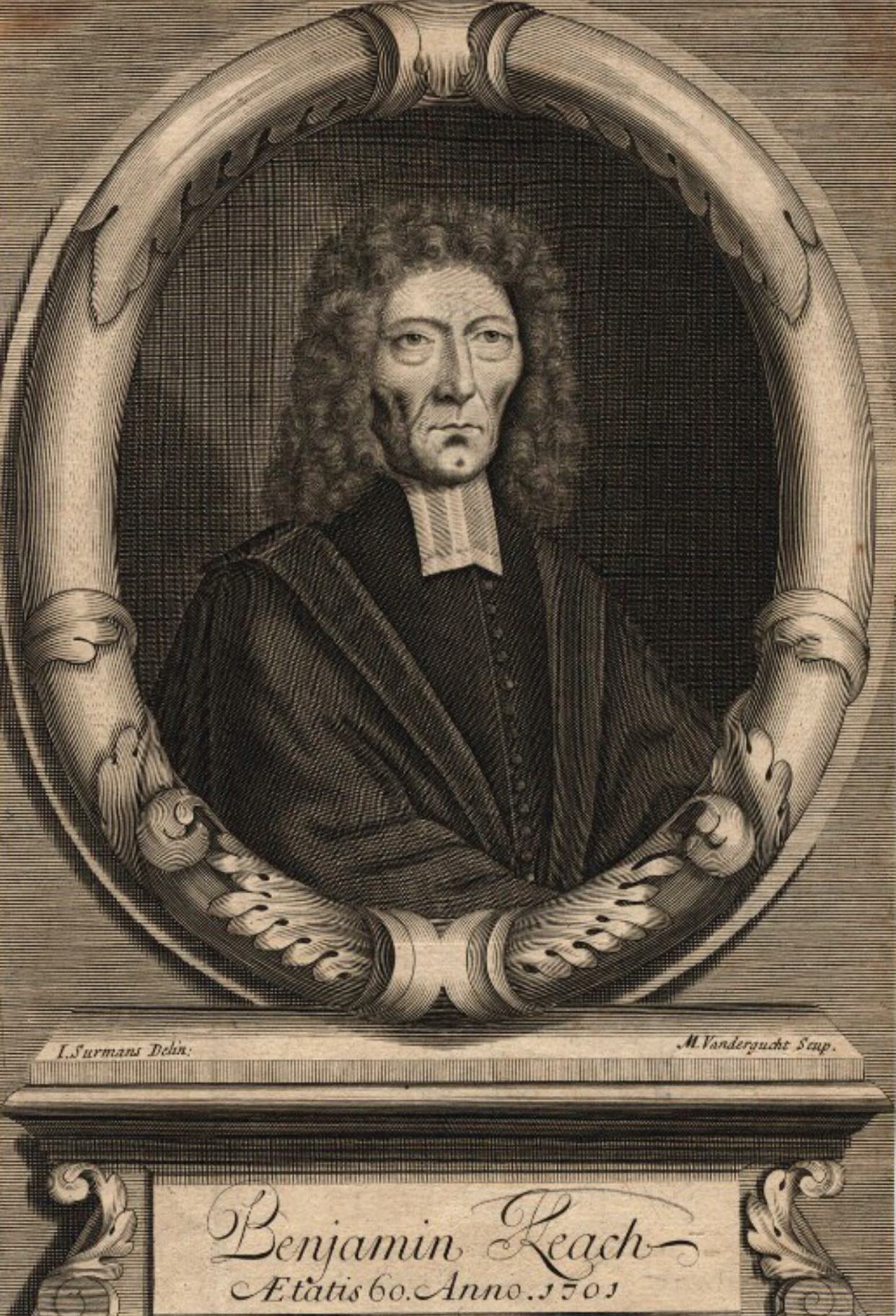
The central theological topic of Benjamin Keach’s article "Christ a Shepherd" focuses on the metaphor of Christ as the Good Shepherd, a concept rooted in Reformed theology. Keach articulates that Christ is divinely appointed to care for His church, possessing the necessary wisdom, power, and tenderness to fulfill this role effectively. Throughout the article, Keach draws from various Scripture references, including John 10:11, Psalm 23:1-2, and Ezekiel 34:11-16, showcasing how these passages affirm Christ's intimate knowledge of His sheep, His provision of sustenance, and His protective nature. The implications of this doctrine emphasize the security and care believers have in Christ, highlighting the importance of abiding in His leadership and the collective health of the church while distinguishing between true and false shepherds.
Key Quotes
“A Shepherd is chosen and appointed to take care of the sheep being a man skilful in doing that work and business.”
“If any of his sheep be set upon by dogs or wolves will venture his life for them to defend and rescue them.”
“Christ laid down his life for his sheep exposed himself to great sorrows and miseries for their sakes.”
“Let other Shepherds remember they are but Christ's servants Christ's deputies and must be accountable to him the chief Shepherd when he appeareth.”
What does the Bible say about Christ as a Shepherd?
The Bible describes Christ as the Good Shepherd who cares for, knows, and protects His sheep, emphasizing His deep personal relationship with believers (John 10:11).
John 10:11, Psalm 23:1-2, Isaiah 40:11
How do we know that Jesus protects His followers?
Jesus protects His followers by defending them against spiritual enemies and guiding them away from harmful influences (Ezekiel 34:2).
Ezekiel 34:2, John 10:3, Isaiah 49:10
Why is it important to understand Christ as our Shepherd?
Understanding Christ as our Shepherd is vital because it highlights His care, guidance, and the assurance of salvation for believers (John 10:28).
John 10:28, Psalm 23:1, Romans 8:31-39
CHRIST A SHEPHERD
I am the good Shepherd" &c. Egw eimi o poimhn kalov, Joh 10:11.
METAPHOR
I. A Shepherd is chosen and appointed to take care of the sheep, being a man skilful in doing that work and business.
PARALLEL
I. Jesus Christ is chosen of God and appointed to take the care and charge of the Church, and very capable to undertake that blessed work.
METAPHOR
II. A Shepherd knows his sheep, he knows their number, and knows them particularly from sheep that are none of his, and one from another.
PARALLEL
II. "I know my sheep," saith Christ, "and am known of mine." He takes special notice of every particular saint; he knew Moses by name. He knows their wants, their sufferings, their weaknesses, their sicknesses, and whatever service they do for his holy name-sake.
METAPHOR
III. A Shepherd marks his sheep, whereby they are distinguished from others.
PARALLEL
III. The Lord Jesus hath set his own image upon his people. The mark which they always bear upon them, is, holiness, meekness, obedience, by which they are distinguished from the world, Re 7:3-4. "Set a mark upon the men that mourn," Eze 9:4. Christ's sheep are sealed in their foreheads and hands, 1. For distinction. 2. Secrecy, 3. Security.
METAPHOR
IV. A Shepherd feeds his sheep, he leads them to green pastures, and springs of water: "Should not the Shepherd feed the flock" Eze 34:2.
PARALLEL
IV. Christ "Feeds his flock like a Shepherd," Isa 40:11; Ps 23:1-2; Joh 10:3; his great care is to put them into good and fat pastures, and lead them by the still waters, Isa 49:10; Pr 8:6, and Pr 4:2; Jer 3:15; he gives them good doctrine, "Feeding them with knowledge and understanding."
METAPHOR
V. A Shepherd preserves his flock, he takes care they do not feed in unwholesome pastures, and defends them from enemies.
PARALLEL
V. The Lord Jesus, to preserve his Church, doth often charge and caution them to beware of, and avoid all pernicious and evil doctrine, false teachers, &c. And he continually defends them from sin, Satan, and all other enemies.
METAPHOR
VI. A Shepherd hath a fold for his sheep, whither he brings them for their better security, and his own profit.
PARALLEL
VI. The Lord Jesus hath his Church for his fold, whither he brings his elect for their better security, and his own glory. "The Lord added unto the Church daily such as should be saved." Ac 2:47. "Glory to God in the Church, throughout all ages," Eph 3:21.
METAPHOR
VII. A Shepherd keeps his sheep together, suffers them not to stray and straggle abroad lest they should be lost.
PARALLEL
VII. The Lord Jesus frequently assembles his people together, and will not allow any to straggle abroad, or be like lambs in large places: "Exhort one another daily," &c. Heb 10:25.
METAPHOR
VIII. A Shepherd, if any of his sheep be set upon by dogs or wolves, will venture his life for them, to defend and rescue them from those beasts of prey; as David for a lamb, fought with a lion and a bear, 1Sa 17:26,37.
PARALLEL
VIII. Christ laid down his life for his sheep, exposed himself to great sorrows and miseries for their sakes, and engaged with the cruelest of enemies, who sought to make a prey of, and devour his flock, which all the malice of wicked men, who "Lay snares to entrap them," cannot accomplish, Jer 5:26.
METAPHOR
IX. A Shepherd is very tender of his flock, will not over-drive them, takes special care of the lambs, and those that are weak and feeble, Ge 33:13.
PARALLEL
IX. Christ is exceeding tender of weak and feeble Christians. "He shall gather the lambs with his arm, and carry them in his bosom, and gently lead those that are with young," Isa 40:11. "Strengthen ye the weak hands, and confirm the feeble knees," Isa 35:3.
METAPHOR
X. If a Shepherd has lost one sheep, or one lamb is gone astray, he will seek it, and when he hath found it, he brings it home with abundance of joy, saying to his neighbours, "Rejoice with me, for I have found my lost sheep," Lu 15:5-6.
DISPARITY
X. Christ, the good Shepherd, came to seek and save that which was lost; his great design is to bring home sinners, and such as have gone astray, as David, Peter, and other saints have done, When he finds them mourning for their sins, how is he pleased! He takes up the lost sheep upon his shoulder, as it were, carries it upon the power of his grace and love into the sheep-fold with joy, Lu 15:1-3, (&c.)
METAPHOR
XI. A Shepherd heals the diseases of the sheep. "The diseased (saith God to the Shepherds of Israel) have ye not strengthened, neither have ye healed that which was sick," Eze 34:4.
DISPARITY
XI. Christ binds up the broken-hearted, restores sight to the blind, and sets at liberty them that are bruised; he pours in oil and wine into the sinner's wounds. "I will bind up that which was broken, and will strengthen that which was sick," &c., Eze 34:16.
METAPHOR
XII. A Shepherd judges between sheep and sheep, between fat and lean ones; and if any push the weak, and hurt or wrong his fellow, or would thrust and shoulder him out of the fold, the shepherd takes notice of it, and accordingly orders such who do the wrong.
DISPARITY
XII. Christ judges between member and member, between one saint and another. And if any oppress and injure his fellow Christian, or if the rich wrong the poor, or the strong the weak, and retain their right, or would jostle them out of the church, Christ takes special notice of it, and will reward them accordingly; "I will destroy the fat and the strong, if they repent not." "The Gentiles exercise lordship, and their great ones usurp authority; but it shall not be so among you." Mr 10:42.---"Diotrephes, who loveth to have the pre-eminence among them, receiveth us not," 3Jo 1:9-10. "I will remember his deeds," Col 3:25. "He that doth wrong, shall receive for the wrong."
METAPHOR
XIII. The Shepherd watches over his sheep, because of the dangers that might otherwise befal them in the night: "And there were in the same country Shepherds, abiding in the fields, keeping watch over their flock by night," &c., Lu 2:8.
DISPARITY
XIII. Christ continually keeps a strict watch over his people, his eye is never off them; "I will keep it night and day," Isa 27:3. In this night of darkness, how happy are we, that the good Shepherd hath his eye upon, and watches his threatened flock, since so many Roman wolves are abroad!
METAPHOR
XIV. Shepherds are to give an account of their sheep, to see that none are lacking.
DISPARITY
XIV. Christ gives the Father an account of all his sheep: "Of all those that thou hast given me, I have lost none, but the son of perdition," Joh 17:12.
METAPHOR
XV. A Shepherd washes his sheep (in convenient places) from all filth and soil, which they are subject to contract.
DISPARITY
XV. Christ hath loved us, and washed us from our sins in his own blood, Re 1:5. It is his blood that "cleanses us (through faith) from all sin," 1Jo 1:9.
METAPHOR
XVI. A Shepherd delights much to see his sheep and lambs thrive.
DISPARITY
XVI. Christ is wonderfully pleased to see his people grow in grace, and in the fruits of the Spirit: "Hereby is my Father glorified, that you bring forth much fruit," Joh 15:8.
METAPHOR
XVII. A Shepherd, if he sees one or more of his sheep are infected with any distemper, so that they may endanger the rest, he separates such from the flock.
DISPARITY
XVII. Christ, if he sees any evil, infected, and corrupted members in the church, that may endanger the rest, he gives command to purge them out, or separate them from the church, by the righteous censure thereof, 1Co 5:1-3; Tit 3:10.
METAPHOR
XVIII. A Shepherd separates the sheep from the goats.
DISPARITY
XVIII. Christ will make a plain decision at the last day. He will separate the godly from the wicked, as a Shepherd separates the sheep from the goats, Mt 25:32.
METAPHOR
XIX. A Shepherd leads his flock to some sweet shady place, where he makes them rest at noon, when the sun shines hot.
DISPARITY
XIX. Christ hath the like care of his flock; he is as "the shadow of a great rock, in a weary land," by his gracious promises, and protection in the day of persecution.
METAPHOR
I. OTHER Shepherds are generally hirelings; they keep other men's sheep, and not their own.
DISPARITY
I. CHRIST'S sheep are all his own by creation; his by free donation of the Father; his by election; "You have not chosen me, but I have chosen you," Joh 15:16. They are his by purchase or redemption: he bought them with the price of his own blood.
METAPHOR
II. All other Shepherds are no more than men, and generally poor, and of a mean race or descent.
DISPARITY
II. This Shepherd is the Son of God; never was there such a Shepherd in the Church before, nor ever shall arise after him: "He thought it no robbery to be equal with God." Php 2:6.
METAPHOR
III. Other Shepherds may fail in skill or care, or may want power to help and save their sheep from danger, when the lion or wolf cometh.
DISPARITY
III. Christ is called the Wisdom of God, and the power of God, 1Co 1:24. His bowels, covenant, and faithfulness, will not suffer him to forget or neglect his flock. He is able to drive away all the beasts of prey, with his voice can make the fiercest lion tremble; he can make the devils fly, and restrain the wrath of man, and powers of darkness, at his pleasure.
METAPHOR
IV. Other are Shepherds of a few sheep, or a few particular flocks.
DISPARITY
IV. Christ is the great Shepherd of the sheep, He is called Great, Heb 13:20; 1Pe 5:4; 1. In respect of his Person. 2. In respect of his power. 3. Great, in respect of the flocks he hath the charge and care of. He is the universal Shepherd; it is false of the Pope, but true of Christ. All the sheep or flocks that live, or ever lived, were and are his. 4. Great, in respect of the pastures he hath to accommodate his sheep. The world is his, and the fulness thereof. 5. Great, in respect of the many inferior Shepherds that are under him, that must be accountable to him.
METAPHOR
V. Other Shepherds are but sheep themselves; nay, and if his, they cannot have greater dignity conferred upon them.
DISPARITY
V. Christ is the Shepherd of shepherds. The patriarchs, prophets, and apostles themselves, and all ministers of the Gospel, are Christ's sheep, and under his charge and keeping.
METAPHOR
VI. Other Shepherds may lose their sheep; they may be diseased, rot, and perish, and they cannot help them.
DISPARITY
VI. Christ will lose none of his sheep. He is able to cure all their diseases, and to keep them from perishing, Ps 103:3. "My sheep hear my voice, and they follow me, and they shall never perish, neither can any man pluck them out of my hand," Joh 10:28.
INFERENCES
1. If Christ be the Shepherd of his sheep, if he hath the care and charge of all the faithful people of God; this informs us, that they shall not, cannot be at any time without a Shepherd: for Christ is not short-lived, or subject to death, as other Shepherds are: "He ever lives," &c., Heb 7:25.
2. Believers may say with David, "If Christ be their Shepherd, they shall not lack," Ps 23:1.
3. Let other Shepherds remember they are but Christ's servants, Christ's deputies, and must be accountable to him, the chief Shepherd, when he appeareth.
4. We may infer from hence, that the state and condition of such men is sad, that worry, and make a spoil of the righteous; they are Christ's lambs they thus grievously abuse, and make slaughter of.
5. Follow this Shepherd in his doctrine, in his example.
6. Examine yourselves, whether you be his sheep, or no; his sheep know his voice from the voice of strangers: see more under the metaphor of sheep.
7. Take heed you do not straggle from the fold, and refuse the guidance and conduct of this Shepherd.
8. Enquire where this Shepherd feeds his flock, and where he makes them rest at noon. Song 1:7.

Comments
Your comment has been submitted and is awaiting moderation. Once approved, it will appear on this page.
Be the first to comment!