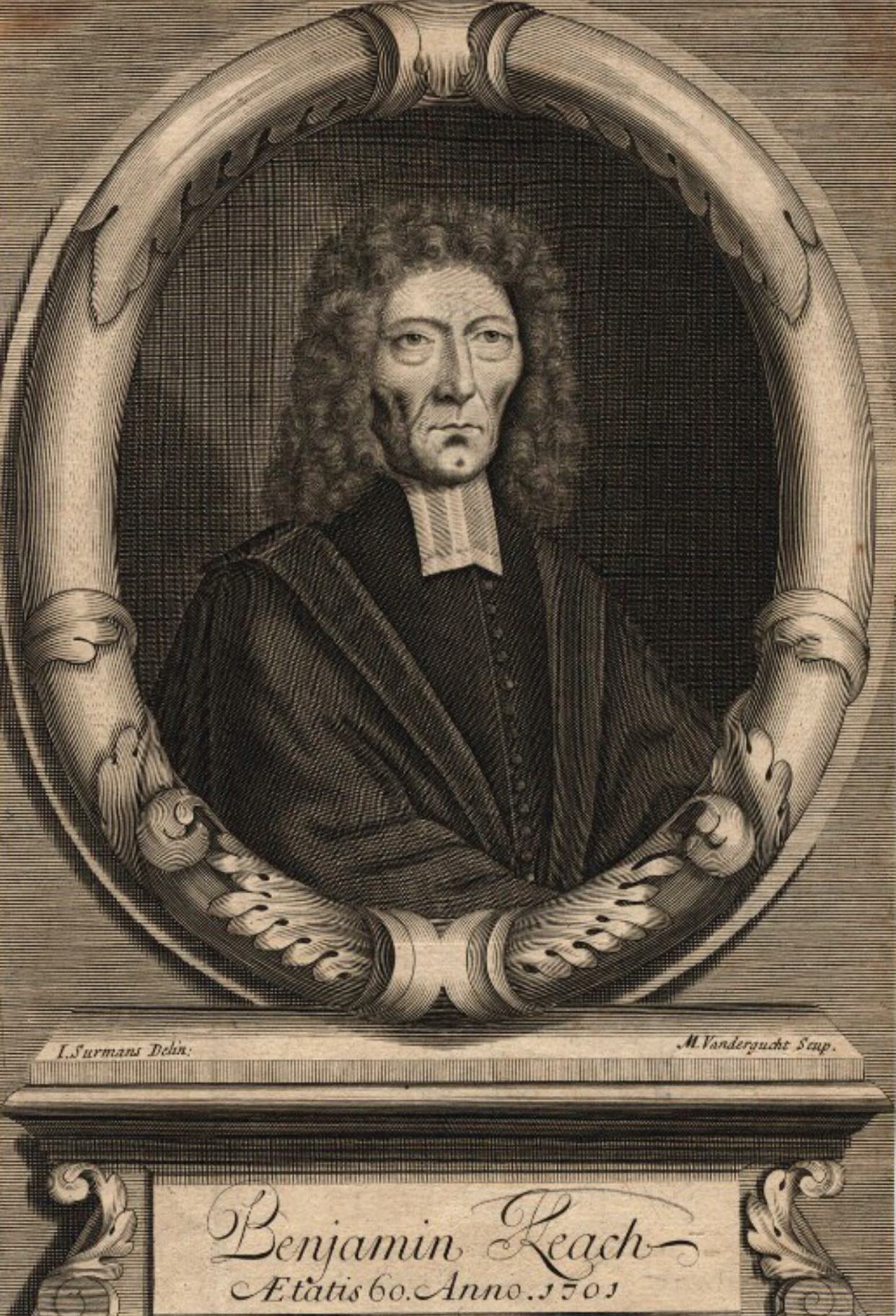
The main theological topic addressed in Benjamin Keach's article "Christ the Head" is the concept of Christ as the Head of the Church and its implications for believers. Keach systematically presents various metaphors that illustrate Christ's headship—ranging from His role as the Supreme authority over all principalities (Eph 1:21) to His position as the source of spiritual life and nourishment for the Church (Col 2:19). Each metaphor parallels a characteristic of the natural head with attributes of Christ, emphasizing His authority, sustenance, and protective love for His body, the Church. The article extensively references Scripture, including 1 Corinthians 11:3 and Colossians 1:18, to assert that Christ's headship conveys His supremacy, intertwined relationship with believers, and His role as a mediator. The practical significance is profound, as it invites the Church to recognize their dependence on Christ and fosters an understanding of their unity and identity in Him, which serves to encourage believers in their faith journey and communal life.
Key Quotes
“The Son of God is never sick but always in a capacity not only to help a sick body on earth but also against all disease much more permanent than the angels of God dwelling where sickness cannot approach.”
“Jesus Christ as a public Person and Head of his church is Receiver-general and common treasury of the whole body.”
“The Son of God doth transmit or cause be transmitted all the supplies of the mystical body whether it be peace of conscience ease for soul-pains.”
“Because I live you shall live also.”
What does the Bible say about Christ as the Head of the Church?
The Bible teaches that Christ is the Head of the Church, symbolizing His authority, guidance, and provision for His body.
Christ's role as the Head is not only authoritative but also nurturing. Just as the head governs and provides for the body, Christ ensures that His Church receives all necessary spiritual nourishment and comfort through His Spirit. He transmits grace and strength to His members, enabling them to function and grow in unity and holiness. Thus, understanding Christ as the Head is essential for appreciating the Church's identity and mission, as every believer is intimately connected to Him, receiving life and vitality from Him.
How do we know that Christ is the Head of all principalities and powers?
Ephesians 1:21 states that Christ is far above all rule, authority, power, and dominion, confirming His position as the Head over all principalities and powers.
Moreover, Colossians 2:10 reinforces this teaching by asserting that believers are complete in Christ, who is the head over every power and authority. This indicates that Christ's headship encompasses not only the Church but also extends to all creation, including angels, principalities, and powers. This assurance fosters confidence in the Church's mission, for it is governed by the victorious Head who has overcome all forces of darkness.
Why is Christ's headship important for Christians?
Christ's headship is vital for Christians as it ensures guidance, protection, and dependency on His grace and strength.
Additionally, the concept of Christ as head provides comfort and security. Just as a head is the source of direction and coordination for the body, Christ ensures that all parts of His body operate according to His will. This connection also implies a relational aspect—Christ loves and cares for His Church, having sacrificed Himself for its redemption. Therefore, understanding His headship encourages Christians to stay in union with Him, reinforcing their identity and purpose within the body of Christ.
CHRIST THE HEAD
"Not holding the Head," Col 2:19.
THE Son of God is very often in the holy scriptures called an Head, and may be so for divers considerations.
1. In respect of angels, he is the Head of all principalities and powers, Eph 1:21.
2. In respect of man, the whole race of man; the Head of every man is Christ, 1Co 11:3.
3. In respect of the powers of the world; he is the Head of kings and princes, and all the powers of the earth.
4. He is the Head of the Gospel-building: "The stone which the builders rejected, the same is become the Head-stone of the corner," Ac 4:11.
5. He is the Head of the body, the church, which alludes to a natural Head, and doth agree therewith in divers respects; of which take these examples, Eph 1:22; Col 1:18.
METAPHOR
I. The Head is the highest part of the body, more loftily placed than all the rest of the members.
PARALLEL
I. The Son of God, as he was higher by birth than men, yea, than the greatest of men, kings, and mighty potentates of the earth, &c., so is he by place and office: "God hath anointed him with the oil of gladness above all his fellows, and set him over the works of his hands," Heb 1:9.
METAPHOR
II. The Head is the seat of the senses. There is the eye to see, the ear to hear, the organs to smell and taste, by which things are truly distinguished, even the good from the bad, for the benefit of the whole body.
PARALLEL
II. The Son of God, the mystical or spiritual Head, is the seat of the spiritual senses. There is the clear seeing eye, the perfect hearing ear, the pure, true, and infallible taste, by which things are distinguished aright, the good from the bad, for the benefit of the whole body of the church.
METAPHOR
III. The Head is the common treasury of the whole man; whatsoever comes is lodged there for the rest of the members.
PARALLEL
III. Jesus Christ, as a public Person, and Head of his church, is Receiver-general, and common treasury of the whole body. Whatsoever came originally from God, for the good and benefit of the church, is lodged in Christ as Mediator, and Head of his church. As David said, "All my springs are in thee," Ps 87:7, so may the Church say of Christ, "We beheld his glory, as the glory of the only-begotten Son of God, full of grace and truth," Joh 1:14. "It pleased the Father, that in him should all fulness dwell," Col 1:19.
METAPHOR
IV. The Head doth transmit, or cause to be transmitted, by way of communication, all the supplies accruing to all other parts of the body, whether it be ease from pain, by application of comfort, &c.
PARALLEL
IV. The Son of God doth transmit, or cause be transmitted, by way of communication, all the supplies of the mystical body, whether it be peace of conscience, ease for soul-pains, by an application of his blood, and Spirit to comfort. It is by him, that the whole body, by joints and bands, have nourishment admistered one to another, as knit together in all parts, and increasing with the increase of God, Col 2:19. "Of his fulness have all we received, and grace for grace," Joh 1:16.
METAPHOR
V. The Head is the very fountain of strength, and cunning policy, so signified concerning the serpent: "He shall bruise thy Head," &c., Ge 3:17.
PARALLEL
V. The Son of God is the fountain of strength to his church; it is said, "All power is given to him," Mt 28:18. "I can do all things, through Christ that strengthens me," Php 4:13.
METAPHOR
VI. The Head is the place where burdens are carried, &c. Three baskets were on the baker's Head, Ge 40:16.
PARALLEL
VI. Jesus Christ was a man of labour, that carried our burdens for us in divine respects: the burden of temptations from Satan and the world fell upon him; the burden of persecution, even to death itself. "The Lord laid on him the iniquities of us all," Isa 53:6.
METAPHOR
VII. The Head is the seat of sorrow; there it is received and centred, Ge 42:38.
PARALLEL
VII. The Lord Jesus was a man of sorrows, and acquainted with grief, Isa 53:3-4. There was no sorrow like his, it was heaped upon him even to perfection.
METAPHOR
VIII. The Head receives the hand of blessing from the Father, Ge 48:18.
PARALLEL
VIII. The Lord Jesus is the man of God's right-hand, made strong for himself, upon whom the blessing is conferred by the Father, as a token of good to the whole church: "In him all the families of the earth are blessed," Eph 3:15.
METAPHOR
IX. The Head receives the consecration of God, both in case of Nazarite and high-priest, Le 21:10. The anointing with oil (or the holy unction) was upon the Head, whereby the whole man became sanctified, and set apart for God, Nu 6:7.
PARALLEL
IX. Christ, the holy and spiritual Head, received the consecration of God; for he was filled with the Holy Ghost from the womb, and as a perfect Nazarite continued separate until his baptism, at which, time the holy anointing being upon him in a visible manner, did furnish him for his ministry, and fit him to be a Priest unto God; this holy unction descended on him, as it did on the Head of Aaron, not only drenching his beard, but all the parts of his body also, even to the skirts of his garment, "Say ye of him whom the Father hath sanctified and sent into the world," &c., Joh 10:36, "Who through the eternal Spirit offered himself to God."
METAPHOR
X. The Head beareth the glory, whether it be the holy mitre, and sacred crown, appertaining to the priest, Ex 29:6; or the royal diadem appertaining to secular princes, and crown of gold, Ps 21:3.
PARALLEL
X. The Son of God not only beareth the glory of priesthood, but the highest glory of his Father's house, which consists of Kingships, &c. "Thou art a priest for ever, &c., We see Jesus made a little lower than the angels, &c., crowned with glory and honour," Heb 2:7,9; 5:6.
METAPHOR
XI. The Head is the principal object of envy and fury, most threatened and struck at, and receives the signs of death. Jezebel threatened the Head of Elisha, 2Ki 6:31. The wife of Heber struck at the Head of Sisera, Jg 5:26. The beast appointed for sin-offering was to have hands laid upon the Head; this was a sign of death.
PARALLEL
XI. Christ was the principal object of envy and hatred. The devil envied him, the Jews hated him without cause, Herod threatened him. One while they waited to kill him; at another time they led him to the brow of the hill, that they might cast him down headlong to destroy him; at last they came and laid their hands upon him in the garden, where he received the sign of death, after his most bitter agony; and was soon after offered up on the cross; as a public sacrifice: "He died for our sins, according to the scriptures. Christ our passover is sacrificed for us."
METAPHOR
XII. The Head is the subject of humility. When men have been much affected with some great thing, they put earth upon their Heads. 1Sa 4:12.
PARALLEL
XII. The Lord Jesus was a subject of great humility, much affected with God's providences, and men's wickednesses. He wept when Lazarus died. Christ wept, when the Jews rejected him to their own destruction, Lu 19:41, and, as Publius Lettius saith of him, he was never seen to laugh, but often to weep. The devil, Herod, Pontius Pilate, with the Jews, were not content to persecute and drive the Son of God to corners: but after they had agreed with Judas to betray him, they endeavoured, as much as lay in them, to take this blessed Head off from his mystical body; nothing would satisfy them, till they had slain the Lord of life and glory.
METAPHOR
XIII. But notwithstanding all, the Head is the glory of the man.
PARALLEL
XIII. And so is Jesus Christ the glory of God, the glory of his church. She glories in him: "His Head is as the most fine gold." "He is altogether lovely. This is my beloved, and this is my friend, O! daughters of Jerusalem," Song 5:16.
METAPHOR
XIV. The Head showeth the greatest signs of pity and sympathy to the poor, distressed, and afflicted members.
PARALLEL
XIV. Christ, being in all things like unto us, sin only excepted, hath showed no small signs of pity and sympathy, as one touched with our infirmities, as appears both before he left the world, and since. 1. He comforts them by good words and promises; he will not leave them comfortless, but will come to them. 2. He assureth, that he would send another Comforter, the Holy Spirit. 3. He prays the Father to take them into his care and protection. 4. He cries out from heaven, when violence is offered to them: "Saul, Saul, why persecutest thou me," &c., Joh 14; 16; 17; Ac 9:4.
METAPHOR
XV. The Head is the governing part of the whole man; the eyes, the ears, the hands, the feet are all governed by the Head.
PARALLEL
XV. The Son of God, as Head of the Church, hath the government on his shoulders: his members hear his voice, and keep his commandments, and his commandments are not grievous unto them.
METAPHOR
XVI. The Head loves the body that belongs to it, and is concerned night and day for its prosperity.
PARALLEL
XVI. Jesus Christ loves his Church, yea, all his members. He died to save and redeem them, he shed his blood to wash and sprinkle them, and went to heaven to prepare a place for them, and is concerned both night and day for their prosperity and welfare: he will come again from thence to solemnize the glorious marriage, and receive them unto himself, that where he is, there they may be also. "I love them that love me." "He gave himself, that he might redeem us from all iniquity." "He hath loved us, and washed us from our sins with his own blood," Re 1:5. "I go to prepare a place for you. If I go away, I will come again, and receive you unto my Father, that where I am, you may be also."
METAPHOR
XVII. The Head receiveth reverence and respect, love and honour, from the body and the members.
PARALLEL
XVII. The Son of God receiveth reverence and respect, love and honour from the Church, and all its members, when others despise him, and account him an impostor and deceiver. But the church says, he is the Son of God, both Lord and Christ, Lord of Glory, Lord of all the princes of this life, the Head of angels, the choicest and chiefest of ten thousand: "Whom having not seen, they love; and though now they see him not, yet believing, they rejoice with joy unspeakable, and full of glory," 1Pe 1:8. He is precious in their esteem: his name is as ointment poured forth.
METAPHOR
I. The natural Head is joined but to one numerical and physical body.
DISPARITY
I. The Son of God, the mystical Head, is joined to many numerical and physical bodies: he is not only head of angels, even of all principalities and powers, but of all men in some sense; and to the Church, and every true member thereof, in a more special and peculiar sense; "I would have you to know, that the Head of every man is Christ, and he is the Head of the Church, the fulness of him that fills all in all.
METAPHOR
II. The natural head is joined to the physical body, by fleshly bonds and ligaments; veins and sinews, nerves and arteries, &c.
DISPARITY
II. Jesus Christ is joined to the mystical Head, by spiritual and more lasting bonds; as the bond of voluntary choice, or promise, and invisible union. "Ye have not chosen me, but I have chosen you. Because I live, you shall live also, that they also may be one, as thou O Father, and I am one. I in them, and thou in me, that they may be made perfect in one."
METAPHOR
III. The natural Head is sometimes sick, being liable to many distempers of very dangerous consequence, as apoplexies, &c., and, being so, it cannot help the body.
DISPARITY
III. The Son of God is never sick, but always in a capacity, not only to help a sick body on earth, but also against all disease; much more permanent than the angels of God, dwelling where sickness cannot approach: "Neither shall there be any more sickness or pain."
METAPHOR
IV. A natural Head doth many times fall asleep, and so becomes insensible, and incapable of securing its body and members, at that juncture of time.
DISPARITY
IV. But the Son of God is the Angel of God's presence, and made the keeper of Israel, who neither slumbers, nor sleeps.
METAPHOR
V. A natural Head is weak, and wants help itself; for there is no man so wise, but may receive additions from others, and doth so in all arts and sciences: yea, the angels themselves have made known to them by the Church, the manifold wisdom of God, and are in some respects charged with folly.
DISPARITY
V. The Son of God is not weak, wants no help from other men, in respect of any arts or sciences whatsoever: for if the first Adam had such strength of wisdom and knowledge as to give names to all things, suitable to their natures, who was but earthly; much more the second Adam, who was the Lord from heaven. "In whom are hid all the treasures of wisdom and knowledge."
METAPHOR
VI. A natural Head may afford some small help to the body, but cannot bless what it affords.
DISPARITY
VI. The Son of God can not only afford suitable help to the body, and members, but can bless the help to them, bless society and communion, bless word and sacraments, bless lenitives and corrosives, rod and staff, make all things work together for good, Ro 8:28.
METAPHOR
VII. A natural Head may be broken, dashed in pieces, and lose its power of helping the body, and members.
PARALLEL
VII. The Son of God, though he was hard laid to, and much struck at, by the powers of darkness, yet could they never reach high enough to break his head, to dash him and destroy his power, (to help his people in time of need) but were destroyed themselves in the very attempt; "He spoiled principalities." Whoso shall fall upon this Head of the corner, shall be broken to pieces. "He bruised the head of the combatant," Ge 3:16.
METAPHOR
VIII. A natural Head may die and lie by the walls. Where is then its help?
PARALLEL
VIII. The Son of God hath passed through the gates of death, hath conquered him that had the power of death, and can never die, death hath no more dominion over him: he ever lives to make intercession for the saints; lives for evermore.
INFERENCES.
1. This showeth the great love and goodness of God in giving such a Head.
2. The great love of Christ, and his wonderful condescension in stooping so low, as to become a Head to poor mortals.
3. What a happy condition the Church and members of Christ are in. (1.) Interested in the same love with the Head. (2.) Under the same degree of election with the Head. (3.) Allied to the same relations, interested in the same riches, and assured by membership of the same life and immortality in the world to come: "Because I live, you shall live also."
4. Affords a very great motive to all men to seek union and membership with him, because as he is, so shall they be also hereafter in the next state: "When he shall appear, we shall be like him," 1Jo 3:2.

Comments
Your comment has been submitted and is awaiting moderation. Once approved, it will appear on this page.
Be the first to comment!