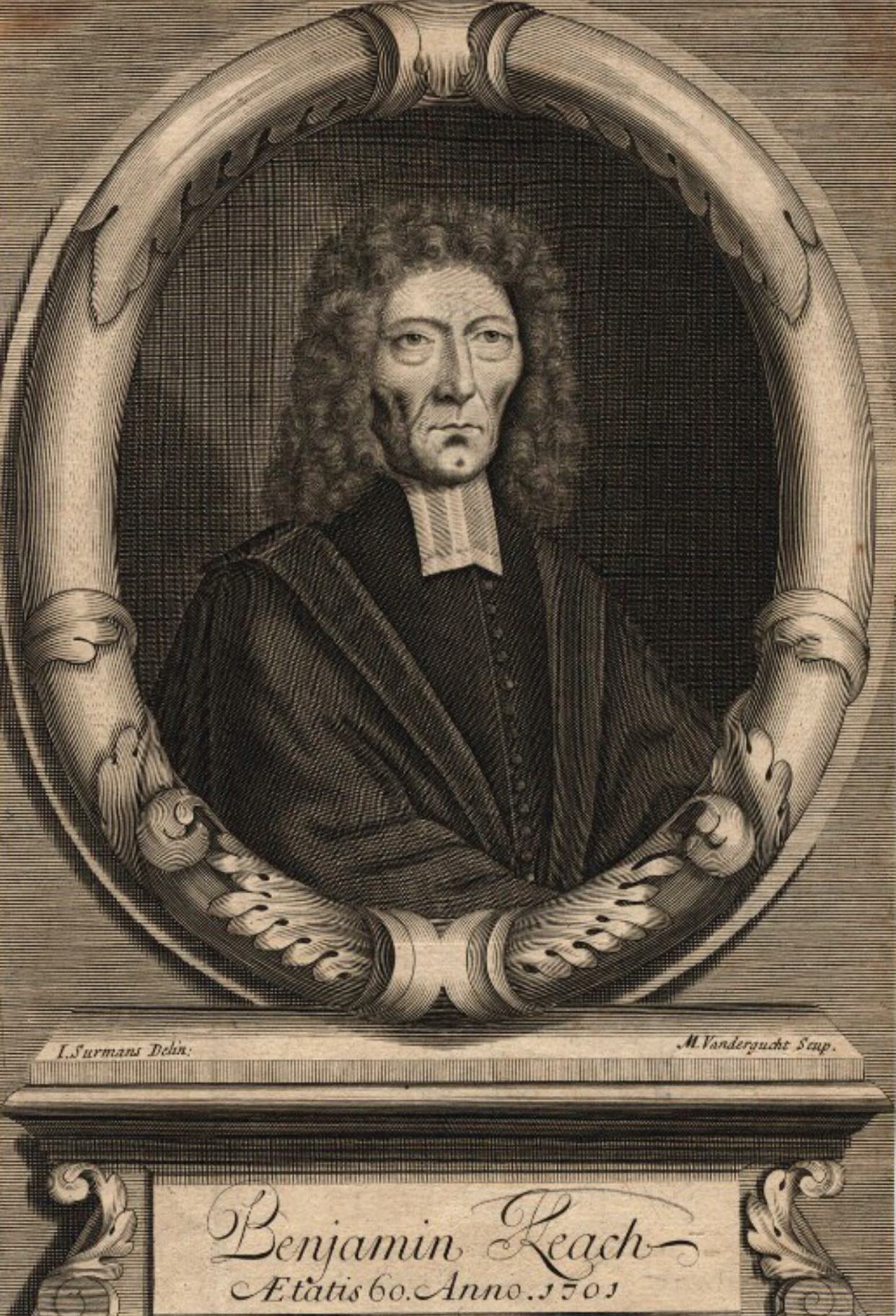
The article "Christ a Garment for Sanctification" by Benjamin Keach examines the metaphor of clothing as it relates to the sanctification of believers through Christ. Keach articulates that just as physical garments cover and protect the body, so too does putting on Christ cover the believer’s spiritual nakedness and empower them with holiness. Key Scripture references include Romans 13:14 and Ephesians 4:22-24, which emphasize the necessity of rejecting sin and embodying the virtues of Christ. The doctrine’s significance lies in the assertion that true sanctification cannot be achieved apart from a conscious choice to "put on" Christ, which encompasses both His righteousness for justification and His example for holy living. The article encourages believers to recognize their identity in Christ and to actively pursue holiness as a reflection of their new status.
Key Quotes
“The Lord Jesus Christ is a cover for the soul every man's nakedness and deformity appears that hath not on this spiritual Garment.”
“Before a man can put on the Lord Jesus Christ and be clothed with the Garment of holiness he must put off the abominable filthy cloaks and covers of wickedness.”
“By putting on of Christ in a way of faith and holiness the soul is defended from the checks and smarting pricks of conscience.”
“Sinners will have none of Christ though they are naked without him they will not put him on will not be persuaded to cover their shame.”
What does the Bible say about putting on Christ for sanctification?
The Bible encourages believers to put on the Lord Jesus Christ as a spiritual garment for sanctification (Romans 13:14).
Romans 13:14, Ephesians 4:24
How do we know that sanctification through Christ is true?
Sanctification through Christ is affirmed by Scripture and the transformative experience of believers (Ephesians 4:22-24).
Ephesians 4:22-24, Romans 8:13
Why is holiness important for Christians?
Holiness is vital for Christians as it reflects their transformation in Christ and their distinction from the world (1 Peter 1:15-16).
1 Peter 1:15-16, Hebrews 12:14
What does it mean to put off the old man and put on the new man?
Putting off the old man and putting on the new man signifies a transformation and renewal of identity in Christ (Ephesians 4:22-24).
Ephesians 4:22-24, Colossians 3:8
CHRIST A GARMENT FOR SANCTIFICATION
"But put ye on the Lord Jesus, and make no provision for the flesh" &c., Ro 13:14.
In this text are two parts:
1. An Act.
2. An Object.
I. An Act, endusasqe, it is a metaphor taken from putting on of Garments, a phrase used by the Apostle often in reference to the new man, Eph 4:24. In reference to the spiritual armour, Eph 6:11. In reference to acts of mercy, Col 3:12. And here, in reference to the application of Jesus Christ, in respect of sanctification. From the scope of the text it is evident the apostle intends Gospel holiness, he presses the saints at Rome to a godly life, and not only to walk holily, but to draw all power of holy walking from Christ, so as to be clothed with the virtues and graces of his Spirit.
METAPHOR
I. Garments are for the covering of the body, they hide nakedness and deformity.
PARALLEL
I. The Lord Jesus Christ is a cover for the soul, every man's nakedness and deformity appears that hath not on this spiritual Garment, Re 3:18.
METAPHOR
II. Garments come not naturally, but are prepared and made fit for us.
PARALLEL
II. Naturally we have no righteousness, that is either accepted of God, or a suitable cover for the soul, Ro 3:12; this spiritual Garment is wrought by the Spirit, and made fit for us, Ps 45:13-14
METAPHOR
III. Garments are worn only in some countries, by civilized nations and people; some barbarian and heathenish men and women go naked in some nations.
PARALLEL
III. The Lord Christ is put on for a Garment or spiritual clothing, by those nations and people only, where Christianity is received, and not by many there neither; some are like brutes and heathenish people, naked, without Christ and true holiness, Mt 7:13-14; Lu 12:22.
METAPHOR
IV. Before new Garments can be put on, the old, defiled, and overworn Garments must be put off.
PARALLEL
IV. Before a man can put on the Lord Jesus Christ, and be clothed with the Garment of holiness, he must put off the abominable filthy cloaks, and covers of wickedness, he must be stript of his filthy rags, that he may be clothed with the Spirit and graces of Christ, "Put off the former conversation, the old man, and put on the new man, which after God is created in righteousness arid true holiness, Eph 4:22-24; Col 3:8.
METAPHOR
V. Garments are of great utility in respect of defence, they secure us from the pricks and scratches of bushes and thorns, and from many bruises and rubs, and other hurts, which nakedness exposes to.
PARALLEL
V. By putting on of Christ in a way of faith and holiness, the soul is defended, from the checks and smarting pricks of conscience, from the fiery darts of Satan, and from the killing power of the law, and the wrath of God, Ac 24:16; Eph 6:11; 2Co 3:6.
METAPHOR
VI. Garments are for keeping of the body warm: (what should we do who live in cold countries, were it not for clothes and useful Garments.) "She is not fearful of the snow, for all her household are clothed in scarlet."
PARALLEL
VI. This blessed Garment keeps the soul warm; hereby saints become fervent in spirit and zealously affected. If we have any spiritual heat in us, we must attribute it to Christ: naturally we are as cold as that child was when his spirit was departed, 2Ki 4:34.
METAPHOR
VII. Garments tend to the preservation of health; the neglect of putting them on, many times brings sickness, sometimes death.
PARALLEL
VII. The graces of Christ and true holiness are the only preservative of the inward man from spiritual sickness: by putting them on, and leading of a holy life, we abide in health; and those who neglect to put on these Garments, are exposed to all manner of soul-diseases, which end in eternal death, Ps 119:11; Ro 8:13.
METAPHOR
VIII. Garments are used for distinction as:
1. They distinguish one sex from another, the man shall not put on the apparel which appertaineth to the woman.
2. Garments also distinguish the several ranks and qualities of men, "Those that are clothed in soft raiment are in king's houses," Mt 11:8.
3. By the habit or Garment we do distinguish the people of one nation from another, Zep 1:8.
PARALLEL
VIII. The spiritual Garment makes a distinctinction:
1. Holiness distinguisheth believers from unbelievers, the godly from the wicked: "Who hath made thee to differ from another?" "If a man be in Christ, he is a new creature," 2Co 5:17.
2. This glorious Garment shows that the righteous are more excellent than their neighbour: as it was said of "Jabez, he was more honourable than his brethren," 1Ch 4:9; Pr 12:26; it makes it appear that the godly are king's children, having princely robes upon them, 1Co 4:8.
3. By a holy Christ-like conversation, the people and saints of God are known to be people of another country, citizens of another city, "Ye are not of this world."
METAPHOR
IX. Garments are of a comfortable and refreshing nature, and of excellent use to them who put them on.
PARALLEL
IX. This spiritual Garment is of a most excellent, sweet, comforting and refreshing quality, the virtue whereof is not, cannot be felt not apprehended by believers.
METAPHOR
X. Garments answer not their end in making, neither are they of use till put on.
PARALLEL
X. Men put not Christ to that use for which he came into the world, till they put him on for Sanctification and holiness, neither will he be otherwise of saving benefit unto them; "He that believeth not, shall not see life;" "Without holiness no man shall see God," Tit 2:14; Joh 3:36; Heb 12:14.
METAPHOR
XI. Some sorts of Garments were significations of grief and sorrow. Mordecai put on sackcloth, so in Joe 1:13.
PARALLEL
XI. Such as have put on this Garment, do abundantly demonstrate their great sorrow and grief for sin; "Godly sorrow worketh repentance," 2Co 7:10, "Ye shall be sorrowful," Joh 16:20. All such as put on Christ for Sanctification, are clothed with humility, 1Pe 5:5.
METAPHOR
XII. Garments were also used to testify joy; as appears in the case of the prodigal: "Bring forth the best robes and put on, and put a ring on his finger," Lu 15:22.
PARALLEL
XII. Such who are clothed with the robes of righteousness, have on them the beautiful Garments of salvation, Isa 61:10-11, which signifies, that they above all, have cause to rejoice; hence, saith the apostle, "As sorrowful, yet alway rejoicing," 2Co 6:10, "Rejoice in the Lord alway, and again, I say, rejoice," Php 4:4; 1Th 5:16.
METAPHOR
I. Material Garments are made by man.
DISPARITY
I. This Garment of holiness is wrought by the Spirit of God.
METAPHOR
II. Other Garments consist of matter, and are of such or such external shape, according to the party from whom they are made.
DISPARITY
II. This Garments consists of grace, divine virtues, and spiritual qualifications.
METAPHOR
III. Other Garments may be bought with money, and those likely who have most of it, have the best robes.
DISPARITY
III. This Garment may be had without money or price; it is true, Christ speaks of buying, &c., white Raiment, that buying, is free receiving: the prophet explains his phrase, Isa 55:1. No man hath any thing of worth or value to give for it; the gift of God cannot be purchased with money, the poor in spirit are better clothed than the poor.
METAPHOR
IV. Material Garments render a man or woman amiable only in the sight of man, &c.
DISPARITY
IV. This Garment renders a man or woman lovely in the sight of God. "The ornament of a meek and quiet spirit is in the sight of God of great price, 1Pe 3:4.
METAPHOR
V. Other Garments are the worse for wearing, by long and often using they will decay.
DISPARITY
V. This Garment the more and longer it is used, the better and more excellent it is: use makes perfect in godliness as well as in other cases, Heb 5:14; 2Co 7:1.
METAPHOR
VI. Other Garments at certain times are to be put off, or may be changed; as light or thin Garments for summer, and more substantial for winter, &c.
DISPARITY
VI. This Garment, (viz.) the robe of righteousness, is never to be changed nor put off day nor night, winter nor summer; we ought to be good and virtuous in sickness and health, at all times, in prosperity and adversity; "It is good always to be zealously affected in a good thing," Ga 4:18.
METAPHOR
VII. A man may part with or dispose of other Garments at his pleasure as he thinks fit, to his friends, or to such as want clothes.
DISPARITY
VII. This Garment, Christ and holiness, as a man cannot dispose of it unto others, so he ought not. No man hath so much grace as to furnish his friend with it; the "Wise virgins had no oil to give to the foolish," Mt 25:9, "What thou hast already, hold fast till I come," Re 2:25.
INFERENCES
I. We may from hence admire the excellencies of the Lord Jesus Christ, he is life, he is meat, hidden manna, he is drink; yea, he is all in all, and provides all for believers.
II. It shows the miserable state of those that are without true holiness, such, are naked. Now a naked man is exposed to the reproach of every eye, his shame appears to all, nakedness lays open to every storm, every shower wets, thorns prick them; piercing and nipping winds make those that are naked to shrink. The unconverted sinner hath the continual pricks and terror of his own conscience, and shall thereby be filled with horror and shame; much more when the arrows of the wrath of God begin to fly about his ears.
III. This demonstrates, that wicked men are mad, or beside themselves. None but distracted and barbarous men reject clothing. Sinners will have none of Christ, though they are naked without him; they will not put him on, will not be persuaded to cover their shame, turn from their evil ways, and accept of a robe of righteousness.
IV. Observe, that none are so well clothed, so richly arrayed, as believers, as the godly and faithful in Christ Jesus.
V. Here is good news for the poor, and such are naked; here is a glorious Garment ready, if they will put it on.
VI. That the ungodly would be persuaded to put on Christ.
Ques. But some may say, what is it to put on Christ?
Answ. 1. Christ is to be put on for justification; but in that sense those saints at Rome had put him on before.
2. Christ is to be put on by way of imitation; this refers to sanctification: we must follow his example in his holy and gracious life; we must apply his righteousness for our justification by faith, and walk by the glorious pattern he hath left, to teach us to express his virtues and excellencies in a course of sanctification, and new obedience." [1] If Christ be not put on in both these respects, he will profit none to salvation.
[1] See Christ the saints' Wedding-garment.
VII. What will become of them, who instead of putting Christ on, and following of him, put the devil on; and instead of expressing his excellencies, they express the vices of the devil, and abominations of their own base hearts?
VIII. From hence let saints be cautioned, from defiling of their Garments; a small spot is quickly seen in a white vesture. Those only who defile not their Garments, shall "walk with Christ in white," Re 3:4.
Lastly. Let all take heed to keep their Garments, for otherwise men will at one time or other see their shame, Re 16:15.

Comments
Your comment has been submitted and is awaiting moderation. Once approved, it will appear on this page.
Be the first to comment!