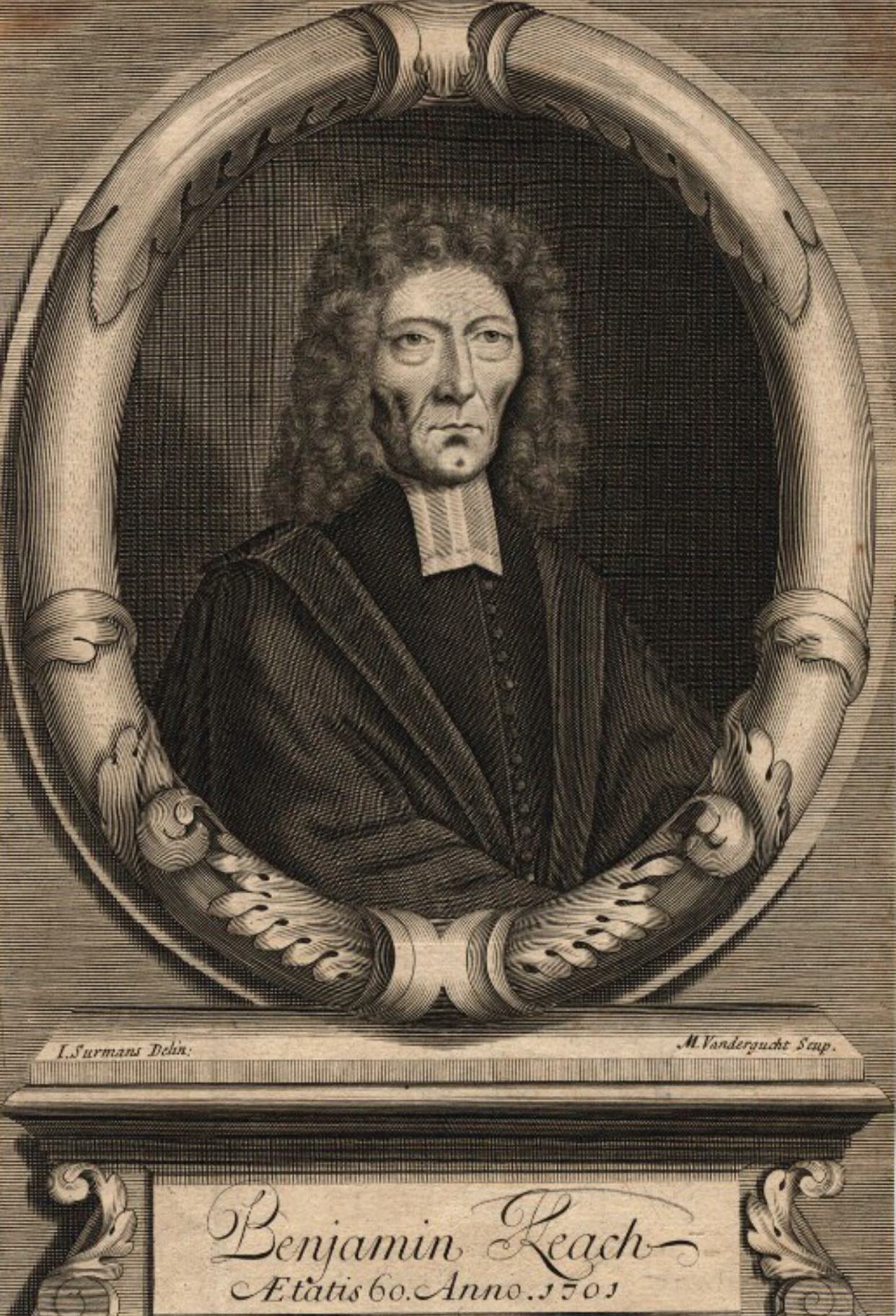
In "Christ a Lamb," Benjamin Keach explores the theological significance of Christ being referred to as the Lamb of God, emphasizing His role in atonement and sacrificial love. He argues that Christ fulfills the typology of lambs from the Old Testament, showcasing attributes such as innocence, meekness, and sacrificial purpose. Keach draws upon various Scripture passages, including John 1:36, 1 Peter 1:19, and Isaiah 53:7, to illustrate how Christ embodies the qualities of a lamb—innocent and without blemish, enduring suffering without retaliation, and offering Himself as a sacrifice for the sins of humanity. The practical implications of this doctrine reinforce the notion of Christ as the ultimate sacrifice and provide guidance for believers on how to emulate His humility, patience, and willingness to suffer for others.
Key Quotes
“Christus vocatur Agnus propter immolationem pro peccatis totius mundi factam quam ut typi praefigurarunt Agni in V T immolati.”
“The Lamb is a very innocent and harmless creature Bullinger calls it a symbol of innocency.”
“He is brought as a Lamb to the slaughter and as sheep before her shearers is dumb so he opened not his mouth.”
“If the Lord Jesus was such a harmless innocent silent and delightful Lamb how doth this set out and aggravate the horrid sin of the Jews and others who put him to death.”
What does the Bible say about Christ as a Lamb?
The Bible describes Christ as the Lamb of God, emphasizing His innocence and role as a sacrifice for sin.
John 1:36, 1 Peter 1:19, Isaiah 53:7
How do we know that Christ's sacrifice is sufficient for sin?
The sufficiency of Christ's sacrifice is confirmed through Scripture, demonstrating His innocence and divine appointment.
Hebrews 7:26, Hebrews 12:24
Why is understanding Christ as the Lamb important for Christians?
Understanding Christ as the Lamb is crucial as it reflects His nature and the significance of His atoning sacrifice.
John 1:36, Isaiah 53:7, Philippians 2:5
CHRIST A LAMB
"Behold the Lamb of God!" Joh 1:36.
"As a Lamb without blemish," &c., 1Pe 1:19.
"I beheld, and lo! a Lamb stood upon Mount Zion" &c., Re 14:1.
IN the two first texts the Greek word is amnov, compounded of a privativum, and mnov, robur, which signifies strength: that is, not strong. The article 'o (as Erasmus hath observed out of Chrysostom and Theophylact) is emphatical, distinguishing him from the typical Lamb; and denotes also relation, for it puts in mind of the prophecies of Isaiah and others, used Ac 8:32. The word in Re 14:1, is arnion, which is a diminutive of arnov, and signifies Agnellus, a little Lamb, [1] tener adhuc et immaturus, tender, &c. Joh 21:15.
[1] Gent. in Harm.
How, and in what respects Christ may be called a Lamb, [2] follows.
[2] Christus vocatur Agnus propter immolationem pro peccatis totius mundi factam, quam ut typi præfigurarunt Agni in V. T. immolati; tum propter mansuetudinem, patientiam, innocentiam, beneficentiam, &c. Glassius.
METAPHOR
I. The Lamb is a very innocent and harmless creature. Bullinger calls it a symbol of innocency. It doth no wrong or injury to any.
PARALLEL
I. JESUS CHRIST is of a sweet, quiet, and harmless nature and disposition: "Such an High-priest became us, who is holy, harmless, undefiled, separate from sinners," &c. Heb 7:26.
METAPHOR
II. The Lamb is made a prey of, and often worried by dogs, wolves, and other evil beasts.
PARALLEL
II. The Lord Jesus was preyed upon by devils and wicked men, who continually worried him, like hungry and blood-thirsty wolves, lions, and ravening beasts, whilst he was upon the earth, Mt 4:2-3.
METAPHOR
III. The Lamb is a meek and patient creature, bearing wrongs, not seeking revenge upon them that strike and abuse him.
PARALLEL
III. The Lord Jesus with a meek and patient spirit bore all those vile and grievous wrongs, contradictions of sinners, and horrid blasphemies, in the days of his flesh, without seeking the least revenge upon them. Austin saith, he is compared to a Lamb because of his mildness, Heb 12:3; Mt 26:53.
METAPHOR
IV. The Lamb is silent, when brought to the slaughter, doth not cry, complain, nor strive, as other creatures do.
PARALLEL
IV. The Lord Christ was silent, when he was led to be crucified: "He is brought as a Lamb to the slaughter, and as sheep before her shearers is dumb, so he opened not his mouth," Isa 53:7. "He did not cry, nor cause his voice to be heard in the street."
METAPHOR
V. The Lamb is a lovely and very delightful creature; hence Uriah's wife is compared to it, 2Sa 12:3-4.
PARALLEL
V. Christ is the delight of the Father, very lovely in the eyes of saints and angels; nay, what was said of Titus Vespasion, may fitly be spoken of Christ, "He is the delight of mankind," Pr 8:30; Isa 42:1.
METAPHOR
VI. The Lamb is a contented creature; let the shepherd put it into what pasture he please, it grumbles not, but seems very well satisfied.
PARALLEL
VI. Christ was abundantly satisfied to become any thing, and do whatever the will of his Father was, though it was to be abased so low, as to be born of a poor virgin, to live in a mean condition, and to have nowhere to lay his head, whilst he abode in this howling wilderness, Heb 10:7; Joh 10:15,17-18; Php 2:7-8.
METAPHOR
VII. The Lamb is a clean beast, whose flesh God appointed for food, and the flesh of no beast, is more generally prized, especially at its first coming, than Lamb.
PARALLEL
VII. Christ was ordained of God to be the food of our souls; and there is no meat so sweet; or is so much prized by the godly, especially when they first receive him by faith, as this Lamb. "My flesh is meat indeed, and my blood is drink indeed," Joh 6:55. Whosoever hath fed spiritually on Christ, he desireth no better dainties.
METAPHOR
VIII. The Lamb was appointed under the law for sacrifice, it was to be taken out of the flock, to be severed from the rest, to be killed a he-Lamb, and without spot, was to be offered up to make an atonement, and the blood to be sprinkled, &c.
PARALLEL
VIII. Christ, the Lamb of God, is our only sacrifice. He was taken from among men, separated from sinners, truly man. He was a Lamb without blemish, no spot or stain of sin could be found in him. He was slain or offered up upon the cross, to make an atonement for the sins of his people; and his blood must be sprinkled or applied to our consciences by faith, Heb 8:13, 1 Pet. 17, 18, 19, and Heb 12:24.
METAPHOR
IX. Lambs are very profitable creatures, they enrich their owners; their fleece and skins are good for clothing. Also the[3] money of the ancient Patriarchs was called a Lamb, because the figure of a Lamb was on it. Abraham bought a field for an hundred pieces of silver or Lambs.
[3] xxx xx Chesitah, Nummus, sexta pars Denarii, Ge 33:19; Job 42:11; Jos 24:32. Nummus agni imagine signatus, doth signify both money and a Lamb. Leigh. Crit. Sac.
PARALLEL
IX. Christ enriches all that have interest in him, or can lay claim to this Lamb; and his righteousness is for our clothing. No money will pass for current (as it were) with God, but Jesus Christ. He is the saint's treasure; their estate and inheritance lies in Christ:"But of him are ye in Christ Jesus, who of God is made unto us wisdom and righteousness," &c. Isa 45:24; Jer 23:6; 33:16, Rey. xix. 8, 1Co 1:30.
METAPHOR
X. The Lamb is a small creature to other beasts, therefore the Hebrews call them XXXXX. Aben-Ezra apud Jobum, tenellam Pecudem, vel Agnellum interpretatur:[4] a small sort of cattle, or diminutive Lamb.
[4] Leigh Crit. Sacr. Job 42:12
PARALLEL
X. Christ made himself of no reputation. In respect of his humanity, he is called a worm, as annotators expound that in Ps 22:6, "I am a worm, and no man, a reproach of men, and despised of the people." He was small and despised in the eyes of the great heroes of the earth.
There are several great disparities between Christ and a Lamb, but we shall pass by them, and only take notice of two or three.
INFERENCES
I. IF the Lord Jesus was such a harmless, innocent, silent, and delightful Lamb, how doth this set out and aggravate the horrid sin of the Jews, and others, who put him to death!
II. And how doth it magnify the love and pity of God to us, that he should be pleased to part with this precious Lamb out of his bosom, to be made a sacrifice for our sins!
III. From hence also we may learn how to live in the world, not to be high-minded, and seek great things for ourselves. "Let the same mind be in you, that was also in Christ Jesus," &c. Php 2:5.
IV. Let us make him our example, when under suffering, and in the hands of wicked men, "Who when he was reviled, reviled not again;" let us not seek revenge, nor render evil for evil to any man, Ro 12:19; 1Pe 2:23.
V. Moreover, let us be contented, as he was, whatever it pleaseth the Father to exercise us with, or in what pasture soever he sees good to put us.
VI. And since he suffered so willingly for us, let us labour (when called thereunto) to lay down our lives for his holy Name sake.

Comments
Your comment has been submitted and is awaiting moderation. Once approved, it will appear on this page.
Be the first to comment!