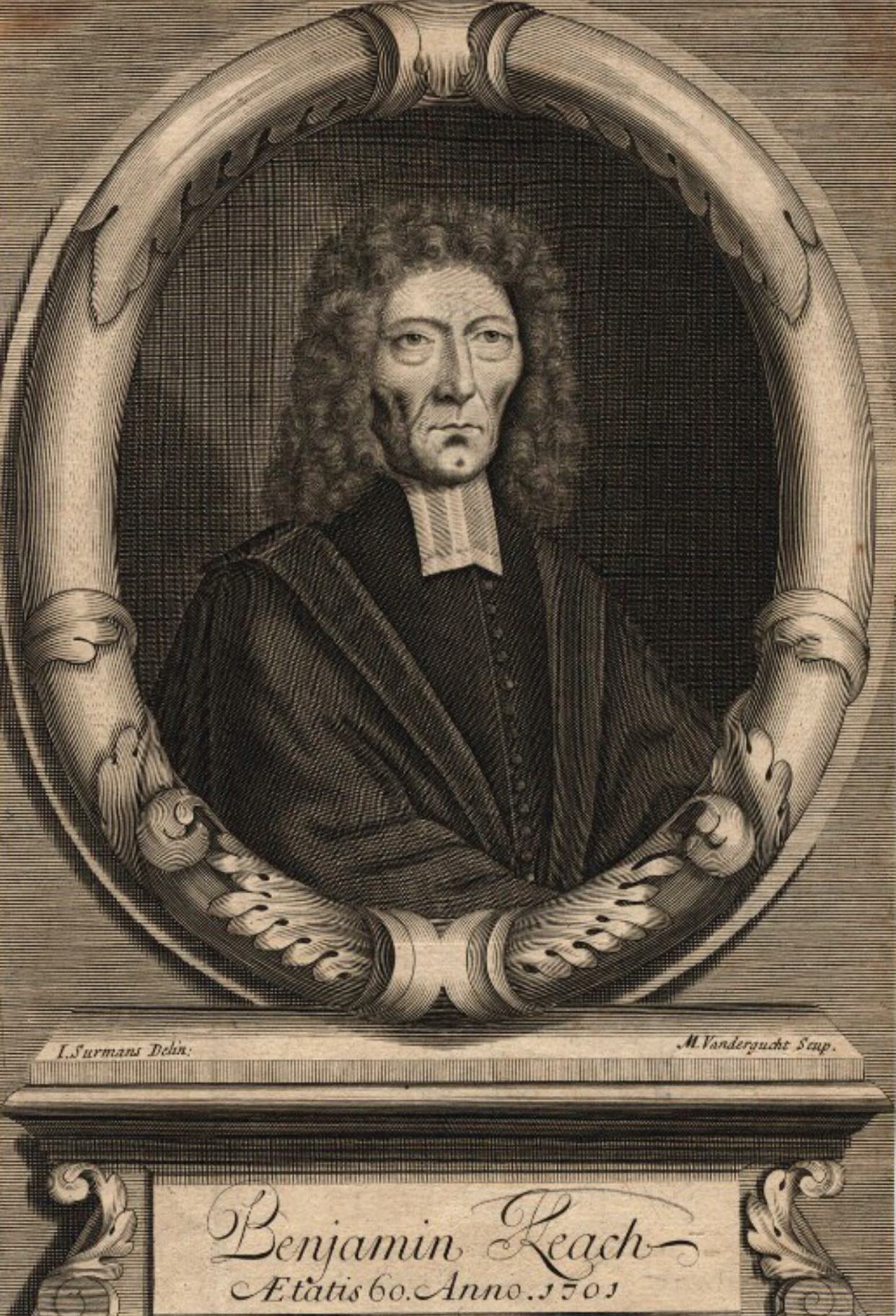
The article "Christ Compared to an Eagle" by Benjamin Keach explores the theological metaphor of Christ as an eagle, emphasizing His protective and nurturing nature toward His people. Keach draws upon various Scripture passages, such as Exodus 19:4 and Deuteronomy 32:11-12, to illustrate how the Lord, like an eagle, bears and nurtures His children through their trials and adversities. The author further explains that the eagle symbolizes Christ's swiftness, power, and ability to see into the hearts of men, paralleling attributes of Jesus such as His sovereignty and providential care over believers. This doctrinal portrayal underscores the significance of finding refuge, strength, and renewal in Christ amidst life's difficulties, reflecting a key aspect of Reformed theology regarding God's caring nature and the believer's reliance on His grace.
Key Quotes
“I have borne you on Eagles' wings; that is the Lord hath lovingly supported and cherished you as Eagles do their young.”
“The Lord Jesus hath strong love... which like two long wings he stretcheth out easily in the way of his gracious providences for the help and succour of his people.”
“Jesus Christ... when he utters his voice in anger... will cause all the inhabitants of the earth to tremble.”
“The Lord Jesus... teacheth all his people to be like himself as far as they are able and to mount up as with eagles' wings.”
What does the Bible say about Jesus compared to an eagle?
The Bible compares Jesus to an eagle to illustrate His strength, swiftness, and protective nature over His people.
Moreover, the eagle's ability to rise high and see far represents Christ's divine omniscience and authority. He sees the hidden motives of man's heart and is capable of delivering justice against evil. Jesus, as the great eagle, rescues His church from sin and grants them eternal security, demonstrating both tenderness and power as He leads them through this world into the next.
How do we know the doctrine of Christ's protection is true?
The doctrine of Christ's protection is affirmed in Scriptures such as Isaiah 46:3-4, where God promises to carry and support His people.
This doctrine is crucial for believers as it provides assurance of their security amidst trials and tribulations. Just as the eagle provides security for its young, Christ envelops His followers in His love and protection, guiding them through both physical and spiritual challenges. Therefore, the foundational belief that Christ protects His people is deeply embedded in Scripture, assuring believers of His unwavering commitment to their well-being.
Why is Christ being like an eagle important for Christians?
Christ's comparison to an eagle is important as it symbolizes His strength, swiftness, and nurturing care toward His people.
Moreover, the eagle's ability to rise high signifies Christ's exalted position after His resurrection. He is not only close to believers but also carries authority over the earth and the heavens, providing a source of hope and strength. Through these analogies, Christians are encouraged to rely on Jesus, much like young eagles depend on their parents, for support during spiritual growth. Such comfort and assurance bestowed by the Lord amplify the significance of the relationship believers have with Christ in their daily lives.
CHRIST COMPARED TO AN EAGLE
"Ye have seen what I did unto the Egyptians, and how I bare you on Eagles' wings, and brought you unto myself" Ex 19:4.
"As an Eagle stirreth up her nest, fluttereth over her young, spreadeth abroad her wings, taketh them, beareth them on her wings; so the Lord alone did lead him," &c. De 32:11-12.
"And to the woman were given two wings of a great Eagle, that she might fly into the wilderness," &c. Re 12:14.
SOME say, that the word aetov, Aquila, an Eagle, is derived of aissw, to be carried violently: others from an intensive a, and etov, which signifies a year, because it is lively, from whence came the proverb, Vivacior Aquila, livelier than an Eagle. Others say, that the Latin, Aquila, is derived ab aquilo colore, from its dun colour. For its swiftness and seldom returning, Job says, Job 9:26, "My days pass away as the Eagle," &c., that is, swiftly, and never to return. Because of its velocity and forcible flight, it denotes the quick invasion of an enemy, Jer 48:40; 49:22; Ho 8:1; Mic 1:16, which describes the greatness of the calamity.
"I have borne you on Eagles' wings," Ex 19:4; that is, the Lord hath lovingly supported and cherished you, as Eagles do their young; who bear them safe over craggy and dangerous places, see Jer 4:13; La 4:19. It is said, Ps 103:5, "Thy youth is renewed like the Eagle's;" that is, he hath strengthened thee so, as to go through all difficulties, &c.: Galatinus saith, that the Messiah is called an Eagle, Pr 30:19, (&c.)
But in the texts alleged, viz., De 32:12; Ex 19:4, (&c,) the Lord is compared to an Eagle, with respect to the protection and safety of his people, the swiftness of his deliverances, and his tender care and affection to them.
The great Eagle, Annotators tell us,[1] signifieth the Lord Jesus: and it seems to be an allusion to that flight of the Church from Egypt to Canaan, which she undertook not by her own counsel, but by the Lord's command; and performed not by her own strength, but by the Lord's. As the church of Israel fled from the dragon, Pharaoh, as he is called, Eze 29:3, so the Christian Church fled from the serpent or dragon here, with two wings of a great Eagle, Re 12:14.[2]
[1] Ainsworth, Wilson.
[2] Ainsworth.
Now, though I deny not but these scriptures refer to God the Father; yet may they as safely, and in the judgment of some, more properly refer to the Lord Jesus Christ. Stephen, speaking of Christ, saith, "This was he that was with the fathers in the wilderness, which spake to them in Mount Sinai," &c.
SIMILE
I. The Eagle is a royal bird,[3] the princess or queen of all the birds of the air.
[3] See Caryl on Job 39:30.
PARALLEL
I. Jesus Christ is the Prince of the kings of the earth, King of kings, and Lord of lords, Re 1:5, and Re 19:16. As the Eagle among birds, so Christ, both amongst men and angels hath the preeminence.
SIMILE
II. The Eagle is a very strong fowl; naturalists speak much of the Eagle in this respect: Eagles carry the prize, saith Pliny, both for honour and strength.
PARALLEL
II. The Lord Jesus Christ is called the Mighty God: "I have laid help on one that is Mighty," Ps 89:19. For strength he is compared to a lion. What is all human and natural power, to the strength and power of Jesus Christ!
SIMILE
III. The Eagle mounts up exceeding high, out of the reach or sight of men, Job 39:27.[4]
[4] Plin. lib. x. cap. 3.
PARALLEL
III. The Lord Jesus, after his resurrection, mounted up exceeding high, into the highest heavens, far out of the sight of man's natural eye, where he cannot be reached by wicked men or devils, Eph 4:12; Heb 7:26.
SIMILE
IV. The Eagle hath a very piercing eye: when she is on high, can see down to the earth, nay, behold the small fish in the sea.[5]
[5] Plin.
PARALLEL
IV. Jesus Christ hath a wonderful piercing eye, seeth not only from the highest clouds, whither the Eagle mounts, but from the highest heaven; can look into the secrets of every man's heart, even into the hell of wicked men's diabolical counsels, and can thoroughly see their bloody purposes and contrivances; although they dig never so deep, yet they cannot hide themselves from his omniscience, for he sees what they are doing.
SIMILE
V. The Eagle is a mighty swift creature: "My days are swifter than an Eagle." She is swift in pursuit of her prey, De 28:49; Job 9:25; 2Sa 1:23; Job 8:1.
PARALLEL
V. The Lord Jesus is swift when he comes to fight gainst the enemies of his Church, he is swift in the executing of his judgments, swift to deliver and help his people. See metaphor, Sun, Hart, &c.
SIMILE
VI. The Eagle, historians tell us,[6] fights with dragons and serpents and overcomes them.
[6] Plin. lib. x, cap. 4.
PARALLEL
VI. Jesus Christ, the spiritual Eagle, fought with that great red dragon the devil, and hath bruised the head of the dragon, Ge 3:15.
SIMILE
VII. The Eagle hath strong and long wings, which she easily spreads forth for the succour and help of her young, Eze 17:3.
PARALLEL
VII. The Lord Jesus hath strong love, enlarged and great affection, which like two long wings he stretcheth out easily in the way of his gracious providences, for the help and succour of his people; he shall arise with healing under his wings, Mal 4:2.
SIMILE
VIII. The Eagle bears and carries her young upon her wings, takes them, beareth them upon her wings, De 32:11-12.
PARALLEL
VIII. The Lord Jesus beareth and carrieth his faithful children upon the wings of his power and sovereign grace; thus he bare and carried Israel of old, "I have borne you upon Eagle's wings," "Hearken unto me, O house of Jacob, and all the remnant of the house of Israel, who are borne by me from the belly, which were carried from the womb; I will bear you, I will carry you," &c., Ex 19:4; Isa 46:3-4.
SIMILE
IX. The Eagle hides her young in high and mighty rocks, where her nest is, even in the same ragged place of inaccessible rocks.
PARALLEL
IX. The Lord Jesus hides his children in the secrets of the Almighty, that glorious Rock of ages: "Their place of defence shall be a munition of rocks," Isa 33:16. David knew what he did, when he fled to God for shelter: "Under the shadow of thy wings, will I make my refuge, until these calamities be overpast, Ps 57:1. See Refuge.
SIMILE
X. The Eagle's voice, naturalists tell us,[7] is so terrible, that when he is angry, he makes all living creatures to be afraid. Dracones audito clangore aquilarum, fugerunt in speluncas: the dragons when they hear the angry voice of the Eagles, fly into the dens to hide themselves.
[7] Wolfsang. Frantz. Hist. Animal, de Aquil. 325. 338.
PARALLEL
X. Jesus Christ when he utters his voice in anger, and rises up to the prey, he will cause all the inhabitants of the earth to tremble: "They will call to the hills and mountains to fall upon them, and to hide them from the face of him that sitteth upon the throne, and from the wrath of the Lamb," Re 6:16. Nay, the time will come, when the old dragon will be glad to fly into his den. The devils were afraid of him, when he came as a Lamb: "Art thou come to torment us before the time?" "Be wise now therefore, ye kings; be instructed, O ye judges of the earth: kiss the Son, lest he be angry, and ye perish from the way, when his wrath is kindled but a little. Blessed are all they that put their trust in him," Ps 2:10,12.
SIMILE
XI. The Eagle's way in the air cannot be known.
PARALLEL
XI. The way of Christ's love, wisdom, providence, &c., cannot be known or found out to perfection, Job 11:17; Eph 3:19.
SIMILE
XII. Historians say, the Eagle can look on the sun in its brightest splendour without being dazzled. She tries her young ones the same way, to see whether they be her true offspring; for if they cannot behold the sun, but wink, or their eyes water, she turns them out of their nest, and disowns them, as degenerates or bastards.
PARALLEL
XII. Jesus Christ hath a glorious and clear sight, can behold with open face the glory of the excellent Majesty, and the highest splendour and beauty of that immortal and inaccessible light, which no natural eye can approach unto. And although none of his people can see as he seeth, who is infinite in knowledge; yet those that pretend to be his offspring, and are not like him in grace, heavenly-mindedness, and holiness, nor endeavour after it, from that excellency they behold in it, Christ will utterly disown them, as being none of his seed or offspring, Php 2:5-6; 1Pe 1:16; Col 3:1.
SIMILE
XIII. The Eagle trains up her young to be like herself, and to mount up as she mounts.
PARALLEL
XIII. The Lord Jesus teacheth all his people to be like himself, as far as they are able, and to mount up as with eagles' wings, and to live on high, Isa 40:31.
SIMILE
XIV. The Eagle is very careful and tender of her young.
PARALLEL
XIV. So is the Lord Jesus of his people, Joh 21:15.
SIMILE
XV. Naturalists tell us,[8] the Eagle gives her young ones of her own blood, when she cannot get other blood for them to drink.
[8] Ælian. 1. 14. c. 14. See Caryl on Job 39.
PARALLEL
XV. The Lord Jesus suffered himself to be wounded for us; his hands and feet, yea, his very heart was pierced, that we might have his blood to drink in believing: "My blood is drink indeed," Joh 6:55.
SIMILE
XVI. The Eagle is very long-lived. The Greeks express her by a word signifying longevity. And some give the reason, not only from the excellent temperament of her body, but because she lives in such a pure air, free from all evil vapours, and noisome smells.
PARALLEL
XVI. The Lord Jesus Christ is not only long-lived, but he lives for ever, Re 1:18. He was from everlasting, and he will be to everlasting. He is the King eternal, the Father of eternity Isa 9:6.
METAPHOR
THE Eagle hath many evil qualities: she is neither fair nor comely, hath no sweet voice, nor is she good for food; but she is quarrelsome, preying, devouring, solitary, envious of others, proud and lofty, the plague and torment of all other birds or fowls of the air, an enemy to peace: she has horrible claws: feeds on serpents, fish, and carrion; snatching up geese, hares, lambs, &c. Gesner reports, that a certain Eagle's nest was found, wherein three hundred ducks, one hundred and sixty geese, forty hares and many fishes. An Eagle is very crafty: she fills her wings with dust, and gets upon a stag's horns, and beating the dust and sand into his eyes, she blinds him, and then soon conquers him. She carries shell-fish on high, letting them fall upon the rocks to break them, &c.
DISPARITY
IN all things there can be no greater disparity imaginable; and upon this account wicked men, or tyrants, are compared to Eagles.
INFERENCES.
I. Fly to Christ, to bear you upon his wings.
II. To hide you under the wings of his gracious protection: "Under thy wings saith David, will I make my refuge, till these calamities be overpast," &c., Ps 57:1.

Comments
Your comment has been submitted and is awaiting moderation. Once approved, it will appear on this page.
Be the first to comment!