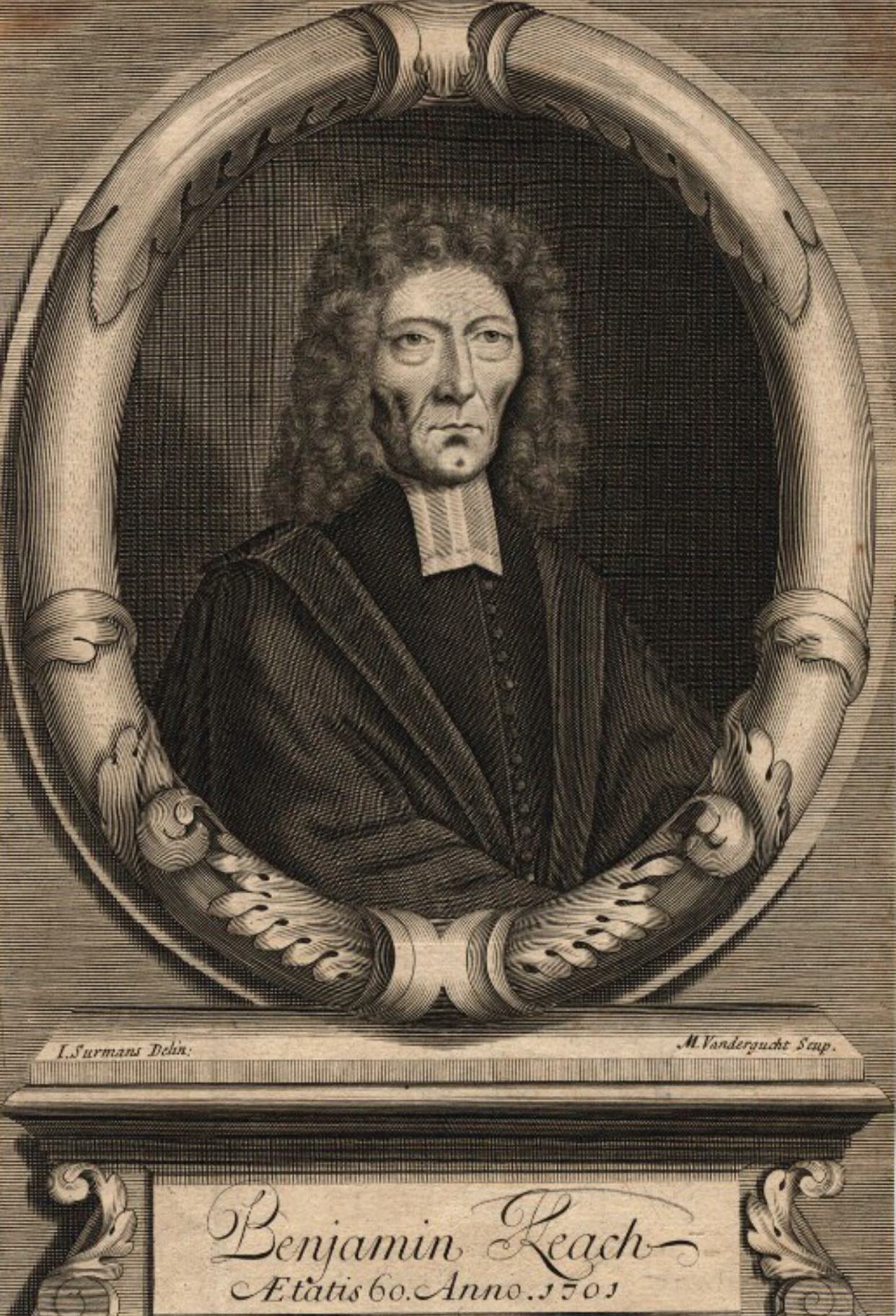
Benjamin Keach's article, "Christ Compared to a Bundle of Myrrh," explores the multifaceted nature of Christ's love and the believer's relationship with Him, using the metaphor of myrrh. Keach argues that just as myrrh is a fragrant, preserving, beautifying, and healing substance, Christ embodies these qualities, providing spiritual sustenance and transformation to His Church. The article draws on various Scripture references, including Song of Solomon 1:13, Matthew 2:11, Isaiah 53:5, and Revelation 8:4-5 to illustrate Christ's sweet fragrance, healing power, and the believer's need for His grace. Ultimately, the significance of this metaphor lies in its illustration of believers' dependence on Christ's righteousness and holiness, emphasizing that true beauty and acceptance before God are found solely in Him.
Key Quotes
“A soul espoused to Jesus Christ with a great love to him and a high esteem of Him knows not how to set out that excellent worth and beauty it beholds in him.”
“Christ hath in him a preserving quality or power; were it not for that life he has communicated to us, how soon would our bodies rot!”
“In Christ is abundance of divine sweetness; not a sprig or two but a great bundle, not two or three grains but a bag filled with it.”
“You will smell rank and unsavoury in the nostrils of God if you have not this bundle of Myrrh to perfume your souls and services.”
What does the Bible say about Christ compared to myrrh?
The Bible uses the metaphor of myrrh to illustrate the fragrant and preserving qualities of Christ, emphasizing His worth and beauty to the believer.
Song of Solomon 1:13, Psalm 45:8, Revelation 8:4-5
How do we know the Christ is our healer?
Christ is our healer, as affirmed in Isaiah 53:5, where it states that by His stripes we are healed.
Isaiah 53:5, John 19:39-40
Why is Christ's beauty important for Christians?
Christ's beauty is essential for Christians because it reflects His righteousness, which believers receive and are called to emulate.
Ephesians 5:27, Isaiah 53:2
How does myrrh symbolize Christ's role in spiritual preservation?
Myrrh symbolizes Christ's role in spiritual preservation by illustrating how He keeps believers from spiritual decay and corruption.
Isaiah 1:5-6, John 15:4-5
CHRIST COMPARED TO A BUNDLE OF MYRRH
"A bundle of Myrrh is my beloved unto me," Song 1:13.
THIS book expresses under many different metaphors and similitudes, the greatness of Christ s love to his Church, and the sincerity of the Church's love to Christ Sometimes you have Christ commending his spouse, sometimes the spouse speaking in praise of Christ, as she doth here, "A bundle of Myrrh, a cluster of Camphire, is my beloved unto me." A soul espoused to Jesus Christ with a great love to him, and a high esteem of Mm, knows not how to set out that excellent worth and beauty it beholds in him
Myrrh is a kind of precious fruit, plentifully growing in Arabia; it is somewhat bitter, but most fragrant, and of excellent use in physic.
METAPHOR
I. Myrrh has a perfuming quality it is a fragrant and odoriferous nature; it is used for perfuming garments, and other things, to make them cast a pleasant smell: "All thy garments smell of Myrrh, aloes, and cassia," Ps 45:8. The harlot says, "She had perfumed her bed with Myrrh, aloes, and cinnamon," Pr 7:17.
PARALLEL
I. Jesus Christ hath a perfuming virtue. See how the Church describes him for his fragrancy: "Who is this that cometh out of the wilderness, like pillars of smoke, perfumed with Myrrh and frankincense, with all the powders of the merchant," Song 3:6. We read of the sweet scent of the Church; but how comes she to smell so rarely, but from the communication of the sweet graces of Christ to her. Sinners are very unsavoury, until this Myrrh tree has dropped upon them.
METAPHOR
II. Myrrh is a rare and rich perfume, a fit present for a king; hence the wise men of the east: honoured Christ with Myrrh at his birth, Mt 2:11.
PARALLEL
II. Christ is the richest and purest perfume heaven and earth can afford; none so sweet. How fragrant is he in the nostrils of God the Father! He even ravishes the senses of angels and saints, makes us, and all our duties, as sweet odours unto the Father, Re 8:4-5.
METAPHOR
III. Myrrh hath a preserving quality; it keeps things from corruption, putrefying, and rotting. Hence the friends of Christ brought Myrrh, aloes, and other spices, for the embalming of his body after his crucifixion, Joh 19:39-40.
PARALLEL
III. Christ hath, in him a preserving quality or power; were it not for that life he has communicated to us, for the rest of mortals, how soon would our bodies rot? But in a special manner he preserves our souls. Sin is of a rotting, stinking, and putrefying nature, compared to a leprosy, and filthy sores, Isa 1:5-6. Now if Christ did not drop daily a little of his Myrrh, I mean, the grace of his Spirit, into their souls, how loathsome should we soon become?
METAPHOR
IV. Myrrh hath a beautifying quality. The virgins that prepared themselves for Ahasuerus, made use of Myrrh. It is good to take away the wrinkles from the face, and to make the skin smooth and shining.
PARALLEL
IV. Jesus Christ makes every believer beautiful; they have no comeliness but what he has put upon them. It is he that makes their faces to shine, who takes away every spot and wrinkle, and presents them a perfect beauty in the Father's sight, by imputing and imparting of righteousness unto them through faith, Eze 16:14; Eph 5:27.
METAPHOR
V. Myrrh, that which is the right and true Arabia Myrrh, is not easily known by the vulgar, Pliny notes, Book xii. c. 26. Many cannot discover it; some take the false Indian Myrrh, that grows upon a thorny plant, for the right sort.
PARALLEL
V. Christ, the true Christ of God, is not easily known to the ignorant; many take a false Christ for the true Christ. Some are so blind, that they think the light which is in every man, the light of natural conscience, is the Christ of God, and Saviour of the world.
METAPHOR
VI. Myrrh hath a healing quality: physicians make use of it for the removing of several distempers. Pliny Book xii. says, it dries up rheums, clears the voice, helps the ill savour of the breath, &c.
PARALLEL
VI. Jesus Christ hath many medicinal virtues; "By his stripes we are healed," Isa 53:5. He dries up all evil and offensive rheums; makes prayer, the breath or breathings of the soul, savoury; clears the voice, and helps our infirmities, by which means we pray more elegantly and fervently, in the Spirit; takes away all impediments, so that our prayers are heard and accepted by the Father.
METAPHOR
VII. Myrrh was the first and Principal ingredient of the holy anointing oil, that was appointed to be made use of for the anointing of Aaron,* the tabernacle, and the purtenances thereof.
PARALLEL
VII. The Spirit of Christ, and graces thereof, are compared to oil, Heb 1:9. He is the Myrrh tree, from whence the divine oil flows, wherewith the ministers and saints of God are more or less anointed. See Oil of Gladness.
It is called a bundle, or as Ainsworth reads it, a Bag of Myrrh:
METAPHOR
1. To denote the plenty or fulness of that odoriferous gum.
PARALLEL
1. In Christ is abundance of divine sweetness; not a sprig or two, but a great bundle; not two or three grains, but a bag filled with it, or a bundle of heavenly Myrrh.
METAPHOR
2. A bundle or bag keeps things safe that are of worth: "The soul of my lord shall be bound in the bundle of life, with Jehovah his God," 1Sa 25:29.
PARALLEL
2. Whatever is good, in Christ is laid up safely. Believers may waste or lose much of the grace of Christ in them; but none of that which is bound up in this sacred bundle can be lost.
SIMILE
I. Myrrh has some dregs in it, though never so purely refined.
DISPARITY
I. In Christ are no dregs, no sin, nothing but what is invaluably precious.
SIMILE
II. Other Myrrh may be bought for money.
DISPARITY
II. All the riches of both the Indies cannot purchase one drachm of this divine Myrrh.
SIMILE
III. Other Myrrh will lose its virtue, if kept overlong.
DISPARITY
III. Christ's virtue is ever the same, Heb 12:8.
SIMILE
IV. The Myrrh-tree doth not always drop;[1] this gum distils but at certain seasons of the year.
[1] Ainsworth.
DISPARITY
IV. Christ, the spiritual Myrrh-tree, is always dropping.
APPLICATION.
1. Christ is a precious Jesus, and saving grace worth the prizing; it is like to sweet-smelling Myrrh.
2. What a mercy it is to have our spiritual senses so exercised, as to discern between things that differ.
3. What eyes do they see with, that despise and slight Jesus Christ! This Bundle of Myrrh, this Rose of Sharon, this Lily of the Valleys, is not so much regarded by the most of men, as a bundle of thorns and briars.
4. You that love a sweet smell, here is a precious perfume for your unsavoury souls: notwithstanding all your rare gums, odours, and fragrant flowers, spices, and choice powders, you will smell rank and unsavoury in the nostrils of God, if you have not this bundle of Myrrh to perfume your souls and services.
5. If believers receive all their graces and sweetness from Christ, let them make grateful acknowledgments thereof to him, Re 5:12-13.

Comments
Your comment has been submitted and is awaiting moderation. Once approved, it will appear on this page.
Be the first to comment!