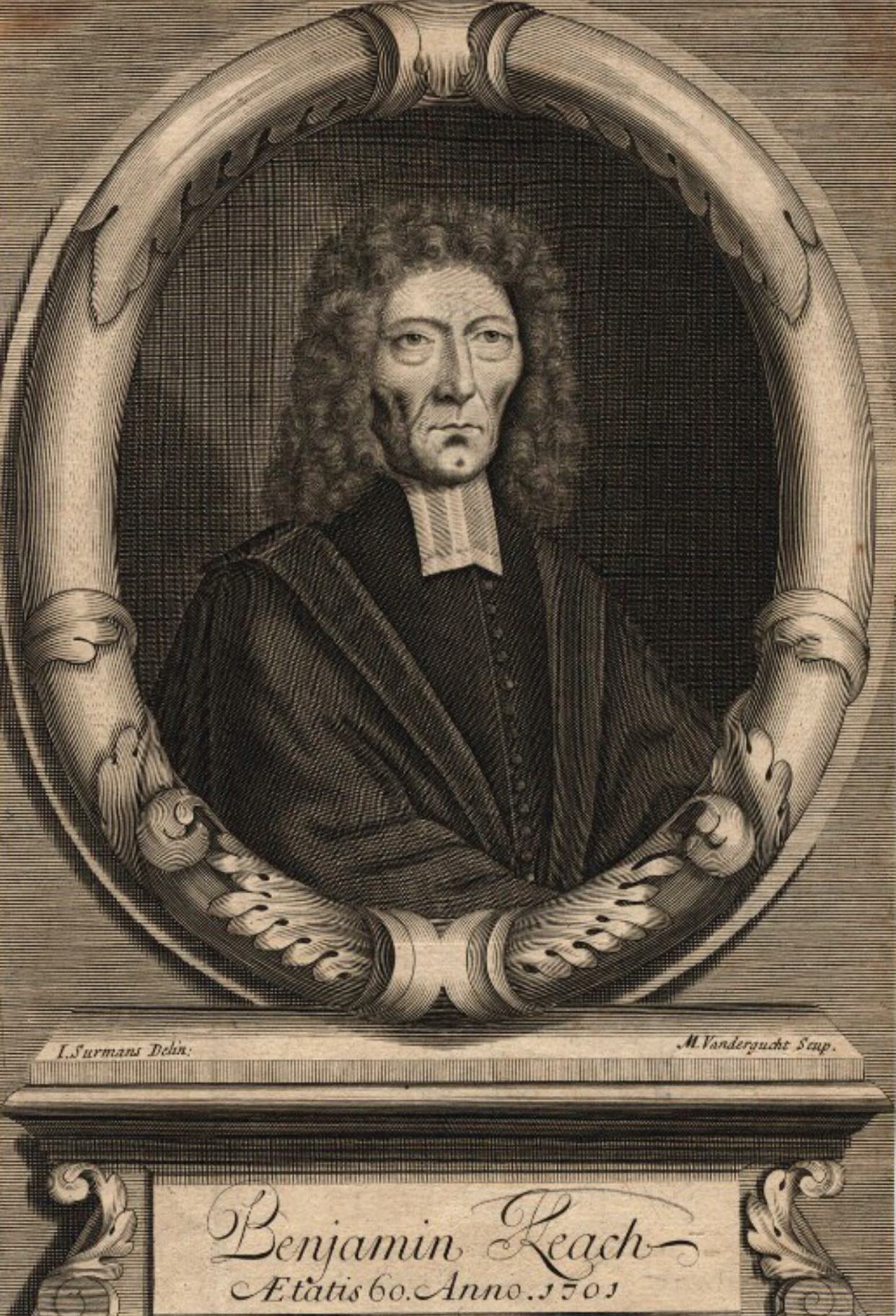
The article "Christ the Saints' Wedding-Garment" by Benjamin Keach explores the theological significance of Christ's righteousness as a wedding garment, drawing from the parable in Matthew 22:11-12. Keach argues that just as ancient customs required wedding guests to wear specific garments, so too must believers be clothed in Christ's righteousness to enter the heavenly banquet. He highlights various metaphors and parallels indicating that this divine garment serves to cover believers' sinfulness and is only attainable through faith, aligning with Reformed doctrines of justification by faith alone. Scripture references such as Isaiah 61:10 and Romans 3:25 are employed to substantiate the necessity of Christ's righteousness for salvation, emphasizing that only those adorned with this garment will enjoy communion with God. The practical significance of this teaching lies in the assurance of believers that they are accepted by God, as their imperfections are hidden under Christ's perfect righteousness.
Key Quotes
“By the Wedding-Garment is intended Christ's righteousness or imputed righteousness which is put on the soul by faith for justification.”
“Christ's righteousness is a glorious robe...which by faith all true believers are clothed with.”
“Those that have not the spiritual wedding-Garment in the day when our bridegroom comes shall not be entertained amongst Christ's guests but shall be put out of the wedding-chamber.”
“The worth and price of this wedding-Garment can never be valued; it is worth millions yea thousands of millions.”
What does the Bible say about the Wedding-Garment?
The Wedding-Garment symbolizes Christ's righteousness, which believers must be clothed in to be accepted by God.
Matthew 22:11-12, Philippians 3:8-10, Romans 3:25
How do we know that Christ's righteousness is essential for salvation?
Christ's righteousness is essential for salvation as it is the only acceptable covering for our sins before a holy God.
Romans 3:25, Matthew 22:13
Why is imputed righteousness important for Christians?
Imputed righteousness is vital for Christians as it assures our justification and acceptance before God.
Romans 5:1, 2 Corinthians 5:21
CHRIST THE SAINTS' WEDDING-GARMENT
"And he said unto him, friend, how earnest thou hither, not having a Wedding-garment?" &c. Mt 22:11-12.
THIS text is part of the parable of the marriage, Mt 22.; and the word parable, is thus expounded by Jerome, Tom. 3. Epist. 51. ad Algasiam q. 6. p. 359. Parabola, hoc est similitudo quæ ab eo vocatur, quod alteri paraballetai, hoc est, assimilatur, et quasi umbra prævia veritatis est. A parable, that is, a similitude so called, because it is like another thing, and is as it were a previous shadow of truth. The word Pazabolh, is derived of paraballw, to compare or liken, it answers to the Hebrew XXX Mashal.[1] In the New Testament, it signifies an enigmatical, or allegorical comparison, &c. For further account, the reader is referred to the place where we treat parables.
[1] Jansen, in Conc. Evang.
The phrase enduma gamou, the Wedding-Garment, is borrowed from a custom among the ancients, where every guest at that solemnity, was arrayed in a habit peculiar to such feasts, and such as wanted it were accounted intruders, viz., such as without any right thrust themselves in. Now in this parable all orthodox expositors affirm, that by the King, ver. 2, we are to understand JEHOVAH; by his Son, the Messiah; by his servants, the ministers of the Gospel; by such that found pretences of absence, worldly-minded persons, that prefer their temporal pleasures before grace and true religion; by the invitation of the guests, the calling of the Gentiles, &c., by him that wanted the Wedding-Garment, hypocrites, or such as have not put on Christ spiritually, (that is, are not clothed with his righteousness by faith) whose doom is damnation, ver. 13. All the best expositors agree, by the Wedding-Garment is intended Christ's righteousness, or imputed righteousness, which is put on the soul by faith for justification. For the further demonstration hereof, see the following parallel.
METAPHOR
I. THE use and necessity of Garments came in by the fall. Adam in innocency had no need of them.
PARALLEL
I. THE necessity of Christ and his righteousness, came in by original depravity, Ge 1:27. Man in innoceney had no need of a Saviour, was perfect and wanting nothing, Ps 51:5; Ro 7:17-18.
METAPHOR
II. Garments are to cover nakedness, that shame and deformity may not appear to others; for this reason did our first parents sew fig-leaves together to cover themselves, and from hence God afterwards made them coats of skins, &c. Ge 2:21.
PARALLEL
II. Christ is the soul's spiritual cover. 1. He hides all our natural filthiness. 2 He hides and covers all our actual sins and pollutions. 3. He covers all the spots of our holy duties.[2] The cherubims under the law covered the mercy-seat, the mercy-seat covered the ark where the two tables of the decalogue lay, Ro 3:25; Ex 25:17-18,20-21; this mercy-seat typify Christ. Jesus Christ covers all the sins which believers commit against the Law of God. He delivers us from the curse and accusation thereof. Hence it is said, God beheld no iniquity in Jacob. He doth not see it to impute it, because it is hid under the covering mercy-seat, Jesus Christ.
[2] Guild. Moses Unvailed, p. 101. Mr. Robinson's Christ All in All, p. 45.
METAPHOR
III. Garments differ much in worth and excellency; we read in scripture of filthy Garments, and likewise of glorious apparel.
PARALLEL
III. "All our righteousnesses are as filthy rags," Isa 64:6. And in another place compared to a menstruous cloth; our best services are grievously defiled and polluted with sin. But Christ is a glorious robe, his righteousness is of inestimable value, glorious apparel which by faith all true believers are clothed with.
METAPHOR
IV. Garments are for ornament, they set off natural excellency, making men and women appear very lovely and amiable in the eyes of others.
PARALLEL
IV. Christ's righteousness put on the soul by faith, is the most beautiful ornament that ever mortals were adorned with; this makes men and women amiable and very comely in the eyes of God and the holy angels, Eze 16:12; Isa 45:24, and Isa 61:10.
METAPHOR
V. Garments are of great utility in respect of defence, they secure us from many hurts and dangers, which naked ones are exposed to; they are munimenta corporis, they are as light armour to the body in winter, they save the body from piercing cold; in summer they preserve and defend from parching heat: every blast would pinch us, were it not for our Garments, every thorn would scratch us, every blow would bruise us. Robinson.
PARALLEL
V. The Lord Jesus, clothing us with his righteousness, defends us; 1. From sin, sin hath not power and dominion over us, it cannot bear sway or hurt the soul, because Christ hath condemned it in the flesh. It is a vanquished, wounded, and crucified enemy, Ro 13:2. Christ defends us from the smarting pricks and checks of conscience, when for want of light, a believer is accused and condemned, and is driven almost into despair. Christ's righteousness is a glorious Garment to guard and keep off conscience from mauling, breaking, and bruising of him in pieces; through Christ saints obtain, deliverance. "Corne unto me, all ye that labour and are heavy laden, and I will give you rest to your souls," Mt 11:28. "My grace is sufficient for thee." 3. Christ defends us from the fiery darts and cruel assaults of Satan. "This roaring lion would tear us in pieces, if this impenetrable Garment were not between his teeth and our souls. His fiery darts would stick to the very heart, did not this Garnent blunt and deaden them. Notwithstanding all the malice and rage of the devil, he cannot destroy us, because we are clothed with Christ's righteousness, and have the Lord Jesus to be a cover for us. 4. Christ defends us from eternal wrath. God is to all that are naked (to all that have not Christ on for clothing) a scorching and consuming fire, the hottest flames cannot touch the body till they have burned the garments; but wrath cannot seize Christ any more, he hath overcome it, and quenched its burning; he hath lain under it once for all and therefore it cannot seize on a believer, who is circled about with Christ, and with his righteousness as with a Garment. The fire cannot burn the man whilst the screen is between him and the flame. Jesus Christ is the believer's screen, which stands continually between him and the devouring flame of God's anger." Robinson.
METAPHOR
VI. Garments are prepared and made fit for the person that is to wear them, or otherwise they are not comely.
PARALLEL
VI. Christ's righteousness prepared for believers, is made fit for the soul, it answers to the law and justice of God, it every way suits, accommodating every part, leaving none uncomely nor unclothed in the sight of God.
METAPHOR
VII. When a person puts on a Wedding-Garment, all other Garments are laid aside as invaluable and unseemly for a bride to have on.
PARALLEL
VII. When a soul puts on Christ's righteousness by faith, it lays aside its own rags, having no confidence in the flesh, Php 3:8-10. If a man be not stript of all hopes, trust and reliance, in respect of his own righteousness, he will not seek for another, neither can he put Christ on, for Christ is the only Garment for such who are naked, and see no absolute necessity of that which is by faith, in order to their being accepted in the eyes of the bridegroom.
METAPHOR
VIII. A Wedding-Garment is usually very rich, if provided for a person of honour, a princess, or some great heiress.
PARALLEL
VIII. Christ's righteousness is a very rich and glorious robe, curiously wrought, the person for whom it is provided, being nobly descended, born from above, and espoused to the Prince of heaven and earth. "I clothed thee with embroidered work, and covered thee with silk; I decked thee with gold and thy raiment was of fine linen," Eze 16:10,14. "The king's daughters were among thy honourable women," Ps 45:10-13. "Upon thy right hand did stand the queen in gold of ophir."
METAPHOR
IX. A rich and glorious wedding-garment, is put on as a sign of joy, and a good day.
PARALLEL
IX. The righteousness of Christ put on by faith signifies joy, and a good day; the soul that is clothed with this robe of righteousness, that beautiful garment of salvation, hath infinite cause of joy and gladness; hence saith the apostle,---As sorrowful, yet always rejoicing." "Rejoice in the Lord always, and again, I say rejoice," Php 4:4; Isa 41:10-11; 2Co 6:10; 1Th 5:16.
METAPHOR
X. Those who are invited to a marriage amongst the Jews, as history tells us, if they had not on a Wedding-garment, they were not entertained, nor suffered to be amongst the guests, but were, if observed, turned out of the wedding-chamber.
PARALLEL
X. Those that have not the spiritual wedding-Garment in the day when our bridegroom comes, shall not be entertained amongst Christ's guests, but shall be put out of the wedding-chamber, and turned into eternal darkness. "And when the king came in to see the guests, he saw there a man that had not a Wedding-garment: and he said unto him, friend, how earnest thou in hither, not having on a Wedding-Garment? and he was speechless. Then said the king to his servants, bind him hand and foot, and take him away, and cast him into outer darkness: there shall be weeping and wailing, and gnashing of teeth," Mt 22:11-13.
METAPHOR
XI. The bride that is gloriously clothed, and adorned in her marriage-robes, is delighted in, and rejoiced over by the bridegroom.
PARALLEL
XI. That soul that hath this Wedding-Garment on, that is clothed and adorned with Christ's righteousness, that is justified and accepted by faith; the Lord Jesus takes great delight in. "As a young man who marrieth a virgin, &c., and as a bridegroom rejoiceth over the bride, so shall thy God rejoice over thee," Isa 62:5.
METAPHOR
I. A Garment can cover but one at once, it cannot clothe several persons.
DISPARITY
I. This is a large Garment, the robe of Christ's righteousness can cover many, though they be at never so great a distance. Should I say, saith Bernard, that Christ' righteousness will not serve for him and me; Non est pallium breve quod duos operire non potest. All the elect of God, though they live in several nations, though they be a multitude which no man can number; yet they are clothed, and sufficiently, with this one Garment. "I saw a wonder in heaven, a woman clothed with the sun," Re 12:1. This woman is the Church of God, this Sun is Jesus Christ, "The Sun of righteousness," as he is called, Mal 4:2. All believers are covered, clothed, and adorned with one and the same garment, and every one hath it as an entire Garment to himself.
METAPHOR
II. Every material Garment will not serve to cover every part of the body: that which is proper for the head, will not cover the loins, and that which fits the body will not fit the feet; every part of the body hath a distinct clothing which is only proper for itself.
DISPARITY
II. The spiritual Garment fits every part, Christ is "A diadem, or crown upon the head, and shoes for the feet."Christ's righteousness is a complete suit of apparel from head to foot; the soul that hath this Wedding-Garment on, is perfectly and completely clothed.
METAPHOR
III. There is not one particular Garment that serveth for all uses for the body; some robes are good for covering, but are not for beauty; other Garments serve for ornament, but they do not serve for defence; some Garments are good to wear in cold winter weather, but not good for the heat in the midst of summer. Persons of ability have several garments for several uses, because there is no one Garment good on all occasions.
DISPARITY
III. This spiritual Garment is for all uses, and all seasons, it is both for covering and ornament; it is as proper and necessary in winter as in summer, and in summer as in winter; it is good for the traveller, it is the labourer's Garment, it is the soldier's Garment, it is good to fight in; it is the prince's Garment, yea, and the subject's Garment: it is the Christian's Garment, it is very light and pleasant to walk in, and yet thick to defend from stormy weather. Christ suits all occasions, states, and conditions of the souls that have an interest in him. "He is made of God unto us wisdom, righteousness, sanctification, and redemption," 1Co 1:30.
METAPHOR
IV. No one Garment will fit all bodies: that which fits decently on one sex, would be uncomely on another; that which will fit a child will not fit a man, that which is proper for a prince will not become nor suit a subject.
DISPARITY
IV. This spiritual Garment, the righteousness of Christ, is as fit for one as for another, it is as fit and as proper for the peasant as for the prince; the same Garment here that is for the man, is for the woman, for the child as for the father. "There is neither Barbarian, Scythian, Jew nor Gentile, male nor female, bond nor free, but ye are all one in Christ," Col 3:11. The righteousness of Christ is a fit Garment for the souls of men, there is no soul too big, no soul too little, none too small, none too-great for Christ's righteousness to array and cover.
METAPHOR
V. Other Garments may be pierced, a sword may be thrust through them, they may be spoiled, burnt, or cut to pieces.
DISPARITY
V. But this Garment no dart nor spear can pierce or enter into, no devil can tear or rend it, nor can all the powers of hell, sin, or darkness burn or destroy it.
METAPHOR
VI. All material Garments may be corrupted, moths may eat them, they may be worn out by using and turn into rags, even the strongest Garments that ever were made.
DISPARITY
VI. But this spiritual Garment is durable and lasting, the moth cannot corrupt nor consume it, it never grows old, nor can it be worn out, it is as fresh and as beautiful at the last as at the first putting on.
METAPHOR
VII. The best and richest wedding Garment that ever was made, the price thereof may soon be accounted and easily reckoned up.
DISPARITY
VII. The worth and price of this wedding-Garment can never be valued, it is worth millions, yea thousands of millions, the riches of the whole world are nothing in comparison of it. What would a Christless soul give, in the great day for this robe, viz., to be clothed with Christ's righteousness?
METAPHOR
VIII. Other Garments may be stained, catch spots and dirt, and many ways be defiled.
PARALLEL
VIII. This robe cannot be defiled, the Garment of sanctification may take spots; hence we read of some who had their Garments spotted with the flesh; and of others, who had not defiled their Garments; but a Christian's wedding-robe can sustain no pollution; the life of Christ was without spot, his righteousness pure and perfect, which saints are clothed with in respect of justification: hence Christ calls his love, his dove, his undefiled one. "Thou art all fair, my love, and there is no spot in thee." See metaphor, Christ a Garment for Sanctification.
INFERENCES.
I. This shows the miserable state of those that are without Christ; such have not on the wedding-Garment, they want that excellent robe that renders the godly person amiable in the Bridegroom's sight; and all that have it not on, shall be shut out of the wedding-chamber.
II. It shows also the happy and blessed condition of all sincere and godly ones. See Garment of Sanctification.

Comments
Your comment has been submitted and is awaiting moderation. Once approved, it will appear on this page.
Be the first to comment!