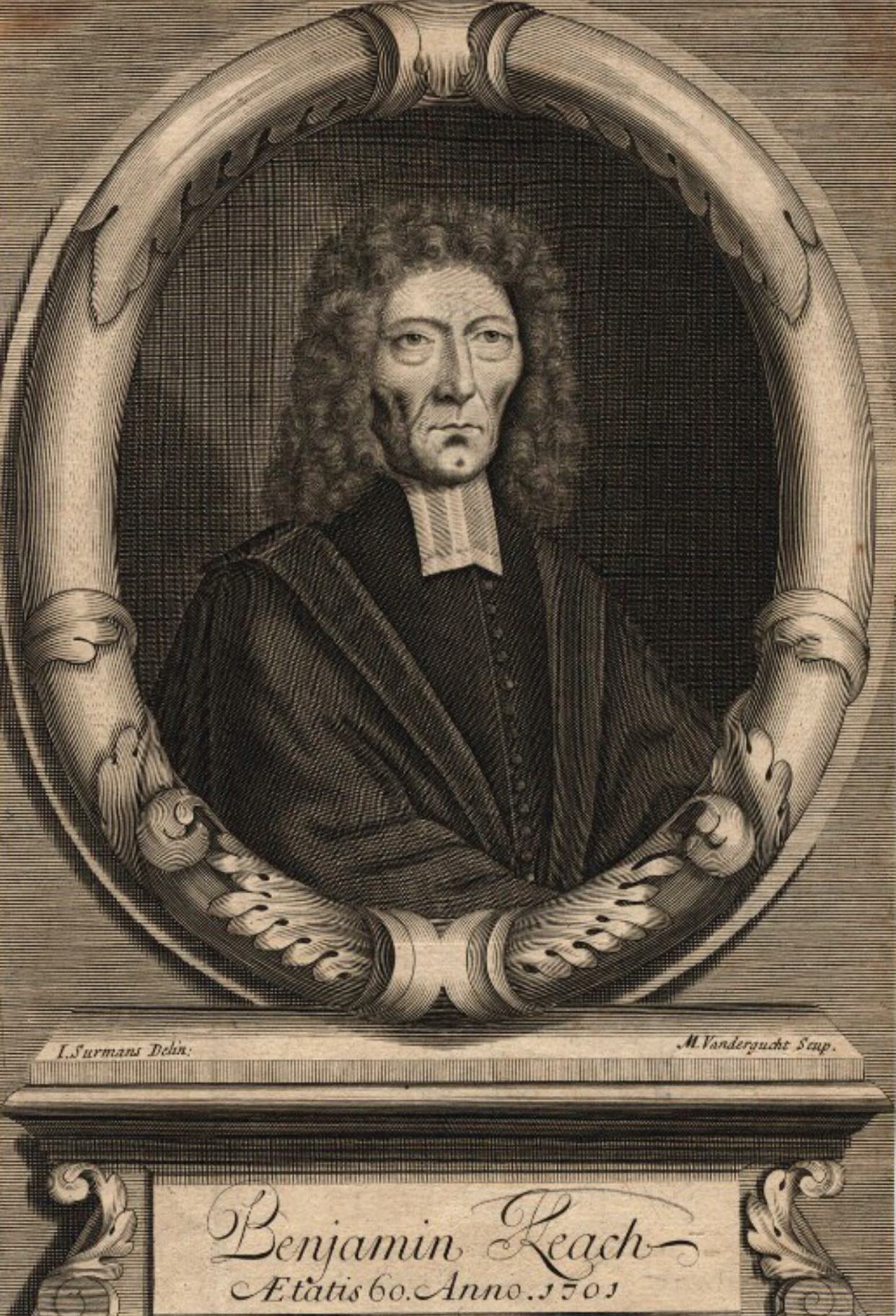
The main theological topic addressed by Benjamin Keach in "Christ the Judge of All" is the role of Jesus Christ as the ultimate Judge of humanity, which emphasizes His divine authority and perfect qualifications to judge the living and the dead. Keach argues that Christ’s judicial role is established by His wisdom, knowledge of divine law, goodness, justice, and the divine commission from God the Father, which underscores His unique fitness for this office. He supports his claims by referencing various Scriptures including Acts 10:42, Matthew 25:32, and Revelation 20:12-13, demonstrating that all nations will be summoned before Christ's judgment seat, reinforcing the certainty of divine accountability. The practical significance of this doctrine is twofold: it serves as a solemn warning to unbelievers about the necessity of faith in Christ to escape condemnation, and it offers comfort to believers, affirming that they will be received graciously by Him based on Christ's righteousness.
Key Quotes
“Before him shall be gathered all nations.” (Matthew 25:32)
“He that is without sin let him throw the first stone.” (John 8:7)
“God judgeth no man but hath committed all judgment unto the Son.” (John 5:22)
“There is no condemnation to them which are in Christ Jesus.” (Romans 8:1)
What does the Bible say about Jesus as the Judge?
The Bible clearly affirms that Jesus Christ has been appointed as the Judge of the living and the dead, as seen in Acts 10:42 and 2 Corinthians 5:10.
Acts 10:42, 2 Corinthians 5:10, John 5:22, Matthew 25:32
How do we know that Jesus will judge all people?
The certainty that Jesus will judge all people is rooted in biblical prophecies and teachings, notably in passages like Acts 17:31.
Acts 17:31, Hebrews 9:27
Why is the concept of Christ as Judge important for Christians?
Understanding Christ as the Judge reinforces the seriousness of our moral choices and offers hope through His justice and mercy.
2 Corinthians 5:10, Matthew 25:34
CHRIST THE JUDGE OF ALL.
"And He commanded us to preach unto the people, and to testify, that it was he that was ordained of God, to be the Judge of the quick and dead" Ac 10:42.
THE term krithv, a Judge, is derived of krinw, to judge, which word has various significations. And though the word [Judge] is not brought here as a metaphor, Christ being really and properly a Judge, yet it being a phrase alluding to earthly Judges, we shall, for edification sake, run the parallel, wherein are amply set forth the qualifications and properties, as well as the authority of a temporal Judge, with the correspondent analogy and disparity, when applied to Christ, the Judge of (twn zwntwn kai nekrwn,) the living and the dead.
METAPHOR
I. A Judge necessarily supposes a people under a law to be judged by; for there can be no action where there is no object, nor any exercise of power, or judicial proceeding, without a subject.
PARALLEL
I. Christ's being called a Judge, doth clearly hold forth, that there are a people to be judged by him; "Before him shall be gathered all nations," Mt 25:32. "We must all appear before the judgment-seat of Christ," 2Co 5:10. "I saw the dead, both small and great, stand before God," Re 20:12-13.
METAPHOR
II. A Judge is, or ought to be a person fit for the place and office whereto he is called.
1. A Judge ought to be a man of great wisdom and prudence.
2. A Judge is a man of knowledge it is necessary that he should be well acquainted with all the laws of his sovereign.
3. A Judge is, or ought to be, a man of goodness, not subject to anger, malice, or revenge, and it is very requisite it should be so, otherwise great damage might ensue, upon the ill disposition of the Judge.
4. A Judge is, or ought to be, a man of justice and impartiality, that will not respect persons in judgment, take bribes, or know the faces of any, though never so great among men. Aaron was not to know his father nor mother in judgment.
5. A good and upright Judge is a man of courage and boldness, will not say to the wicked, "Thou art righteous;" nor excuse the faults of great men through fear.
PARALLEL
II. Jesus Christ infinitely excels other Judges in respect of fitness to this office, or excellency of qualifications, as will appear by what follows:
1. Christ is wise, not only far beyond David and Solomon, but all the angels in heaven: the learned amongst the Jews admired his wisdom: He is called, as hath been often hinted, "The wisdom of God," 1Co 1:24.
2. Jesus Christ fully knows all divine laws, as well that which is written in the heart of man, as that which was written in tables of stone; and then as to the law of the Gospel, that is called the law of Christ, because he gave forth all the precepts contained therein, Mt 5:6-7
3. The Lord Jesus Christ is full of goodness, full proofs of which he gave before his advancement to his dignity. He is not forward to accuse, is free from anger, not subject to take advantage by the weakness of an offender, but ready to pity and forgive, if the circumstances of the cause will bear it: an instance of which we have in what Christ said to the woman taken in adultery: "He that is without sin, let him throw the first stone," &c., Joh 8:7.
4. The Lord Christ is a man of justice, that will not be flattered with fair words. His impartiality appeared in the days of his flesh. He told Nicodemus, a great ruler, that he must be born again, Joh 3:3, called Herod the king a fox. He told the rulers of the Jews, that they should "Hereafter see the Son of man sitting at the right-hand of power and glory," Mt 26:64; that is, as a Judge, to arraign them for their injustice, cruelty, &c.
5. The Lord Jesus, though he be a Lamb for meekness, and a dove for innocency, yet he is a lion for boldness and courage, and in his time will show himself to be so to all the ungodly of the earth, whether kings, captains, or mighty men: "They shall cry to the rocks to fall upoii them, and mountains to cover them, to hide them from the face of him that sitteth upon the throne, and from the wrath of the Lamb." Re 6:16-17.
METAPHOR
III. The place and work of a Judge is grounded upon good reason: 1. The honour of the sovereign. 2. The reasonableness of sovereignty and authority. 3. The justness of the laws. 4. In respect of the subject.
PARALLEL
III. The work assigned to the Lord Jesus, as a Judge, is grounded upon the highest reason: 1. The authority of God the Father, who hath committed all judgment into the hands of the Song 2. The reasonableness of his authority: He gave to all their being, and therefore may challenge a right more than earthly sovereigns, to sit as Judge over them. 3. The equity of his laws, which are "Holy, just, and good," Ro 7:12. There is nothing amiss, no fault can be found in them. 4. In respect of his subjects: "God is not unrighteous, to forget their work of faith, and labour of love," &c., of the godly: and it is a righteous thing with him to recompence the ungodly according to their deeds: "He shall render unto every man, according as their works shall be," Re 22:12.
METAPHOR
IV. A Judge is appointed to his place and office; he acts not of himself, but by commission.
PARALLEL
IV. The Lord Jesus Christ is appointed to take the place and office of a Judge; he acts not of himself, but by commission from the great and mighty Potentate of the whole universe. "God judgeth no man, but hath committed all judgment unto the Son," Joh 5:22. It is he that is ordained of God to be the Judge of the quick and dead. "He hath appointed a day, in which he will judge the world in righteousness, by that man whom he hath ordained," Ac 17:31. "It is appointed unto men once to die, and after death the judgment, to which end Christ shall appear the second time," Heb 9:27.
METAPHOR
V. A Judge hath his set time or days limited, wherein to keep a general sessions, or hold a solemn assize, for the honour of his sovereign lord the king.
PARALLEL
V. In like manner is there a set time, a certain day limited, for the Lord Jesus, the great Judge, to keep a general sessions, and hold a solemn assize, for the honour of the eternal God, called the day of judgment. "It shall be more tolerable for Sodom and Gomorrah in the day of judgment, than for that city," Mt 10:15.
METAPHOR
VI. A Judge, when he hath received his commission, and the set day is come, hath power to summon all parties concerned, and order all offenders to appear before him in judgment.
PARALLEL
VI. The Lord Jesus, as supreme Judge, by virtue of his authority and commission, when the set time is come, will summon the whole world, even all offenders, to appear before his judgment-seat: "The time is corning, when all that are in their graves shall hear his voice, and come forth," Joh 5:28. "The trumpet shall sound, and the dead shall be raised incorruptible," 1Co 15:52. "There shall be a resurrection from the dead, both of the just and unjust," Ac 24:15, "The Lord shall descend from heaven, with a shout, with the voice of the archangel, and the trump of God, and the dead in Christ shall rise first," 2Co 5:10, "We must all appear before the judgment-seat of Christ," &c.
METAPHOR
VII. A Judge, after this great appearance upon his summons, enters upon his work, which consists chiefly in three great points:
1. To open the law.
2. To examine witnesses.
3. To arraign the offenders.
VII. The Lord Christ, immediately after summons, upon this great appearance before his dread tribunal, enters upon his last and great work. First, to open the three great law-books, that men have lived under, viz.: 1. The law of nature. 2. The law of Moses. 3. The Gospel-law. The Judge being set, the books are opened; next in order the witnesses appear, and first those that gave the laws; and they are of three sorts: 1. God, that wrote the law of nature after an invisible manner on the hearts of men: "I will come near you to judgment, and be a swift witness against you, saith the Lord," Mal 3:5. Moses, that delivered the law to Israel; "There is one that accuseth you, even Moses, in whom you trust," John 5:45. 3. The apostles that published the Gospel-law, not to Jews only, but to the Gentile world: these will appear not only to judge the twelve tribes of Israel, but the Gentiles, whose persons and works also must be tried by Christ, as well as the Jews: "He shall judge the secrets of all men," Ro 2:16.
METAPHOR
VIII. A Judge charges matter of fact in judgment, and proceeds to clear proof and evidence, by a sufficient number of proper witnesses touching the same.
PARALLEL
VIII. Jesus Christ will judge the world, viz., all men, both Jews and Gentiles, according to their works: "God shall bring every work into judgment, with every secret thing, whether it be good, or whether it be evil," Ec 12:14. The necessity of which appears in these four cases: 1. The scripture will not else be fulfilled, and made good, which doth fully assert the "Bringing to light the hidden things of darkness, and making manifest the counsels of the heart." 2. The ungodly will not otherwise be convinced of all their ungodly deeds, and all "their hard speeches, which ungodly sinners have spoken against the Lord," Jude 1:15. 3. The judgment will not otherwise appear just, upon which the glory of the Judge doth so much depend: it is for his glory to overcome when he judgeth.
And unless matter of fact be charged, due proportions will not be weighed out and awarded according to the desert, with clearness and satisfaction, either in a way of mercy or just severity, to all spectators. Therefore the Gentiles shall be charged with matter of fact against the law of nature: "Whoremongers and adulterers God will judge," Heb 13:4. The Jews shall be charged for rejecting Moses, and killing the prophets. The Jews and Gentiles jointly, that they have neglected faith and charity, under the vouchsafement of the Gospel, Mt 25:41-42. "He shall judge the secrets of men by Christ Jesus, according to my Gospel," Ro 2:16.
The fore-mentioned witnesses are sufficient to prove matter of fact, both in point of number and capacity. The first and chief witness will be God himself, who knew all things, and there can be nothing hid from him. The second witness will be conscience, which was and is with men in all places and actions, which man could never leave at home, nor shun its company, when he went out, or when he came in. It is with him in its most secret retirements, and has often told him, that there is one above, even God, that seeth all things, Ro 2:15.
Besides these two witnesses that are of such mighty credit, there may be three more added, namely 1. The good angels, which are much busied in this world to watch men, and inspect their ways. 2. The evil angels, who are never out of men's company, and have voluntarily of their own accord been accusers of the brethren, who will give testimony at the bar of Christ against their own proselytes, if God call for it. 3. The ordinary companions of transgressors, with whom counsel was held about evil projects, designs, and actions of murder, theft, drunkenness, and adultery, whose tongues shall, no doubt, be as ready to accuse their comrades, as to confess their own faults, concerning whom we are informed, that not only "every knee shall bow, but every tongue shall confess," &c.
METAPHOR
IX. A Judge, by this order and method of proceeding, keeps up the honour of the law, which he makes his rule in all his acts of judgment.
PARALLEL
IX. Jesus Christ will magnify the law and make it honourable, in that the word or law spoken by angels, by Moses, by himself, and his holy apostles, shall be the rule of judgment at the last day.
METAPHOR
X. A Judge is very terrible upon the seat of judgment, in three respects: 1. He is clothed with majesty. 2. He hath very great attendants, as the sheriffs, justices of the peace, and the gentry of the country about him. 3. He passeth a solemn and fatal sentence upon guilty criminals.
PARALLEL
X. Jesus Christ, the high and great Judge of heaven and earth, at the end of the world, on his judgment-seat, will be very terrible in three respects. 1. He is set forth as being clothed with majesty, as Judges are with their scarlet robes: "Red in his apparel, clothed with a garment down to his foot, girt about the paps with a golden girdle; his hair like wool, as white as snow: his eyes like a flame of fire, and his feet like fine brass, as if it burned in a furnace; his countenance as the sun shining in its strength; and his voice like the roaring of a lion, the noise of thunder, or the sound of many waters," Isa 63:2; Re 1:13-14:2. He will have great attendance, even all the angels in heaven: "When the Son of man shall come, and all the holy angels with him, he shall sit upon the throne of his glory," Mt 25:31. All the saints that ever were in the world since the beginning thereof, shall sit upon the throne with him. "The Lord my God shall come, and all the saints with him," Ecclesiastes 14:5. "Know you not that the saints shall judge the world?" 3. He will pass a most solemn and fatal sentence upon the ungodly: "They shall not stand in the judgment, nor sinners in the congregation of the righteous," Ps 1:5. The sentence will be, "Depart from me, ye workers of iniquity, I know you not. Go, ye cursed, into everlasting fire, prepared for the devil and his angels," which, with the consequences of it, and reasons assigned, you have at large, Mt 25:41 to the end. O! the sad shrieks, the hideous noises, the woeful and lamentable outcries, from high and low, that will attend this solemn sentence, which no tongue of man is able to express.
METAPHOR
XI. A Judge hath the command of officers to see sentence executed as pronounced, as sheriffs, deputy sheriffs, with keepers of prisons, and the like.
PARALLEL
XI. So Jesus Christ, the universal and supreme Judge, hath the full command of all the good and elect angels, who attend the court at the great assizes, to see that no resistance nor escape be made, but that sentence be fully executed upon all the treasonable, black, rebellious, and condemned crew; take and bind them hand and foot, and it follows, "These shall go away into everlasting punishment," Mt 25:46.
INFERENCES.
IF there be a Judge, a time, a place, and work of Judgment, we do infer these three things.
I. What great need unbelievers, rebels, traitors, and all offenders have of pardon, there being nothing else will stand them in stead when they appear before the great Judge, where there will be no pleading, not guilty, because of full evidence to matter of fact; no pleading ignorance, because a known and established law is broken; no benefit of petitions, because the King is gone off the mercy-seat; no relying upon the wrong verdict of corrupt jurors, because no such persons will be found there to afford help. Nothing avails with the Judge in this judgment-day, Mt 22:13, but a white stone, a wedding- garment, the spotless righteousness of Jesus Christ: all who want this robe will in that day be speechless.
II. How sad will it fare with all those that go out of this world without faith in the Son of God, without the pardon of their sins! Woe, unto such in that day that ever they were born. Look to it, all you unbelievers, swearers, whoremongers, persecutors, liars, sabbath-breakers, lovers of pleasures more than lovers of God, covetous persons, proud persons, thieves, drunkards, and backsliders, what will you do in that day? as sure as God liveth you will be all condemned (unless you repent and believe in Christ, 1Co 6:9-10; Lu 13:3,5.) "to the lake that burneth with fire and brimstone," Re 21:8. What will you do in this clay of visitation? who shall plead for you, now you have lost the prevailing Advocate? where will shiners and ungodly ones appear? How will you be able to look the Judge in the face? How can you escape this judgment, that have neglected so great salvation?" Heb 2:3. How can you escape the damnation of hell, that have no Christ, no faith, no pardon.
III. But thrice happy are they who appear before this great and mighty, this high and terrible Judge, with a white stone, with a wedding robe, with a pardon under hand and seal.
1. The law is silent, being fully answered.
2. The Judge smiles, and takes knowledge of them as the favourites of heaven, "Well done, good and faithful servant," &c. "Come ye blessed of my Father, enter into the joy of your Lord.---Inherit the kingdom prepared for you," &c., Mt 25:34.
3. The witnesses are freed from trouble, and excused from giving testimony against them, because guilt was owned, the fact was confessed, a self-judgment passed, and the King's pardon obtained, "Through the redemption that is in Christ's blood, Ro 3:31. and Ro 8:33-34. "Now if God be for us, who can be against us?" If God justify, who shall condemn? "Who shall lay any thing to the charge of God's elect? Who shall condemn if Christ hath died, shed his blood, and sent his Spirit to seal that pardon? God the chief witness is pleased, conscience is purged; peace being there, its power to accuse is gone, the inward thoughts are for excusing altogether. What remains now but liberty proclaimed? "There is no condemnation to them which are in Christ Jesus, who walk not after the flesh, but after the Spirit," Ro 8:1. And the joyous jubilee sounded forth; *' Lo, this is our God, we have waited for him, the Lord is our Lawgiver, our Judge, our King; he is come to save us, we will be glad and rejoice in his salvation. He is come to be glorified in his saints, and admired in all them that believe; sing praises to "our God, sing praises to our King, sing praises to our Judge, sing praises. Glory be to God, and to the Lamb, to the King, and to the Judge for ever and ever, world without end, Amen."

Comments
Your comment has been submitted and is awaiting moderation. Once approved, it will appear on this page.
Be the first to comment!