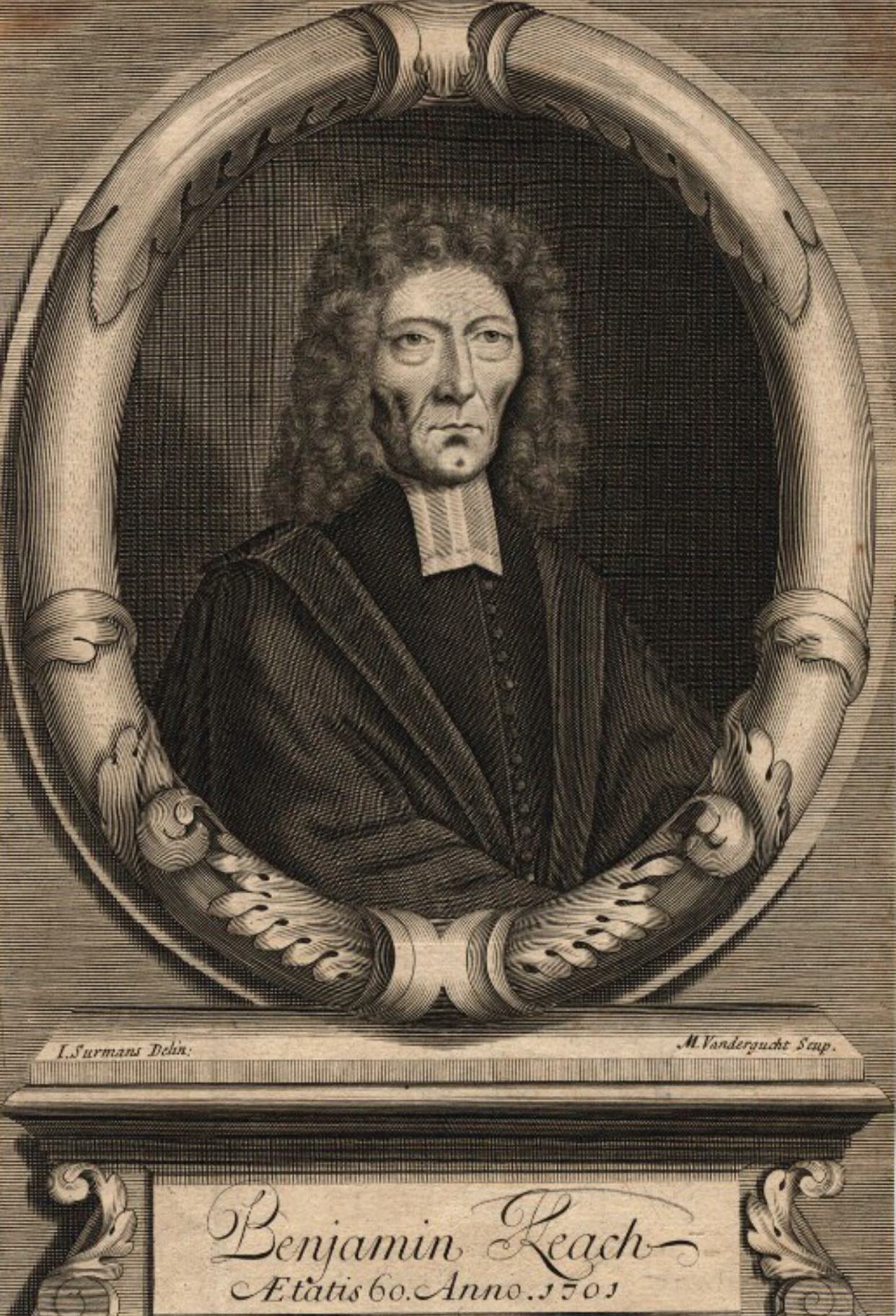
The article "The Holy Spirit Compared to the Wind" by Benjamin Keach examines the multifaceted nature of the Holy Spirit through various metaphors associated with wind, as drawn from Scripture. Keach emphasizes that just as wind is invisible, powerful, and transformative, so too is the Holy Spirit in its operations within the believer's life. Key metaphors include the invisible nature of wind paralleling the hidden workings of the Spirit (John 3:8), the purging quality of wind akin to the Spirit's cleansing of sin (1 Corinthians 2:14), and the varied actions of the Spirit likened to the diverse movements of wind. The theological significance lies in recognizing the Spirit’s essential role in regeneration, sanctification, and the believer's daily life; understanding this relationship encourages Christians to seek and observe the Spirit's influence in their faith journey.
Key Quotes
“The Wind is invisible, no man ever saw it... Likewise, the Holy Spirit is invisible and works invisibly, none of the ways and operations thereof can be perceived or seen by mortal eyes.”
“The Wind blows at God's command... The operations of the Spirit are from God; it is He that causes or commands the spiritual winds to blow upon the souls of men and women.”
“The Wind hath a cooling property... The Spirit also is of a cooling nature which abates the burning lust of concupiscence and the scorching of Satan's fiery darts.”
“The motions of the Wind are various... The Spirit moves and operates variously sometimes it blows upon one people and sometimes upon another.”
What does the Bible say about the Holy Spirit?
The Bible describes the Holy Spirit as an invisible, powerful force that works in the hearts of believers, guiding and transforming them.
Additionally, the Holy Spirit is described as cleansing and purifying the soul, much like the wind purifies the air, removing corruption and facilitating spiritual growth (Ephesians 1:18). The Spirit not only convicts of sin but also imparts wisdom and understanding, evidenced by changes in a believer's desires and actions. Scriptural references such as Romans 5:4 highlight the transformative work of the Spirit, establishing new habits in the heart that reflect a life dedicated to God.
How do we know the work of the Holy Spirit is true?
The work of the Holy Spirit is evidenced by transformed lives and the fulfillment of promises in Scripture.
Moreover, the internal witness of the Spirit aligns with external evidence, such as growth in grace, increase in holiness, and a newfound desire for communion with God (Romans 8:16). These manifestations highlight the authenticity of the Spirit's work. As believers see their lives increasingly reflecting Christ's character, they affirm that the Holy Spirit's presence is active and vibrant within them.
Why is understanding the work of the Holy Spirit important for Christians?
Understanding the Holy Spirit's work is vital for spiritual growth and effective Christian living.
Furthermore, acknowledging the Spirit’s work is essential for effective worship and service to God. In Romans 8:26, we learn that the Spirit helps our weaknesses and intercedes for us according to God’s will. Recognizing this profound role enables Christians to engage in a deeper relationship with God, facilitating a life marked by obedience and fruitfulness in their spiritual journey, as they are empowered to live out their faith actively.
THE HOLY SPIRIT COMPARED TO THE WIND
"Awake, O north Wind; and come, thou south, and blow upon my garden," &c. Song 4:16.
"The Wind bloweth where it listeth, and thou hearest the sound thereof, but canst not tell whence it cometh," &c., Joh 3:8.
"And suddenly there came a sound from heaven, as of a rushing mighty Wind, and it filled all the house where they were sitting," &c., Ac 2:2.
THE Hebrew word XXXX, and the Greek, to pneuma, (which comes from a verb that signifies to breathe, or to blow) signifies sometimes air, sometimes wind, and sometimes a spirit. The several metaphorical meanings of Wind may be read in our Philologia Sacra, to which we refer you. Sometimes it denotes things that are vain, light, and empty; as Ec 5:16; Ho 12:1, (&c.) In the texts cited, by an express similitude it is compared to the Holy Spirit, as you may see in the following parallel.
METAPHOR
I. The Wind is invisible; no man ever saw it, nor is the way of it known; it passeth the skill of man, to find out from whence it cometh, and whither it goeth, John iii 8.
PARALLEL
I. The Holy Spirit is invisible, and works invisibly; none of the ways and operations thereof can be perceived or seen by mortal eyes: "Neither doth the natural man understand the things of the Spirit, nor can he," 1Co 2:14. The workings and operations thereof are of a hidden and mysterious nature, hardly to be found out by the godly themselves.
METAPHOR
II. The Wind blows at God's command; he is said to hold the Wind in his fist.
PARALLEL
II. The operations of the Spirit are from God; it is he that causes or commands the spiritual winds to blow upon the souls of men and women.
METAPHOR
III. The Wind has a purging quality in it; it cleanseth and purifieth the air, which otherwise would be hurtful and prejudicial to man; it drives away those ill vapours and stinks that arise from the earth.
PARALLEL
III. The Holy Spirit cleanseth the soul of a sinner, purging out all those hurtful fumes, that arise from the inward corruption of the heart; it expels and works out deadness and indisposedness to good, and removes those things that cause a man to be unsavoury in his place and generation, and which indeed make him not to savour of the things of God.
METAPHOR
IV. The Wind hath a cooling property; how much do people in hot countries desire to have the Wind blow, to lay the extremity of heat.
PARALLEL
IV. The Spirit also is of a cooling nature, which abates the burning lust of concupiscence, and the scorching of Satan's fiery darts and temptations, Eph 6:16, (as is further opened in the metaphor of Water). How comfortable is it in time of temptation, to have the Wind of the Spirit blow upon the soul. The desire after evil is presently allayed thereby.
METAPHOR
V. The Wind hath a clearing quality, dispersing clouds, and causing serenity, expelling all mists and fogs, which darken the air.
PARALLEL
V. The Holy Spirit disperseth the clouds of ignorance and darkness in the understanding, and drives away those mists of temptation, which cause men to lose their way, and by its powerful influence makes fair weather in the soul, Eph 1:18.
METAPHOR
VI. The south Wind, as naturalists ohserve, is of a thawing quality, which experience oft-times shows to be true.
PARALLEL
VI. The Holy Spirit melts or thaws the cold and frozen heart of a sinner. The hearts of men are naturally congealed, like ice, hard and obdurate; but no sooner doth the Spirit come to blow upon it, but this hardness thaws and dissolves into a flood of tears, Ac 2:36-37.
METAPHOR
VII. The Wind is of a searching quality; it finds out the most hidden places, it passes through the most private corners, and undiscernible crannies.
PARALLEL
VII. The Holy Spirit tries the heart and reins, and finds out the very thoughts of men; it is said, "To search all things, yea, the deep things of God," 1Co 2:10. "It pierceth even to the dividing asunder of soul and spirit, joints and marrow, and is a discerner of the thoughts and intents of the heart," Heb 4:12.
METAPHOR
VIII. The Wind, naturalists observe,[1] has also a drying and ripening property; it dries up filthy and unclean places, that are not passable, and helps to ripen things for harvest.
[1] See Plin. lib. ii. cap. 19.
PARALLEL
VIII. The Spirit dries up the filthy issue of our sinful humours, which make our way to heaven very hard and difficult; and also ripens us, like wheat, for the Lord's harvest. It is by the influence of the Spirit, that we are "made meet for the inheritance of the saints in light," Col 1:12.
METAPHOR
IX. The motions of the Wind are various; sometimes it blows one way, and sometimes another; when it blows on high in one part of the kingdom, it is low, or hardly blows at all in another part: its several motions also have various effects and properties.
PARALLEL
IX. The Spirit moves and operates variously; sometimes it blows upon one people, and sometimes upon another; sometimes upon one church it blows powerfully, when upon another at that time its operations are hardly discernable. Again, sometimes the north Wind of the Spirit blows, which is sharp, cold, and nipping, (rebukes and reproofs of the Spirit, and afflictions, are like the blowing of the north Wind) which tends to kill the weeds and worms of our corruptions. And then again, at another time the south Wind blows, which is warm, comfortable, and refreshing; peace, inward joy, and consolation of the Spirit, are signified thereby, as the learned observe.[2]
[2] See Gardener.
METAPHOR
X. The Wind blows freely where it lists; we cannot command the Wind to blow when and how we would.
PARALLEL
X. The Spirit of God is a free Agent; it moves, blows, and operates as it pleaseth; it is not at our command. "But all these things worketh the one and the same Spirit, dividing to every one severally as he will," 1Co 12:11.
METAPHOR
XI. The Wind blows and worketh sometimes powerfully, strongly, and irresistibly; it hath a mighty force in it, bearing down all that stands in its way; it turns up the cedars of Lebanon, rends the mountains, and breaks rocks in pieces.
PARALLEL
XI. The Holy Spirit is powerful in its operations, there is no standing before it. It brings down and levels all high, mighty, lofty, and towering thoughts of men; when in good earnest it begins to work upon the heart, no opposition that is made against it is able to stand. Though Satan and evil relations, may endeavour to obstruct its workings, and hinder the soul in its purposes and resolutions heaven-wards; yet nothing is effectual to impede the powerful influences of the Spirit and grace of God; mountains of sin and opposition are broken in pieces by it. When it once blows briskly upon the soul, it presently cries out, "Lord, what wouldst thou have me to do?" Immediately, saith Saul, "I conferred not with flesh and blood," Ga 1:16.
METAPHOR
XII. The Winds many times by their blowing cause rain, by dissolving the clouds.
PARALLEL
XII. The Spirit dissolving the clouds of iniquity, waters the heart with tears of repentance and godly sorrow.
METAPHOR
XIII. Men observe or take good notice of the blowing of the wind, and by certain signs, viz., by beholding clouds, vanes,&c., they know which way it blows.
PARALLEL
XIII. The blowings or operations of the Holy Spirit ought carefully to be observed, with the access and recess thereof; for a Christian can make no earnest of the duties of religion, unless these winds blow. Moreover, there are certain signs, whereby a man may know which way the Spirit blows. 1. If the desires of the soul be after God and holiness, it is one sign the wind is in a right point. 2. If the understanding be enlightened, and clouds of ignorance scattered, the affections changed, so that heavenly objects are principally delighted in; if the will be brought to yield, and readily to submit to the will of God, the Spirit blows the right way. 3. If a man leave his old and evil courses and company; if that which was once pleasant to him, be now become grievous to him: if his discourse be savoury, and his life holy, you may know which way the Wind blows: They that are after the Spirit, do mind the things of the Spirit," Ro 5:4. If there be new habits wrought in the soul, so that although a man may sometimes be obstructed in his way, and hindered in his course heaven-ward, yet immediately, as it were by a natural or divine instinct, he falls into his former way and course of grace and holiness again; it is a sign which way the wind blows. You know the Wind is sometimes obstructed or stopped in its usual course, by houses or trees, &c., so that you can hardly discern by vanes or smoke, &c., which way it is; so it may be with a Christian. Besides, sometimes you can scarcely perceive any wind to blow at all, no more can you the operations of the Spirit.
METAPHOR
XIV. The Wind, naturalists observe, causes some flowers to wither, and hang down their heads.
PARALLEL
XIV. The Spirit of God blowing upon the soul of a sinner, causes his pride and external glory to fade away, which is compared to the flower of the field, "The rod hath blossomed, pride hath budded," Eze 7:10. "All flesh is grass, and the goodliness thereof is as the flower of the field: the grass withereth, the flower fadeth, because the Spirit of the Lord bloweth upon it," Isa 40:6-7.
METAPHOR
XV. The Wind, though it be invisible, and cannot be seen, yet it may be heard, and its effects are seen, and its influences evidently felt and experienced by all.
PARALLEL
XV. The Holy Spirit, though it be invisible, and its operations mysterious, and not to be discerned by many men, yet they may see and hear the effects of it, they may perceive what alteration and changes it makes in this and that man: such as were very vicious and ungodly, are by the workings of the Spirit formed into another likeness, and become pious, and truly religious; that tongue that was wont to blaspheme God, they now hear to praise and admire him, &c. And believers themselves clearly feel and experience the blessed effects and operations thereof in their own souls.
METAPHOR
XVI. The Wind cherishes and causes plants and grass to grow and thrive; as it is observed by some, that nothing will grow and thrive without it. It is thought, that the roots of things being moved by the wind, it causes them to root the more, making the ground to give way unto them, by which means they take the faster root.
PARALLEL
XVI. The Spirit of God causes the saints to grow in grace, and in the knowledge of our Lord Jesus Christ. The Spirit moves upon the affections, and every other faculty of the heart, and by that means causes the seed of grace to take the deeper root. The ground or spirit of a Christian must be broken, and loosened from the world, and from the love of sensual things more and more, by the wind of the Spirit, or he will not be fruitful in grace and good works.
METAPHOR
XVII. The Wind is useful for navigation, to carry a ship from one port unto another; for if the Wind do not blow, they are becalmed; nor can they sail at all without it.
PARALLEL
XVII. Unless the Spirit blow upon the Soul or upon the Church, they lie becalmed, and cannot sail towards the haven of eternal happiness; no duty or service, performed in public or private, can avail any thing; we get not a bit of ground, nor any real advantage by them, unless they are performed by the help and influence of the Spirit: "God is a Spirit, and they that worship him must worship him in Spirit and in truth," Joh 4:24.
METAPHOR
XVIII. The Wind is very profitable to fan or winnow wheat, to sever the chaff or light seed from the good corn or grain.
PARALLEL
XVIII. The Holy Spirit winnows and fans God's people, who are compared to wheat and good grain. It is said of Christ, "His fan is in his hand, and he will throughly purge his floor," Mt 3:12. How doth Christ fan and purge his people, but by his word and Spirit? It is that which cleanses and makes them pure from the dross and pollutions of sin and wickedness, as the apostle observes, 1Co 6:11.
METAPHOR
XIX. The Wind rises high, and blows powerfully; sometimes it riseth on a sudden, and at other times gradually.
PARALLEL
XIX. The Spirit of God sometimes comes on a sudden upon a soul, and by its powerful operation, in a short space makes a great and wonderful change; as appears in the case of Saul; but at other times it raiseth and worketh upon some men's hearts gradually.
METAPHOR
XX. Naturalists tells us,[3] that an earthquake is occasioned by the Wind; certain exhalations, or wind, being got into the earth, shade it.
[3] See Pliny; also Speculum Mundi, p. 173.
PARALLEL
XX. The Holy Spirit, when it gets into the heart of a man, by its powerful operation it makes him tremble, and shakes him to pieces, as it were, causing strange, though glorious workings in the inward man. This he doth by setting the evil of sin before his eyes, and his woeful condition thereby. A man never trembles as he should, till the Spirit enter into him. Saul was taken with such a trembling, when the Spirit entered into him, and began to work, that he could not stand upon his feet.
METAPHOR.
I. Some Winds are sent in judgment, to destroy and overthrow; which many times blow down houses and trees, and make great desolation: witness that prodigious Wind in the year 1661.
DISPARITY
I. But the Spirit being the great promise of the Father, and the fruit and effect of Christ's ascension, is sent in mercy to strengthen and establish, and is so far from destroying or overthrowing, as that it causeth the Church in general, or a Christian in particular, to take the more firm root, and stand the faster, Eph 3:17; Col 2:7.
METAPHOR
II. Some Winds are of a blasting nature, and cause the fruit to fall before it be ripe.
DISPARITY
II. But the Spirit, as compared to the north and south Winds, ripeneth a Christian in grace, and causeth the spices thereof to flow forth, Song 4:16. Grace ripeneth and fitteth for glory. Ps 84:11.
METAPHOR
III. There hath been a Wind, in which the Lord hath not appeared, 1Ki 19:11.
DISPARITY
III. But there is no greater demonstration of the Lord's presence with his people, or with a soul, than by the indwelling of his Spirit, Joh 14:17. "Where two or three are gathered together in my name, there am I," saith Christ, Mt 18:20.
METAPHOR
IV. Some Winds are compared to words, and speeches of one that is desperate.
DISPARITY
IV. "But no man speaking by the Spirit, calleth Jesus accursed," 1Co 12:3. Men are by the Spirit brought into their right minds: witness the Prodigal, Lu 15.
METAPHOR
V. Sometimes "Wind is made use of to set forth that which is vain and empty, Pr 11:29.
DISPARITY
V. But wherever the holy scriptures make mention of the Holy Spirit, it is to set forth persons and things, as they are, substantial; neither is there any thing that is more opposite to lightness or vanity, than the work of grace wrought by the Spirit in the hearts of believers, Ga 5:22.
METAPHOR
VI. Some Winds are without rain. "Whoso boasteth himself of a false gift, is like clouds and Wind without water," Pr 25:14.
DISPARITY
VI. But the Wind of the Spirit is always attended with sweet dews and showers of rain, being frequently thereunto compared in scripture.
METAPHOR
VII. If some Winds be observed, men must not plough nor sow their seed: "He that observeth the Wind, shall not sow, and he that regardeth the clouds, shall not reap," Eccles.xi. 4.
DISPARITY
VII. But whosoever plougheth or soweth, in expectation of a blessed crop, must observe the Wind of the Spirit, without which his ploughing and sowing will be altogether unprofitable, if not sin.
METAPHOR
VIII. Man's iniquity is compared unto the Wind.
DISPARITY
VIII. But contrary-wise, there is no work of the Spirit in the hearts of men, but what is directly contrary thereunto, and tends to the mortifying of all sin and iniquity whatsoever.
INFERENCES
I. We may infer from hence, how hard a thing it is for us to know the nature of the work of the Spirit in regeneration upon another man's heart, some of its operations being so secret and invisible.
II. Let it teach us to pray to God, that he would be pleased to raise this Wind, and cause it to blow briskly upon our souls and churches. And let us be contented with that Wind of the Spirit which God sends to blow upon us, whether it be the north Wind of affliction, adversity, and rebuke, or the south wind of peace, joy, and prosperity, both being absolutely necessary; as we would have the one, so we cannot be without the other.
III. Bless God when you find the influences of the spiritual Wind upon your own souls, or upon the souls of others.
IV. Let it be also a warning to all true believers, as they would be preserved in their Christian course, and be kept from being tossed to and fro, and so from the danger of rocks and sands, to take heed in steering their course, by what wind they sail, because there are some Winds of doctrine, that arise from "The sleight of men, and cunning craftiness, whereby they lie in wait to deceive," Eph 4:14; called also, "Divers and strange doctrines," Heb 13:9.

Comments
Your comment has been submitted and is awaiting moderation. Once approved, it will appear on this page.
Be the first to comment!