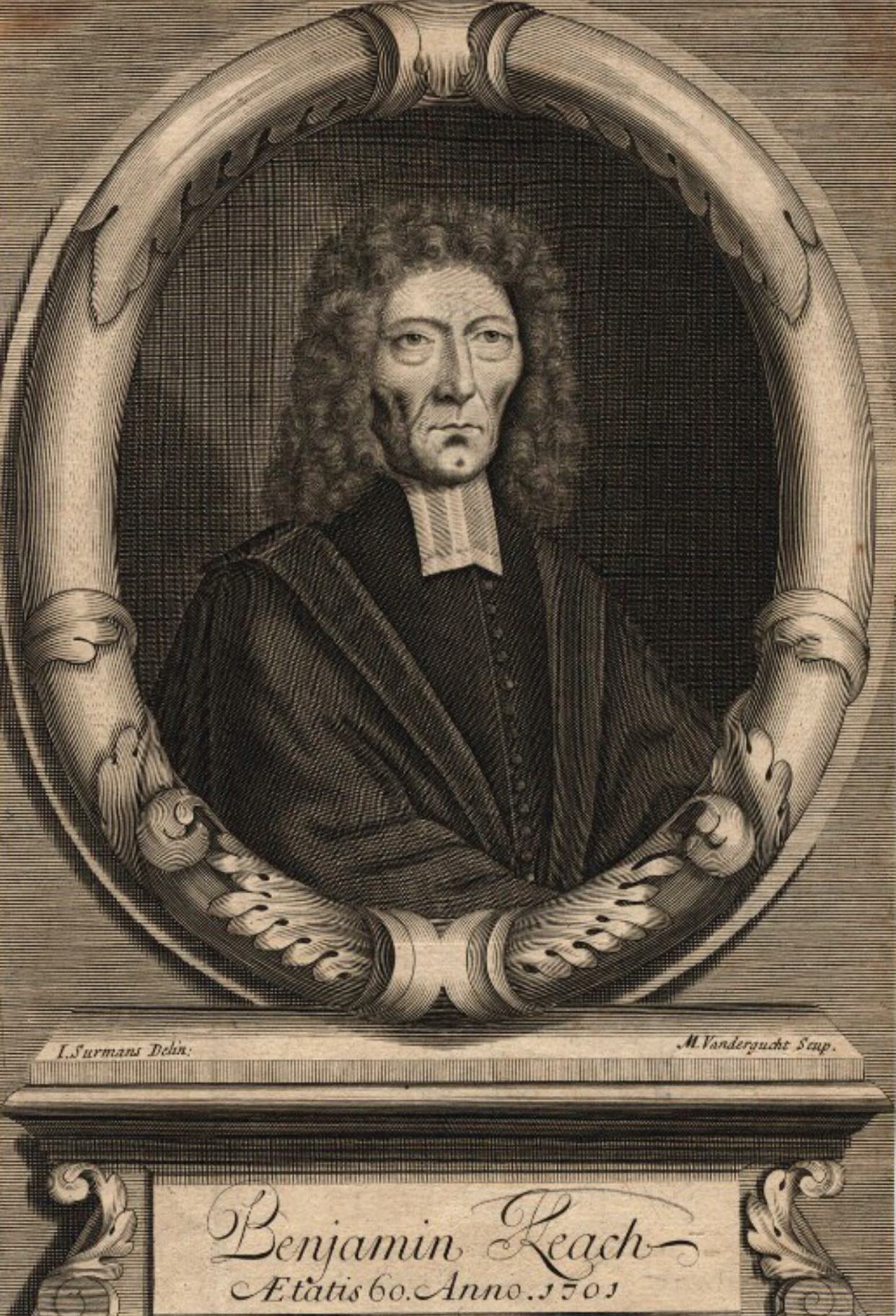
The article "The Word of God Compared to Light" by Benjamin Keach delves into the theological metaphor of the Word of God as light, exploring its implications in Biblical theology. Keach presents its properties—like clarity, guidance, and purifying qualities—by linking the metaphor to specific Scripture references such as Psalm 119:105 ("Thy word is a lamp unto my feet") and 2 Peter 1:19, emphasizing that God's Word illuminates spiritual truths and reveals the character of God. He explores various dimensions of light, including its ability to penetrate darkness, manifest reality, and guide believers, stressing the transformative power of the Gospel in illuminating one's understanding of sin, salvation, and eternal life. The practical significance lies in how this illuminative quality of Scripture calls believers to rely on it for guidance, comfort, and assurance of God's righteousness, ultimately linking the Word to the work of Christ and the Holy Spirit in the believer's life.
Key Quotes
“Thy Word is a lamp unto my feet and a Light unto my path.” — Psalm 119:105
“The word and blessed Gospel of Christ is so great a Light that it makes wonderful discoveries to the children of men.”
“When you would see what a thing is that you may make a true judgment of it, you bring it to the Light.”
“The Gospel and word of God disperseth and scattereth all the fogs and mists of darkness and error.”
What does the Bible say about the Word of God as light?
The Bible describes the Word of God as a light that illuminates our paths and gives clarity to our understanding, as seen in Psalm 119:105.
Psalm 119:105, 2 Peter 1:19
Why is understanding the Gospel as light important for Christians?
Understanding the Gospel as light is crucial for Christians as it reveals truth, exposes sin, and guides believers in their spiritual journey.
Ephesians 5:8, Psalm 119:105
How does the Word of God act as a purifying light?
The Word of God acts as a purifying light by cleansing the hearts and lives of believers, as reflected in Psalm 119:9.
Psalm 119:9, John 15:3
METAPHORS, ALLEGORIES, SIMILES, TYPES, ETC., THAT RELATE TO THE MOST SACRED WORD OF GOD. BOOK 3:
THE WORD OF GOD COMPARED TO LIGHT
"Thy Word is a lamp unto my feet, and a Light unto my path," Ps 119:105.
"We have also a more sure Word of prophecy whereunto ye do well that ye take heed, as unto a Light that shineth in a dark place," &c. 2 Pet. i 19.
"Lest the Light of the glorious 'Gospel of Christ who is the image of God should shine upon them" &c. 2Co 4:4,6.
IN handling this Metaphor we will (1.) Show what Light is. (2.) Give its various acceptations. (3.) Run the parallel, and largely open the properties of Gospel Light; concluding with practical improvements upon that and some dependant and collateral points.
Light properly taken, is thus defined, Lux est claritas seu splendor in Corpore luminoso, vel extra a corpore luminoso exiens--- that is, Light is a clarity, brightness or splendour in a luminous body, or proceeding from it---it is called in Hebrew XXX (or) from whence comes the Greek opaw, cerno, to behold, which cannot be done, but where there is light. The Hebrew word XXXX Maor is properly a lightsome or lucid body, as the sun, moon, aud stars, Ge 1:14-15. The Greeks call it fwv, Mt 17:2; Ac 26:23; The Latins lux and lumen. It is threefold viz. there is a natural Light, a Light of grace, and a Light of glory; the first is common to all that have the sense of seeing, the second to believers only on earth, the third to the saints and glorified spirits in heaven.
The second sort of which we treat, proceeds from Christ who is called the Light, Joh 1. and his Gospel, which is also called Light, because it has the same influence and efficacy in illuminating the minds of men (which without it are spiritually dark) as the sun and other lucid bodies have, to help our corporeal eyes in the discovery of objects.
Light metaphorically is put for life itself, Job 3:16,20-21. (2.) For any prosperity and joy of mind arising from thence, Es 8:16. (3.) For the open and manifest state of things, Mt 10:27, Zeph, 3:5, Joh 3:21; 1Co 4:6. (4.) For favour and good will, Pr 16:15. (5.) For the mystery of regeneration, (1.) with respect to the original cause of it, viz., the Word and Spirit of God, Ps 43:3; Pr 6:23; Isa 2:5,20; 2Co 4:6; 1Jo 2:8. (2.) With respect to the formal cause, which is the saving knowledge of Christ, and true faith, Ac 26:18; Eph 5:8; 1Pe 2:9; 1Jo 1:7. Hence believers are called the sons of Light, Lu 16:8; Eph 5:8. 1Th 5:5, and the graces of the Spirit and effects thereof, the armour of Light, Ro 13:12. (3.) With respect to the final cause, the last scope and effect of faith, which is life eternal, Isa 60:19-20; Joh 8:12; Ac 26:23, 2 Tim. 1:10, &c.
More particularly by a Metaphor, Light is put for knowledge, Da 5:11; Isa 60:3. For believers, Eph 5:8, for the ministers of the Gospel, Mt 5:14, for God himself, 1Jo 1:5 Natural Light was the first perfect creature that God made of this visible world, Ge 1:3.
Light is put for the morning, Ne 8:3, "And he read unto them---from the Light (so the Hebrew) until mid-day" noon-light in the Hebrew XXXXX Zocharajim) signifies
double Light, or that which is extraordinary shining. The devil is called an angel of Light, 2Co 11:14; that is, by himself or agents he assumes a specious and seeming sanctity on purpose to ensnare and deceive the godly. God is said to "dwell in unapproachable Light," 1Ti 6:16, that is, in such transcendent glory, that no mortal eye can approach unto. There is nothing so illustrious and glorious as Light, hence the joys of heaven are set out by it.
In what respect the word is compared to Light, take as followeth.
METAPHOR
I. Light is pleasant and very comfortable. "Truly Light is sweet," saith Solomon, "and a pleasant thing it is for the eyes to see the sun," Ec 11:7. How grievous is it to be blind, or to be kept in a deep and dark dungeon without seeing or beholding the Light.[1]
[1] Gluku fwv, sweet is the Light.
PARALLEL
I. The word or Gospel of Jesus Christ is very pleasant, and a delightful thing. How woeful was the state of England in former times when men were kept in the dungeon of Popish darkness, without the precious Light of God's word. Light is compared to gladness, and a good day, Ps 97:11. Many good days have we enjoyed since God sent out his Light and truth amongst us, Ps 43:3.
METAPHOR
II. Light hath a penetrating quality, it is of such a piercing and subtle nature, that it conveys itself into the least crevice; you can hardly make a fence so close as wholly to keep out light.
PARALLEL
II. The word of God is of a searching and penetrating nature, the apostle saith, "It is quick and powerful, sharper than any two-edged sword, piercing even to the dividing asunder of soul and Spirit, and of the joints and marrow, and is a discerner of the thoughts and intentions of the heart," Heb 4:12.
It is a hard matter for a man, though never so wicked, to shut out or prevent the Light of God's word from darting into and piercing of his evil and accusing conscience.
METAPHOR
III. Light makes manifest. Great Light discovers and makes things manifest, causing them to appear as they are in their proper nature: which in the dark, many times are taken to be that which indeed they are not. When you would see what a thing is, that you may make a true judgment of it, you bring it to the Light. "Whatsoever maketh manifest," saith the apostle, is Light, Eph 5:13.
PARALLEL
III. The word and blessed Gospel of Christ is so great a Light, that it makes wonderful discoveries to the children of men.
1. It makes manifest not only that there is a God, but also what a God he is. Not only his being, but also his manner of being.
2. It discovers the creation of the world.
3. The state of man, before he fell and after his fall.
4. The horrid nature of sin.
5. The secret counsel and eternal love of God to lost man, together with the severity of God towards fallen angels.
6. It makes known the Lord Jesus Christ and his blessed design in coming into the world: his incarnation, nativity, life, death, resurrection, ascension, and intercession, &c.
7. It discovers how God is to be worshipped: all his laws, ordinances, and institutions are revealed by it.
8. It discovers the true church, which otherwise cannot be known.
9. Lastly, It makes manifest whatsoever is needful or necessary to be known, believed, or practised in order to salvation, 2Ti 3:15-17.
METAPHOR
IV. Light hath a directive virtue, it guides men in their way: the traveller by the benefit of Light sees what path to keep; and how to avoid the dangers that may attend, should he turn to the right hand or to the left.
PARALLEL
IV. The word of God directs and guides men in the right way. Hence David saith, "Thy word is a lamp unto my feet, and a Light unto my paths," Ps 119:105. God is gracious unto mankind in this respect, viz., he leaves them not at an uncertainty without an infallible guide in matters of religion. Take away this unerring rule, and what confusion would the Christian world be in: one man might say this is the way, and another that; I walk, saith one, by the guidance of the Spirit, and so saith another that teacheth quite contrary things. Saith a third you are both out of the way, it is I alone that am led by inspiration and ye are in darkness. Others plead for the Pope and general Councils, which have been miserably contradictory one to another, and none of these can give better demonstrations, touching the truth of what they preach and practice, than the rest; being not able to confirm their doctrine by miracles; and so consequently how shall a poor doubtful soul be directed in the way to heaven by either or any of them. For were not the holy scripture the rule; but contrariwise the Light within, or inspiration, &c., then must a man be able to confirm and prove what he saith in such a way, or by such means that no deceiver or impostor can pretend unto, or do the like.
Object. But is not the Spirit of God above the scriptures, which you call the word? did not the Spirit give forth the scriptures? If so, sure then that is of the greatest authority and only Light that can best direct men into the right way.
Answ. That the Holy Spirit or third Person of the holy Trinity is a greater Light than the Holy Scripture is not denied, by virtue of which holy men of old were inspired that gave them forth; yet the question is, whether any man now hath such a measure of the Spirit in him which is a greater Light than the written word, and to whom others are bound to adhere and be directed by: for it is this only which is denied.
METAPHOR
V. Light hath a cheering, warming, and reviving quality. Light contributes much to the vegetation, growth, and life of plants and other creatures: Light and motion are the cause of heat which the heavenly bodies send down upon earth. Light is that instrument whereby all influences of heaven are communicated and dispersed to the world.
PARALLEL
V. The word and Gospel of Christ hath a cheering and quickening virtue. "This is my comfort in my affliction, thy word hath quickened me," Ps 119:50. And in another place, "I will never forget thy precepts, for with them thou hast quickened me," Ps 119:93. As it is grievous to be spiritually blind, or in the dark region and dungeon of idolatry, sin, and unbelief; so on the other hand how comfortable is it to enjoy the blessed word and Gospel of Jesus Christ!
METAPHOR
VI. Light hath a purging and purifying virtue. Fogs and mists that are gathered in darkness are dispersed and scattered when the Light comes, hence Light is called the refining-pot of nature. The world, saith a worthy divine, would be an unwholesome pest-house if it had no Light.
PARALLEL
VI. The word and Gospel of Christ hath a cleansing, purging and purifying virtue in it. "Wherewith shall a young man cleanse his way? by taking heed thereto according to thy word," Ps 119:9, "Now ye are clean through the word which I have spoken unto you," Joh 15:3. The Gospel and. word of God disperseth and scattereth all the fogs and mists of darkness and error. It is the refining-pot of truth. What an unwholesome pest-house would the world be in a spiritual sense, were it not for the Light and excellent virtue of God's holy word.
METAPHOR
VII. Light is of an undefileable nature. Though it pass through sinks and most polluted places, yet it contracts no defilement; it cleanseth all things, but is defiled by nothing. It is a quality so spiritual that nothing can fasten upon it to pollute it.
PARALLEL
VII. The word and Gospel of God is very pure and of an undefileable nature, Ps 119:140. What filthy sinks hath it passed through, and what means hath been used by the Popish adversaries and others to corrupt and pollute it, and yet no defilement cleaveth to it, it remains unmixed, and pure, still shining forth gloriously; such is the excellent nature of it, it purifieth the hearts and lives of men, and nothing can fasten upon it to pollute it.
METAPHOR
VIII. Light is glorious for beauty and splendour. Hence the glory of heaven is called Light. There is nothing of all created beings so glorious as the Sun, and Light is a resplendency and shining forth of it.
PARALLEL
VIII. The word and Gospel of Christ is called by the apostle, "The glorious Gospel," 2Co 4:4, the Gospel is exceeding full of glory. There is nothing in it but that which is very glorious. Here you have a resplendency and shining forth of the Sun of Righteousness. Gloria quasi clara, saith Aquinas, because glory is the bright shining forth of excellency, now it is transcendent excellency and splendour shines forth, as may be demonstrated many ways.
1. It is glorious, in respect of the Author and Fountain from whence it proceeds.
2. It is glorious in a comparative sense.
3. It is glorious in respect of itself.
First, As Light is glorious because it is the most excellent rays, resplendency, and shinings forth of the sun; so is the Gospel, because it is the glorious shining forth and resplendency of Jesus Christ the Sun of Righteousness.
Secondly, It is glorious in a comparative sense, it excels the law, hence called a better Testament; though that was glorious, yet it had no glory in this respect, by reason of the glory that excelleth, 2Co 3:10.
I. The Gospel excels the law in respect of the names of the one and the names of the other.
1. The law is called the letter; the Gospel, the ministration of the Spirit.
2. The law is called a ministration of death, the Gospel a ministration of life.
II. The Gospel excels in glory above the law.
1. In regard of the light and perspicuity of it, the law was full of obscurity, clothed with many ceremonies and mysterious sacrifices.
2. They were at a great loss touching the main drift and end thereof, 2. Cor. 3:13. God spake as it were under a veil.
III. The Gospel is clean and plain; Christ beheld, heard, handled, &c., the mysteries long hid, opened, and explained fully: "We behold with open face," &c., 2Co 3:17-18.
IV. The law was appointed to be but a leading ministration, and in subserviency to the Gospel, our schoolmaster to bring us to Christ, Ga 3:24.
V. The Gospel is more glorious, or excels the law in respect of the strength of the one and weakness of the other "What the law could not do, in that it was weak through the flesh, God sent forth his Son," &c., Ro 8:3.
The law wounds, but cannot heal; it shows a man he is dead; but it cannot give him life; it shows man he is naked, but it cannot clothe him.
The Gospel gives life, heals, clothes and comforts; the one shows we are in prison, the other brings us out, no salvation by the one, and none without the other.
VI. The Gospel excels in glory above the law, in regard of the discovery there is made therein of the grace and mercy of God; the one shows God is just and severe, and will not clear the guilty; the other shows he is not only just, but also gracious. If any grace shone forth under the law, it was only beams of Gospel light darting forth darkly in it.
VII. The Gospel is more glorious in regard of the chief administrators of the one and of the other. The one were, (1.) Angels, "If the word spoken by angels were stedfast; who have received the law by the disposition of angels and have not kept it, Heb 2:1,4; Ac 7:53. (2.) Moses, a servant, one that spake on earth, the other Christ, the Lord of life and glory who speaks from heaven. "How shall we escape if we turn away from him that speaketh from heaven?" Heb 12:25.
VIII. The Gospel excels the law in respect of priesthood. Aaron and his sons were Priests of the law, Christ is the only Priest of the Gospel.
1. The priests of the law were but men, no more than men; Christ, God-man.
2. They had infirmities, sin and guilt in their hearts and lives as well as others. Christ had none, in his mouth was found no guile.
3. They were made priests without an oath, but Christ with an oath, Heb 7:21, so greater solemnity at his instalment into office.
4. They could not continue by reason of death, and they truly were many because were not suffered to continue, by reason of death; but Christ dieth not, "He ever liveth to make intercession for us, but this man because he continueth for ever hath an unchangeable priesthood," Heb 7:23-25.
5. Christ was more merciful and filled with greater bowels than they, "He hath compassion on the ignorant, and on them that are out of the way," Heb 5:2.
6. Christ as Priest, was the substance, the antitype of Aaron and his priesthood.
7. There is completeness and perfection in Christ's Priesthood; but it was not so touching Aaron's. "If therefore perfection were by the Levitical priesthood, &c., the law, that made nothing perfect," Heb 7:11,19.
IX. The Priesthood of Christ under the Gospel excels Aaron's in respect of word and office, &c.
1. He was to enter into the holy place.
2. To appear before God.
3. To bear the sins of the people, Ex 28:38.
4. To make an atonement, Le 16:32.
5. To judge of uncleanness, Le 13:2.
6. To offer incense, Le 16:17-18.
7. To determine controversies, De 17:8.
8. To bless the people: and many other things which Jesus Christ infinitely excels in.
1. Christ is entered into the true holy place, Sanctum sanctorum, the holy of holies, heaven itself.
2. He appears really before God for us, being set down on the right hand of the majesty on high, &c.
3. He hath, as the great Antitype, borne our sins in his own body upon the tree.
4. He hath made a complete and perfect atonement.
5. He judges our uncleanness both of the heart as well as of the flesh.
6. He resolves all our doubts, ends controversies; speaks peace to the disconsolate, a word in season to him that is weary.
7. He offers incense; "And there was given him much incense that he should offer it with the prayers of all saints," Re 8:3.
8; He gives down all blessings; "Him hath God sent to bless you in turning away every one of you from his iniquities," Ac 3:26.
X. The Gospel excels the law in respect of sacrifices.
1. Those sacrifices under the law were not so excellent, there was not that worth in them as in the sacrifices of the Gospel. What was the blood of bulls, bullocks, and lambs? These were part of those legal sacrifices.
Christ offered up his own body, poured forth his precious blood to take away our sins.
2. They were offered often to atone for iniquity daily, every year;
But Christ hath offered up himself in sacrifice once for all. "By one offering he hath perfected for ever them that are sanctified," Heb 10:14: that which they were always or continually doing, and yet could not accomplish, he did by one single sacrifice, and that for ever.
XI. The law required perfect righteousness, and nothing less would be accepted, and so consequently no soul could thereby be delivered from terror and bondage; but the Gospel (through Christ's perfect righteousness acted in his own person for us) accepts of sincerity in the room and stead of the perfect keeping the whole law.
XII. In respect of the extent of the one and of the other.
The law was only given to Israel, or unto the lineal seed of Abraham and to the proselyte stranger; he dealt his laws and statutes to Israel, he did not so to any nation, &c.
The Gospel is extended to all the people and nations under the whole heavens: "Go into all the world and preach the Gospel to every creature," Mr 16:15. "Whosoever believeth hi him shall not perish but have eternal life," Joh 3:16.
XIII. The Gospel excels the law in the easiness and sweetness of it; the precepts of the law were many more in number, and hard to learn and remember, and very difficult and painful some of them to do (particularly circumcision) and also very chargeable beyond what the Gospel is: "My yoke is easy, and my burden is light," Mt 11:28-29.
XIV. The Gospel is glorious above the law in regard of the promises of it, called better promises, better covenant, better hope, Heb 7:19.
XV. It is more glorious in respect of its duration; the law was but for a time. The servant abides not in the house for ever, but the Son abides forever. An everlasting covenant, an everlasting priesthood, an everlasting Gospel. Joh 8:34. No other ministration to be looked for till the end of the world.
Thirdly, The Gospel is glorious in respect of itself. (Here we shall be large.) If we have respect to the historical part, the Gospel contains a glorious history; there is that in it which may affect every person, please every curiosity; what is there in any history which may commend or illustrate its glory and excellency which the Gospel comes short
in?
1. Some persons delight to read and hear histories that treat of love, and amorous stories.
2. Some are more affected with, such that treat of martial exploits or achievements of wars, of the conquering of kingdoms and nations, and overcoming mighty champions, &c.
3. Some rather commend such histories that treat of those great rarities which are in many nations and kingdoms of the world, and of the cities, laws, customs, and other things of the like nature that are in some countries.
4 Others are more pleased with such histories that treat of things different from all these.
Now the Gospel of Christ contains variety of matter upon every respect; what is there famous, rare delightful, or marvellous, but it is out-done here?
First, concerning love; what history may compare with the Gospel in this respect? Here you have an account of a mighty King whose dominions, power, and glory was infinite, who was higher than the highest, and ruled over all; who had but one Son and he most dear to him and lay in his bosom, the joy and delight of his heart, the very express image of the Father; whose beauty, loveliness of his person, and other personal excellencies and perfection, had we the tongue of men and angels, we could not set forth the thousandth part thereof. This glorious King had a mind to dispose of his Son in marriage, and to this end very easily proposed the matter to him, and whom he had chosen for him. As also the ways, means, and manner how or what he must do in order to obtain her for himself. To which the Son with abundance of joy consented. And so it fell out, that the person agreed upon to be the intended spouse, was once in great favour with this mighty King, and a near dweller to him in Eden: but for horrid rebellion and treason was banished his presence and was fled into a far country. And now there was no way for the glorious Prince to accomplish his business but he must suit himself in a fit equipage, and take a journey into that country where this creature was strayed to.
1. Now were the nature and glory of a kingdom considered, which Jesus Christ left, or the place from whence he came.
2. The greatness of his glory there, and excellency of his Person.
3. The length of the journey he undertook.
4. The nature of that doleful and miserable place or country into which he came.
5. His great abasement or manner of his coming.
6. What he met with, or how entertained at his first arrival.
7. What the quality and condition of the creature was, for whose sake he came.
8. What he suffered and underwent from the greatness of that precious love he bore to the said creature.
9. And how after all this he was slighted and rejected by this rebellious one, and of his much patience and long-suffering before he took his last denial, together with the powerful arguments and ways he used, and doth use, to obtain the soul's affection. If these things, I say, were considered, this history will appear to every discerning person the most pleasant and glorious for love that ever mortal had. See metaphor Bridegroom.
Secondly, should we speak of warlike achievements, what history in this respect can compare the history of the Gospel? was there ever such a champion as Jesus Christ, or such terrible battles fought as were fought by him? as witness that glorious battle of his with Satan the mighty king of the bottomless pit: also those conflicts he had with sin and wrath in the garden; and last of all with death the king of terrors, over all which he obtained a perfect conquest, Mt 4:3,11.
Thirdly. As touching great rarities and wonderful things, which some histories abound withal; none afford such wonder as doth the Gospel; is it not marvellous that a woman should compass a man? That he that made the world should be born of a woman? That the ancient of days should become a child? That death should be destroyed by death and many other like mysteries the Gospel abounds with.
Secondly, As the word and Gospel of God is glorious in respect of the historical part thereof, so its glory appears in respect of those titles or epithets given to it.
I. It is called the word of reconciliation.
1. Because it shows how peace and reconciliation is made between an offended God and offending creatures.
2. Because by it terms of reconciliation are offered to poor sinners.
3. Because it is the medium or means God offered to remove the enemy that is in sinner's hearts.
II. It is called the Gospel of the grace of God, and may well be so termed, Ac 20:24
1. In respect of the testimony that is borne therein of God's great grace and favour to men in giving Jesus Christ for them.
2. In respect of its being the clearest discovery of God's grace, that ever was afforded to the children of men.
3. Because it is the instrument or means by which God works grace, or makes the souls of men gracious, who were once void thereof and ungodly, so that "Faith comes by hearing, and hearing by the word of God," Ro 5:17.
4. Because it is the way by which God increaseth, strengthens, and perfects his blessed grace in the souls of his elect, Eph 4:12.
III. The Gospel is called the Gospel of peace, Eph 6:15.
1. It is a message of peace: "Peace, peace to him that is afar off, and to him that is near." "And came and preached peace to you which were afar off, and to them that were nigh," Isa 62:12; Eph 3:17.
2. Because it is that, which being received, alone pacifies the conscience of a wounded sinner, "He sent his word and healed them," Ps 107:20.
3. Because as an instrument it brings the soul into a state of peace and friendship with God, and reconciles men one to another.
IV. It is called "the Gospel of the kingdom," Mt 24:14.
1. Because it discovers the Gospel Church, which is called often in the holy scripture, "The kingdom of God," Lu 10:11.
2. It shows the way into the kingdom of God.
3. It fits and prepares men and women for Christ's spiritual kingdom, Mt 11:12.
4. It contains all the laws, and ordinances, and customs of the kingdom.
5. It enriches all the true and sincere subjects of the kingdom.
6. In it are contained all the privileges and immunities of the kingdom.
7. It shows men the ready way to the kingdom of glory, and from hence may fitly be called the Gospel of the kingdom.
V. The Gospel is called "The word of life," Php 2:16.
1. Because it shows who is our life, Col 3:4.
2. It shows the way how we come to be made alive, viz., by Christ receiving the Spirit of life for us, as Mediator, and laying down the price of his own blood; he died that we might live. "I am come that they might have life, and that they might have it more abundantly," Joh 10:10.
3. The Gospel may be called the word of life, because by the help of the Spirit it works life in us, it is hereby we are quickened, and raised from death to life, "The dead," saith our Saviour, "shall hear the voice of the Son of God, and they that hear shall live," Joh 5:25.
4. It is by the word and Gospel of God life is maintained in us, it is the support of our spiritual life.
"Man lives not by bread alone, but by every word that proceedeth out of the mouth of God,"' Mt 4:4.
5. It leads to eternal life, all those who believe and follow the holy rules and directions thereof.
VI. The Gospel is called "The power of God unto salvation," Ro 1:16, i.e. a mighty and glorious instrument or means of God's saving power: metalepsis.
VII. The Gospel is called the joyful sound; the law was a sound of fears and terror, a sound or voice of words that were exceeding dreadful. The Gospel is the anti-type of the sounding of the trumpet of the great jubilee, to proclaim full liberty and freedom from all bondage and tyranny of sin, Satan, hell, and wrath, Heb 12:19; Le 25:8-10.
VIII. The Gospel is called the unsearchable riches of Christ, Eph 3:8.
1. It shows how rich our Mediator and Husband is, "In him are hid all the treasures of wisdom and knowledge," "it pleased the Father that in him all fulness should dwell," Col 2:3; 1:19.
2. It shows the nature of his riches both of grace and glory.
3. The Gospel makes all spiritually and gloriously rich, who truly receive it, though never so poor before, Eph 1:17-18; 3:16,
4. All true riches are communicated to us through the Gospel, such that would have this golden ore must dig in this mine; this is the field where the pearl lies hid.
IX. The Gospel is called "The Word of faith," Ro 10:8.
1. It presents the object before the soul.
2. It opens the way to see this object.
3. It gives, by means of the Spirit, a hand to take hold of the object.
X. The Gospel is called the faithful word. Because whatever his promises are, they are faithfully performed, Tit 1:9.
XI. It is called the ministration of the Spirit, 2Co 3:9, because through it persons come to receive the Spirit, "Received ye," saith the apostle, "the Spirit by the works of the law, or by the hearing of faith," Ga 3:2.
XII. It is called the Gospel of salvation.
1. It interesteth the soul, through the Spirit, unto salvation, as well as shows the way of it.
2. There is no other way of salvation but that which is revealed or manifested therein.
XIII. It is called the glorious Gospel of God.
1. The glory of God shines forth in it.
2. It was the glorious contrivance of his eternal wisdom.
3. It wholly exalts God, and sets him forth in all his blessed and most glorious attributes and perfections, beyond what any other ministration whatsoever doth.
XIV. The Gospel is called a book, Re 22:18.
1. Yea, it is a book by the inspiration of God, as all holy scriptures were. All other books, save the Bible, are human, but this is sacred and divine.
2. There is a blessing pronounced to him that reads this book, Re 1:3.
3. And a much greater blessing to him that understands it, and keeps the things therein contained.
4. It is a book of all truth and no error, can that be said of any other book?
5. It is a book ratified and confirmed by wonders.
6. It is a book that all other books point to. Moses points to it, the Prophets point to it, all holy books of godly men point to it.
7. It is a book that all good and godly books are out of.
8. It is a book that hath filled the world with good and profitable books. These things considered, may serve as a sound gradation to set forth the glory of the Gospel and word of God.
Thirdly, To come more directly unto the thing itself to set forth and further illustrate the glory and splendour of the Gospel of Jesus Christ.
1. It is glorious in respect of the time and contrivance of it. It was found out or contrived before the world began. Hence Christ is said to be a Lamb slain before the foundation of the word.
2. It is brought in as a result of that great and glorious council which was held in eternity. Hence Jesus Christ our Mediator is said to be delivered up by the determinate counsel and foreknowledge of God---God, that is Father, Son, and Holy Ghost, all agreed that the second Person should assume man's nature, and by shedding of his blood proclaim peace and reconciliation to sinners. "The counsel of peace," saith the Prophet, "shall be between them both," Zech.
3. It may not be unnecessary to note here the matter this great council had before them, and did then debate about, and that was how a way might be found out that God might display his own glory and magnify himself in every one of his glorious attributes, particularly how the two great attributes of justice and. mercy, might meet together in sweet harmony and shine in equal glory, that God who is just might appear so, and yet be exceeding gracious.
4. It was to find out a way how in a glorious manner God might destroy the works and designs of the devil: for to this purpose we read, the Son of God was manifested.
5. It was a council held upon the account of sinful man, lost man, (whom God then saw dead and fallen) how he might be delivered from sin and eternal wrath; it was not a council held to ruin and destroy men, but to save and make them happy, This is the third thing to illustrate this great truth that the Gospel or word of Christ is a glorious Gospel.
Fourthly, The Gospel is glorious upon the consideration of that revelation there is in it of God, personally considered, or the Persons of the blessed Trinity, or God's manner of being.
1. Though God be often called a Father in the Old Testament, yet how hard is it without the help of the Gospel to find out where he is so called or taken in distinction from the Son and Holy Spirit. Since the Father, as many divines observe, in some places of scripture respects all the three Persons, and hence the Jewish Rabbies, who allow not of the New Testament, manifestly declare their ignorance touching this great truth of the Trinity, though that may in part be imputed to that judicial blindness they are left under, yet it must be granted there is in the Gospel a more clear and full discovery of this glorious mystery than in the law, or Old Testament, how plainly and by manifest testimony is this borne witness to.
1. By the angels, Lu 1:32.
2. By that voice from the excellent glory, Mt 3:17; 2Pe 1:17.
3. By the testimony of Christ himself. "I thank thee, Father, Lord of heaven and earth---even so Father---the Father that sent me is with me---the Father loveth the Son---the Father hath not left me alone---I and my Father are one;" and it is observed that he calls God Father near a hundred times in the Gospel of John.
4. By the testimony of the holy apostles, how clearly is this witnessed by them, especially the blessed beloved apostle, and Paul the great apostle of the Gentiles!
Fifthly, The Gospel appears yet to be more glorious upon the consideration of the glory of every one of the Persons in the blessed Trinity which shine forth most excellently therein.
1. In respect of the Father, who did not design to avail his own glory, but to greaten and magnify it by the Gospel. For though the Lord Jesus be held forth in the Gospel as touching his Deity to be equal with the Father, yet this doth not, must not, lessen or diminish the Father's glory; all are to honour the Son as they honour the Father, but not above the Father, nay, what can or ever did demonstrate or greaten the honour which is due to God the Father, like the honour and adoration ascribed and given to him by the Lord Jesus as Mediator? O how did he strain to set out and promote the glory of God the Father; "My doctrine is not mine, but the Father's that sent me." As the living Father sent me, and I live by the Father," &c. "My Father is greater than I, I honour my Father, but ye dishonour me, for I have not spoken of myself, but the Father which sent me, he giveth me commandment what I should say, and what I should speak," Joh 6:57; 14:28; 12:49.
Quest. Where doth the Gospel manifest the Father's glory?
Answ. The Father's glory shines forth therein to admiration, in respect to his infinite grace, love, and rich bounty to poor perishing men.
I. What relief, succour, and saving benefit any sinners do receive in this world, or have the promise of receiving in the world to come, the Gospel wholly ascribes it in the first place to God the Father; his compassion, his bowels, and his love and bounty, are set forth in the Gospel to be such to his poor creatures, that no tongue is able to express it. He is great and glorious; Alexander is said to give like himself, be sure the Father hath outdone him and Araunah too. He gives not to kings, but like a king, yea like the King of kings, he is wonderful, in grace and rich bounty, he is wonderful.
II. Consider, what it is he hath given, what he hath parted with for and to poor sinners; has he not parted with his choicest jewel, his best and choicest treasure? "God so loved the world that he gave his only begotten Son, that whosoever believeth in him might not perish but have everlasting life," Joh 3:16.
If it had been a servant, his Noah, his Abraham, his Moses, his David, his grace and bounty had been great: but, alas, they could not redeem us, none were found worthy to open the book nor loose the seals thereof, amongst all the children of men or saints of God that ever lived.
Or had it been an angel, one of the glorious Seraphims or Cherubims, the favour had been unspeakable, considering what we were: but to think it was and must be his Son; his only begotten Son that lay in his bosom, his dearly and well-beloved Son in whom he was well pleased, a Son that never offended, a glorious Son, the joy and delight of his heart.
III. Consider, whither he sent this his dear Son, and wherefore.
1. He sent him into the world.
2. Into a sad world, a strange country where he was not known.
3. He sent him amongst enemies, amongst wicked men, such as hated him and his Father.
4. Nay amongst devils.
5. He sent him to be abased, he was vilified, contemned, and spit upon, "He was despised and rejected of men," Isa 53:3.
6. Nay he sent him to die, to pour forth his soul to death, to become a ransom for f, he commanded him to lay down his life, Joh 10:8.
IV. Consider for whose sake he sent him to suffer all this.
1. Was it for his friends, such that he was beholden to?
2. Or was it for some dear relation?
3. Or was it for some worthy or deserving creature that had merited such favour and grace from him?
No, it was for such that were his enemies, who deserved nothing but hell and eternal wrath for ever.
V. And lastly, consider, what was his great and glorious design in all this.
1. Which was to make peace, "God was in Christ reconciling the world to himself," 2Co 5:19.
2. To espouse and marry poor sinners to himself for ever.
3. To convey a gracious and legal pardon to them, and to wash them from their sins in the blood of his everlasting covenant, Ac 5:21; Re 1:5.
4. To bestow the blessing of adoption upon them, i.e., to make such his own children by favour and grace who were his enemies and children of wrath by nature, 1Jo 3:1.
5. To purchase a kingdom for them.
6. To save them from eternal wrath and death, and to bestow upon them eternal life.
And thus the glorious mercy of God the Father shines forth in the Gospel; for these things fully set forth that the Father is gracious. And in the next place let me speak a little of his justice also, for his glorious justice as well as mercy shines forth in the Gospel.
First, it must be considered that justice as well as mercy is in God, as his mercy is infinite, so is his justice, Ex 34:7.
Secondly, it must be granted also that justice was injured by the fall and sin of man, and called for satisfaction, which was signified, 1. By the execution of the sentence pronounced upon the account of man's disobedience. 2. By turning him out of the garden. 3. By the flaming sword. 4. By the law upon Mount Sinai. 5. By many severe expressions and fearful threatenings mentioned in the holy Scriptures, "God is angry with the wicked every day," his soul loathed them, "He has whet his sword," &c., Ps 7:11; Ec 11:8.
Thirdly, in the next place consider justice must be satisfied or we must be damned, that God will not save in a way of mercy to the wronging of his justice.
Fourthly, it behoveth us therefore to know what will satisfy God's justice and appease his wrath. And, indeed nothing less will do this than perfect and complete obedience to the law for the time to come, and a plenary compensation for the wrong done in time past. Thou must be holy, pure, without sin in thine own person, or have such a righteousness by faith imputed to thee.
What will the sinner now do? May be he will say, I will cast myself upon the mercy of God, that is thy only way, but if thou hast not an eye to the atonement and satisfaction made by Christ Jesus, thou wilt perish notwithstanding; for he that said he was gracious, abundant in goodness and truth, said also he would by no means quit the guilty. Ex 34:7-8.
The Gospel shows God's wrath must be appeased, and that it must be appeased by sacrifices, but should we sacrifice 1000 rams or 10,000 rivers of oil; nay, do as the Gentiles did, sacrifice our children, or cause them to pass through the fire as the Jews did to Moloch, and give the fruit of our body for the sin of our soul, it will not be accepted.
And as a child cannot by being sacrificed, make an atonement for sin, neither can any man's brother do it for him, "They that trust in their wealth and boast themselves in the multitude of their riches: none of them, can by any means redeem his brother, nor give to God a ransom for him; for the redemption of their soul is precious," &c., Ps 49:7-8.
What will the sinner now say, or what course take, that he may please God, pacify his wrath and be saved? may be he will say, I will reform, I will amend my life: this is good, but alas it will not do: because thou owest ten thousand talents. Will promising, nay endeavouring, to run more in debt pay off the old score? Well saith the sinner, if it be so, I will repent and mourn for my sins and pour forth tears before God, and see if that will do. Alas! shouldst thou weep rivers of tears, nay, couldst thou weep rivers of blood, and nothing but weep as long as thou livest on earth, yet this will not satisfy the justice of God, nor make a compensation for thy iniquity, this shows God is just indeed: and thus glorious justice shines forth in the Gospel.
And now to satisfy divine justice, Jesus Christ, as the act of mercy is constituted and appointed by the great God to be our Surety, who entered into a covenant to pay all, and discharge such sinners who shall believe on him: and that there is no pardon nor salvation but by this way, viz., by Christ.
(1) I shall show.
(2) Show why salvation is by Christ Jesus.
(3) Answer an objection.
I. That it is so, see Ac 4:12, where the Apostle Peter speaking of Jesus Christ saith, "Neither is there salvation in any other, for there is no other name under heaven given whereby we can be saved." Compared with Ac 13:38; Heb 10:5: but further to demonstrate it must be so.
1. Because Christ is said to bear our sins, that is, he was constituted and placed by the Father as Mediator in our room to bear the punishment due to us for our iniquities, Isa 53:4-6; 1Pe 2:24.
2. Because the scripture saith, without shedding of blood there is no remission, and that no other blood would do but the blood of this immaculate Lamb, Heb 9:22.
3. Because Christ is said to make peace, reconcile and bring us near to God by his blood, Eph 2:13-15.
4. Because we are said to be bought with a price, or redeemed and purchased by the Lord Jesus, "The Son of Man came not to be ministered to, but to minister; and to give his life a ransom for many," 1Co 6:20; 1Pe 1:18-19; Mt 20:28.
5. Because our acceptance with God is through Christ, wherein he has made us accepted in the beloved, and this is through the imputation of Christ's righteousness, Ac 20:27.
God imputeth not our sins to us, they are laid upon another, viz., our Surety, "He was made sin for us, who knew no sin, that we might be made the righteousness of God in him," Eph 1:6; Isa 45:24; 2Co 5:20.
6. Because it is said there is no salvation but in and through him, and all that we receive, whether grace here or glory hereafter is for his sake.
Quest. Why is salvation by Jesus Christ, and by the shedding of his blood?
Ans. 1. Because of the absolute purpose and decree of God, God has decreed this way and no other way to save sinners, Ac 4:12; 1Jo 2:12.
2. I might show the necessity of salvation by Christ from the nature of sin which men stood charged with; sin is so contrary to God he could do no less than require the satisfaction of his own offended justice.
3. In respect of the law, perfect righteousness being required of man in point of justification.
4. Salvation came in this way that God might be glorified in every attribute, and eternal life be "wholly God's free grace, through the redemption that is in Christ Jesus, Ro 3:24-25.
Quest. How can we be said to be freely forgiven our sins in a way of grace and favour, if Christ hath made a full compensation to the justice of God for them.
Answ. It is wholly of grace, though not without atonement and redemption made by Christ's blood, which might be made appear many ways.
1. In that God is so gracious as not to require satisfaction of us, and to impute our trespasses to us, 2Co 5:19.
2. Because God was at his own free choice whether he would bring forth a Saviour for us or not.
3. Because the Surety is wholly of his own providing, and nothing but his love and precious grace moved him to send him into the world, 1Jo 4:14.
Moreover it is further demonstrated by God's gracious acceptance of this satisfaction for us and not for others; for though there be a worth and sufficiency in it for all, yet it is only made effectual unto them, for whom it was intended or appointed by that glorious agreement or compact between the Father and the Son in eternity, Joh 3:16.
5. It is further manifest also in respect of God's gracious goodness, in affording us the knowledge of this blessed atonement; there is an absolute necessity of faith in order to a sure interest into this salvation, and faith comes by hearing the word preached; had not God afforded us the Gospel, we should have known no more of this glorious mystery of redemption, nor had any more faith than Pagans and Infidels, Ro 10:14,17; Eph 3:4-5; Ga 1:14-15.
6. It appears to be wholly of God's free grace; upon the consideration of God's working those meet qualifications in order to pardon and salvation, viz., it is he that gives a broken heart and repentance; it is he that works faith in us, and by whom we are begotten to a lively hope.
7. Lastly, It is of his own free grace, in that he parted with and spared not his own Son rather than we should die in our sins, who could not fail nor be discouraged, was every way capable to accomplish the work of salvation for us, Isa 42:4.
1. He was a Person holy and undefiled, yea, without the least stain or spot of sin.
2. He was one that was free and could dispose of himself to be a Surety and Sacrifice for others.
3. He consented and agreed with the Father to undertake this glorious work and office Heb 10:7.
4. He was able to overcome all difficulties and thereby fully discharge the sinner.
5. One so glorious in nature, that from the excellency and worth of his Person satisfaction comes to be received. Thus the Gospel appears glorious as it makes manifest, and does reveal the glory of God the Father.
First, I shall show you the Gospel is glorious as it discovers and holds forth the glory of the Lord Jesus Christ, the second Person of the Trinity.
1. The Gospel reveals the Son clearly who was long prophesied of and pointed at, and that more principally in five respects.
(1.) In respect of his glorious Person.
(2.) In respect of his glorious offices, as Mediator.
(3.) In respect of his glorious love.
(4.) In respect of his glorious riches.
(5.) In respect of his glorious power, Headship, and sovereignty.
The Gospel is glorious in respect of the chief subject thereof, Jesus Christ.
And first in respect of the excellency of his Person; which had I the tongue of men and angels, I could not declare the hundredth part thereof; so far doth he excel in personal excellencies and perfections the children of men, what can one think of Christ, speak of Christ, hear of Christ, or read in the holy scripture of Christ, but may affect our hearts? the Gospel is a glorious subject, but it is Christ who is the glorious subject of the Gospel: as all we have flows from or through the Gospel to us, so all the Gospel hath in it, flows from Christ. That he is excellent and glorious in this respect is expressly declared in the holy scriptures, "Thou art more excellent," saith the Psalmist, speaking of Christ, "than the mountains of prey." And in another place, "Thou art fairer than the children of men, or sons of Adam, grace is poured into thy lips." "My beloved is white and ruddy, the chiefest among ten thousand, he is altogether lovely." "He is the brightness of the Father's glory, and the express image of his Person," Ps 76:4; 45:2; Song 5:10,16; Heb 1:3.
That his glory is very great, might be demonstrated by two or three arguments.
1. Because he is the object of the Father's delight, nay, the Father himself commends his beauty and glory to the children of men.
2. Because, in that the holy angels are taken with him, the angels stand and wonder, "He was seen of angels," such a person they never beheld before, and they worship him, 1Ti 3:16.
3. Because saints and all truly enlightened souls do admire him, and know not how to set him forth, Paul "accounted all things loss for the excellency of the knowledge of Christ," Php 3:8.
4. He is called the desire of all nations.
1. There is enough in him to fill the desire of all nations.
2. None ever in any nation that had a true sight of him but did desire him.
3. The nations will never be satisfied until they have and do enjoy him, and are under the influences of his glorious grace and government.
4. Because there never were any who saw his glory but did admire it.
Quest. Wherein do his personal excellencies consist?
Answ: In his being man, such a man, "There is one God, and one Mediator between God and man, The Man Christ Jesus:" 1Ti 3:5, compared with Ac 2:22; Heb 7:24. 1Ti 3:5.
Quest. What a man is Christ?
Answ. A Man of men, the Son of Man, a Man without spot, fault, or stain of sin, the excellency of human nature, made like unto us in all things, sin only excepted.
He is not only glorious in respect of his being Man, such a Man, but in respect of his being God also, in this he excels! Oh here, in this his glory shines forth as the Light; "the Spirit shall come upon thee, and the power of the highest shall overshadow thee: therefore also that holy thing that shall be born of thee shall be called the Son of God," Lu 1:35.
1. He is called God, "But unto the Son he saith, thy throne, God, is for ever and ever," &c. Heb 1:8.
2. Not only God, the mighty God; "His name shall be called Wonderful, Counsellor, the mighty God, the everlasting Father," &c. Isa 9:6.
3. Not only God, the mighty God, but also the true God; And we are in him that is true, even in his Son Jesus Christ, this is the true God and eternal life," 1Jo 5:20.
4. He is called the only wise God.
Lastly. He is called God blessed for ever, "Whose are the fathers, and of whom as concerning the flesh Christ came, who is God blessed for ever, Amen," Ro 9:5.
Secondly, The Gospel declares that he made the world, this proves that Christ is God and greatly magnifies his glory, he that made the world must needs be God eternal, for none could do that but the glorious Jehovah; it is ridiculous and most absurd to think that the creature could make itself before itself was. God in respect of his infinite glory and wisdom upon this account expostulated and reasoneth with his people, glorying if I may so say, in the greatness of his power and majesty, and thereby proving his ineffable essence and dreadful Godhead, Isa 40., and all the gods of these nations to be but idols, and that the same power in respect to creating, which is ascribed to the Father, is attributed to Jesus Christ. See Joh 1:1-2. "For by him were all things created that are in heaven, and that are in earth, visible and invisible," Col. 1:16, &c., compared with Heb 2:10.
Thirdly, The Gospel shows that Jesus Christ did not only create, but also doth uphold all things that are created, "Who being the brightness of his glory, and the express image of his Person, and upholding all things by the word of his power, when he had by himself purged our sins, sat down on the right-hand of the majesty on high," &c. "He is before all things, and by him all things consist," Col 1:17.
Fourthly, The Gospel shows that Jesus Christ knows all things, such knowledge is too wonderful for men or angels. In several places of scripture, the blessed God doth prove his glorious Being by his omnisciency, and that the like in respect of knowledge is said of Christ, is evident, "And he said unto him, Lord thou knowest all things," Joh 21:17; compared with Joh 2:24-25, "But Jesus did not commit himself unto them because he knew all men, and needeth not that any should testify of him, for he knew what was in man;" in another place it is said, he knew from the beginning who they were that believed not, and who should betray him.
Fifthly, The Gospel declares that Jesus Christ searches the heart; (though this argument depends upon the last, yet for illustration sake I make another of it) he that searches the heart, ought to be acknowledged and owned to be the Almighty and eternal God, for who can find out the depths and deceits thereof but the infinite Majesty? "The heart is deceitful above all things, and desperately wicked, who can know it? I the Lord search the heart and try the reins," Jer 17:9-10; as if he should say, there is none, save myself alone knoweth or can know it; but that the Lord Jesus who died for our sins "searched the heart and reins," he himself positively asserts it, Re 2:23, "I will kill her children with death (speaking of the woman Jezebel) and all the churches shall know that I am he which searcheth the reins and the heart, and will give unto every one according as his work shall be."
Sixthly, The Gospel shows that Jesus Christ is the first and the last, and he that is the first and the last, must of necessity be acknowledged to be the everlasting and eternal God, for
from this very ground and consideration the Almighty argues and reasons with his people of old to convince them of his Deity, and that there is no other God besides himself, "I am the first, and I am the last, and besides me there is no God," Isa 44:6, compared with Isa 48:12, "Hearken unto me Jacob, Israel my called, I am he, I am the first and I am the last" &c. And that the same is spoken of the Lord Jesus Christ; see Re 1:8. I am Alpha and Omega, the beginning and ending, which is, and which was, and which was and which is to come, the Almighty." Ver. 17, "And when I saw him, (saith John) I fell at his feet, and he laid his right-hand upon me, saying, I am the first and the last."
Seventhly, The Gospel declares that spiritual worship or divine adoration, doth appertain or belong to Jesus Christ, which proves undeniably he is God eternal and from everlasting, for that it is idolatry spiritually, to adore and worship a creature. That Christ was and ought to be worshipped with the same worship that is due to the Father; see Mt 8:2; 28:17; Lu 24:52; Joh 9:28; 5:33. "And again, when he bringeth his first-begotten into the world, he saith, and let all the angels of God worship him."
Eighthly, The Gospel shows Jesus Christ hath power to forgive sins; none have power to forgive sins but God. Ergo, Jesus Christ is God, Mt 9:1-2,5-6; Mr 3:5-6; Lu 5:21; Ro 10:9,12; 1Co 1:2; Joh 2:19,21; 10:18; Php 2:5-7; Heb 12:2; Mt 3:11; Mr 1:4; Eph 4:8,11.
Ninthly, He to whom the saints ought and do pray, is the most high God; but the Gospel shows the saints do and ought to pray to the Lord Jesus Christ, therefore he is the most high God.
Tenthly, The Gospel shows that Jesus Christ had not only power to lay down his own life, but also to take it up again, "Destroy this temple and in three days I will raise it up again, but he spake of the temple of his body." This proves clearly his divinity, for who besides him that was God could give resurrection to himself.
Eleventhly, He that was in the form of God, and thought it no robbery to be equal with God, and whom the scripture calls God's fellow, must needs be God blessed for ever: but Jesus Christ was in the form of God, and thought it no robbery to be equal with God, and is called God's fellow, therefore he is God.
Twelfthly, He that is the object, author and finisher of the true believer's faith, is God eternal, blessed for ever, Amen. But Christ is the object, author and finisher of true believers' faith, Ergo.
Thirteenthly, He that hath power to baptize with, and give the Holy Spirit, and the saving graces thereof, is God. But the Lord Jesus Christ hath power to baptize with and give the Holy Spirit, Ergo. "He shall baptize you with the Holy Spirit and fire:" "When he ascended up on high, he gave gifts to men," &c.
Fourteenthly, He who can in his own name, and by his own power and authority, give power or privilege to others to become the sons of God, must needs be God. But the Gospel shows that this power the Lord Jesus Christ hath, Ergo "He came unto his own and his own received him not, but as many as received him, to them gave he power to become the sons of God, even to them that believed in his name," Joh 1:11-12. He adopts, regenerates, and makes men and women God's children by the effectual workings of his own blessed Spirit in their hearts, by which they are interested into all the privileges, promises, and blessings of the covenant of grace, which none can do but God alone.
Fifteenthly, He that is the believer's life is God; but Jesus Christ is the believer's life: therefore God, De 30:20.
Sixteenthly, He that is omnipresent must be God: but the gospel shows the Lord Jesus is omnipresent; who can go out of Christ's presence? "Lo, I am with you always to the end of the world," Col 3:4; Mt 28:20.
Seventeenthly, He that sees all things, or before whom all things are naked and bare, and hears all the cries and prayers of his people in what place or corner of the earth soever they live; is God. But all this the Gospel shows to be true of the Lord Jesus Christ: Ergo. [2] Joh 1:48; Ac 9:11.
[2] Bernardus non vidit omnia.
Eighteenthly, He that is the Saviour of all the elect and chosen people of the Lord, is God: but Jesus Christ is the Saviour of all such and therefore God. How often is he called our Saviour, "Neither is there salvation in any other;" "His name shall be called Jesus." Ac 4:12.
Nineteenthly, He that can and will raise the dead by his own power at the last day, is God. But Jesus Christ will raise the dead by his own power at the last day day; Ergo, "No man can come to me except the Father which hath sent me, draw him, and I raise him up the last day. Marvel not at this, for the hour is coming in which all that are the grave, shall hear his voice and shall come forth," &c. Joh 6:44; 5:28.
Thus we have briefly showed the Gospel is glorious in respect of the revelation that is made therein of the Lord Jesus.
First, In respect of the excellency of his Person, which we have showed appears by his being man.
Secondly, By his being God, which has been evinced.
Thirdly, His glory and exeellency consisteth in his being both God and man; truly man and truly God in one Person. Can heaven and earth make a lovely and an admirable beauty? O then Christ is he.
He is David's Root, and David's Offspring; David's Lord, and David's Son. See metaphor Branch and Root.
Quest. What kind of beauty and perfections, is the beauty and are the perfections of our Lord Jesus Christ?
Answ. You have heard it is the beauty of God; the beauty of man, the perfection of those beauties, which are in God and man, But to answer this question more distinctly;
1. He is the original of all beauties and perfections of beauty, that is in angels, the soul, the body, the face of a man, the sun, the stars, the firmament, &c.
2. His beauty is a desirable beauty, "Saw ye him whom my soul loveth," "With my soul have I desired thee in the night," Isa 26:9. "One thing have I desired of the Lord, and that will I seek after: that I may dwell in the house of the Lord for ever, that I may behold the beauty of the Lord, and enquire in his temple," Ps 27:4. And hence he is called the desire of all nations.
3. It is a holy and chaste beauty, there is no snare nor pollution in it; Joseph was a beautiful person, but it was attended with a snare, here you may look, and love, and fear no danger.
4. It is a real beauty, not a seeming beauty, a paint on a wall. What is human beauty to the beauty of the Son of God? Pr 31:30.
5. Christ's beauty is a soul engaging beauty, how did it make Moses to leave all, Peter and John leave all! Whoever saw him and could forbear to love him, neglect all and follow him?
6. It is a communicative beauty, he can transmit his beauty to the making others beautiful, "And thy renown went forth among the Heathen for thy beauty, for it was perfect through the comeliness which I put upon thee," &c., Eze 16:14.
8. It is a satisfying and delightful beauty, it fills and contents each soul to the full who beholds it.
8. It is a mystical and hidden beauty, carnal eyes cannot see it, they behold no beauty nor comeliness in him to desire him, Isa 53:2.
9. It is an admirable and wonderful beauty: angels in heaven, and saints on earth, are amazed and astonished at the sight thereof.
10. It is a lasting and never-fading beauty: the beauty of mortals is like a flower which withereth and passeth away in a moment.
"You gentle youths whose chaster breasts do beat
With pleasing raptures, and love's gen'rous heat:
And virgins kind, from whose unguarded eyes
Passion oft steals your hearts by fond surprise:
Behold the object, this alone is he!
Ah none like Christ did ever mortals see!
He is all fair; in him's not one ill feature:
Ten thousand times more fair than any creature,
That lives, or ever lived on the earth,
His beauty so amazingly shines forth.
Angelic nature is enamour'd so,
They love him dearly, and admire him too.
His head is like unto the purest gold;
His curled tresses lovely to behold.
And such a brightness sparkels from his eyes,
As when Aurora gilds the morning skies:
And though so bright, yet pleasant like the doves;
Charming all hearts, where rest diviner loves.
Look on his beauteous cheeks, and thou wilt spy,
The Rose of Sharon deck'd in royalty.
His smiling lips, his speech, and words so sweet,
That all delights and joy in them do meet.
Which tend at once to ravish ear and sight,
And to kiss all heavenly souls invite.
The image of his Father's in his face:
His inward parts excel, he's full of grace.
If heav'n and earth can make a rare complexion,
Without a spot, or the least imperfection;
Here, here it is; it in this Prince doth shine:
He's altogether lovely, all divine.
If you his beauty saw, his riches weigh; }
'Twill charm your eyes, your best affections sway, }
And in dark minds Light up eternal day. }
He's fairer than all others; beauty such,
As none can be enamour'd of too much.
This object choose, yield him a holy kiss }
That thou at last may'st sing, raptur'd in bliss, }
My well-beloved's mine, and I am his. }
Secondly. Christ is glorious in respect of his offices as Mediator. See Mediator; also King, Priest, and Prophet.
Thirdly. As the Gospel is glorious upon the consideration of the revelation or discovery which is made therein of Jesus Christ, in respect of the excelleney of his Person and perfections, so likewise it is glorious as it reveals or makes known his glorious love to the children of men.
Christ's love held forth in the Gospel is glorious love.
1. From the earliness of it, he loved us from everlasting. "We love him because he first loved us." He loved us when we had no love to him; nay, when we were his enemies and hated him, 1Jo 4:19.
2. Christ's love is a glorious love upon account of the freeness of it, there was no constraint laid upon him to fix his eye upon fallen man, the soul is Christ's own free and voluntary choice, and he doth not begrudge us his love, he doth not think he is too high, too rich, too honourable, or too good for poor sinners, Ho 14:4.
3. Christ's love held forth in the Gospel is a glorious love, in that it is a drawing, engaging, or attracting love, it is like Elijah's mantle which he cast upon Elisha; Christ's love hath a kind of compulsion in it, not by violence but by sweet influence, Ho 11:3; 1Jo 4:19; 1Ki 19:20.
4. Christ's love held forth in the Gospel is a glorious love, in that it is an undeserved love, an unmerited love. Where is the soul that can say it deserves Christ's love? some
will say, O such a person is worthy, she deserves and merits your love, but it cannot be said so here, Lu 14:23.
5. Christ's love held forth in the Gospel is a glorious love, in respect of the strength of it; what Solomon speaks of love, is true in respect of Christ, His love is stronger than death," Song 8:6.
1. Consider from whence it brought him.
2. Consider whither it brought him.
3. Consider how it stript him and disrobed him.
4. Consider what he endured and underwent, as the effect of his great love and affection.
5. Christ's love held forth in the Gospel is a glorious love, because it is a matchless love, it is wonderful, it is so deep no finding of a bottom, so long no measuring of it, none ever loved, as Christ loved us, "He hath loved us and washed us from our sins in his own blood," Eph 3:17-19. Re 1:5.
6. Christ's love is a glorious love, in that it is a conjugal or an espousal love, Christ loves not as a master loves his servant, nor (only) as the father loves his dear child, but as a bridegroom his spouse, the choice and delight of his heart, or as a man loves his dear wife.
7. Christ's love held forth in the Gospel is a glorious love, in that it is an abiding and eternal love, nothing can separate the soul from Christ's love; "Having loved his own that were in the world, he loved them unto the end," Ro 8:35; Joh 13:1.
8. Christ's love is a glorious love, because it is a love of complacency, he takes delight in his love, and in the soul beloved. Christ loves all men with a love of pity, but he loveth his elect with a love of complacency.
9. Christ's love held forth in the Gospel is glorious love, because it draws forth or doth beget glorious love in the soul to him; the love which is in us to him, is but the glorious effect of his love to us. It makes us to love him so as to admire him, not being able to set his worth and excellency forth: glorious love causeth a longing and languishing until the soul enjoy Christ, it is with the soul as it was with Ahab touching Naboth's vineyard. Christ runs much in the mind and thought of such; yea, and it makes them willing to go through hardships and difficulties for him as Jacob did for Rachel; such will abide with Christ in adversity as Jonathan did with David, it carries the soul to love Christ above all other things, Song 5:16.
Glorious love is attended with fruit, "Simon son of Jonah lovest thou me more than these? Feed my sheep."---"If you love me, keep my commandments," Joh 20:16; 14:15.
Such delight in Christ's presence, and greatly prize every token of his divine love and grace, and mourn at Christ's absence, nothing will comfort if Christ be gone. Glorious love leads the soul to visit Christ often, and to love them that he loves, and long to look for his appearing.
Thirdly, The Gospel is glorious in respect of the glorious subject of it, viz., Jesus Christ upon the consideration of the discovery there is made therein of his glorious riches. 1. The Gospel shows that Christ is rich. 2. In what respect he is rich. 3. That he is gloriously rich; it also reveals why he is held forth to be so rich.
1. Riches imply plenty, and plenty of good things, whether it lie in money, lands, houses, wares, &c.; he that hath abundance of either, having absolute property in them, is accounted rich. In Christ are hid all the treasures of wisdom and knowledge, Col 2:3.
1. Christ is rich in wisdom.
2. Christ is rich in grace, Eph 1:7.
3. Christ is rich in goodness, Ro 2:4.
4. Christ is rich in glory, Eph 1:18; 3:16.
Quest. How did Christ come by his riches?
Ans. 1. He was rich from eternity, he is God, and so all things in heaven and earth are his, "All things that the Father hath, are mine," saith Christ, Joh 16:15.
2. He is rich as Mediator; "So it pleased the Father that in him all fulness should dwell," "he was made heir of all things, "Heb 1:2.
3. The Gospel shows the Father hath given all things to him, he came by them as the free donation of the Father, Mt 28:18; Joh 13:3.
4. Christ obtained his riches also by conquest, he has recovered them for us by overcoming his and our enemies, all the riches Christ hath as Mediator, he got by conquest, as Israel got Canaan; sin and Satan, those spiritual thieves had robbed us of our riches, but Jesus Christ hath rescued or recovered them again out of the hands of these robbers.
5. Christ, as the Gospel shows, hath obtained his riches by purchase, grace is purchased, gifts are purchased, glory is purchased, the Church which is called his inheritance is purchased, heaven is purchased, Eph 4:8; 1:14; Ps 78:54; Ac 20:27.
Quest. How do you make it appear that Jesus Christ is gloriously rich?
Answ. 1. Because he had enough to pay all our debts, yet never a one of us owed less than ten thousand talents, Mt 18:24.
2. Christ's riches were glorious riches, because they will satisfy glorious justice, which no other riches could do, no, not the riches of ten thousand worlds, nor all the worth and riches of the angels of heaven.
3. Because he provides for and maintains all in heaven and earth at his own charges and as all have their beings from him, so likewise they are fed and sustained by him, they all eat at his table, none keeps such a house, hath such a family as Christ, he has a good stock, great comings in that thus abundantly layeth out, Ps 104:24; Col 1:16-17.
4. That Christ's riches are glorious riches, appears in that he hath enriched so many men and women since the world began, and not only so, but also with variety of choice and precious riches. Oh what abundance of souls hath the Lord Jesus enriched, thousands and ten thousands! How many before the law, and under the law and under the Gospel! "Who can account or reckon up the number? John declares the number of them that he beheld round about the throne to "be ten thousand times ten thousand, and ten thousands of thousands." Re 5:11. How many hath he made great, advanced on high, honoured greatly on earth, bestowed vast treasures upon, how many millions hath he adorned and gloriously decked with jewels, precious stones, and pearls of inestimable value, and yet himself never the poorer.
5. Christ's glorious riches appear in that he is generally rich; rich in all things, all the gold and silver and precious stones in the world are his, he is the proper Proprietor of them, "The earth is the Lord's and the fulness thereof. The cattle upon a thousand hills." The wool, flax, and oil are his, nay moreover all divine virtues and spiritual gifts are his, he is rich in wisdom and knowledge, in grace and glory.
6. That Christ is gloriously rich, appears in that he has a kingdom, yea, a glorious vast and resplendent kingdom and crown to give to every one of his faithful followers. Every saint shall have a kingdom and crown that fadeth not away; "Be thou faithful unto death, and I will give thee a crown of life," Re 2:10.
7. Because his riches are of such an excellent nature that they enrich the soul of man; other men may have vast riches, may have store of gold and silver, and other good things, and yet none of these riches can enrich their souls, spiritually they may be poor and miserable notwithstanding their great abundance.
8. That Christ is gloriously rich, appears in that he has enough to enrich all, come who will, thousands and tens of thousands, yea millions of thousands if they come to him, he has riches of grace and glory for them all. Oh! there is abundance, yea, a redundancy of grace and riches in Christ, he is as full of grace as the sea is full of water, or the sun is full of light.
9. Christ is gloriously rich, because his riches are incomparable, in respect of their nature and quality; "Happy is the man (saith Solomon) that findeth wisdom, and the man that getteth understanding, for the merchandize of it is better than the merchandize of silver, and the gain thereof than fine gold; she is more precious than rubies, and all the things thou canst desire are not to be compared unto her," Pr 3:13-15. A little faith though it be but as a grain of mustard-seed is worth more than thrones, crowns, and kingdoms of the earth, one drachm of grace is better than all the gold of Ophir.
10. Christ's riches are glorious riches, because they cannot be spent, Christ's treasury is inexhaustible, it can never be drawn dry, Christ gives abundantly out, but never wastes his stores, nor hath a farthing the less, the riches of Christ are unsearchable. O! the height, the depth, the breadth, and length of Christ's riches! Who can find out the bottom of his rich love and grace, the bottom of his rich wisdom and knowledge? We may well cry out upon this account, with the apostle, "O! the depth of the riches both of the wisdom and knowledge of God! how unsearchable are his judgments, and his ways past finding out!" Ro 11:33.
11. Christ's riches are glorious riches, because his riches are harmless, (as a divine well observes) they are riches that will not hurt nor harm the souls of such that possess them, never were any made worse by being spiritually rich. The riches of the world have undone many, they have been as thorns to them, by which they have been pierced through with many sorrows. Many will one day curse the day that ever they had such store of earthly riches; riches are a snare to the possessors, hence Christ saith, it is hard for a rich man to enter into the kingdom of heaven.
12. Christ's riches are glorious riches, because they are satisfying riches. Silver and gold will not satisfy; "He that loveth silver shall not be satisfied with silver, nor be that loveth abundance of increase," Ec 5:10. He that has Christ and his riches has enough, nay he has all, he has pardon and peace of conscience; what can he desire more that has God and Christ and a title to heaven. Hence the Scripture saith, he shall abide satisfied; such thirst no more, their inordinate desire after the world is allayed, Joh 4:13-14.
13. Lastly, Christ's riches are glorious riches because they are permanent, they are lasting, yea, everlasting riches. Other riches fly away like smoke, they are here to day and gone in a moment with one spark of fire, or with one blast at sea, but Christ's riches, are durable, "Riches and honour are with me, yea, durable riches and righteousness," Pr 8:18.
Quest. Thirdly. Why is Christ held forth in the Gospel to be thus gloriously rich?
Answ. 1. That the doubts and scruples that are in sinner's hearts might be removed is there enough in Christ, is there enough grace, enough pardon, enough strength? &c.
2. Because the Gospel holds Christ forth to be the store-house of all divine grace and blessings; he is ordained to convey all spiritual riches to his Church and every member thereof.
3. To allure and engage souls to love him and close in with him; how can any refuse such a friend, reject such, a Saviour, that is so beautiful to look upon, and also so exceeding rich?
4 That it might leave all men and women without excuse in the great day: what will they have to say that reject such a Saviour, that turn their backs upon such, a Christ, when they are called to answer in the day of judgment?
5. To relieve the tempted soul.
6. To strengthen the faith and cheer the hearts of all that do believe in him.
Fourthly. The Gospel is glorious in respect of Christ, the glorious object of it, as it reveals his glorious power.
Power in scripture is taken in two manner of ways, or it shows a two-fold power in Christ.
1. A commanding power, his power of sovereignty, or regal power, that which we
call authority.
2. The power of working or effecting that which he would have done. Some have power to command, but want a power to effect that which they command; cannot accomplish, what they would have done, but what Christ commands he can do or cause to be done at his pleasure.
1. I shall show that the power of Christ is a glorious power.
2. Show why Christ hath such power.
I. Christ hath a commanding power, he hath great authority, he hath a regal power of superiority over all.
1. Over angels.
2. Over the Church.
3. Over the devils.
"I will lay upon the shoulders of Eliakim, the keys of the house of David," Isa 22:22. Keys is a borrowed speech signifying government and legal power, Christ hath the keys of David, Re 3:7. All power in rule and government, in commanding, forbidding, punishing, binding, loosing, damning, saving, is in Christ's hand: see Christ the Head, and Heir of all things. Keys of hell and death signifieth Christ's regal power over the devils, and delivering up unto death and hell, or keeping out of it.
4. Over men, mighty men, kings of the earth, "He is the only Potentate, King of kings and Lord of lords," 1Ti 6:15. They are all his subjects, shall and must submit to him.
He hath universal power, therefore a glorious power; the sun, the moon, the stars, the winds, the seas obey him, Re 19:17.
Christ's power is absolute, he bears the image of God, he is God; as you heard before.
None hath absolute power but God; he doth what he pleaseth.
6. Christ's power is just, therefore glorious in power; it is not a might without right; it is in him essentially as God, and is given to him as Mediator; in the one respect he derived it from none, in the other sense he received it from the Father, Mt 18:18.
7. Christ's power is infinite; he made the world, he upholds the world, therefore glorious in power. He could have made a thousand worlds, can do beyond all that we can conceive or speak, Eph 1:21-22.
8. Christ's power is glorious because he can bring all other power to nought in a moment at his pleasure, whether of man or devils.
9. Christ's power is a glorious power, in that it is an everlasting power. Men may be powerful for a time, but they may soon lose it; must die, and so cannot hold it long, but Christ "Sits King for ever, his power is from everlasting to everlasting, of his kingdom there shall be no end," Ps 145:13, and Ps 66:5.
10. Christ's power is dreadful, he looketh upon the earth and it trembles, he can make all tremble before him; who can thunder like God? Job 40:9.
1. He has a glorious commanding voice.
2. A glorious restraining voice, what is swifter than the sun, which he can stop in a moment.
3. Glorious in his reproving voice, Ps 1:6.
4. In his threatening voice, Re 2:16,23.
11. He hath a glorious, victorious, conquering, and subduing power; he hath overcome sin, the devil, death, hell, &c.
12. Christ's power is glorious, because nothing is too hard for him to do, nay, nothing is hard for him to do; he can do what he will with a word of his mouth.
13. Christ's power extends not only over the body but over the soul also; works mightily in us as well as for us, and can do wonderful things by weak instruments, by foolish and contemptible ones in the eye of the world. What mighty things did he do by a few poor fishermen, and others not accounted of?
14. Lastly. Nothing is hard for Christ to do, though all the devils of hell, and men on earth oppose and resist him. "I will work and who shall let it?" Isa 43:13.
Quest. Why hath Christ as Mediator such great and glorious power given him?
Answ. 1. For the greatness of his work he is to accomplish.
2. Because no souls, whatsoever discouragements they meet with, should despair in coming to him or in relying upon him.
3. That he might be feared and dreaded by all, yea, that his very enemies might tremble before him.
4. That he might be honoured and adored. Honour belongs to sovereignty.
Thirdly. As the Gospel is glorious in respect of the revelation made therein of God the Father and our Lord Jesus Christ; so likewise in respect of the Holy Ghost; the Gospel shows the Spirit in himself to be a distinct, living, powerful, intelligent, divine Person. Not only a distinct self-subsisting Person, but also a participant of the divine nature, not the chief of all created spirits, and so the head of all good angels, as some imagine, but that he is uncreated, truly and really God, co-eternal with the Father and the Son. This we shall speak of a little with his glorious work of office and operations.
First, the word of God holds forth und positively declares that the Holy Spirit is, in himself, a distinct intelligent divine Person, and which ought to be believed concerning this great truth, viz., the Deity and Personality of the Holy Ghost, may be seen to the ensuing testimonies, according as they are collected to our hands by a revered divine,[3]
[3] Dr. Owen on the Trinity, page 90,91.
"By the word of the Lord were the heavens made, and all the host of them by the Spirit of his mouth," Ps 33:6.
"By his Spirit he hath garnished the heavens," Job 26:13.
"Thou sendest forth thy Spirit, they are created," Ps 104:30.
"Baptising them in the name of the Father, and of the Son, and of the Holy Ghost; Mt 28:19.
"That scripture must needs have been fulfilled which the Holy Ghost by the mouth of David spake," Ac 1:16.
"Peter said to Ananias, why hath Satan filled thy heart to lie to the Holy Ghost," Ac 5:3. "Thou hast not lied to man but God," verse 4.
"Know ye not that ye are the temple of God, and that the Spirit of God dwelleth in you," 1Co 3:16.
"All these worketh that one and the self-same Spirit, dividing to every man severally as he will. And there are diversities of operations, but it is the same God which worketh all in all," 1Co 11:6.
"The grace of the Lord Jesus Christ, and the love of God, and the communion of the Holy Ghost be with you all," 2Co 13:14.
"Take heed to the flock over which the Holy Ghost hath made you overseers," Ac 20:28.
"All manner of sin and blasphemy shall be forgiven unto men, but the blasphemy against the Holy Ghost shall not be forgiven unto men," Mt 12:31.
"Whither shall I go from thy Spirit?" Ps 139:7.
"But the Comforter, which is the Holy Ghost, whom the Father will send in my name, he shall teach you all things," Joh 14:26.
"The Holy Ghost shall teach you in the same hour what you ought to say," Lu 12:12.
"And as they ministered to the Lord and fasted, the Holy Ghost said, separate me Barnabas and Paul for the work whereunto I have called them," Ac 13:2.
"They being sent forth by the Holy Spirit departed," &c., verse 4.
"It is evident upon consideration that there is not any thing which we believe concerning the Holy Ghost, but that it is plainly revealed and declared in these testimonies.
"He is directly called God, Ac 5:3., which the Socinians will not say is by virtue of an exaltation unto an office or authority, as they say of the Son; that he is an intelligent, voluntary divine Person, he knoweth, he worketh as he will, which things if in their frequent repetition they are not sufficient to evince an intelligent agent, a personal substance, that hath being, life, and will; we must confess that the scripture was written on purpose to lead us into mistakes and misapprehensions of that we are under penalty of eternal ruin, rightly to apprehend and believe. It declareth also, that he is the Author and Worker of all sorts of divine operations requiring immensity, omnipotency, oinnisciency, and all other divine excellencies unto their working and effecting. Moreover, it is revealed that he is peculiarly to be believed in, and may be sinned against. Also that he together with the Father and Son created the world, 'The Spirit of God hath made me,' Job 33:4; that he is the Author of all grace in believers and order in the churches. The sum is, that the Holy Ghost is a divine, distinct Person, and neither merely the power or virtue of God, nor any created Spirit whatsoever. This plainly appears from what is revealed concerning him, for he who is placed in the same series or order with divine Persons, without the least note of difference, or distinction from them as to an interest in personality; who hath the names proper to a divine Person only, and is frequently and directly called by them; who also hath personal properties, and is the voluntary Author w personal divine properties and the proper object of divine worship, he is a distinct divine Person. And if these things, be not a sufficient evidence and demonstration of a divine, intelligent substance, I shall, as was said before, despair to understand any thing that is expressed and declared by words. But now thus it is with the Holy Spirit according to the revelation made thereof in the word and Gospel of God."
One consideration which hath in part been before proposed, I shall premise, to free the subject of our argument from, ambiguity. And this is, that this word or Spirit is used sometimes to denote the Spirit of God himself, and sometimes his and graces, the effects of his operation on the souls of men, and this our adversaries in this cause are forced to confess, and thereon in all their writings distinguish between the Holy Spirit and his effects. This alone being supposed, I say it is impossible to prove the Father to be a Person, or the Son to be so, both which are not acknowledged any other way than we may and do prove the Holy Ghost, to be so. For he to whom all personal properties, attributes, adjuncts, acts, and operations are ascribed, and unto whom they do belong, and to whom nothing is or can be truly ascribed, but what may and doth belong unto a person, he is a Person, and him we are taught to believe so to be. So we know the Father to be a Person; as also the Son. For our knowledge of things is more by their properties and operations than by their essential forms, especially is this so with respect to the nature, being, and existence of God which are in themselves absolutely incomprehensible: now I shall not confirm the assumption of this argument with reference unto the Holy Ghost from this or that particular testimony, nor from the assignation of any single personal property unto him but from the constant uniform tenor of the scriptures in ascribing all those properties unto him. And we may add hereunto that things are so ordered in the wisdom of God, that there is no personal property that may be found in an infinite, divine nature, but it is in one place or other ascribed unto him.
First, he is placed in the same rank and order without any note of difference or distinction as to a distinct interest in the divine nature, that is, as we shall see, personality, with other divine persons; Mt 28:12, "Baptizing them in the name of the Father, and of the Son, and of the Holy Ghost." 1Jo 5:7, "There be three that bear record in heaven, the Father, the Word, and the Holy Ghost, and these three are one." 1Co 12:3-6,"No man can say that Jesus is the Lord, but by the Holy Ghost;" "Now there are diversities of gifts, but the same Spirit, and there are differences of administrations, but the same Lord, and there are diversities of operation, but it is the same God which worketh in all." Neither doth a denial of his divine being and distinct existence, leave any tolerable sense unto these expressions. For read the words of the first place from the mind of the Socinians, and see what it is can be gathered from them; "Baptizing them in the name of the Father, and of the Son, and of the virtue or efficacy of the Father." Can any thing be more absonant from faith and reason, than this absurd expression? And yet it is the direct sense, if it be any, that those men put upon the words. To join a quality with acknowledged persons, and that in such things and cases, as wherein they are proposed under a personal consideration, is a strange kind of mystery, and the like may be manifested concerning the other places.
Secondly, He also hath the names proper to divine persons only. For he is expressly called God, Ac 5. He who is termed the Holy Ghost, ver. 3, and the Spirit of the Lord, ver. 9; is called also God, ver. 4. Now this is the name of a divine Person, on one account or other. The Socinians would not allow Christ to be called God, were he not a divine Person, though not by nature, yet by office and authority. And I suppose they will not find out an office for the Holy Ghost whereunto he might he exalted, on the account whereof he might become God, seeing this would acknowledge him to be a Person which they deny. So he is called the Comforter, Joh 16:7. A personal appellation this is also, and because he is the Comforter of all God's people, it can be the name of none but a divine Person. In the same place also it is frequently affirmed that "he shall come, and he shall and will do such and such things," all of them declare him a person.
Thirdly, He hath personal properties assigned unto him, as a will; "He divideth to every man severally as he will," 1Co 12:11, and understanding, "The Spirit searcheth all things, yea the deep things of God," 1Co 2:10. As also the actings that are ascribed unto him are all of them such, as undeniably affirm personal properties in their principle and agent. For
Fourthly, He is the voluntary Author of divine operations; he of old cherished the creation. "The Spirit of God moved upon the face of the waters," Ge 1:3. He formed and garnished the heavens; he inspired, acted, and spake in and by the prophets. "Well spake the Holy Ghost by Isaiah the prophet unto the fathers," Ac 28:25-26. "But holy men of God spake as they were moved by the Holy Ghost," 2Pe 1:21. He regenerateth, enlighteneth, sanctifieth, comforteth, instructeth, leadeth, guideth, all the disciples of Christ, as the scriptures every where testify. Now all these are personal operations, and cannot with any pretence of sobriety or consistency with reason be constantly and uniformly assigned unto a quality or virtue. He is as the Father and Son, God, with the properties of omniscience and omnipotence, of life, understanding, and will; and by these properties, works, acts, and produceth effects according to wisdom, choice, and power.
Fifthly, The same regard is had to him in faith, worship, and obedience, as unto the other Persons of the Father and Son. For our being baptized into his name is our solemn engagement to believe in him, to yield obedience to him, and to worship him, as it puts the same obligation upon us to the Father and the Son. So also in reference unto the worship of the Church, he commands that the ministers of it be separated unto himself. "The Holy Ghost said, separate me Barnabas and Saul for the work whereunto I have called them," "So they being sent forth by the Holy Ghost departed," Ac 13:2,4. Which is comprehensive of all religious worship of the Church.
And on the same account is he sinned against, as Ac 5:3-4,9; for there is the same reason of sin and obedience. Against whom a man may sin formally and ultimately, him is he bound to obey, worship and believe ha him. And this can be no quality but God himself, for what may be the sense of this expression, thou hast lied to the efficacy of God in his operations? Or how can we be formally obliged unto obedience to a quality? There must be an antecedent unto faith, trust and religious obedience be supposed as the ground of rendering a person capable of being guilty of sin towards any. For sin is but a failure in faith, obedience, or worship. These therefore are due unto the Holy Ghost; or a man could not sin against him so signally and fatally as some are said to do in the foregoing testimonies.
I say therefore unto this part of our cause, as unto the other, that unless we will cast off all reverence of God, and in a kind of Atheism, (which as I suppose, the prevailing wickedness of this age hath not yet arrived unto) say that the scriptures were written on purpose to deceive us, and to lead us into mistakes about, and misapprehensions of, what it proposeth unto us, we must acknowledge the Holy Ghost to be a substance, a Person, God, yet distinct from the Father, and the Son. For to tell us, that he will be our Comforter, that he will teach us, lead us, guide us, that he spoke of old, in and by the Prophets, that they were moved by him, acted by him, that he searcheth the deep things of God, 1Co 2:10; works as he will, that he appointeth to himself ministers in the Church: in a word to declare in places innumerable what he hath done, what he doth, what he says and speaks, how he acts and proceeds, what his will is, and to warn us that we grieve him not, sin not against him, with things innumerable of the like nature, and all this while to oblige us to believe that he is not a Person, an Helper, a Comforter, a Searcher, a Willer, but a quality in some especial operations of God or his power and virtue in them, were to distract men, not to instruct them, and leave them no certain conclusion but this, that there is nothing certain in the whole Book of God. And of no other tendency are these and the like imaginations of our adversaries in this matter. Dr. Owen.
Secondly. The Gospel is glorious in respect of the revelation made therein of the Spirit touching his glorious works and operations.
1. The framing, forming, and miraculous conception of the body of our Lord Jesus Christ in the[4] womb of the blessed Virgin, was the peculiar and special work of the Holy Ghost. This work I acknowledge in respect of designation, and the authoritative disposal of things is ascribed unto the Father, for so the Lord Christ speaketh unto him, "A body hast thou prepared me," Heb 10:5; but this preparation doth not signify the actual forming and making ready of that body, but the eternal designation of it, as prepared in the council and love of the Father. As to the voluntary assumption, it is ascribed to the Son himself, Heb 2:14, "Forasmuch as the children were partakers of flesh and blood, he himself partook of the same." He took unto him a body and soul, entire human nature, as the children or all believers, the same synechdochially expressed by flesh and blood, ver. 16. "He took on him the seed of Abraham." But the immediate divine efficiency in this matter was the peculiar work of the Holy Ghost, Mt 1:18, "When his mother Mary was espoused to Joseph, before they came together she was found to be with child of the Holy Ghost." Lu 1:35, "The Angel answered and said unto her, the Holy Ghost shall come upon thee, and the power of the highest shall overshadow thee: therefore also that holy thing which shall be born of thee shall be called the Son of God."
[4] Maximum in tota creatura testimonium de divinitate Spiritus Sancti corpus Domini est; quod ex Spiritu Sancto esse creditur secundum Evangelistam, Mt 1. Sicut Angelus ad Josephum dicit, Quod in ea natum est de Spiritu Sancto est. Athanasius de fid. un. et Trin.
Creatrix virtus altissimi, superveniente Spiritu Sancto in virginem Mariam, Christi Corpus fabricavit; quo ille usus Templo sine viri natus est semine. Didym. de Sp. Sanct. Lib 2.
(1.) The Person working is the Holy Ghost, he is the wonderful Operator in this glorious work, and therein the power of the Most High is exerted. For the power of the Most High is neither explicatory of the former expression, the Holy Ghost: as though he were only the power of the Most High. Nor is it adjoining of a distinct agent or cause unto him, as though the Holy Spirit and the power of the Most High were distinct agents in this matter, only the manner of his effecting this wonderful matter, concerning which the blessed Virgin had made that enquiry, how can this thing be, seeing I know not a man.
"The Holy Ghost," saith the angel, acting in the power of the Most High, or in the infinite power of God, shall accomplish it.
(2.) As the human nature of Christ was formed by the miraculous working of the Holy Ghost, he was hereby formed absolutely innocent, spotless and free from sin, as Adam was in the day he was created.
(3.) The Spirit also---the Gospel shows---in a peculiar manner anointed him with those extraordinary powers and gifts, which were necessary for the exercise and discharge of his office; "The Spirit of the Lord God is upon me, because he hath anointed me to preach good tidings unto the meek," &c. Isa 61:1; Lu 4:18.
4. It was in an especial manner by the power and operation of the Holy Ghost, by which he wrought all those great and miraculous works, by which he attested and confirmed his doctrine. Hence it is said, God wrought miracles by him, "Jesus of Nazareth, a man approved of God by miracles, wonders and signs which God did by him." He affirmed that what he did, he did by the finger of God, that is, by the infinite power of God; hence these mighty works are called dunameiv, powers, because of the power of the Spirit of God put forth for their working and effecting. See Mr 6:5; Ac 2:22; Lu 11:20; 4:36.
5. The Lord Jesus was guided, directed, comforted, and supported in the whole course of his ministry, temptations, obedience, and sufferings by the Spirit, he was led thereby into the wilderness presently after he was baptized; the Holy Spirit guided him to begin his contest with Satan. The continuation of discourse in Luke will not admit that any other Spirit can be intended, "and Jesus being full of the Holy Spirit returned from Jordan and was led by the Spirit into the wilderness," namely, by that Spirit which he was full of. And it was by the Spirit's assistance, that he was carried triumphantly through the course of his temptations, in the power of the Spirit he returned en th dunamei tv pneumaXX into Galilee, that is, powerfully enabled by the Holy Spirit unto the discharge of his work, Lu 4:14.[5]
[5] Dr. Owen.
6. Moreover the Scripture affirms that he offered himself up unto God through the eternal Spirit: some understand by the eternal Spirit in this place is meant the divine nature, his Deity giving sustenance unto his human nature in the sacrifice of himself, in that he had power to lay down his life, and to take it up again; yet many able divines, both ancient and modern, do judge that it is the person of the Holy Ghost that is intended, Heb 9:4.[6]
[6] Dr. Owen, p. 143.
7. It is also thought by the learned, that the Holy Spirit was eminently concerned in raising him up again from the dead; but we cannot dwell upon that here.
8. The work of the new creation is managed and gloriously carried on by the workings and operations of the Holy Ghost; it is the work and office of the Spirit to make the whole work of the mediation of Christ effectual to the souls of the elect.
9. All those glorious and extraordinary gifts that were poured forth either upon the prophets or apostles were by the operations of the Holy Spirit, 1Co 12.
10. The gift of prophecy, whether ordinary or extraordinary, was always the immediate effect of the operation of the Spirit who inspired the penmen of Holy Scripture, both of the Old and New Testament, in the writing and giving of them forth, and in the opening and explaining of them to the sons of men. "The prophecy came not in old time by the will of man, but holy men of God spake as they were moved by the Holy Ghost," 2Pe 1:21.
11. The Holy Ghost supplies the bodily absence of Jesus Christ, and by him he doth accomplish all his promises unto his church.
12. As he represents the person and supplies the room, person, and place of Christ, so he worketh and effecteth whatever the Lord Christ hath taken upon himself to work and effect towards his saints; whereas the work of the Son was not his own work, but rather the work of the Father; so the work of the Holy Spirit, is not his own work, but rather the work of the Son, by whom he is sent and in whose name he doth accomplish it. Howbeit when the Spirit of truth is come, he will guide you into all truth, for he shall not speak of himself, but whatsoever he shall hear that shall he speak, and he will show you things to come. He shall glorify me, for he shall receive of mine and shall show it unto you. All things that the Father hath are mine, therefore I said he shall take of mine and show it unto you," Joh 16:13-15.
13. The Holy Spirit is the Spirit of grace, and the immediate efficient cause of all grace and gracious effects in men; wherever there is mention made of them, or any fruits of them, it must be acknowledged as part of his work, though he be not expressly named, &c.
Grace is taken two ways in scripture.
(1.) For the grace, free love, and favour of God towards us.
(2.) For the gracious, free, and effectual operations in us.
In both senses the Holy Spirit is the Author of it as unto us; in the first as to its manifestation and application; in the second as to the operation itself. The nature, excellency, and glory of grace in the latter sense we shall in the next place insist upon.
But since some men in these days as in former times do much eclipse the glory of the Spirit touching the work of grace and operation of the Spirit in regeneration, or the quickening them who are dead in trespasses and sins, in affirming that saving conversion doth principally consist in a moral suasion:
It may not be amiss to add something briefly here in confutation of these men whose principles are in our judgment fairly stated by the Reverend Doctor Owen.[7]
[7] Dr Owen in his Book, entitled, PNEUMATOLOGIA, or a Discourse of the Spirit, page 256.
(1.) They say that God administereth grace unto all in the declaration of the doctrine of the law and Gospel.
(2.) That the reception of this doctrine, the belief and practice thereof, is enforced by promises and threatenings.
(3.) That the things revealed, taught, and commanded are not only good in themselves, but so suited unto the reason and interest of mankind, as that the mind cannot but be disposed and inclined to receive and obey them unless overpowered by prejudice and a course of sin.
(4.) That the consideration of the promises and threatenings of the Gospel is sufficient to remove these prejudices and course of sin.
(5.) That upon a compliance with the doctrine of the Gospel and obedience thereunto, men are made partakers of the Spirit, with other privileges of the New Testament, and have a right unto the promises of the present and future life.
This, saith the Doctor, is a perfect system of Pelagianism. Those that would see his answer hereunto, may read from page 257, to page 286.
That we say this, viz., that mere moral suasion, without powerful influences and divine operations of the Holy Ghost, will not bring a person effectually to believe and close in with Jesus Christ, or work true conversion in the soul, though we always say the power which the Holy Ghost puts forth in regeneration is such in its acting or exercise, as our minds, wills, and affections are suited to be wrought upon and to be affected by, according to their nature and natural operations, "Turn thou me, and I shall be turned," "Draw me, we will run after thee." He doth not act in them otherwise than they themselves are meet to be moved and move, to be acted and act, according to their own natural power and ability. He doth not in our conversion possess the mind with any enthusiastical impression, nor acteth absolutely upon us, as he did in extraordinary prophetical inspirations of old: when the mind and organs of the bodies of men were merely passive instruments moved by the Spirit above their own natural capacity and activity; not only as to the principle of working, but as to the manner of operation. But he works on the minds of men in and by their own natural actings through an immediate influence and impression of his power. "Create in me a clean heart, O God." "He worketh to will and to do," He therefore offers not violence or compulsion unto the will. This, that faculty is not naturally capable to give admission unto. If it be compelled it is destroyed. And the mention that is made in scripture of compelling, ("compel them to come in") respects the certainty of the event, not the manner of the operation on them.
But whereas the will in the depraved condition of fallen nature, is not only habitually filled and possessed with an aversion to that which is good spiritually (alienated from God,) but also continually acts in opposition unto it, as being under the power of the carnal mind, which is "enmity against God," and whereas this grace of the Spirit in conversion doth prevail against all this opposition, and is effectual and victorious over it; it will be enquired how this can otherwise be done but by a kind of violence and compulsion, seeing that we have evinced already, that moral suasion and objective allurement is not sufficient thereunto.
Answ. It is acknowledged, that in the work of conversion unto God, though not in the very act of it, there is a reaction between grace and the will, their acts being contrary, and that grace is therein victorious; and yet no violence or compulsion is offered unto the will.
1. The opposition is not ad idem. The enmity and opposition that is acted by the will against grace, is against it as objectively proposed unto it. So do men resist the Holy Ghost; that is, in the external dispensation of grace by the word. And if that be alone they may always resist it; the enmity that is in them will prevail against it, "Ye always resist the Holy Ghost."
The will therefore is not forced by any power put forth in grace in that way wherein it is capable of making opposition unto it, but the prevalency of grace is of it as it is internal, working really and physically, which is not the will's opposition, for it is not proposed unto it, as that which it may accept or refuse, but worketh effectually in it.
2. The will, in the first act of conversion, as even sundry of the schoolmen acknowledge, acts not but as it is acted, moves not but as it is moved, and therefore is passive therein in the sense immediately to be explained. And if this be not so, it cannot be avoided, but that the act of our turning unto God is a mere natural act, and not spiritual or gracious. For it is an act of the will not enabled thereunto antecedently by grace. "Wherefore it must be granted, and it shall be proved, that in order of nature, the acting of grace in the will in our conversion is antecedent unto its own acting, though in the same instant of time, wherein the will is moved it moves; and when it is acted it acts itself, and preserves its own liberty in its exercise. There is therefore herein an inward Almighty sacred act of the power of the Holy Ghost producing or effecting in us the will of conversion unto God, so acting our wills, as that they also act themselves and that freely, so Austin, cont. duas epistol. Pelag. Lib. 1. Cap. xix. Trahitur, (homo) miris modis, ut velit, ab illo qui novit intus in ipsis cordibus hominum operari, non ut homines, quod fieri non potest, nolentes credant, sed ut volentes ex nolentibus fiant.
The Holy Spirit, who in his power and operation is more intimate, as it were, to the principles of our souls than they are to themselves, doth with the preservation, and in the exercise of the liberty of our wills, effectually work our regeneration and conversion unto God. This is the substance of what we plead for in this cause, and which declares the nature of this work of regeneration, as it is an inward spiritual work; I shall therefore confirm the truth proposed with evident testimonies of scripture, and reasons contained in them or deduced from them.
1. Because the work of grace in conversion is expressed by words denoting a real internal efficiency, such as creating, quickening, forming, giving a new heart, &c.
******** Christus non dicit, duxerit, ut illic aliquo modo intelligamus precedere voluntatem, sed dicit, traxerit, quis autem trahitur si jam volebat? et tamen nemo venit nisi velit, trahitur ergo miris modis ut velit, ab illo qui novit intus in ipsis hominum cordibus operari, non ut homines, quod fieri non potest, nolentes credant, sed ut volentes ex nolentibus fiant. August, cont. duas Epist. Pelag. cap. 19.
Certum est nos velle, cum volumus, sed ille facit ut vellemus, de quo dictum est, Deus est qui operatut in nobis velle. Idem de Grat. et. lib. Arbit. cap. 16.
2. It is attributed to be wholly of grace, to the end God might have all the glory, and all boasting might be excluded.
But (1.) The doctrine of these men, as the doctor observes, ascribes the whole glory of our regeneration and conversion unto ourselves, and not to the grace of God, for that act of our wills on this supposition, whereby we turn unto God, is merely an act of our own, and not of the grace of God; this is evident, for if the act itself were of grace, then would it not be in the power of the will to hinder it.
(2.) This would leave it absolutely uncertain notwithstanding the purpose of God, and the purchase of Christ, whether ever any one in the world should be converted unto God, or no. For when the whole work of grace is over, it is absolutely in the power of the will of man whether it shall be effectual or no. And so absolutely uncertain, which is contrary to the covenant, promise, and oath of God, unto and with Jesus Christ.
(3.) It is contrary to express testimonies of scripture innumerable, wherein actual conversion unto God is ascribed unto grace as the immediate effect thereof. This will further appear afterwards. "God worketh in us to will and to do;" the act therefore itself of willing in our conversion, is of God's operation, and although we will ourselves, yet it is he who causeth us to will, by working in us "to will and to do," Php 2:13.
And if the act of our will in believing and obedience, in our conversion to God, be not the effect of his grace in us, he doth not "work in us both to will and to do of his own good pleasure."
1. The work of conversion itself, and in particular the act of believing, or faith itself, is expressly said to be of God, to be wrought in us by him, to be freely given unto us from him; the scripture saith not that God gives us ability or power to believe only, namely, such a power as we may make use of, if we will, or do otherwise, but faith and conversion themselves are said to be the work and effect of God.
Object. But it may be objected that every thing which is actually accomplished is in potentia before. There must therefore be in us a power to believe before we do so actually.
Answ. 1. The act of God working faith in us, is a creating work, "For we are his workmanship created in Christ Jesus," Eph 2:10, and "he that is in Christ is a new creature." Now the effects of creating acts are not in potentia any where but in the active power of God, so was the world itself before its actual existence. This is termed potentia logica; which is no more but a negation of any contradiction to existence; not potentia physica which includes a disposition to actual existence. Notwithstanding therefore all these preparatory works of the Spirit of God which we allow in this matter, there is not by them wrought in the minds and wills of men such a next power, as they call it, as should enable them to believe without further actual grace working faith itself. Wherefore with respect to believing, the first act of God is to work in us to will; so Php 1:13, "He worketh in us to will." This God worketh in us by that grace which Austin and other learned men call gratia operans.
2. Faith and repentance. It is said to be given of God. "Him hath God exalted to be a Prince and a Saviour, to give repentance unto Israel and remission of sin," Ac 5:31.
"To you it is given in behalf of Christ, not only to believe but to suffer for his sake," Php 1:29. "By grace ye are saved through faith, and that not of yourselves, it is the gift of God," Eph 2:8. Our own ability, be it what it will, however assisted and excited, and God's gift, are contrary distinguished. If it be of ourselves it is not the gift of God; if it be the gift of God, it is not of ourselves, and the manner how God bestows this gift upon us is declared, ver. 10, "For we are his workmanship created in Christ Jesus unto good works." And from hence faith is called the faith of the operation of God.
3. Love, that precious prevailing grace, is planted in the soul by the Spirit causing the soul with delight and complacency to cleave unto God and his ways. "The Lord God will circumcise thine heart to love the Lord," De 30:6. "Hope maketh not ashamed, because the love of God is shed abroad in our hearts by the Holy Ghost," Ro 5:5. "The
of the Spirit is love," Ga 5:22.
4. It might be further demonstrated by considering how conversion, with the manner how it is effected, is set forth in the holy scripture; "The Lord thy God will circumcise thine heart and the heart of thy seed, to love, the Lord thy God with all thine heart," &c. De 30:6. What is this but the putting off the body of sin? Col 2:11. This is the immediate work of the Spirit of God, no man ever circumcised his own heart "A new heart also will I give you, and a new Spirit will I put within you, and will take away the stony heart," Eze 36:26, that is, that impotency and enmity which is in our hearts unto conversion.
5. The work of grace upon the soul is called a vivification, we are by nature dead in sins and trespasses; in our deliverance from thence we are said to be quickened. "The dead shall hear the voice of the Son of God, and live," being made alive; now no such work can be wrought in us by an effectual communication of a principle of spiritual life and nothing else will deliver us. Some think to evade the power of this argument by' saying all these expressions are metaphorical, and arguing from them is but fulsome metaphors. And it is well if the whole Gospel be not a metaphor unto them.[8]
[8] Dr. Owen, page 279.
But if there be not an impotency in us by nature unto all acts of spiritual life, like that which is in a dead man unto acts of life natural. If there be not an alike power of God required unto our deliverance from that condition; and the working in us a principle of spiritual obedience as is required unto the raising of him that is dead, they may as well say the Scripture speaks not truly, as that it speaks metaphorically.
6. Believers are said to be begotten and born again of the Spirit, by which it appears that our regeneration is not an act of our own. I mean not so our own as by outward helps and assistance to be educed out of the principles of our nature. "Of his own will begat he us by the word of truth," &c. Jas 1:18. "Born again not of corruptible seed, but of incorruptible," &c. 1Pe 1:23. "Which were born not of blood, nor of the will of man, but of God," Joh 1:13. This being so, it behoved them who plead for an active interest of the will of man in regeneration, to produce some testimonies of scripture where it is assigned unto it, as the effect unto its proper cause; where it is said that a man is born again or begotten anew by himself. And if it be granted, as, it must be so, unless violence be offered not only to the scripture, but reason and common sense, that whatever be our duty and power herein, yet these expressions must denote an act of God, and not ours; regeneration being thus proved to be the glorious working and operation of the Holy Ghost, we shall now proceed to show further, the nature and excellency of grace as it shines forth in the Gospel, and is experienced by every sincere Christian.
1. Gospel grace is glorious, because, when received in truth, it delivers the soul from bondage, it breaks the bonds. For the soul is not set at liberty by the bare shedding of Christ's blood, without the application of it by the Spirit or infusion of grace into the heart.
2. The Gospel through the grace of it when received in truth, opens blind eyes, it makes them see, that never saw, in a spiritual sense, before; it opens their eyes that were born blind; how blind was Saul till the Gospel grace shone upon him or rather in him?
3. The Gospel through the grace of it, when received in truth, raises the dead soul to life. It is hereby we come to be quickened, the flesh profiteth nothing, it is the Spirit that quickeneth; that is, the human nature without the divine cannot accomplish salvation for us; nor shall any soul receive any saving benefit by the flesh, or death of Christ, unless he be quickened by the Spirit.
4. The Gospel in the grace of it, when received in truth, casts out that cursed enmity that is in the heart against God, and thereby reconciles the sinner to the blessed Majesty of heaven.
5. The grace of the Gospel works regeneration, makes the sinner another man, a new man. It forms the new creature in the soul.
1. It infuses new qualities.
2. It makes the proud person humble, and not to vaunt himself.
3. It makes the unclean person chaste, and to loath lascivious thoughts.
4. It makes hard-hearted sinners full of bowels.
5. It makes the impenitent soul to bear all things.
6. It makes the covetous person liberal, and to distribute to the poor.
7. It makes the worst husband the best husband, the worst wife the best wife, the worst children the best children, the rebellious ones to be obedient ones.
6. The Gospel in the grace of it, brings the soul into union with God. No grace, no Christ. God is the fountain of this union, Christ is the conduit-pipe as Mediator; the Spirit and the grace thereof is the stream. Union is let into the soul at this door; no grace, no God, no union with him, and no communion with him.
7. The grace of the Gospel washeth the polluted soul; it cleanseth the filth of the heart and pollution of the life. "He put no difference between them and us, purifying their hearts by faith," 1Co 6:11; Tit 3:4-5; Ac 15:9.
2. The grace of the Gospel, or saving operations of the Spirit, heals the wounded soul, "He poured in oil and wine," &c. Lu 10:34.
9. Gospel grace gives the soul a right to all the blessings of a crucified Christ, is that which puts on the wedding garment. It was a pretty saying of a good man,
1. The Father weaves this garment, he was first concerned about it, he prepared the matter with which it is made.
2. The Son made it, he has wrought righteousness for us.
3. The Spirit puts it on.
10. The grace of the Gospel makes a glorious soul, a glorious man, a glorious woman, a glorious family, a glorious church, a glorious city, a glorious kingdom, where it is generally received in truth.
It makes a glorious soul; it finds it naked, and clothes it. It finds it starved, as it were, and feeds it. It finds it wounded, and heals it. It finds it cold, and warms it. It finds it unclean, and sanctifies it. It finds it poor and enriches it. It finds it in bonds, and sets it at liberty. It finds it an enemy to God, and reconciles it. It finds it condemned, and justifies it. It finds it dead, and gives it life.
11. The grace of the Gospel adorns the soul, it puts ornaments upon the head, and chains beyond those of gold, upon the neck. It decks it with jewels, "I decked thee with ornaments, I put bracelets upon thy hands, and a chain on thy neck; I put a jewel on thy forehead, ear-rings in thine ears, and a beautiful crown on thy head; thou wast decked with gold and silver, with silk and broidered work," Pr 1:9; Eze 16:12-13. It puts a ring on the finger, it adorns the soul with a meek and a quiet spirit, which is in the sight of God of great price, Lu 15:22; 1Pe 3:4.
12. The grace of the Gospel makes a man behold a beauty and glory in the Gospel, to love it, and to suffer for it. The Gospel is worth little in the sight and esteem of that man, that has not the grace of the Gospel. What is the word of grace without the grace of the word?
13. Gospel grace is an excellent preservative against the plague of sin. No pestilence so bad as this. "How shall I," saith Joseph, "do this thing and sin against God?" It is also a potion to work it out, as well as to preserve from it.
14. Gospel grace is good, really good, always good and glorious at all times; it is good in health, the soul cannot have health without it; good in sickness, it is good in prosperity, it is good in adversity, it is good in good times, and woe to them that want it in bad times; we are blessed that have it, but they are cursed that are without it, whatsoever profession they make. For the profession of the Gospel without the grace of the Gospel will do a man no good; it is but the name without the nature; the cabinet without the jewel; the lamp without the oil.
15. The grace of the Gospel makes men like to Christ, to love Christ, and to die for Christ.
16. Gospel grace makes men to live to God; they live to themselves that have it not; they uve to God that have it. It makes men wise, to be men of understanding, to live sober to themselves, to live righteously to men, and to live holy towards God, to live in subjection to God, to obey God, to delight in God, and to live in obedience and subjection to his Church.
II. The Gospel is glorious in respect of the tenders and offers made therein to the sons of men.
Quest. What is tendered?
Answ. Repentance is tendered, pardon is tendered, peace is tendered, bread and water of life is tendered, perfect righteousness is tendered, adoption is tendered, glorious liberty is tendered; in short, God is offered, he makes a tender of himself. Christ is tendered with all his benefits, who is the pearl of great price, worth millions; yea more than ten thousand worlds; a marriage with Christ is tendered, the Spirit is tendered with all the blessings of it, a kingdom is offered in the Gospel, a crown is offered, a crown of endless glory, a crown that fadeth not away, eternal life is tendered.
Quest. Who is it that makes these tenders and offers in the Gospel?
Answ. The great God, he that has them to bestow, and a right to give them.
Quest. Whom are they offered to?
Answ. To such that were his enemies, rebels, even the worst of sinners; in a word whoever will, he that hath a will to receive them may have them, Re 22:17.
Quest. Upon what terms are they offered?
Answ. Freely, offered without money and without price, though a man, as to righteousness, hath nothing of worth nor beauty in him, being in himself but a lump of sin and filthiness, yet he may have these things, they are offered unto such, Isa 55:1-3.
They are sincerely and faithfully offered, God doth not mock men and women, offer them such things as these, and yet never intend to bestow them upon them; if they have a heart and a mind to them, my life for theirs they enjoy all these and many more like glorious good things. Nay, and more than this, they have been often tendered with much affection and in bowels of compassion, God bewails, and Christ bewails, the state of such who do refuse them. O! then what fools are mortals to slight and reject these tenders!
III. The Gospel is glorious in respect of the glorious things that are brought about and accomplished thereby.
The first I shall mention is reconciliation, which is a glorious blessing; what is more fully opened and held forth in the Gospel than reconciliation with the means and manner how, and by whom accomplished? which will appear
1. By considering the parties reconciled.
2. By considering the nature of the breach that was between them.
3. By considering the means and manner how it is accomplished.
4. By considering the fruits and effects of it.
First, Considering the parties that were at variance, who by the Gospel are reconciled, God and man, the infinite God, the holy God and man, these were at enmity; it is sad when a difference rises in a family, in a congregation, in a city, in a kingdom, or between one kingdom and another: but much more sad is it to have God and sinners at enmity. Adam runs from God, hides himself, he knew God was now become his enemy; the word declares the creature to be God's enemy, whilst he stands in old Adam in the state of nature; "And you that were sometimes alienated and enemies in your mind," &c. Col 1:21. And then God declares himself to be the sinner's enemy, he is angry with the wicked every day; he is said to fight and war against them, which plainly shows he is their enemy. But now what a glorious blessing is this to have these two parties reconciled, "When we were enemies we were reconciled to God by the death of his Son!" "You that were enemies in your minds by wicked works, (or as in the margin, by your minds in wicked works,) yet now hath he reconciled in the body of his flesh through death," Ro 5:10; Col 1:21-22.
Secondly, Gospel reconciliation appears to be a glorious reconciliation, if we consider the nature of the breach that was between them.
1. It was an old breach, no sooner was man made, but straightway he became an enemy to God; nay, every soul that comes into the world, comes into it an enemy of God, or in a state of enmity.
2. It is so great a breach that all the angels in heaven, nor all the saints on earth, could not make up.
3. It was such a breach that lays the soul obnoxious to God's fearful curse.
4. It is such a breach that makes the creatures of God at enmity with one another, and mankind in danger of being devoured by them: and also hath set man one against
another.
5. It is such a breach that sets man against himself, it hath caused his own conscience to fee his enemy, and to accuse, and fight against him and condemn him; "If our hearts condemn us, God is greater," &c., 1Jo 3:20-21.
6. It is such a breach, that unless made up will produce an eternal separation from God, "Depart from me, ye cursed, into everlasting fire prepared for the devil and his angels," &c., Mt 25:41.
Thirdly, it is a glorious reconciliation, if we consider the means and manner how and by whom it is brought about and accomplished; every Person in the glorious Trinity hath a hand in it and is eminently concerned about it. "God was in Christ reconciling the world to himself." "All things are of God, who hath reconciled us unto himself by Jesus Christ," &c., 2Co 5:18-19. The Lord Jesus the second Person is employed, (or as we may see from hence,) as one fitly qualified to make up this dreadful breach: and in order thereunto he took our nature on him. There was a necessity of Christ's coming to reconcile God and man: God, his law and justice was wronged, and God was resolved to have this wrong made up and his justice satisfied, which none but Christ could do, God was there to be reconciled, yet nevertheless he will (wherein he was wronged) be righted, and have his justice fully and completely satisfied. Christ knew what would appease and satisfy both law and justice, what he hath done hath infinite worth and efficacy in it; this way tends most to glorify God the Father, the Son is glorified most this way, the Spirit is glorified this way, and there was no way like this to melt the sinner's heart, to abase him, and lay him. at the feet of God. See Christ the Mediator, &c.
2. Christ doth not only reconcile God to the creature, but also reconciles the creature unto God; he undertakes to bring God near to man, and man near to God; whose heart is full of sin and enmity to his Maker, and not subject to his law; he lays his hands upon both: the first is done by his death. Christ, like Jonas, is cast into the sea, as it were, of wrath, to make a calm. The second is done by the Spirit, he breaks the heart, changes the inward qualities and evil dispositions; he takes away the heart of stone, and gives a heart of flesh.
Fourthly, Gospel reconciliation is glorious in respect to the nature of it.
1. It is a free reconciliation; it is a work of free-grace alone: it is not of man. "Not of him that willeth, or him that runneth; but of God that showeth mercy," Ro 9:16. Hence the apostle saith, "All things are of God;" speaking of reconciliation.
2. It is a mysterious reconciliation, "We speak the wisdom of God in a mystery, even the hidden wisdom, which God ordained before the world began to our glory," 1Co 2:7. "The Spirit searcheth all things, yea, the deep things of God;" this is one of those deep things, which many because they cannot comprehend it in their own natural wisdom, cavil against.
3. It is a certain reconciliation, God is at peace and fully reconciled in Jesus Christ. Christ shall not, will not lose his glorious design in coming into the world, taking our nature on him, and dying the cursed death of the cross. Those therefore that are brought to accept of the terms of peace and reconciliation as offered in the Gospel, stand in a state of real peace and friendship; neither let any one imagine that after all these glorious transactions of the blessed Trinity about this work, that the issue of the whole in order to the making it effectual, depends upon the will and power of man.
4. The soul is taken into perfect love and union with God; God hereby entirely loveth us, and is so for us, or on our side, that his friends and allies become our friends and allies, and all our enemies become his enemies; so that what is done to us, he takes as done to himself.
5. It is an honourable reconciliation; it is a reconciliation upon honourable terms, God differeth not in any of his glorious attributes; if God had passed by our offences so that we had had pardon and reconciliation without more ado, without a compensation for sin, the devils perhaps, saith a divine,[9] might have cried out against him, and have said, where is the glory of thy justice? These have sinned against thee, as well as we and the breach, they have made upon thy justice, is no ways made up: but now their mouths are stopped for ever. This reconciliation will he to the glory of God in the sight of angels and men to eternity, and it is that which God rejoices in as being exceedingly pleased with it, seeing his honour is made up in this reconciliation.
[9] Mr. Burroughs.
6. It is an abiding, firm, and everlasting reconciliation; there is nothing can make a breach between God and his people any more; the union cannot, shall not be broken, it is beyond the power of devils, men, sufferings, nay, or sin either, to do it. "Who shall be able to separate us from the love of God which is in Christ Jesus our Lord?" Ro 8:39.
Fifthly, Gospel-reconciliation is glorious in respect of the fruits, effects, and consequences of it.
1. In that all that enmity that was between God and the soul comes hereby to be removed, and man consequently to have peace with God. "For he is our peace who hath made both one, and hath broken down the middle wall of partition between us, having abolished in his flesh, &c. and that he might reconcile both unto God in one body by the cross, having slain the enmity thereby, and came and preached peace." "Being justified by faith, we have peace with God through our Lord Jesus Christ," Eph 2:14-17; Ro 5:1.
2. Peace of conscience is another fruit and effect of this reconciliation.
3. There are also, as the effects of this reconciliation, peace and sweet harmony in the soul between all the faculties; they do not fight as formerly one against another, the conscience drawing one way, and the will another; the will opposing that which conscience would have done; the judgment may be convinced in some measure as Balaam was, who cried out that God's ways were best, "How goodly are thy tents, Jacob, and thy tabernacles, Israel!" Nu 24:5, and yet the affections may be for sin, and love the wages of unrighteousness.
4. The next thing that I might mention is joy in the Holy Ghost: when once a soul knows he is reconciled to God, then he comes not only to have peace, but also to be filled with joy in believing; "The kingdom of God is not meat and drink, but righteousness and peace, and joy in the Holy Ghost."
5. Free access to God is another fruit and effect of Gospel-reconciliation; such may go with boldness to the throne of grace. "Through him we both (i. e., Jews and Gentiles who believe) have access by the Spirit to the Father," Eph 2:18.
6. Hence there is a free and blessed trade opened between heaven and earth, between God and the soul; as in countries that are in war one with another, there can be no trade nor traffic between them, but when peace is made, and a sure league concluded betwixt them, trade is open again; so is it between God and the soul when reconciled.
7. By this means we come in a special manner to be under the care and protection of God; there shall not one hair fall to the ground without the leave and permission of God; he has hereby interested himself in all our concerns, and many other blessed effects attend our reconciliation with God, which are elsewhere insisted upon. See Mediator.
Sixthly, the Gospel is glorious in respect of remission or pardon of sin. Gospel-remission is a glorious remission:
I. By considering who it is that is pardoned, or who they are that God forgives?
1. Rebels, such that had broken an holy and just law.
2. Rebels to God, such that had conspired against him, joined and sided with Satan against the Majesty of heaven.
3. Such that were greatly in debt, owed ten thousand talents, and nothing to pay. See Metaphor, poor.
4. Such that were liable to eternal wrath.
II. By considering the causes, and chief ground or way of pardon, Christ's blood must be shed to procure it; "Without shedding of blood there is no remission of sin." Heb 9:22.
III. By considering the nature and effect of pardon.
1. All sins that ever the poor sinner committed are promised to be forgiven.
2. For ever forgiven.
3. The pardoned person is not only forgiven, but justified also.
4. None can condemn such.
5. They have peace with God, through our Lord Jesus Christ.
IV. And lastly, Gospel remission is glorious in respect of God that gives forth the pardon, "I am he that blotteth out thine iniquity," Isa 43:25. This antidotes the soul against the venom of Satan's temptations.
1. He pardons the sinner that hath power to do it; who but God can forgive sin?
2. Who can accuse the soul? I will, saith Satan; thou art a sinner: What then, saith the soul? See what I have here, behold a pardon from the King himself.
3. None can revoke this pardon, or make it ineffectual.
4. God himself never repents the giving it to any poor believer; as others cannot, so he never revoke free Gospel pardon and remission himself.
Seventhly, The Gospel is glorious in respect of peace, the fruit and effect of grace; not peace with God, for that we have already spoken of, but peace of conscience. "Great peace have they that love thy law," &c. "My peace I leave with you, my peace I give unto you, let not your hearts be troubled;" "Let the peace of God rule in your hearts," &c., Joh 14:27.
Eighthly, The Gospel is glorious in respect of the ordinances and institutions of it, which we shall insist upon, under its proper head; particularly that of baptism and the Lord's Supper, which will be made appear to be glorious ordinances.
Ninthly, The Gospel is glorious in respect of the promises thereof.
The promises of God in the Gospel given through Christ are great, glorious, and exceeding precious. The promises may be compared to the Land of Promise, they flow with milk and honey, they are like a rich mine, abounding with precious treasure, the further you dig, the more precious gold you will find. Or they may be compared to a lovely and choice garden, that abounds with all sorts of rare and excellent flowers; but it is a garden always green and flourishing; flowers that know no drought nor winter, that never decay; not only for pleasure, but for profit. A Gospel promise is something that God hath engaged to give to Christ, or unto us through Christ, or for his sake.
And they consist either in his free bestowing of good, or his gracious removing of evil. In his bestowing of good here, or good hereafter; or in removing of evil here, or evil hereafter. And they either are absolute or conditional.
Gospel promises are glorious promises, called precious promises; and better promises than those of the law or first Testament.
I. This appears if we consider who it is that makes and gives these promises forth, viz. the great God, Ro 1:2. Men think they have enough when they have the promise and word of a king, touching this or that, to rely upon; but what is the promise or word of an earthly king, to the promises of the King of heaven and earth, they oftentimes fail in their promises; but this King never did.
II. Glorious, if we consider the time when given, and that was before the foundation the world. "In hopes of eternal life, which God, that cannot lie, promised before the world began," Tit 1:2-3.
III. Glorious promises, if we consider the vileness, unworthiness, and nothingness of them, as they are in themselves, to whom the promises are made.
IV. Gospel promises are glorious promises, considering through whom and by what means they are given; Christ procures the promises as well as remission, by pouring forth his precious blood, he paid dear for them; that the slave might be adopted and saved, the Son is sacrificed.
V. They are free promises; not made for any merit or worthiness in us, but purely proceed from the free grace and favour of God, Tit 3:5, and therefore glorious. God doth not sell himself, his Son, and precious promises, to sinners, but they are given freely, "Without money, and without price;" not for thy beauty, righteousness, excellence, &c. He that hath promised to love us freely, pardons us freely. "Thou hast bought me no sweet cane without money, neither hast thou filled me with the fat of thy sacrifices; but thou hast made me to serve with thy sins, thou hast wearied me with thine iniquities, I even I, am he that blotteth out thy transgression for mine own sake, and will not remember thy sins," Isa 43:24-25.
Salvation is freely promised, "Not by works of righteousness that we have done, but according to his mercy he saved us, by the washing of regeneration and renewing of the Holy Ghost," Tit 3:5.
VI. Gospel promises are glorious, if we consider the extent of them; they run not only to the lineal seed of Abraham, but to all believers, to Jew and Gentile, bond and free, none are excluded: "Whosoever will, let him take of the water of life freely," Re 22:17.
VII. Gospel promises are glorious promises in respect of what is given:
1. Christ is given, God hath given his Son, not only for the sinner, but to the sinner. Christ promiseth to give himself, offers to betroth himself to us for ever. The Spirit is promised with all the blessings, grace, gifts, and operations thereof, Ho 2:16,19; Isa 62:5.
2. God promises in the Gospel to give himself, "I will be your God, and you shall be my people." This promise is the highest, the fullest, and sweetest of all promises; Austin speaking of it, breaketh forth in admiration, "What is better than this goodness! "What is or can be greater happiness than this! Can God give any thing greater than himself."
3. Whatsoever he is, has, or can do, in a gracious way, is promised to be given in this one promise. He is one eternal, all-sufficient, immutable, infinite, glorious, incomprehensible, omniscient, omnipresent, holy, and gracious God. His goodness, truth, power, wisdom, mercy, loving-kindness, faithfulness, is engaged for believers.
4. O what is in man that thou art mindful of him? Is all below thyself too little and not good enough for man, that thou givest thyself to fill and satisfy him? All that God is or hath so far as communicative is promised, &c. life, light, grace, strength, wealth, riches, pleasure, honour, is the believer's.
5. Whatsoever he can do so far as comports with his own glory and our good, is promised, viz. to feed, support, suppress fears, prevent danger, keep in or deliver out of trouble, &c.
6. The greatness of this promise will appear by considering what all other things are in comparison of God; if heaven be nothing, what is earth in comparison of him? all other things come from him as water from a fountain; what are all things without him, either spiritual or temporal? Consider the necessity of him. Men make a shift to live without enjoying God (though such are dead whilst they live) but know not how to die without him; nothing but God is a suitable good for the soul. It is not clothes that can clothe it; it is not silver, gold, nor pearl can adorn it; it is not fire that can warm it, nor bread can feed it, nor wine can cheer it, nor money can satisfy it, nor earthly friends comfort it; it is God only that can supply all the wants and necessities of the soul.
7. This is a great promise, because nothing is yours till God is yours: by union with him the soul is interested into all spiritual and temporal good things.
8. It is a part and portion which can never be spent; you may live upon God, there is enough in him for millions, and millions of millions; Ps 73:25, See God a Portion. God is better than heaven, better than grace, better than glory, better than things present, or things to come; the promises are like a rich ring of gold, but this is the rare diamond in that ring; it is the crown, the top, excellency of all promises; his wisdom is the soul for direction, his power for protection, his grace for its acceptation, his Spirit for its consolation, his creatures on earth to serve us, his angels to guard us, his ordinances to feed and strengthen us, his grace to adorn us, his riches to advance and crown us to eternity.
This is a great promise, the greatest promise; God gives Light when he gives himself, he gives life when he gives himself. God is Light without obscurity, how sweet is that Light! He is Life without mortality, how sweet is that Life! Peace without perplexity, Love without mutability, how sweet is such love! God fills and satisfies all that enjoy him; beyond God the heart can desire nothing.
VIII. Promises of the Gospel are glorious and precious promises, if we consider the seasonableness and suitableness of them.
Rest is promised to the weary }
Food to the hungry }
Clothes to the naked }
Pardon to the guilty}
Liberty to the captive }
Strength to the weak } Soul.
Health and healing to the sick and wounded }
Courage to the faint-hearted }
Riches to the poor and needy }
Light to the blind }
Life to the condemned }
Were a man cast for life and condemned to die a painful and horrible death, suppose it were to be burnt or roasted alive, and a pardon should be proffered to him in the very nick of time, how sweet and precious would that be to him; even so seasonable and sweet are the promises of the Gospel to poor condemned sinners. God gives them into the soul when it sees it is just dropping into hell, to be burnt for ever in eternal flames.
IX. Promises of the Gospel are glorious in respect of the firmness and stability of them. Gospel promises are firm and sure promises.
1. Made or given forth by one who cannot lie nor deny himself. "In hope of eternal life, which God, that cannot lie, promised before the world began," Tit 1:1; 2Ti 2:13.
2. They are not yea and nay, not uncertain, doubtful, mutable, and variable, but yea and amen in Christ Jesus. God ever kept his promise with his people, 2Co 1.
1. He promised Noah he would not drown the world any more; and how graciously hath lie kept that promise, and continued the token of it in the cloud unto this day?
2. God promised Abraham a son, and will work miracles rather than not make that promise good.
3. God promised to give the land of Canaan and rest therein to his seed; how punctual was he in performing of it, as Solomon well observes, 1Ki 8:56, "Blessed be the Lord, that hath given rest to his people Israel, according to all that he promised." "There hath not failed one word of all his good promise," &c. It was declared to Abraham that his seed should be strangers in the land of Egypt four hundred years; and Moses shows that at the end thereof, nay the very self-same day, the Lord brought them out of the said land, Ex 22:31.
4. God promised to send a Saviour, and accordingly when the fulness of time was come, he sent him into the world.
5. And, that Gospel promises might be firm and sure to all the faithful and covenant people of God, they are put into Christ's hand, who having shed his blood to procure the good promised, hath received the promises for us as our Trustee, Ac 2:33, "Therefore being by the right-hand of God exalted, and having received the promise of the Holy Ghost, he hath shed forth this, which ye now see and hear."
6. That the promises might be made sure to all the seed, Christ hath brought himself under an obligation to make them good. And the Lord Jesus is not only engaged, but we Father also, Lu 24:49.
1. In respect of his goodness and mercy, Heb 10:23; 1Jo 1:9.
2. In respect of his faithfulness and truth, 1Co 10:13.
3. Nothing can hinder or obstruct God in accomplishing whatsoever he hath promised.
4. They must be made good because of the nature of the covenant, it is ordered in all things, and sure, 2Sa 23:5. It is unto God as the waters of Noah, Isa 54:10. They are left in Christ's last will and Testament, that was confirmed by his blood, Heb 9:15-17. See Testator.
"And for this cause he is the Mediator of the New Testament, that by means of death or &e redemptions of the transgressions that were under the first Testament, they which are called, might receive the promise of eternal inheritance."
5. But if all this be not enough, God hath engaged himself by oath to make them he hath, if I may so speak, pawned his own being, life, power, truth, and holiness, the performing whatsoever he hath promised to his own covenant-people, for "when God made a promise to Abraham, because he could swear by no greater, he swore by himself (Ge 22:16-17,) saying, surely in blessing I will bless thee, and in multiplying I will multiply thee." And so after he had patiently endured, he obtained the promise; for men verily swear by the greater, and an oath of confirmation is to them an end of all strife. Wherein God more abundantly to show unto the heirs of promise the immutability of his counsel, confirmed it by an oath: that by two immutable things in which it was impossible for God to lie, we might have a strong consolation, who have fled for refuge to lay hold upon the hope set before us," Heb 6:8-13. May not this cause a believer to venture upon a promise of God, and to rest satisfied until it be accomplished.
X. Gospel promises are glorious promises, because they are generally and more especially soul or spiritual promises. What is it to have a promise of such or such an estate or lordship, or to be blessed in the basket and store, or with all earthly good things? these are the blessings, it is granted, that worldly men seek after; "I have goods," Lu 12:19, saith the rich glutton, "laid up for many years:" blind wretch! but how poor and miserable was his soul! Now Gospel promises are of a spiritual, heavenly, and sublime nature, as you have heard before; soul-food, soul-strength, soul-health, soul-riches, soul-place, soul-liberty, soul-life; a Christ, a kingdom, and crown that fadeth not away, for the soul.
XI. Gospel promises are glorious promises, because it is by virtue of these thou comest to take hold of, and obtainest an interest in the Lord Jesus Christ. Is not that a precious promise that will make thee sure of a Saviour? a bare promise for (of his) interest, is security enough, though he has condescended in a gracious manner to us not only to make over himself and eternal life to our souls by promise; but hath given us an earnest also in our hearts; nay, more than that, "sealed us also by his Spirit unto the day of redemption," Eph 1:13, and Eph 4:30. See Earnest, and Seal, under the head of metaphors respecting the Spirit.
The promises are the ground of faith and hope; that faith is a fancy, and that hope will be but as a spider's web, that is not grounded upon the promise of God.
XII. Gospel promises are glorious in a comparative sense above the promises of the law.
1. Better in respect of perspicuity or clearness of them, those were promises under obscure types and shadows; justification was held forth by several sacrifices, burnt offerings and sin-offerings, &c. Sanctification held forth unto several ceremonial washings.
2. Better in regard of the nature or quality of them; the former were generally promises of temporal or earthly things, De 28:34.
3. In respect of the efficacy and power that is in these, over what was in the other. "The law made nothing perfect," Heb 7:19. Many blessings were made indeed in case of obedience, but the law gave no power to perform the condition, or help the soul in that obedience.
4. They are better in regard of extent or duration.
XIII. Gospel promises are glorious in respect of the variety of them; there is variety of all good things promised therein, answering to every condition the creature may be under. They tend in a sweet manner to remove all objections, doubts, and discouragements of the soul whatsoever, as you may perceive by taking a brief taste.
Obj. I am a vile sinner, saith the soul, mine iniquity is gone over mine head as a heavy burden; they are more than can be numbered, and are ever before me; I have sinned against light and knowledge, and hated instruction. Is there any hope or promise for such a wretch, such a rebel and monster of wickedness as I am?
Answ. See the promise, "How long, ye simple ones, will ye love simplicity, and the scorners delight in their scorning, and fools hate knowledge? turn at my reproof: behold I will pour out my Spirit upon you, I will make known my words unto you. Lct the wicked forsake his way, and the unrighteous man his thoughts, and let him return unto the Lord, and he will have mercy upon him, and to our God, and he will abundantly pardon." "Come unto me all ye that labour and are heavy laden, and I will give you rest," Pr 1:22-23; Isa 55:7; Mt 11:28.
Here are promises that may be grounds of encouragement to the vilest sinner. Were there no promises but to righteous persons, or to men and women, so and so qualified, it were sad. But through Christ, and in closing with him in the Gospel, there is pardon offered to sinners as sinners, though they have been very vile and notorious in wickedness.
Obj. But alas, saith the soul, I have made God mine enemy; his curse and judgments are denounced against me; I may say with Job, God pursues me, Job 6:4. And hell is ready to receive me; "Whilst I suffer his terrors, I am distracted," Ps 88:15.
Answ. The storm of God's wrath is over in Christ: where God remits the sin, he remits the punishment. "Go, and proclaim these words towards the north, and say, return, and I will not cause mine anger to fall upon you: for I am merciful, saith the Lord, and I will not keep anger for ever," Jer 3:12. "He retaineth not his anger for ever, because he delighteth in mercy."
Obj. But alas, I am ignorant of God and of Christ, and know not God; and he will come in flaming fire to take vengeance on such, 2Th 1:7-8. Woe is me.
Answ. God hath promised to teach thee the knowledge of himself, and to guide thee in the way thou shouldest go. "Good and upright is the Lord, therefore will he teach sinners in the way," Ps 25:8. Nay, and though thou be blind, see what a gracious promise he makes, Isa 42:16, "I will bring the blind by a way that they know not, and I will lead them in the paths they have not known. I will make darkness light before them, and crooked things straight; these things will I do unto them, and not forsake them."
Obj. But my heart is dead and obdurate, you know not the naughtiness of it; O! I am a filthy creature, I cannot mourn nor melt under the word of God.
Answ. "And they shall loathe themselves for the evils they have done," Eze 20:43; and not only for what they have done, but also for the baseness of their vile, stubborn, rebellious, and whorish heart, as is mentioned by the same Prophet; and see what a promise God is pleased to make to those polluted and hard-hearted ones. "A new heart also will I give you, and a new Spirit will I put within you; and I will take away the stony heart out of your flesh, and I will give you a heart of flesh," Eze 36:26. God has promised to pour out the Spirit of grace, and that he will melt thee under the sense of thy sin, and cause thee to mourn in a right manner for thy sin. God will not only break thy stony heart, but will also take it away. O blessed promise, he will take it away because it is good for nought; it is not fit to be wrought upon, it is not soft or pliable, there is no mending of it, it must be new made, new cast, like a cracked bell, before God's Image can be formed in it, or engraven upon it, &c.
Obj. Aye, but I have been so vile and wicked, that I know not what evil things I could do more against God, than made I have done.
Answ. So it is said of Judah and Israel, Jer 3:5. "Behold, thou hast spoken, and done evil things as thou couldest;" yet mind the promise of God to them, "Return,---and
I will not cause my anger to fall upon you: I am merciful, saith the Lord, only acknowledge thine iniquity," &c. ver. 12, 13.
Obj. But I cannot think there is mercy and pardon for me; it cannot enter into my thoughts.
Answ. "Let the wicked forsake his way, and the ungodly man his thoughts, and turn to the Lord, and he will have mercy upon him, and to our God, and he will abundantly Pardon: for my thoughts are not your thoughts, saith the Lord. For as the heavens are higher than the earth, so are my thoughts higher than your thoughts," &c. Isa 55:7-9.
But saith another soul, I have backslidden from God, there is therefore no comfort and salvation for me.
Answ. "I will heal thy backslidings, and love thee freely," Jer 3:12,14; Ho 14:4.
Obj. But this and the other sin and corruption will be too hard for me; "I shall one day fall by the hand of Saul," saith David; so may I say in respect of one base sin that waylays me, and doth always beset me.
Answ. Soul, thou shalt not finally be overcome, though thou fall thou shalt rise a gain; what saith God to thee, "I will subdue your iniquities?" Mic 7:18-19. "Sin shall not have dominion over you, for ye are not under the law, but under grace," Ro 6:14; Ps 67:3.
Obj. But Satan will be too many and mighty for me, he will break my bones, and devour me at one time or other.
Answ. But what says God, the promise runs, he shall but bruise thy heel, not break thy head: he has also promised to "bruise Satan under thy feet shortly," Ro 16:20 "My grace is sufficient for thee," 2Co 12:9
Obj. But I have no power to stand, I shall fall when persecution comes, I shall not be able to go through fiery trials.
Answ. I will give thee power, saith the Lord, "He giveth power to the faint, and to them that have no might." "Fear not, worm Jacob, and ye men of Israel, I will help thee, I will uphold thee, &c.; when thou goest through the fire I will be with thee," &c.
Obj. If I follow God and his ways, my friends will leave me, nay, my father and mother will forsake me, and how shall that loss be made up.
Answ. "When my father and mother forsake me," saith David, "the Lord will take me up;" "I will never leave thee, saith God, nor forsake thee," Ps 27:10; Heb 13:5.
Obj. But what shall I do for a father?
Ans. "I will be a Father unto you, and ye shall be my sons and daughters, saith the Lord Almighty," Jer 3:19; 2Co 6:18.
Obj. But I am weak, and not able to speak when I am brought before rulers for Christ's sake.
Answ. "Take no care, it shall be given to you the same hour."
Obj. But notwithstanding all this, I am afraid I shall deny the faith, and depart for ever from God.
Answ. "I will put my fear in their hearts, that they shall not depart from me." "My sheep hear my voice, and I know them, and they follow me, and I give them eternal life, and they shall never perish, neither shall any pluck them out of my hands," Jer 32:40; Joh 10:27-28.
Obj. But strange evils have befallen me.
Answ. "All things shall work together for good."
Obj. I am afraid I shall want bread.
Answ. "The young lions want and suffer hunger, but they that fear the Lord shall not lack any good thing." "He will give grace and glory: and no good thing will he withhold from them that walk uprightly."
Obj. But those that live godly are in danger to be undone, to follow Christ is the way to lose all, say what you will.
Answ. "Godliness is profitable unto all things, having the promise of the life that now is, and of that which is to come." It is the only way to grow rich; those that lose any thing for Christ's sake, shall have a hundred-fold in this life, and in the world to come life everlasting.
Obj. But I may lose my life if I keep faithful to the Lord Jesus.
Answ. "He that loses his life for my sake, shall find It;" all such shall have an heavenly life for an earthly one, an eternal life for a transitory one; and thus by the help of the Spirit, the promises sweetly tend to answer all doubts and objections that may arise in poor sinners, or in the hearts, of weak believers, which is the last thing I shall mind, as to the glorious excellent nature of Gospel promises.
Tenthly, the Gospel is glorious in respect of the privileges thereof; here I might insist upon adoption or sonship, free access to the throne of grace, a dwelling-place in God's house, right to the ministry, and all the gifts thereof; whether Paul or Apollos, all is yours, and right to partake of the prayers of the Church, and many other privileges that occasionally have been mentioned, which here I shall omit.
Eleventhly, the Gospel is glorious in respect of the salvation brought about by the Lord Jesus, as recorded and revealed therein. That Gospel salvation is a glorious salvation doth appear from what hath been said.
1. In respect of God, who in his eternal wisdom, first found it out, or was the contriver of it.
2. In respect of Christ, who is more immediately the Author thereof, Heb 5:9,
3. In respect of the price of this salvation, viz., the blood of Jesus Christ.
4. In that all the glorious attributes shine forth in their own glorious splendour and lustre therein. They all meet together in sweet harmony: righteousness and truth meet together, justice and mercy do, as it were, kiss each other, as hath already been hinted; the Gospel shows that God in magnifying one attribute, doth not eclipse the glory of another.
5. In respect of the publishers of it.
(1.) The angels.
(2.) The Lord Jesus himself.
(3.) The Apostles.
6. In respect of all other salvations: what was that glorious salvation God wrought for Israel at the Bed Sea, in comparison of the salvation of the Gospel by the Lord Jesus? Many conclude that salvation of Israel, and other great salvations spoken of in the Old Testament, were as types and shadows of this.
7. In respect of the confirmation of it by signs and wonders, and divers miracles and gifts of the Holy Ghost, the dead were raised, the blind saw, the temple rent asunder, the sun darkened, the graves opened, the Spirit miraculously given down, and all to confirm the salvation of the Gospel, Heb 2:3-4.
8. Gospel salvation is a glorious salvation in respect of the workings and operations of the Holy Spirit upon the heart, in order to the initiating of the soul in the grace and blessings thereof, as hath been shown already. The Holy Trinity is employed and concerned in bringing about and finally accomplishing of this salvation.
9. In respect of the seasonableness of it; every thing therein being gloriously fitted and suited as to time, and the necessity of poor sinners; "In due time Christ died for the ungodly." See Promises.
10. Upon consideration of what we are hereby delivered from, viz., sin, Satan, the law, wrath of God, death, and everlasting burning.
11. In respect of all those things and blessings we are hereby invested with, and hope to receive.
12. Gospel salvation is glorious, because it is a free salvation; "Not by works of righteousness that we have done, but according to his mercy he saved us," Tit 2:5.
13. Because it is a full salvation; it supplies the soul with all things it wants, whether grace, light, power, wisdom, peace, or any thing else in order to initiate into it, or the perfect accomplishment of it.
14. Because it is a sweet soul-satisfying salvation. Every one that sees his interest in it, may say with good old Simeon, "Now let thy servant depart in peace, for mine eyes have seen thy salvation."
15. It is a certain and sure salvation.
16. It is an eternal salvation. "Israel shall be saved in the Lord, with an everlasting salvation." "And being made perfect, he became the Author of everlasting salvation to all them who obey him," Heb 5:9.
INFERENCES.
I. This may inform and fully convince all considerate persons, what the reason and cause is that the devil is such an implacable enemy to the Gospel, and uses all means imaginable to prevent it or hinder the light thereof from shining into our hearts; "If our Gospel be hid it is hid, to them that are lost; in whom the god of this world hath blinded the minds of them that believe not, lest the light of the glorious Gospel of Christ, who is the image of God, should shine unto them," 2Co 4:3-4.
II. It also shows us what a great blessing God hath bestowed upon this nation.
III. It may be a means to stir up all poor sinners to believe and obey it, to prize and esteem it.
IV. It may teach us to contend earnestly for it, and to hold it fast, in spite of all opposers whatsoever.
V. What motives might hence be inferred to prevail with all sincere believers to be earnest with God, that they may behold in this glass more of his glory, to the end it may by its reflected rays, change them into the same image from glory to glory, even as by the Spirit of the Lord. That it may shine into their hearts,
(1.) As they would be as burning and shining lights to others.
(2.) As they would live in the joy and comfort of it themselves.
(3.) As they would approve themselves Wisdom's children, by justifying and standing by, and for, this glorious Gospel held forth in the word of God, in the worst times.
VI. If the Gospel be so glorious, it may put each man upon examination, dost thou perceive and clearly behold the glory which shines forth in it? Some, it is to be feared, never saw the Gospel in the glory of it; it is as a sealed book to them; they see but the outside of the book, they are not able to discern the lustre and glory which is contained in it; "The god of this world hath blinded the minds," saith the apostle, "of them that believe not, lest the light of the glorious Gospel of Christ, who is the image of God, should shine unto them," 2Co 4:3-4.
Some men commend the Gospel only because it contains so many righteous and good laws, and holy rules of justice and morality, teaching men to live soberly, and to do as they would be done unto, but see but little more in it; which shows, these men have but little of the mystery, and glory of the Gospel opened to them; for though it be granted, this it is one part of the excellency of it, yet it is not the chief, as appears by what hath been said.
Again there are others who seemingly are much affected with the Gospel, that book of books, and yet cry up, and magnify the light within above it, as if that were a more perfect rule than the holy Gospel, and word of God; which shows how little of the Gospel glory appears to them.
In the last place, if the Gospel be so glorious, O! pray, whosoever thou art, that God would be pleased to open thine eyes, that thou mayest see it so to be, and cry mightily, that he would be pleased never to take it away from this poor nation, nor suffer its glory and brightness to be eclipsed by letting in Popish darkness again amongst us. If we once lose the Gospel, we may all cry Ichabod, the glory is departed from England: and with the Church of old, say, "The crown is fallen from our heads, woe unto us that we have sinned."
Quest. But some may say, why doth Satan endeavour to hide the Gospel?
Answ. 1. It is because he is such an implacable enemy to mankind; he cannot endure the light himself, and he would not (such is his hatred to us) have the light of the Gospel shine upon us.
2. Because of that malice he bears to the Lord Jesus, he would fain keep men ignorant of a Saviour; not only out of hatred to man, but also out of implacable enmity to the Lord Jesus Christ, that so he may as much as lies in him, hinder our Saviour's chief design and intention in coming into the world; which was to bring men out of darkness into the light.
3. Because he knows whilst he can keep men ignorant of the Gospel, he hath them fast enough, what profession soever they make of religion, though they hear, read, pray, gives alms, nay, and in many things reform their lives; yet if they see not the way of salvation as it was revealed in the Gospel, he matters it not, they still remain his captives.
4. Because it is hereby his kingdom is like to fall; it is the light of the Gospel, that tends to the utter overthrow and ruin of the kingdom of darkness.
What wonderful things hath the Gospel done in the world, and what power is there in it, by the help of the Holy Spirit to dethrone Satan, and break all his chains to pieces! therefore he bestirs hunself to hinder the breaking out of the light and knowledge in every nation, and causes fierce opposition to be made against those who endeavour to supplant him, and lay open his grand designs. This informs us how it comes about there is so much ignorance and gross darkness in the world; not only in Popish countries, but also where the Gospel is preached. Though men hear it preached every day, yet, O! how blind and ignorant are many sinners. Men are satisfied with the bare notion of things, and name of Christians, never minding religion in good earnest, but in a most dreadful manner, are grown so fool-hardy, and venturous, as to venture and expose their souls to eternal ruin. The devil hath blinded their minds; this also shows us from whence it is, there are, and formerly have been, so many false and detestable opinions, errors, and cursed heresies in the world. Alas, the devil this way, endeavours to obstruct and hinder the Gospel from being received, he has indeed striven for a long time wholly to overthrow the very foundation of the Christian religion, and to bring in another Gospel; he strives to cheat men of the true Saviour, and in his stead to preach another, of whom the scripture is wholly ignorant; how many have impudently asserted the Light in all men to be the true Christ, and Saviour of the world? He doth not strive to take away his glorious sovereignty, and set up another universal head, who hath power to make laws, and repeal them in matters of religion at his pleasure, as the followers of the beast affirm, but now of late endeavours to take away the very Person of the Holy Jesus. Also to change the ordinances, or wholly to deny them, hath been, and is another of his stratagems, which witness to the true Christ, his death, burial, and resurrection. And lastly, Satan hath always endeavoured also to bring into contempt the ministers of the gospel, or else raise up persecutions upon them; and all these things he doth to hinder the gospel from shining, or obstruct the promulgation thereof.

Comments
Your comment has been submitted and is awaiting moderation. Once approved, it will appear on this page.
Be the first to comment!