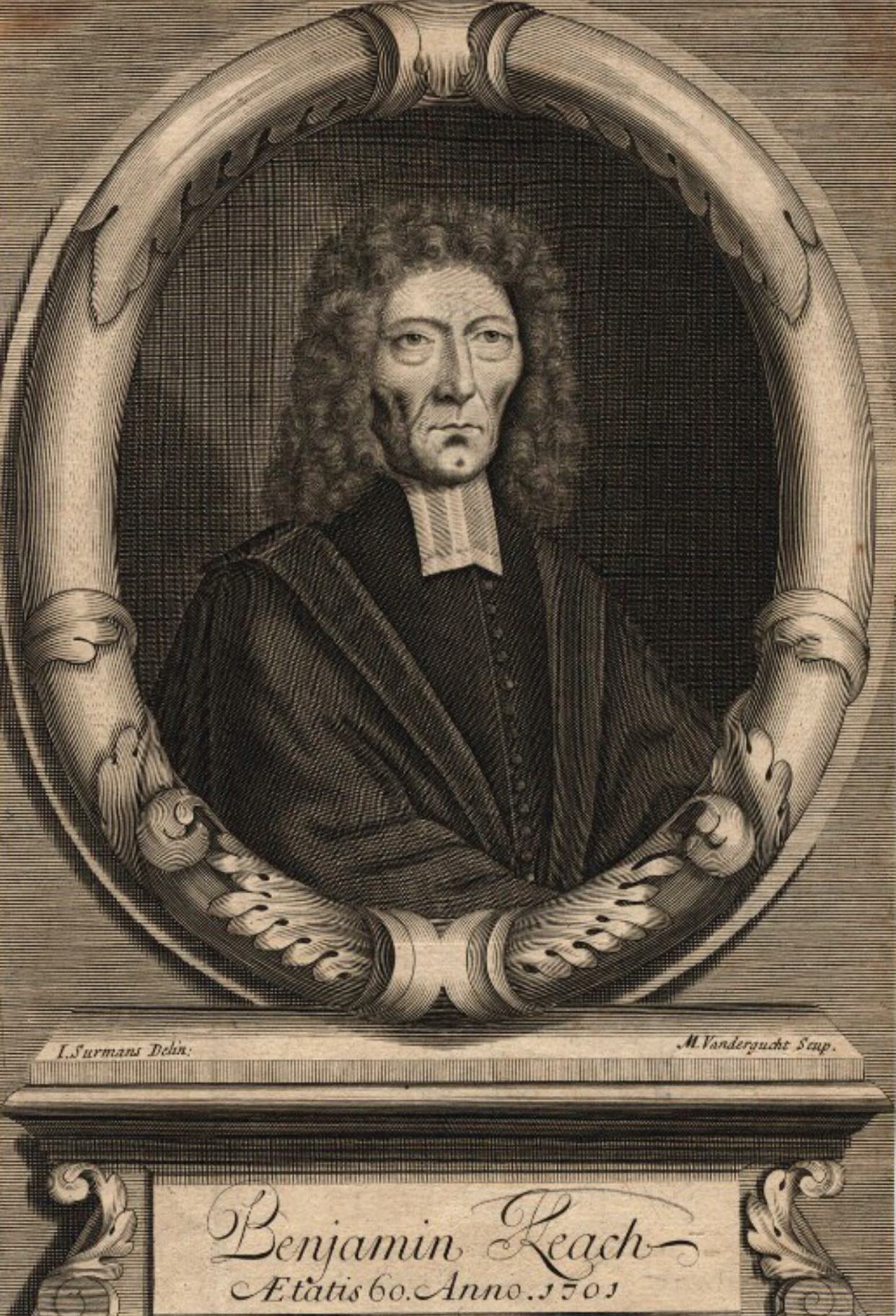
In "The Kisses of Christ's Mouth," Benjamin Keach explores the metaphorical significance of kisses in the Song of Solomon, arguing that they represent Christ's manifestations of love and intimacy towards His Church. Keach identifies various types of kisses, such as ones of reconciliation, affection, and approbation, emphasizing that the Church longs for these expressions of Christ's love to deepen her relationship with Him. Throughout the work, biblical references are used, including Song of Solomon 1:2 and Psalms 2:12, to illustrate how divine desire and affection are integral to the believer's experience. The significance of this doctrine lies in the affirmation that believers have the privilege to seek and receive the intimate love of Christ, highlighting the covenant relationship established through His grace.
Key Quotes
“Let him that is Christ Kiss me... the Church desireth to have Christ manifested in the flesh.”
“O when wilt thou come unto me? It is the voice of my Beloved that knocketh.”
“The death of Christ is the greatest expression of his affection to his elect.”
“Tokens of love and evidences of divine favour are the proper rights and privileges of believers.”
What does the Bible say about the Kisses of Christ's Mouth?
The Kisses of Christ's Mouth symbolize deep affection and communion between Christ and His Church, revealing His love through His Word.
Song 1:2, John 10:15, Psalm 119:49
How do we know Christ's love for us is true?
Christ's love is validated through His sacrificial death and Holy Word, assuring believers of their standing before Him.
John 15:13, Romans 5:8
Why is the concept of Kisses of Christ's Mouth important for Christians?
The Kisses symbolize Christ's intimate relationship with His Church, encouraging believers to seek greater union and communion with Him.
Song 1:2, Isaiah 26:9
THE KISSES OF CHRIST'S MOUTH
"Let him Kiss me with the Kisses of his mouth, for thy love is better than wine," Song 1:2.
"LET him," that is, Christ, "Kiss me." By these expressions, (saith Ainsworth and others[1] ) the Church desireth to have Christ manifested in the flesh. Others by Kisses, understand most friendly, familiar, and sensible manifestations of love, for they are so amongst friends; as it was betwixt Jonathan and David, and so it is between husband and wife. It is evident that Kisses are mentioned on sundry occasions used for divers ends, and signifying several things.
[1] Ainsworth, Guild, Sibbs, Durham, Wilson, Glassius, Illyricus, in locum.
1. We read of a Kiss of salutation, 1Sa 20:41; 1Th 5:26.
2. A Kiss of valediction, Ru 2:9.
3. A Kiss of reconciliation, 2Sa 14:33.
4. A Kiss of subjection, Ps 2:12.
5. A Kiss of approbation, Pr 24:26.
6. A Kiss of adoration, 1Ki 19:18.
7. A traitorous Kiss, Mt 26:49.
8. A Kiss of affection, Ge 45:15.
And since the Church desires in the plural number, Kisses of Christ's Mouth, it may
refer.
1. To a Kiss of reconciliation, or manifestation of peace, unity, and friendship.
2. A Kiss of affection, which is very sweet, to have Christ express or manifest his
gracious love to her.
3. A Kiss of approbation, which is, saith Mr. Guild, sweetest of all.
The text is purely allegorical, as the whole song is acknowledged to be by all divines.
METAPHOR
I. KISSES betoken love and good-will to the party they are given to.
PARALLEL
I. THE spouse in the text desires of the Lord Jesus, tokens, or further manifestations of his love and good-will to her.
METAPHOR
II. They betoken a hearty conjunction, and cordial union of two parties.
PARALLEL
II. The Church desires farther tokens and assurances of that blessed conjunction and union, that is between herself and the Lord Jesus Christ.
METAPHOR
III. They betoken such a friendship, as allows a liberty of access and communication at all times.
PARALLEL
III. Gracious souls desire a more near access unto Christ, and spiritual intimacy and communion with him: "O when wilt thou come unto me!" "It is the voice of my Beloved that knocketh." "With my soul have I desired thee in the night," Song 5:2; Isa 26:9.
METAPHOR
IV. They leave such impressions, as engage the affections to a future remembrance to the object.
PARALLEL
IV. The spouse desires such favour, and manifestations of Christ's love and grace, that she may never forget his love: "We will remember his love more than wine," Song 1:4.
METAPHOR
V. They oblige the giver to show further favours, and acts of love and kindness, to the party he bestows them on.
PARALLEL
V. The spouse desires, as doth every gracious soul, that Christ would lay himself under such obligations of love and friendship to her, that he may never forget her. The death of Christ is the greatest expression of his affection to his elect. Let him seal up his love to us by the Kisses of his Mouth, viz., by his gracious promises, and we are sure enough.
METAPHOR
VI. They are a confirmation of the endeared love and reality we profess.
PARALLEL
VI. The spouse desires the greatest confirmation of Christ's love and gracious affection to
her, to have clear evidence of her union with him, and eternal life.
METAPHOR
VII. They are the privilege and right (in a more peculiar manner) of covenant relations, as husband and wife, &c.
PARALLEL
VII. Manifestations of Christ's love do belong properly to the Church, and covenanted people of God. Hence the spouse presumes to speak thus unto her beloved, "Let him Kiss me with the Kisses of his Mouth:" I have the liberty and privilege to request it of him.
METAPHOR
VIII. In reconciliation, after a seeming breach between dear relations, they are highly prized and longed for by the party offending.
PARALLEL
VIII. Manifestations of Christ's love are greatly prized by gracious persons, after there
hath been a seeming strangeness or breach in their apprehension between them, knowing they were wholly in the fault, and the only cause of the breach.
METAPHOR
IX. A Kiss is looked upon as a very high honour, when received by an inferior person from a great king or prince, and begets in others a longing after the like manifestation
of sovereign grace and favour.
PARALLEL
IX. The love-tokens, or expressions of Christ's blessed favour to the spouse, makes the daughters of Jerusalem to long after Christ's favour as well as she: "Whither is thy beloved gone, O thou fairest among woman, that we may seek him with thee?" Song 6:1. This was after she had declared, "his Mouth is most sweet, he is altogether lovely," Song 5:16.
METAPHOR
X. They are very sweet and comfortable to very dear friends, after long absence.
PARALLEL
X. How sweet and exceeding comfortable are the Kisses of Christ's Mouth, or evidence of his love, after a long time of spiritual desertion.
METAPHOR
XI. They are the first ceremony or initiation of kind and comfortable entertainment; as in the case of the profuse and extravagent Prodigal, Lu 15:20; 12.
PARALLEL
XI. Manifestations of Christ's and the Father's love are glorious tokens or acts of acceptance of poor sinners, who having been very vile and rebellious, return home at last to their Father's house, and embrace a precious Saviour.
METAPHOR
XII. To be admitted to Kiss the hand of a prince, is a great honour, because of his royalty and grandeur; but to Kiss his Mouth, is extraordinary, and only allowed to great favourites.
XII. The Kisses of Christ's mouth, who is the only King and blessed Potentate of heaven and earth, are in an infinite honour; can a poor creature be more eminently dignified?
"Let him Kiss me with the Kisses of his mouth."
BY Mouth, annotators generally understand, is meant his holy Word, or his own lovely and gracious doctrine; that is, let me have expressions, or give evidence of thy love to me from thy word: "Kiss me with the Kisses of thy Mouth," by metonymy of the cause, viz. cum causa organica, sive sermonis formandi instrumentum, pro ipso sermone sive loquela ponitur: That is, when the organical cause, or the instrument that forms speech, is put for the speech itself; as the Mouth is put for testimony, De 17:6; 18:19; Mt 18:16, which is expounded, Joh 8:17, "It is also written in your law, that the testimony of two men is true." The mouth is also put for a command or appointment, as Ge 45:21, where the Mouth of Pharaoh (so it is in the Hebrew) signifies the command of Pharaoh: so the Mouth of the Lord is put for his command, word, and appointment, Ex 17:1; Nu 3:16,39; 24:13; 27:14; De 1:26,43; 34:5. Where the Hebrew XXXX juxta os Domini, at the Mouth of the Lord, with us translated, word, is by the Targum attributed to Jonah. Uzziel rendered XXXX XXXX XXXX XX, ab osculum verbi Domini, to the Kiss of the word of the Lord. "Lying lips do not become a prince;" that is, lying words. Now the reason why the Church desires Kisses of Christ's Mouth, may be as followeth.
METAPHOR
I. Kisses of the mouth are expressions of high favour, much more than to kiss the hand.
PARALLEL
I. Christ in a high manner expresses his favour and exceeding great affection unto his people in his word; "I lay down my life for my sheep." "Greater love than this hath no man," Joh 10:15; 15:13.
METAPHOR
II. Kisses of the Mouth have virtue in them; they tend to increase love in the object, or beget more ardent affection.
PARALLEL
II. Evidences of Christ's love from his word and gracious promises are full of life and virtue; they wonderfully draw out the soul in love and longings after Christ. How did that sweet word (or Kiss) of Christ to Mary endear her to the Lord Jesus; "Woman, thy sins are forgiven thee," Lu 7:49.
METAPHOR
III. Kisses of the mouth are plain and visible evidences of cordial affections, and many times put a person out of doubt about the reality of the giver's love.
PARALLEL
III. Evidences or manifestations of Christ's love to a believing soul, are clear demonstrations, of Christ's real affection. When a promise is set home, and imprinted upon the soul or spirit of a doubting Christian, it causes all his fears to fly away: "Remember thy word unto thy servant, upon which thou hast caused me to hope," Ps 119:49.
METAPHOR
IV. The Mouth is the instrument or medium to convey the inward conceptions of the heart and mind, whether it respects thoughts or actions, to the knowledge and understanding of others.
PARALLEL
IV. The word of Christ is the way or glorious medium he makes use of, to convey or make known those gracious, high, and eternal conceptions of his heart and mind to his elect; also hereby he opens and explains to us the end of his coming into the world, and his design in dying, and in all things he did, which otherwise would have been hard to us to have found out, Joh 1:1; Mt 11:29; Heb 11:2; Joh 10:10; 20:30.
METAPHOR
I. Others many times kiss them they do not love out of compliment.
DISPARITY
I. Christ never vouchsafes any the Kisses of his Mouth, but to those that he dearly loves.
METAPHOR
II. Others give sometimes a flattering and dissembling Kiss; like that of Absalom's kissing the people, thinking thereby to steal away their hearts from David his father.
DISPARITY
II. Christ always, when he vouchsafes his gracious favour to any soul, doth it in all simplicity and integrity of heart; in his heart is no guile or deceit.
METAPHOR
III. Others salute persons oftentimes with an unchaste and wanton Kiss.
DISPARITY
III. All Christ's Kisses are holy, chaste, heavenly, harmless, and innocent.
METAPHOR
IV. Others Kiss when they design to murder. Thus Joab kissed Abner, and slew him: Judas our Saviour, and thereby betrayed him.
DISPARITY
IV. Christ's design is to save those whom he kisses: "He came to seek and to save that which was lost." "I come that ye might have life."
INFERENCES.
I. From hence we may perceive what a vast difference there is betwixt the godly and the wicked. The one have their hearts set upon heavenly objects, the other on carnal; the desires of the one are holy, heavenly, and spiritual; the desires of the other are
fleshly, earthly, and sensual.
II. If the Kisses of a Saviour, or evidences of his love be so sweet, methinks this should stir up all to desire Kisses of Christ's Mouth.
III. It may be some souls are ready to enquire, how may I come to attain this great happiness and honour, to be embraced in the arms of the Lord Jesus?
1. Wouldest thou have the Kisses of his Mouth? Thou must with Mary Magdalene fall down, and kiss his feet, and bedew them with the tears of a broken heart; be humbled for thy sin.
2. If thou wouldst have him give thee a Kiss of reconciliation and affection, do thou kiss him with a Kiss of subjection: "Kiss the Son lest he be angry," Ps 2:12.
If thou want motives, take these following:---
1. The Father presents his Son, the Lord Jesus Christ, before your eyes in the Gospel (as he doth the like himself) as a person every way deserving your love and affection, to see whether you will respect him or not.
2. The Father highly honoureth the Son; he hath given all things into his hand, he is his heir.
3. The Father hath sent him into the world to seek himself a spouse.
4. He became flesh, that he might be a fit object for sinners.
5. Christ hath a great desire to give himself unto you, and so become yours for ever.
6. He hath abundance of love, great and strong affection.
7. Christ left his glory, and came into the world in a low and contemptible condition, and denied himself for thy sake, and wilt thou not accept of him?
8. Shall he die, and come through a sea of blood to engage thy affection, and wilt not thou yield him a Kiss of subjection?
9. Shall he send his ministers, as spokesmen, to entreat you, and will you say nay?
10. Shall he move you by the motions of his Spirit, and checks of conscience; and will you still refuse to close in with him?
11. Shall he knock loud and long, and cry continually to you, and can you still stand it out against him?
12. Will not your gain and preferment be great? What honour and dignity, excelling union with Christ, can you think to meet withal?
13. Are you not like to be miserable at last, if you die before you have an interest in him: "If any love not the Lord Jesus Christ, let him be Anathema Maranatha."
IV. But some may say, how comes it to pass the spouse is so bold, and thus familiarly speaks to Christ, "Let him kiss me?" Should not fervour of affection have with it humility of reverence?
To this says Bernard, Ne causamini præsumptionem, ubi affectio urget; reclamat pudor, sed urget amor, qui nec consilio temperatur, nec pudore frænatur. Do not plead presumption, where affection presses forward; be neither kept back by advice, nor restrained by bashfulness, in your approaches to Christ. Besides, saints, who truly love Christ, may boldly come to Christ. Tokens of love, and evidences of divine favour, are the proper rights and privileges of believers; they may be bold with their dearest friend.

Comments
Your comment has been submitted and is awaiting moderation. Once approved, it will appear on this page.
Be the first to comment!