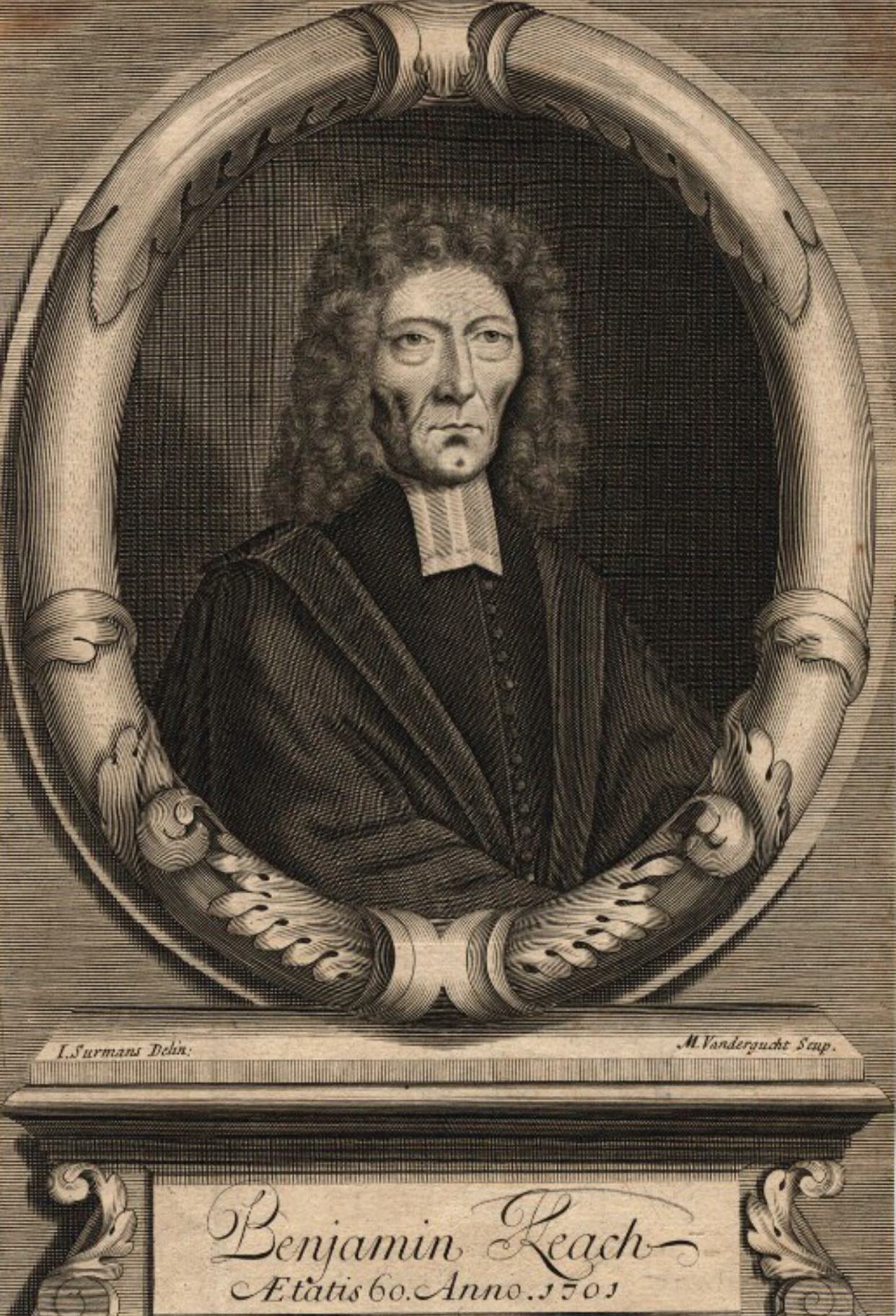
Benjamin Keach’s article on the Lord's Supper primarily addresses the doctrine of the sacrament in the context of Reformed theology, specifically opposing the Roman Catholic view of transubstantiation. Keach presents a robust argument against the notion that the bread becomes the actual body of Christ, using a variety of Scripture references such as 1 Corinthians 11:23-26, John 6:54, and Matthew 26:26. He asserts that Christ's words should be interpreted figuratively, highlighting that consuming the bread is a spiritual act rather than a physical one, which aligns with the Reformed understanding of the sacrament as a means of grace rather than a magical transformation. The practical significance of this doctrine emphasizes both the nature of faith in receiving Christ spiritually and the need for proper preparation before partaking in the sacrament.
Key Quotes
“The eating of Christ's flesh cannot intend the receiving of the sacrament of the Lord's supper for if it did it would be a very easy way for the vilest sinner to go to heaven.”
“This being so what reason is there for them to burn us because we cannot see the bread to be Christ's real body more than there is for us to kill them because they cannot see that it is the gates of Solomon's porch.”
“Whenever any angel comes to earth he leaves heaven.”
“It shows the horrid nature and evil of sin in that nothing could expiate it nor satisfy the justice of God or make a compensation for it but the blood of Jesus Christ.”
What does the Bible say about the Lord's Supper?
The Bible describes the Lord's Supper as a sacrament instituted by Christ, symbolizing His body and blood through bread and wine.
Matthew 26:26-28, Mark 14:22-24, Luke 22:19-20, 1 Corinthians 11:23-25
Why is the Lord's Supper important for Christians?
The Lord's Supper is vital for Christians as it commemorates Christ's sacrifice, fosters unity among believers, and strengthens faith.
John 6:35, 1 Corinthians 10:16-17, 1 Corinthians 11:24-25
How do we know that transubstantiation is not true?
Transubstantiation, the belief that bread and wine become Christ's actual body and blood, contradicts Scripture and reason.
1 Corinthians 11:26, Acts 1:9-10, Matthew 26:26
THE LORD'S SUPPER
"For I have received of the Lord, that which also I delivered unto you, that the Lord Jesus, the same night in which he was betrayed, took bread," 1Co 11:23.
"And when he had given thanks, he brake it, and said, Take, eat, this is my body which is broken for you: This do in remembrance of me," 1Co 11:24.
THE Papist's affirm, that after the words which they call the words of consecration, spoken by their Mass-priest, the bread is changed into the real body of Jesus Christ; and many of the blessed martyrs, in Queen Mary's days, were burned to ashes for denying this transubstantiation. Which absurd and monstrous conceit of theirs hath been learnedly confuted by many ancient and modern writers, so that it may be thought needless to add any thing here upon that account; yet that we may make our way the more plain to these metaphorical and figurative expressions used by our Saviour, when he instituted the holy sacrament of the Supper, saying, "This is my body," something briefly we shall offer, in confutation of their pernicious doctrine; which may soon be done, for they confute themselves, in saying, that the sacrament is a feast for our souls, and not for our bodies; now what is my soul the better, when I eat the very body of Christ? Christ is eaten and received spiritually: "Whoso eateth my flesh, and drinketh my blood, hath everlasting life," and I will, saith Christ, "Raise him up at the last day," Joh 6:54. Therefore the eating of Christ's flesh cannot intend the receiving of the sacrament of the Lord's supper: for if it did, it would be a very easy way for the vilest sinner to go to heaven.
But to come directly to the business in hand: either Christ spoke figuratively, when he said, "This is my body," or he did not? And that the words cannot be taken in a proper sense, is evident; for it is impossible for words to express any thing more plainly, than that by this is meant the bread. It is said, that "Christ took bread, and brake it, and gave it, and said, Take, eat, this is my body;" where this necessarily relates to that which Christ took, brake, and gave. Also the apostle saith positively thrice in a breath, that it is bread: "As often as ye eat this bread," &c., 1Co 11:26. "And whosoever shall eat this bread," Joh 6:15. "The bread which we break, is it not the communion of the body of Christ?" 1Co 10:16. Also the participation of the sacrament is called, "Breaking of bread," Ac 2:46; 20:7, which Popish authors themselves understand of the sacrament. Now can any be so ignorant and foolish, to believe it is Christ's proper and real body, which the Holy Ghost calleth so often bread, after it is blessed, &c.
Object. By this, say some of the Papists, is neither intended the bread, nor Christ's body; but in general, this substance which is contained under this species.[1]
[1] Bellarmin. de Each. l. 3. c. 12.
Answ. "What do they mean? Are there any more substances under those species, besides the bread first, and afterwards the body of Christ? Do not they affirm, as soon as ever it ceaseth to be bread, it becometh the real body of Christ? Then surely if it be a substance, according to what they say, it must either be bread, or the body of Christ, or no substance at all."
Object. Christ's body is after the manner of a spirit, taking up no room, so that head, hands, feet, are altogether in the least crumb of the host.
Answ. "In arguing thus, as a learned man observes, they plead for the propriety of words, and destroy the propriety of things. How can they say it is properly a body, which wants the essential properties of a body, which is to have quantity, and take up room; take away this, and the body may properly be a spirit, for it is that only which differenceth it from a spirit."
But further, to show how idle and absurd it is to take our Saviour's words in a proper sense, we shall show that it is utterly against sense and reason, as well as contrary to scripture, as you have heard.
First, It is against sense. What greater evidence can there be of things, than what sense affordeth? But if this which the Papists affirm, about the consecrated bread being the real body of Christ be true, the senses of all the world are deceived; for since the great argument for Christianity, as all agree, was the words that Christ spoke, and the works which Christ did; now how could we be sure he did so speak, or so work, if we may not credit the reports of our eyes and ears? This was St. Luke's great evidence of the truth of what he wrote, that it was delivered to him by eye-witnesses, Lu 1:1-2, and St. John's: "What we have seen with our eyes, and our hands have handled of the word of life," 1Jo 1:1. And St. Paul's for the resurrection, "That he was seen of Cephas, then of the twelve, then of the five hundred brethren at once," 1Co 1:5-6. Even Thomas's infidelity yielded to this argument, "That if he did thrust his hand into Christ's side, he would believe," Joh 20:25. Christ judged this was a convincing argument, when the apostles thought they had seen a spirit: "Handle me, and see; for a spirit hath not flesh and bones, as you see me have," Lu 24:39.
But now if after the words of consecration, there is under the species of bread, the nature and properties of flesh, then are the senses of the wisest of mortals deceived: and if our senses be deceived here, they are not, as a late author, Dr. Tillitson, observes, to be trusted in any other thing; no, not when they are most sure that we see father, or mother, or wife, or children. Can we be sure, "This is my body," is written in Mt 26:26; Mr 14:22; Lu 22:19; 1Co 11:24? For may not those words be some other words? Why should we trust our eyes? What if we should tell the Papists, these words, "This is my body," are neither in this chapter, nor anywhere else written in the New Testament, and grow confident of it, and tell them the words are, This is not my body; it is the bricks that were laid to build Babel, it is the gates of Solomon's porch: this is the shew-bread that Abimelech gave to David, the bottles that Abigail took from Nabal? If they tell us, we are strangely deceived, and the sense of all that we can read will give it against us; may not we tell them as well, when they say, This is the real body of Christ, when it is nothing but a wafer-cake, That they are strangely deceived, and that the senses of all, that can either see, taste, smell, or feel, will give it against them? This being so, what reason is there for them to burn us, because we cannot see the bread to be Christ's real body, more than there is for us to kill them, because they cannot see that it is the gates of Solomon's porch.
Secondly, It is against reason. And shall any conclude, that it is any principle of the Christian religion, that is contrary to, and utterly against reason? For it would make us believe things that are absolutely impossible, and gross contradictions. Though some things may be above reason, yet they themselves confess no principle of religion can be against it.
Obj. But they say, We imagine many things impossible, that really are not so; and further intimate. If we can prove any real impossibilities, which this doctrine forceth them to believe, they will yield to us: for they with us condemn the Lutheran opinion, that Christ's body is every where, because it is impossible; and therefore expound those words, I am the vine, I am a door," &c., figuratively, as we do, because it is impossible for him who is a man, to be a vine, or a door, &c. See Mr. Pool, p. 107.[2]
[2] See a book called Scripture Mysteries, p. 279.
Answ. It is no less impossible for the bread to be Christ's real body. "Why might not the vine, as well as the wine, be by transubstantiation converted into Christ's real substance? I think, saith Mr. Pool, the mother as good as the daughter. And especially since Christ saith, I am the vine, might not they have devised another transubstantiation, to make Christ's words good?"
But to proceed to show how irrational and absurd their notion is, and what they hold, as you heard, that Christ's whole body is present in every crumb of bread, &c., and yet do affirm, Christ's body is entire and undivided, and also believe it is really in heaven, in such a proportion or bigness as he had upon earth. Now then saith Mr. Pool, according to their doctrine, the same body of Christ is bigger than itself' and longer than itself, and which is worse, Christ is divided from himself. I know not what can be more impossible, than to say, That all Christ is at Rome, and all at London and all in heaven, and yet not all in the places between.
Object. All this the Papists say, may be done by God's Almighty power.
Answ. Then by the same Almighty Power, it 'is possible for any other man to be in so many places: for it matters not that Christ should be invisible in so many places, and another should be there visibly; or that Christ is there in so little a bulk, and another must be in a greater. And if this be so, what monsters follow from hence? Can any devise greater absurdities than they believe, if in very deed they believe what they say, and daily affirm? Suppose now John to be by divine power at the same time at Rome, at Paris, and at London: wherever John is alive, it follows he must have power to move himself, or else no living creature. Then John at Rome may walk towards London, and the same John at London may walk towards Rome: and so they may meet, shall I say, the one the other, and you may be sure it will be a merry meeting; it were worth enquiring, how long they will be ere they come together. Then again, at Rome all the parts of John may be excessively hot, and at London excessively cold, and at Paris neither hot nor cold. This is beyond all romances that ever were devised. Besides, John may be sorely wounded at Rome, and yet at London may sleep in a whole skin; John may be feasting at Rome, and fasting at London, in the same moment.
Object. You talk at this rate, because you measure God by yourselves, whereas he can do more than you or I can do.
Answ. There are some things, which it is no dishonour to God to say he cannot do them, because they are either sinful, (so God cannot lie,) or absolutely impossible. God himself cannot make a man to be alive and dead at the same time; God cannot make the whole to be less than a part of it; he cannot make three to be more than threescore; he cannot make a son to beget his father; he cannot make the same man to be born at several times, as Papist authors confess, and therefore in like manner he cannot make the same body to be in two several places, for this is not one jot less impossible than the other: but they must believe, Christ may have ten thousand bodies at one time, or so many as there are priests to consecrate the bread, and distinct congregations to celebrate the holy Supper."
Object. These indeed are great difficulties to human reason, but reason is not to be believed against scripture.
Answ. True, but this is their hard hap, this doctrine of theirs is against scripture, as well as reason, in as much as it is highly dishonourable to Christ, whose honour is the great design of scripture. What a foul dishonour is it to him, to subject him to the will of every mass-priest, who, when he pleaseth can command him down into bread! And what a dishonour is it, that the very body of Christ may be eaten by rats and worms, and may be cast up by vomit, and the like, as Aquinas, affirms,[3] and that their church in her missals hath put this amongst other directions, That if worms or rats have eaten Christ's body, they must be burned; and if any man vomit it up, it must be eaten again, or burned, or made a relic? And yet this is no more than their doctrine will force them to own; for if they will believe Christ's own words in one place, as well as in another, he assureth us, that whatsoever, without exception, "Entereth into the mouth, goeth into the belly, and is cast forth into the draught," Mt 15:17.
[3] Sum, quæst 8, Art 3.
Object. What dishonour is this more to Christ, than to have fleas suck his blood when he was on earth.
Answ. Very great dishonour! For though in the days of his flesh it was no dishonour to him, as it was necessary for us that he suffered so many indignities, and died, yet now being risen from the dead, "He dieth no more;" and it must needs be a great wrong, injury, and dishonour to him, to be crucified again, and be brought back to those reproaches which he long since left; and all this to no purpose, and without any profit to us. Again the scripture approveth and useth this argument, that his body cannot be in two places at one and the same time. It is the angels' argument, "He is not here, he is risen," Mt 28:6, plainly implying, that he could not be here and there too. Or must we say, the argument used by the angels of God is weak or deceitful, that theirs may be strong and true?
Object. Have we not many examples in holy scripture, which show that Christ may be in divers places at one time? Was he not in heaven when he appeared to St. Paul, Ac 9:3. Paul saith, "He was seen last of all of him," and yet he was not then in heaven?[4]
[4] See a Popish Book called, The Portraiture of the True Church, p. 152.
Answ. What sight it was that Paul had of Christ, is not declared; however, it is evident it was a vision that he had of him, for so he calleth it: but that this proves the body of Christ to be in two places at once, doth not in the least appear. Stephen also saw Christ; and if it should be granted, as some affirm, that he saw his real glorified body, doth it follow, the body of Christ was then in two places? The heavens might be opened, and his sight so strengthened that he might have a sight of the blessed Jesus, whom Stephen said, he saw "Standing on the right-hand of God," Ac 7:56.
Object. The Papists say, Christ's real body is in the eucharist invisibly, and so the angels might mean, he was not there visibly, when they said, "He is not here, he is risen."
Answ. To this saith Mr. Pool, If a man being sought after, should hide himself in some corner or hole of the house, and pursuers should ask for him, could any with a good conscience say, he is not here, because he is invisible? None sure but a Papist, who is so well skilled in equivocation, would give such an answer. Our Saviour every where makes these two opposites, his being in the world, and going to heaven. Joh 13:1. The hour was come, that he should "Depart out of this world unto the Father." It seems they could have taught him the art of going thither, and remaining here as the same instant. They have an excellent faculty, as he had, who said, since he could not give content in going, nor staying: he would not go, nor stay: for they know how a man may both go from a place and stay in it, at the same time. I know not what can be more plain, if they did not wilfully shut their eyes. Christ saith expressly, "Me you have not always with you:" that is, his bodily presence; for as touching his divine presence, so he is always with his people unto the end of the world, Mt 28:20. Besides, their doctrine destroys the truth of Christ's human nature. We read of Christ, "He was in all points like unto us, sin only excepted." His body was like ours, and therefore impossible it should be in a thousand places at once, which according to their doctrine it is. This turns Christ's body into a spirit; nay, indeed, they make his body more spiritual than a spirit; for a spirit cannot be in several places, divided from itself. The soul of man, if it be entire both in the whole, and in every part of the body; yet it is not divided from itself, nor from its body, nor can it be in two bodies at the same time, as all confess; much less can it be in ten thousand bodies at once. Whenever any angel comes to earth, he leaves heaven. So that this quite destroys the truth of Christ's human body.
Object. Much of what we say here, the Papists say, was true of Christ's body in the days of his infirmity; but when he was risen from the dead, then he received a spiritual body, as it is said ours shall be at the resurrection, 1Co 15.
Answ. This is but a fig-leaf; for they ascribe these monstrous properties to Christ's body before its resurrection; for they say, the flesh and blood of Christ were really in the sacrament which the disciples received while Christ lived. Secondly, Christ's resurrection, though it heightened the perfection, yet it did not alter the nature and properties of his body, nor give it the being of a spirit: for after he was risen, he proves that he was no spirit by this argument, "Handle me, and see: for a spirit hath not flesh and bones, as you see me have," Lu 24:39. By this it appears, that their doctrine destroyeth the truth of Christ's human body; at least it destroys the main evidence of it against those who affirmed that Christ had only a phantastical body, namely, that he was seen, and felt, and heard; for the Papists say, that sense is not to be believed. Again this doctrine of theirs destroyeth the truth of Christ's ascension into heaven; for he is not ascended, if he hath not left this world, but is here the sacrament. Nothing can be more clear, than that Christ did visibly and locally leave this world, when he went up into heaven, Ac 1:9-10. That being once there, "The heavens must receive," or contain "him, until the time of the restitution of all things," Ac 3:21. And that at the last day he shall come visibly and locally from heaven, 2Th 1:7. But that he shall come down a thousand times in a day, at the command of every mass-priest, or that he should have such power as to make the body of his Saviour, is such a dream as the scripture speaketh not one syllable of, nor can any rational man believe it, Besides, their doctrine destroyeth the very essence of a sacrament, which consists of two parts, an outward element or sign, and the inward grace signified by it.
These things being well considered, it is evident these words, "This is my body," are to be taken figuratively, i. e., this is a sign of my body, or this is the sacrament of my body; so that from the manner of the words spoken by Christ, there is no necessity to take them as the Papists do, seeing it is so frequent with the Holy Ghost to use metaphors in this kind; I need not name them, considering it is the subject of our present work. "The seven kine are seven years; the seven ears of corn are seven years;" the stars are the angels of the seven churches; the seven heads are seven mountains, &c. Christ is called a rock, a lamb, a lion, a door, together with many other things, which we have spoken unto. See the second head of Metaphors, Similies, &c.
The saints are called sheep, branches, &c. "The meaning of all this is," saith Dr. Preston, "they are like such and such things; but yet it is the manner of the scripture-speech and therefore, saith he, it is not necessary those words should be taken in a proper sense, as they are by the Papists.[5]
[5] Dr. Preston on the Saint's Qualifications, p. 478.
Object. "But," saith the worthy doctor, "you will object: yea but in a matter of this moment, as a sacrament, the Lord speaks distinctly and expressly; there he useth no metaphor, though in other cases he doth.
Answ. "To this,"saith he," I answer briefly: It is so far from being true, that he useth them not in the sacrament, that there are none of all the sacraments but it is used, viz., in the sacrament of circumcision, "this is the covenant," &c. In the sacrament of the passover, which were the sacraments of the old law, the lamb is called the passover. In this very sacrament, to go no further, for instance, take but the second part of it, 'This is the cup of the New Testament in my blood:' here are not one, but divers figures. The cup is taken for the liquor in it; the wine in the cup is taken for Christ's blood; 'This is the New Testament,' &c. that is, the seal of the New Testament." Here is figure upon figure, saith Mr. Pool, and yet the Papists have the impudence to reproach us for putting in but one figure, which they confess the
Holy Ghost frequently maketh use of. Wonder, O heavens! and judge, earth, whether those men do not strain at gnats, and swallow camels, &c.
This openeth a way for us to our next work, which is to run the parallel concerning those figurative and metaphorical expressions of the Lord Jesus Christ, used at the institution of the holy eucharist, Mt 26:26, "Jesus took bread, and blessed it, and brake it, and gave it to his disciples, and said, Take, eat, this is my body."
METAPHOR
I. Christ took Bread after he had supped, &c.
PARALLEL
I. This, in the judgment of some divines, notes God's choosing or taking Christ from among men, to be a sacrifice for our sins.
METAPHOR
II. Christ blessed the Bread: "He took the Bread, and gave thanks."
PARALLEL
II. Christ sanctified himself; he was set apart to that glorious work and office he came to do.
METAPHOR
III. Christ brake the Bread. Corn, we know, is bruised, or ground in a mill, that so it may become meet Bread for our bodies.
PARALLEL
III. Christ was bruised or pierced for our sins, he was broken as it were in the mill of God's wrath, which was due to us for our sins, that he might become meet food for our souls; "It pleased the Father to bruise him," Isa 53:10.
METAPHOR
IV. Christ gave the Bread to his disciples: "He took Bread, and blessed it, and brake it, and gave it to his disciples."
PARALLEL
IV. Signifying not only his giving himself for us, but his giving himself freely with all his benefits to us.
METAPHOR
V. The disciples took the Bread. Note by the way, it is called Bread when Christ took it, it is called Bread after he blessed it, and it was Bread the disciples took.
PARALLEL
V. Which holds forth our taking or accepting of Christ the Bread of Life, as the food of our souls.
METAPHOR
VI. The disciples ate the Bread. Bread will do us no good, unless it be taken and eaten.
PARALLEL
VI. Unless we receive Christ by a lively faith, and feed upon him, that is, fetch all our comforts from him, relying wholly by faith upon him, he will avail us nothing to eternal life: "Unless ye eat the flesh of the Son of man, and drink his blood, ye have no life in you," Joh 6:53;
METAPHOR
VII. Bread is the stay and staff of man's natural life: "I will break the staff of bread," Eze 4:16. It is that which preserves the life of the body.
PARALLEL
VII. Christ is the stay or staff of the life of our souls: "When Christ, who is our Life, shall appear," &c., Col 3:3. Christ preserveth the life of our inward man: "Because I live, ye shall live also."
METAPHOR
VIII. Bread is the best of earthly blessings; hence in scripture it is sometimes put for all good things, Isa 55:1-2.
PARALLEL
VIII. Christ is the best and chiefest blessing that ever God gave to his people; he comprehends all other good: he that hath Christ hath every thing. "All things are yours," 1Co 3:22. Why so? because they had an interest in Christ, Christ was theirs. Hence he is called the "Chiefest among ten thousand," Song 5:10.
METAPHOR
IX. Bread is of a satisfying nature; hence God saith, "He will satisfy his poor with Bread.
PARALLEL
IX. Christ received by faith, most sweetly fills and satisfies the soul of a believer. "He that eateth of the Bread of life, and drinketh of the water of Life, shall hunger or thirst no more," Joh 4:14. Such have what they desire.
METAPHOR
X. Bread is made of seed, or corn, which before it riseth, or becometh fruitful, or yields increase is sowed, and dies. "Verily, verily, I say unto you, except a corn of wheat fall into the ground, and die, it abideth alone; but if it die, it bringing forth much fruit," Joh 12:24.
PARALLEL
X. The Lord Jesus, like a seed of corn, was sown, and did die, that so he might not remain alone, in the perfect enjoyment of himself, but for great increase, viz., to raise up with him all his elect; he was content, when his hour was come to yield himself up to death. He died, and rose again, and thereby bringeth forth much fruit. All that ever were, or shall be quickened, and raised out of a state of death by sin, were, and shall be quickened by the death and resurrection of Christ. Such hath been the fruit of the preaching of Christ crucified, that multitudes of sinners thereby through the Spirit have been converted to God, whence also hath sprung forth a seed to serve him, whom he hath accounted to the Lord for a generation; of all which he will not suffer one grain to be lost, but will raise it up at the last day.
A parallel much like this might be run, in respect of the Cup or spirit of the wine. See Wine.
INFERENCES.
I. The apostle saith, "That what he received of the Lord Jesus, he delivered to the saints: how the Lord Jesus, the same night in which he was betrayed, took Bread, and blessed it," &c. "And in like manner took the Cup, when he had supped," &c., 1Co 11:23-25. From whence we infer, that whatsoever we do in the worship of God, we must see we have a command from God to warrant our practice, and also exactly to do it according to the pattern he hath left us, or directions he hath given us; we must not add to, nor diminish from, nor alter any thing of the words of the institution; we do, God will not hold us guiltless.
II. This rebukes the Papists, who deny the people the holy Cup of our Lord, and give the sacrament, or holy ordinance, only in one kind, when nothing is more clear, than that Jesus Christ gave his disciples the Cup, as well as the Bread.
Quest. Why did Christ institute this holy ordinance, and give it to his disciples, the very night in which he was betrayed?
Answ. 1. To strengthen their faith in an hour of temptation, that was just at the door, And ready to come upon them. When is a cordial more necessary, than when the patient is ready to faint, and his spirits fail? Christ saw what a sad qualm was coming upon poor saints, and therefore gives them this soul-reviving cordial, to bear up their spirits.
2. Because the last words of a dying friend are mostly kept in mind, or tokens of love given by him are chiefly borne in remembrance.
Quest. Who ought to partake of the holy Eucharist?
Answ. 1. None but such who are true converts, or who sincerely believe in the Lord Jesus Christ; for this is an outward sign of an inward grace received. Those who have not spiritually received Christ by faith, ought not to come to the holy Supper of the Lord.
2. It appertaineth to none, but such converts as are baptized. "Those that received the word were baptized; and they continued in the apostles doctrine and fellowship, in breaking of bread, and prayer," Ac 2:40-42. We read of none that received the Lord's Supper, but baptized persons.
3. Such who are fallen into any gross and scandalous evil, and under the suspension or sentence of the Church, ought not to partake of the holy Supper of the Lord, until they have repented, and given satisfaction to the Church, and are received again into fellowship.
4. Those who cannot discern the body of the Lord broken, so as to look unto and behold Jesus Christ crucified for them, but eat it as common bread, ought not to come to this ordinance; such, amongst others, if they come, are unworthy receivers.
Quest. What is required of persons who come to partake of this holy ordinance?
Answ. They ought to examine themselves; it requires due preparation, which doth consist in these four or five particulars.
1. A sincere confession of those sins, which we find out upon diligent search and examination.
2. Godly sorrow for the same, manifested by putting away the filth of the flesh. We must come with clean hands, and a pure heart.
3. We ought to forgive those who have offended us. Christ commands us to be reconciled to our brother. The apostle exhorteth us to lay aside all malice. We must not "Keep the feast with the leavened bread of malice and wickedness," 1Co 5:8.
4. Faith in the death and blood-shedding of Jesus Christ.
5. We ought to do it in remembrance of his death.
(1.) With an affectionate remembrance. The sight of our eyes ought to affect our hearts.
(2.) A sorrowful remembrance, in contemplation of what our sins brought upon our dear Saviour: they were the thorns, as I may say, that crowned him, and the nails that fastened him to the cross.
(3.) With a sin-loathing and self-abhorring remembrance.
(4.) With a thankful remembrance. Though we have cause of sorrow, considering the nature of our sin, and horrid evil thereof; yet there is great cause of joy and thanksgiving, to behold a Saviour, who in bowels of love died to redeem and save us from them.
Quest. How may a Christian, with much comfort, upon examination, receive the Lord's Supper?
Answ. 1. If there be no sin in thy heart or life, which thou regardest, or dost allow thyself in, bearest with, or connivest at.
2. If thou dost loathe sin, as well as leave it; when it is not only out of thy conversation, but out of thy affection also. To hate and loathe sin, is more than to leave it; persons never willingly leave or forsake what they love.
3. If thou canst say in truth, that thou wouldest be made holy, and dost labour after it, as well as to be made happy; to be thoroughly sanctified, as well as to be saved; live to God here, as well as live with God hereafter; to have sin mortified as well as pardoned.
4. If Christ be most precious to thee, and hath the chiefest room in thy heart. If upon trial thou findest these things are in very deed wrought in thee, thou mayest with much comfort come to the sacrament.
Quest. Of what use is the sacrament of the Lord's Supper?
Answ. 1. It shows the horrid nature and evil of sin, in that nothing could expiate it, nor satisfy the justice of God, or make a compensation for it, but the blood of Jesus Christ.
2. It shows the wonderful love of God to poor sinners, in giving up his own dear Son, to die the cursed death of the cross for us.
3. It shows the wonderful love of Jesus Christ, who freely laid down his life for our sakes. "Greater love hath no man than this, that a man lay down his life for his friend;" but Christ hath laid down his life for us, when we were enemies to him by wicked works," Joh 15:13; Ro 5:8-10.
4. It tends to increase our love to Christ, and our faith in him.
5. It shows us that Christ is our Life, and how and by what means we come to be saved.
6. It seals the covenant of grace to us, giveth us, in the right use of it, much assurance that Christ is ours.
7. There is a mystical conveyance or communication of all Christ's blessed merits to our souls through faith held forth hereby, and in a glorious manner received, in the right participation of it.
8. It may animate and encourage us to suffer martyrdom, when called to it, for his sake.

Comments
Your comment has been submitted and is awaiting moderation. Once approved, it will appear on this page.
Be the first to comment!