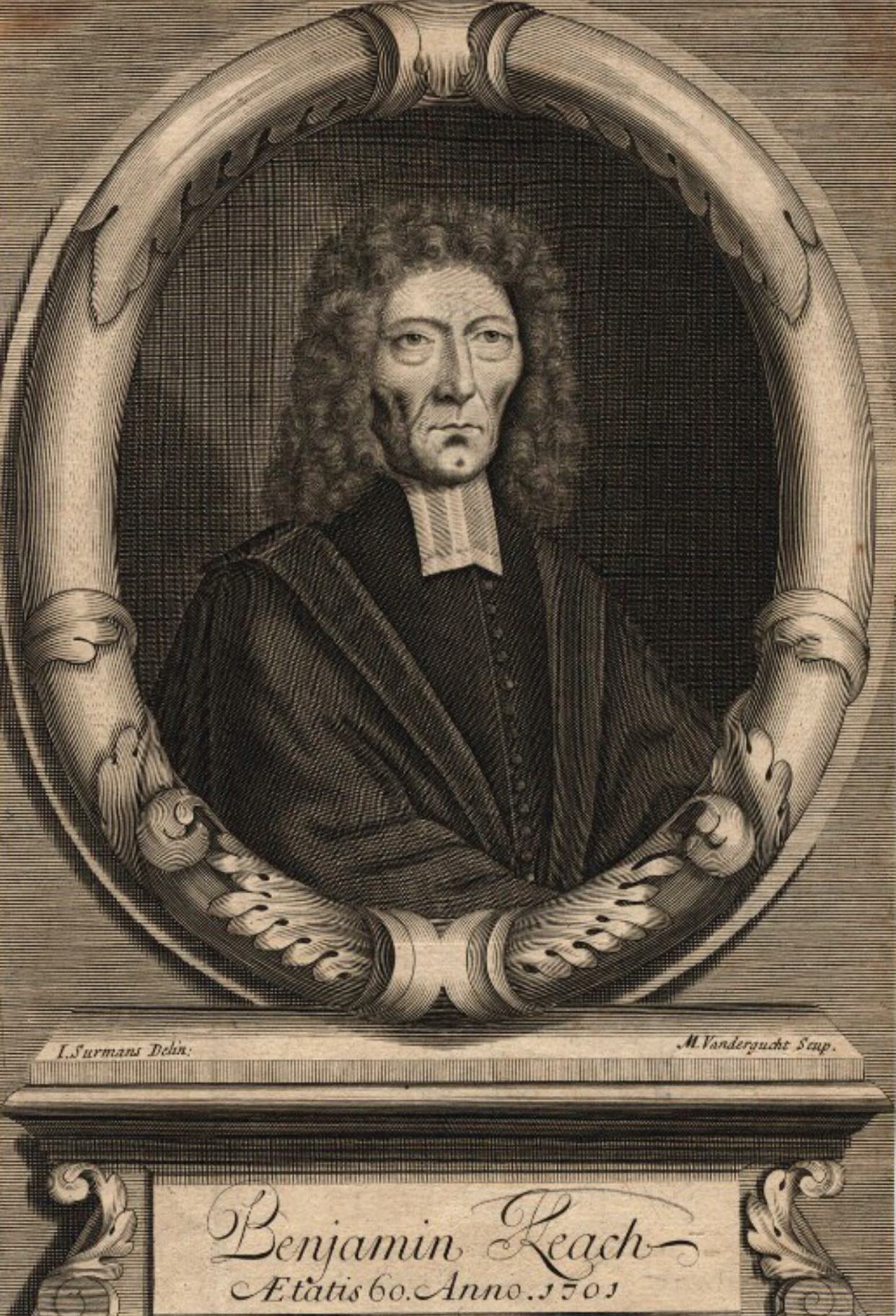
The main theological topic of Benjamin Keach's article "Christ Our Passover" is the typological relationship between the Passover lamb in the Old Testament and Jesus Christ as the ultimate Passover sacrifice. Keach argues that each aspect of the sacrificial lamb prefigures specific attributes and actions of Christ, such as His sinlessness and atoning death, supported by various Scripture references including 1 Corinthians 5:7 and Hebrews 2:14. He emphasizes the blood of Christ, paralleling the blood of the lamb that protected the Israelites, teaching that believers must apply Christ’s sacrifice through faith for spiritual cleansing and communion with God. The doctrinal significance lies in the call for believers to partake in the sacrament of Communion with reverence, recognizing it as a vital means of grace and a command of Christ that should not be neglected.
Key Quotes
“For Christ our Passover is sacrificed for us.”
“The blood was to be sprinkled on the lintel and door-posts that the angel seeing the same might pass by.”
“He that said Do not steal… said Do this in remembrance of me.”
“Is not the neglect of a known duty a great sin?”
What does the Bible say about Christ as our Passover?
The Bible emphasizes that Christ is our Passover, sacrificed for us, fulfilling the Passover Lamb's role as a type of Christ.
1 Corinthians 5:7, Hebrews 2:14
How do we know that Christ's sacrifice is sufficient for our salvation?
Christ's sacrifice is sufficient as it signifies a complete and perfect atonement for sins, fulfilling the spiritual needs of believers.
Hebrews 9:14, John 6:55
Why is the metaphor of the Passover important for Christians?
The Passover metaphor is crucial as it illustrates the themes of sacrifice, redemption, and the fulfillment of God's covenant in Christ.
Hebrews 10:4, Exodus 12:7
CHRIST OUR PASSOVER
"For Christ our Passover is sacrificed for us," 1Co 5:7.
THE Passover, or Paschal Lamb, being a most eminent type of the Messiah, of which see our sacred Philology, in the chapter of sacred Rites, where you have the reason of its typical and metaphorical representation, we shall here run an apt parallel betwixt that illustrious type, and the most holy Antitype.
TYPE
I. The paschal Lamb must be without blemish, entire, whole, sound; not blind, nor broken, nor sick nor bruised.
PARALLEL
I. Shadowing forth the perfection and innocency of Christ, in whose lips was found no guile; "As a Lamb, without blemish and without spot."
TYPE
II. He was to be a year old.
PARALLEL
II. Signifying the experience Christ should have of our miseries, whereof even a day's continuance yields sufficient proof; as also the perfection of Christ in like sort: and that in fulness of time he should come and suffer; a year being a perfect revolution of the sun's course. Guild.
TYPE
III. It was to be taken out of the flock.
PARALLEL
III. Christ was taken from amongst mankind: "Forasmuch then as the children are partakers of flesh and blood, he also himself likewise took part of the same." &c. Heb 2:14.
TYPE
IV. It was to be separated from the flock.
PARALLEL
IV. Christ was separate from sinners,
TYPE
V. It was to be slain,_and that in the evening.
PARALLEL
V. So Christ died, saith Mr. Ainsworth, in that season, viz., in the evening of the day: also in the evening of time, in the latter age of the world.
TYPE
VI. The blood was to be sprinkled on the lintel, and door-posts, that the angel seeing the same, might pass by, Ex 12:7.
PARALLEL
VI. Signifying, that Christ's blood must be applied by us; and where Christ is received, and the soul sprinkled by faith, sanctification outwardly will appear in the practice of the life, 1Co 1:30.
TYPE
VII. The Lamb was to be roasted with fire, Ex 12:8.
PARALLEL
VII. Signifying, saith Mr. Guild,[1] the agony of Christ in the garden, and the wrath of his Father, which he did endure both in soul and body. It was a sign either of the Spirit of God, which is compared to fire, through which Christ offered himself; or of the fire of God's wrath, which he suffered when he was made a curse for us, Heb 9:14.
[1] Moses Unvailed, p. 62.
TYPE
VIII. It was to be roasted with head and legs, and the appurtenances thereof; that is, it must be roasted all whole, not cut in pieces.
PARALLEL
VIII. This signifies our full communion with
Christ, whole and undivided, 1Co 13., Ga 2:20.
TYPE
IX. No bone of the Lamb was to be broken.
PARALLEL
IX. Os nullum illius agni frangi voluit Deus, &c. It signifies, that not a bone of Christ should be broken, as it was prophesied of him.
TYPE
X. The Lamb was to be eaten.
PARALLEL
X. Christ is spiritually to be received, and fed upon. "My flesh is meat indeed," &c., Joh 6:55.
TYPE
XI. It was not to be eaten raw, Ex 12:9.
PARALLEL
XI. Noting, that we should be well prepared when we come to the sacrament. Guild.
TYPE
XII. It was to be eaten all, and with unleavened bread.
PARALLEL
XII. Signifying, that in Christ nothing is unprofitable, or to be rejected; and that we ought to eat with the unleavened bread of sincerity and truth.
TYPE
XIII. It was to be eaten with bitter herbs.
PARALLEL
XIII. Which typified forth the bitter sorrows and sufferings of Christ; and that we should eat our Passover with a sense of, and bitter sorrow for our sins, wherein we were captivated.
TYPE
XIV. It was to be eaten in every family, and each family to this purpose had a Lamb.
PARALLEL
XIV. Showing the unity that ought to be among God's people, they being all fellow commoners in, and partakers of the, privileges and blessings of Christ. Every Church and family of the faithful; yea, each particular soul, hath a whole Christ.
TYPE
XV. The house was to be prepared.
PARALLEL
XV. To signify how we should prepare our hearts, 1Co 11:28.
TYPE
XVI. If the house was too little, the neighbour's house was to be assumed; yea, the strangers were to partake, if they were circumcised.
PARALLEL
XVI. To signify, first, the superabundant virtue of Christ's death, for the house may be too little for the Lamb, but not the Lamb for the house; as also the sweet communion of the saints in love, the joyful vocation also of the neighbour-Gentiles, and their admission into the fellowship of the faith, being inwardly circumcised, &c.
TYPE
XVII. They were to eat it with their loins girded.
PARALLEL
XVII. This signifies the girding the loins of our minds with justice, strength, and verity.
TYPE
XVIII. They were to have their shoes on.
PARALLEL
XVIII. This was to figure out the preparation of the Gospel of peace, wherewith our feet should be always shod.
TYPE
XIX. They were to eat in haste. The original word signifies to haste away, as with fear and amazement.
PARALLEL
XIX. They that come to Christ, must be ready to walk in the way of salvation, with the staff of true faith in their hands; as strangers and pilgrims, to make a daily progress towards the land of everlasting happiness.
TYPE
XX. Lastly, in that the blood of the Lamb was first sprinkled on them.
PARALLEL
XX. It shows, that first Christ was made a sacrifice to God, and then a sacrament to us. Guild
TYPE
I. The Passover signified Christ was to come.
DISPARITY
I. Our Passover shows he is come, and hath been crucified for us.
TYPE
II. The Passover only fed the body.
DISPARITY
II. Christ spiritually feeds the soul.
TYPE
III. The Lamb being slain and eaten, perished, and nothing of it remains.
DISPARITY
III. But Christ, though he was slain, and became thereby spiritual food for our souls, yet he is no whit impaired thereby; but liveth and abideth for ever in perfect bliss and happiness, and remaineth as perpetual nourishment to his chosen.
TYPE
IV. That was a type or shadow.
DISPARITY
IV. Christ is the Antitype and substance of it.
INFERENCES.
GOD gave special charge to the Israelites, concerning their eating the passover; He was greatly provoked by the neglect of it. "But that man that is clean, and is not on a journey, and forbeareth to keep the passover, even that man shall be cut off from his people," &c., Nu 9:13. What then will become of them who refuse to come to Christ, and eat of this spiritual passover? Also it may stir up such sincere and godly souls to look about them, and cause them to tremble, who live in the great neglect of coming to the holy
Supper of our Lord. Surely there is as good ground and reason for you to obey the Lord Jesus in this ordinance, as there was for Israel to obey Moses in keeping the passover: nay, I may show, much greater.
1. From the consideration of what the one was a sign of, and what the other shows forth, and is a sign of.
2. From the consideration of the excellency of Christ, whose law this is, above Moses, who received that law, and delivered it to Israel.
3. From the threats that are denounced against those who refuse to hear Christ in whatsoever he shall say to them. "If the word spoken by angels was steadfast," &c. "If they escaped not, that refused him that spake on earth; how shall we escape, if we turn away from him that speaketh from heaven?"
And for further motives consider,
1. The strict and positive injunction of Christ, "Do this in remembrance of me." He that said, "Do not steal, do not commit adultery," &c., "Repent, believe, pray always, be holy," &c., said, "Do this," &c.
2. It is a perpetual ordinance, till Christ come the second time. Paul received it from Christ, after his coming in Spirit according to his promise, &c. And the primitive saints continued in it after that time likewise; therefore the coming he spake of, must intend his second coming at the last day.
3. Consider the great need there is to remember Christ's death, and of those profitable instructions and blessings comprehended in this ordinance.
4. Is not the neglect of a known duty a great sin?
5. Is not this in effect to set light by Christ, and to cast contempt upon his commands, and in effect to say there is no need of them? What signifies, say some, the eating a little bread, and drinking a little wine? Wilt thou take upon thee to teach Christ, and exalt thy own wisdom above his, who is the most wise God?
6. Consider how faithful and ready the saints in former ages were, to walk in the commandments of God; and is it not left upon record to their everlasting commendation? ''Moses did all things according to the pattern showed him in the mount," &c. "Zachariah and Elizabeth walked in all the commandments of the Lord blameless."
7. Dost thou know what spiritual blessings thou losest by thy neglect hereof; is not loss of communion with Christ a great loss?
8. Is not universal obedience a demonstration of grace? "Then shall I not be ashamed, when I have respect to all thy commandments," Ps 119:6. "If ye love me, keep my commandments," Joh 14:15.
9. Will not the thoughts of a wilful neglect of known and indispensable duties, be bad death-bed companions?
10. This preacheth the Gospel to the very sight of your eyes; is it not necessary to make use of all means God hath ordained for your establishment in the truth of the Gospel?
11. Will not omission of known duties exclude men and women the kingdom of heaven? read Mt 25. Is it not for sins of omission, that Christ will condemn and sentence many souls to eternal burnings in the great day?
Wherein the Nature, Order, Office, and Ministration of Angels is opened.
THE creatures of God are divided into invisible and visible: the invisible are spirits aswmatoi, asomatoi, without bodies; and by them we understand angels, because being in their nature incorporeal, they cannot be seen by human eyes. The visible are whatsoever things have existence in the visible world, whether simple or mixed bodies. In what notions metaphors are taken from good and evil angels, see our sacred Philology, book i. p. 99.
1. Angels then in their natures are spirits created of God.
2. Called ministers or Angels, to show their office. Take Mr. Ainsworth's description of Angels, Ge 16:16.
"Angels, so named of the Greek aggelov, angelos, in Hebrew XXXX, Maleac, by interpretation a messenger or legate, one sent and employed in any work, whether of God, or man. And those sent of God were sometimes men, as Haggai is called the Lord's angel, or messenger, Hag 1:13, and John Baptist, Mt 3:1, and generally the Lord's priests under the law, Mai. ii. 7; and Christ's ministers under the Gospel, Re 2:1. 'Unto the Angel of the Church,' &c., that is, the minister or pastor of the Church. But in special, Angels are those heavenly spirits, and fiery flames, that are wise, 'Excel in truth, Ps 103:20. 'Which are all ministering spirits, sent forth to minister unto them who shall be heirs of salvation,' Heb 1:7,14. The Hebrew doctors' opinion of Angels is, that they are essential forms, created without any material substance or body. And whereas the prophet says, he saw an Angel like fire, and with wings, &c. It is also spoken of prophetical visions, and by way of dark parables. Also that the Angels are lower and higher than another; it is not in the highness of place, as when one man sits higher or above another; but as we speak of two wise men, which excel one another in wisdom, that that man is higher than this. Likewise that there are ten names that angels are called by, and accordingly ten degrees of them; and the tenth, called men, are the Angels which spake with the prophets, and appeared to them in visions, for which they are called men, as Maimon, showeth in Misneh Jesudei Hatovah, chap, ii. That there are ten degrees of angels, the holy scriptures show not; but degrees there are, as the apostle mentioneth, Ro 8:38; Col 1:16, 'Angels, principalities, powers, thrones, dominions, &c. ' Howbeit, we are warned not to intrude into those things which we have not seen,' Col 2:18. Sometimes the word Angel is given to Christ himself, who is the Angel of the covenant, and the Angel of God's face or presence, Isa 63:1. 'In whom God's name is," Ex 23:21. Thus Ainsworth. And in another place he saith, 'That one of the two Angels that appeared to Abraham was Jesus Christ, whom Abraham called the Judge of all the earth, Ge 18:2,25, who is called Jehovah."
It is the opinion of some of the learned, that every particular saint hath an Angel to take care of him; which they gather from that passage, "Take heed ye despise not one of these little ones; for I say unto you, that in heaven their angels always behold the face of my Father," &c., Mt 18:10. And from that in Ac 12:15, "Then said they, it is his Angel." But others rather conclude, that the saints have many Angels to watch over them, and continually to minister to them. That the godly are under the guardianship of the holy Angels, is not doubted or questioned by any worthy writer.

Comments
Your comment has been submitted and is awaiting moderation. Once approved, it will appear on this page.
Be the first to comment!