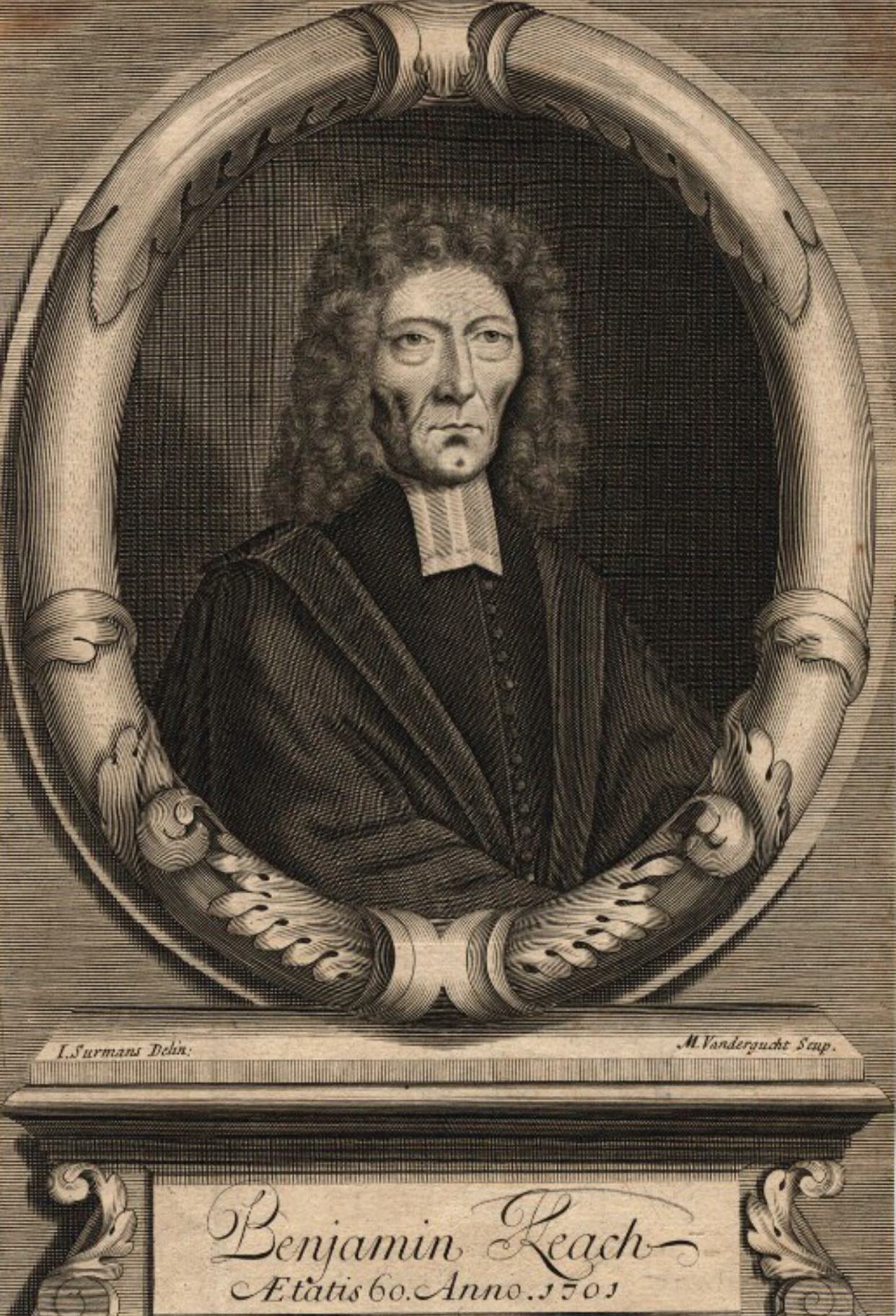
In "Saints Compared to Cedars," Benjamin Keach draws a theological parallel between the character of saints and the cedar tree of Lebanon, emphasizing the strength, stature, and rootedness of believers in Christ. Keach argues that like the tall cedar, godly individuals may seem insignificant in the eyes of the world, yet they grow high in grace and spiritual experiences, thereby showcasing their virtue and excellence (2 Kings 19:23; Isaiah 40:31; Colossians 3:1-2). He illustrates that the depth of their roots corresponds to their spiritual disciplines and humility, counterbalancing their growth (2 Samuel 23:5). Scripturally, he references the good qualities of cedars, stressing that saints are not only strong and enduring but also fruitful and useful in God's kingdom (Ephesians 6:10-11). This analysis holds practical significance for believers, encouraging them to remain grounded in Christ and resilient amid adversity, while proffering assurance of their worth and potential in God’s design.
Key Quotes
“The godly are a renowned people...They soar aloft and mount towards heaven.”
“Saints are well rooted in Christ... a strong blast of temptation may soon puff them up with pride.”
“The Saints are strong in the Lord...they go from strength to strength in Zion.”
“If the Saints be like goodly Cedars excellent above others...do we excel?”
What does the Bible say about the growth of Saints?
The Bible compares the growth of Saints to that of Cedars, indicating they grow high in grace and virtue.
Psalm 92:12, Isaiah 40:31
Why are humility and deep roots important for Saints?
Humility and deep roots are essential for Saints as they provide stability against temptation and pride.
2 Samuel 23:5, James 4:10
How are Saints compared to Cedars in terms of strength?
Saints are compared to Cedars as they possess inner strength and resilience against spiritual decay.
Ephesians 6:10-11, Psalm 84:7
What does it mean that Saints are fruitful like Cedars?
Saints are fruitful like Cedars as they bear good works and holiness, benefiting both God and others.
Ezekiel 17:23, John 15:5
SAINTS COMPARED TO CEDARS
"He shall grow like a Cedar in Lebanon" Ps 92:12.
"The trees of the Lord are full of sap; the Cedars of Lebanon, which he hath planted;" Ps 104:16.
"And, cast forth his root as Lebanon," Ho 14:5.
GOD'S people, their growth and rooting, are in these scriptures compared to the Cedar-tree, the Cedar in Lebanon, in Greek Libanos, which was a mountain in the north part of the land of Canaan, possessed of old time by the Hivites, Jg 3:3, afterwards by the Israelites; on it grew many stately Cedars, &c.
In what respect the Saints may be compared to the Cedars, will appear by the following parallels.
SIMILE
I. The Cedar is a very noble and stately tree, it grows very high; hence they are called tall Cedars, 2Ki 19:23; also its branches are called branches of the high Cedar, Eze 17:22, It mounts high towards heaven. Pliny,[1] tells of one Cedar that grew in Cyprus, which was one hundred and thirty feet high, and three fathoms thick.
[1] Plin. lib. xvi. p. 490.
PARALLEL
I. The godly are a renowned people. Though they seem in the eyes of the world but mere shrubs, yet they are, as it was said of Saul, higher by the head and shoulders than all others who dwell upon the earth. They grow high in grace, and spiritual experiences. They are said to dwell on high, they dwell in God, in communion with him, Isa 33:16. They soar aloft and mount towards heaven, Isa 40:31. "Their affections are set upon things above," Col 3:1-2. They may in this sense be said to grow like the Cedar; they overtop the wicked in renown and dignity. "The righteous are more excellent than their neighbours," Pr 12:26.
SIMILE
II. The Cedar is a tree that takes deep root; its roots spread this way, and that way, and go far into the ground. Naturalists say, that as trees grow high, so proportionably they take root downward, because otherwise they would be top-heavy, and overturn; a blast of wind taking advantage of their tallness, being weak at the root, would soon blow them down; therefore proportionable to their spreading above, there must be a rooting in the ground.
PARALLEL
II. The godly are said to take root downward; they are well rooted; they cast forth their roots as the cedars in Lebanon. Saints are well rooted in Christ, rooted in the covenant, which is firm, "Ordered in all things and sure," 2Sa 23:5, well rooted in grace, in faith, love, and humility. And indeed those Saints that grow high in knowledge, who in gifts and parts over-top their brethren, had need to grow downwards in humility, proportionable to their growth upwards, or else a strong blast of temptation may soon puff them up with pride and self-conceitedness, and so thereby quite blow them down. In Adam we had no sure rooting, but in Christ, by partaking of his fulness, our standing is firm.
SIMILE
III. The Cedar is a very strong tree. Naturalists also tell us, that it is not subject to putrefaction, as many other trees are.
III. The Saints are strong in the Lord, Eph 6:10-11. It is sin that causeth men to be spiritually weak, unstable as water, as Jacob spake of his son Reuben; but the godly are delivered from the guilt and dominion of it, and thereby, become strong in the inward man, both to do for God, and to suffer for his sake: they go from strength to strength in Zion. David was too strong for Goliah, and overcame him, he coming against him in the name of the Lord. Also they are not so easily corrupted by the pollution of the sins of the times, and evil example of the wicked, as others are; they having a glorious principle of life in them; that preserves them from soul putrefaction. "He that is born of God, cannot commit sin," 1Jo 3:9.
SIMILE
IV. The Cedar is a very profitable tree, it is excellent to build an house withal; Solomon therefore made use of it in building the temple, which we have showed was a type of the Gospel church, 1Ki 6:15-16.
PARALLEL
IV. The Saints are fit trees to build God's spiritual house. The beams of the church are said to be of Cedar, which notes the excellency and duration of her principle members, Song 1:17.
SIMILE
V. The Cedar is a tree full of sap, it also bears a soft of fruit: "And it shall bring forth boughs, and bear fruit, and become a goodly Cedar, and under it shall dwell all fowls of every wing," Eze 17:23. The shadow of this tree, it appears, is very refreshing.
PARALLEL
V. The Trees of the Lord are said to be full of sap, the Cedars of Lebanon which he hath planted, Christ is the precious root, who supplies them with abundance of grace and inward virtue; "Of his fulness all we receive, and grace for grace," Joh 1:14,16,. And by this means also they are made very fruitful, abounding in holiness, and good works. And as they are fruitful to God, so likewise they are profitable to men. How happy is that people or nation, that sit under the shadow or protection of a righteous government, when righteousness and judgment shall be administered by the Saints! all will seek for shelter under them. Which is promised, and shall certainly be accomplished in the latter day.
INFERENCES.
I. THIS may put us upon the search. If the Saints be like goodly Cedars, excellent above others, well rooted, strong, durable, and useful to God and men, we may hereby try ourselves. Do we excel? Do we grow up high heaven-ward? Do we grow in humility? are our hearts lowest, when our estates are highest? When we are most honoured in the eyes of men, are we most humble in the sight of God?
II. It may also afford comfort to the godly: what decays soever they seem, now to be under, yet they shall return again, grow, and send forth their roots, as the Cedars in Lebanon, Ho 14:6.
III. Remember, that that Tree, which takes the deepest root, spreads its branches furthest out, and brines forth most fruit.
IV. Let it also be remembered, that the more the Saints grow like the Cedar, and put forth their roots as Lebanon, the more they manifest and clearly show their being rooted in Christ whose countenance is as Lebanon, excellent as the Cedars, Song 5.
V. How wonderfully are they mistaken, that think to tear up by the roots, or throw down God's tall and strong Cedars! for notwithstanding the many terrible blasts, and violent winds, that have most fiercely blown upon them; yet they have stood, do and will stand. "The Highest himself shall establish her."

Comments
Your comment has been submitted and is awaiting moderation. Once approved, it will appear on this page.
Be the first to comment!