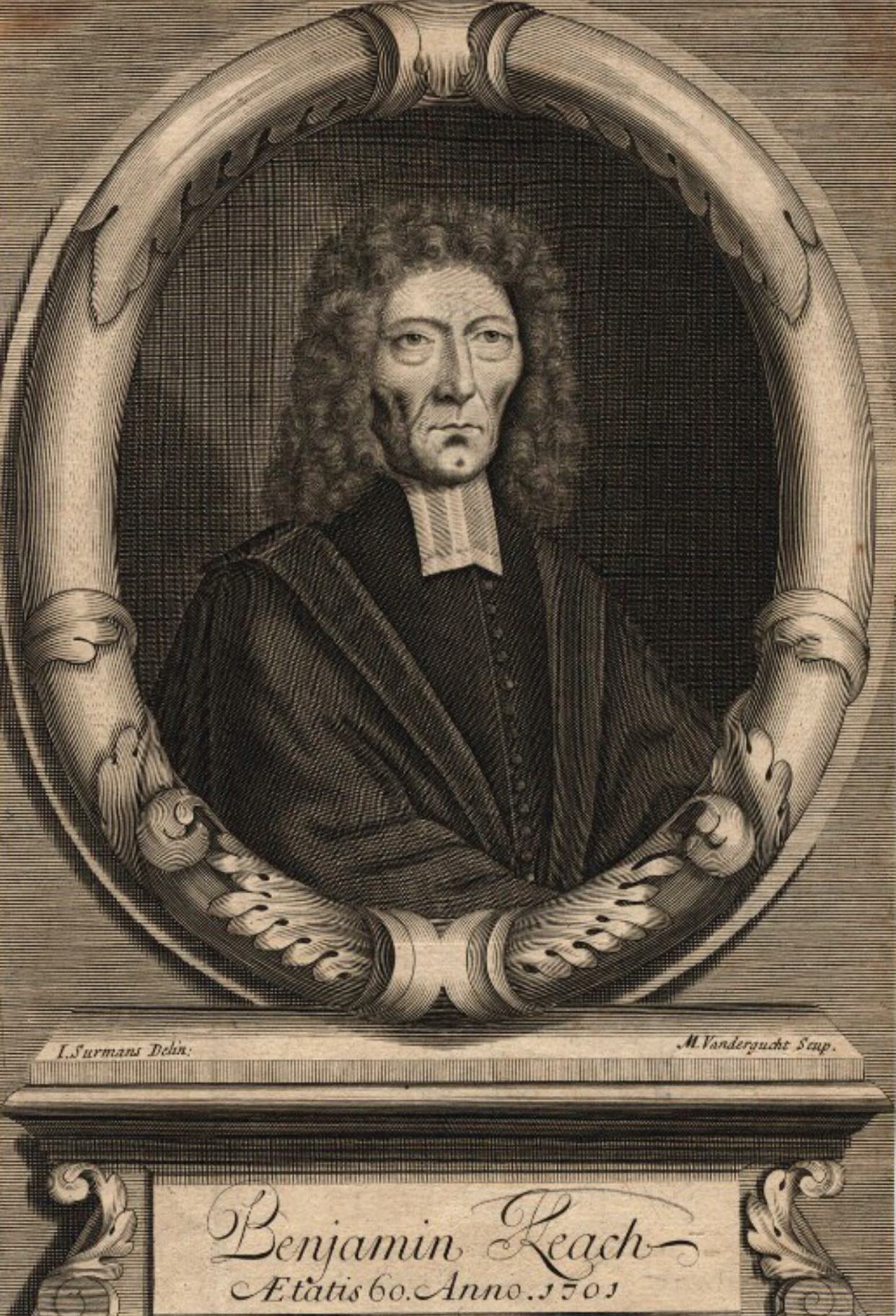
In "Saints Compared to Myrtle-Trees," Benjamin Keach employs the metaphor of the myrtle tree to illustrate the nature and characteristics of God's people. He argues that just as the myrtle tree is esteemed among various types of flora, so too are the saints valued by God, surpassing the ungodly. Keach references Scripture, particularly Isaiah 41:19 and Isaiah 55:13, which emphasizes God's favor toward His chosen people in contrast to the wicked, likened to thorns and briers. The practical significance of this metaphor is manifold; it highlights the calling of believers to bear spiritual fruit, embody humility, and exhibit a persistent faith, thus representing Christ’s fragrance in the world (2 Corinthians 2:14-15). Ultimately, Keach underscores the importance of understanding and embodying these qualities within the Reformed tradition.
Key Quotes
“The Myrtle-tree is a rare and most excellent Tree... the Jews highly esteemed of it.”
“As the Myrtle-tree excels the thorn and the brier so do the godly excel the wicked.”
“The righteous are said to be like a Tree whose leaves wither not; they hold fast the profession of their faith.”
“The Saints yield a sweet savour to God and man.”
What does the Bible say about saints being compared to trees?
The Bible often compares saints to trees like the Myrtle-tree, representing their value and unique qualities in God's garden.
Isaiah 41:19, Isaiah 55:13, Psalm 1:3
How do we know the importance of being humble as Christians?
Humility is essential as it reflects the nature of Christ and allows believers to experience God's presence.
Ecclesiastes 1:8-11, Psalm 23:4
Why is producing fruit important for Christians?
Producing fruit reflects the work of the Holy Spirit in believers' lives and their contribution to God's Kingdom.
Acts 24:16
SAINTS COMPARED TO MYRTLE-TREES
"I will plant in the wilderness the cedar, the shittah, and the Myrtle-tree,"' &c., Isa 41:19.
"Instead of the thorn, shall come up the fir-tree; and instead of the brier shall come up the Myrtle-tree," &c., Isa 55:13.
"I saw by night, and behold, a man riding upon a red horse, and he stood among the Myrtle-trees that were in the bottom," Ec 1:8,11.
THE wise God, who best knows the nature and properties of all things that his hands have made, compares the ungodly oftentimes in holy scripture to trees, and other things that are of a hurtful and evil quality, or are of such a nature that he sees will suitably set them forth: they are compared to Briers, Thorns, Nettles, &c. And also the godly are set forth by, and compared to several sorts of trees, as to the Palm-tree, the Cedar, the Willow, &c., and in these places, as many understand, to the Myrtle-tree; the nature of which, together with an useful parallel, take as followeth.
METAPHOR
I. THE Myrtle-tree is a rare and most excellent Tree, a Tree of very great account; hardly any one tree was more accounted of amongst the Romans, as Pliny observes; the Jews highly esteemed of it.
PARALLEL
I. THE Saints are a choice people; God esteems highly of them. As the Myrtle-tree excels the thorn and the brier, so do the godly excel the wicked. "Since thou hast been precious in my sight, thou hast been honourable," &c. Isa 41:19; 55:13; 43:4.
METAPHOR
II. There are divers sorts of Myrtle-trees; some white, and some black; some tame, and others wild, as historians[1] have noted.
[1] Plin. Lib. xv. P. 451
PARALLEL
II. So there are divers sorts of Christians; some more shining in grace and holiness than others; some, by reason of an evil and crooked nature, grace hardly appears in them, &c. We read of fathers, young men, and children.
METAPHOR
III. The best sorts of Myrtle-trees were used to be planted in gardens, and were a great ornament to them, their branches being very green, and amiable to look upon.
PARALLEL
III. The godly, those spiritual trees, which God plants in his Church, which is his garden; and the most holy and mortified ones of them, such whose conversation and profession is amiable, whose branches and spiritual leaves wither not, are a great ornament to God's garden.
METAPHOR
IV. The Myrtle-tree yields most choice and excellent fruit; nay, more may be said of it, then of any other tree, for it yields two sorts of fruit, both oil and wine. "Nature, saith. Pliny, showeth her wonderful power touching this Tree, especially in the juice, considering, that of all fruits it alone doth yield two sorts, both oil and wine.
PARALLEL
IV. The Saints of God are a people that yield two sorts of fruit, to the honour of God, and the profit of their neighbour, answering to the two tables. In this they excel all other people. There are some that are morally righteous, they make conscience of their duties to men, but do not bring forth the fruits of the Spirit, in answering a good conscience towards God. "Herein do I exercise myself," &c., Ac 24:16.
METAPHOR
V. The Myrtle-trees are said to stand in the bottom, Ec 1:8,11.
PARALLEL
V. The Saints of God are a people of a lowly and humble spirit, and hence they are compared to the low valleys; whereas the wicked are compared to lofty mountains. Also the Myrtle-trees in the bottom may signify the low and persecuted state of God's people; and in that the angels are said to be amongst them, it holds forth the precious presence of God with his Saints, whilst they are in a low, dark, and persecuted condition. "Yea, though I walk," said David, "through the valley of the shadow of death, I will fear no evil; for thou art with me," &c., Ps 23:4.
METAPHOR
VI. The Myrtle-tree never sheds its leaves.
PARALLEL
VI. The righteous are said to be like a Tree whose leaves wither not; they hold fast the profession of their faith, Ps 1:3.
METAPHOR
VII. The Myrtle-tree is said to yield a sweet and fragrant scent.
PARALLEL
VII. The Saints yield a sweet savour to God and man. "Now thanks be to God, which always causeth us to triumph in Christ, and maketh manifest the savour of his knowledge by us in every place: for we are of God a sweet savour of Christ in them that are saved, and in them that perish," 2Co 2:14-15.

Comments
Your comment has been submitted and is awaiting moderation. Once approved, it will appear on this page.
Be the first to comment!