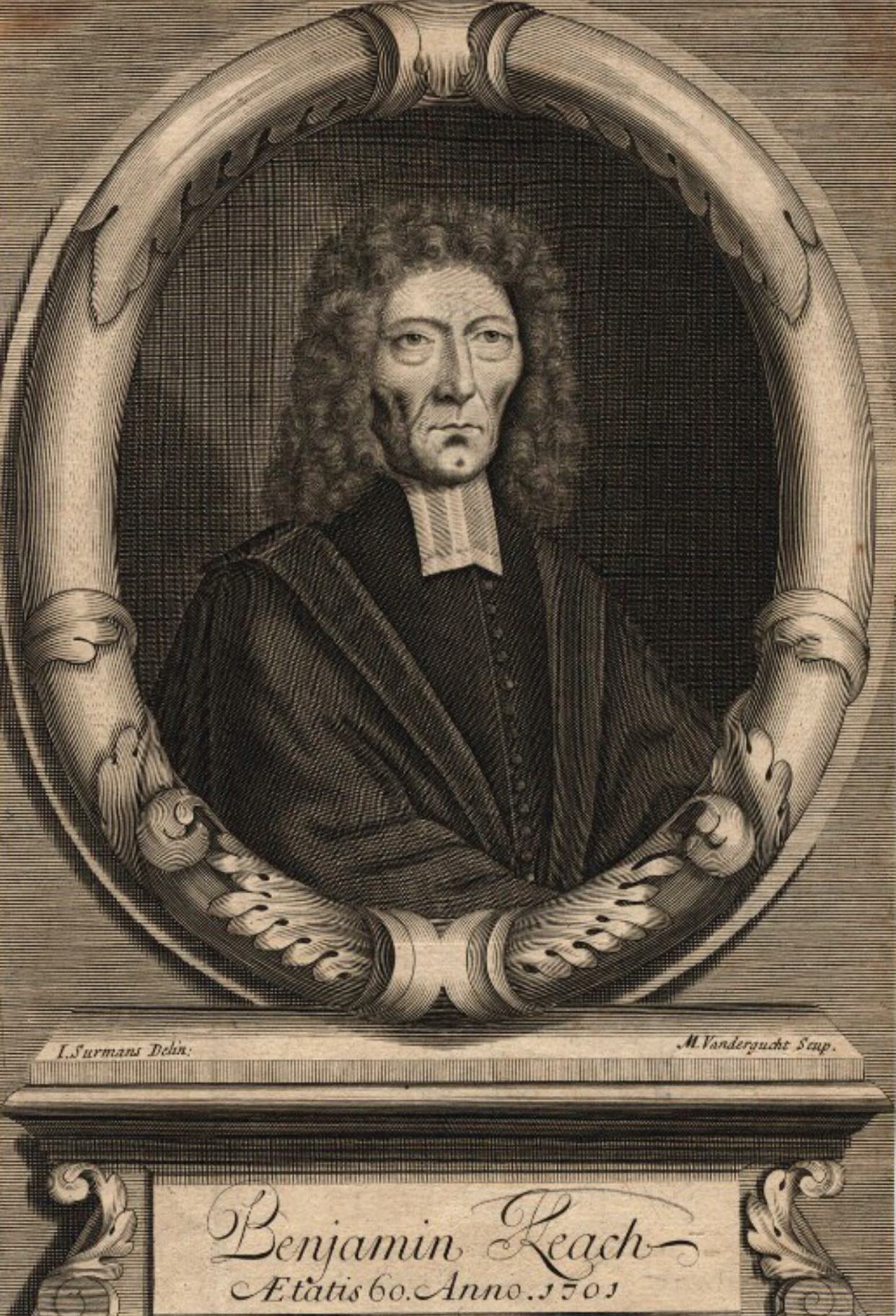
In "Wicked Men Compared to the Troubled Sea," Benjamin Keach explores the theological metaphor of wicked individuals as akin to the tumultuous sea, drawing on Scripture to illustrate their instability and lawlessness. He argues that just as the sea is bound by God's authority (Job 38:8-11), so too are the wicked restrained in their actions by divine sovereignty. Key verses like Isaiah 57:20-21 are employed to highlight the absence of true peace in the lives of the ungodly, contrasting their restless nature with the peace granted to the faithful (John 14:27). Keach emphasizes the importance of believers' reliance on God's power to contain evil, encouraging prayer for divine protection against the wicked and for peace amidst chaos, underscoring a core Reformed belief in God's absolute sovereignty over all creation.
Key Quotes
“The Sea is a great convention… so the Wicked are a multitude of people.”
“The Lord sets bounds to the wrath and rage of the ungodly; no creatures can go further than God permits them.”
“There is no peace to the Wicked… Peace is the portion only of the Lord's people.”
“Pray that God would keep the Sea of man's wrath within its limited bounds.”
What does the Bible say about the nature of wicked men?
The Bible compares wicked men to the troubled sea, depicting their restless and destructive nature.
Moreover, the metaphor suggests a deeper theological insight into the bounds God sets upon the wicked. As the Creator controls the sea, He also limits the actions of the ungodly, ensuring that their waves of anger and opposition do not exceed His sovereign will. We see this theme echoed in passages like Job 38:8-11, where God delineates the boundaries of the sea, signifying that He similarly restrains the wrath and rage of the wicked. Thus, while they may seem fearsome, they operate under divine constraints, ensuring that their ultimate power is curtailed.
Isaiah 57:20-21, Job 38:8-11
Why is the concept of God's sovereignty important for Christians?
God's sovereignty assures Christians that He is in control over all, including the actions of the wicked.
Furthermore, recognizing God's sovereignty compels Christians to prayer and reliance upon Him. The exhortation to pray for God's restraint upon the wicked and for the preservation of peace reflects the belief that divine intervention is necessary. Through prayer, believers acknowledge their dependence on God to keep the turbulent seas of wickedness within His limits. Ultimately, this understanding motivates believers to trust in God's plan and promises, reinforcing the truth that the peace granted by God is far superior to any temporary stillness that might come from worldly circumstances.
Psalm 76:10
How do we know that there is no peace for the wicked?
The Bible explicitly states that wicked individuals have no true peace, as declared in Isaiah 57:21.
Wicked individuals may pursue material wealth and honor, yet these pursuits leave them restless and dissatisfied. As articulated in the article, their restless nature is compared to the sea that casts forth mire and dirt, suggesting an inability to find true fulfillment or solace. Moreover, the narrative of wickedness as an ongoing state of unrest serves as a profound warning. It delineates the stark contrast between the peace enjoyed by those who love God's law, as indicated in Psalm 119:165, and the ever-turbulent existence of the ungodly. Knowing that true peace is a gift from God through Christ encourages believers to seek Him earnestly and live according to His Word.
Isaiah 57:21, Psalm 119:165
WICKED MEN COMPARED TO THE TROUBLED SEA
"But the Wicked are like the troubled Sea, &c., Isa 57:20.
"The Sea is come up upon Babylon, with the multitude of the waves thereof," Chaldee, "the king, with his numerous hosts, in plenty like the Sea, is come up against Babylon" &c., Jer 51:42.
Note. The Wicked are compared to the Troubled Sea, and to many waters, &c.
PARALLELS
I. The Sea is a great convention, as one words it, or a multitude of waters; "The gathering together of the waters called He Seas," Ge 1:10; so the Wicked are a multitude of people.
II. The Sea sometimes swells, roars, and rises very high, threatening the earth as if it would swallow it up immediately: so the mighty concourse of the wicked and tyrannical powers of the earth, many tunes swell in pride and arrogancy, and make a fearful noise, as if they would in a moment swallow up the Lord's people.
III. The Sea hath its bounds set by the Almighty: "He shall shut up the Sea with doors," &c., and hath said, "Hitherto shalt thou come, and no further; and here shall thy proud waves be stayed," Job 38:8,11. So the Lord sets bounds to the wrath and rage of the ungodly; no creatures can go further than God permits them. As he that made the Sea, can master it; so he can soon put a stop and curb to the proudest oppressor and persecutor in the world. Let Men be as angry as they will, let them be as stormy as the boisterous Seas; yet the Lord hath said, "Hitherto shall ye come, and no further." "He stilleth the noise of the Seas, the noise of the waves, and the tumults of the people," Ps 65:7. Nay, the devil himself is like a Sea shut up, he cannot do what he would, he hath bounds set him, &c.
IV. The Sea at God's command is still; "The wind and Seas obey him:" so with one word speaking, as it were, he can quiet the Wicked, and make them silent in darkness; he can make this Sea and frightful storm a calm, and cause the proud waves to be still, Ps 107:29.
V. The Sea produces or brings forth many strange monsters: so the multitudes of the Wicked, this metaphorical Sea, hath brought forth many a vile and strange monster. See Da 7:3, "And four great beasts came up from the Sea, diverse one from the other; and the first was like a lion, and had eagle's wings," &c. These four beasts signified the four monarchies of the earth: what a monster the fourth hath been, all the world hath had full experience of, that had great iron teeth, &c. What devils incarnate were many of the Roman emperors, particularly Nero, who ripped up the belly of his own mother! &c. And what a monster hath the little horn been, I mean the Papal power! What a mighty mass of innocent blood hath the beast and whore devoured! &c.
VI. The sea is very restless, it ebbs and flows, and seems to be continually troubled: so the ungodly are always restless in their spirits, like wicked Haman, they never cease plotting against the just. Though they have great power, riches, and honour, yet because God's Mordecais will not bow down their souls for them to go over, all seems as nothing to them; they have riches, much gold and silver, but not satisfied; they enjoy all the delights and pleasures the world can afford them, but yet are like the troubled Sea: Many times also their consciences sorely disquiet them. What rest soever they may have, yet certainly they are continually void of the true peace of God, and in this sense "There is no peace to the Wicked," &c., Isa 57:21.
VII. The Sea continually casteth forth mire and dirt: so the ungodly never cease casting forth their abominable wickedness.
INFERENCES
I. Let not the saints fear the ungodly: what though they swell and roar: God hath set bounds to them: "The wrath of man shall praise thee, and the remainder of wrath shalt thou restrain," Ps 76:10. No more wrath of man shall be let out, no higher shall these Seas swell, than shall tend to the glory of God; the over-plus, that wrath that would indeed prove hurtful to the godly, and to the dishonour of the Almighty, the Lord will restrain.
II. Pray hard, that God would keep the doors and bars of these troublesome Seas fast, and prevent the danger. "I will yet for this be enquired of by the house of Israel to do it for them," Eze 36:37.
1. Pray, that God will keep the Sea of man's wrath within its limited bounds.
2. Pray, that God would not suffer Satan to break forth too furiously upon us. If God did not set bounds to him, no man could live quiet one hour.
3. Pray, that God would set bounds to the Sea of profaneness.
4. And also that he would set bounds, and drive back the Sea of error and false doctrine, &c.
III. This shows the woeful condition of ungodly men: they have no peace, true peace, whilst they live, and be sure shall have none at death. Peace is the portion only of the Lord's people: "Great peace have all they that love thy law," &c., Ps 119:165. "My peace I give unto you," Joh 14:27.

Comments
Your comment has been submitted and is awaiting moderation. Once approved, it will appear on this page.
Be the first to comment!