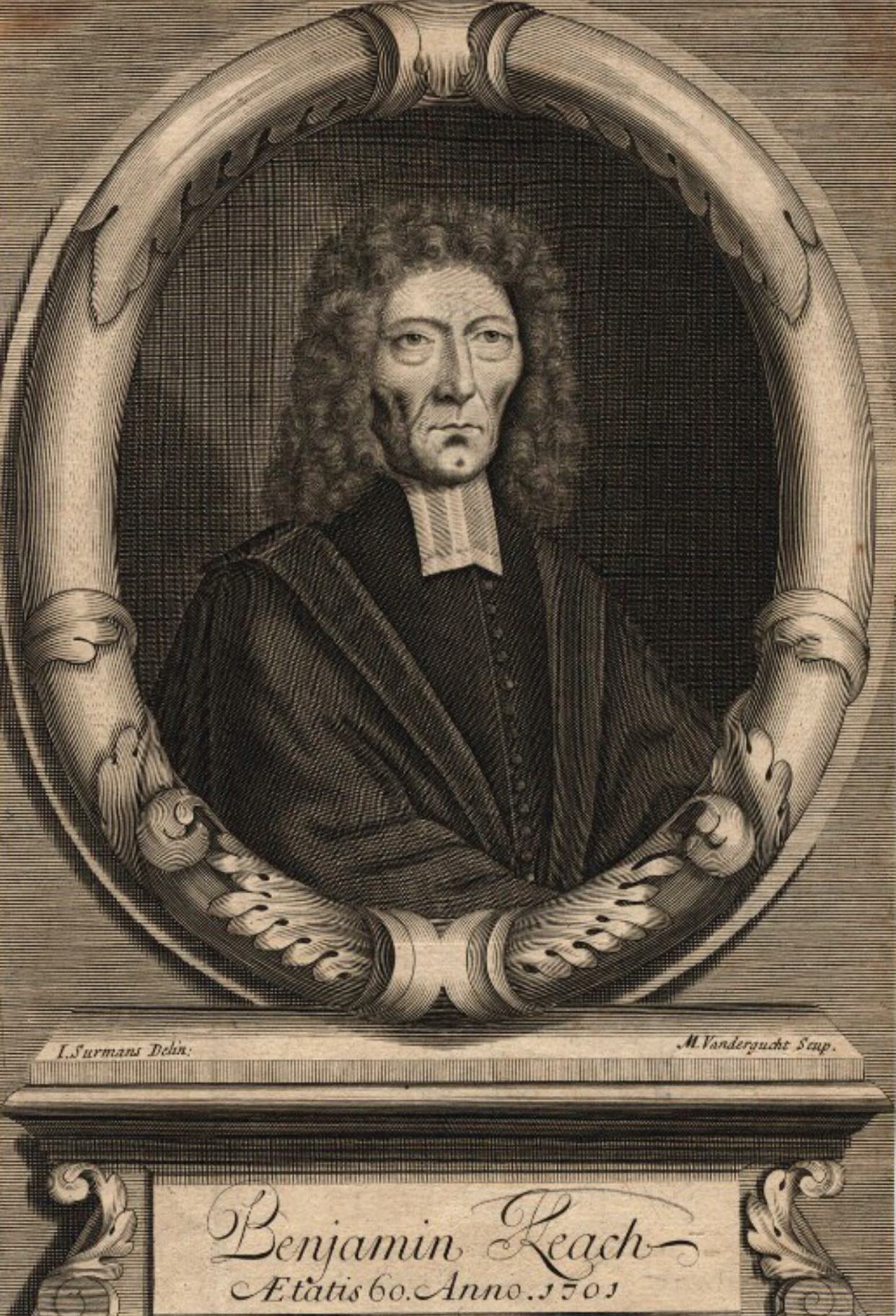
The article "Wicked Men Compared to Goats" by Benjamin Keach addresses the theological doctrine of judgment and the distinction between the righteous and the unrighteous as depicted in Matthew 25:31-33. Keach explores the characteristics of goats in scripture, likening wicked men, particularly hypocrites within the Church, to goats due to their behaviors—greediness, uncleanliness, and mischievousness. He supports his argument with scriptural references, particularly from Romans 1:26-27, illustrating the abhorrent nature of sinful lusts that place wicked men in opposition to God. The practical significance lies in the urgent call for self-examination among churchgoers to recognize the difference between true disciples of Christ (the sheep) and those who merely associate with them yet remain unrepentant and sinful (the goats), emphasizing the eventual separation by Christ at judgment.
Key Quotes
“So some hypocrites seem to love the company of God's people...taking much seeming delight in the company of the truly religious.”
“So there is a great difference between a Wicked Man notwithstanding his highest pretence to religion and a saint.”
“Wicked Men are unclean filthy and loathsome in the sight of God by reason of their abominable and most beastly lusts.”
“As they so abide they will be found at the left-hand of Christ in the day of his appearing to judgment.”
What does the Bible say about wicked men?
The Bible often compares wicked men to goats, illustrating their unclean, greedy, and mischievous nature.
Matthew 25:31-33, Romans 1:26-27
How do we know the doctrine of separation is true?
The doctrine of separation is illustrated in the parable of the sheep and goats, affirming God's ultimate judgment.
Matthew 25:31-33
Why is the concept of hypocrisy important for Christians?
Hypocrisy is significant because it distinguishes true believers from those who only outwardly conform to Christianity.
Matthew 25:31-33, Romans 1:26-27
WICKED MEN COMPARED TO GOATS
"When the Son of Man shall come in his glory, and all the holy angels with him, then he shall sit upon the throne of his glory. And before him shall be gathered all nations, arid he shall separate them one from the other, as a shepherd divideth his sheep from the Goats. And he shall set the sheep on his right-hand, but the Goats on the left" &c., Mt 25:31-33.
THE male or great he-Goat, is called in Hebrew atud, and the lesser sier and zier; the Chaldee translate it, Ge 13. teias jaii, and Nu 15 lze; the Arabians, teus and maez; the Persians asteban, and busan; the Grecians tragos, or devouring or ravening.
Tragus ab edendo quod grana fracta pane.
The common epithets given to the Goat, by the learned, are these, viz., left-sided, greedy, unarmed, swift, long-legged, rough, ragged, unclean, strong-smelling, letcherous, bristler, wanderer, vile, wanton, &c.
Wicked men, but more especially hypocrites in the Church, are compared to them.
SIMILE
I. The Goat commonly feedeth among sheep, and lieth down with them, and seems much to love their company.
PARALLEL
I. So some hypocrites seem to love the company of God's people, they cunningly contrive ways how to get into Churches, and appear to be of the same flock, taking much seeming delight in the company of the truly religious.
SIMILE
II. Yet there is a vast difference between the natural properties of the sheep and Goats; for whereas sheep are meek and harmless, Goats are of a contrary disposition, they are ravenous and very mischievous, they will eat the barks of trees, and spoil tender plants, great destroyers of gardens and vineyards.
PARALLEL
II. So there is a great difference between a Wicked Man, notwithstanding his highest pretence to religion, and a saint; the one is humble, meek, and harmless, seeking the good and well-being of all, when the other is proud, stubborn, and mischievous; many of them while they seem to have a great zeal for religion, secretly care not what hurt they do to God's vineyard, contriving means how they may undo and ruin the godly in the land.
SIMILE
III. The Goats are a stinking and unclean sort of creatures; there is no creature, saith Gesner,[1] that smelleth so strongly as doth a male Goat, by reason of the immoderate lust which this creature is exceedingly prone and addicted to above others.
[1] See Topsel out of Gesner.
PARALLEL
III. So Wicked Men are unclean, filthy, and loathsome in the sight of God, by reason of their abominable and most beastly lusts and uncleannesses, being given horribly to fornication, adultery, incest, &c., Ro 1:26-27. From whence cometh the proverb of those men, that have a strong scent about them, that they stink like a Goat.
SIMILE
IV. A Goat is said to be a very greedy and devouring sort of creature; for as Dr. Franzius[2] reports that that field or pasture that will feed a thousand sheep, will not be enough for a hundred goats.
[2] Page 198.
PARALLEL
IV. So some Wicked Men are of a very covetous and greedy disposition, not being contented with a small portion of worldly good things; for though they have some hundreds, nay thousands by the year, yet are still craving after more, not being satisfied with what they have of their own, but also strive to possess themselves of that which is their neighbour's; desiring, like wicked Ahab, Naboth's vineyard. So that that portion or estate, which will satisfy and comfortably maintain a thousand families of good Christians, is too little for one of them: such is their covetous and greedy appetite.
SIMILE
V. Goats feed and lie down with sheep, yet sometimes the shepherd separates them one from the other.
PARALLEL
V. So though some Wicked and hypocritical persons accompany with the Lord's people, and seem to feed and lie down with them, yet at last the Lord Jesus will separate the one from the other, as a shepherd separates the sheep from the goats.
SIMILE
I. Goats are useful; some poor people are much supplied by them both for meat and milk.
DISPARITY
I. But some Wicked Men are not only of no use either to poor or rich; nay, many of them are not only worse than Goats, but worse than infidels; so far from relieving others, as that they provide not for those of their own household.
SIMILE
II. Goats have been made use of in the time of the law, for sacrifice, and were also used, as clearly typifying Jesus Christ. See Ainsworth on Le 16:5,8,15.
DISPARITY
II. But Wicked men are an abomination to the Lord, their very persons, as well as their sacrifices, are detestable; no use at all made in any part of God's worship, but are excluded there-from, till by hearing the word, they repent and turn to Gocl, and so become the sheep of Christ.
INFERENCES
As this may call aloud to Wicked men, to consider the sad and loathsome estate they are in, so in a special manner it doth reprove all such, that like Goats, feed and lie down with Christ's flock, and yet are still but Goats; and as they so abide, they will be found at the left-hand of Christ in the day of his appearing to judgment, when they shall be separated, so as never to have the company of the sheep of Christ more; and "Then shall he say unto them on the left-hand, depart from me, ye cursed, into everlasting fire, prepared for the devil and his angels," Mt 25:41.

Comments
Your comment has been submitted and is awaiting moderation. Once approved, it will appear on this page.
Be the first to comment!