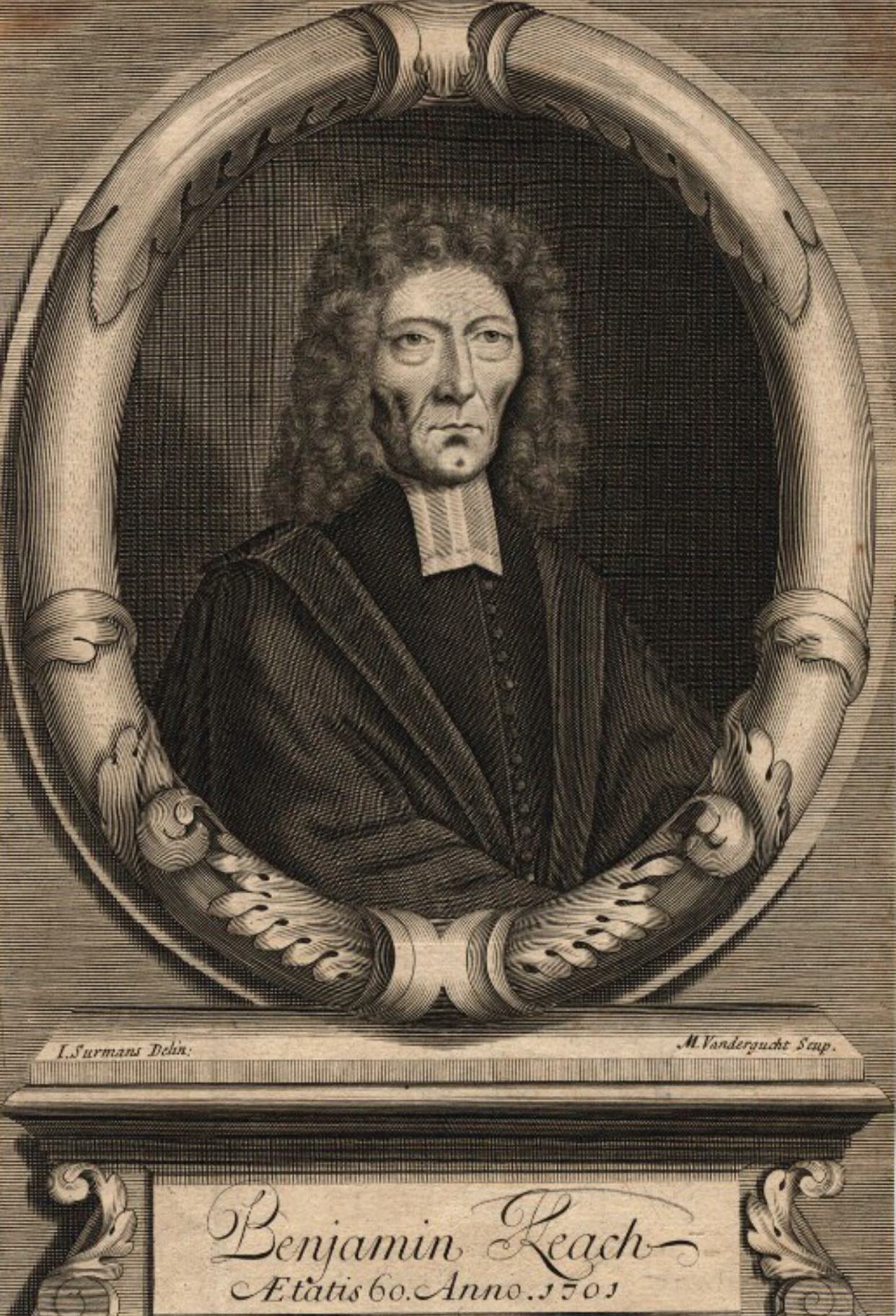
In "Ministers Compared to Rulers," Benjamin Keach draws parallels between the roles of civil rulers and Gospel ministers to underscore the authority and responsibilities of the latter within the Church. He argues that ministers are not only leaders but also servants of Christ, tasked with governing according to God's Word and leading with integrity (Hebrews 13:7, 1 Timothy 3:1-3). Keach employs various metaphors, likening ministers to wise rulers who have legal and moral obligations, and emphasizing the necessity of their role in maintaining order and care within the congregational community (1 Peter 5:3, Romans 13:1). The practical significance of this doctrine lies in the call for the Church to respect and support ministers while also highlighting the serious accountability that ministers have before God in their shepherding of His flock.
Key Quotes
“So Ministers are the chief of God's people such as have great power committed to them as the deputies and ambassadors of Christ.”
“It is an odious thing to see a Minister covetous who is required to open the nature of and preach against that sin as well as all others and ought to live accordingly.”
“Faithful Rulers are a great blessing to a people and ought to be cheerfully obeyed, reverenced and submitted to.”
“Gospel ministration is of absolute necessity because God hath ordained preaching as the ordinary means for the conversion of sinners.”
What does the Bible say about the role of ministers?
The Bible compares ministers to rulers, emphasizing their authority to govern God's people according to His Word (Hebrews 13:7).
Hebrews 13:7, 1 Timothy 3:1-3
Why is the minister's authority important for Christians?
A minister’s authority is essential as it is established by God to guide, teach, and protect the Church (Ephesians 4:11-12).
Ephesians 4:11-12, Hebrews 13:17
How do we know that ministers should be chosen by the Church?
The Bible instructs that ministers ought to be chosen by the congregation, according to God’s qualifications for leadership (1 Timothy 3:1-3).
1 Timothy 3:1-3, Acts 6:3
What is the significance of ministers acting in love?
Ministers must act in love, demonstrating compassion and care akin to the tenderness of a father toward his children (1 Peter 5:2-3).
1 Peter 5:2-3, 2 Samuel 22:3
MINISTERS COMPARED TO RULERS
"Remember them which have the rule over you, who have spoken unto you the Word of God," &c. Heb 13:7.
MINISTERS of the Gospel are Rulers or governors, &c.
METAPHOR
I. Rulers are men in high place, endued with power and authority over others; it is a name of dignity.
PARALLEL
I. So Ministers are the chief of God's people, such as have great power committed to them, as the deputies and ambassadors of Christ.
METAPHOR
II. Rulers or governors have a law, by which they ought to rule and govern in all things.
PARALLEL
II. So Ministers are to rule the house and Church of God by the rule of God's word.
METAPHOR
III. It is an evil thing, and justly reproveable in rulers, to exceed the limits and bonds of the law by which they are to rule, and govern; or to carry things according to their own wills and lusts, not regarding the fundamental laws of the land where they live.
PARALLEL
III. So it is an abominable evil in Ministers, to rule according to their own wills, violating the law of God. Ministers may exceed their due bounds, and be arbitrary, and tyrannize over the people in things spiritual, as well as civil Rulers or magistrates in things temporal.
METAPHOR
IV. Rulers, in some places, are chosen by the people whom they govern; it is the people's privilege to choose their magistrates.
PARALLEL
IV. So Ministers ought to be chosen by the Church; it is the privilege of the people to choose their own pastors, and other officers, according to the qualifications laid down by the Spirit of God. 1Ti 3:1-3, "Wherefore, brethren, look ye out among yourselves," &c. Ac 6:3.
METAPHOR
V. Rulers ought to be wise men, men fearing God. See Jethro's counsel to Moses, "Thou shalt provide out of all the people, able men, such as fear God, men of truth, hating covetuousness," &c., Ex 17:16. "The God of Israel said, the Rock of Israel spake unto me, he that ruleth over men must be just, ruling in the fear of God," 2Sa 22:3. What a sore rebuke doth God give covetous rulers by the prophet! "Her princes in the midst thereof are like wolves ravening the prey, to shed blood, and to destroy, to get dishonest gain," Eze 22:27.
PARALLEL
V. So Ministers ought to be men wise, holy, and of a blameless conversation, such as are given to hospitality, and not greedy of filthy lucre, 1Ti 3:2-3. It is an odious thing to see a Minister covetous, who is required to open the nature of, and preach against that sin, as well as all others, and ought to live accordingly. How can he preach against that sin he is guilty of himself? or, if he doth, what good effect can he think it will have upon other men's hearts, when the word reflects back upon himself, as it were, physician heal thyself? Paul could say in the truth of his heart to the saints, it is not yours, but you, I seek. This was the beastly sin which God loathed in the prophets and Rulers of Israel: "You are greedy dogs, which can never have enough, that cannot understand; they all look to their own way, every one for his gain from his quarter:" Isa 56:11, compared with that of Mic 3:11, "The heads thereof, speaking of Zion, judge for reward, and the priests teach for hire, and the prophets divine for money; yet will they lean upon the Lord, and say, is not the Lord amongst us?"
METAPHOR
VI. Faithful Rulers are a great blessing to a people, and ought to be cheerfully obeyed, reverenced, and submitted to. It is a great sin to speak evil of dignities, or despise dominions: "Let every soul be subject to the higher powers," &c. Ro 13:1. "Submit yourselves to every ordinance of man for the Lord's sake, whether it be to the king, Basilei of basij, a foundation, and laoj, the people, the foundation of a people, as supreme, or unto governors," &c. 1Pe 2:13-14.
PARALLEL
VI. So Ministers, faithful and able Ministers, are no small blessing, and sign of God's favour to a people; yea, great benefit we receive by them in many respects, as might be shown: they feed, guide, counsel and pray for us, as well as rule and govern us; and therefore they ought to be with all readiness obeyed: "Obey them that have the rule over you, and submit yourselves; for they watch for your souls, as they that must give an account," &c. Heb 13:17. And to speak evil of Ministers, is to despise their high and holy function; it is a God-provoking evil. There were some in the apostle's times, who were crept into the Church, who like Korah, spake against the dignity and power of the apostles and Ministers of Christ, who in a sense are said to be the foundation of God's people, whom the apostle characterized, and shows what their end is like to be: "Who were presumptuous, self-willed, and were not afraid to speak evil of dignities." Their hearts rose against the servants of God, for exercising authority in Christ's name; which is given to them. What said Korah? "All the Lord's people are holy," &c., as if he should have said, is this Moses more than others? but we see what became of him, Nu 16.
METAPHOR
VII. Some Rulers, are chief magistrates, do not, cannot pass any act or law, such, is the nature and constitution of the government where they live without the people; no law can be made, but with the assent and consent of the people, in their representatives in parliament, as it is here in the English nation.
PARALLEL
VII. So Christ's Ministers, or pastors, or Churches, cannot, by virtue of any authority given by the Lord Jesus, pass any act, either for the receiving in, or casting out of members, &c., without their brethren, &c. They must have the assent and consent of the Church. Many reasons might be given for it, which I shall omit. "If he neglect to hear the Church, let him be unto thee as an heathen man, or publican," Mt 18:17.
METAPHOR
VIII. Rulers should rule their people in love, showing all tenderness and bowels to the disobedient like tender-hearted fathers, unless it be towards those that are notorious criminals.
PARALLEL
VIII. So should Ministers labour to act in their places towards the saints in love, and to show all tenderness and meekness, with compassion, to such who through weakness transgress; [see Fathers] and not to be severe to any, unless obstinate and capital offenders; on such justice ought to be executed.
METAPHOR
IX. Rulers, that rule well, are worthy of double honour.
PARALLEL
IX. So faithful and laborious Ministers, that rule God's house well, ought to be greatly respected: "Let the elders that rule well, be counted worthy of double honour," 1Ti 5:17.
METAPHOR
X. Rulers are very needful: there is a great necessity in all societies and communities of men, of government, and Rulers. What is a nation, city, or family, without rule, Rulers, or government, but disorder and confusion?
PARALLEL
X. The need there is of Rulers in God's Church is very great, God being a God of order, and not of confusion, in all the Churches of the saints. The necessity of them appears, by considering the nature of divers of the metaphors we have opened concerning them. What would become of the flock of sheep, if they had no shepherd, &c.
METAPHOR
I. Rulers, or earthly governors, are commonly noblemen, men of great name, clothed with outward glory and grandeur.
DISPARITY
I. Christ's true Ministers are of little or no esteem in the eyes of the men of the world; they are commonly accounted base, low, and contemptible, &c. "Ye see your calling, brethren, how that not many wise men after the flesh, not many mighty, not many noble are called: but God hath chosen the foolish things of the world, to confound the wise; and God hath chosen the weak things of the world to confound the things that are mighty; and base things of the world, and things which are despised, hath God chosen, yea, and things that are not, to bring to nought things that are; that no flesh should glory in his presence," 1Co 1:26-29.
METAPHOR
II. Many earthly rulers are lords, and lord it over their brethren.
DISPARITY
II. But Christ's Ministers are contented to be servants. Even as their Lord and Master came not to be ministered unto, but to minister, and was on earth as him that served: so his Ministers must not assume the title of lords, nor must they lord it over God's people: "Neither as being lords over God's heritage, but being ensarnples to the flock," 1Pe 5:3.
INFERENCES.
First: And now to conclude with this head, from the whole we may infer these particulars following:--
1. That a true Minister of Christ, is one that is truly converted, a gracious, holy, and sincere person, one that hath the experience of the real work of God upon his own heart.
2. A member of a true constituted Church, i.e., a community of godly Christians, that have given up themselves in a solemn covenant, in the fear of God, to walk in fellowship and communion together, according to the rule of the Gospel; amongst whom the word of God is truly preached, and the ordinances duly and in a right manner administered.
3. That he ought to be chosen by the Church, according to the direction left by the apostle, 1Ti 3:1-6; Tit 1:5-9.
4. That he ought to be a discreet person, endued with considerable gifts and abilities by the Holy Ghost.
5. If called to be a pastor or elder, he ought to be ordained by the laying on of hands of the presbytery, or eldership, 1Ti 4:14.
6. That he ought to be very laborious, and give himself wholly to the work of the ministry, making the word of God in all things his rule.
7. That he ought to have a comfortable maintenance allowed him by the Church, to which he belongs, if they are able to do it. That this is their due by divine right, though not a forced maintenance, otherwise than love to God, his truth, and people, whose duty forceth them to allow their Ministers a competency.
Secondly, we may infer, that the work of a Minister of Christ is not easy, but contrariwise, a very hard and difficult work. "Who is sufficient for these things?" 2Co 2:16. So hard, that many of Christ's servants of old undertook it with much trembling, which made them cry out, "Send by whom thou wilt send," &c., Ex 4:13; Jer 20:9. So hard, that a saint with all his natural parts is not sufficient for it; nay, a saint with all his acquired parts is not sufficient for it; nay, I may say, a saint with all his spiritual gifts, graces, and endowments, without fresh supplies of new strength, is not sufficient for it.
Thirdly; it informs us wherein the difficulty of the Minister's work doth lie; and that 1. In respect of themselves who are employed in it. (1.) They are but men; "Son of man, I have made thee a watchman," Eze 3:17; and they commonly none of the wisest and most learned in the esteem of the world neither, 1Co 1:27. (2.) Man at the best is a dark sighted creature. We know but in part, 1Co 13:9. (3.) Man at best is attended with weakness, and carries a body of sin and death about with him. (4.) Man at best hath but small skill, and short experience. (5.) Man at best is subject to great discouragements, and liable to temptations.
2. In respect to the work itself, a Minister's employment is very hard and difficult. (1.) It is a mysterious work; what mysteries are greater than those a Minister is to study and dive into? "Without controversy, great is the mystery of Godliness," &c., 1Ti 3:16. (2.) It is difficult, in that it calls for the greatest care and exactness imaginable; Add to his word, &c. (3.) In that it calls for the strength of his whole soul. (4.) In that it is a work that consisteth of divers parts; there are many things in which a Minister ought to be well instructed, as appears by what hath been said. (5.) In that it is a work which calls for much diligence; a slothful or idle person is not fit to be a Minister. It is a work that must be followed continually; "Preach the word, be instant in season, out of season, reprove, exhort, with all long suffering and doctrine."
3. It is a difficult work, in respect of the opposition that is made against them, or from those grand obstructions they meet with; 1. From their own hearts; 2. From sin; 3. From Satan; 4. From the world. (1.) By reproaches and contradictions of the ungodly; (2.) By heretics, and false teachers; (3.) From persecutors, &c.
Fourthly; We may infer from what hath been said in opening these metaphors, that Gospel ministration is of absolute necessity.
1. Because God hath ordained preaching as the ordinary means for the conversion of sinners; "Faith cometh by hearing, and hearing by the word of God," Ro 10:17.
2. God hath gifted, and graciously endowed some men, on purpose for this work.
3. He hath given plain directions to his people, how and whom to choose and ordain, &c.
4. The necessity further appears, by considering the nature of the similes and metaphors we have opened. Sinners are in arms against God; and these are his ambassadors, by whom he treats, and offers terms of peace to them. Christ designs to espouse sinners to himself, and these are his spokesmen, by whom he effects this glorious enterprize.
Fifthly; It shows also, that the Minister's function is a most noble and honourable employment; and that all due respect, esteem, and obedience ought to be given to them.
Sixthly; We infer, that many who pretend themselves to be Christ's true Ministers, are none of his Ministers, but rather a shame and reproach to that venerable name, work, and office.
Seventhly; Let us learn from hence to bless God, that we have so many able and worthy Ministers of Christ in our land. O let us pray for them, and desire God to send more of these labourers into his harvest. "Pray ye the Lord of the harvest," &c.
Eighthly; it sharply reproves many churches and professors, for the great neglect of their duties towards their Ministers. What a day do we live in! How is Christ's interest, Ministers, and poor saints, forgotten, slighted, and neglected! O that God would raise up some to "cry aloud, and spare not, but lift up their voice like a trumpet, to show God's people their transgressions, and the house of Jacob their sins!"

Comments
Your comment has been submitted and is awaiting moderation. Once approved, it will appear on this page.
Be the first to comment!