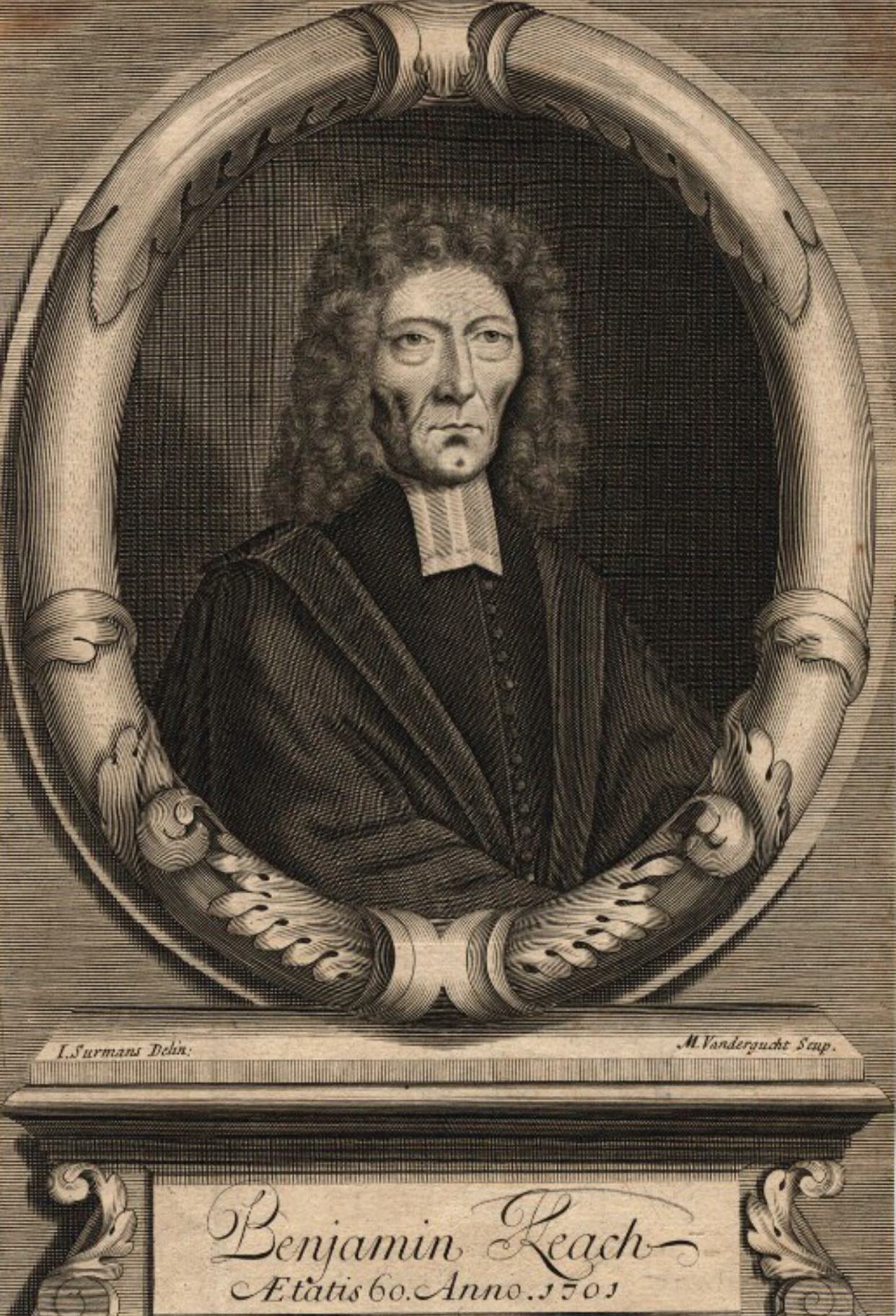
In "Ministers Compared to Ambassadors," Benjamin Keach explores the theological doctrine of the ministerial office, likening ministers to ambassadors sent by God to convey vital messages of reconciliation and peace. He argues that faithful ministers possess dignity and responsibility as they are authorized and empowered by Christ, the ultimate authority, to deliver God’s message to humanity. Key Scripture references include 2 Corinthians 5:20 ("We are ambassadors for Christ") and 1 Timothy 3:1-7, which outline the qualifications and honorable status of ministers, underscoring their role in representing Christ and the importance of their message of salvation. The doctrinal significance of this comparison emphasizes the high calling of ministry, urging congregants to receive the message of the Gospel with respect, while highlighting the grave consequences of disregarding the truth delivered by Christ's representatives.
Key Quotes
“Faithful Ministers are Christ's Ambassadors.”
“What higher dignity doth Christ confer upon any of his saints here below?”
“So those who receive and show all due respects to Christ's faithful Ministers honour Christ whose deputies they are.”
“Ministers must be holy men that they bring not themselves and the dignity of their function into contempt.”
What does the Bible say about ministers as ambassadors?
The Bible presents ministers as ambassadors for Christ, representing Him and delivering His message of reconciliation (2 Corinthians 5:20).
2 Corinthians 5:20, Ephesians 6:20
How do we know that ministers are called by God?
Ministers are known to be called by God through their lawful commission, as mandated in Romans 10:15.
Romans 10:15, 1 Timothy 3:1-7, Titus 1:7-9
Why is the role of a minister important for Christians?
The role of a minister is crucial as they provide guidance, preach the Gospel, and help believers grow in their faith.
2 Corinthians 5:20, 1 Timothy 3:1-7
MINISTERS COMPARED TO AMBASSADORS
"We are Ambassadors for Christ," &c., 2Co 5:20.
"For which I am an Ambassador in bonds" &c., Eph 6:20.
THE words, Ambassador, legate, or messenger, are synonimous terms, properly, such as are commissioned or deputed betwixt distant parties, to transact affairs of moment. The term. is applied to the ministers of the Gospel; and it sets forth, 1. The dignity, 2. The duty of Ministers.
Note. Faithful Ministers are Christ's Ambassadors, &c.
METAPHOR
I. Ambassadors are authorized and sent abroad by princes, about the great affairs of their kingdoms.
PARALLEL
I. Ministers are authorized, empowered, and sent by the Lord Jesus, the Prince of the kings of the earth, on the great affairs of his glory, and man's good.
METAPHOR
II. Ambassadors usually are persons of eminency; it is an office that a prince will not confer upon any of his subjects, but on such as are of great esteem in his court, such as are fitly qualified for that great trust confided in them; in a word, great honour and dignity is conferred upon them.
PARALLEL
II. Faithful Ministers of Christ, such as are Ministers indeed, are eminent persons, such as are great favourites to the court of heaven. What higher dignity doth Christ confer upon any of his saints here below! They also are men fitly qualified for this great employment; and what their qualifications are, and must be, you may see in 1Ti 3:1-7, and Tit 1:7-9, viz., "Blameless as the stewards of God, not self-willed, not soon angry, not given to wine, no striker, not given to filthy lucre, a lover of hospitality, a lover of good men, sober, just, holy, temperate, holding forth the faithful word, able by sound doctrine to stop the mouths of gainsayers, &c., not a brawler, not covetous, one that rules well his own house."
METAPHOR
III. The dignity of Ambassadors appears in the greatness of their prince from whom they come: they have usually respect according to the rank and quality of their master.
PARALLEL
III. Now true faithful Ministers are sent as Ambassadors from the great God, who is King of heaven and earth: "By whom kings reign, and princes decree judgment," Pr 8:15. "With him is terrible majesty, he rules and reigns over all, and who can say unto him, What doest thou?"
METAPHOR
IV. An Ambassador appears according to the dignity of the person whom he represents, and whose place he supplies.
PARALLEL
IV. True and faithful Ministers represent the Person of Jesus Christ. O! and what honour is this! They are employed in his stead, they are his deputies: He is the chief Ambassador, called therefore the "Messenger of the Covenant;" Mal 3:1, from him they receive their authority.
METAPHOR
V. The Excellency of the message Ambassadors are sent about, shows further the dignity of the officers. Now there are three sorts of embassies in the world:
1. Embassies of peace.
2. Embassies of Marriage.
3. State embassies, which respect trade and commerce, &c.
1. An Ambassador is welcome, when he comes from a prince about peace; and that especially.
(1.) When he comes from one that is formidable, mighty in power, and whose armies are irresistible; now to a poor, weak, and naked people, how welcome is his approach!
(2.) An Ambassador is welcome, when he is sent to a people that have felt already the impression of his power, and are pining under the bleeding miseries of his anger.
(3.) An Ambassador is welcome, when the terms he offers are honourable and easy: not like the peace that Nahash offered to the men of Jabesh-Gilead, viz., that they should have every one his right eye thrust out, and lay it as a reproach to Israel.
(4.) An Ambassador is welcome, when he offers peace from a prince that is real to his word, and gives good security for the performance of what he promises.
2. Ambassadors sometimes offer an alliance, by marriage, between one state and another.
3. Sometimes, as we minded before, Ambassadors come with an embassy for trade, that there may be an open trade and commerce between such and such princes and states, &c.
PARALLEL
V. Ministers come with a threefold embassy:--
1. Of peace.
2. Of Marriage.
3. Of heavenly commerce and trades, &c.
1. Christ's Ministers are welcome when they come with an embassy of peace; and needs they must be so, if we consider the things following:
(1.) These Ambassadors come from that great God that is dreadful in power, that if he speak but in his wrath, the earth trembles, whose armies are also ready; who offers not peace, because he cannot make war, or stands in need of our friendship, but merely from his great love wherewith he hath loved us, &c. What can sinners do to withstand his power? Doth he fear their hostility? Can they shoot their arrows as high as heaven? If they strike at him, he makes their swords turn into their own bowels. O how gladly should these Ambassadors be received! Who would not tremble to think of this God!
(1.) So a Minister of Christ is welcome to poor sinners, who find the arrows of divine vengeance sticking in their very hearts, and the curse of God cleaveth to every faculty of their souls, who lie bleeding under his heavy anger.
(3.) Now the Ministers of the Gospel offer honourable and easy terms: God might require the perfect keeping of the whole law, he might demand satisfaction for all the wrongs and injuries we have done to his justice; but they offer terms of peace and pardon, upon the acknowledgment of sin, and laying down our arms, and to hold no league or secret friendship with sin and Satan any longer, to take hold of Christ, and plead the atonement of his blood: "Believe on the Lord Jesus, and thou shalt be saved."
(4.) Now God doth by his faithful Ministers give the greatest assurance imaginable of the performance of whatsoever he offers to poor sinners; he hath past his word, nay, more, it is upon oath, Heb 6.
2. And this is one great part of a Minister's embassy, he is sent to let sinners know what good will the God of heaven and earth bears to them, and that he is desirous to bestow his own dear Son, the heir of all things, in marriage upon; what favour and grace is this! Can sinners be so sottish, foolish, and ungrateful, as not readily to receive and embrace this offer?
3. The Ministers of the Gospel come with embassies for commeice; God is willing in Christ's name, to trade with man again: for no sooner had Adam sinned, but a war was commenced, and all trade forbidden: but now through Christ there is a free trade opened again to heaven; convinced and repenting sinners may be stored with all things they need, as pardon, peace, union, and communion with God, and eternal life, even all the riches of grace and glory: "Ho every one that will,--Come, buy;--and you that have no money, come, buy, and eat; yea, come, buy wine and milk without money, and without price," Isa 55:1.
METAPHOR
VI. Those that honour an Ambassador, honour the prince that sent him; but those that abase, slight, or despise him, do also despise the prince or state that sent him. We cannot despise this messenger, and yet honour his master, saith Mr. Gurnal.
PARALLEL
VI. So those who receive and show all due respects to Christ's faithful Ministers, honour Christ, whose deputies they are, and whose Person they represent. "Few are so bold, as to say with that proud king, ' Who is the Lord, that I should obey him?' Ex 5:2. Yet many dare say, Who is the Minister, that I should obey his message, or repent at his summons, or tremble at the words he speaks?" What is he? Do I not know him? What is he better than us? Shall I mind what he says? A rush for his doctrine, &c. But let sueh read that word, "He that heareth you, heareth me; and he that despiseth you, despiseth me; and he that despiseth me, despiseth him that sent me," Lu 10:16.
METAPHOR
VII. An Ambassador should take heed he cast no indignity upon his office, by any base or unworthy practice; he should behave himself with all wisdom and gravity, and avoid all dirty and unseemly actions; for in so doing, he would bring much honour and renown not only to himself, but to his master also that sent him.
PARALLEL
VII. So Ministers must be holy men, that they bring not themselves, and the dignity of their function, into contempt. A wise, grave and gracious behaviour exceedingly becomes a Minister. Paul saith, he magnified his office. then let others take heed they do not vilify and debase it. That which another man may do without much reproach, you cannot do, but it will be to your great blemish and dishonour, nay, and to the dishonour of Christ, and of his truth also.
METAPHOR
VIII. An Ambassador is to do his uttermost endeavour to negotiate and accomplish such matters he is sent about; he must see to his charge: for if the treaty of peace, or marriage, or embassy for commerce and trade, succeed not, the Ambassador is sure to be called to an account, how he hath discharged his place, &c.
PARALLEL
VIII. So Ministers must see the work of their place and function. "They are," saith Gurnal, "called Ambassadors, in regard of their duty, as well as, dignity; where there is honour, there is onus, places of honour are places of trust. Many like well enough to bear the Ministers' dignity; with Diotrephes, they love pre-eminence, yet would willingly be excused the work that attends it. None have a greater trust reposed in their hands, than Ministers; it is tremendum onus, a weight that made the apostle tremble under it: I was among you, (saith Paul,) with much fear and trembling."' They have the charge of souls committed to them, one of which is more worth than all the world, no less than the price of blood, the precious blood of Jesus Christ. To them is committed the Word of reconciliation. Hence they pray and beseech, and use all means imaginable to bring the souls of men to terms of peace and reconciliation with God, through Christ; they knowing the sad and dreadful effects, if they speed not ha their embassy. "Knowing the terror of the Lord, we persuade men." And in another place, "We pray you in Christ's stead, be you reconciled to God," 2Co 5:11,20. For if the treaty of peace between God and sinners doth not succeed, the Minister is sure to be called to an account, how he discharged his trust in the business, &c.
METAPHOR
IX. An Ambassador is to keep close to his instructions; he is in nothing to act contrary to, or derogate from his commission.
PARALLEL
IX. So Ministers must see they keep close to the Word of God; they had need to take their errand well before they come into the pulpit, or assembly of God's people. "I have received of the Lord, what I delivered unto you." They must speak nothing, require nothing, preach nothing, but what is according to the authority of God's Word, which is above the church, senates, general councils, or any authority whatsoever. These Ambassadors must act and do exactly according to their commission, &c.
METAPHOR
X. An Ambassador must not only act according to his commission, as to matter, but must deliver his message also with much zeal, and with all due respect had to his master or prince that sent him. He must not prosecute his business coldly; or after he hath had audience, give himself to the pleasures of the court where he is resident, and mind his affairs no more, or not regard how his master's business succeeds. What answer will he be able to return? Surely, if he should do thus he could not say, he had done the work of a faithful Ambassador, &c.
PARALLEL
X. So Ministers must be fitted with zeal, and act diligently in their places, or prosecute their business vigorously; their hearts must be deeply engaged in their spiritual embassy. They are to preach with all fervency, as having the sense of Christ's honour, and the worth of immortal souls upon their hearts; and not only say, Thus and thus saith the Lord, and be satisfied to see people willing to give them the hearing. Though they may thank them for that civility, yet they must not quit them, unless they see they accept of the terms of peace and reconciliation, offered to them in Christ's name through the Gospel. They must show them the profit that will accrue to them, if they do cornply; and the danger, on the other hand, if they do refuse; and that it will be more intolerable for Sodom and Gomorrah in the day of judgment, than for them.
METAPHOR
XI. It behoveth an Ambassador to be faithful in all things to his master's interest, and not to become a pensioner to a foreign prince: for such an one is utterly unworthy of such an honourable employment.
PARALLEL
XI. So Ministers must not comply with Christ's enemies, or seek for reward from them, such as would betray his interest, whatever is offered them, "But as we are allowed of God to be put in trust with the Gospel, even so we speak, not as pleasing men, but God which trieth our hearts. For neither at any time used we flattering words, as ye know, nor a cloak of covetousness, God is witness," 1Th 2:4-5.
METAPHOR
XII. An Ambassador ought to seek the interest of his fellow-subjects, and show much love, care, and tenderness to them, so far as the interest of his prince will bear; and not to do any thing to the spoiling of their trade, &c.
PARALLEL
XII. So Ministers ought to seek the good and welfare of all the saints and church of God, and help them by their counsel and prayers at all times; and not to weaken, but strengthen their hands, and protect them from the scorn, reproach, and oppression of the enemy, as much as lieth in them, &c.
METAPHOR
XIII. When a prince finds his Ambassadors cannot succeed in their business, but that all terms of peace are rejected, he calls them home, and then bloody wars commonly follow.
PARALLEL
XIII. So when God sees, that the messenger, and message he sends by his faithful Minister, is slighted, and that sinners remain obstinate, after long patience, he calls home his Ministers, perhaps takes them away by death, and resolves to treat with that people or state no more, but contrariwise, to let out his wrath upon them. And thus it fared with Israel of old. The Lord God of their fathers sent to them by his messengers rising early, and sending them, &c. But they mocked the messengers of God, and despised his Word, and misused his prophets, until the wrath of the Lord arose against his people, till there was no remedy," 2Ch 36:15-16.
INFERENCES.
1. This shows what great dignity God hath conferred upon his faithful Ministers; and this title should procure an honourable esteem of them in the hearts of all persons to whom they are sent. And this is more necessary to the good success of their message, than is generally thought; though it is evident, what Ministers speak upon this subject is misconstructed, as if they herein rather sought themselves, than to befriend the Gospel, or advance the honour of their master. Men are ready to interpret it as a fruit of their pride, and affectation they have of some outward grandeur, and worldly pomp, which they design to gain by such a magnificent title. The apostle himself was sensible of this, and yet would not desist to magnify his office; and therefore saith he, "Let men so account of us, as ministers of Christ, and stewards of the mysteries of God, and that they should judge nothing before the time," 1Co 4:1,5.
Object. But some may say, If God will use Ambassadors to treat with sinners, why doth he not use angels? &e.
Answ. 1. The Apostle answers this: "We have this treasure in our earthen vessels, that the excellency of the power may be of God, and not of us," 2Co 4:7.
2. Ministers being men, have the advantage many ways above angels for this work. (1.) They are more concerned themselves in the message they bring, than angels are. What greater argument for a man's care than his own interest! (2.) They have a more deep sense arising in. their hearts, upon the account of the temptations they are subject to, &c. (3.) The sufferings which ministers meet with for the Gospel's sake, are of great advantage to their brethren; had angels been the Ambassadors, they could not have sealed to the truth of their doctrine with their blood, they cannot die, &c. (4.) Besides the presence of angels might terrify and affrighten us, their glory is so great, &c.
II. This shows, that Ministers have a special commission. "How shall they preach, except they are sent?" Ro 10:15. They must have a lawful call to this office, as Ambassadors have.
III. Let poor sinners from hence be persuaded to hearken to them, and carefully receive the message Ministers bring from the great God, and accept of terms of peace, and close in with Jesus Christ.
IV. It shows the wonderful love of God, and the great care he hatli of mens' souls.
V. It shows what an intolerable affront is offered to the Majesty of heaven by those that abuse or deride the ministers of the Gospel; and much greater, by them that persecute and imprison them for delivering their message. Paul was an Ambassador in bonds, &c.
VI. It shows the weight and importance of the preacher's message; it is not a slight or sleeveless errand they come about. "I set before you this day life and death," De 30:1 -- "Hear, and your souls shall live." "He that believeth not, the wrath of God abideth on him," Joh 3:36. "Go into all the world, and preach the Gospel to every creature. He that believeth, and is baptized, shall be saved; but he that believeth not, shall be damned," Mr 16:15-16.

Comments
Your comment has been submitted and is awaiting moderation. Once approved, it will appear on this page.
Be the first to comment!