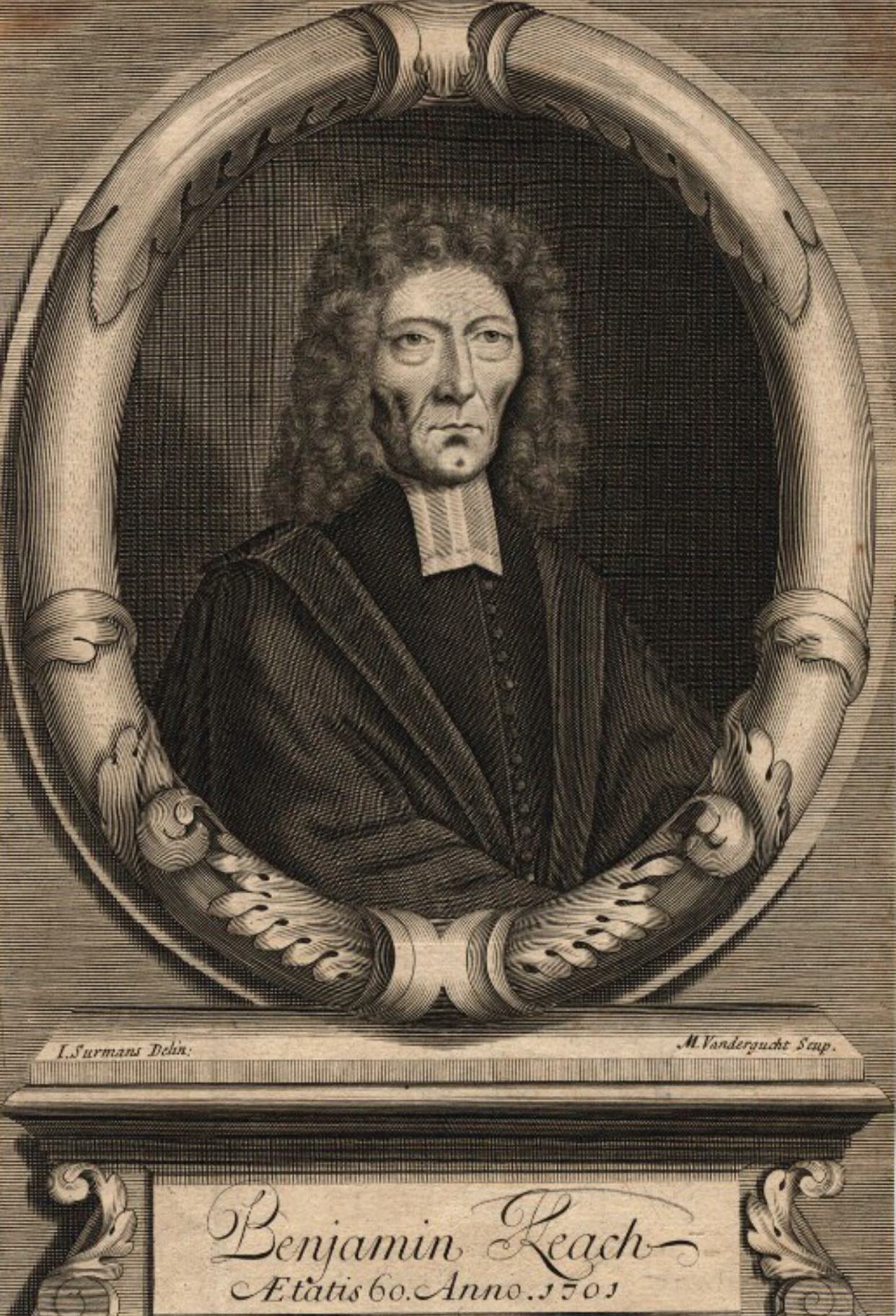
The article "The Church of Rome, Mystery Babylon" by Benjamin Keach presents a rigorous theological critique of the Roman Catholic Church, arguing that it fulfills the prophetic image of Mystery Babylon as depicted in the Book of Revelation. Keach outlines various interpretations of Babylon, ultimately asserting that it represents the seat of papal authority, which has historically maintained power over nations through idolatry, persecution, and a perversion of the Christian faith. Key biblical references include Revelation 17-18, which describe Babylon as a great city and a corrupting influence over the earth. Keach’s significance lies in his insistence on distinguishing between true Protestant faith and the practices of the Roman Church, emphasizing that the latter's influence is a direct contradiction to biblical doctrine and has resulted in the bloodshed of countless saints. This critique aligns with Reformed doctrine that stresses the authority of Scripture and the danger posed by unbiblical traditions.
Key Quotes
“For indeed it is a Mystery to be wondered at let it be considered 1 That a Shepherd should be a wolf and devour that flock which he pretends to be an overseer or pastor of.”
“Rome Papal is not only a woman a city a whore but a very great woman city and whore great in many respects but chiefly in these four: 1 She hath a great name… 2 Great in power… 3 Great in multitude… 4 Great in action vile actions.”
“If the Pope of Rome did arise to temporal power upon the weakening of the Cæsarean dominion… then the Pope of Rome is the little Horn the wicked power and vile person set forth by the prophet Daniel.”
“If there be no sect of people in the Christian world guilty of so much blood drunk with the blood of saints… then the Church of Rome is this woman… drunk with the blood of the saints and the martyrs of Jesus.”
What does the Bible say about Mystery Babylon?
The Bible presents Mystery Babylon as a metaphorical figure representing corruption and apostasy within the Church, particularly pointing to the Church of Rome.
Revelation 14:8, Revelation 17-18
How do we know Rome is Mystery Babylon?
Rome is identified as Mystery Babylon based on its historical role in oppressing true Christians and its doctrinal corruption.
Revelation 17:6, Revelation 17:18
Why is the concept of Mystery Babylon important for Christians?
It highlights the dangers of spiritual corruption and encourages believers to remain faithful to biblical truth.
Revelation 18:4, 2 Thessalonians 2:3-4
THE CHURCH OF ROME, MYSTERY BABYLON
"And there followed another angel, saying, Babylon is fallen, is fallen, the great city, because she made all nations drink of the wine of the wrath of her fornication" Re 14:8.
"And great Babylon came in remembrance before God, to give unto her the cup of the wine of the fierceness of his wrath," Re 16:19.
"And upon her forehead was a name written, MYSTERY, BABYLON THE GREAT, THE MOTHER OF HARLOTS, (or fornications,) AND ABOMINATIONS OF THE EARTH," Re 18:5.
"And after these things, I saw another angel come down from heaven,---And he cried mightily with a strong voice, saying, Babylon the great is fallen, is fallen, and is become the habitation of devils, and the hold of every unclean spirit, and a cage of every unclean and hateful bird" &c., Re 18:1-2.
In the handling of this great subject, it seems needful to give an account of the various opinions, that have, more or less, presented themselves to the world about it, which may be reduced to these four following heads.
I. That it is Jerusalem; and that for two reasons:
1. Because the man of sin, or last beast, that is to head this Babylon, is set forth by St. Paul, "To sit in the temple of God, showing himself to be a god," 2Th 2:4.
2. Because this city where the beast reigns, and shall slay the witnesses, "is spiritually called Sodom and Egypt, where our Lord was crucified," Re 11:8.
II. That it is the Turkish empire, or power of the Saracens; which Mr. Mede somewhat touches, and in a brief way most learnedly argues against, in his third book, page 644, 645.
III. That it is indeed Rome, the seat of the fourth or last empire, but Rome in its heathen state, under the idolatrous and persecuting emperors: so the Rhemists would have it, if there be a necessity to fix upon Rome to be this Apocalyptical, or Mystery Babylon. For this opinion the present Romanists have no better advocate than Dr. Hammond, who hath done very worthily at other turns. See his Annotations upon the 17th chapter of the Apocalypse.
IV. That it is the present power and church of Rome, who under pretence of the most high and ecclesiastical jurisdiction, doth influence and govern the secular power and state of kingdoms. Of this last opinion were the ancient Waldenses, who felt the bloody power of Rome, venting itself in most horrid and barbarous cruelties against them, and that for a long series of time, as appears by our most authentic, ancient, and modern writers, who give a very ample account of the great persecution of Christians, for many hundred years last past, in all parts of the Christian world; where they have had power. To which opinion of the Waldenses most of our modern Protestant divines agree, of which we shall mention only Cartwright, Fulk, the worthily admired, and learned Mede, not forgetting famous Du Moulin of France; as may be seen in their works at large.
But because we will not take things upon trust, nor refer the reader to many quotations, which he may want books and time to satisfy himself about; it appears needful, that we remove the objections with as much brevity as possible, before we state the Metaphor, and run the parallel.
Now that Babylon in all these new Testament texts cannot be fairly applied to Jerusalem, the Turks and Saracens, nor terminate in the heathenish state of Rome, we offer these following considerations or arguments:
I. It cannot be meant the city Jerusalem:
1. Because Jerusalem did not reign over the kings of the earth in St. John's time, when he saw this vision, and wrote the revelation, which this city Babylon is expressly said to do: "And the woman which thou sawest, is that great city which reigneth over the kings of the eaith," Re 17:18. Jerusalem having been not only under captivity divers times before, but was then eatirely under the power of the Roman yoke, as the whole history of the Gospel doth confirm, and themselves did most plainly confess: "We have no king but Caesar," Joh 19:15.
2. Jerusalem was never in so high esteem with the beast, as to be capable to ride as queen regent upon him, as this woman, whore, or city is said to do; "And the Angel said unto me, Wherefore didst thou marvel? I will tell thee the mystery of the woman, and the beast that carrieth her, which hath the seven heads, and ten horns," Re 17:7, compared with ver. 2, "So he carried me away in the Spirit into the wilderness, and I saw a woman sit upon a scarlet coloured beast, full of names of blasphemy, having seven heads, and ten horns."---For by the woman sitting, and beast carrying, is undoubtedly signified, influence, power, and dominion, which Jerusalem was far remote from, not only under the Roman monarchy, but also under the three kingdoms that went before it, viz., the Babylonian, Grecian, and Persian; as might be largely illustrated both out of sacred and human history.
3. Jerusalem did not sit upon many waters, which is interpreted to be people, nations, and tongues; that is, had not command or dominion over them, as this woman, whore, or city is said to have: "And he saith, the waters which thou sawest, where the whore sitteth, are peoples, and multitudes, and nations, and tongues," Re 17:15. The whole land of Judea being under tribute to the Roman government at that time: Lu 2:1. "And it came to pass in those days, that there went out a decree from Csesar Augustus, that all the world should be taxed;" and particularly, Galilee, Nazareth, Judea, and the city of David, called Bethlehem, ver. 4.
4. Jerusalem was not capable to enchant and bewitch all the nations round about her, either by her religion and doctrine, or by great gifts and rewards.
(1.) Because the Roman power kept her under, and much in awe, on the one hand not owning nor subscribing to her religion.
(2.) The Christian doctrine and religion blocked up her way, on the other hand that she could not extend her influence to either neighbouring, or remote nations, as this woman, whore, or city, is said to do: "For thy merchants were the great men of the earth; for by thy sorceries were all nations deceived." Re 18:23.
5. Jerusalem, though she were guilty of much blood, from the beginning of her excellency and glory, in Solomon's time, killing prophets, even all that were sent unto her, murdered John Baptist, and our Lord and Saviour, as also the blessed martyr, St. Stephen: yet in her could not be found that great mass of blood that was shed, and myriads of Christian saints that have been barbarously murdered, by massacre, and public martyrdom, since they were ruined and destroyed by Titus Vespasian, which we find positively charged upon this city Babylon: "And I saw the woman drunk with the blood of Saints, and with the blood of the Martyrs of Jesus, and I wondered with great admiration;" as indeed well he might, as shall be shown. "And in her was found the blood of prophets, and of saints, and of all that were slain upon the earth; that is, since the destruction of Jerusalem, Re 17:6; 18:24.
6. And lastly; not to multiply more upon this head, though Jerusalem was fearfully destroyed, as the history of Josephus shows; yet shall she rise again, be built upon her own heap, be replenished with her own children, which this city Babylon under consideration shall never be, after this catastrophe which John saw visionally coming upon it: "And a mighty angel took up a stone, like a great mill-stone, and cast it into the sea, saying, thus with violence shall that great city Babylon be thrown down, and shall be found no more at all," Re 18:21.
II. It cannot be the Turks and Saracens, for two reasons offered by the learned Mead, lib. 3:p. 643.
1. Because though they did arise to great power, in the world, yet they had not their seat in that great city, which in St. John's time reigned over the kings of the earth, which this Babylon is expressly said to have, Re 17:18.
2. That they did not rise by apostacy from the Christian religion, which this Babylon with her head, the man of sin, did; for, as this worthy author saith, the Turk, whatever he be, could be no apostate, because he was of a nation that never was Christian.
To which we shall add something for the clearing of this head, that we may discharge that debt we owe to God, to the Church, and the world.
3. It cannot be the Turks, because they are not strangely and wonderfully mysterious, which this Babylon is said to be: "And upon her forehead was a name written, MYSTERY, BABYLON THE GREAT, THE MOTHER OF HARLOTS AND ABOMINATIONS OF THE EARTH. And the angel said unto me, Wherefore didst thou marvel? I will tell thee the mystery of the woman, and the beast which carrieth her, which hath the seven heads, and ten horns," Re 17:5,7.
What special Mystery hath showed itself to the world from the Turks and Saracens, more than from other common empires or kingdoms, that is matter of admiration to the wisest of men? Is it matter of wonder, that the Turks do own but one true, and most high God? Is it matter of wonder, that they do own Jesus Christ to be a prophet, and a good man? Is it matter of highest wonder, that they prefer Mahomet above Jesus? Is it matter of wonder, that they appear true to their contracts, in matters, of civil commerce? Is it matter of highest wonder, for them to endeavour to keep what dominion they have, and to enlarge it, to make slaves and prizes of those enemies they take prison say, in none of these things is there any high mystery, or matter of things common to all places and kingdoms invested with power:
(1.) Did not the great king of literal Babylon own the only true God, yet still held the Church in captivity?
(2.) Did not Israel own the same, and yet kept their idols, after their revolt from Judah?
(3.) Did not Judah prefer Moses above and before Christ, and at that time when Christ was personally amongst them, working most stupendous miracles, which did evince his divine mission? Nay, did they not prefer a common and notoiious villain before the blessed Lord of glory, when they desired a murderer to be freed, and pressed hard to have the good and blessed Jesus, the Saviour of the world, killed? And did not this wise apostle know this to be true in fact, and to equal, nay, out-do any thing that the Turks or Saracens ever did, or can be accused of? And if St. John was transported with astonishing wonder, at matters much less than he had seen before, doth it not give good reason to suspect him of weakness and defect, that he should suffer himself to be surprized with the greatest wonder, at far less things than he had seen and known before? Certainly therefore we must conclude, there was something more of mystery in John's vision, than what hath been showed to the world by the great Turk, or any other power; and indeed, undoubtedly, the greatest mystery that ever the world was acquainted with: for the characters of Babylon must either be singular, that is, such as none have besides; or else they must be transcendent, to go far beyond what others had in a lesser degree. Otherwise John might have kept the description of Babylon to himself, there being no clear distinctions, to render the wisest and most discerning men able to make a judgment upon her. The Mystery then that is written upon this woman Babylon, seems clearly to lie in these particulars following.
First. That she doth transact the most horrid wickedness that ever the world was, or is like to be, acquainted with.
Secondly. That under this monstrous guilt, she is prodigiously confident, and without all regret, or show of shame, and most impudently boasts of the highest sanctity and holiness in the world, viz., that she is totally pure, infallibly certain, and cannot err, &c. That this indeed is a Mystery to be wondered at, let it be considered.
(1.) That a Shepherd should be a wolf, and devour that flock which he pretends to be an overseer or pastor of.
(2.) That a professed servant of Jesus Christ, and the meanest of saints, should exalt himself above his Master, and not above his Master only, but above the God of his Master, and all other deputed gods, that are vicegerents to the King of heaven, by slighting and trampling upon the holy scriptures, and laws both of God and princes, dispensing with the breach of them, indulging the highest violation thereof, and setting up his own inventions, traditions, and decrees above them: insomuch that there is a thousand times less danger, in their esteem, in respect of excommunications, and corporal punishments in this world, or of damnation in the world to come, in breaking and violating the laws of God and princes, than there is in the violation or breach of the inventions, traditions, and decrees of Mystery Babylon, and her head.
(3.) That one sitting in the temple of God, pretending himself as a poor apostle, vicar, and successor of Christ, nay, as the successor of a poor fisherman, should wear the highest ensigns of imperial dignity!
(4.) That he should be so lordly, and prodigiously insolent, who was commanded to the greatest humility and abasement, as to tread upon the necks of emperors, kick off the crowns of great princes, and make kings his foot pages.
(5.) That he should pretend highly, yea, most highly, to God, Christ, religion, and holiness, and yet espouse to himself, as the darlings of his bosom, not only the chiefest sons of Belial, but all that will decline sancity and religion, and embody themselves with those first-born sons of wickedness, that are of the highest magnitude, and engage themselves in such monstrous and butcherly practices, that human nature, as such, could never act in the butchering of brute beasts.
(6.) That the spouse of this prodigious monster should in profession own God, Jesus Christ, and the things of religion, of which justice and charity, holiness and compassion, are not the least part; and yet under this vizard, and in the very time of these pretensions, perpetrate the greatest and most unparalleled villanies in the world: 1. In being the top of pride. 2. In committing palpable idolatry. 3. Fill themselves with excess and drunkenness. 4. To curse, swear, and blaspheme the very name they profess to be sacred. 5. To cast down the truth, burn the Bible, deface the holy books and laws of God. 6. To assume not only a power to dispense with violations of the highest nature, but to pardon and forgive them at pleasure. 7. To commit adultery, and account it a venial crime. 8. To break covenants, drive a trade in perjury, forswear every thing they are justly charged with, and is fully proved against them. 9. To foment wars and broils in every kingdom and country where they have power; contrive the ruin of towns and places, cities, countries, and kingdoms, by fire, sword, and most cruel devastations. 10. To slaughter, kill, and barbarously murder, both men, women, and children, even all that dare make a show of conscience and religion, so far as to abhor and dissent from these villanies.
This is such a scheme of religion, and system of divinity, to come from an apostle, a Shepherd, a vicar and successor of Christ, from a Church, sheep, saints, and the pretended followers of the meek, peaceable, and innocent Jesus, who taught altogether otherwise by his doctrine and example, that it might well be wondered at, and is the strangest Mystery that ever appeared, of which we challenge the whole world to show the like in the Turks and Saracens. For men to swear, lie and forswear themselves, and yet be true men: to contrive rebellion, murder, and treason, and yet be as innocent as a child unborn: to be elevated to the highest pinnacle of pride, even above emperors and kings, above Jesus Christ, and God his Father; and yet be humble and lowly: to commit gross idolatry; and yet be the servants of the living God: to be filled with, and make a trade of excess and drunkenness; and yet be the patterns, and standards of sobriety and temperance: to cast down the truth to the ground, deface the laws of God, and burn the scriptures: and yet be the true witnesses to it: to forgive sins; and yet be the greatest of sinners themselves; to commit fornication and adultery; and yet be spotless and pure in heart: to foment wars and broils in every kingdom and country where they have power; to contrive the ruin of towns and places, cities, countries, and kingdoms, by fire, sword, and cruel devastations; and yet be as harmless as doves to all mankind, the only sons of peace and quietness: to slaughter, kill, and barbarously murder men, women, and children, that dare not be so wicked as themselves; and yet to be full of mercy, tender pity, and compassion; an apostle, shepherd, vicar, and successor of the meek and lamb-like Saviour. And for the dear consort of this impious head, or man of sin, to be not only confederate with him, but a principal in all these unparalleled villanies and most butcherly and rapacious murders; and yet be the holy Catholic Church of God, the pare and spotless spouse of Jesus Christ, the true sheep, the harmless lambs, the best of saints, and close followers of the Lord Jesus, who always taught the contrary by his holy doctrine, and meek example. "We say, these things not being found by secret search, but are written in capital letters upon her forehead, appear in open view, to.be read by everyone that is not wilfully blind: let any one show us a greater Mystery in the world thaii this, and we will subscribe to it.
4. It cannot be the Turks, because they are not the mother of harlots, and abominations of the earth, which this Babylon is said to be, Re 17:5, "And upon her forehead was a name written, MYSTERY, BABYLON THE GREAT, THE MOTHER OP HARLOTS, AND ABOMINATIONS OF THE EARTH." And here we demand, in excuse to the Turks, this one thing:
From whence did proceed the murders, massacres, and martydoms of all the religious professors of Christianity, that have died by violence in the Christian world, for the space of twelve hundred years last past? and from what people did proceed those horrid oaths, blasphemies, and execrations, that the world hath woefully been acquainted with, most horrid and strangely astonishing to repeat?
Came these unparalleled degrees of impiety from the Turks? from the Waldensians, Lutherans, Calvinists, or any nonconforming Protestants? No, no. Why, whose language then is it? Whose! Why, it is the language of the beast of the bottomless pit, and bloody whore, who bare these blasphemous sons of her own body, daily nourishes them at her breast, and strengthens them in their sinful courses, by accounting them the sons, the precious sons of Zion, the true sons of the Catholic Church, the darlings of heaven, the beloved ones of the Virgin Mary, and giving them pardon for these bold and heavendaring sins, as often as they do commit them, and come to ask pardon for them: so that sin and pardon is as constant and common with them, as breathing and eating. And these things are done to seal and confirm lies, which is the more heavy, henious, and prodigious; for if men may lie by allowance; may kill, and shed innocent blood, without control of conscience, and Church-censures; may swear and blaspheme, and challenge God himself to damn them; may burn men for religion, consume cities to ashes, conspire the death of kings, the ruin and overthrow of kingdoms, whore, and murder infants; and yet be accounted a Church, the members and parts of it, called saints, holy children, and sons of the Most High God: then may we claim a patent, and take a license to change the name of all things, and alter all the ideas of the minds of men; call and account Beelzebub a good god, and all his black tribe, the pure saints of the Most High; call the lower regions of blackness and darkness, to which he is confined, the heaven of glory and eternal light. Of which things we ought in justice to clear the Turks, until witnesses of undoubted credit shall come forth, and evidence, that the Turkish state is the mother of as great abominations as these are.
5. And lastly; the Turks cannot be Mystery Babylon, because they never were made drunk with the blood of the saints, and with the blood of the martyrs of Jesus, which this woman, Mystery Babylon, is expressly said to be, Re 17:6, "And I saw the woman drunk with the blood of the saints, and with the blood of the martyrs of Jesus, and I wondered with great admiration." Now let any man show such bloodshed, saints' bloodshed, by massacres and martyrdom, for the professing of Christianity, which must be. if the text be answered in that clause, "Blood of the martyrs of Jesus," by the Turks, either within their dominions, or without, as hath been shed by a generation nearer home, and we shall become like the man without a wedding-garment, wholly speechless, and say not a word about Babylon.
III. Now that Babylon in the Apocalypse, is Great Rome, that in former times reigned, and in future times shall be destroyed, is owned by some of the Papists themselves, and is asserted by all Protestants; the difference betwixt them is brought to this narrow point: the one wholly confines Babylon to Rome Heathen, and there totally to terminate; the other brings Babylon down lower, to Rome antichristian, or papal Rome. Now that this work may be to edification, and more full of satisfaction in this great case, we shall advance to the last and chief secret that is to be opened and considered, namely, whether all things in John's vision or prophecy, that are applied to Mystery Babylon, did completely terminate in Rome Heathen, and come no further!
In answer to this great enquiry, we do, with the body of Protestants, in opposition to the Papists, conclude the negative, viz., that all things in the Apocalypse applied to Mystery Babylon, did not terminate in Rome Heathen. The reasons of which negative are as followeth.
1. Because the beast that Mystery Babylon rides on, is the eighth head, or last ruling power of that city that is seated upon seven hills, which must be Rome Papal, because the whole race of Rome Heathen was gone off, before the eighth head came up. The sixth head was in John's time; the seventh was to come, and continue but a short space, "The beast that carries the woman," viz., Babylon, "is of the seventh, but is the eighth, and shall be the last; for he goeth into perdition." This being so evident from the letter of the text, needs nothing more to confirm it. Now that Rome Heathen was not the last part of the Romish power, is not only the full and joint consent of all writers upon this subject, but is so evident to all the Christian world, that it would be vanity itself to make a show of proof. The conclusion then is this; if the very last part of the Roman power carries the woman Bablylon, and that the Heathen-state of Rome went off before, and was not the last; then Babylon could not terminate in Rome Heathen, but must come down to Rome Papal. See Re 17:3,7,9,11.
2. If Babylon be totally terminated in Rome Heathen, then the book of the Apocalypse is of little use to the latter ages of the Christian world: for if the whole transactions relating to the persecution of the Church, and the slaughter and destruction of God's enemies, did end in Rome Heathen, then it served only to give a characteristical account of a beast and whore that was grown old, and ready to go off the stage; but hath wholly left us in the dark, and given us no notice at all of that horrible confusion, and bloody persecutions, which have reigned in the Christian world for more than a thousand years last past; which for length of time, numbers of murders, and manner of cruelties, hath outdone all the wickedness of Rome in its Heathen state. Which is not at all likely, that a vision should be given, and a revelation made, and called so, about a state that was almost expired, and the most great and principal part wholly left out, and said nothing to. Who can imagine, that a careful Saviour should be so full in his discoveries to the Jewish church, concerning their sufferings, and the 'time under Egypt, and Babylon literal; and be so short and lean to his Gospel-church, to leave them altogether without any written prospect, or extraordinary prophet, to inform them what should come to pass in the world, from the going off of the power of Rome Heathen, to the end of all the Church's troubles, which have already lasted above a thousand years? The conceit of which is fit but for two ranks of men to receive, viz., the Roman Catholics, and such Protestants as look for antichrist to come at the end of the world, after tht restoration of the Jews to their own land, and building a material temple at Jerusalem, where antichrist shall sit three days and an half, or years, to kill two men called the two witnesses.
3. If this last Babylon was wholly to terminate in Rome Heathen, then there was no cause of wonderment and great admiration for a wise man, to see in a vision an heathenish state, under a diabolical influence, to perform actions suitable to their state, and not contrary to their professions: for what manner of wonderment can it be to feel the wind blow, to see the sea foam, and hear the waves rage and roar when the winds oppose its effluxion? And what cause of great wonderment and admiration for a wise man, to see wicked Heathens oppose and persecute Christianity, when it is so suitable to their spirit, and agreeable to their profession so to do, we cannot yet understand, and we will diligently listen to them who will undertake to inform us, for the thing is true, that a wise man did wonder at the sight he saw, with great admiration, Re 17:6, "I saw the woman drunk with the blood of the martyrs of Jesus, and I wondered with great admiration." Wonderful! Strange! At what? To see that which was common to all ages, the seed of the serpent, that professed Heathenism, the wicked, even the worst of the wicked, by principle and profession, to plot against the righteous, and gnash upon him with their teeth; idolaters, professed idolaters, to persecute the servants and worshippers of the true God; those that were born after the flesh, and lived after the flesh, to persecute them that were born of the Spirit, and lived after the Spirit. Surely, if our adversaries' opinion was true in this case, that Babylon is only Rome Heathen, St. John had forgotten that Cain slew Abel, and Ishmael persecuted Isaac; and took not so much notice of the course of the world, common to every age, as Paul did, who said, "But as he that was born after the flesh, persecuted him that was born after the Spirit; as it was then, so it is now: and what strange wonder is all this.
4. Rome Heathen never was espoused, married, or united to the Lord Jesus, in a spiritual way, visibly owning his laws, and submitting to his government, as a wife submits to and obeys her husband, and afterwards casts him off and chooses another head and husband; and therefore cannot be Mystery Babylon, or the great whore: for though these heathens were great idolaters, yet were they never charged with spiritual adultery, nor could they, unless they had once, by visible profession, made a covenant with, or espoused themselves to the Lord Jesus, which Rome papal before its apostacy did: therefore Rome Heathen could not be the great whore, or Mystical Babylon.
5. Rome Heathen cannot be the Babylon set forth by John, unless she be guilty of all the Christian blood shed upon the earth since the destruction of Jerusalem: for as the guilt of all the blood shed from righteous Abel, to the death of Zacharias, as by our Saviour fixed upon Jerusalem, and cannot be removed to another people; so the blood of all the martyrs and followers of Jesus, is by this revelation fixed upon the last Babylon, Re 17:6, "And I saw the woman drunk with the blood of the saints, and of the martyrs of Jesus." Re 18:24, "And in her was found the blood of the prophets, and of saints, and of all that were slain upon the earth."But Rome Heathen was not guilty of all the Christian blood that was shed upon earth, by murders, massacres, and martyrdoms, since the destruction of Jerusalem: for to look back but for six hundred years last past, in -which time we shall find hundreds of thousands of professed Christians most butcherly and barbarously put to death, for then' zeal and love to the Christian religion, in the respective nations of Europe, before which the Heathenish state of Rome was gone off about the space of six hundred years. So that if he will regard the full satisfying of this prediction about Mystery Babylon, we must of necessity bring her down lower than the heathenish state of Rome.
6. Rome Heathen cannot be this Babylon under consideration, because the discoveries of other prophecies, relating to the same state, no way agrees to the power of Rome Heathen.
(1.) This state of Babylon is called the Mystery of Iniquity. This no way agrees to Rome Heathen, but fully agrees to Rome Papal. Compare 2Th 2:7, with Re 17:7, viz., "For the mystery of iniquity doth already work." "The angel said unto me, Wherefore didst thou marvel? I will tell thee the mystery of the woman, and of the beast that carrieth her."
(2.) The head of this state Mystery Babylon is called the Man of Sin, by way of eminency, kat ecoxhn, not only beyond the common rank of men, but beyond the highest sons of wickedness that went before him. And there is a great truth in this; for if we consider the Pope in respect of pride, hypocrisy, idolatry, and blood, he is the most unparalleled Man of Sin.
(3.) This state, or mystery of iniquity began to work in the apostle's days, which is no ways applicable to the power of Rome Heathen; for that did not then begin, it being at that time in the very meridian of its greatness, and universal sovereignty: Lu 2:1, "And it came to pass in those days, that there came out a decree from Caesar Augustus, that all the world should be taxed."
(4.) This man of sin, Mystery of iniquity, or head of this Babylonish state, is said to be let or hindered in his designs: "He that now letteth, will let, until he be taken out of the way," 2Th 2:7. But now Rome Heathen hath no let or hinderance, either from the word of God, for that declared it, as it was a civil magistracy, to be God's ordinance; nor from any opposite power, either civil or military, they giving laws to the greatest part of the world, and enjoying the supreme government of the best kingdoms in the universe, none being able to cope with them at that time.
(5.) This head of the Babylonish state is said to "sit in the temple of God," which the power of Rome heathen did not do, neither in the temple of Jerusalem, nor in the church, which is more properly the temple of God: for the Jews kept the possession of the literal temple, till it was destroyed; and for the Church of God, the Heathen emperors never loved it so well, as to make their residence in it. But the Bishop of Rome, before he showed himself to be that wicked one, viz., the man of sin, did evidently sit in the Church or temple of God, and so fulfilled this prophecy in the very letter of it.
(6.) He, that is, the man of sin, or head of this Babylonish state, was to rise by apostacy, or falling away from the Christian religion; 2Th 2:3, "There shall come a falling away first;" exactly agreeing with another prophecy to the same purpose, 1Ti 4:1., "Now the Spirit speaketh expressly, that in the latter times some shall depart from the faith," &c. But Rome Heathen did not rise by apostacy from the Christian religion, or a departing from the faith, which they never professed, as is evident to the whole world: ergo, Rome Heathen cannot be this Babylonish state.
(7.) This man of sin, or head of Mystery Babylon, lay hid in the apostle's time, and was not revealed: but the power of Rome Heathen did not then lie hid, or wanted to be revealed: for it stood visible and high, upon a hill, even upon seven hills, 2Th 2:3; Re 17:9, according to the Roman poet Ovid, who lived about the very time of Christ's being on earth, in lib. de Tristibus.
Sed quae de septem totum circumspicit orbem
Montibus, Imperii Roma, Deumq; Locus.
That is,
But Rome, which from her seven hills the whole
Earth views around, the place of gods, and rule, &c,
Ergo, Rome Heathen cannot be this Babylonish state.
(8.) This Mystery of iniquity is said to "oppose and exalt himself above all that is called God, or that is worshipped," 2Th 2:4. But this the power of Rome in its Heathen state did not do; for they worshipped, offered sacrifices, and bore a reverence to their gods, which by nature indeed were no gods; and it is only the head of Rome Papal, that runs down all gods but those of his own making; ergo, Rome Papal, and not Rome Heathen, must of necessity be this Mystery of inipuity.
(9.) The rise or coming of this Mystery of iniquity, is "after the working of Satan," 2Th 2:9. But the rise of the Romish greatness and power, when Heathen, was not after the working of Satan, but was said by Daniel, (Da 7:2-3), to be produced by the providence of God, or the four winds of Heaven; and by the apostle, to be "powers ordained of God," Ro 13:1; therefore, Rome Heathen cannot be the Mystery of iniquity, &c., here meant.
(10.) This Mystery of iniquity is not only said to come "after the working of Satan," 2Th 2:9, but also with all power, &c. But the rise of Rome Heathen was not after that manner: ergo, &c. To illustrate the first proposition, note, that the term, "all power," marks out the Romish Pope so notoriously, that whosoever runs may read it; for if we do but impartially consider his impudent usurpations upon crowned heads, and his pretences of supremacy over the whole Christian world; his proud imperious decrees, bulls, &c.; his disposal of the kingdoms of princes, and the inheritances, yea, the very lives of piivate persons, of any rank, that dare disobey him; his pretences to shut and open heaven, hell, and his feigned purgatory; his carrying a symbol of that vast and God-like power, viz., a brace of keys hanging at his girdle; all these will appear as clear demonstrations, that the head of Rome Papal is the head of Babylon, and the grand impostor, or the capital manager of this Mystery of iniquity, he having, most sacrilegiously, assumed to himself all heavenly power of damning or saving, and all earthly power, both temporal or civil, and ecclesiastical or sacred.
(11.) This wicked Babylonish state comes forth with a great pretence of miracles, which are but false signs, and lying wonders, to deceive and cheat the people; and by this means they conquer nations, and carry away their kings to their wicked interest. This Rome Heathen did not do. For though the heathenish power of Rome did conquer nations and countries, with their kings, yet it was by state-policy, and force of arms, not by pretended miracles, false signs, and lying wonders: therefore Rome Heathen cannot be this Mystery of iniquity, or Babylonish state.
(12.) This wicked state, under consideration, is declared not only to depart from the faith by a palpable apostacy, but to forbid marriage, and command a long lent, and many other fastdays, whereon some sorts of meats are prohibited to be eaten; which doth so fully agree to the papal state of Rome, that nothing can be more plain, unless the Spirit had expressly told us, this will be fulfilled by Rome Papal. For these two things we have their canons upon record, the which if none can show the like of the Heathen state of Rome, then Rome Papal shall carry the title of this Mystery of iniquity, and Babylonish state.
7. If the Babylon, under consideration, be only confined to the power of Heathen Rome, then there is a more evident and apparent mystery upon the state or power of Rome Heathen, than upon any power or state that went before it, or should come after it; for so the text imports, Re 17:5, "And upon her forehead was a name written, MYSTERY, BABYLON THE GREAT," &c. But there did no such mystery appear upon the power or state of Rome Heathen, therefore this Babylon cannot terminate there. What great Mystery appeared upon the power and state of Rome Heathen, more than appeared upon the power and state of the three foregoing monarchies.
8. This Babylon cannot be confined to the power of Rome only in its Heathen state, because Babylon is to continue till the good people shall, with the horns that did support her, which is the last part of the wicked and persecuting power, answerable to the ten toes in Daniel's great image, reward and destroy her, for the injury that she did unto them, according to these three texts of scripture, Re 18:4; Da 7:22,26-27; Re 17:16-17. "And I heard another voice from heaven, saying, come out of her, my people, that ye be not partakers of her sins, &c. Reward her even as she hath rewarded you, and deal unto her double according to her works: in the cup that she hath filled, fill to her double: how much she hath glorified herself, and lived deliciously, so much torment and sorrow give her." "And the ten horns which thou sawest upon the beast, these shall hate the whore, and shall make her desolate and naked, and shall eat her flesh, and burn her with fire." Which the power of Rome in its Heathen state felt not, but ended its course, without being destroyed by good people, and the ten horns, which is the last part of the image-government. "And in the days of these kings," viz., ten toes, ten horns, ten kings," shall the God of heaven set up a kingdom, which shall never be destroyed: and the kingdom shall not be left to another people, but it shall break in pieces, and consume all these kingdoms, and it shall stand for ever." Which could not be fulfilled in what Constantino did in the time of Maxentius, as Dr. Hammond would have us believe, for these three reasons:
(1.) Because the ten horns, that afterwards the Roman power fell into, were not come up, and so could not destroy the power of Rome in its Heathen state.
(2.) Because Babylon's persecution, misery, and confusion, did not utterly cease, which it must have done, so as to rise no more for ever, if the power of Rome Heathen destroyed by Constantine, has been this Mystery Babylon.
(3.) Because though there might be a body of good people with Constantine, when he overthrew Maxentius, yet the power of the kingdom was not so established in the hand of good people, as not afterward to be left to other, as the text afilrms, "And the kingdom shall not be left to another people:" for, as we shall anon show, the kingdom or power that ceased to be in the hands of Heathens, and by a mighty and divine Providence came to be in the hands of a worthy and renowned Christian emperor, came afterwards into the hands of very devils incarnate, who acted all the violence of the Heathen power over again, and indeed out-did them.
9. Those that are for confining this Babylon to the power of Rome in its heathen state, are not well aware what they do; for if they do demand it, their opposites, who hold it to be Rome Papel, may grant it for argument's sake: but then the remedy is worse than the disease; for they slip into such a precipice, as neither Baronious, Bellarmine, Dr. Hammond, or the Rhemists, can save or deliver them from. The true state of the case is this:
Rome Heathen is Mystery Babylon; this say the Papists: and the more willing they are to say so, because it is a good argument to prove that Peter was at Rome, he subscribing his first Epistle from Babylon, 1Pe 5:13, "The church that is at Babylon, elected together with you, saluteth you," &c., but this being allowed, the worst is come. This Babylon is destroyed, when the power of Rome Heathen is taken away, so as to be no more for ever; but then what condition doth the state of Babylon fall into! Doth it become the throne of the Lamb, the city of the living God, the habitation of holiness, and dwelling-place of Zion, the true Church, the place of the holy ones, and saints of the Most High? no! what then? hearken, and an angel from heaven shall tell you, Re 18:1-2, "And after these things," of the horns hating the whore, making of her naked, and burning her flesh with fire, "I saw another angel come down from heaven, having great power, and the earth was lightened with his glory; and he cried mightily, with a strong voice, saying, Babylon the great is fallen, is fallen, and is become the habitation of devils, and the hold of every foul spirit, and a cage of every unclean and hateful bird." Now, you Papists, if you will needs have Babylon to be Rome Heathen, take it, and much good do you with it; but then make Rome Papal better than an habitation of devils, if you can.
If it be Rome Heathen, then adieu to Dr. Hammond, and the Rhemists, they have what we desire: if it be, then Rome Papal is a far worse place than Rome Heathen or Babylon ever was; and then what a fine church the people make themselves?
10. If the place, seat, and city of Rome was not utterly ruined, so as to be no more for ever as a place of commerce, trade, and human society, when the Heathen power ceased, then Rome Heathen cannot be this Babylon, because of the ending and downfall of this Babylon, the place, seat, and city is utterly ruined, so as to be no more a place of trade, commerce, or human society. "And the ten horns which thou sawest upon the beast, these shall hate the whore, and shall make her desolate, and shall eat her flesh, and burn her with fire." And the woman which thou sawest is that great city which reigned over the kings of the earth. "For her sins which God hath remembered, which have reached unto heaven, therefore shall her plagues come in one day, death, and mourning, and famine, and she shall be utterly burnt with fire. For strong is the Lord who judgeth her," Re 17:16,18; 18:8,11-13. All sorts of merchandize traffic, trade and commerce with human society, shall cease, so as to be no more in her at all, and the good things which she in her fulness enjoyed before, even all things that were dainty and goodly, are now departed from her, and she shall find them no more at all, ver. 13, "For in an hour is she made desolate," ver. 19. And a mighty angel took up a stone, like a great millstone, and cast it into the sea, saying, thus with violence shall the great city of Babylon be thrown down, and shall be found no more at all. And the voice of harpers, and musicians, and of pipers, and trumpeters, shall be heard no more at all in thee, and no craftsman, of whatsoever craft he be, shall be found any more in thee; and the sound of a mill-stone shall be heard no more at all in thee. And the light of the candle shall shine no more at all in thee; and the voice of the bridegroom, and of the bride, shall be heard no more at all in thee," ver. 21, 22, 23.
But the place, seat, and city of Rome was not so utterly ruined as to be no more for ever a place of trade, traffic, merchandize, and human society, when the Heathen power of Rome ended.
Ergo, Rome Heathen cannot be the whore of Babylon, under present consideration, whose seat or city hath since had a powerful government, reigning in pride and pomp, for some hundreds of years.
1. If Rome papal be Mystery Babylon, the city of pride and confusion, that is set forth by St. John in the apocalypse; then neither the city of Jerusalem, the seat of the Turks and Saracens, nor Rome Heathen, is or can be the same: but Rome Papal is the mystery Babylon set forth by St. John in the, apocalypse Ergo, neither the city of Jerusalem, the seat of the Turks and Saracens, nor Rome Heathen, can be the same.
The last proposition is thus proved:
If all the marks and characters left us upon divine record, to prove Mystery Babylon by, do more aptly and fitly agree to Rome Papal, than to the city of Jerusalem, the seat of the Turks, or Rome Heathen: then Rome Papal, and not any one of them, is Mystery Babylon.
But the marks and characters left upon divine record, to distinguish and know MysteryBabylon by, do more aptly and fitly agree to Rome Papal:
Ergo, Rome Papal, and not the other, is Mystery Babylon.
For the clearing up of this argument, we shall distinctly state the character of Mystery Babylon, and run the parallel betwixt her and Rome Papal, in this method following:
Babylon is a woman, which imports either a single person, ranked in the feminine gender; or a body of people related to some head, husband, or public person to whom she is joined in wedlock, by covenant or matrimonial contract, as Eve was related to Adam, and therefore called woman; or as Judah and Israel, who were joined in covenant with God, and therefore called a woman, or as the true Church now is married or joined to Christ, and therefore called a woman. A single person, as Eve was, she cannot be, because the character given of her in respect of her state and actions, doth no way comport with it: she must therefore be a body of people, related to some head, husband, or public person, as Judah and Israel of old was, who are often called by the title of woman; and in like manner Babylon, before her degeneracy, were a people joined in matrimonial contract, by a Gospel covenant and profession, to the Son of God.
METAPHOR
I. Babylon imports a body of people that was once united to the Son of God; and hence, metaphorically called a woman; "And I saw a woman sit, &c. And the woman was arrayed, &c. And I saw the woman drunk," &c., Re 17:3-4,6.
PARALLEL
I. Rome Papal, or the Church of Rome, is a body, a great body, a famous Body of people, and which were, before their apostacy, a true church, by Gospel covenant and profession united to the Son of God, as her public head and husband; "Among whom are ye also the called of Jesus Christ. To all that be in Rome, beloved of God, called to be saints; grace be to you, and peace from God the Father, and the Lord Jesus Christ," Ro 1:6-7.
METAPHOR
II. Babylon is a city, a very great city, so called in a threefold respect; (1.) In respect of power; (2.) In respect of people; (3.) In respect of place and residence, where this power and people is seated; Re 17:18 and Re 18:10,16,18-19,21. City being indefinitely taken for either of these, or comprehending all, as in these instances, Ps 121. Isa 14:31; Ac 19:28.
PARALLEL
II. Rome Papal, or church of Rome, is a city, a very great city, so called in a threefold respect, 1. In respect of power, which is a twofold, (1.) civil, (2.) Ecclesiastical, signified by two horns like a lamb, Re 1:2. In respect of people, which are great in Nu 3. In respect of place and residence, where this power and great people is seated; and indeed it is as worthily called definitely by way of eminency, a city, as any power, people, or place in the Christian world, because there is nothing so much spoken of, or gives sadder occasion to be so much spoken of, as Rome, in respect of power, people, and place, which shall be further cleared by argument, &c. The fame of this people as a Church, was great, before the power and chief dominion of the place was joined with it; as appears, Ro 1:8, "First, I thank my God, through Jesus Christ, for you all, that your faith is spoken of throughout the whole world."
METAPHOR
III. Babylon is not only a woman, and a city, but a bad woman, and a city of confusion; for so the word Babel, or Babylon, signifies, viz., evil, or confusion.
PARALLEL
III. Rome Papal, or church of Rome, is not only a woman, and a city, but a very evil woman, and a city of confusion: there is the name of the Lamb much spoken of, but his doctrine undervalued and slighted, his laws trampled upon and violated, his example not regarded for imitation, either by the bishop himself, his cardinals, or inferior orders, having his humility and self-denial only in words, like those the apostle speaketh of, that "In words profess God, but in works deny him." For under this verbal humility, here is the greatest pride in the world; under this verbal meekness and self-denial, the greatest oppression and cruelty, covetousness, and love of the world; as appears by their pompous garbs, their cruel punishments, and the vast sums of money brought in from all parts of their dominions, by sleights, and cunning and deceitful cheats: besides a mere hodge-podge of principles, one order of fraternity professing that which another writes against, and cries down; which is the more strange to come from a Church infallible: besides the strange mixtures in their visible worship, of traditions, and human inventions, of lying and diabolical tricks, of blessing bya cross, consecrating holy water, and cleansing by it, which are too numerous and tedious to relate, and the less needful, because every man that hath seen their ways, hath an imperfect book of it in his own mind, and can read the truth of what we say within himself. And let any people in the Christian world, pretending to religion, be compared to them, for supernumerary, trifling, and insignificant ceremonies crowded into their pretended worship; nay, let all the people in the Christian world be laid in the balance against the Church of Rome, in this respect, and they will be found inconceivably wanting: for which we have this reason to judge her to be Babylon, and the city of confusion.
If there is more confusion, in contrariety of principles, practices, contradicting pretensions, crowding in supernumeraries, and mysteries of unscriptural inventions, into visible worship, in Rome Papal, or the Church of Rome, than is to be found amongst any or all people pretending religion, in the Christian world besides; then is Rome Papal, or the Church of Rome, the great Babylon, or city of confusion.
But there is more confusion, in the fore-mentioned respects, to be found in Rome Papal, or the Church of Rome, than in any or all people pretending religion in the Christian world besides: Ergo, &c.
METAPHOR
IV. Babylon, is not only a woman, and a city, a city of confusion, but she is a whore, which is a strange word to be applied to a great and famous people; a word that carries in it one of the highest impeachments, but no other than was given to Israel, Judah, and Jerusalem, in the days of old, upon a very good reason, Isa 57:3 and Isa 16:14; Ho 4., and Ho 5:3. For they being joined in covenant with God, to serve him in obedience and subjection, did like to an adulterous woman, break wedlock, and set up other lovers or idols in his stead, and continued so a long time, till a bill of divorce was given, and God proclaimed them not married to him as his wife, but a whore, and divorced, Eze 16:38; Ho 1:9, and Ho 2:2,5. Yet it is observable, that they used his name, though they worshipped idols, and cried, "The temple of the Lord, the temple of the Lord, are we."
PARALLEL
IV. Rome Papal, or Church of Rome, is not only a woman, and a city, a city of confusion, but according to scripture-history, and notorious matter of fact, she is a whore also, and may be justly so called; for in the apostle's time she joined herself to the Lord, by firm ties of a Gospel covenant and profession, and was the renowned spouse of the Son of God, owned and professed him in the time of Heathenism, received the apostles and servants of God amongst them, withstood the fury of the emperors, suffered persecution, had their faith spoken of throughout the whole world; and yet after all this, like Israel of old, she left God, and his holy laws, made idols to herself of saints, angels, reliques, and images, upon which she doated, and forsook the Son of God, upon the working and appearance of the Man of Sin, who exalted himself into the place of Christ, and became her head, by which means she is so far degenerated from what she once was, that she retains nothing, holds fast nothing of what really appertains to true godliness, but the bare names of God and Jesus Christ, having corrupted the true worship of the Son of God, her first husband, and notoriously abandoned obedience to him, taking this vile person to be her head, and chief guide, and setting him in the place of, and dignity above her first head, and true guide of her youth; and yet, like Israel of old, still cries, the true Church, the Catholic Church, the mother Church are we; having on her forehead a strange Mystery written, i.e., Christ, truth, verity, infallibility; and next to this there lies nearest ner heart, devil, Pope, lying, deceit, perjury, idolatry, and horrible cruelty towards the best of men, professing Christ and religion in uprightness and truth: for which change of her first head, husband, and guide of her youth, for this vile person, with which she commits most abominable lewdness, together with the kings of the earth, she is ranked by the angel amongst the worst of women, and styled, as her type and predecessor of old, a well-favoured harlot, or of the angel, a woman, a city, a notorious whore, which ill and black characters we conclude with this argument.
If there be no body of professing people in the Christian world, that hath so apparently declined or adulterated from what they once were, deserted the holy doctrine, example, and right government of Jesus Christ, and set up another visible and public head of the Church, in room and stead of him, whose power and laws are preferred above and before the authority and laws of the Lord Jesus, as Rome Papal, or Church of Rome hath done: then Rome Papal, or Church of Rome is this whore spoken of.
But there is no body of professing people in the Christian world, that hath so apparently declined, or adulterated, or deserted the holy doctrine, example, or right government of Christ, ut supra.
Ergo, Rome Papal, or Church of Rome, is this whore spoken of.
To reinforce this argument, let it be showed by any man, that any people different from the Church of Rome hath made such a change, in point of religion and headship, and matters thereto pertaining, so as that this black character of whore can more fitly and fully be made to meet upon them, and we must confess our argument not weighty; but till then, we conclude it carries conviction in the bowels of it.
METAPHOR
V. Babylon, this woman, this city of confusion, this whore, is a very great woman, city, and whore: "And the great city was divided." "And the woman which thou sawest, is that great city," &c. "The merchants" stood afar off, saying, Alas! alas! that great city, Babylon, that mighty city. Again they wept, saying, Alas; alas! that great city, which was clothed," &c. "What city is like unto this great city? And cried, weeping and wailing, saying, Alas! alas! that great city, wherein we are made rich!" &c. "And a mighty angel took up a stone like a great mill-stone, and cast it into the sea, saying, Thus with violence shall that great city Babylon be thrown down. I will show thee the judgment of the great whore, &c. He hath judged the great whore," &c., Re 16:19; 17:18; 18:10,16,18,17,21; 17:1 and Re 19:2. Great in four respects: (1.) Great in name. (2.) Great in power. (3.) Great in multitude. (4.) Great in action, vile actions.
PARALLEL
V. Rome Papal, or Church of Rome, is not only a woman, a city, a whore, but a very great woman, city, and whore; great in many respects, but chiefly in these four:
1. She hath a great name, no name so great in the Christian world, as the name of Rome. She is called a queen, because joined by contract to a great man, the Man of Sin, man greater than emperors, and temporal princes, who pretends a power to give them their crowns, to set them upon their heads, and kick them off at pleasure.
2. Great in power. She gives rules to kingdoms, advances her ecclesiastical laws above temporal; sets her head, and the chiefest of her sons, above secular jurisdiction; makes them unaccountable, and pretends a power to absolve and bless them; and without controversy, the lesser is blessed of the greater.
3. Great in multitude. There are no people besides, that are in a spiritual united body, and visible community, professing Christianity, comparable to her for multitude, and the vast numbers of her sons and daughters.
4. Great in action, vile actions, such as deposing and poisoning princes, fomenting jealousies, raising wars, setting nations together by the ears, invading rights, making uproars, burning cities, and carrying on dreadful devastations, where she is gainsayed. And that which adds to her greatness, is the invincible confidence she hath, that all persons and things are made for her, and given to her, so that all things she doth are allowed as legal and just in heaven: from whence we frame this argument.
Argument. If there be no united body of people, or visible community in the Christian world, that is so great in name, power, multitude, and action, vile actions, as Rome Papal, or Church of Rome hath been, and still is---Then Rome Papal, or Church of Rome is this great, very great woman, city, and whore spoken of.
But there is no united body of people, or visible community in the Christian world, that is so great in name, power, multitude, and action, vile actions, as Rome Papal, or the Church of Rome is---
Ergo, Rome Papal, &c., is this great, very great woman, city, and whore spoken of.
To reinforce this argument, let it be considered that the Christian world is distinguished or divided into two parts, viz., Papists and Protestants; the Protestants cannot be this whore;
1. Because they own Jesus Christ to be the Head of the Church, and only him.
2. They have never revolted or changed him, so as to set up another in his room, under any title whatsoever, but profess him to be their Lord, and are in obedience and subjection to his laws in all matters purely religious.
3. Neither is their name, power, multitude, or actions, so great by far 'as the Papists are; they being but small, inconsiderable, and low, in all Papist countries. And when the Protestant religion hath gotten up to be the professed religion of any nation, kingdom, or city, what is that nation, kingdom, or city, in comparison of those nations, kingdoms, and cities, where the Papists reign, and Popery is professed? This every intelligent man hath so full a prospect of, that it appears needless to give proof by instances.
METAPHOR
VI. Babylon, this woman, city of confusion, and whore, which is very great, sitteth upon many waters; which is expounded to be peoples, and multitudes, and nations, and tongues; "And he, the angel, said unto me, the waters which thou sawest where the whore sitteth, are peoples, an multitudes, an tongues," &c., Re 17:1,15. Which, according to the learned Mede, and a famous French author, is more than a third part of the ten considerable parts, which the Roman monarchy fell into, not long before the Pope, Man of Sin, or head of Mystery Babylon, assumed the imperial seat and crowns, which afterwards became ten kingdoms, with crowned heads, assisting the beast against the Lamb, and persecuting of the saints, distinguished into ten kingdoms or empires. 1. Of Germany. 2. France. 3. England. 4. Scotland. 5. Denmark. 6. Polonia. 7. The kingdom of Spain. 8. The kingdom of Navarre. 9. The kingdom of Hungary. 10. The kingdom of Naples and Sicily. All which Rome Papal had in possession, as our French author saith, in the days of Pope Leo the tenth, which was less than 200 years.
PARALLEL
VI. Rome Papal, or Church of Rome, is not only a great woman, city of confusion and whore; that hath set up the Man of Sin, great Belial, her highest son of wickedness, but she likewise sits upon many waters, viz., people, and multitudes, nations, and tongues, which may be illustrated by undeniable instances.
1. She sat upon, or ruled over more than one third part of ten, which was formerly under the Rornan empire in its civil state, which, more than one third part, hath since fallen into ten states or kingdoms, under the government of ten crowned heads, and have all agreed to give their power to this last beast, according to what was foretold by Daniel, (Da 7)., concerning the little horn, which had a mouth speaking great things, whose looks were more stout than his fellows; by whom three of the first horns of the Roman power in its civil state was plucked up by the roots, and in their place succeeded ten kings, or crowned heads, who have their crowns given them by this last beast. And as they have their crowns given by, and hold their kingship under the Pope, little horn, last beast, or Man of sin, in requital of his fatherly care, to give his sons so great a patrimony, they gave their power unto him, and engage against the Lamb, making war with and persecuting the saints, till the word of God, or prophecy of Daniel, is fulfilled, which ten crowned heads answer to the ten toes in Nebuchadnezzar's image, to the ten horns in this 17th of the apocalypse, that are so concerned in the beast's kingdom, as to be overcome by the Lamb, and turn to hate the whore, that before they supported, and for whose pleasure the did persecute the saints, which ten states or kingdoms are by our French author, in his book, called the accomplishment of the prophecy, p. 345, distinguished to be as in the other column set forth. All which kingdoms, as King James in his learned works makes out took their rise with Rome Papal upon the division or ruin of the Roman Empire in its civil state, the body of which kingdoms may well be called many waters, viz., peoples, and multitudes, and nations, and tongues, or people of several languages, which were as well known to have been under the usurpation and jurisdiction of Rome Papal, as their being so; which doth fully answer to the very letter of the text, "the waters which thou sawest, whereon the whore fitteth, are peoples, multitudes, nations, and tongues," Re 17:15.
2. He making all the European merchants rich, that traffic by sea, by the great expense of all commodities which are swallowed up within her territories and dominions, Re 18:11; which could never be effected unless she had nations and multitudes to contribute to her great pride and luxury.
3. A third instance is, the numberless number of good Christians which she hath drawn in and murdered, for no other cause than their fearing God, and obeying his laws by loving Jesus Christ, and following his example, of which we have a large account in Fox's Acts and Monuments, and other histories; upon which we form this argument:
Argument. If there be no body of people, professed church or state in the Christian world, under any single denomination, that sits upon, commands or bears rule over peoples, multitudes, nations and tongues, as Rome Papal, or Church of Rome, doth: then Rome Papal, or the Church of Rome, is this Babylon treated of.
But there is no body of people, professed church or state, under any single denomination, that sits upon, commands or bears rule over peoples, multitudes, nations, and tongues, as Rome Papal, or Church of Rome doth.
Ergo, &c.
To the establishing this argument, let it be considered, that the whole state of the Christian world consists of but these two parts, as we showed before, viz., the Church of Rome, considered as head and body, and those that dissent from her, and those are so inconsiderable, whether the Waldenses, Albigenses, Hugonots, or other parties of Protestants, that no one party of them, nay if we put them all together, can be said to sit upon, command, or bear rule over, peoples, multitudes, nations, and tongues; to answer the text, the Waldenses and Hugonots, have been and still are, a persecuted people, the Lutherans never got up so high as to command many states, or kingdoms, or places 'of many languages; Great Britain, though a Protestant state, or kingdom, comes not near to fulfil the text, much less the seven Provinces that of late revolted from Spain. So that if Rome Papal had done so, and no other people that dissent from her could ever do the like, then this proves Rome Papal the whore that fits upon many waters, &c.
METAPHOR
VII. Mystery Babylon, or the great whore, is such a Woman, such a city, such a whore, that the kings and great Men of the earth have committed fornication with. See the text, "with whom the kings of the earth have committed fornication," Re 17:2; i.e. spiritual fornication, or fornication in a mystery, after a mysterious manner, such as Jerusalem of old was charged with, which was a following the same idolatry that this woman Babylon had set up, and was devoted unto; and so great was her fornication, that it is said, she did corrupt the earth with it, Re 18:9 and Re 19:2; Isa 19:2.
PARALLEL
VII. Rome Papal, or Church of Rome, is such a woman, such a city of confusion, such a whore that the kings of the earth have committed fornication with, and that hath corrupted the Earth with her fornications, fornications after a mysterious manner, by following abominable superstition and idolatry.
1. Hath she adored the Pope as her Lord God, universal head, and Bishop infallible, acknowledged above all laws? So have the kings, and their misguided people, done.
2. Hath she worshipped the Virgin Mary, divers Angels, and many departed Saints? So have the kings and their misguided people.
3. Hath she adored images, the crucifix, and pictures of pretended Saints? So have the kings, and their misguided people.
4. Hath she foolishly debased herself with the adoration of the relicts of known and unknown Saints? So have the kings and their misquided people.
5. Hath she grossly and superstitiously worshipped the true God in a false manner, by crowding in an innumerable train of fopperies into his worship and service, which he never ordained, as candlesticks, altars, vestments, spits, oil, holy water, beads, and a world of such like trumpery? So have the kings and their misguided people, not only the emperor of Germany, kings of France, Spain, Poland, Portugal, that are still under her influence; but the kings of England and Scotland too, before the Reformation got ground: upon which we form this argument:
Argument. If there be no body of people in the Christian world, pretending a Church-state, that hath set up idolatry to that degree, and with whom the kings of the earth have complied, as Rome Papal, or Church of Rome hath done. Then Rome Papal, or Church of Rome, is the mysterious whore of Babylon treated of.
But there is no body of people in the Christian world, pretending to the Church-state that hath set up idolatry to that degree, and with whom the kings of the earth have complied, as Rome Papal, &c., hath done: Ergo, &c.
To reinforce this argument, let any man that will become an advocate for the Church of Rome, show, that any people called the reformed, who dissent from the Church of Rome, are guilty of like idolatry, and that the kings of the earth have complied with them in it, as aforementioned, and we will acquit this argument, but if this character doth more fitly agree to Rome, than to the reformed, &c., our argument is good.
METAPHOR
VIII. Babylon is such a woman, city, and whore, that hath not only, had kings, committing fornication with her, but hath intoxicated the minds of multitudes, and corrupted a great part of the world, or common sort of people, by wicked and false doctrine, "And the inhabitants of the earth have been made drunk with the wine of her fornication," Re 17:2.
PARALLEL
VIII. Rome Papal, or Church of Rome, is such a woman, city, and whore, that hath not only had the kings of the earth to commit fornication with her, in dancing after her pipes all her mysterious allurements; but hath intoxicated the minds of the multitude, and corrupted a great part of the world, or common sort of people, by wicked and false doctrine; as first, that a wicked man should be appointed of God to be the vicar of Christ; as if God had no more regard to his own name, and the good of his Church, and honour of his Son, than to institute a child of the devil, as every wicked man is, to be vice-gerent to the most holy Jesus, in the highest transactions that relate to heaven, and the souls of men. Surely if God shut Judas out from his bishopric, because of his wickedness, though an apostle; he is not so far changed since to be fond of a wicked Pope, as to make him immediate deputy to Christ, and to impose a wolf, as shepherd, upon the universal Church.
2. Who saith, that he is an infallible Judge to determine articles of faith, and impose them upon great penalties: so that as a lord he hath dominion over men's faith, and souls too, which the apostles declaimed.
3. Who saith the Church cannot err, though God and the world knows there are not such great errors in principles, nor such villainous enormities, cursed actions, cruel and immoral practices in the world besides, which the poor mutitude believes, and kill others that oppose it, and venture body and soul upon it.
4. That says, that a priest, though he be a treacherous villain, a contriver of murder, an abominable adulterer, hath power to absolve his equal and fellow sinner from all his offences, if he come to confession, though the pretended penitent keep his old habit of wickedness still; contrary to what God and Jesus Christ say, that the dauber with untempered mortar, and the daubed; the layer of the pillow under sinful elbows, and the leaner thereon; the blind leader, as well as the blind follower, shall all fall together.
5. That saith, There is a purgatory, this no part of heaven or hell; and that men may be redeemed thence for money: though God saith, the redemption of men's souls is precious, and ceaseth for ever, after the offering of the body of Jesus once for all; that redemption is not with corruptible things, as silver and gold, but with the precious blood of Christ, as a Lamb slain without spot.
6. That saith, that the hands and mouth of a filthy unclean priest, can make not only the bread and wine sacred, but turn both into the real body and blood of the Son of God, make whole Christ of a pitiful wafer cake, and after it is eaten, turns to corruption; and before it is eaten, is a fit feast for rats and mice; not only contrary to reason, but the full verdict of all our senses.
7. That saith, That no person, how good and pious soever he be, can be saved, out of the pale of their polluted, ungodly, and devilish church; though the scripture plainly affirms, that in every nation, lie that fears God, and worketh righteousness, is accepted with him.
8. That says, It is no sin to lie, and forswear, to kill, slay, and murder such as they call heretics, though never so good, if it be for the cause of the church, with a thousand things of the like import, which the people do verily believe: and as they dare not gainsay upon their salvation, so will they embrace and use all opportunities to fight and make wars, overcome cities, and lay waste countries and kingdoms, to kill and slay, by massacre, and all manner of murdering ways, all ranks and degrees of men, that oppose the horrid principles and practices of those cursed children. Nay, they will go boldly to their own death, when convicted, and condemned for villanies, and deny that to-day, that they were convicted of but yesterday, and though never so notoriously guilty, yet will take it upon their death and salvation, that they are as innocent as the child unborn. What can this be, though they drink it down for most sweet and pleasant wine, but an infusion of the rankest and most deadly poison that the lowest cellar of the bottomless pit can afford, the very wine of fornications, and most dangerous drunkenness and intoxication in the world? Which is attended with this aggravation, that the best prepared medicines of the wisest physician will not recover them; for Babylon having made the multitude drunk with this sort of poisoned wine, how rare it is to have any come to themselves, to their right mind again: and to shut up his head, take his argument:
Argument. If no people in the Christian world hath made the multitude, or common sort of people drunk, corrupted, and intoxicated their minds by wicked lies and false doctrine, such as before mentioned, as Rome Papal, or Church of Rome, hath done: then Rome Papal, or Church of Rome, is this Babylon treated of.
But no people in the Christian world hath made the multitude, or common sort of people drunk, corrupted and intoxicated their minds by wicked lies, and false doctrine, such as before mentioned, as Rome hath done:
Ergo, Rome papal, or Church of Rome, is this Babylon treated of.
METAPHOR
IX. Mystery Babylon is such ill company, as to let Kings be dishonestly familiar with her, and make the lower and ruder sort of her associates drunk. She is said to sit drunk upon a scarlet-coloured beast, full of the names of blasphemy," &c., Re 17:3. So that the woman and the beast are distinct: the woman, the Church, the beast the secular power, or civil state. This appears evident from divers considerations, arising.
(1.) From other prophecies relatiug to the same thing.
(2.) From the letter of the text.
(3.) From arguments in reason.
(4.) From the confession of the woman, Babylon, or the whore herself.
1. From "many prophecies; the latter part of the image is partly iron, and partly clay; two states really distinct, that could never so incorporate as to become one, Da 2.
2. From the letter of the text: "I saw a woman sit upon a scarlet-coloured beast, full of the names of blasphemy," Re 17:3. The colours of the royal and imperial vestments, the angel in the nest words declares distinct, and the apostle in the vision beheld them distinct.
3. They appear to be distinct from arguments in reason. For (1.) The beast is in the masculine, the whore in the feminine gender. (2.) The whore else did sit and ride upon herself; a high absurdity. (3.) The horns, being of the beast, shall hate the whore; if not distinct, the whore must hate herself, even to ruin and desolation, which is nonsensical, (4.) The beast shall abide, though in captivity, after the whore is thrown down or destroyed. See Re 17:11, compared with ver. 2, 4, 6, 16.
4. From the plain confession of the woman or whore herself, who saith, "I sit a queen, I am no widow," Ergo, she hath a head or husband, which is the beast, little horn, or man of sin, that Paul declared should rise after the removal of the then present power which did let, which the primitive fathers, as Tertullian, Cyprian, Jerome, and others, understood to be the imperial power, in its, pure, civil, iron, or unmixed state.
Ergo, Rome Papal, or Church of Rome, is the whore of Babylon here treated of.
To reinforce this argument, we challenge any professed Papist, Atheist, or any else to show where any other people or parties are, to whom these characters agree; and then we shall be content to let fall our argument.
PARALLEL
IX. Rome Papal, or Church of Rome, hath not only been ill company to the kings and great men of the earth, in drawing them into her idolatry, abuse of God, his blessed Son, the Christian religion, and blessed books of the Old and New Testament; but she hath made the lower and ruder sort of people drunk too. And it is no wonder; she thinks she may do any thing, having a dispensation from heaven, which the Pope keeps the keys of, and fearing no power on earth; for she sits upon him, and rides him, and is not only distinct from the secular power, but above it; so as what of the secular power is still left at Rome, is under the conduct and management of the church; there being no civil administration of justice, or exercise of laws, but what is authorised and allowed by his unholiness, the head: and the cardinals, the shoulders, breasts, and arms of the church, or state ecclesiastical. To make this fully evident, the Pope doth not only exercise a power of appointing seculars in Rome, and near to it; but he claims the like supremacy abroad, in the islands far off. If the secular princes fall off from him, or if they will not be reconciled to him, as head of holy church, he will excommunicate and depose them, and dispose of their crowns, thrones, and sceptres from them. That the Pope is a temporal prince, as well as an ecclesiastical bishop, i.e. makes laws, exact tributes, raises soldiers and acts as a monarch, which fairly affords him the title of beast; that his royal robes, chair he sits in, to his very hose and shoes, with the vestments of cardinals, is scarlet, no man can reasonably doubt. That what the civil power claims and the ecclesiastical power exercises, are not incorporated, or entirely mixed; that the princely Pope is in the masculine, and his spouse, the church, in the feminine, is owned by all parties.
That the church-state doth sit upon, ride, and govern the secular at Rome, Italy, and all its territories; that the church of Rome owns that she is no widow, but hath a head, called his holiness, or supreme ruler of the church, is so evident, that we cannot find them upon any file or record of controversy. There remains therefore no more to be done at this time, but to frame our argument upon the premises, and leave the reader to prove the weight thereof in the balance.
Argument. If there be no visible state in the Christian world, that doth so apparently sit upon, command, and govern the beast, or a great secular power, clothed with scarlet vestments, as Rome Papal, or Church of Rome, doth: then is Rome Papal, or Church of Rome, the whore of Babylon here treated of.
But there is no visible state in the Christian world, that doth so apparently sit upon, command, and govern the beast or secular power, clothed with scarlet vestments, as Rome Papal, or Church of Rome doth.
METAPHOR
X. This beast that Babylon sits upon, commands, and governs, is not only clothed with scarlet, but is full of the names of blasphemy, &c., which may be taken in a threefold sense. (1.) For reproaching the name of God. (2.) For telling lies in divine things. (3.) For ascribing that to creatures which belongs to God. And though we will not excuse the beast from the two former; yet for brevity's sake we shall take the latter, viz., ascribing that to creatures which belongs to him, that saith "I am God and my glory will I not give to another."
PARALLEL
X. Rome Papal, or Church of Rome, sits upon, commands, and governs that beast, or scarlet power, that is not only clothed with scarlet vestments, but is full of the names of blasphemy, which appears by his receiving, allowing, and encouraging the ascribing that to creature, which belongs to God, and to his Son, of which we give you but these instances; (1.) When this human, sinful, and wicked head, is called our lord god the Pope, whether this is not blasphemy against God? (2.) When he is called, universal head of the catholic church, which none is but Christ. (3.) When he is called the lamb of God, the light of the world, the root of David, the lion of the tribe of Judah, whether this is not blasphemy against the Son of God? (4.) Whether when the orders of the church, oral traditions, the decrees of councils, are said to be of greater authority than the scriptures, which they call a nose of wax, the heretic's ink rule, are perniciously mischievous to the people; whether this be not blasphemy against God that spake, and the "Word of God spoken? (5.) When angels, the Virgin Mary, and other unknown saints, shall be invocated with addresses only becoming the Divine Majesty: as if these creatures were infinite, and could hear us at so great a distance as is earth, from heaven, which they could not do, if perpendicularly over us, much less from all parts of the world, over which they cannot be; whether this ascribing infiniteness and adoration to the creature, that is only due to the Creator, who is over all, God blessed for ever, be not blasphemy? (6.) To conclude, whether making a god of a piece of bread, and calling the profane priest the maker of the creature, be not ascribing that to the creature, which only belongs to God? Is not this the vilest blasphemy in the world, worse, if possible, than Atheism itself? For as philosophers observe, it is better having no opinion of God, than such an one as is unworthy of him; which we shall close with this argument.
Argument. If no people in the Christian world are borne up and supported by a beast full of names, full of such names or inscriptions of blasphemy, as Rome Papal, or Church of Rome is, then Rome Papal, or Church of Rome, must be this Babylon treated of.
But there is no people in the Christian world borne up and supported, by such a blasphemous beast, as Rome Papal, or Church of Rome is. Ergo, &c.
To reinforce this argument, let it be considered, that none can pretend to fix this character or mark upon any Protestant dissenters from the Church of Rome, called heretics, who have no such beast to support them, nor ascribe such blasphemous titles, or adoration to any creature in heaven or earth. For they acknowledge the one God, the object of divine worship; one Mediator between God and man, the Lord Jesus; and God's sacred truth to be the only rule; disowning all principles and practices contradictory thereunto.
Ergo, It is not the Protestant dissenters from the Church of Rome that are here meant.
METAPHOR
XI. Babylon, that sits upon a scarlet-coloured and blasphemous beast, is adorned with great pomp, and outward glory, very well fitting that spirit that delights in grandeur: "And the woman was arrayed in purple and scarlet, and decked with gold, and precious stones, and pearl, having a golden cup in her hand, full of abomination, and filthiness of her fornication," Re 17:4. Which must be such as none of her neighbours can match her in, else no note of distinction.
PARALLEL
XI. Rome Papal, or Church of Rome, doth not only sit upon a scarlet-coloured and blasphemous beast, but she is beautified and adorned with great pomp and outward glory, by which she commends herself to that part of the world that delights in her gaudery, being a woman whose worship is filled with detestable doctrine, which she holds forth to them with pictures and gallantry of all sorts. (1.) Look into the holy patrimony of consecrated saints, there you find riches and honour, though not durable riches, and righteousness. (2.) Look unto their garbs and vestments, there you shall find cardinals like splendid princes, heads of parties and provinces in such habiliments, that for riches might have become the highest order of the Jewish priesthood. (3.) Look into the instruments, and mode of their worship, and there you shall find the altar and candlesticks, the vessels for oil and pots of purification, as if their predecessors had been at Solomon's temple and had brought a pattern from thence; and yet in this golden cup, or framed piece of gallantry, there is nothing to be found, but foul and adulterated wine, most fitly to be called by the angel, abomination, and filthiness, and the wine of fornication: which we conclude with this argument.
Argument. If no people in the Christian world hath such riches and splendour, such pomp and gallantry in the maintenance and management of their worship, as Rome Papal, or Church of Rome hath. Then Rome Papal must be this gaudy harlot, or whore of Babylon.
But there is no people in the Christian world that hath such riches and splendour, such pomp and gallantry in the maintenance and management of religious worship, as Rome Papal, or Church of Rome hath.
Ergo, Rome Papal, or church of Rome must be this whore, or well-favoured harlot treated of.
The Argument is full and clear, and so well fortified, that we think it needs no rear-guard to enforce it; and therefore, though it be short, and low of stature, we shall leave it amongst our infantry, and draw up our right and left wings, yet further to assault Babylon.
METAPHOR
XII. This woman or city, that is thus adorned with outward pomp and glory, hath upon her forehead a name written, "MYSTERY, BABYLON THE GREAT, THE MOTHER OF HARLOTS AND ABOMINATIONS OF THE EARTH," Re 17:5, which may be true both in a literal and mystical sense, the breeder of concubines, and whores, to gratify the sensual appetites of her treacherous sons; but chiefly in a mystical sense, she breeds, and brings forth spiritual harlots, viz., unclean communities.
PARALLEL
XII. Rome Papal, or Church of Rome, if she be not concerned here, we will acquit her of being Mystery Babylon.
(1.) Here is a name written in capital letters, and written so as to be read publicly too. It is not written upon any part of the woman, that may be hid or covered with a garment, but on that part which is bare, and is easiest to be seen, her forehead, her public, visible, and known parts.
(2.) Here is Babylon, or confusion, a mixed body, that is far from that good and pure order, which in words she pretends.
(3.) Here is Mystery in the case, and a great Mystery to a wonder, even to the surprising of every wise and thinking man, Ver. 6.
(4.) Here is a mother, a mother of a very spurious, illegitimate, and unclean offspring, harlots, and abominations, many abominations, and great and reigning too, "Abominations of the earth," i.e. that large part of the earth, where she is situate, and doth reside. A little unto each of these, as the time and space we are limited to will allow.
A name upon the forehead. If this were not to be read and seen by most Christians and professors, it would not much concern the Christian world for whom it must be calculated; for others that own not the Christian Religion, are not in a capacity to make a judgment upon the case: for if this book of the Revelations were not written for the Christian world, it leaves us not any certainty where the case is to be considered, and the matter to be judged. Now if it calculated for the Christian world, then it must be upon such a people, that is most public and visible, and apparent, which agrees to none so fitly as to the Church of Rome; which, by their own confession, is the most potent and visible in the Christian world, for where have the inconsiderable heretics, so called, whose beings are in corners, such a name, as may be read or known by all, or by the principal part of the Christian world? now to clear these poor innocent, so called, heretics, from being concerned in this character, we imagine at least it cannot refer to them:
1. Because they have no forehead so broad to bear the inscription, which we will engage to make good against any Romanist in the world.
2. Because they are so plain and honest a people, and their principles so easily and well known, that it is wild and ridiculous to call them Mystery Babylon, there neither being any hellish depth nor confusion in what they profess, as might be fully evinced by unquestionable instances; for what confusion or hidden thing can be in this, that there is one God the object of worship, one holy book called the Bible, the rule of worship; and all that act faith, hope, and charity, upon these three great fundamental principles, shall inherit that blessed kingdom, or world to come?
3. Because they are so retired and private, that had they a forehead broad enough for the inscription aforesaid, yet they sit so low that nations cannot easily read it; and if we acquit the poor innocent Protestant, who must we fix these characters upon? if all dissenters from the Church of Rome be clear, then it must unavoidably be fixed upon Rome herself: if any demand for what reason, the answer is,
First; Because, when the Protestants are exempted, then there is none left to bear the inscription, but the Church of Rome.
1. She hath a forehead broad endugh to bear Mystery and confusion, for there is not a greater hellish depth and confusion to be found upon any people, than upon the Church of Rome, as will appear in its place.
2. Because the dissenters, with respect to appearance, and the exercise of power, are very small and inconsiderable, in comparison of that overgrown monstrous body of the Church of Rome; for to call the dissenters great, and the Church of Rome small, is as congruous, as to call the ocean a little spring, and the smallest brook the ocean.
Secondly; Babylon, confusion, or a mixed body, is far from that pure order, which in words Rome pretends unto, and can by no means agree to the Protestants; for they are so strict in their discipline, that they admit of no such mixture that deserves the name of confusion, they will receive none into their communion without much caution and satisfaction; and when received, keep them no longer than they appear to walk strictly and holily, according to the principles upon which they first received them; and as for their officers, they are soon summed up, being no more than bishops, or elders, and deacons. But the Roman Church may "be called Babylon, or the city of confusion very reasonably, because she so fitly answers literal Babylon of old, that was her type, and from whence she derives her name;
1. In setting up another way for men to go to heaven by, than what God hath ordained and appointed, viz., a tower of their own making.
2. In having so many languages amongst them, which is like the confusion of Babel.
3. In bearing the glory and sway over the kingdoms and countries of the chiefest part of the world, therefore called the lady of kingdoms, which is no way applicable to the poor dissenters.
4. In plucking up, or razing out the true worship of God, which was settled at Jerusalem, and setting up idolatry in the room of it.
5. In captivating God's people, who were carried away into literal Babylon.
6. In their doctrines, principles, and modes of worship, which is such a jumble, mixture, and heap of things, that may go for confusion itself.
7. In their orders, diversity, and long muster-roll of officers, that are so numerous, as well as unscriptural, that if mixture and confusion may be thought to be any where, it is to be found in this Church, where you have popes, cardinals, arch-bishops, abbots, provincials, heads of fraternities, priests, monks, friars, followers of Dominick, St. Francis, Jansenius, Augustine, Capucius, &c., and what not? All which is many times more like to be Babylon, mixture, or confusion, than the dissenters from the Romish Church.
Thirdly; For Mystery, which is in the description, it no where agrees to them, whom they call heretics, but agrees very well to the Church of Rome, in four things:
1. In calling themselves the Church of God, and yet are the synagogue of Satan, that is a Mystery.
2. In calling themselves the pure spouse of Christ, and yet an abominable whore, that is a Mystery.
3. In pretending to be the mother of peace, purity, and charity, and yet the breeder, bringer-forth, and cherisher of division, falsehood, most bloody butcheries, and barbarous cruelties, this is a Mystery.
4. In being queen regent, riding upon the beast in state, and yet being that good woman that fled into the wilderness, and abides there in a suffering condition all the time of the beast's reign, this is a Mystery. See our fourth argument: one proof of their Church is visibility; yet it is evident the true Church, for the space of 260 years, was to be in the wilderness, or in an obscure condition, &c.
Fourthly; Mother of harlots, and abominations, better agrees to the Church of Rome, than to Protestants.
It is against the principles of Protestants, to allow fornication or adultery, in persons of any rank whatsoever, maintaining constantly, that marriage is honourable, but whoremongers and adulterers God will judge; whereas Rome gives public toleration to notorious whoredoms, and the most shameless and unnatural beastialities, as the whole world knows.
Fifthly; for mother of harlots, in a spiritual sense, she is owned by all her children to be the mother-church. And,
1. Therefore Protestants are exhorted to return into the bosom of their mother.
2. All polluted and national churches in the European kingdoms, sprang from her, as the churches of France, Spain, Portugal, &c.
3. All corruption in doctrine and discipline may call her mother, that is to say, the false titles and errors following, viz., Universal, supreme, infallible head, holy father the Pope, his holiness in the abstract Our Lord God the Pope, unerring church, priestly absolution, selling of pardons, indulgences, dispensations, adoring the crucifix, worshipping of images, foolish crossing, anointings, and sprinkling with holy water, the adoration of the mass, and many such things, which from the beginning was not so.
4. For personal vices: from whence come horrid oaths and blasphemies, most astonishing perjury, and subtle equivocations, and hypocrisies, all manner of uncleannesses, lying, and adulteries, covenant breaking, and bloody-mindedness; is this allowed and practised by the Protestants? No, no, they are the brats and offspring of this lewd and filthy mother, who indulgeth those abominable pernicious practices, for which she is rightly called "Mystery, Babylon the great, the mother of harlots, and abominations of the earth," Which we conclude with this argument;
Argument. If this same Mystery, Babylon the great, the mother of harlots, and abominations of the earth, doth not so fully and fitly agree to the Protestants, or any other people as it doth to Rome Papal, or Church of Rome. Then Rome Papal, or Church of Rome, and not the Protestants, &c., is Mystery Babylon, the mother of harlots.
But this name Mystery, Babylon the great, the mother of harlots, and abominations of the earth, doth not so fully and fitly agree to the Protestants, &c., as it doth to Rome Papal, or Church of Rome.
Ergo, Rome Papal, and not the Protestants, is Mystery Babylon, the mother of harlots.
METAPHOR
XIII. This Mystery Babylon, mother of harlots, and abominations of the earth, is very drunken company; for she not only makes others drunk with the wine of her fornication, and commits adultery herself; but she is a beastly drunken whore, that makes herself drunk after the worst manner of drunkenness, which is, to be drunk with blood, the best blood, the blood of the saints and martyrs of Jesus Christ; "and I saw a woman drunk with the blood of the saints, and the blood of the martyrs of Jesus, and I wondered with great admiration," Re 17:6.
PARALLEL
XIII. Rome Papal, or Church of Rome, if she be guilty here, it is enough to make not only good men, but even angels wonder, to see a woman pretending to be nobly descended, the daughter to the great King of heaven, the spouse of the Lamb, the mother of all peace, purity, holiness, innocency, charity, and chastity; I say, to see a woman by profession, such a drunken beastly strumpet in works and actions: "and if Rome Papal, or Church of Rome be guilty in this point, she is the unhappiest church in the world; for she then gives cause to every good man in the world to abhor her, and indeed she hath very good luck if she escape this charge; for if she be Mystery Babylon, the mother of false churches, and abominations of the earth, there is no avoiding, but she must be this drunken strumpet. But because it is never safe judging a cause before trial and examination of witnesses, we will,
1. Consider what it is to be drunk.
2. What things do necessarily contribute to it.
3. The true and proper signs of it.
4. Whether such things can be fixed upon Rome Papal, or church of Rome? And then conclude this head.
1. To be drunk, is an excessive taking in of such things, as disorder nature in its course and operations. This we take to be a general definition of it, including the proper and metaphorical notations thereof.
2. Such things as necessarily contribute to it; are, (1.) Great and vehement thirst. (2.) Plenty of the thing thirsted after. (3.) The greedy taking their fill of it.
3. The signs of drunkenness are, (1.) When the faculties are so disordered, that will not submit to the best reason that can be given them. (2.) When they will abuse those whom they are most obliged to love and respect. (3.) When they have cast off all consideration of their own and others good, and forbear no mischief but what they are restrained from by force.
4. That these things are evident in the church of Rome, and cannot be fairly fixed upon her opposites, or supposed heretics, appears,
1. Because she hath shed a mass, a very great mass of blood upon the account of religion, all which was unlawfully shed, of this the whole Christian world is a witness.
2. To clear her supposed heretics from this red and bloody crime.
(1.) It is against their principle to kill men for religion, and this they do avowedly profess, pleading for liberty of conscience, in matters purely religious in all places.
(2.) They have wanted power to do it, in case they had been for it in principle, all power being in the hands of Papists before the Reformation.
(3.) Where there hath since been a Protestant seat or kingdom, governed by laws different from that of the Popish countries, yet they have not made use of their power and laws, to take away the lives of Papists merely for religion; and if it hath happened at any time, that some ecclesiastical persons have been put to death by Protestants; it has been but very rare and seldom, and the cause not for their religion, but for sedition, rebellion, and treason: otherwise they have lived peaceably under Protestant governors, enjoying their civil right in common with other men. And for the confirming of this, we make a challenge to all Christendom to come forth and make it appear, where England, Scotland, and Ireland, the United Provinces, &c., since the Reformation, have, by massacres, murders, or martyrdom, put one thousand, nay, one hundred to death, of men, women and children, only because they professed the Romish religion, or any religion different from theirs: so far have they been from making themselves drunk with the blood of saints, and religious men. And if this cannot be done, then having brought our character within the confines of the Christian world, we must necessarily charge this drunkenness, by blood, upon the church of Rome.
This head we conclude with the following argument:
If no sect of people in the Christian world, be guilty of so much blood, drunk with blood, innocent blood, blood of saints, as the church of Rome is, then the Church of Rome is this woman that St. John saw, to his great astonishment, drunk with the blood of the saints, and the martyrs of Jesus.
But there is no sect of people, &c., guilty of so much blood, or drunk with the blood of saints, &c., Ergo, the church of Rome is this woman, &c.
METAPHOR
XIV. Babylon is a church or body of people, that sits upon a beast that hath seven heads, or seven sorts of sovereign governments, 1. Kings, of whom Romulus was the first. 2. Consuls. 3. Military tribunes. 4. Decemvirs. 5. Dictators. 6. Heathen emperors. 7. Christian emperors. Re 17:9-11, "And here is the mind that hath wisdom, the seven heads are seven mountains on which the woman sitteth. And there are seven kings, five are fallen, one is, and the other is not yet come: but when he cometh he must continue a short space. And the beast that was, and is not, even he is the eighth, and of the seven, and goeth into perdition!" *
* See Mede, Peter de Moulin, &c.
PARALLEL
XIV. Besides all that hath been said, we hope to very good purpose, if we find not Rome here, we will let her go for ever: for, (1.) This is the place which hath had seven sovereign governments, five of which were gone off the stage, and the sixth, viz., the heathen empire, was in being in St. John's time. (2.) The seventh was to appear and continue but a short space, viz., the Christian empire: for it cannot be the Papal power, because that was not up in St. John's time, so not the sixth head; and as the Papal power, for that reason, could not be the sixth head, so for a very good reason, could not be the seventh head, because that whensoever that did appear, it was to continue but a short space; which respects not the Papal power, but answers the Christian empire; for the Papal power has continued longer than any of the other sovereignties that went before; and if the Papal power be neither the sixth, nor seventh Head, then it must needs be the eighth, which is one of the seventh, and goes into perdition, or else it must be no head or power at all. But a head and a power it is, a great head and power it hath been, therefore it is the eighth head which carries the whore, according to the express letter of the text, and shall go into perdition. And that by the woman, city, or whore, that sitteth upon the seven mountains, is meant Rome, we have no cause to doubt, because the great sons of Rome themselves, as Baronius, Bellarmine, and many others do confess it; but would defend their mother from being a whore, by putting it off to the power of Rome in its Heathen state: to which we have fully answered already; and do say, that Rome Papal is neither the sixth head, nor the seventh, but the very last beast, or eighth head, in which there is a secular and an ecclesiastical power joined together; which makes up a beast, a most blasphemous beast, and a whore, a most devilish, drunken, and bloody whore, which hath her seat upon seven mountains, on which this city of Rome was built as before. This paragraph we shall shut up with this argument:
Argument. If Rome Papal, or Church of Rome, be borne by a secular power which had seven sovereign governments, seated upon seven hills; then Rome Papal, or Church of Rome, is the very Mystery Babylon, that the apostle John saw in his Apocalyptical vision.
But Rome Papal, or Church of Rome, is borne up by a secular power, which had seven sovereign governments, and seated upon seven hills.
Ergo, Rome Papal, or Church of Rome, is the very mystical Babylon, &c.
This argument shines so clear, that unless our adversaries can assign any Protestant state, by them called heretical, that these characters do better and more fully agree to, it must pass for current coin, and which we shall be ready to receive from them: so we proceed.
METAPHOR
XV. Mystery Babylon, is not only a beastly woman, that has made herself drunk with the blood of the saints and martyrs of Jesus, that sits upon a beast that had seven heads, or seven sorts of sovereign governments, and was seated upon seven mountains; that professeth herself the mother of all spiritual power and jurisdiction. But such a woman, and such a city, that in the eye of the vision, had, did, or was, to reign over the kings of the earth, Re 17:18, "And the woman which thou sawest, is that great city, which reigneth over the kings of the earth."
PARALLEL
XV. Rome Papal, or Church of Rome, is not only a beastly woman, that has made herself drunk with the blood of the saints and martyrs of Jesus, that sits upon a beast, or the remains of that power, which had seven sorts of sovereign governments, and is seated upon seven mountains; that professes herself the mother of all spiritual power and jurisdiction. But is such a woman, and such a city, that since the vision and prophecy of St. John, hath for several hundreds of years reigned over the kings of the earth; she hath governed a great part of Italy, if we will believe herself, ever since Constantine, who gave it as a patrimony to St. Peter, she hath had her kingdom over Germany, so long upon France, Spain, Portugal, Poland, England, Scotland, and Ireland; so that their kings have been governed by her; whom she would, they killed; whom she willed, they worshipped, and so became guilty of drinking the wine of her fornication; whom she willed, they set up; whom she willed, they plucked down. What she required, they paid themselves, and made their people pay also. "When she willed, they raised arms; and when she willed, they laid them down again. What shall we say, the Church of Rome hath had such power over the kingdoms of Europe, that the power arid wills of princes have been controlled and over-ruled, when in any considerable case they have gone contrary to the sense and interest of the Church, and that to such a degree, as they have sometimes made them do penance, resign up their crowns, and then receive them again as an act of kindness, from the chair of St. Peter, which affords us ground for such an argument as this:---
Argument. If there be no great and considerable body of people in the Christian world, that hath so evidently and apparently reigned over the kings of the earth, as Rome Papal or Church of Rome hath done; then Rome Papal, or Church of Rome, is this Babylon, city, or people, that St. John sets forth.
But there is no such great and considerable body, &c.
Ergo, Rome Papal, &c., must be this Babylon, &c.
The major is so undeniable; the minor is so notoriously known to the whole world that the Papists can never avoid the force of it, unless they can produce some Protestant kingdom, or state, that domineered over the kings of the earth in a more eminent way and manner, than Rome is here charged with: but that is impossible. The conclusion is therefore true.
And now having thus in fifteen particulars run the metaphor by way of parallel, betwixt Mystery Babylon, and Rome Papal, as the same is set forth in the Apocalypse, other histories, and known experiences, we shall, before we quit this task, briefly consider, how the acts and progress of the Church of Rome do most fully comport with other types and prophecies of holy scripture, namely, with literal Babylon, that was her type, and from whence she derives her name; from the prophecy of Daniel, concerning the little horn, vile person, or man of sin, which is her head: the prophecy of the apostle Paul, in two remarkable epistles, the first to Timothy, and the second to the Thessalonians; and conclude. The sum we shall cast into one general argument, and so proceed to the various branches of it. The concluding argument is this:
Argument. That people whose acts and progress do most fitly and fully comport with literal Babylon, which was a type, with the prophecy of Daniel about the little horn, and Revelations of the New Testament about the last scene of things, is undoubtedly the wicked and bloody whore of Babylon.
But Rome Papal, or Church of Rome, is that people, whose acts and progress do most fitly and fully comport with literal Babylon, the prophecy of Daniel, and Revelation of the New Testament, about the last scene of things.
Ergo, Rome Papal, or Church of Rome, is undoubtedly the wicked and bloody whore of Babylon.
The truth of this argument we will endeavour to illustrate by this induction of particulars following.
METAPHOR
I. As literal Babylon was the head city of the first or Chaldean kingdom, called the glory of the Chaldean kingdom, and great Babylon, &c., Isa 13:19.
PARALLEL
I. So Rome Papal is the head city of the last kingdom, called great Babylon, or the great and mother city, Re 17:18.
METAPHOR
II. Literal Babylon had a great head or king' over her, called Lucifer, or son of the morning.
PARALLEL
II. So Rome Papal hath a great head or king over her, called the angel of the bottomless-pit, son of the evening, darkness or perdition.
METAPHOR
III. Literal Babylon had dominion over many countries or provinces.
PARALLEL
III. Rome, or Mystery Babylon, hath dominion over many countries or kingdoms, no less than the territories or jurisdictions of ten considerable kings, called ten horns.
METAPHOR
IV. Chaldea, or literal Babylon, fell under a four-fold circumstance, in respect of her supreme lord, or chief head. As, (1.) that he "was," when in great pride he did insultingly say, "Is not this great Babylon, that I have built, by the might of my power, for the honour of my majesty?" (2.) He "was not," when by the watchers, and the holy ones, he was tossed from his throne, and made to eat grass with oxen, till seven times, or years, passed over him. (3.) Yet "was," when his reason, and the hearts of his nobles returned to him, and gave him a re-advancement. (4.) Went off finally, when God brought the Medes and Persians against his successor, into whose hands the kingdom was translated.
PARALLEL
IV. Rome, or Mystery Babylon, is foretold by the angel to fall under a four-fold circumstance, in respect to her supreme lord, or chief head, the last beast, by her called, "our lord god the Pope." (1.) When he carries the whore in state, makes war with the saints, and overcomes them; when his adherents say, "Who is like unto the beast? who is able to make war with him?" Then "he was." (2.) He "is not," when the horns shall hate the whore, make her desolate, eat her flesh, and burn her with fire." And good men join issue with them, to take away the little horn's dominion, and him into captivity, whose life shall be prolonged for a season and time, even unto the time of the end. (3.) He "yet is," when by virtue of a false prophet, and all the helps Satan the dragon can afford him, he shall make a rally of the careless nations, to bring up against the Jews, after the restoration, to complete the battle of "Armageddon," foretold by divers prophecies. (4.) He shall go off the stage for ever, as the Man of Sin, great opposer of Christ, and son of perdition, when God shall send his Son from heaven to fight against, and slaughter his deceived nations; of whom it is said, "The Lord shall go forth, and fight against those nations, as when he fought in the day of battle," Ecclesiastes 14:3, which will be so dreadful a fight or battle, as never yet was fought, for slaughter and blood; and so destroy this vile person with the brightness of his appearance, to fulfil 2Th 2., and cast him, as the son of perdition, into the burning flames, to fulfil Re 19:20, "And the fowls of heaven shall be filled with their flesh. And here is the mind that hath wisdom, The beast that was, and is not, and yet is, is of the seventh head, and is the eighth, and goeth into perdition."
METAPHOR
V. The first beast, or head of the Chaldean kingdom, or literal Babylon, did invade Judea, besiege Jerusalem, take the city, and trample it under foot, till raised again by an edict from the next great king of Persia
PARALLEL
V. The last beast, or head of the Roman kingdom, called Mystery Babylon, doth invade Sion, the Gospel-Church; hath closely besieged her and blocked up her privileges, and trampled under foot the holy city for a long space of time, Re 11:2.
METAPHOR
VI. The first beast or power of the Chaldean kingdom, called literal Babylon, did take away the two olive-trees, that stood before the God of the whole earth.
VI. The last beast, or power of the Roman kingdom, hath taken away, or endeavoured to slay the two witnesses, that bore up the light and testimony of God to the world.
METAPHOR
VII. Chaldea, or literal Babylon, did set up image-worship, commanding, upon pain of burning, the worshippers of the true God to fall down, Jer 50:38; Da 3:6, "It is the place of graven images, and they are mad upon their idols." "And whoso falleth not down, and worshippeth, shall the same hour be cast into the midst of the burning fiery furnace."
PARALLEL
VII. Rome, or Mystery Babylon, requires worship to be given to the crucifix, the image of the virgin Mary, and other saints, but especially to the idol of the mass; so that whosoever will not own that most ridiculous idolatry, of a piece of consecrated bread, coming out of the priest's unhallowed hands, to be their God and Saviour; shall be burned at a stake; as many blessed men and women, young and old, were in the Marian days. See Fox's Acts and Monuments.
METAPHOR
VIII. Chaldea, or literal Babylon was the place of captivity and spoil; for she carried the servants of God away captive, and made a spoil of their treasures, and rejoiced in so doing. Here we shall find Ezekiel, and Daniel, and thousands more in captivity; here we shall find the spoils of Jerusalem, and the enemy rejoicing in the spoil, Jer 52:28-30; Eze 1., Da 1. "Because ye were glad, because ye rejoiced at the destruction, ye are grown fat as the heifers at grass, and bellow as bulls," &c., Jer 1:11; 51:35.
PARALLEL
VIII. Rome, or Mystery Babylon, is become the place of captivity and spoil; for it is by her orders, dictates, and influence, that the servants of God have been carried away captive, and their goods and possessions made a spoil of in all parts of the Christian world. In her dominions it was, where we find John Huss, Jerome of Prague, the noble Lord Cobham, and thousands more captivated and destroyed. It is in the gaols we find good men imprisoned; in Popish countries we find the Inquisition, and other cruel usages: for who is it in all the Christian world besides, that imprisons, spoils, and destroys men for their religion, that persecutes the people of God, but the vassals of this sinful city of Rome? Her wicked sons did not only kill and spoil in Bohemia, Piedmont, and other countries, but they rejoiced in their horrid wickedness, as appears in the histories of the saint's sufferings, written by Mr. Fox, Mr. Clark, Sir Sam. Moreland, and others, &c.
METAPHOR
IX. Chaldea, or literal Babylon, notwithstanding her great wickedness, yet was the most lofty and proud of all countries besides, called the "Lady of kingdoms, and the glory and beauty of excellency, for which God doth severely threaten her. "Behold, I am against thee, thou most proud, saith the Lord God of hosts: for thy day is come, the time, that I will visit thee," Re 18:7; Jer 50:31.
PARALLEL
IX. Rome or Mystery Babylon, notwithstanding her great crimes, and most horrid wickedness, yet hath been the most proud of any city or people in the Christian world, who saith in her heart, "I sit a queen, am no widow, shall see no sorrow;" for which haughtiness and pride of hers, the Lord will remember her with judgment, and severity, when he comes to make inquisition for blood, and avenge upon her the injury done to Sion: Re 18:7, "How much she hath glorified herself, and lived deliciously, so much torment and sorrow give her," &c.
METAPHOR
X. Chaldea, or literal Babylon, was not only a people of great pomp, pride, and covetousness, but of great riches and treasures. "Thou that dwellest upon many waters, abundant in treasures, thine end is come, the end of thy covetousness," Jer 50:37; 51:13.
PARALLEL
X. Rome or Mystery Babylon, is not only a people of great pomp, and pride, arrayed with purple, scarlet, gold, pearl, and precious stones, but she sits upon many waters, is covetous, as well as proud, and full of treasures: and indeed it must needs be so; for besides the gifts that were first given in the time of Constantine, as is pretended, she hath made a prey upon nations, a spoil upon saints, had the gifts of kings, had vast revenues settled upon her orders and clergy; she has peeled the people by selling pardons and indulgences, raising Peter-pence, and the like; so horribly covetuous is she, that she is not willing any should go to heaven without the gift of money to Holy Church, by which slight she is grown so exceeding rich, and full of treasure, that she can afford a golden cup to present the intoxicating wine in, to be clothed with scarlet, decked with gold, pearl, and precious stones; she makes the merchants of the earth rich that do trade with her; she hath indeed, as a full answer to her type, La 1:10, stretched forth her hand upon all the pleasant things of those countries and kingdoms where she hath sat as a queen.
METAPHOR
XI. Chaldea, or literal Babylon, did spoil the meetings of God's peo ple, made the ways of Sion to mourn, because men could not come to the solemn assemblies, La 1:4, "The ways of Sion do mourn, because none can come to her solemn feasts, or assemblies. All her gates are so desolate, her priests, or ministers, do sigh, her virgins are afflicted, and she is in bitterness," &c.
PARALLEL
XI. Rome, or Mystery Babylon, hath spoiled the meetings of God's people, the true professors of the religion of the holy Jesus, by driving the the Gospel, Sion, or Church, into the wilderness; and oftentimes burning and plucking down their meeting-places, and persecuting her ministers, driving them into corners, frighting and dispersing their auditors, by fines, imprisonments, banishments, and cruel usages; so that her ministers have been made to sigh, her gates become desolate, none being suffered to enter without danger; and their virgins, the best sort of professors, have been afflicted: the faithful pastors grieving, because they might not preach to their flocks; and the people mourning, because they could not hear the pleasant voice of their pastors, by reason of violence, &c.
METAPHOR
XII. Chaldee, or literal Babylon, made the worst of men, chief among the nations, and provinces, over which she ruled, suffering none to come to preferment, but such as were enemies to Sion, and the ways of worship by her observed, La 1:5, "Her adversaries prosper, and are the chief," &c.
PARALLEL
XII. Rome, or Mystery Babylon, hath made the worst of men rulers, or chief among the nations; not suffering men to bear office in kingdoms, cities, or corporations, nor indeed comfortably to buy and sell, unless they would relinquish goodness and religion, and receive the mark of the beast in their forehead, or right-hands, viz., publicly profess or privately subscribe to such injunctions as were against their consciences, and inconsistent with their religion: who can be cardinals, unless they do own the Pope? Who can be kings, without being deposed or poisoned, that subscribe not to the see of Rome? Who can sit safe as governors over any cities, where she sits as queen, without truckling under the yoke of servitude, that she puts upon the necks of all her vassals? Re 13:16-17.
METAPHOR
XIII. Chaldee, or literal Babylon, was guilty of starving, or famishing the children of Sion, in the days of her power and reign, which made the prophet cry out La 1:19; 4:7-10; 5:10, "My priests and mine elders perished in the city, while they sought their meat to refresh their soul; those that were purer than snow; whiter than milk, more ruddy than precious stones curiously polished, became as black as a coal, withered and wrinkled, their skin cleaves to their bones for want of food."
PARALLEL
XIII. Rome, or Mystery Babylon, hath been guilty of the most horrid cruelty, by forcing tender and heavenly born souls, both ministers and people from their dwellings, and that in a most bitter season, driving them up into corners, where they have been kept, till starved to death by much hunger; of which we have a lamentable and heart-breaking relation, in the history of the Irish massacre, &c.
XIV. Chaldea, or literal Babylon, delighted so in burning-work, as that they set on fire and burnt down the very houses and dwellings of the people of Sion, as well as the places of public worship, Jer 52:12-13, "In the nineteenth year of the king of Babylon, came his chief steward, and burnt the house of the Lord, and the king's house, and all the houses of Jerusalem, and all the great houses burnt he with fire," &c.
PARALLEL
XIV. Rome, or Mystery Babylon, hath so much delighted in the cursed trade of burning, that she hath not been contented with burning the bodies of men and women to ashes; but she hath burnt down their meeting-places, wherein they worshipped God; and not only so, but the very habitations and dwelling-places of the faithful servants of Christ, leaving them and their wives and children harbourless; as she did not only to the blessed witnesses of Christ, in the vallies of Piedmont, but to famous and renowned London itself, &c., remember 1666.
METAPHOR
XV. Chaldea, or literal Babylon was so as to ravish the women in Sion, and the maids in the cities of Judea, declaring their sin like Sodom, La 5:11. "They defiled the women, and ravished the maids in their cities," &c.
PARALLEL
XV. Rome, or Mystery Babylon, hath been so beastly villainous, that it is almost beyond belief, taking women before their husband's faces, and maidens before their parent's faces; first ravishing them openly, in the sight of the sun, and then imbruing their barbarous hands in their blood, as divers histories do declare.
METAPHOR
XVI. Chaldea, or literal Babylon, delighted in hanging as well as burning; serving God's people, as men serve dogs that they do not think fit to live: as well as used them like dry bones and rotten wood, by burning them to ashes and powder, they hanged them up as well as burnt them, and hanged them up in a miserable manner too, even the best among the people, La 5:12, "Princes are hanged up by their hands, the faces of elders were not honoured," which is the worst way of hanging for continuance of shame and pain.
PARALLEL
XVI. Rome, or Mystery Babylon, hath not less answered her type in this than in many other things; for she hath served the best of men like dogs, that have been counted not fit to live, for besides making them like rotten wood, and burning their bones into lime, dust, or powder, she hath driven a very cursed trade in hanging; and because she would see which was the worst way of hanging, she has hanged some by the neck till dead, and others by the middle, and burnt them by degrees, to lengthen out their pain and misery; others by their tenderest parts; monstrous barbarity! A shame to have it told in Gath, or published in the streets of Askelon! What was done to the noble lord Cobharn, and many others in these parts of the world, is so plain and notorious, as if she had been under a constraint to accomplish the iniquity of her type.
Here we shall, for the further clearing up of this Mystery, run a brief parallel between the little Horn and the Popes or bishops of Rome, and so conclude.
METAPHOR
I. The little Horn rose at the latter end of the fourth kingdom, or when the Roman empire stood upon its last legs, or fell into a division of ten parts, Da 7:7-8. "And the [Roman, or] fourth beast had ten horns; and behold, there came up amongst them another little Horn."
PARALLEL
1:The Popes of Rome were kept under by the emperors, who kept a strict eye over them, curbed their insolencies and exorbitances, and at the first appearance nipping their aspiring projects in the very bud; sometimes deposing and banishing some proud prelates, when they showed at what they levelled their designs. But after the power of Rome, which before was entire in one emperor, fell into ten parts and divisions, which happened in the year of our Lord 456, as [1] Du-Moulin, and the learned [2] Mede show at large, out of the Roman histories. Upon this division, and weakness of the empire, the bishop of Rome took his advantage, to make his advance, and rose up to regal power, enacting laws, raising taxes, and levying soldiers; by which means he struck in with parties, and encroached upon Italy, and the parts adjacent.
[1] Accomplishment of prophecies.
[2] Lib. 3. p. 779.
METAPHOR
II. This power arising upon the weakening and division of the old state of the fourth monarchy or kingdom, is called a little Horn, because truly so at its first beginning, Da 7:8, "And behold there came up among them another little Horn, &c.
PARALLEL
II. The Papal power, or bishop of Rome, before this division, was but low and small, being confined to his episcopal power over the Church, till by his arts he had got up gradually to the regal seat, and power of the temporal sword, which he managed with so much craft and policy, that afterwards he enlarged his dominions; but is very rightfully in his infancy styled a little prince, power, or Horn, arising up amongst, or after the rest, which began presently after the death of Julian, about the year 365, in which time was a most fearful earthquake, the like never known before, betokening the decay of the fourth kingdom, in its civil state or power, by a division or falling of nations, who set themselves against the power of Rome, and harassed, wasted, and destroyed the provinces thereof, for near forty-five years together. See Mede, lib. 3, p. 659.
METAPHOR
III. This little Horn, after his rise to temporal power, plucks up three of the ten horns by the roots. Da 7:8, "Before whom there were three of the first horns plucked up by the roots."
PARALLEL
III. The Papal power having gained the temporal sword, though but a little Horn at his beginning, did practice and prosper so, that betwixt the year 365, and the year 456, or soon after, when Rome was sacked by Gensericus, he gained such enlargements, that he came to possess about three parts of ten of the former or old Roman dominions, according to the rules or measure of the compass; as we find in Mr. Mede, lib. 3. p. 658, and famous Du Moulin ubi supra. Upon which three characters of the little Horn, we frame this short argument.
If the Pope of Rome did arise to temporal power, upon the weakening of the Csesarean dominion, which before did hinder him in his aspiring usurpation, was but little in his first rise and appearance, did enlarge, and grow to a possession of about a third part of the old Roman dominion: then the Pope of Rome is the little Horn, the wicked power and vile person, set forth by the prophet Daniel.
But the antecedent is true: Ergo, so is the consequent.
METAPHOR
IV. This little Horn hath eyes like the eyes of a man, &c.
PARALLEL
IV. The Pope of Rome hath eyes like the eyes of a man, the resemblance of a human look, but a heart like the dragon, out of which foul mouth he utters presumptuous things. His predecessors had eyes like a leopard, a bear, a lion, a dragon; but this hath eyes like a man. In which there are three things to be noted: 1. He looks higher; 2. Sees further; and, 3. Is more enticing than those that went before him. (1.) He looks higher, that is, makes a pretence of piety, and design for heaven. (2.) Sees further, that deceit, flattery, and policy, will do more than strength. (3.) Is more enticing to kings and people, than the eyes of a leopard, lion, or dragon, or the former powers in their heathen state.
METAPHOR
V. This little Horn hath a mouth speaking great or presumptuous things, above the rate of ordinary men, Da 7:8.
PARALLEL
V. The Pope of Rome hath a mouth speaking great or presumptuous things, above the ordinary rate of men. This is evident in many respects, of which we shall give you but a few instances out of many. (1.) That he is the highest deputy of God, above all the kings of the earth. (2.) That he is infallible, and cannot err, which is an incommunicable attribute of the Most High. (3.) That he is universal head and bishop of the Catholic Church. (4.) He assumes the attributes of "his holiness," and "holy father;" such an oracle has right or power to give laws to the world, to which all ought to subscribe, and yield obedience, and none ought to dispute. Greater and more loftily can no man speak, unless he will say, I am the supreme Being, and there is no God in heaven or earth above myself, which would be so highly ridiculous, that every idiot would be able to detect it.
METAPHOR
VI. The little Horn had his looks more stout than his fellows: Da 7:20, "Whose looks were more stout," &c.
PARALLEL
VI. The Pope of Rome has looks more stout than the Horns that have been contemporary with him; which appears in three things: 1. In his terrible bulls, that he makes to roar and stare most dreadfully. 2. In his power and acts of deposing princes. 3. In asserting himself to be God's vice-gerent, against whom no person, upon any cause or pretence whatsoever, ought to lift up hand or tongue, upon the penalty of a total ruin in this world, and an eternal ruin in the world to come.
METAPHOR
VII. The little horn makes war with the saints, Da 7:21, "I beheld, and the same horn made war with the saints, and prevailed against them, and that for a long time, even to the wearing out of the poor saints of the Most High," ver. 25.
PARALLEL
VII. The pope of Rome hath made war with the saints, and prevailed against them, and that to their ruin, as to liberty, estate, and even life itself; as the true witnesses of Christ have most sadly experienced in many countries, in divers by past ages, even for such a series of time, that may be properly called a wearing out of the saints of the Most High; for his cruelty ended not in a month, or a year, but hath lasted for many hundred years: so that for length of time, numbers of countries, and multitudes of persons, there is no power that ever reigned, hath out-done, or equalized this vile and bloody monster; upon which we frame this argument.
If the pope of Rome may be more fitly said to have eyes like the eyes of a man, a mouth speaking presumptuous things, and looks more stout than his fellows; to have made war with the saints, to have prevailed against them and worn them out, more than any other power that ever yet reigned: then he is the little horn, or vile person under consideration.
But the former is true: Ergo, so is the latter.
METAPHOR
VIII. The little horn is diverse from the rest of the horns, Da 7:24, "And he shall be diverse from the first, and shall subdue three kings."
PARALLEL
VIII. The pope of Rome is diverse from the rest of the potentates in these four respects: 1. The manner of his rise. 2. His pretensions to power, 3. In his progress to his height of dignity. 4. In his management of the power he has usurped. (1.) He was small or little in his rise, but an ordinary bishop, before he came to be a temporal prince. (2.) He pretends not to hold his kingdom by inheritance, or gift of the people, as other kings do, but by a special and divine patent. (3.) In his progress to the height of his dignity, by leaving his fixed station, as pastor of a church, and by deceit, treason, and violation of all laws, mounts the throne of imperial grandeur. (4.) He rules by a supreme ecclesiastical power, as well as temporal; pretends to the keys of heaven, as well as the sword of justice on earth, showing himself to be the beast that hath two horns like a lamb, spoken of, Re 13:11.
METAPHOR
IX. This little horn hath so many marks upon him, that they are too numerous to handle distinctly after our usual method; and therefore we shall put the remaining part into a general rank, and conclude this subject.
1. He must change times and laws.
2. Continue a long space of time.
3. He is a vile person.
4. Had not the honour he hath, fairly given to him, either by God or man, but gained it by flattery.
5. Removed the preceding power by the arms of a flood.
6. He became strong by a small people.
7. He shall have power over the fattest places of the province, and there scatter his riches.
8. Such as do wickedly against religion, he shall accept.
9. Under him the saints fall by captivity and spoil, by sword and flame, many days.
10. Shall do according to his own will, not accounting himself tied to any laws.
11. He shall exalt himself above every god, and speak marvellous things against the God of gods.
12. Shall not regard the God of his ancestors.
13. Nor the desire of wedlock.
14. Nor any god in a pious way.
15. Shall give honour to them that have armed forces.
16. Shall own a strange god, with splendid ceremonies, Da 11:38.
PARALLEL
IX. The Pope of Rome hath so many marks or characters upon him, that are too numerous to be handled distinctly in a little room; and therefore we shall but touch upon them, so far as they show the texts made good, and form an idea of truth in the minds of man.
1. The pope hath changed times and laws in two respects: (1.) He hath set up and plucked down kings, which is called a "changing of times and seasons," Da 2:21. (2.) He has made strange alterations of the laws, orders, and institutions used in the Church, in respect of officers, administration of sacraments, and celebration of days.
2. Hath continued above twelve hundred years.
3. He is as vile a person as any in the world, tolerates all kinds of wickedness, by his dispensations, pardons, &c.
4. Had his exaltation neither by inheritance, lawful conquest, nor rightful gift from rightful donators.
5. He had the help of Phocas, to kill the emperor Mauritius; and by the help of Goths and Vandals enlarged his power.
6. Because strong by a small people, having only a declining church, and apostate Christians to assist him.
7. He hath power over Italy, which is reputed the garden of Europe, &c.
8. He hath accepted, entertained, and encouraged the people of any nation that would turn wicked, and sacrifice all piety and religion, to serve his interest.
9. Under him the saints have fallen, by flames, captivity, and spoil, many days.
10. He hath done according to his own will, and doth not look upon any laws to be obligatory to him, either from God or men.
11. He, the Pope, hath exalted himself above every god, that is, such as are so accounted amongst men, or gods on earth, by excommunicating, deposing, treading upon their necks, and kicking off their crowns; by his blasphemous edicts and injunctions he exalts himself above God himself, and his written laws, &c.
12. He doth not regard the God of his ancestors, either the idols of the emperors, or the God of the good bishops that went before him.
13. He hath been remote from the desire of women in a lawful way, nay, and frights his clergy from it too, who are made incapable of spiritual promotion, and censured as heinous transgressors, if married.
14. He hath not regarded any god in a pious way; for though he doth name the true God often, and in words profess him, yet in works he doth defy him, and profane his holy name.
15. He gives honour to them who have armed forces, and lends them assistance to carry on his black and diabolical designs.
16. He hath owned a strange god, a mark completely made up in the mass, which is adored with splendid ceremonies. Upon all which we fairly frame this argument.
If all these sixteen characters meet no where so clear and evident, as upon the Pope of Rome; then the Pope of Rome is the little horn, and vile person, set forth in the Book of Daniel.
But all the aforesaid characters meet no where so clear and evident, as upon the Pope of Rome, &c.
Ergo, &c.
To these characters we shall add a few more out of the Evangelist Matthew, the 20th of the Acts, the first Epistle to Timothy, and the second to the Thessalonians, and so draw to a conclusion.
METAPHOR
Christ foretold that enemies should come in his name, and own him to be the true Christ, with an intent to deceive; that they should appear in sheep's clothing, and under this vizard hide their devouring teeth. And, Mt 7:15, "Beware of false prophets, which come to you in sheep's clothing, but inwardly are ravening wolves;" that is, have a design to destroy you.
PARALLEL
The Popes of Rome in their succession, have been clothed in sheep's clothing, covered their design with the name of Christ, the true Christ, but with an intent to deceive; for all their pretences of Jesus being the true Christ, have been but as a vizard to hide their devouring teeth; whilst they hid themselves under the notion of Christianity, they have carried on most pernicious and destructive designs, showing their wolfish and devouring nature in these three respects. (1.) If there have appeared any kings in the Christian world, that have been piously disposed, they have forthwith endeavoured to pervert them by their diabolical doctrines, or destroy them by their holy poison. (2.) If any ministers, or men of parts, have risen up, to set forth God's holy truth, and bless the world with Gospel light, and saving doctrine, they have either choked them with perferments, affrighted them, by dreadful fears, or by a ravenous thirsting after their blood, have most wickedly and treacherously destroyed their lives. (3.) If collective bodies of pious congregations of Saints have sprung forth in the world, they have followed them like blood-hounds, and devouring wolves, with fire and sword, fearful massacres, devastations, murders and slaughters, till they have spoiled them, torn in pieces, and devoured them: completely fulfilling that prediction of the apostle, Ac 20:29-30, "For I know this, that after my departure shall grievous wolves enter in amongst you, not sparing the flock: also of your own selves shall men arise, speaking perverse things, to draw away the disciples after them." Who can this prophecy so exactly agree to, as the bloody Popes, who at first arose out of the Church, and acted the part of wolves to purpose, 1. By affrighting the flock: 2. By dispersing and scattering them abroad: 3. By drinking or sucking the blood of any of them they could fasten upon, in a most astonishing and prodigious manner?
As for those two eminent Gospel prophecies, viz., the beginning of 2Th 2., and of 1Ti 4., we will give a brief abstract by way of parallel, showing how these relate only to the Pope of Rome, and no other.
METAPHOR
The apostle expressly tells us, that a man of sin shall arise, who shall be a lawless one, that will lift up himself against God, to sit in the temple of God; that was hindered in his wicked designs by the imperial power; who gets up by a falling away, 2Th 2:3ff; 1Ti 4:1. That he was to be so considerable, as to be easily discerned and discovered by the Christian world; that he was to manage a great mystery of iniquity: his coming up was to be by the assistance and working of the devil: he was to have a two-fold power, civil and ecclesiastical, comprehending all earthly power: he was to suggest signs and lying wonders to the people: he was to make use of all treachery, or deceivableness, and lies; his followers were to be given up to strong delusions; his party was to speak desperate lies in hypocrisy, to have seared consciences; that he should be against matrimony; that he should command a long lent, and to abstain from meats.
PARALLEL
If the Pope of Rome be not a man of sin, then Beelzebub is not a devil, as is largely demonstrated in the foregoing sheets; for no divine or human law can set any bounds to his ambition, and spiritual tyranny. That he exalts himself against God, in polluting his pure worship, and against kings, by his usurped supremacy, is before evidenced: that he was hindered by the Roman imperial power, is the opinion and judgment of the learned; and also that he was the monstrous spawn of the great apostacy. That he manages a great mystery of iniquity, in which his grand counsellor, the devil, lends him politics, to a double usurpation, and encroachment upon soul and body; pretends to miracles, and false wonders, acts like the metropolitan cheat and impostor of Christendom: that his followers are strongly deluded, mere liars and hypocrites, with seared consciences, forbidding honest marriage, but allowing canonical whoredom; that he forbids meats, but can dispense with the grossest debaucheries: all these, I say, with those other marks the Holy Spirit gives of him, are so legible upon the Pope, as if the very sunbeams had writ them in capitals upon his brazen forehead. Therefore we dismiss him with this full-proved conclusion, that he, and only he, is kat ecoxhn, the antichrist, and the very man of sin.
Thus you have had a brief description of Mystery Babylon, and the antichristian beast, who hath been so long a time so great a plague to the world, but more especially to God's Church.

Comments
Your comment has been submitted and is awaiting moderation. Once approved, it will appear on this page.
Be the first to comment!