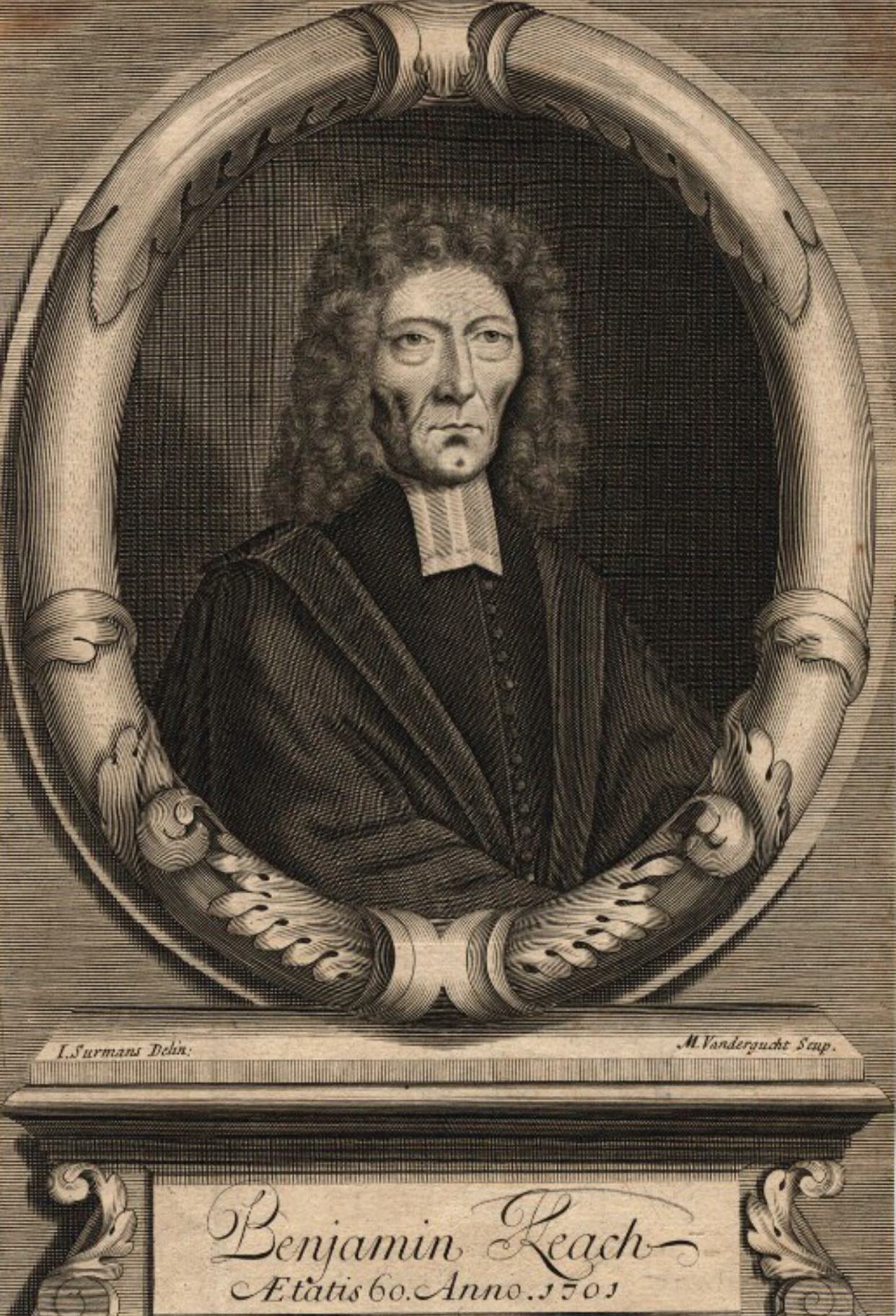
Benjamin Keach's article "Sin a Plague" addresses the heinous nature of sin by drawing parallels between sin and leprosy and poison, highlighting how sin affects the entirety of humanity and separates individuals from God. Keach argues that sin is intrinsically evil, harmful to both body and soul, and ultimately leads to eternal separation from God. Specific Scripture references such as 1 Kings 8:38 and Romans 3:13 illustrate how sin is an internal plague that corrupts and soils individuals, akin to leprosy's contamination. The practical significance of this doctrine lies in the call for believers to recognize the seriousness of sin, to flee from it, and to rely solely on Christ for healing and restoration, emphasizing the urgent need for repentance and grace.
Key Quotes
“Sin may fitly be compared to the Plague to the Plague of the leprosy.”
“A wicked man can converse with no man but as a leper he infects him by his ill example.”
“O what is sin? It is a leprosy.”
“Sin's sweet to him whose soul is out of taste, But long alas its sweetness will not last.”
What does the Bible say about the nature of sin?
The Bible likens sin to a plague, illustrating its corrupting and infectious nature.
1Ki 8:38, Le 13:2-6
How do we know the doctrine of total depravity is true?
Total depravity is evident in scripture, showing that sin has affected every part of humanity.
Romans 5:12, Romans 3:23
Why is understanding sin important for Christians?
Understanding sin is crucial for recognizing our need for repentance and the grace of Christ.
Isaiah 59:2
SIN A PLAGUE
"What prayer and supplication soever be made by any man, or by all thy people Israel, which shall know every man the Plague of his own heart," &c., 1Ki 8:38.
"And it be in the skin of the flesh like the Plague of leprosy" &c., Le 13:2; 6.
BY the Plague of leprosy, all expositors agree, was represented the hateful nature of Sin.
Note, Sin may fitly be compared to the Plague, to the Plague of the leprosy, &c.
PARALLELS.
I. The leprosy proceedeth from poisoned and corrupted humours in the body: so sin is nothing else but the poisonous and corrupted humours of the soul.
II. The Plague of the leprosy spreads over every part of the body: so Sin hath spread itself over the whole lump of mankind, and over every faculty of the soul.
III. No disease is more stinking and hateful to men than the leprosy; so nothing is more abominable and detestable in the sight of God, and sincere Christians, than Sin.
IV. No disease is more contagious and infectious than the leprosy; the Plague of the pestilence, saith a divine, is not so infectious as the Plague of the leprosy: it infecteth houses, walls, vessels, garments, &c. So nothing is so infectious as Sin. See Sin a Wound.
V. The Plague of the leprosy separated the infected person from the fellowship of all men, whatever they were, if incurable, although kings; they were utterly and for ever excluded the host, as Uzziah, neither were they admitted to come into the temple, to join in holy things, 2Ki 15:5. So Sin unrepented of, separateth from God and Christ, and from the fellowship of the saints; it shuts souls out of the church, nay, out of heaven itself.
VI. No disease is more painful and mortal, or more incurable; therefore they were to put on mournful apparel and garments; it was so rarely and seldom cured, that most carried it to their graves; so Sin is very painful and tormenting, as we before have showed.
VII. The symptoms of the leprosy agree with the symptoms and effects of sin.
1. There is a debility and weakness of all parts in them that have this disease, because the spirits are exhausted: so Sin makes feeble, weakens, and debilitates the powers of the soul. Hence Jacob, when he blessed Reuben, cries out, "as weak and unstable as water, because of his sin." Saints have weak hands, and feeble knees oft-times hereby.
2. There is in a leper a tumour and swelling in the flesh: so Sin swells a man up in pride, vain-glory, and self-conceitedness.
3. There is in them, saith my author, a burning thirst, through the adust and burnt blood by melancholy, whereof it ariseth: so sincauseth an inflammation and burning of anger, of lust, and vehement thirst after the world, preferment, pleasures, riches, &c. See Poison.
4. There is in them filthy, putrid matter, breaking forth in a most loathsome manner: so such as are greatly infected with the Plague of sin, cast forth nothing but horrid pollution. Hence wicked men are likened to the troubled sea, that casts forth miry dirt.
5. They have a hoarse and weak voice: so sinners cannot pray, or if they do, they cannot be heard. "God hears not sinners," Joh 9:31.
6. They have a stinking breath and mouth, and therefore they must cover their lips, lest by their breath they should infect others: so sinners have a filthy breath: their mouths are full of unclean and adulterous speeches, belching forth nothing but vile and abominable oaths, cursing, and slanderous accusations against the godly, and sometimes also against one another; but these seldom cover their lips.
INFERENCES.
I. WHAT an horrid disease, and Plague of Plagues, is sin! every man hath a running Plague-sore upon him. Who is it that is not a leper from the womb? We were all born with this Plague; we brought it into the world with us. Every man, as he is in himself, may cry out, "unclean, unclean." Sin hath spread itself over us like a leprosy.
II. Wicked men are miserable, whoever they are, if not cured of this Plague. Sin renders a man more hateful to God, than an ugly toad is to us.
III. It may caution saints to shun the company of a vile sinner, and dread sin, and fly from it, as from the Plague. Nothing that sinners touch, but they defile, infect, and taint it, till they are cleansed, whether earthly or heavenly things; all creature comforts and actions are unclean to them hereby: "The very ploughing of the wicked is sin," Pr 21:4, yea, the sacraments, prayers, or alms, all is polluted, so long as they are unconverted. "Unto them that are defiled, nothing is pure," &c. Tit 1:15.
IV. A wicked man can converse with no man, but, as a leper, he infects him by his ill example; he endangers the lives and souls of men.
V. It may teach the Saints to bless God, and admire his grace, who hath delivered them from the contagion of sin. "But art thou made whole? sin no more," Joh 5:14.
VI. None but the high-priest pronounced a person clean from the leprosy: so none but Christ can discern our uncleanness, and pronounce us clean, and wholly free from the Plague of sin.
O what is sin? It is a leprosy,
When, scripture so compares it, may not I
Call it a Plague, a wound, a loathsome sore,
That doth corrupt and spread the soul all o'er?
Like to an ulcer, or infectious biles,
Which the whole man most woefully defiles.
O how do men fly from the pestilence,
And shall not We learn wisdom now from thence?
Sin is a plague that kills eternally,
All sorts of men, unless they swiftly fly
To Jesus Christ; no med'cine will do good,
Nor heal the soul, but this Physician's blood.
SIN COMPARED TO POISON
SIN COMPARED TO POISON
"The Poison of Asps is under their tongues" Ro 3:13.
Poison of Asps denotes, 1. Sometimes great punishment, Job 6:4; 20:16. '"He shall suck the Poison of Asps," &c. 2. Sometimes corrupt doctrine, and heresies, wherewith men poison themselves and followers. De 32:33, "Their wine is the Poison of dragons," i.e., their doctrine; so Ainsworth, Re 17:2. "With the wine of her fornication." Which intends venom and poison of the devil, the old dragon; or the 'detestable superstition and idolatry of antichrist, and Church of Rome. 3. It signifies the cruel malice and rage of men.
Note, Sin is the venom or Poison of the serpent, or the old dragon.
PARALLELS.
I. Poison inflames, heats, and, as it were, sets the body on fire: so Sin inflames, heats, and sets, as it were, a man's spirit on fire. What a heat doth the devil put some men in by stirring up their wrath, rage, and malice, against their neighbours!
II. Poison causeth a great and extreme thirst. Gross or dreggish liquor will not quench the fiery thirst of poison; it drinks, saith one, nothing but pure spirits: so Sin stirs up an insatiable desire or thirst after revenge, as also after the pleasures, profits, and honours of this world, which nothing can allay, but the water of life, which Jesus Christ gives, Joh 4:14.
III. Poison gets quickly, saith one, to the spirit, it is subtle and spiritful, and in a very little time will corrupt the whole mass of blood, &c. So Sin in a little time corrupted the whole lump of mankind. Adam had no sooner sinned against God, but the spiritual Poison and venom thereof struck to his heart, corrupting every faculty of his soul, and not only so, but also the souls of all his posterity. See Wounds.
IV. It is noted by Plutarch, that when an asp stings a man, it doth first tickle him, and makes him laugh, till poison by little and little gets to the heart, and then it pains and torments him, more than ever it delighted him before: so doth sin, it may please a little at first: "Though wickedness be sweet in his mouth, though he hide it under his tongue; though he spare it, and forsake it not, but keepeth it still within his mouth: yet his meat in his bowels is turned, it is the gall of asps within him," Job 20:12-14. Forbidden profits and pleasures are very delightful to carnal men, and many love to be meddling with these poisoning morsels of sin. Many eat that on earth, which they digest in hell. Men must not think to dine and dance with the devil, and then sup with Abraham, Isaac, and Jacob, in God's kingdom.
V. Poison in a toad or serpent, suits and agrees well with their nature; but poison in a man's stomach makes fearful work, it being of a contrary nature: so Sin in a wicked man, one that hath no spark of true grace in him, seems to be suitable and agree well with him, his whole nature being so grievously corrupted, and changed into the evil nature thereof, he having used himself so Idhg in sinful ways, that Sin, viz., open profaneness, superstition, and error, is. habitual, and become natural to him, as Poison to a toad. Naturalists say, that if a man take a little quantity of Poison at a time, and so accustom himself to it, it will at length become so natural to him, that he may take it as food: even so wicked men, by a continual course and evil custom in Sin, drink it down as pleasant liquor, like as the fish drinks water. But now Sin to a true Christian, is like much Poison in a man's stomach; it is contrary to that new nature, and divine principle, which is wrought in him by the Spirit of God; he cannot bear nor endure it, he hates every false way: "That which I hate that I do," Ro 7:15.
VI. Poison is deadly in its own nature, and of a killing and destroying quality, if not timely vomited up, by taking some fit and proper antidote, &c. So Sin, whether fleshly or spiritual, viz., sensual debauchery, or heresy, will kill and destroy all wherever it is, both body and soul, eternally, except by true repentance it be vomited up. Though men take it down as sweet wine, and are not presently sensible of any harm; yet at last.it will bite like a serpent, and sting like an adder, Pr 23:31.
VII. Oil will expel poison, and it is often given to persons who have taken it, to cause them to vomit it up: so the Oil of Gladness, viz., the Spirit of God, is the best antidote in the world, to expel and work out the Poison of Sin in the Soul. See Oil of Gladness, Book II.
INFERENCES.
I. What do Sinners mean? Will they Poison themselves? Are they void of understanding, to take down the Poison of dragons? Will they wilfully murder themselves? What blindness and folly is in their hearts!
II. O how should this stir up the godly to pity wicked men, and to strive, as much as lieth in their power, to prevent their sinning, and endeavour to turn away their wrath!
III. It may also caution believers to take heed of Sin, and of the venom of an evil tongue, as also the Poison of heresy and error.
IV. Let sinners also learn from hence timely to look out for help. O get a fit antidote to save you from this Poison!
Ah! What is Sin? 'Tis Poison in a cup,
That's gilt without, and men do drink it up
Most earnestly, with joy and much delight,
Being pleasant to the carnal appetite.
Sin's sweet to him whose soul is out of taste.
But long, alas! its sweetness will not last.
Sin's sweet to th' flesh, that does it dearly love;
But to the soul it doth rank Poison prove.
Hast thou suck'd this most deadly venom in?
And dost not see thy vital parts begin
To swell? Art Poison'd, soul? Look, look about,
To get an antidote to work it out
Before it be too late; the Poison's strong,
Don't stay a week, twelve hours is too long.
One drachm of grace, mix'd with repenting tears,
The grace of perfect love, that casts our fears,
Mix'd with that faith that kills all unbelief,
Took down with speed, will ease thee of thy grief;
'Twill purge the soul, and work by vomit well,
And all vile dregs of venom 'twill expel.
Unless thou vomit up each dreg, be sure
No hope of life: one Sin will death procure,
Eternal death: repentance is not right,
'Till Sin, nay, every Sin's forsaken quite.
Not only left, but as a poisonous cup,
Thou must it loath, 'tis hateful, spue it up.

Comments
Your comment has been submitted and is awaiting moderation. Once approved, it will appear on this page.
Be the first to comment!