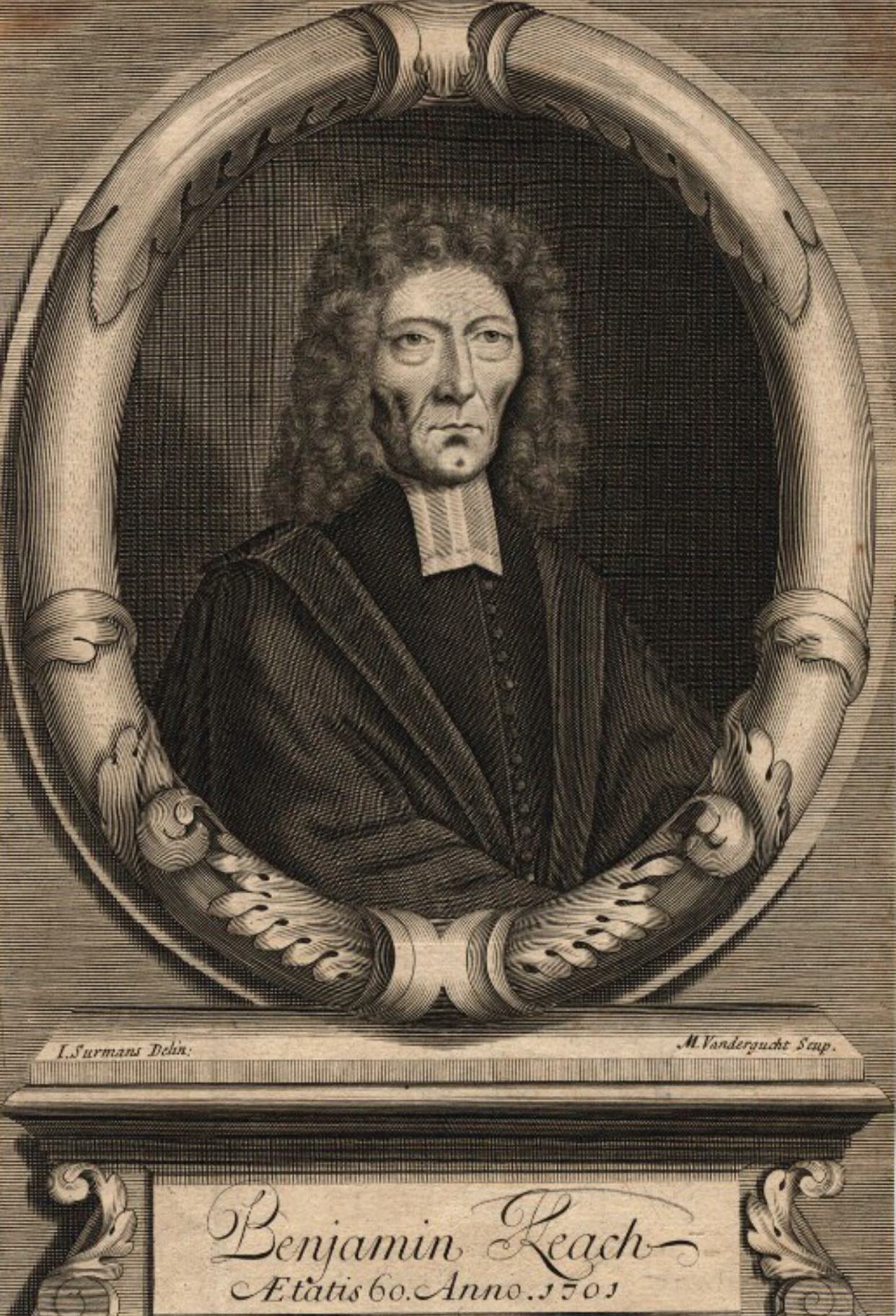
In "Sin a Sickness," Benjamin Keach explores the concept of sin as a profound spiritual illness affecting humanity. He delineates two aspects of spiritual sickness: being sick with sin, which impacts the soul, and being sick of sin, which portrays a recognition of its evil nature. Keach supports his thesis with Scripture, notably referencing Isaiah 1:5 to illustrate that the entirety of humanity is afflicted by this condition and Matthew 9:12 to emphasize Jesus as the divine Physician for the spiritually sick. The significance of this doctrine extends to understanding the gravity of sin as the greatest evil, highlighting the necessity of seeking Christ for healing and redemption, thereby underscoring the Reformed emphasis on total depravity and the need for grace.
Key Quotes
“The whole head is sick and the whole heart faint...” — Isaiah 1:5
“Christ came from heaven on purpose to be thy Physician.”
“No pestilence like it; sin is the plague of plagues.”
“If Christ undertakes the cure, he will never leave thee till he hath perfectly restored thee to health again.”
What does the Bible say about sin as a sickness?
The Bible describes sin as a sickness that affects the whole person, making the heart faint and separating us from God.
Isaiah 1:5, Matthew 9:12
How do we know the doctrine of original sin is true?
The doctrine of original sin is validated by scriptural accounts of humanity's fall into sin through Adam.
Romans 5:12
Why is understanding sin as a sickness important for Christians?
Understanding sin as a sickness helps Christians recognize their need for repentance and the healing power of Christ.
Matthew 9:13
SIN A SICKNESS
"The whole head is sick, and the whole heart faint" &c., Isa 1:5.
"The whole need not a Physician, but they that are sick" Mt 9:12.
SPIRITUAL Sickness is twofold; (1.) To be sick with Sin. (2.) To be Sick of Sin: as Sin wounds the soul, so it makes sick, and this is man's misery; but to be sick of Sin, viz., to be sensible of the evil and cursed nature thereof, this is a mercy.
PARALLELS.
I. THE causes of natural Sickness are divers, sometimes it arises from some inward, and sometimes from some outward cause; to know from whence the distemper grew or did arise is very necessary, whether it be chronical or acute, i.e., that which hath seized on the patient on a sudden, by heats, cold, or from the corruption of the blood, by an infectious air, &c., which an able physician is diligent to pry and search into. Now as touching the Sickness of the soul, it is evident the original cause thereof, was by eating of the forbidden fruit, which surfeited the whole lump of mankind; or, if you please, it was occasioned by poison, by the poison of the old serpent. Deadly poison makes a man very sick, and corrupts the whole mass of blood: and as it is needful to find out, if possible, the cause of Sickness, so it is as necessary to find out the cause of spiritual Sickness; the cause being discovered, the cure is easy. If a man doth not see what his state is, as considered in the first Adam, nor the evil and damning nature of sin in general, nor the particular plague of his own heart, he is in no hopeful way of help and healing.
II. Some Sicknesses or diseases are epidemical: Sin is a Sickness or disease so universal, and a contagion so catching, that none have escaped, nor are totally free from it.
III. Some are so sick that they have no place free: Sin is a disease that afflicts every part, "The whole head is sick, and the whole heart faint," &c., Isa 1:5.
IV. The distemper which we call the Sickness, or pestilence, is very mortal, and sweeps away thousands: Sin is such a Sickness, no pestilence like it: Sin is the plague of plagues. That which is most opposite to God, is the greatest evil: but Sin is most opposite and contrary to God, and therefore the greatest evil. That which separates man from, and deprives him of the greatest good, must needs be the greatest evil-, or the plague of plagues; but Sin doth this, therefore the greatest evil. That which is the greatest judgment to be left unto, is the worst of evils: but it is the greatest judgment in the world, to be left or given up to the lusts of our own hearts; Ergo, &c., When God designs to bring his severest wrath upon a people, or a particular soul, when he resolves to afflict them to the uttermost, he doth not say, I will bring plague, or Sickness, or famine upon them, but, I will deliver them up to their sins. Israel would have none of me, &c., and what then? "So I gave them up to their own heart's lusts," &c., Ps 81:11-12. Thus he gave up the Gentiles to vile affections, Ro 1:26,28. That Sickness, plague, or pestilence, that destroys most, that kills millions, which is so infectious, that none among thousands, nay, millions of thousands, can escape, is the plague of plagues; but such a Sickness is Sin. More shall be damned, than shall be saved; nay, but few comparatively enter in at the straight gate, and so find life. Now all that are damned, are damne'd or destroyed by Sin, and therefore it is the worst of evils. That which kills or destroys body and soul too, is the plague of plagues; but Sin destroys body and soul too: Ergo, Sin is the plague of plagues.
V. Many of those who have the disease we call the Sickness, have spots upon them, which are of two sorts, one of which are called the tokens; and when they appear, they look upon themselves as dead men: so bin, this spiritual plague and Sickness of the soul, marks some men out for eternal death: "Their spot, saith the Lord, is not the spot of my children," De 32:5; that is, their Sin is not a Sin of infirmity, such as appear upon the children of God. Any spot is bad, but some are worse, very Bad, they are deadly spots, they have the tokens of death and wrath upon them.
1. The Sin or spot of a godly man is rather a scar or wound that is healed, or almost healed: but Sin in some of the ungodly, is like a rotten, putrifying sore in the flesh.
2. The spots of the godly are not so contagious or infectious as the Sins or spots of the wicked. The Sins of the ungodly make their very persons and prayers loathed and hateful in God's sight; now God, though he hates the Sins of his own children, yet he loves their persons, Ps 109:7.
3. Sin in a saint is his sorrow, it is that which he hates, it wounds and grieves his soul, he is sick of his sin, Ro 7:3, but the wicked love their Sin. Sin is in a godly man's conversation, and that is his trouble; but Sin is in a wicked man's affection, which renders it to be a deadly spot.
4. Sin reigns and predominates in the hearts of the wicked: but Sin, though it may sometimes tyrannize in a saint, yet he obeys it not, he is not the subject or servant of Sin: the one yields and subjects to sin; the other opposes and resists it, every faculty of his soul is set against it; and not only so, but against every Sin.
VI. Sickness brings oft-times utter weakness upon the body: so Sin brings weakness upon the soul: "I am feeble," &c. It makes a Christian very faint. See Leprosy.
VII. Some Sickness is very grievous to be borne: so Sin is grievous to a true Christian, who is made sensible of it.
VIII. A man that finds himself very sick, and like to die, will soon look out for help, or send to a physician: so the soul that is Sin-sick, will seek for help, viz., hasten to Jesus Christ, for none else can cure the sickness of the soul.
INFERENCES.
I. Art thou sick, and ready to die, and insensible of any illness? Doth nothing ail thee? This is sad.
II. Art thou sick, and greatly afflicted? Is thy soul weary of its groanings? Haste to the Physician, go to Christ.
1. The more sick, the more need of physic; the greater sinner thou art, the more need of a Saviour thou hast.
2. The longer thou delayest, the more hard and difficult will thy cure be, besides the danger thou runnest, death may be at thy door.
3. Consider, you must have a cure, and be freed from this Sickness, this stone in the heart, this unbelief, or whatever else the disease be, or else be damned.
4. Christ came from heaven on purpose to be thy Physician: "He came not to call the righteous, but sinners to repentance," &c., Mt 9:13.
5: Soul, let me tell thee, as it was once said to blind Bartimeus, "Be of cheer, Christ, calls thee." "Come to me all ye that are weary," Mt 11:28-29.
6. Thou mayest have physic and cure very cheap, Lu 10:30. Though thou hast no money, Christ will do all freely, if thou wilt cast thyself upon him.
7. Christ is able to cure all diseases. Though thou art never so sick, he is able to make thee whole: "He is able to save to the uttermost all that come to God by him,'"' Heb 7:25.
8. Christ is willing as well as able. See Mt 8:2; Mr 1:41.
9. Christ can do the work, when all other means fail, Mr 5:26, when purposes fail, good desires fail, prayers fail, and good works, and moral righteousness fail, &c.
10. Christ is such a physician, that rather than thou shouldest go without cure, he hath shed his own blood, to make thee whole, and free thee from thy sickness.
11. If Christ undertakes the cure, he will never leave thee, till he hath perfectly restored thee to health again. But remember, there is no cure, but by his precious blood: "He died, that we might live."
Canst thou be sick, and such a Doctor by?
Thou canst not live unless thy Doctor die.
Strange kind of grief! that finds no medicine good
T' asswage the pain, but the Physician's blood. F. Quarles.

Comments
Your comment has been submitted and is awaiting moderation. Once approved, it will appear on this page.
Be the first to comment!