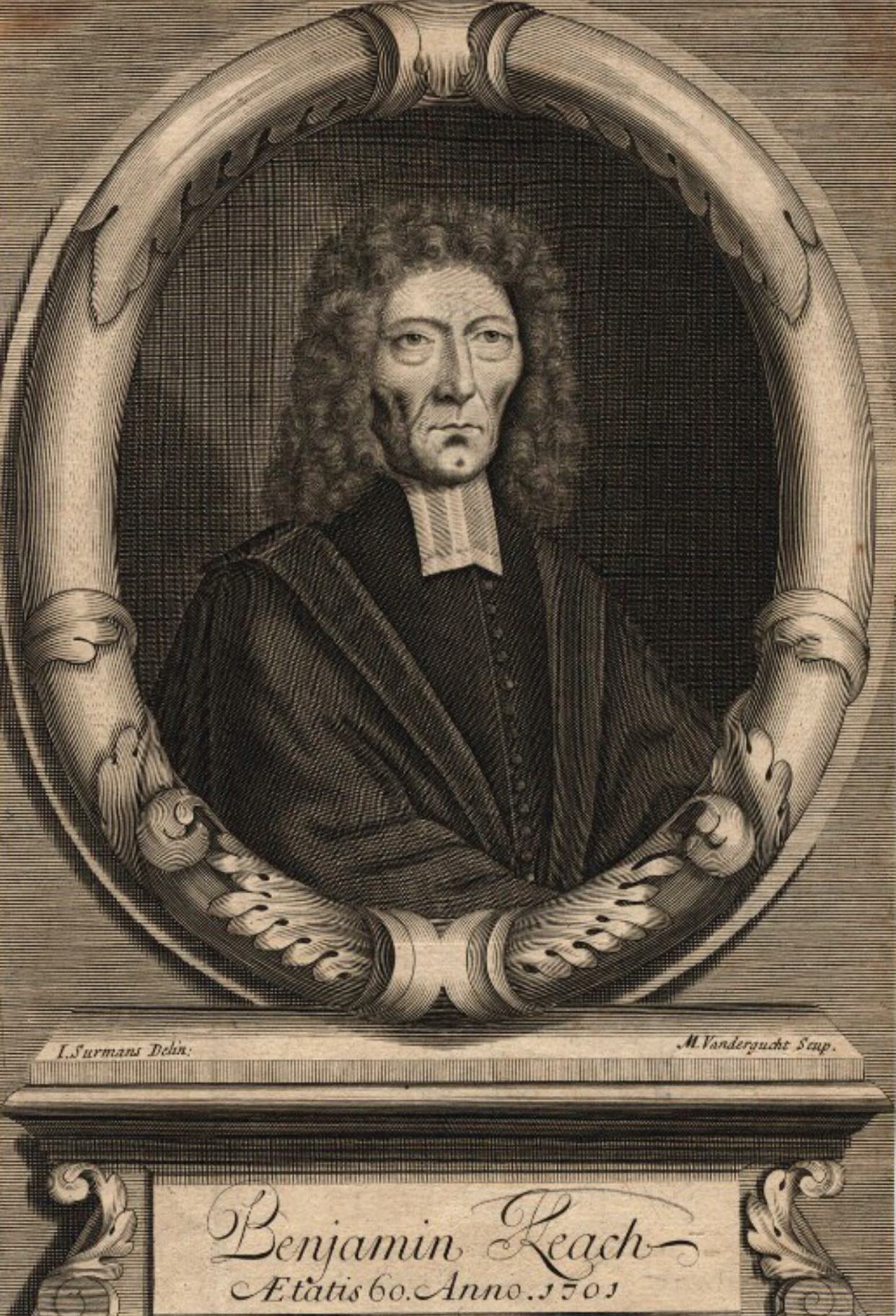
The article "The Devil a Dragon" by Benjamin Keach explores the theological characterization of the Devil, likening him to a dragon as depicted in Scripture. The key arguments center on the nature of the Devil as a persistent and crafty adversary, emphasizing his swiftness, venomous capacity for harm, and predatory behavior. Keach references Revelation 12:9 to establish the identity of the Devil as the "great Dragon," while alluding to various scriptural metaphors for sin and false doctrine, most notably Deuteronomy 32:33. The significance of this doctrinal exploration lies in the warning it presents regarding the insidious nature of evil, urging believers to remain vigilant against the spiritual dangers represented by the Devil and his malign influence in the world.
Key Quotes
“The Devil is said to have wings to denote his swiftness in pursuing his prey.”
“Satan hath wings and can pursue them with his poisonous breath of temptations.”
“The Devil like the Dragon has many ways to wound and destroy mankind.”
“There was war in heaven; Michael and his angels fought against the Dragon and the Dragon fought and his angels.”
What does the Bible say about the Devil being a dragon?
The Bible describes the Devil as a dragon in Revelation 12:9, emphasizing his malicious nature and destructive power.
Revelation 12:9, Revelation 12: 7-8, Deuteronomy 32:33
How do we know the existence of the Devil is true?
The existence of the Devil is affirmed throughout Scripture and supported by historical accounts and natural observations.
Revelation 12:9, 1 Peter 5:8
Why is understanding the Devil as a dragon important for Christians?
Understanding the Devil as a dragon helps Christians recognize the reality of spiritual warfare and the nature of sin.
Ephesians 6:12, 2 Corinthians 11:3, Revelation 12:9
THE DEVIL A DRAGON
"And the great Dragon was cast down, that old serpent, called the Devil and Satan," &c., Re 12:9.
As the Devil is compared to a lion, so likewise to a Dragon. Some are ready to question, whether there be any such creature or no; but it is without any just ground, since the holy scripture speaks of them in so many places. Besides, we have approved histories and historians, which treat of them, as Ælianus, Aristotle, Pliny, Mantuan, Gesner, Ovid, &c.
PARALLELS.
I. The Dragon is a flying serpent, he is described with wings very voluble, and spreading themselves wide according to the quantity or largeness of the Dragon's body; which caused Lucan, the poet, to write in this manner:---
Vos quoq; qui cunctis innoxia numina terris
Ser pitis, aurato nitidi fulgore Dracones,
Pestiferos ardens facit Africa; ducit is altum
Aera cum Pennis, &c.------
You shining Dragons, creeping on the earth,
Which fiery Africa holds, with skins like gold,
Yet pestilent by hot infecting breath,
Mounted with wings in th' air we do behold.
The Devil is said to have wings to denote his swiftness in pursuing his prey. He is like to a furious flying Dragon. No man can get out of the reach of Satan; let them climb up never so high in grace and virtue, Satan hath wings, and can pursue them with his poisonous breath of temptations.
III. Naturalists observe, that Dragons seldom hurt in the day-time, but in the dark night they come out of their holes, and deep caves. So the devil does the greatest hurt in the night of ignorance; he hates the light, like his cursed children; his kingdom is the darkness of this world.
III. Naturalists say, Dragons have cruel teeth, and that they have a treble row of them in their mouths, and that their bite is very dangerous. Teeth, saith Glassius, denote virulence, and an hostile power, because beasts, when they fight, use them as offensive weapons. The wounds the Devil gives to poor sinners by his prevailing power, are venomous and mortal.
IV. Dragons are mortal enemies to mankind, and multitudes have been destroyed by them, in this they fitly resemble the Devil.
V. Diagons have a cruel infectious breath. Those in Phrygia, when they are hungry, turn themselves towards the west, and gaping wide, with the force of their breath, saith my author,[1] they draw the birds that fly over their heads into their mouths; which some attribute to the infectious nature of their breath. Also they kill with their tails nay, some say, the strokes of their tails are more deadly than the biting of their teeth. The Devil, like the Dragon, has many ways to wound and destroy mankind. Sin is like the biting of Dragons, and false doctrine in scripture is called Dragon's Poison, it is the poison of this old Dragon. "Their wine is as the poison of Dragons, and the cruel venom of asps," De 32:33.
[1] Topsell, p. 706.
VI. They will fight terribly, and are, as naturalists note, always in war with the elephant, and with divers other beasts, both wild and tame, for he is the cruel enemy of them all. So the Devil makes war with the Lamb, and with all his followers. "There was war in heaven: Michael, and his angels, fought against the Dragon; and the Dragon fought, and his angels, and prevailed not," Re 12:7-8. The Lord Jesus is too hard for this old Dragon.
VII. There are in Ethiopia, and other hot countries, multitudes of Dragons, some greater, and some lesser, also some of a red colour. We read of some that have been found to be nine cubits long, and of a great thickness. Neither it is to be thought, saith Mr. Topsell, out of Gesner, p. 794, incredible, that the soldiers of Attilius Regulus killed a Dragon, which was an hundred and twenty feet long. Dragons, saith he, are certainly great beasts, and there are few or none bigger on earth. So there are many Devils, and by some places of holy Scripture, we may conclude there is a chief or grand Devil, one whose hellish power is above the rest, &c. The earth and air are full of these cursed Dragons, but being spirits, we cannot see them; besides, we may suppose, that they may abound more in some countries than in others.

Comments
Your comment has been submitted and is awaiting moderation. Once approved, it will appear on this page.
Be the first to comment!